
Review · CHIANG MAI COOKING CLASSES
Chiang Mai: Cooking Class with Market and Pickup
Thai cooking makes more sense once you see the herbs, vegetables, and curry ingredients in a real market. This three-and-a-half-hour class at Chiang Mai Daddy’s Kitchen gives you that useful start, then puts you at your own wok to cook a menu you choose.
I like the small groups of up to 10 and the fact that each person gets a separate station and utensils. I also like the practical finish: mango sticky rice to eat, plus a digital recipe book so your Thai cooking does not end at the airport.
The one thing to consider is the amount of food. You may cook three or four dishes, so arrive hungry, especially for an evening class. Morning participants may want to skip or limit breakfast.
Key points to know before booking
- A market visit comes first: You learn about Thai herbs, vegetables, and spices before cooking with them.
- You choose your dishes: Options can include soups, stir fries, curries, khao soi, and Pad Thai.
- Your own cooking station: Each participant receives a wok, utensils, ingredients, and a place to work.
- Friendly English-speaking instruction: Teachers including Cha-em, New, Wave, Tu, and Emy are praised for clear teaching and lively humor.
- Pickup and drop-off are included: Be in your hotel lobby 30 minutes before the class begins.
- Useful value at $25: The price includes transport, food, cooking instruction, mango sticky rice, and the digital recipe book.
Why the market visit matters
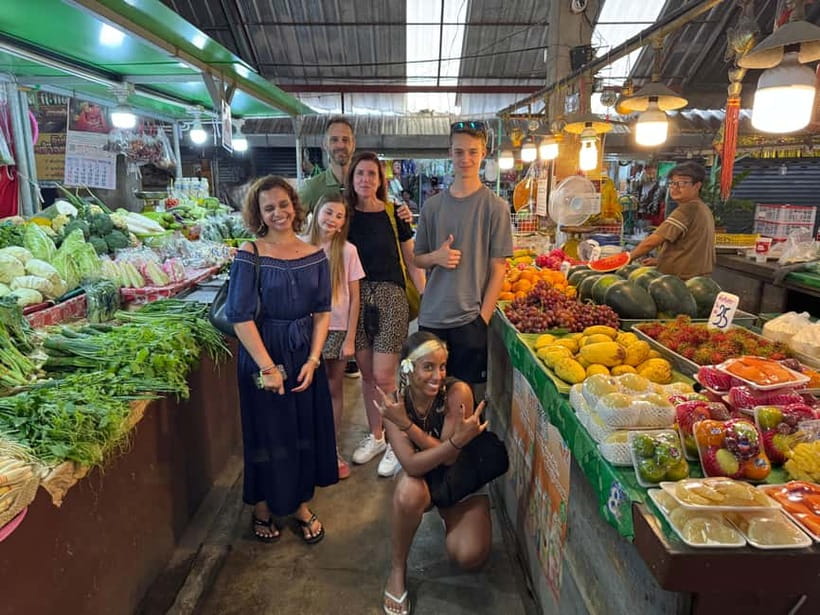
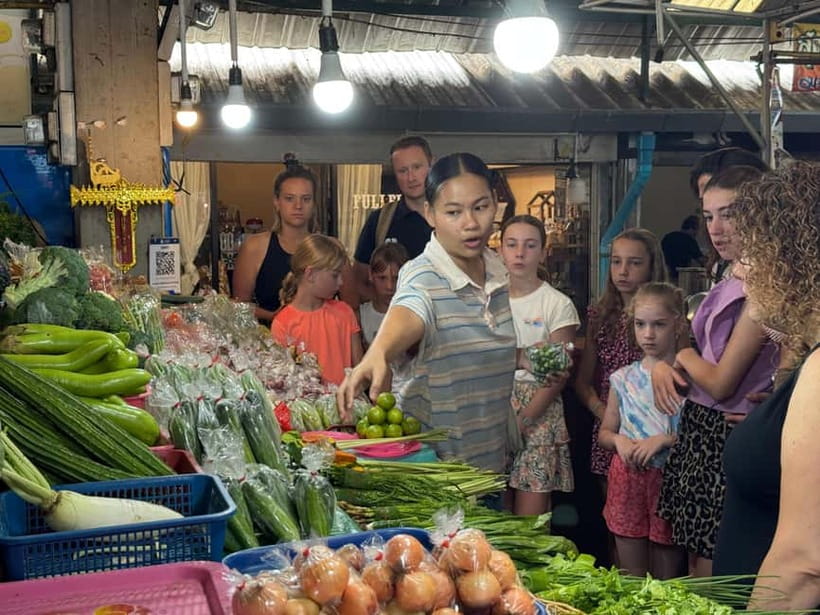
The class begins with pickup from your hotel, followed by a visit to a local fresh market. This is not just a quick stop to buy groceries. The purpose is to introduce you to the Thai ingredients that can be confusing in a restaurant kitchen or supermarket back home.
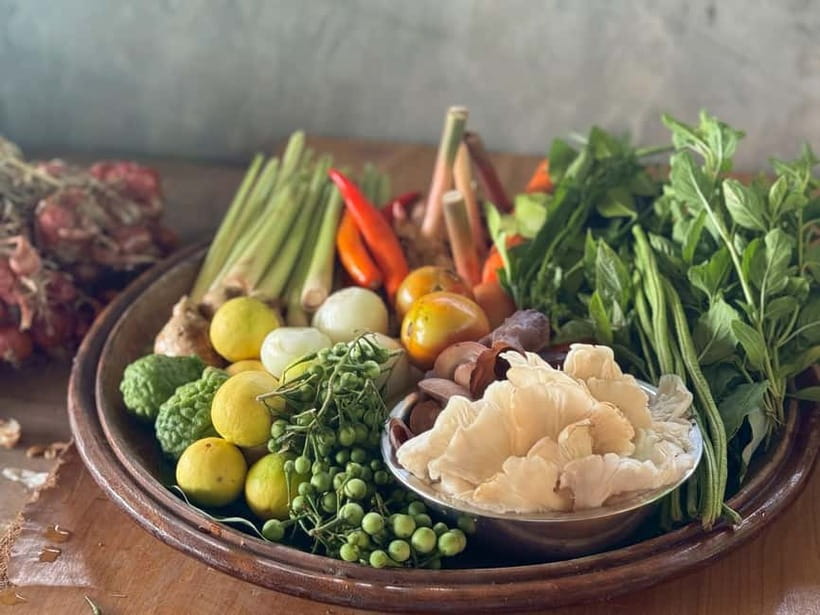
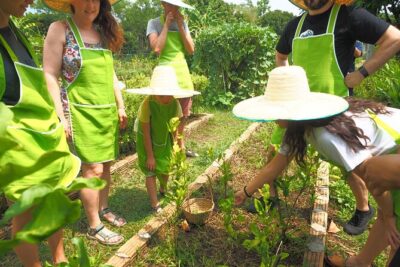
You learn about herbs, vegetables, and spices used in the dishes you will later cook. One especially useful detail is the range of Thai eggplants. They come in several shapes and sizes, and seeing them in the market helps explain why a curry may look different from the version you have eaten elsewhere.
This part gives you a better sense of Thai food before the cooking starts. You can connect the ingredients on the stall to the curry paste, soup, or stir fry on your plate later. It also gives the instructor a chance to explain local food in a setting where the ingredients are easy to see.
The market may be less comfortable than a quiet cooking studio. It is a working food market, not a polished food museum. If you prefer to get straight to the stove, this stop adds time. I think it earns its place because it turns a list of unfamiliar ingredients into something you can recognize.
More Cooking Classes with a Market Tour in Chiang Mai
- Chiang Mai: Cooking Class, Market & Thai Herbs Garden Tour
★ 4.9 · 4,824 reviews - Chiang Mai: Authentic Cooking Class with Market & Farm Visit
★ 4.9 · 4,546 reviews - Chiang Mai: Evening Cooking Class and Local Market Visit
★ 4.9 · 648 reviews
From market produce to a family kitchen
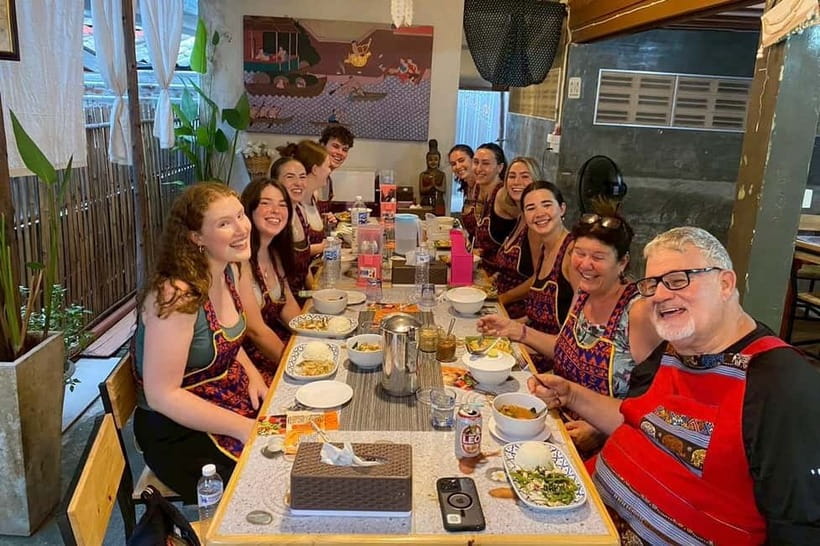
After the market, you return to Daddy’s Kitchen for a welcome drink and snack. The setting is described as a Thai family home atmosphere, which gives the class a more personal feel than a large demonstration kitchen.
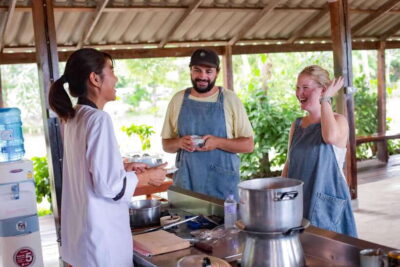
The teaching is hands-on from the start. You do not simply watch a chef prepare a dish while someone else handles the difficult work. You prepare and cook your own food, with the instructor explaining each step and helping with timing, portions, and technique.
That matters if you have little cooking experience. The class is designed for skilled cooks and complete beginners alike, and the teaching style is built around doing the work yourself. Participants with no cooking confidence have still been able to follow the instructions and feel proud of the finished dishes.
English is the teaching language. Instructors such as Cha-em, New, Wave, Tu, Emy, and Toey are praised for clear explanations, good humor, and the ability to keep everyone moving at the same pace. The names may vary by class, but the common thread is an instructor who teaches rather than simply performs.
Your own wok, station, and menu
A major strength is the individual setup. Everyone receives a cooking station, wok, and utensils, along with the ingredients needed for the class. You are not standing shoulder to shoulder while waiting for a turn at one shared burner.
The personal station also makes the class more useful after your holiday. You get to see how much of each ingredient goes into your own dish and how the food changes as it cooks. If you are cooking with a partner, you can select different dishes and share them afterward. That gives you more variety without requiring two separate classes.
The menu offers several choices. Specific classes can include a selection of soups, stir fries, curries, Pad Thai, and khao soi. One participant described choosing from three soups, three stir fries, and four curries, including the chance to make curry paste. The exact choices may vary, so check the available menu when booking.
This flexibility is better than a fixed menu if you already know what you like. It also helps couples or friends compare dishes. One person might make Pad Thai while the other chooses a curry, then both can taste the results.
The choice can add a small amount of decision-making at the start. If you want a tightly planned lesson with the same dish for everyone, this may feel less focused. For most people, though, selecting your own food is part of the fun.
What you may cook during the 210 minutes
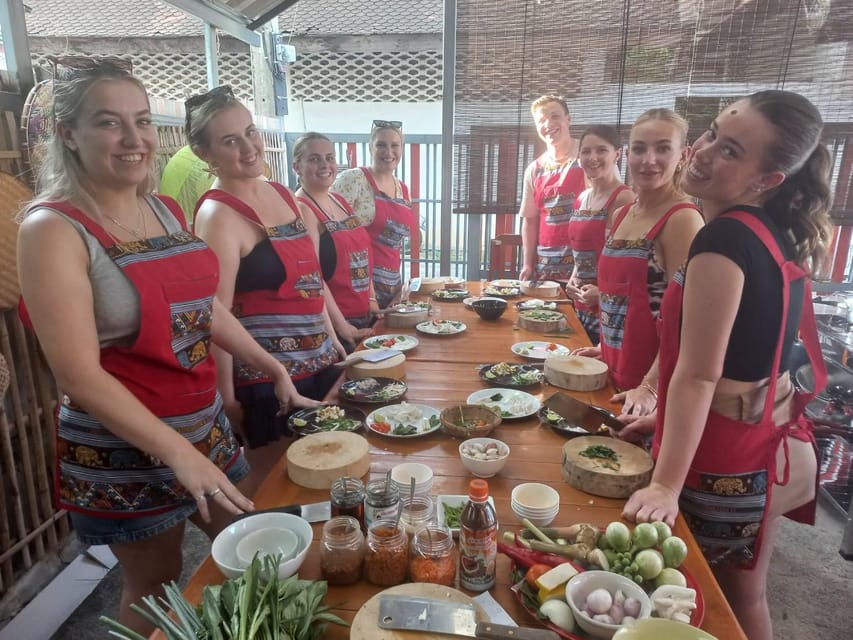
The class lasts 210 minutes, including the market visit, transport, instruction, and eating. The exact order can vary, but the cooking usually builds toward several dishes rather than one single recipe.
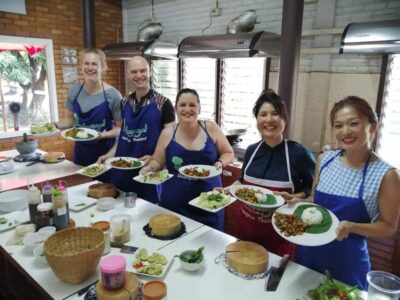
You may make a soup, a stir fry or main dish, a curry or khao soi, and mango sticky rice. Some arrangements have you prepare three dishes individually, with the group working together on curry paste and dessert. Other participants have cooked four dishes each. The practical result is the same: this is a full meal, not a quick lesson with a tiny sample at the end.
More Cooking Classes with a Market Tour in Thailand
- Evening Cooking Class in Organic Farm with Local Market Tour
★ 5.0 · 394 reviews - Cooking Morning Class Chiang Mai Visit Organic Garden and Market
★ 5.0 · 211 reviews - Cooking Evening Class Chiang Mai Visit Organic Garden and Market
★ 5.0 · 187 reviews - Half-Day Cooking Class with Market Tour
★ 5.0 · 163 reviews
Soup
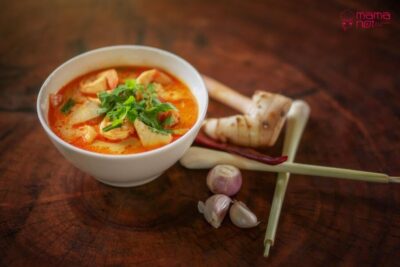
Soup helps you learn how Thai flavors are balanced. You work with fresh herbs and other ingredients, then taste the result as part of the meal. It is a good first dish because you can see how aroma and seasoning develop without needing advanced cooking skills.
Stir fry and Pad Thai
Pad Thai is one of the most familiar Thai dishes outside the country, but cooking it yourself shows how quickly the dish comes together. Timing matters, and the individual wok lets you see the process instead of receiving a finished plate from a restaurant kitchen.
The class can also include other stir fries. These are useful dishes to learn at home because they can be adjusted to suit your preferred level of heat and the ingredients available in your own kitchen.
Curry or khao soi
Curry is often the most educational part of the class because you learn how the paste shapes the final dish. Making the paste as a group also adds a shared task, while each person can choose a curry that suits their taste.
Khao soi gives you another northern Thai option. It is especially relevant in Chiang Mai, where the dish is a local favorite. The supplied information does not promise that every class includes it, so treat it as one possible choice rather than a guaranteed course.
Mango sticky rice
Mango sticky rice is the planned dessert and is included in the price. It gives the class a sweet finish and rounds out the meal.
Not everyone will love the dessert as much as the savory dishes. One detailed account found the first three dishes stronger than the mango sticky rice. That is a useful warning if you are booking mainly for dessert, but it does not change the overall value of receiving a complete meal and the recipe afterward.
The teaching style is part of the experience
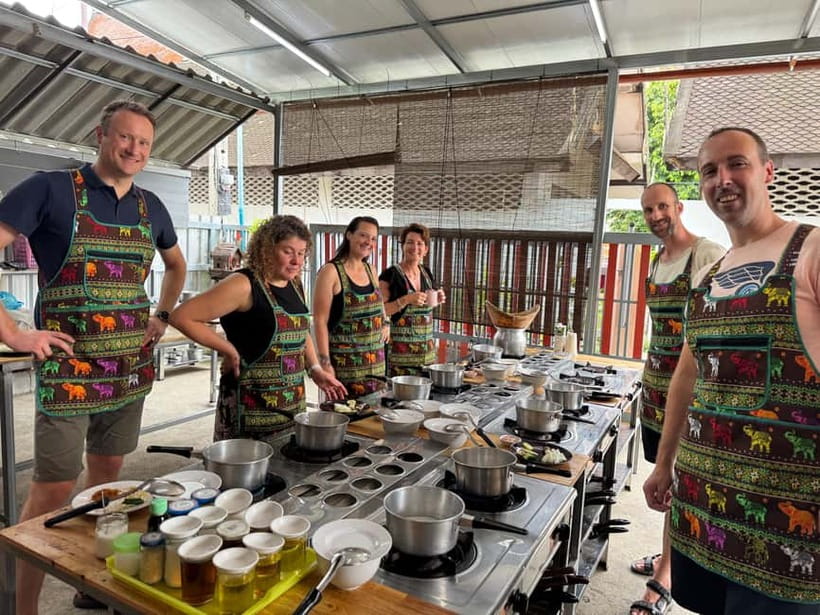
The food is important, but the instructor can make or break a cooking class. Here, the strongest pattern is a relaxed teacher who keeps the group laughing while still explaining what to do.
Cha-em is repeatedly singled out for being funny, welcoming, and easy to follow. New is praised for keeping the class on track, while Wave is noted for explaining market ingredients and making the experience enjoyable. Tu, Emy, Kimmy, Toey, and other instructors are also named positively in the supplied feedback.
That variety means you cannot book a particular teaching style with complete certainty unless the provider confirms the instructor. You can expect English instruction and a small group, but the individual teacher may change.
The humor is a real advantage for beginners. Cooking in front of strangers can feel awkward, especially when you are cutting unfamiliar ingredients or trying to judge when a wok is hot enough. A playful teacher lowers the pressure. At the same time, the class still needs to keep moving, so expect practical guidance rather than a long cultural lecture.
Is $25 good value?
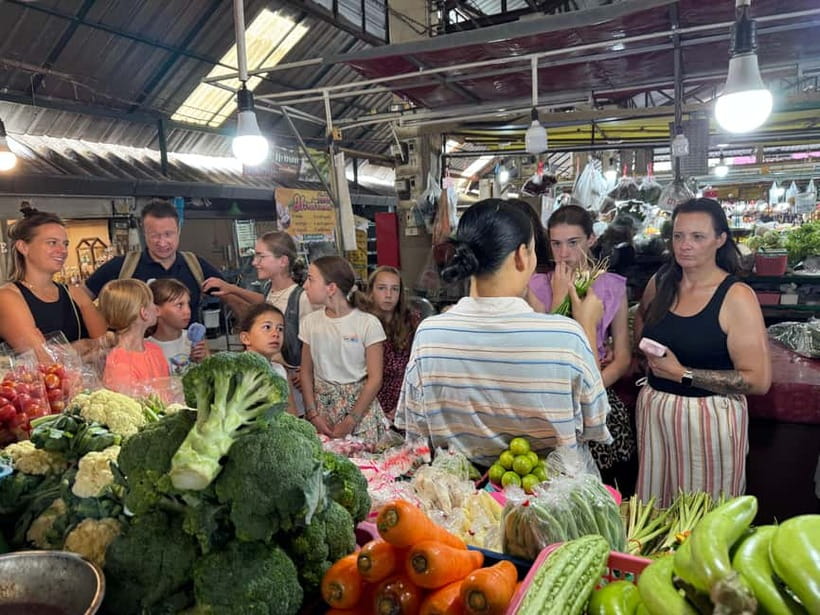
At $25 per person, this is strong value if you want more than a meal. The fee includes hotel pickup and drop-off, the market visit, every ingredient, use of a cooking station and wok, instruction, mango sticky rice, and a digital recipe book.
You also eat several dishes. Restaurant meals in Chiang Mai can be inexpensive, but this price includes food, transport, an activity lasting 210 minutes, and recipes you can use later. The separate station adds value because you are paying for active participation rather than a demonstration.
The class is not the right choice if you only want to sample Thai food with no effort. You will be chopping, seasoning, cooking, and keeping track of several steps. That work is the point, but it requires more attention than sitting down at a restaurant.
Alcohol is not included, though it is available for purchase. Alcohol and drugs are not allowed as part of the activity.
Pickup, timing, and group size
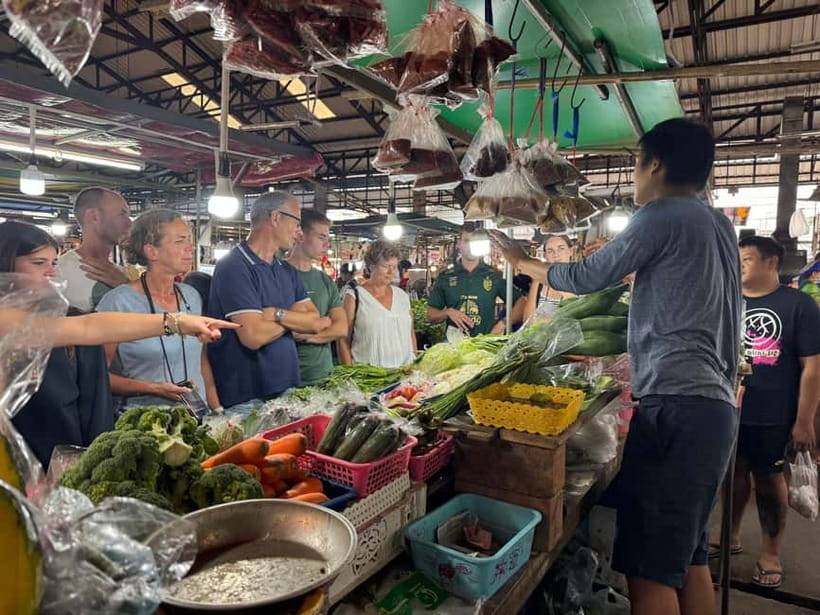
Pickup and drop-off make this easier to fit into a Chiang Mai stay. You should wait in your hotel lobby 30 minutes before the class starts. Clear pickup communication is important, so have your hotel details ready when booking.
The small group limit is 10 people. That is a useful size for a practical cooking lesson because the instructor can watch each station and answer questions without turning the class into a private lesson price.
An evening start can work well if you want to cook your dinner during the activity. You will likely leave full, so do not plan a large meal afterward. A morning class can free up your evening, but it may mean eating your first proper meal later in the morning. Plan your breakfast around that.
The total duration is three and a half hours, but transport and the market visit are part of the time. Allow room in your day rather than booking a tightly timed activity immediately afterward.
What you take home
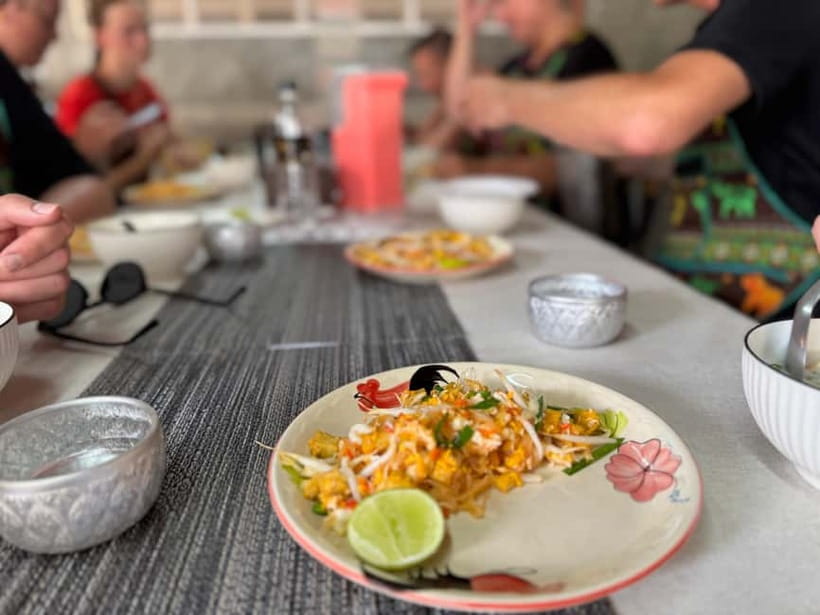
The digital recipe e-book is one of the most useful extras. It lets you recreate the dishes later instead of relying on memory or a few rushed photographs.
Photos of the activities are also provided. That is a nice record of the class, especially if you are traveling with friends or family. The recipes matter more in practical terms, since they help you remember the ingredients and steps once you are back home.
The class uses fresh herbs and ingredients at Daddy’s Kitchen. That does not mean every ingredient will be easy to find in your local shop, but the market introduction should help you recognize key items and understand their role. You may need to make substitutions at home, especially for Thai herbs and vegetables.
Who will enjoy this class most?
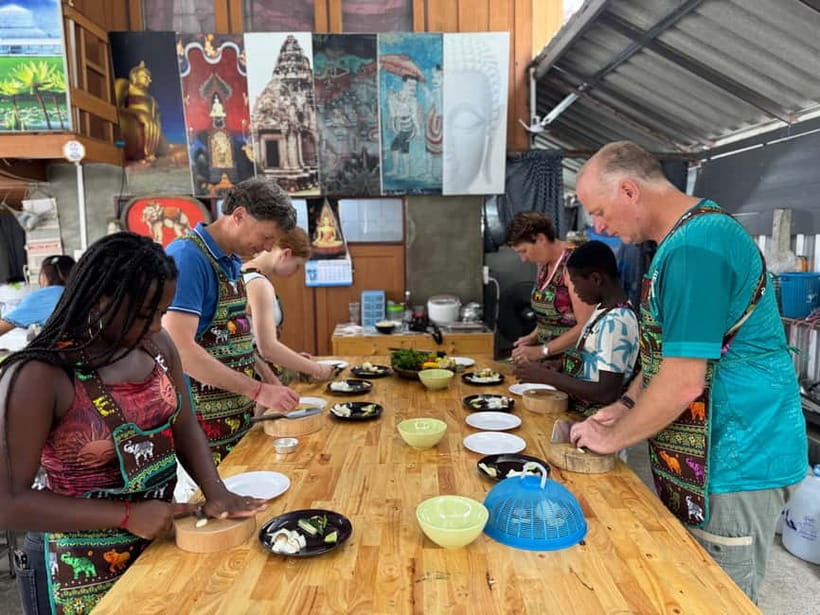
I would choose this for a first-time cook, a couple, a solo visitor, or a family group with older children. Solo participants can work at their own station and still meet the rest of the small group. Couples can choose different dishes and share.
It suits you if you want to understand Thai food by making it, not just eating it. It also works well if you like a social class with jokes and conversation rather than a formal chef demonstration.
Children under five are not allowed, and the activity is not suitable for people over 95. Older children and teenagers may enjoy it, especially since the tasks are hands-on, but the supplied information does not give a specific minimum age beyond the five-year limit.
You should reconsider if you dislike group activities, do not want to cook, or have very little time in Chiang Mai. The market and transport are valuable parts of the class, but they also make it longer than a simple cooking demonstration.
Should you book Daddy’s Kitchen?
Book it if you want a practical Chiang Mai food experience at a modest price. The strongest reasons are the local market introduction, fresh ingredients, individual wok stations, flexible dish choices, and teachers who make beginners feel at ease.
I would especially recommend the evening session if you want the class to serve as dinner and plan to arrive hungry. Choose the morning if you prefer to keep your evening free, but eat lightly beforehand.
The only real cautions are the full meal, the changing instructor lineup, and the fact that mango sticky rice may not be the highlight for everyone. Those are small concerns beside what you receive for $25. If cooking is part of how you understand a place, this is a smart addition to a Chiang Mai stay.
FAQ
How long does the Chiang Mai cooking class last?
The activity lasts 210 minutes, or three and a half hours. This includes hotel pickup and drop-off, the local market visit, cooking instruction, and the meal.
Is hotel transportation included?
Yes. Hotel pickup and drop-off are included. You should wait in your hotel lobby 30 minutes before the class starts.
How many people can join the class?
The class is limited to 10 participants, making it a small-group activity.
What cooking equipment do I receive?
Each participant receives a personal cooking station, wok, and cooking utensils. Ingredients are also included.
Can I choose what to cook?
Yes. You can choose from available Thai dishes. Options may include soups, stir fries, curries, Pad Thai, and khao soi. The choices can vary by class.
Is mango sticky rice included?
Yes. Mango sticky rice is included as dessert.
Do I receive the recipes after the class?
Yes. A digital Thai recipe e-book in PDF format is provided. Photos from the activity are also supplied.
Is the class suitable for beginners?
Yes. The class is suitable for skilled cooks and people with no cooking experience. Instruction is provided in English using a hands-on approach.
Can I cancel the booking?
You can cancel up to 24 hours in advance for a full refund. The reserve now and pay later option is also available.
Are drinks included?
A welcome drink and snack are provided. Alcoholic drinks are not included, though they are available for purchase. Alcohol and drugs are not allowed.
Newest classes around Chiang Mai
- Aroidee’s Farm-Fresh Thai Cooking Experience★ 5.0 · 8 reviews
- Authentic Thai Cooking Class and Farm Visit in Chiang Mai★ 5.0 · 66 reviews
- Signature Thai Cooking Course★ 5.0 · 79 reviews
- Half Day Guided Thai Cooking Class in Chiang Mai★ 5.0 · 13 reviews
- Yummy Tasty Thai Cooking School in Chiang Mai★ 5.0 · 2 reviews
- Online Thai and Akha Cooking Class★ 5.0 · 70 reviews
- Northern Thai Cooking Class in Chiang Mai in a Countryside Home★ 5.0 · 2 reviews
- Private Half-Day Thai Cooking Class in Chiang Mai★ 5.0 · 4 reviews
Chiang Mai Cooking Classes, compared.
Half-Day Thai Cooking Class at Organic Farm in Chiang Mai
Read our review →
Cooking Class, Market & Thai Herbs Garden Tour
Read our review →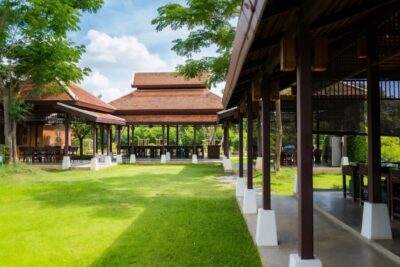
Authentic Cooking Class with Market & Farm Visit
Read our review →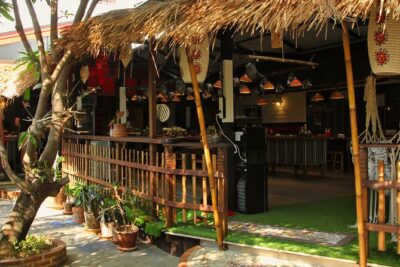
Browse the lists this tour appears in