
Review · CHIANG MAI COOKING CLASSES
Half-Day Cooking Class with Market Tour
The best part of this Chiang Mai class is that it begins with a real market visit and ends in a family home, not a polished restaurant kitchen. You learn what Thai vegetables, herbs, curry pastes, and seasonings look like before you cook them.
I like the choice of dishes, since you can shape the menu around Pad Thai, Tom Yum, green curry, Khao Soi, spring rolls, and more. I also like the small group size, capped at 10, which gives you your own cooking station and room to ask questions. The main drawback is simple: five dishes plus sticky rice with mango is a lot of food, so arrive hungry.
- Market first: Explore local produce and buy ingredients used in the class.
- Home-style setting: Cook in the hosts’ own home, with a family atmosphere.
- Flexible menu: Choose one dish from each category, with vegetarian and dietary adjustments available.
- Five-hour format: Morning classes run roughly 9:00 am to 1:30 pm, while afternoon classes run about 3:30 pm to 8:30 pm.
- Hands-on cooking: You prepare, cook, and eat your dishes rather than watching a demonstration.
- Useful souvenir: An English recipe book helps you recreate the meal at home.
From Chiang Mai’s Old City to a Local Market
Your day begins with hotel pickup if you stay within 3 kilometers of Chiang Mai’s old city. Morning pickup is usually between 8:45 and 9:15 am. For the afternoon class, expect pickup around 3:00 to 3:30 pm.
The short transfer matters because it keeps the experience focused. You are not spending much of your five hours crossing the province. Instead, the class moves quickly from city accommodation to an everyday market, then on to the cooking school.
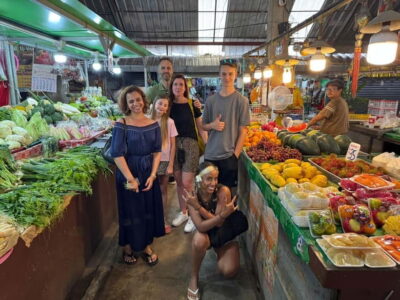
At the market, your guide introduces the ingredients used later in the class. This is more useful than simply being handed bowls of chopped food. You get to see Thai vegetables, herbs, seasonings, and curry ingredients in their normal setting, alongside local people doing their shopping.
I especially like this part for first-time visitors to Thailand. Thai menus often list familiar dish names, but the ingredients behind them can be less clear. Seeing the produce before cooking helps you recognize the flavors you will encounter in restaurants and food stalls during the rest of your trip.
The market visit is not a long formal sightseeing stop. Its value comes from the practical connection between shopping and cooking. You see an ingredient, hear how it is used, and then meet it again in your own dish.
You also get to try some seasonal fruit and snacks. The exact selection depends on what is available, so do not expect a fixed tasting menu. Think of this as a friendly introduction to local eating habits before the main meal begins.
Cooking in a Chiang Mai Home
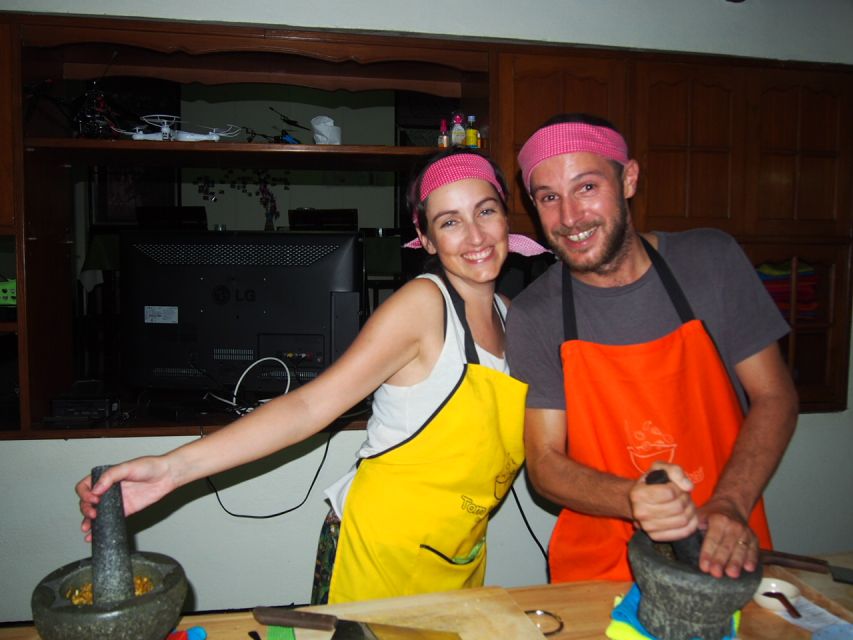
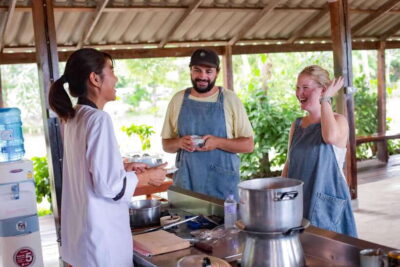
After the market, you continue to the cooking school, which is located in a home. That setting changes the feel of the class. It is less like a large culinary studio and more like being welcomed into someone’s kitchen for a meal.
The hosts, including instructors named Mind, Oun, Orn, and Gay in different sessions, are described as warm, funny, and easy to follow. The class is conducted in English. Their approach combines cooking instruction with explanations about Thai ingredients, food customs, and the flavors behind each recipe.
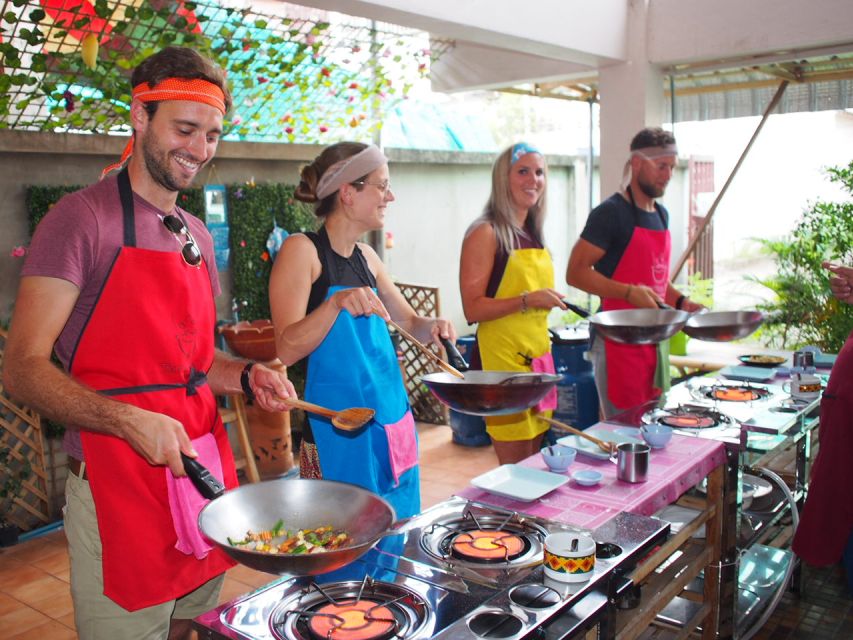
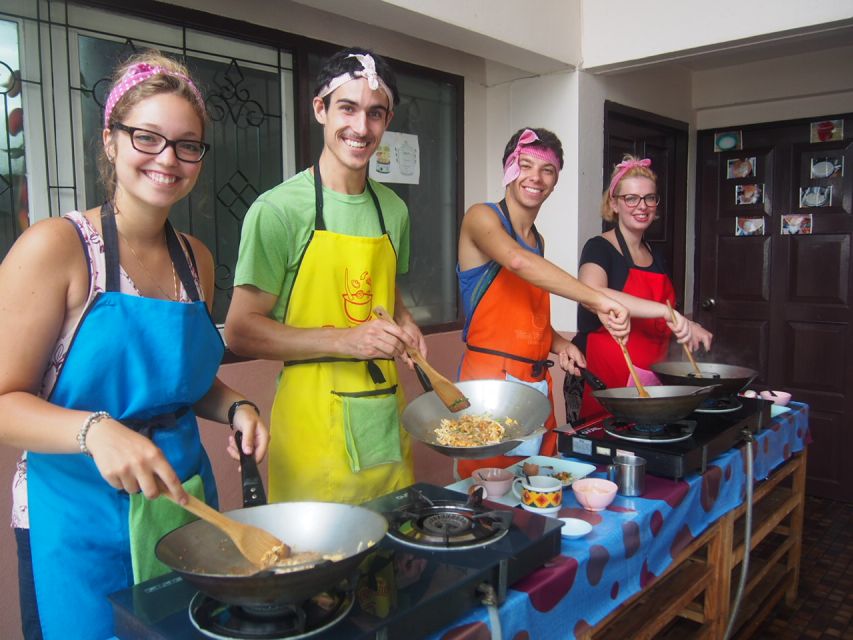
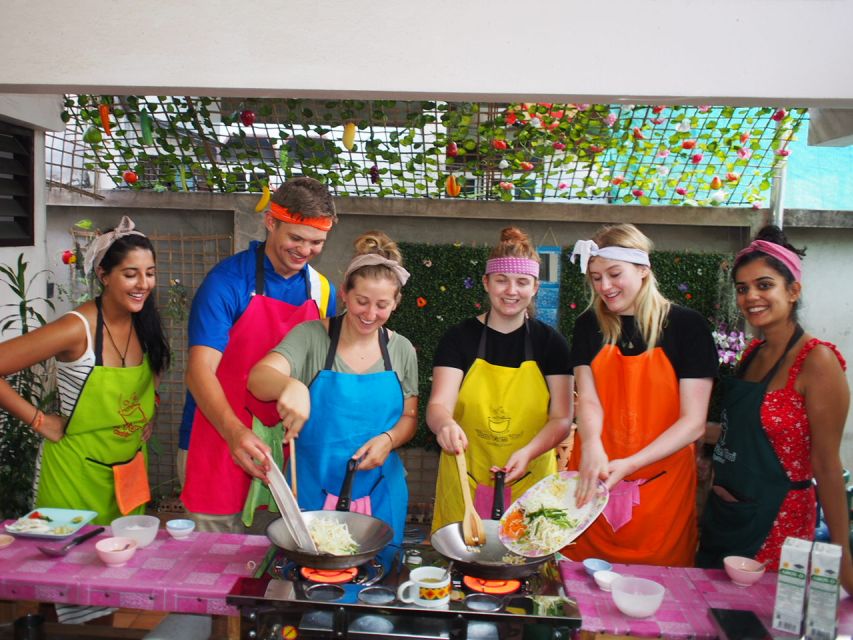
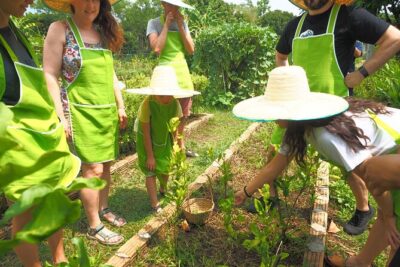
The cooking area is arranged for hands-on work. You prepare ingredients, cook at your own station, and eat each dish as it is ready. Some sessions use separate rooms for preparation, cooking, and eating, with air conditioning available in the dining room.
That layout can be useful in Chiang Mai’s heat. It also keeps the class moving. You are not waiting for one enormous communal dish to finish before eating. Instead, the meal develops course by course.
A small group limit of 10 is another practical advantage. Classes can feel crowded when everyone shares one burner or has to watch from the back. Here, you should have a more direct role in the cooking, with help available when you need it.
The class remains suitable for beginners. You do not need previous cooking experience, and the recipes are explained step by step. You still need to chop and prepare ingredients, so this is not a passive demonstration. That hands-on work is part of the point.
More Cooking Classes with a Market Tour in Chiang Mai
- Chiang Mai: Cooking Class, Market & Thai Herbs Garden Tour
★ 4.9 · 4,824 reviews - Chiang Mai: Authentic Cooking Class with Market & Farm Visit
★ 4.9 · 4,546 reviews - Chiang Mai: Cooking Class with Market and Pickup
★ 4.9 · 1,365 reviews
Choosing Your Five Thai Dishes
The menu gives you room to choose rather than forcing everyone to cook exactly the same food. The available choices cover stir-fries, soups, appetizers, curry pastes, curries, and dessert.
Your menu may include one choice from each of the main categories:
- Stir-fried dishes: Pad Thai, cashew nut with chicken, or Pad See Ew
- Soups: Hot and sour prawn soup, chicken in coconut milk soup, or Thai noodle soup
- Appetizers: Spring rolls, papaya salad, or cucumber salad
- Curries: Green curry, Panang curry, or Khao Soi
- Curry pastes: Green curry paste, Panang curry paste, or Khao Soi curry paste
- Dessert: Sticky rice with mango for everyone
The exact menu structure can vary slightly, but the useful point is that you can choose food you genuinely want to eat. One person might select Pad Thai and green curry, while another chooses Pad See Ew and Khao Soi.
This flexibility also helps couples and families compare different dishes. You can split your choices and taste more of northern Thailand’s food instead of producing identical plates.
Khao Soi is an especially good choice if you want a Chiang Mai specialty. The class includes Khao Soi curry as an option, giving you a chance to learn a dish closely tied to northern Thai cooking.
The curry paste section adds another layer. You are not only learning how to combine a prepared sauce with meat or vegetables. You can learn how the base paste shapes the final curry, which makes the recipe more useful when you cook at home.
The menu supports vegetarian, pescatarian, and gluten-free adjustments according to the information provided. Allergy requests and special food needs should be shared in advance. That is important because Thai cooking often uses fish sauce, shrimp, oyster sauce, peanuts, and other ingredients that are easy to overlook.
What the Five-Hour Schedule Feels Like
The morning class starts at 9:00 am and ends around 1:30 pm. The afternoon class runs from approximately 3:30 pm to 8:30 pm.
The schedule has enough time for the market, explanations, preparation, cooking, and eating. You are not trying to rush through five recipes in a single hour. Several people who took the class described the pace as relaxed, with time to cook and enjoy each course.
The meal is also spread through the session. You cook a dish, eat it, then move on to the next. That makes the experience more social and easier to follow, but it also means the food adds up quickly.
Here is my strongest practical tip: do not eat a full meal beforehand. Five dishes and sticky rice with mango can leave even a serious eater very full. The class includes drinking water, tea, coffee, fruit, snacks, and the food you prepare.
The afternoon session may suit you if you want a relaxed evening activity after sightseeing. The morning session leaves the rest of the day open and works well if you want to learn Thai food early in your visit.
The Food You Actually Make and Eat
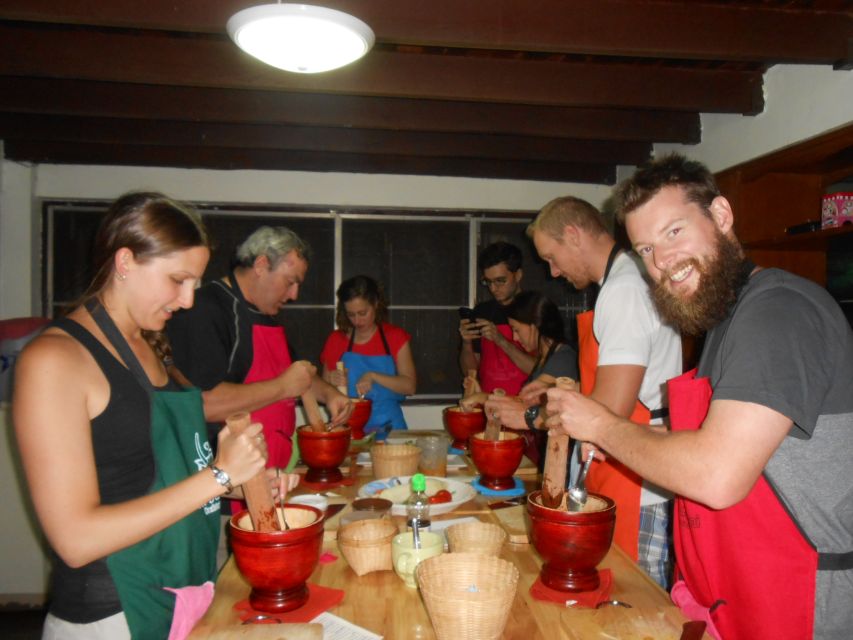
A major strength is that you eat the dishes you cook. You are not preparing food only to watch an instructor finish it. Each course becomes part of your meal, which gives you a clear sense of how the ingredients and cooking steps affect the taste.
The stir-fried choices cover two useful styles. Pad Thai gives you a familiar Thai classic, while Pad See Ew offers a darker, sweeter noodle dish with a different texture and seasoning. Cashew nut with chicken provides another option if you prefer a stir-fry built around meat, nuts, and vegetables.
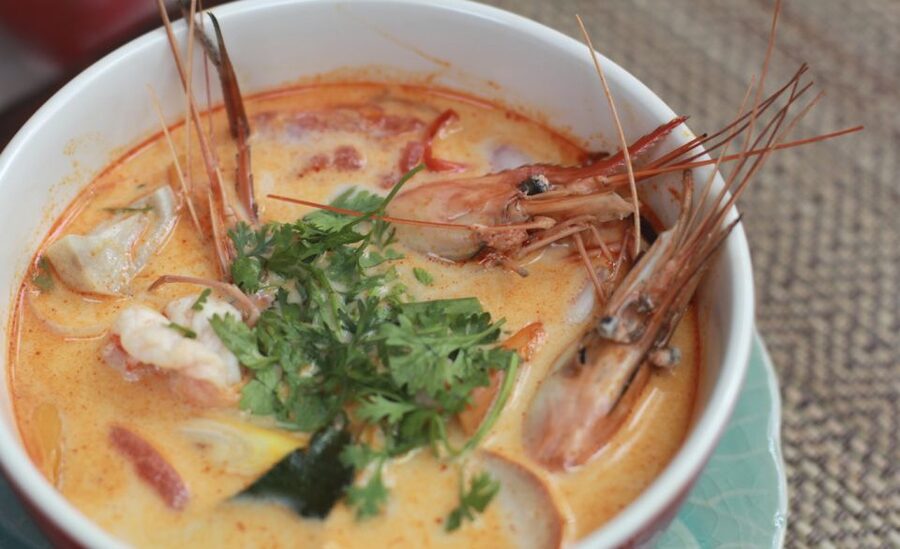
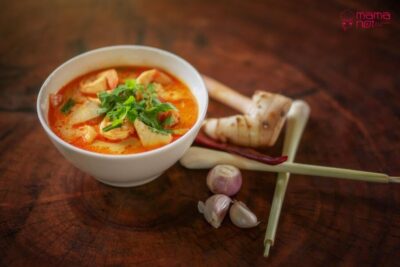
For soup, Tom Yum gives you sour, hot, and aromatic flavors. Chicken in coconut milk soup is gentler and creamier. Thai noodle soup offers a different direction altogether. These choices let you decide how much heat and acidity you want in the meal.
Papaya salad can be a lively choice if you like sharp, spicy flavors. Spring rolls and cucumber salad are milder options. This is useful when cooking with children or when one person in your group does not want every dish to be hot.
You should also tell the instructor how much spice you prefer. The class can be fun and spicy, but Thai heat is not always the same as the mild version served abroad. The menu is flexible enough to make the meal comfortable, but you need to speak up.
The shared dessert is sticky rice with mango. It gives the class a sweet finish and is a practical recipe to take home because it relies on a small number of familiar components, even though getting the rice texture right still takes care.
More Cooking Classes with a Market Tour in Thailand
- Chiang Mai: Evening Cooking Class and Local Market Visit
★ 4.9 · 648 reviews - Evening Cooking Class in Organic Farm with Local Market Tour
★ 5.0 · 394 reviews - Cooking Morning Class Chiang Mai Visit Organic Garden and Market
★ 5.0 · 211 reviews - Cooking Evening Class Chiang Mai Visit Organic Garden and Market
★ 5.0 · 187 reviews
Hospitality, Humor, and English Instruction
The instructors are repeatedly described as friendly, funny, and clear in English. Oun and Orn are noted for keeping the class lively, while Mind is praised for explaining the food well and managing a mixed-language group.
That matters because a cooking class can become frustrating when instructions are vague. Here, you should be able to ask about ingredient names, cooking times, spice levels, and substitutions as you go.
The hosts also make the home setting feel personal. You may receive fruit and water before cooking, and the atmosphere is intended to feel welcoming rather than formal. The family-style setting is one reason this class feels different from a standard restaurant lesson.
There is a small trade-off. A home kitchen is not likely to feel as polished or spacious as a professional culinary school. If you want advanced knife skills, restaurant techniques, or a highly technical lesson, this may feel too relaxed.
For most people, though, that informality is the appeal. You get practical recipes, local ingredient guidance, and a chance to eat in the same place where the class takes place.
Is $36 Good Value?
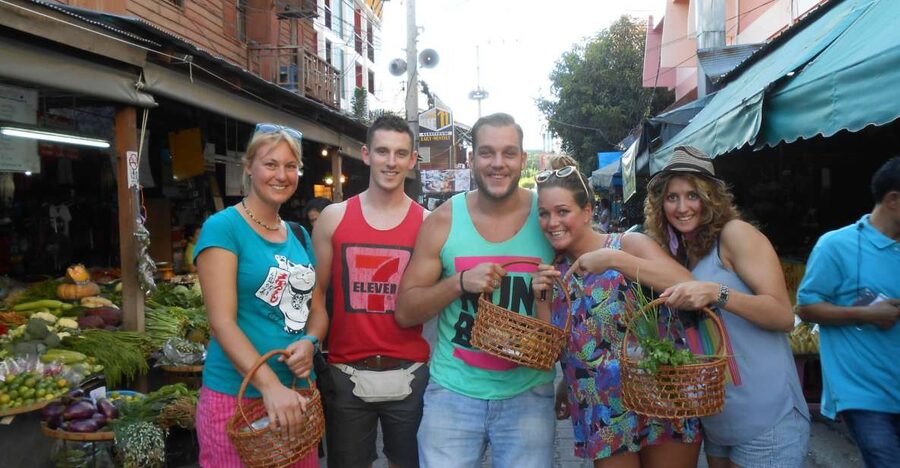
At $36 per person, the class offers solid value for a five-hour activity. The price includes hotel pickup and drop-off within 3 kilometers of the old city, the market visit, ingredients, drinking water, tea and coffee, the meal, and a recipe book.
The transport adds real value in Chiang Mai, particularly on hot days or during the rainy season. You do not need to arrange a taxi to the market or find your own way to a cooking school outside the old city.
You are also getting more than one meal. The class teaches several dishes, and you eat the food as you go. If you ordered the same range of dishes in restaurants, the cost could quickly approach the class price, though the real value is the instruction and recipes.
The recipe book makes the experience useful after your holiday. You can try making Pad Thai, curry, soup, or sticky rice with mango at home instead of leaving with only photographs.
The value is strongest for food-focused visitors, couples, families, and anyone staying in Chiang Mai for several days. It is less suitable if you want a quick activity or dislike spending several hours around food.
Who Should Book This Class?
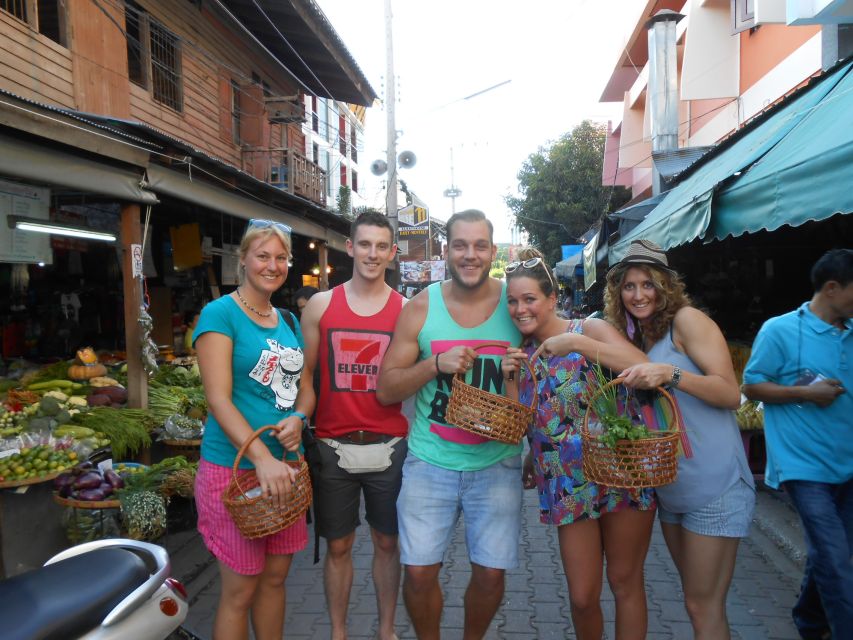
I would choose this class early in a Chiang Mai visit. The market introduction helps you understand ingredients you will see later in restaurants and markets across northern Thailand.
It also suits first-time cooks. The format gives you clear choices and individual practice without requiring professional skills. Families can usually find milder dishes, and the instructors can adjust for several dietary styles when told in advance.
Food lovers will get the most from the curry and Khao Soi options. If you want only a short Pad Thai lesson, five hours may feel excessive. If you want to understand how several Thai dishes fit together, the length is a strength.
The class is also a good rainy-day plan. Much of the experience takes place indoors, and the market visit still gives you a reason to get out and see ordinary local life.
For pickup, stay within the stated 3-kilometer area and wait in your hotel lobby or designated pickup place about 10 minutes early. The activity is limited to English, so it is best for you if you can follow basic English cooking instructions.
Free cancellation is available up to 24 hours before the start time, and you can reserve without paying immediately if that option is offered when you book. Those terms help if your Chiang Mai schedule is still changing.
Should You Book the Tom Yum Thai Cooking School Class?
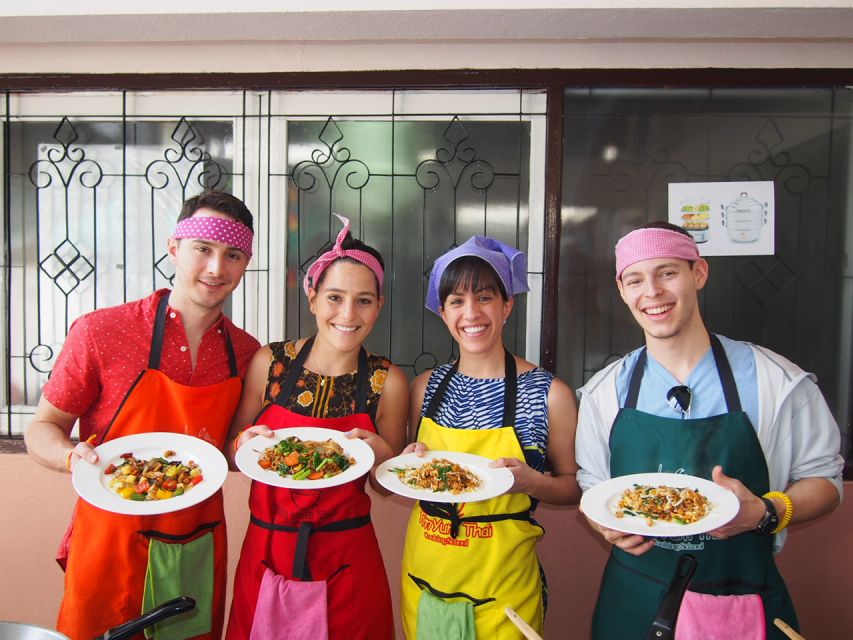
Yes, if you want a friendly, practical cooking lesson with a local market visit and a home setting. The strongest reasons are the small group, individual cooking stations, flexible menu, generous meal, and recipe book.
Keep your expectations realistic. This is not an advanced chef course, and five dishes plus dessert can be filling. The home kitchen may feel informal, and the market stop is designed to explain ingredients rather than provide a long sightseeing tour.
For $36, the combination is hard to beat: transport, market, instruction, a full meal, and recipes you can use later. I would book it near the start of your Chiang Mai stay, tell the school about allergies or dietary needs in advance, and arrive hungry.
FAQ
Where does the cooking class take place?
The class takes place in a home used as the cooking school in Chiang Mai Province. You first visit a local market, then continue to the home for preparation, cooking, and eating.
How long does the experience last?
The experience lasts about five hours. The morning class runs from approximately 9:00 am to 1:30 pm, and the afternoon class runs from about 3:30 pm to 8:30 pm.
Is hotel pickup included?
Yes. Pickup and drop-off are included for hotels or pickup points within 3 kilometers of Chiang Mai’s old city. You should wait in the lobby or pickup area about 10 minutes before the scheduled time.
How many people are in the class?
The class is limited to 10 participants. The small-group format includes individual cooking stations and direct help from the instructors.
Can I choose which Thai dishes to cook?
Yes. You can choose from options including Pad Thai, Pad See Ew, cashew nut with chicken, Tom Yum, chicken in coconut milk soup, spring rolls, papaya salad, green curry, Panang curry, and Khao Soi. Everyone makes sticky rice with mango.
Can the class accommodate allergies or special diets?
Yes, vegetarian, pescatarian, gluten-free, allergy, and other special requests can be accommodated according to the activity information. You should tell the school about your needs before the class.
More Half-Day Outings in Chiang Mai
- Half-Day Thai Cooking Class at Organic Farm in Chiang Mai
★ 5.0 · 19,087 reviews - Chiang Mai: HALF-DAY COOKING COURSE at a Thai Cooking Farm
★ 4.9 · 705 reviews - Half-Day Thai Cooking Class on a Local Farm Near Chiang Mai
★ 4.9 · 32 reviews - Half-Day Chiang Mai Cooking Class: Make Your Own Thai Foods
★ 5.0 · 17 reviews
Newest classes around Chiang Mai
- Aroidee’s Farm-Fresh Thai Cooking Experience★ 5.0 · 8 reviews
- Authentic Thai Cooking Class and Farm Visit in Chiang Mai★ 5.0 · 66 reviews
- Signature Thai Cooking Course★ 5.0 · 79 reviews
- Half Day Guided Thai Cooking Class in Chiang Mai★ 5.0 · 13 reviews
- Yummy Tasty Thai Cooking School in Chiang Mai★ 5.0 · 2 reviews
- Online Thai and Akha Cooking Class★ 5.0 · 70 reviews
- Northern Thai Cooking Class in Chiang Mai in a Countryside Home★ 5.0 · 2 reviews
- Private Half-Day Thai Cooking Class in Chiang Mai★ 5.0 · 4 reviews
Chiang Mai Cooking Classes, compared.
Half-Day Thai Cooking Class at Organic Farm in Chiang Mai
Read our review →
Cooking Class, Market & Thai Herbs Garden Tour
Read our review →
Authentic Cooking Class with Market & Farm Visit
Read our review →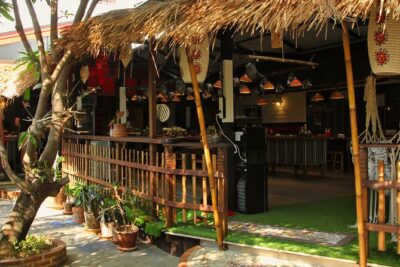
Browse the lists this tour appears in