Review · CHIANG MAI COOKING CLASSES
Chiang Mai: Evening Cooking Class and Local Market Visit
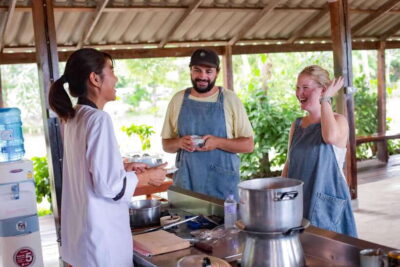
Chiang Mai’s best souvenir may be a curry paste you can make again at home. This five-hour evening class begins with a market visit and an organic garden, then moves into a cool kitchen where you prepare four Thai dishes plus curry paste and sit down to eat what you made.
I like the freedom to choose from dishes such as khao soi, Pad Thai, tom yum, green curry, and som tam. I also like the calm, friendly teaching style of instructors New, Aoy, and Oi, who explain ingredients clearly and adjust recipes for dietary needs. The main drawback is the long evening schedule, especially for young children or anyone who prefers a quick demonstration instead of hands-on cooking.
Key points to know before booking
- Choose your own menu: Pick one dish from the stir-fry, soup, appetizer, and curry categories.
- Shop before you cook: Visit a local market and organic garden to see Thai herbs and vegetables in context.
- Make curry paste from scratch: This is one of the most useful skills to take home.
- Expect a large meal: You cook and eat several dishes, so arrive hungry.
- Hotel transfers cover selected areas: Pickup is offered in central Chiang Mai and several nearby districts.
- Good value at $28: Food, instruction, ingredients, equipment, market visit, transfers, and recipes are included.
A five-hour evening built around real Thai food
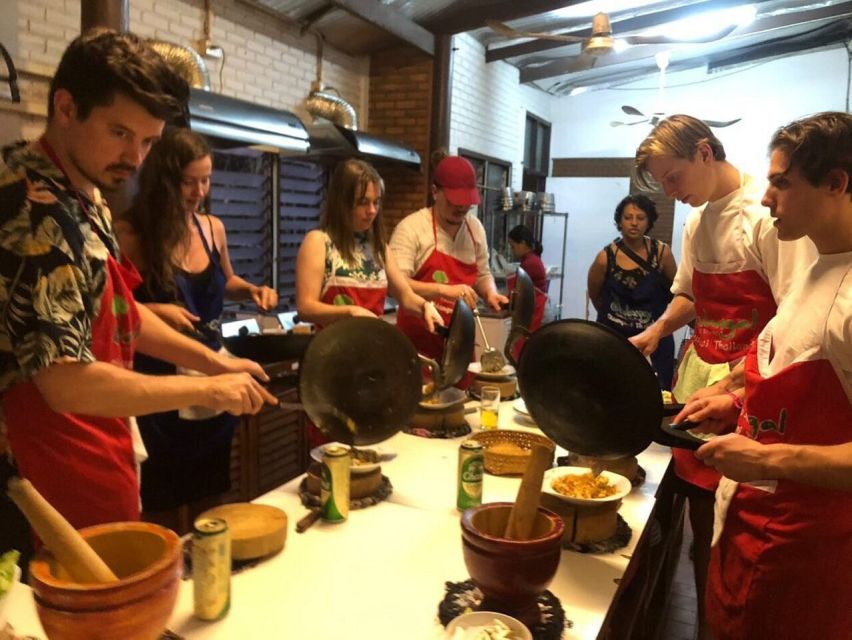
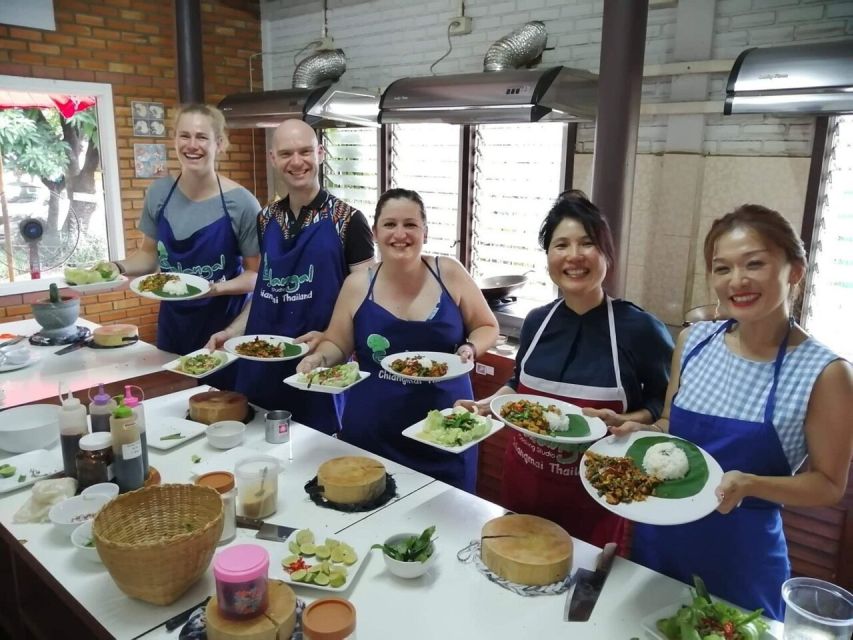
This is not a quick cooking demonstration where you watch someone chop lemongrass and then pose with a finished plate. You handle the ingredients, prepare the dishes, cook them with guidance, and eat the results at the end.
The class runs in the evening, with pickup generally scheduled between 3:15 and 3:45 p.m. The full session is designed to finish around 8:30 p.m. for larger groups of 10 to 12 people or more. Smaller groups may finish earlier, so the exact ending time can vary.
That timing fits Thai eating habits. Dinner begins early here, often around 4 or 5 p.m., and the school advises you to arrive with an empty stomach. Take that advice seriously. Four dishes, plus curry paste and plenty of tasting, can add up to a very filling night.
The experience is led in English, and the instruction is practical rather than academic. You learn what ingredients are used, how they are combined, and how to prepare each dish. The goal is not to turn you into a restaurant chef in one evening. It is to give you enough confidence to make familiar Thai food in your own kitchen.
More Cooking Classes with a Market Tour in Chiang Mai
- Chiang Mai: Cooking Class, Market & Thai Herbs Garden Tour
★ 4.9 · 4,824 reviews - Chiang Mai: Authentic Cooking Class with Market & Farm Visit
★ 4.9 · 4,546 reviews - Chiang Mai: Cooking Class with Market and Pickup
★ 4.9 · 1,365 reviews
From hotel pickup to a Chiang Mai market
Hotel pickup is included for many addresses in the old city, Santitham, and along Huay Keaw Road from Kad Suan Keaw to Maya Shopping Mall. Some parts of Nimman Road, Sirimongkrajan Road, Wat Ket Road, Chang Phueak, Chang Khlan, and Chang Moi are also covered.
The driver may arrive before 3:45 p.m., and you should wait in the hotel lobby 5 to 10 minutes before your scheduled time. Chiang Mai traffic can be slow in the late afternoon, and the driver will not wait more than five minutes after the pickup time. Give yourself a little margin. This is one occasion when being early is much easier than chasing a red truck through traffic.
The transport is typically by local songthaew, the red shared pickup truck used around Chiang Mai. It is a fitting way to begin, though several pickup points can make the ride run late. If your accommodation falls outside the service area, you will be told to make your own way to the school or market.
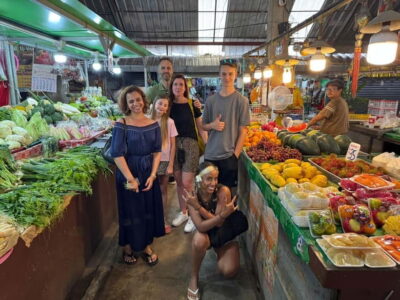
At the market, your guide introduces the ingredients used in the evening’s dishes. This is more useful than simply being handed a shopping list. You can see the herbs, vegetables, chilies, noodles, and other staples before they are measured and placed at your cooking station.
The market stop is not a full food tour, and the amount of free time to browse depends on the group and schedule. Still, it gives the meal a local setting. You begin to recognize the ingredients before they become anonymous pieces in a prepared dish.
The organic garden and the ingredients behind Thai flavor
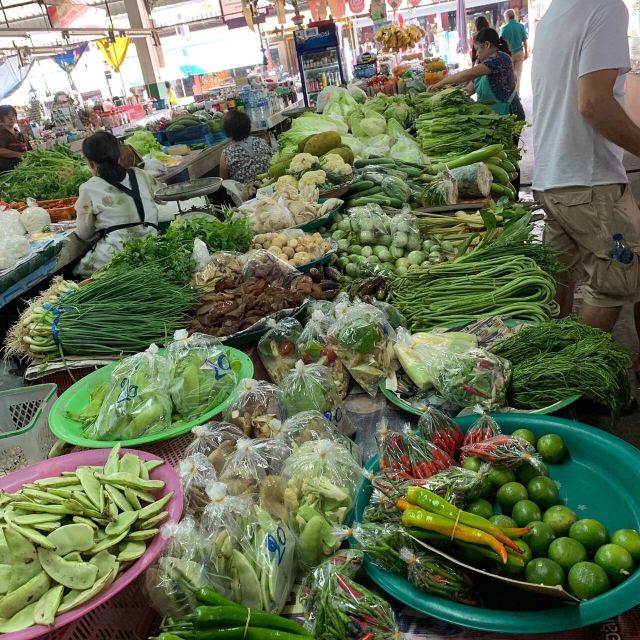
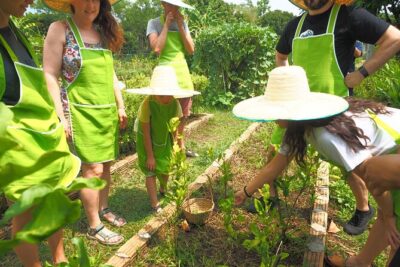
The class also includes a visit to an organic garden. You can stroll through the growing area and see how herbs and vegetables are cultivated in Thailand.
This part is brief, but it adds a useful link between the market and the kitchen. Thai cooking depends on fresh herbs and sharp contrasts: hot chilies, fragrant basil, sour lime, salty sauces, sweet notes, and creamy coconut. Seeing some of the plants first helps you understand that these flavors are not just bottled sauces added at the last minute.
I especially like this stop for first-time visitors to Thailand. You may already know Thai food from restaurants at home, but the garden and market show how many of its everyday ingredients begin. The visit also gives the class a sense of place that a kitchen-only lesson would miss.
Do not expect a long farm tour or a major agricultural attraction. The garden is part of the cooking experience, not a separate sightseeing stop. Its value comes from the connection it creates between local produce and the food you prepare later.
Choosing between Pad Thai, khao soi, and green curry
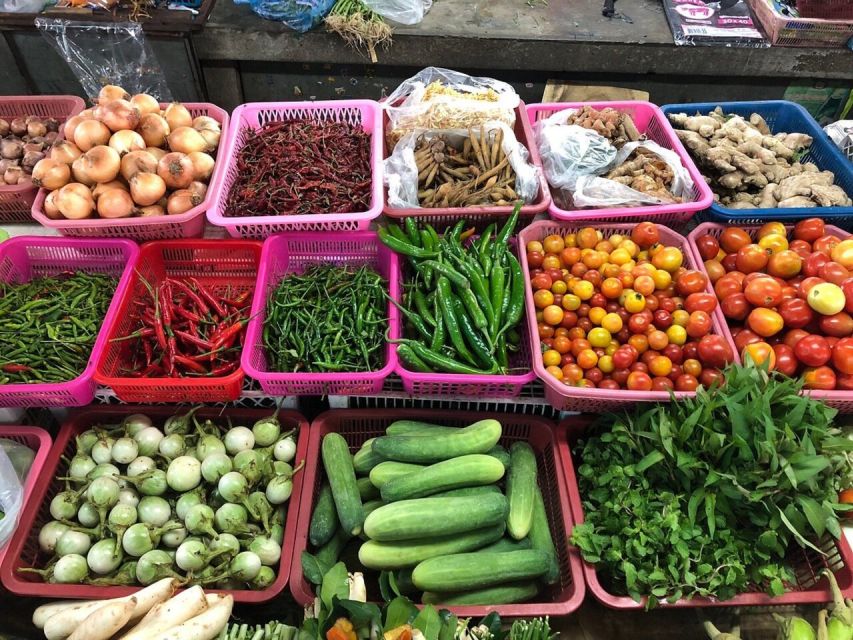
The menu is one of the strongest parts of this class. You choose one dish from each category, which makes the evening more personal than a fixed menu.
For stir-fried dishes, the choices include:
- Pad Thai
- Pad See Ew
- Chicken with cashew nuts
- Minced chicken with holy basil
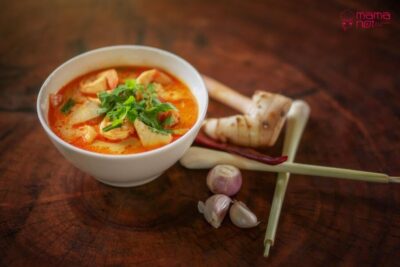
Soup choices include tom yum kung, tom kha kai, vegetarian or vegan tom kha, and tom zap kai. Appetizers include som tam, spring rolls, larb kai, and glass noodle salad.
The curry section has the widest range. You can choose Massaman, green, Panang, red, yellow, dry red curry, khao soi, or another listed curry option. Khao soi is especially fitting in Chiang Mai, since this northern noodle dish is one of the city’s signature meals.
The format lets couples and friends compare dishes, although everyone still prepares their own selected menu. If you already have a favorite Thai dish, this is a good chance to learn it properly. If you are new to Thai food, the instructor can help you choose from the list.
The class also covers curry paste making. This is worth paying attention to. Curry paste is where much of the flavor is built, and learning the balance of herbs and spices gives you a better chance of producing a convincing result at home. It is also the part of the class that feels least like simply following a restaurant recipe.
More Cooking Classes with a Market Tour in Thailand
- Evening Cooking Class in Organic Farm with Local Market Tour
★ 5.0 · 394 reviews - Cooking Morning Class Chiang Mai Visit Organic Garden and Market
★ 5.0 · 211 reviews - Cooking Evening Class Chiang Mai Visit Organic Garden and Market
★ 5.0 · 187 reviews - Half-Day Cooking Class with Market Tour
★ 5.0 · 163 reviews
Hands-on cooking in an air-conditioned kitchen
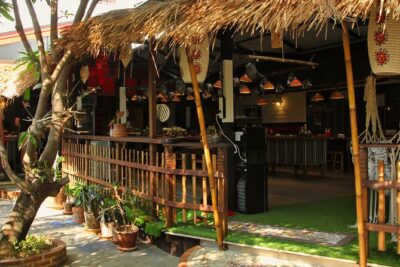
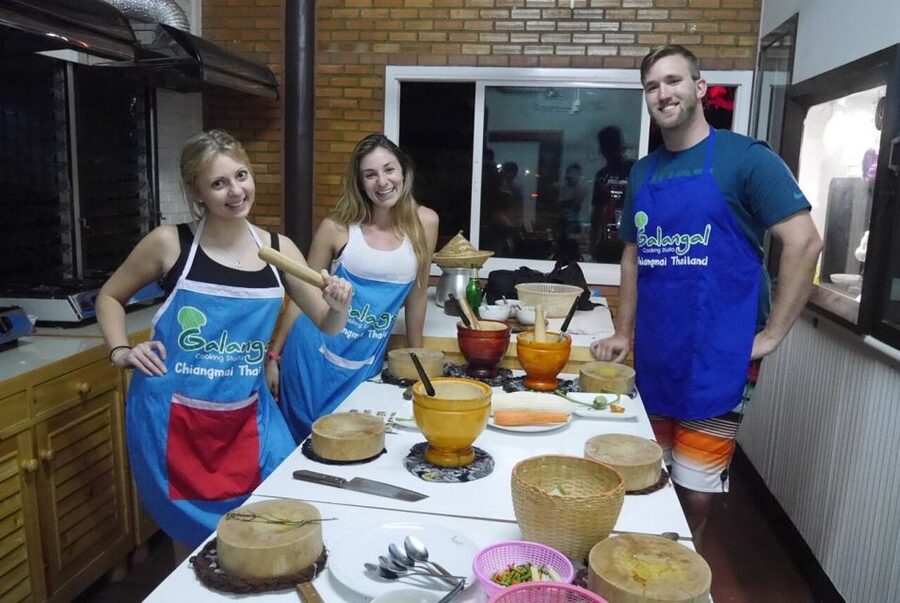
After the market and garden, you move to the cooking school. The kitchen and dining room are indoors and air-conditioned, an important detail in Chiang Mai’s warm climate and especially welcome when you are working over heat.
You receive the ingredients and equipment needed for the class. The instructor explains each step, then gives you time to prepare and cook. The format suits beginners because the cooking is broken into manageable tasks, with help available as you go.
The instructors New, Aoy, and Oi receive particularly strong praise for being patient, attentive, and clear. New is often noted for remembering students’ names and keeping the group on track, while Aoy is described as warm and funny in the kitchen. Those details matter in a class with several dishes, since the evening could become confusing if the teacher simply moved too fast.
You should still expect some group activity. The schedule is set for groups of around 10 to 12 or more, though smaller classes may be offered. A large class can feel social and fun, but it may mean you wait briefly while the instructor helps someone else. A small group offers more direct attention and may finish sooner.
This is not a difficult cooking course. That is good news if you are tired from sightseeing or have little experience with Thai food. The recipes are designed to be achievable, and the instructors help you adapt dishes when needed.
Dietary requests are handled with useful flexibility
Vegetarian, vegan, halal, and gluten-free diners can take part. The school also accepts participants with allergies or other food restrictions.
You should provide those details when booking and confirm them with the instructor at the start. The menu already includes options such as vegetarian and vegan tom kha, and substitutions can be made for some dishes. Seafood can also be replaced when necessary.
I would not treat this flexibility as permission to arrive without explaining a serious allergy. Thai cooking uses fish sauce, shrimp products, soy, peanuts, and other common allergens, so clear communication matters. The instructors have shown a willingness to adjust recipes, but you should still bring your personal medication, as advised.
Eating what you made, then taking the recipes home
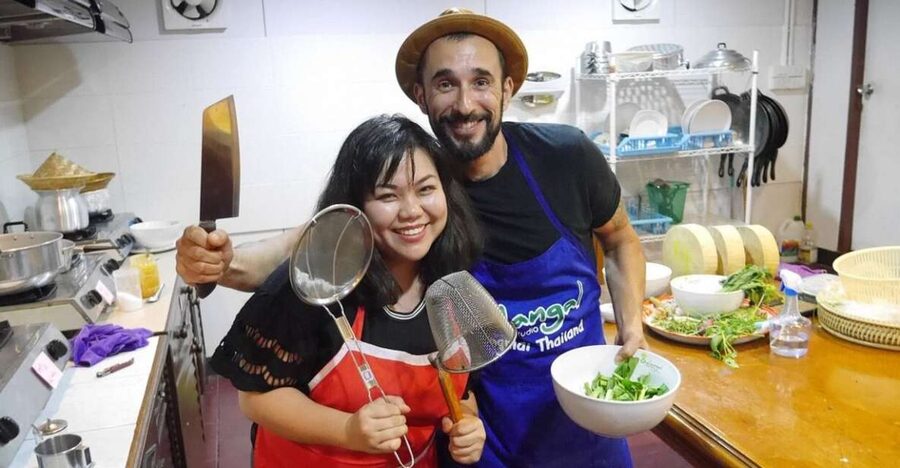
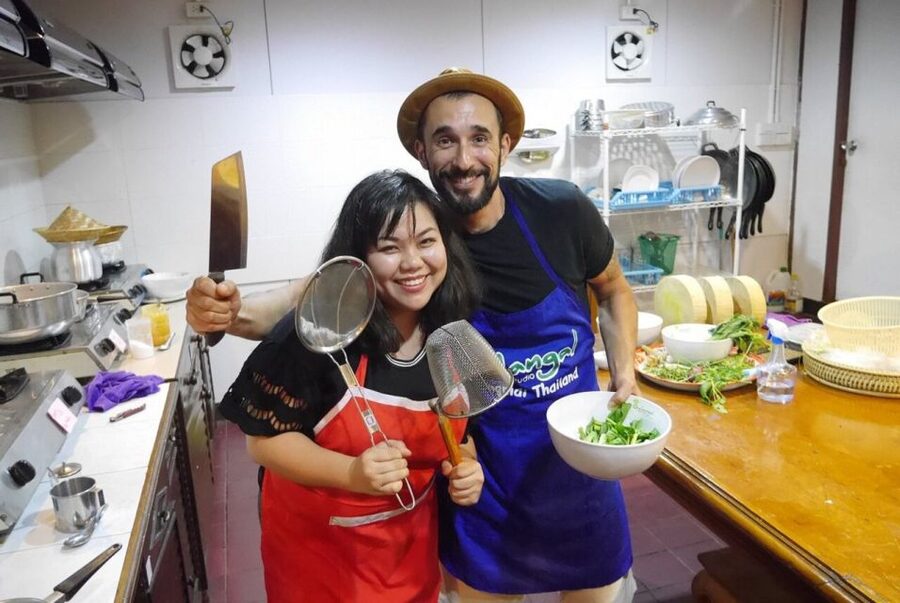
The payoff comes at the dining table. You sit down with the group and eat the dishes you prepared. Since everyone chooses from several categories, the meal can feel like a small Thai feast rather than a single cooking lesson.
This is also where the class makes sense as a social activity. You meet other people, compare dishes, and see how the same basic ingredients can produce very different flavors. The atmosphere is informal, with food at the center rather than a formal lecture.
Portions are generous. Several people finish the evening with enough food to feel completely full, and leftovers may be packed up to take away. Come hungry, but do not assume you will need to find dinner afterward.
You receive cooking instructions and a PDF recipe book after the class. That is a real benefit, since memory fades quickly once you leave Thailand. The recipes give you a starting point for making the dishes at home, even if local herbs and sauces are not available in exactly the same form.
The recipes are not the same as having every Thai ingredient at your local shop. Still, the class teaches you which flavors matter and how the dishes are assembled. That makes the handout far more useful than a simple list of ingredients.
What $28 buys you
At $28 per person, this is a strong value for a five-hour activity. The price includes hotel pickup and drop-off in the covered areas, the market visit, organic garden stop, instruction, ingredients, cooking equipment, water, tea, coffee, and the recipe book.
You are also getting a substantial meal. If you paid separately for transport, a market visit, dinner, and a cooking lesson, the total would likely be much higher, though the exact comparison depends on your plans.
The best value comes if you actually want to cook. If you only want to eat Thai food, a market tour and restaurant meal will take less time. This class earns its price through participation, not just sightseeing.
Observers are allowed but must pay an additional 500 Thai baht per adult or 350 baht for a child aged 6 to 12. That fee is worth knowing if one person in your group wants to watch rather than cook.
Who will enjoy this class most
I would recommend this experience to first-time cooks, couples, families with older children, and anyone who wants a practical Chiang Mai memory. The menu choices make it suitable for people who already have a favorite Thai dish as well as people who need guidance.
Families can take part, and one family with preteen and teenage children enjoyed the format. Keep in mind that the class lasts several hours and includes heat, chopping, waiting, and a large meal. Very young children may find the pace long, even though infant seats are available for the pickup service.
This is also a good choice for solo visitors. The group format gives you an easy way to meet people, and the cooking provides a natural activity to share. The quality of the evening depends partly on group size and the mix of personalities, but the instructors keep the class moving.
You should choose another activity if you dislike structured lessons, want a short evening, or prefer a fine-dining experience. This is a working kitchen class, not a polished restaurant show. You will be involved, and that is the point.
Practical details that can shape your evening
The activity is wheelchair and stroller accessible, and the school is near public transportation. Pickup coverage is not universal, so check your hotel address before counting on the included transfer.
Free cancellation is available up to 24 hours ahead, and you can reserve now and pay later. The class is offered in English, and an English audio guide is included in the activity details.
Smoking is not allowed indoors, and alcohol and drugs are prohibited. Bring personal medication, especially if you have food allergies or other medical needs.
One odd detail is the listed note about altitude sickness. Chiang Mai is not a high-altitude destination for most visitors, and this warning does not seem central to the activity. The more relevant practical concerns are the heat, the long duration, the food volume, and arriving promptly for pickup.
Should you book the Chiang Mai evening cooking class?
I would book it if you want more than a restaurant meal and like the idea of learning by doing. The combination of a local market, organic garden, curry paste, flexible menu, and full dinner gives you a lot for $28.
The strongest reason to choose this class is the teaching. New, Aoy, and Oi bring a warm, patient style that helps beginners keep up without making experienced cooks feel ignored. The recipes and curry paste lesson also give you something useful after the holiday ends.
Think carefully about the timing if you have a packed evening schedule or a very young child. Also confirm your pickup area and dietary needs before you go. If those details work for you, this is one of Chiang Mai’s more useful food experiences: part market visit, part cooking lesson, and part very filling dinner.
FAQ
How long does the Chiang Mai cooking class last?
The activity is scheduled for five hours. Larger groups of 10 to 12 people or more generally use the full 4 p.m. to 8:30 p.m. setup, while smaller groups may finish earlier.
What dishes can I choose to cook?
You can choose one dish from the stir-fry, soup, appetizer, and curry categories. Options include Pad Thai, Pad See Ew, chicken with cashew nuts, tom yum, tom kha, som tam, spring rolls, Massaman curry, green curry, Panang curry, khao soi, red curry, and yellow curry.
Is hotel pickup included?
Yes, pickup and drop-off are included for hotels in the old city, Santitham, and parts of several nearby areas. Coverage includes selected parts of Nimman Road, Sirimongkrajan Road, Wat Ket Road, Chang Phueak, Chang Khlan, and Chang Moi. If your hotel is outside the service area, you will need to reach the school or market independently.
Can vegetarians and vegans join the class?
Yes. Vegetarian, vegan, halal, and gluten-free participants can join, and substitutions are available for some dishes. Tell the school about allergies or dietary requirements in advance.
Is the cooking school wheelchair accessible?
Yes. The activity is wheelchair and stroller accessible, and the school is near public transportation.
What is included in the $28 price?
The price includes hotel transfers in the covered areas, the market tour, organic garden visit, ingredients, cooking equipment, cooking instruction, water, tea, coffee, and a PDF recipe book. Observers pay an additional fee of 500 Thai baht for adults or 350 Thai baht for children aged 6 to 12.
More Evening Classes in Chiang Mai
- Evening Cooking Class
★ 5.0 · 164 reviews - Sunset Thai Cooking with Grandma – Farm & Evening Feast
★ 5.0 · 127 reviews - Half Day Evening Cooking Class with Market Tour in Chiang Mai
★ 5.0 · 91 reviews - Evening Thai cooking class
★ 5.0 · 28 reviews
Newest classes around Chiang Mai
- Aroidee’s Farm-Fresh Thai Cooking Experience★ 5.0 · 8 reviews
- Authentic Thai Cooking Class and Farm Visit in Chiang Mai★ 5.0 · 66 reviews
- Signature Thai Cooking Course★ 5.0 · 79 reviews
- Half Day Guided Thai Cooking Class in Chiang Mai★ 5.0 · 13 reviews
- Yummy Tasty Thai Cooking School in Chiang Mai★ 5.0 · 2 reviews
- Online Thai and Akha Cooking Class★ 5.0 · 70 reviews
- Northern Thai Cooking Class in Chiang Mai in a Countryside Home★ 5.0 · 2 reviews
- Private Half-Day Thai Cooking Class in Chiang Mai★ 5.0 · 4 reviews
Chiang Mai Cooking Classes, compared.
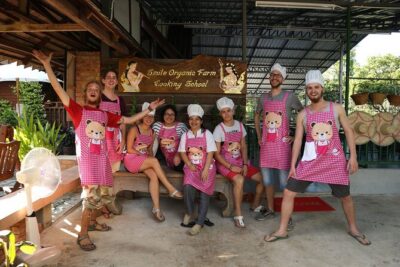
Half-Day Thai Cooking Class at Organic Farm in Chiang Mai
Read our review →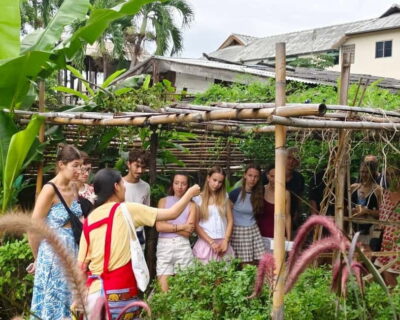
Cooking Class, Market & Thai Herbs Garden Tour
Read our review →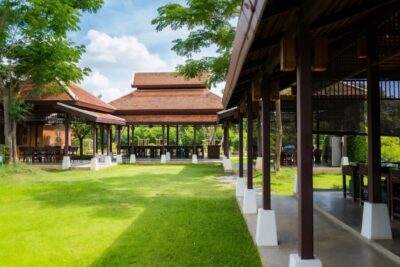
Authentic Cooking Class with Market & Farm Visit
Read our review →