
Review · INDONESIA COOKING CLASSES
Spice Garden, Jamu & Cooking Class in Bali Village
The best part of this experience is that the cooking begins long before you reach the open-air kitchen. You walk through rice terraces, meet farmers, pick herbs, learn the bamboo Rindik instrument, and then cook a full Balinese meal over fire in a village near Mt. Batukaru. Jamu making adds a useful taste of Indonesia’s old herbal traditions.
I like the direct contact with village life, especially the chance to help plant rice and visit the Balikaru farm with its animals and stingless Trigona bees. I also like the generous menu: Sate Lilit, Nasi Campur Tumpeng, Jamu, and Lak Lak dessert. The main consideration is the 30-minute downhill walk, which can be muddy or tiring in poor weather, and the experience may not suit anyone seeking a quick, polished city cooking class.
Key points at a glance
- Two Jamu drinks: Prepare Indonesia’s traditional herbal beverage, then taste Jamu and local fruit.
- Cooking over bamboo fire: Make a full Balinese meal in Paon Bali, an open-air village kitchen.
- Rice terrace walk: Walk downhill for about 30 minutes with mountain views near sacred Mt. Batukaru.
- More than food: Learn Rindik, help plant rice, feed the cow Manis, and see stingless-bee hives.
- Small group size: The maximum is 12 people, which gives the class a personal feel.
- Good value at $55: The price covers the class, lunch, farm visit, guide, recipe book by email, and several village activities.
A Village Morning Near Mt. Batukaru
This is not a class where you simply sit at a counter and copy a chef. The food is part of a longer introduction to village life in the mountains of Tabanan. You begin at BalikaruBelulang Bali in Mengesta, with a 9:00 a.m. start and a welcome drink before heading into the garden and surrounding village.
The setting matters. Near Mt. Batukaru, daily life follows a slower rhythm than Bali’s beach resorts. You see rice terraces, gardens, farm animals, and traditional compounds rather than shops and hotel pools. The experience is best understood as a half-day cultural outing with cooking at its center.
The group can include up to 12 people. That is small enough for hands-on help, though the amount of personal attention will depend on the final group size. The guide speaks English. Other languages are available for an extra charge, according to the tour details.
The schedule ends back at the same meeting point after about four and a half hours. There is no separate transport included in the information provided, so you should plan how you will reach the Balikaru meeting point in Mengesta before booking.
More Farm Cooking Classes in Indonesia
- Ubud: Balinese Cooking Class at an Organic Farm
★ 5.0 · 1,786 reviews - From Ubud: Authentic Cooking Class in a Local Village
★ 4.9 · 1,325 reviews - Balinese Farm Cooking Class by Pemulan Bali
★ 5.0 · 410 reviews
From Garden Herbs to Two Jamu Drinks
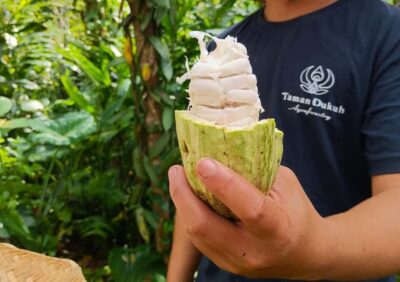
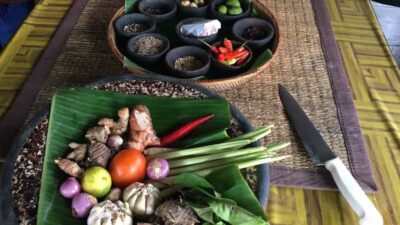
The first food-related stop is the herb and spice garden. Instead of meeting ingredients only after they have been chopped and measured, you get to see where some of them grow and pick fresh herbs yourself. That small step gives the cooking more meaning. You begin to recognize the plants before tasting them in a dish.
You also prepare two kinds of Jamu. Indonesia’s Jamu tradition uses herbs and spices in drinks that are valued for their flavor and traditional health associations. This is not presented as a medical treatment, and you should treat the drinks as a cultural and culinary experience rather than a cure for anything.
Fruit tasting is included as well. One particularly useful detail from the experience is the chance to try Balinese fruit such as mangosteen. If you have spent most of your Bali holiday eating familiar restaurant food, this gives you a better sense of local produce.
The Jamu section should suit people who enjoy learning how food connects to everyday life. It may be less appealing if you want to get straight to cooking lunch, since the morning includes several stages before the main meal begins. I see that as a strength, but it does make the activity feel fuller than a standard two-hour cooking class.
Learning Rindik Before the Cooking Begins
Before you start preparing the meal, you learn to play Rindik, a traditional bamboo instrument associated with farmers. The music lesson is likely to be brief, but it adds a human touch to the morning and gives you another way to connect with the setting.
Do not expect a formal concert or a long music workshop. Rindik is included as part of the wider village experience. The point is to handle a local instrument, hear its sound, and understand that village traditions include music as well as food and farming.
This is one of the details that makes the activity feel less packaged. You are not only collecting recipes. You are getting small windows into how people work, eat, make music, and spend time in the community around Mt. Batukaru.
Cooking in Paon Bali Over an Open Fire
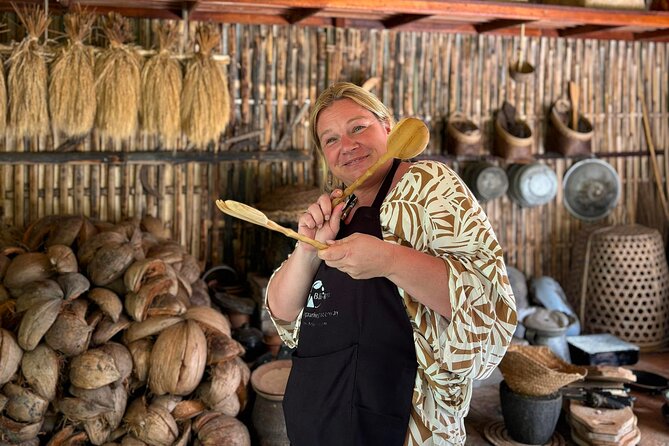
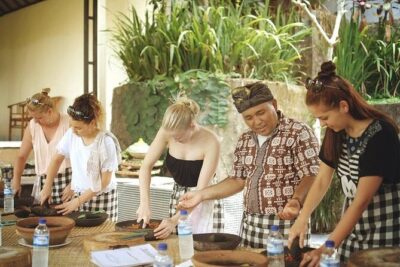
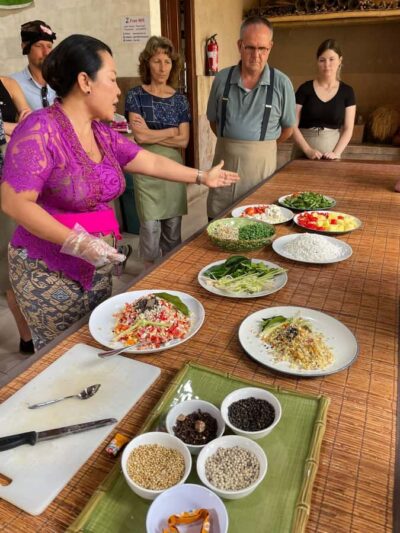
The main class takes place in Paon Bali, the open-air kitchen. You prepare a full Balinese meal with help from the chef and village team. Cooking in an open kitchen, with natural sounds around you, is quite different from working in a sealed demonstration room.
The menu includes several dishes and techniques:
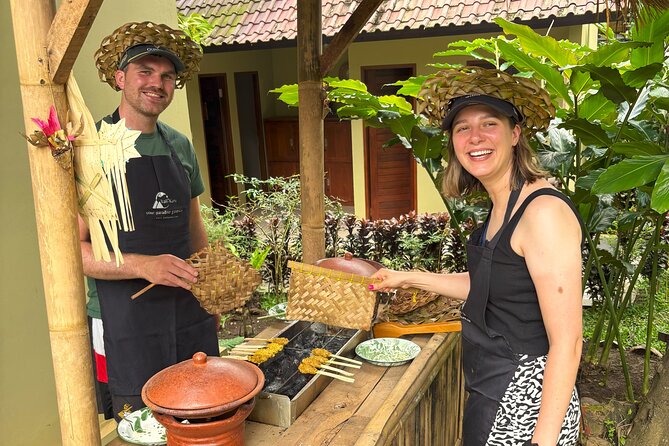
- Sate Lilit, Balinese minced meat satay shaped around a skewer and grilled at Gerobak, the live bamboo grill.
- Nasi Campur Tumpeng, the rice-based meal served as part of lunch.
- Lak Lak, a traditional Balinese dessert cooked in a clay pot.
- Two Jamu drinks, prepared earlier in the session.
- Fruit tasting, including local produce such as mangosteen.
The menu gives you a useful spread of Balinese flavors rather than one recipe. You work with herbs and spices, prepare savory food, grill Sate Lilit, and finish with a sweet dish. The class also includes lunch made by you, so the cooking is not just a demonstration followed by a small sample.
The open-fire setup is atmospheric, but it may be less controlled than a modern indoor kitchen. Heat, smoke, and uneven timing are part of the experience. If you like polished instruction and precise equipment, you may find the setting rustic. If you want to understand how food can be prepared with simple local materials, the bamboo grill and clay pot are a real plus.
Dietary needs such as vegetarian meals can be accommodated if you state them when booking. Be specific in the special requirements field, since the menu includes several dishes and adjustments need to be planned ahead.
More Balinese and Indonesian Classes in Indonesia:
- Ubud Cooking Class Bali with Balinese Chef
★ 5.0 · 1,609 reviews - PRIVATE Authentic Balinese Cooking Class in Ubud at Putu’s Home
★ 5.0 · 644 reviews - Balinese Ubud cooking school (9 Dish Cooking and Market Tour)
★ 5.0 · 540 reviews - Ubud: Balinese Cooking Class and Market Tour
★ 4.8 · 531 reviews
Lunch You Prepare Yourself
After cooking, you sit down to eat the meal. The included lunch is Nasi Campur Tumpeng with dessert, prepared during the class. The portions are described as generous enough that you should arrive hungry. This is not a light tasting menu.
The shared meal is an important part of the experience. Cooking gives you a task, but eating together gives the morning a social finish. You can talk with the family and team, compare the dishes, and enjoy the food without having to rush back into the next activity.
The food is also where the value of the $55 price becomes clearer. You are not paying only for instruction. The cost includes the welcome drink, garden walk, Jamu tasting and preparation, music lesson, cooking class, lunch, dessert, farm visit, rice-planting activity, guided walk, and a farewell gift. For a four-and-a-half-hour outing, that is a substantial package.
Drinks and personal expenses are not included. Tips are also separate. Keep that in mind when comparing the total cost with a simple restaurant-based cooking class.
Balikaru Farm, Manis the Cow, and Stingless Bees
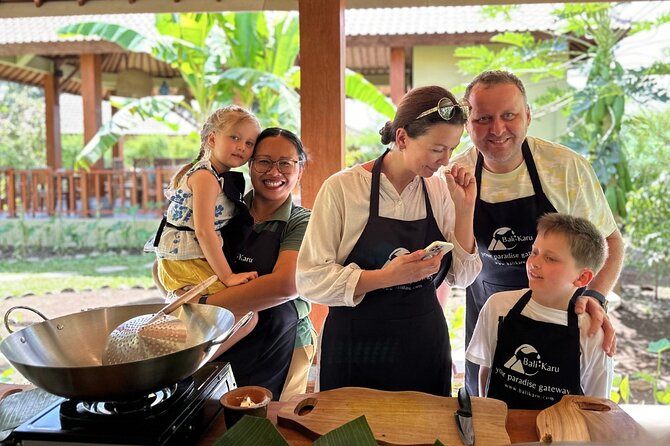
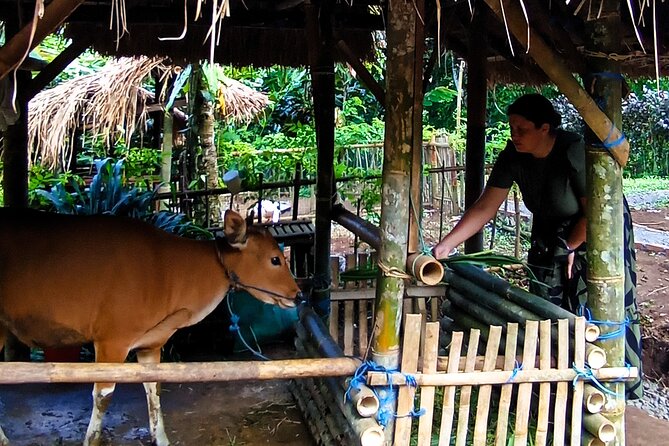
The visit to Balikaru farm adds another layer to the day. You can see farm animals, feed the cow Manis, and visit Trigona beehives. These are stingless bees, known for producing a distinctive honey that is less common than the honey sold in most shops.
The bee visit is especially useful for anyone interested in small-scale farming. You see how food traditions depend on gardens, animals, pollinators, and careful use of local resources. It also keeps the experience from being only about recipes.
You may be able to help with rice planting after lunch. This is a hands-on activity, not just a photo stop. Farming work can be messy, so wear clothes and footwear that you do not mind getting dirty. The information says slippers are acceptable, but a secure pair of shoes may feel better on a downhill path and around wet rice fields.
The village family hosts are central to the experience. They share their food traditions and daily routines with warmth, and your visit helps support the local community. That does not turn the outing into a formal charity visit. It simply means your money goes toward an experience run with local families rather than only toward a commercial kitchen.
The 30-Minute Walk Through Rice Terraces
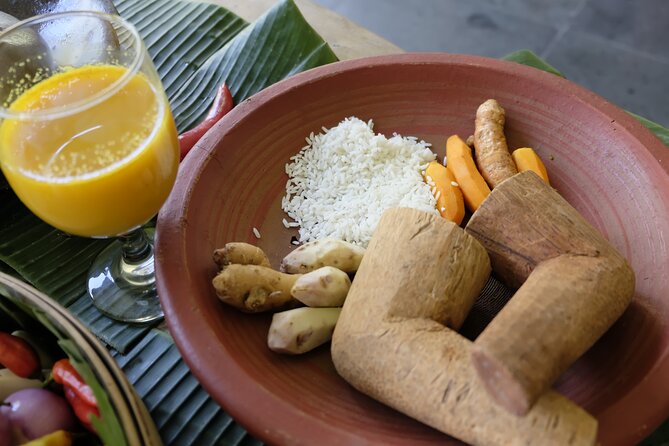
The soft trek takes about 30 minutes downhill and includes mountain views. This is not a long hike, but downhill walking can be harder than it sounds, especially on uneven or wet ground. The tour requires good weather, and poor conditions can lead to a changed date or a full refund.
The walk gives the cooking class a strong sense of place. You see the rice terraces, meet farmers, and move through the area on foot rather than viewing the village from a vehicle. You also get a better idea of how the ingredients and meals relate to the land around them.
The tradeoff is simple: the more rural and hands-on the setting, the less smooth the terrain is likely to be. The available information does not promise a flat, paved route. If you have mobility limits, ask the provider for current details before booking.
At the end of the experience, you return to the meeting point. The tour does not list hotel pickup or drop-off, so arrange your own way to BalikaruBelulang Bali, Mengesta, in the Tabanan region.
A Traditional Compound and Belulang Hot Spring
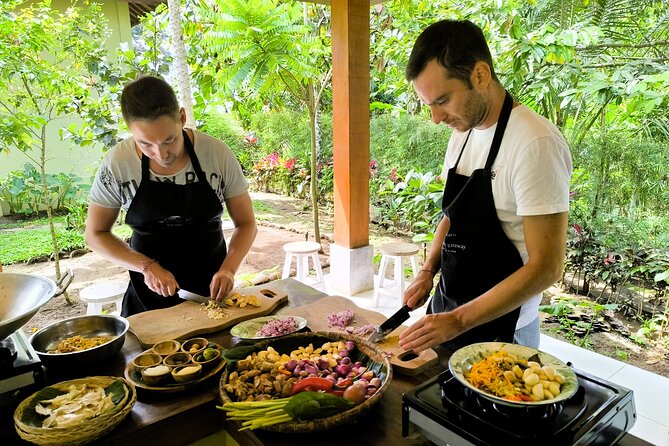
The schedule also includes a visit to an authentic Balinese compound in the mountain village. This gives you a look at local domestic architecture and community life beyond the cooking area. It is a valuable counterpoint to the garden and farm visits because it shows where people live, not just where visitors are taught.
Belulang Hot Spring is another stop, with an optional bath. Since bathing is optional, you can decide based on time, comfort, and what you have brought with you. The supplied information does not specify changing facilities, towels, or bathing arrangements, so ask the provider if the hot spring is a major reason for your visit.
The hot spring should be treated as an extra rather than the main attraction. The strongest parts of the day are the garden, cooking, meal, farm, and village walk. The spring adds variety, but you should not book this experience solely as a hot-spring outing.
What to Wear and Bring
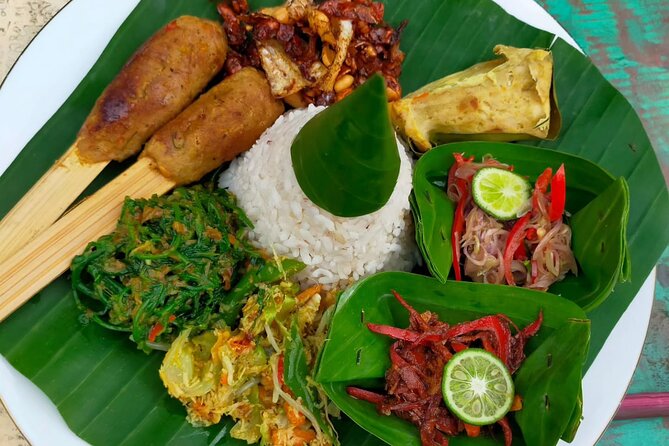
Dress modestly. The activity takes place in a traditional village, and topless clothing or beachwear is considered offensive. Shirts, pants, and slippers are acceptable, but practical clothing is the better choice.
I would wear clothes that allow movement and can handle food splashes, smoke, soil, and possible wet conditions. Bring enough protection from the sun and rain for a mountain setting, although the specific tour information does not list a required packing list.
You may also want to bring a small amount of money for personal expenses and tips. Drinks beyond the included welcome drink and tasting are not included.
Service animals are allowed. If you have dietary requirements, list them when booking. Confirmation is received at the time of booking, and the activity has free cancellation up to 24 hours before the 9:00 a.m. start. A cancellation made less than 24 hours ahead is not refunded, and changes inside that period are not accepted.
Who Will Get the Most From This Experience
I would recommend this outing to you if you want food tied to place and people. It suits couples, families, small groups, and curious solo visitors who enjoy hands-on activities rather than a short photo stop.
It is particularly good for anyone who wants to:
- Learn several Balinese recipes in one session.
- Taste Jamu and local fruit.
- Meet village families and farmers.
- See rice terraces near Mt. Batukaru.
- Take part in rice planting and farm activities.
- Eat a substantial lunch made during the class.
- Visit a small group setting with no more than 12 participants.
I would think twice if you dislike walking, heat, smoke, dirt, or open-air cooking. The itinerary has many parts, so it may also feel too busy if your ideal morning is a slow cooking lesson with plenty of time for one or two dishes.
Families should check the walking and farm activities against the needs of young children. The information does not state a minimum age, child pricing, or stroller access, so those details should be confirmed before booking.
Is $55 a Fair Price?
At $55 per person, this is priced above a basic cooking demonstration but includes far more than kitchen time. You get roughly four and a half hours, an English-speaking guide, a chef-led class, a full lunch and dessert, two Jamu preparations, fruit tasting, a garden visit, Rindik instruction, farm access, a rice activity, a village compound, a guided walk, and an optional hot spring stop.
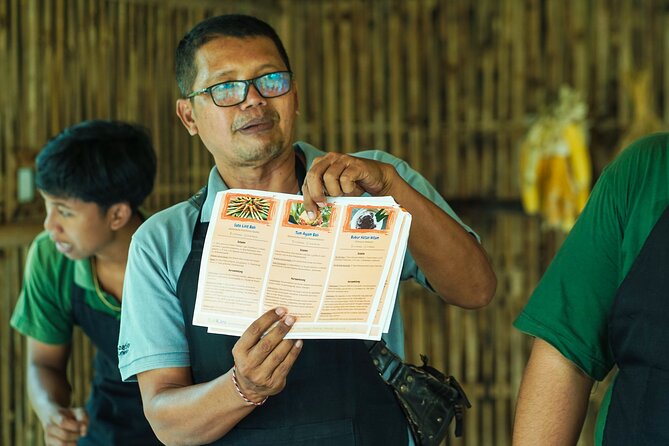
You also receive a farewell gift, a personal cooking certificate, and a recipe book by email after the tour. Those extras will not matter equally to everyone, but the recipe book gives you a practical way to repeat the dishes at home.
Group discounts may improve the value for families or friends booking together. The maximum group size of 12 keeps the outing from becoming a large bus tour, though the exact group size on your date is not stated.
For me, the price makes sense if you plan to spend half a day in the Batukaru area anyway. It is less compelling if you only want a quick recipe lesson and must make a long, costly journey to reach the meeting point.
Should You Book the Balikaru Village Cooking Class?
Book it if you want a full cultural morning built around food, farming, and village contact. The strongest features are the open-fire cooking, the two Jamu drinks, the rice terrace walk, and the chance to help with ordinary farm tasks rather than simply watch them.
The main cautions are the early start, rural meeting point, downhill walk, modest dress rules, and weather dependence. Ask about transport, the hot-spring arrangements, language supplements, and any mobility concerns before paying.
If those details suit you, this is a thoughtful choice near Mt. Batukaru. You leave with a meal in your stomach, recipes in your inbox, and a better sense of how Balinese cooking connects to gardens, farms, family compounds, and village life.
FAQ
Where does the experience begin?
It begins at BalikaruBelulang Bali in Mengesta, Tabanan Region, Mengesta, Kec. Penebel, Belulang, Bali 80152, Indonesia.
What time does the activity start?
The start time is 9:00 a.m.
How long does the experience last?
The experience lasts approximately four hours and 30 minutes.
What is included in the price?
The price includes a welcome drink, an herb and spice garden tour, an English-speaking guide, Rindik instruction, Jamu preparation and tasting, fruit tasting, the cooking class, lunch and dessert, a Balikaru farm visit, rice planting, a short guided walk, a traditional compound visit, an optional Belulang Hot Spring visit, a farewell gift, a cooking certificate, and a recipe book sent by email.
Is lunch included?
Yes. You prepare and eat Nasi Campur Tumpeng and dessert during the cooking class.
Can vegetarian dietary needs be accommodated?
Yes. Dietary requirements such as vegetarian meals can be accommodated if you provide the information in the special requirements section when booking.
How many people can join the activity?
The maximum group size is 12 participants.
What happens if the weather is poor?
The activity requires good weather. If it is canceled because of poor weather, you will be offered a different date or a full refund. You can also cancel for a full refund if you cancel at least 24 hours before the start time.
Newest classes around Indonesia
- Pure Bali Village Experience, Cooking & Jamu Class+VIP Transfer★ 5.0 · 16 reviews
- The Authentic Balinese Cooking Experience★ 5.0 · 4 reviews
- Seminyak: Vegetarian Cooking Class★ 5.0 · 3 reviews
- Seminyak : cooking class traditional food bali★ 5.0 · 5 reviews
- Quad ride, waterfalls & aunthentic cooking class in munduk★ 4.9 · 53 reviews
- Pure Bali Village Experience Cooking & Jamu Class, Transfer★ 4.8 · 5 reviews
- Ubud: Organic Farm Harvest, Bali Cooking Class by Pemulan★ 4.8 · 12 reviews
- packages cooking class and romantic dinner in a local home★ 5.0 · 4 reviews
Indonesia Cooking Classes, compared.
Cooking Class with Transfers and Optional Market Visit
Read our review →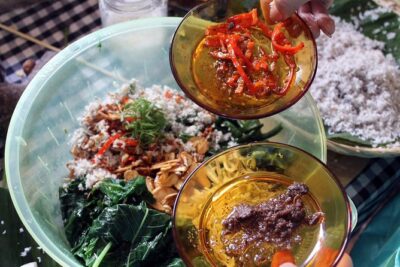
PRIVATE Authentic Balinese Cooking Class in Ubud at Putu’s Home
Read our review →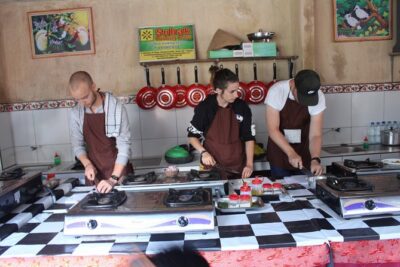
Balinese Ubud cooking school (9 Dish Cooking and Market Tour)
Read our review →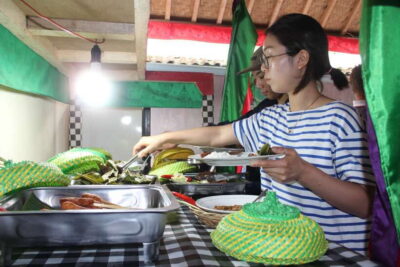
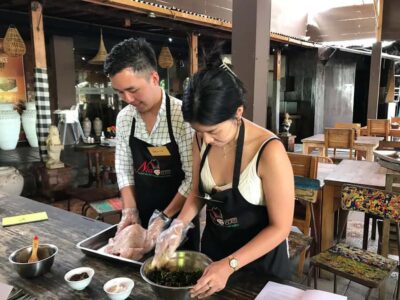
Browse the lists this tour appears in