
Review · ATHENS COOKING CLASSES
Cooking Class with Aspasia in the Heart of Athens
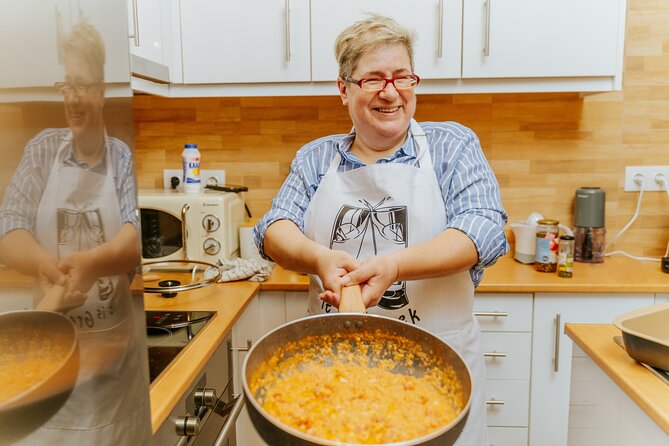
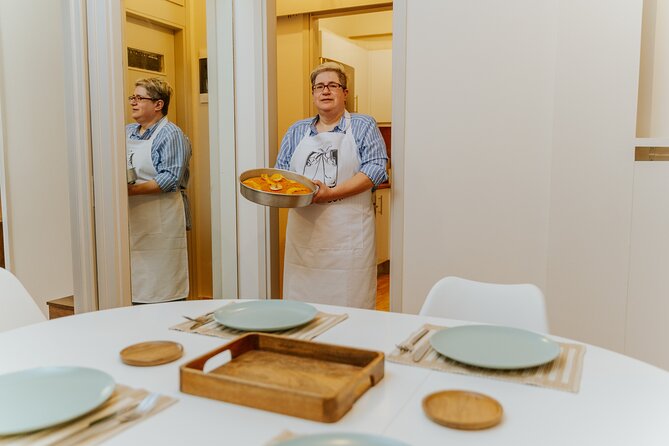
The most interesting part of this Athens experience is not a restaurant kitchen or a staged food demonstration. You enter Aspasia’s own home, where the meal takes shape around you and the cooking is tied to everyday Greek family food. The three-hour session includes seven dishes from several parts of Greece, followed by a shared meal and two glasses of white wine.
I like the personal setting and the chance to make food from Mani, Crete, northern Greece, and other Greek regions in one sitting. I also like that this is private, so your group can ask questions and set the pace. The main consideration is that the level of hands-on cooking may not satisfy serious home cooks looking for a technical lesson in sauces, knife work, or advanced methods.
Key points to know before booking
- Seven dishes in one sitting: Prepare starters, two mains, and a syrup-soaked semolina dessert.
- Aspasia hosts at home: The bright, carefully decorated apartment gives the class a personal, social feel.
- Regional Greek food: The menu reaches from Cretan barley rusks to Mani-style scrambled eggs and a Northern Greek dessert.
- Private English-language experience: Only your group takes part, with mobile tickets and personal attention.
- A full meal is included: You eat what you help prepare and receive two glasses of white wine per person.
- Check the menu closely: The food is classic and familiar, not an unusual tasting menu or an advanced cooking course.
Cooking Greek food in Aspasia’s Athens home
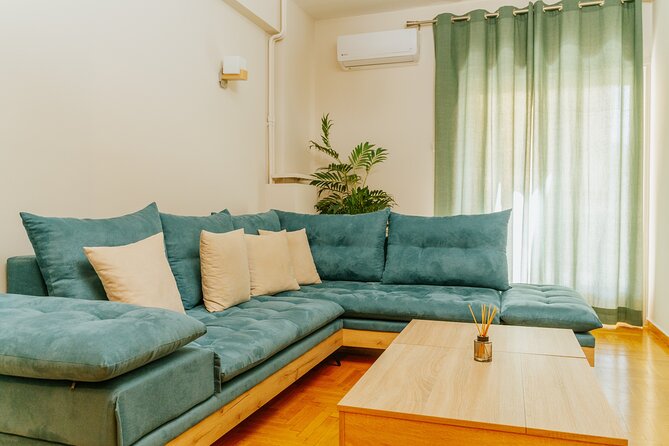
This experience offers a different way to spend an evening in Athens. Instead of moving between monuments or sitting at a busy taverna, you spend about three hours in Aspasia’s light-filled home at Tsocha 3.
The setting matters. A private apartment creates room for conversation, questions, and a more relaxed rhythm than a large commercial class. You are not one face in a crowd. Your group takes part together, and Aspasia can give attention to your questions and cooking comfort.
The atmosphere is meant to be social as well as practical. You will prepare food, hear information about the dishes, and then sit down for the meal. If you like meeting a local through food, this format has a clear appeal.
Still, you should book it with the right expectations. This is not presented as a professional culinary workshop. It is a home cooking experience built around a generous Greek meal. One person may find that ideal, while another may want more direct work at the stove and less conversation.
More Cooking Classes in Athens:
- Athens: Classic Cooking Class with Market Visit and Wine
★ 5.0 · 1,101 reviews - Athens: Food Market Visit and Cooking Class with Wine
★ 4.9 · 1,087 reviews - Greek Cooking Class in Athens Including Rooftop Dinner with Acropolis View
★ 5.0 · 826 reviews
What happens during the three-hour session
The class begins at Tsocha 3 in Athens and ends at the same meeting point. The supplied information does not give a detailed minute-by-minute schedule, so you should expect the order of cooking to follow the needs of the menu rather than a fixed public timetable.
You will contribute to preparing the dishes, with Aspasia explaining recipes and sharing useful information along the way. The host has been praised for patience, especially with people who do not cook often. That makes this a reasonable choice if you want to try Greek cooking without already knowing your way around a kitchen.
The menu contains seven dishes. Several are simple in concept, but that is part of the point. Greek home cooking often depends on good produce, olive oil, herbs, cheese, and careful seasoning rather than complicated technique.
The best part of the format is that the lesson leads directly to dinner. Once the cooking is complete, you are not sent away with a small sample. You sit down to eat the food prepared during the session, with two glasses of white wine per person.
The opening spread: barley rusks, cheese, peppers, and olives
The first dishes introduce several familiar Greek flavors without making you wait for the main course.
Paximadi is a firm Greek bread, and here it is served with olives and graviera cheese. Graviera is a traditional hard cheese with a flavor that can range from mildly sweet to slightly spicy. This is a useful introduction to the way Greek meals often begin with simple items placed on the table for sharing.
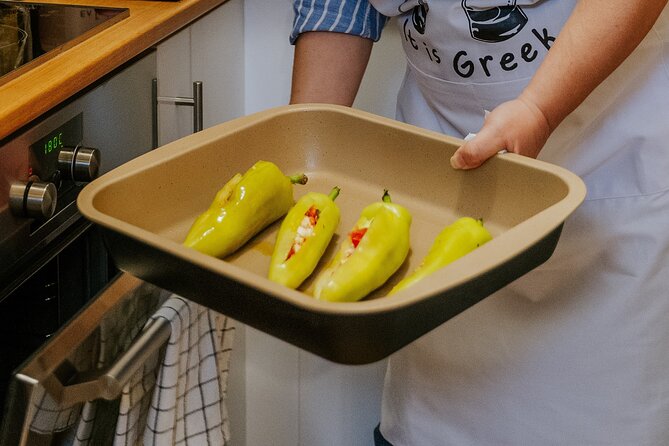
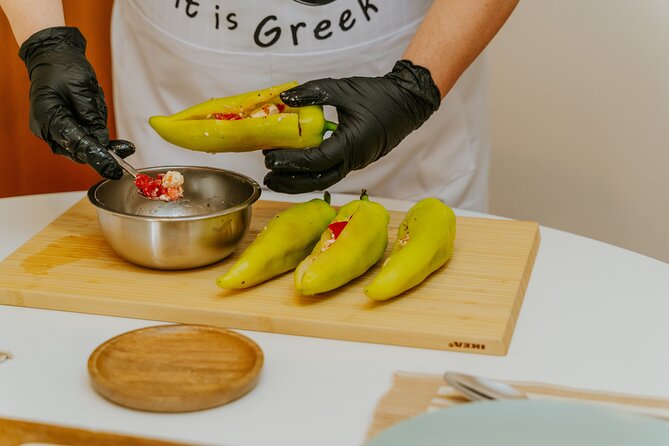
The stuffed long sweet peppers bring a softer, more hands-on dish to the menu. They are filled with feta, tomatoes, and herbs such as spearmint. The combination gives you a good sense of the Greek habit of pairing salty cheese with fresh vegetables and herbs.
These first dishes are not rare or obscure. That is worth noting before you pay. If you already cook Mediterranean food, you may recognize much of the approach. The benefit is less about discovering ingredients you have never heard of and more about seeing how they come together in a Greek home.
Kayanas and dakos show two sides of Greek cooking
Greek eggs kayanas comes from Mani, a region in the southern Peloponnese known for bold, straightforward cooking. The dish combines scrambled eggs, fresh tomatoes, and siglino, a cured pork product.
This is the sort of plate that can look basic on paper but still tells you something about local food traditions. The tomatoes add moisture and acidity, while the cured pork gives the eggs a stronger savory flavor. If you enjoy learning how regional food fits into daily meals, kayanas is one of the more distinctive parts of the menu.
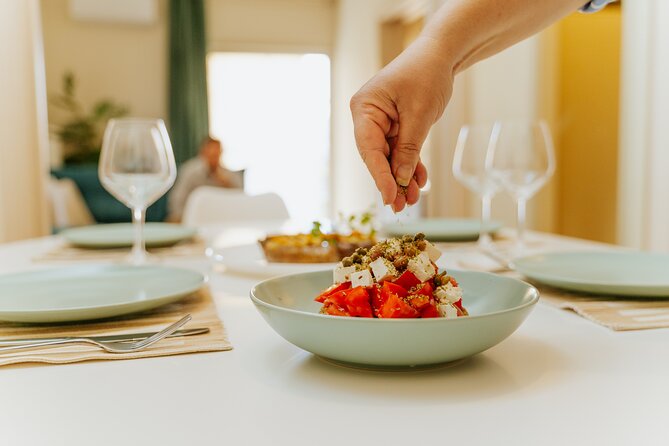
Cretan dakos is another regional specialty. It uses crisp barley rusks topped with tomato, olive oil, and feta cheese. The rusk keeps its bite under the tomato, creating a texture that is different from a soft bread salad.
Dakos is one of the most recognizable dishes in the class, and it gives you a clear taste of Crete without requiring a separate trip to the island. It also shows how a few well-chosen ingredients can make a satisfying dish. The menu does not rely on expensive products or restaurant tricks.
Same region, a different dish to learn:
- Greek Small-Group Athens Cooking Class & Dinner
★ 5.0 · 574 reviews - Athens: Greek Cooking Class & Dinner on a Rooftop
★ 5.0 · 383 reviews - Athens: Greek Cuisine Cooking Class and 3-Course Dinner
★ 4.8 · 270 reviews - Traditional Greek cooking class and lunch or dinner with an Acropolis view
★ 5.0 · 250 reviews
Meatballs and stuffed eggplant make the meal substantial
The first main dish is Greek meatballs with yogurt sauce. The meatballs use ground beef, flour, and a selection of Greek spices. They are described as a classic grandmother-style dish, and that tells you what kind of cooking to expect: familiar, filling, and tied to family meals.
A yogurt sauce adds a cool contrast to the warm meatballs. If you want to learn exact spice measurements or a family recipe in detail, ask Aspasia as you work. The class is more useful when you treat it as a chance to ask questions rather than simply watch the food appear.
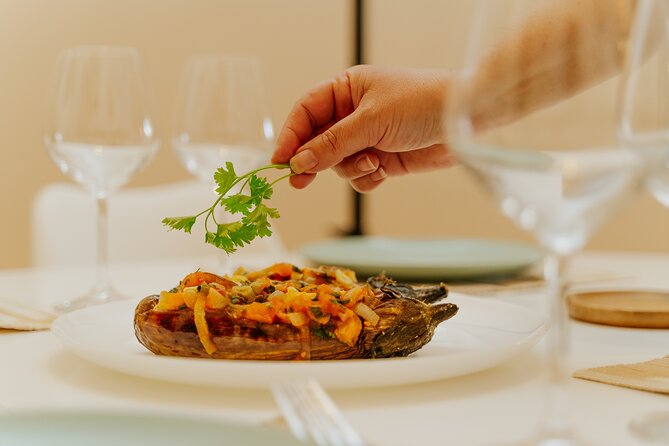
The second main is eggplant imam, made with eggplant, onions, tomatoes, garlic, herbs, and spices. It is a vegetable dish, but it is substantial enough to share the table with the meatballs.
Eggplant imam also brings a different cooking style to the meal. The vegetable absorbs the flavors of the onion, garlic, and tomato, creating a soft, savory dish. It is a good choice for anyone who wants more than meat and bread from a Greek menu.
The two mains also help explain the size of the meal. With starters, meatballs, eggplant, and dessert, you are not paying for a short demonstration followed by a few bites. You are helping produce a complete dinner.
Ravani finishes the meal with syrup and semolina
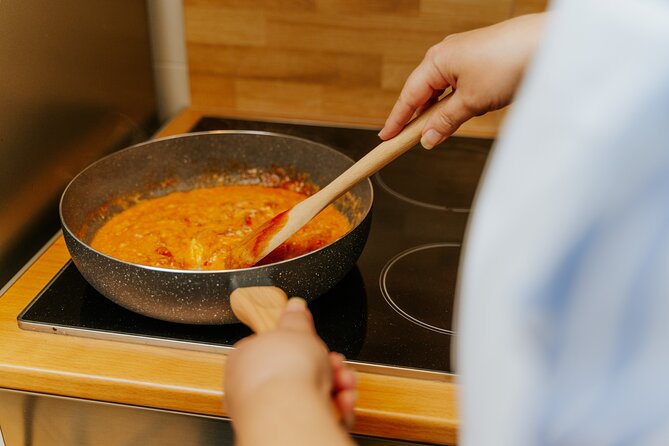
Dessert is ravani, a semolina cake soaked in aromatic syrup. Its origins are in northern Greece, giving the menu another regional connection.
Ravani is sweet, soft, and moist from the syrup. It provides a clear contrast to the salty cheese, olives, eggs, and savory mains served earlier. If you prefer desserts that are less sweet, keep that in mind before booking.
One detail deserves attention. A personal account of the experience described a rice pudding dessert, while the stated menu names ravani. Since menus can change, check the current offering if the dessert is important to you. You should rely on the listed menu rather than assume rice pudding will be served.
How interactive is the cooking?
This is the key question. You are told that you will participate in preparing the dishes, and the format is private. Aspasia explains recipes and encourages interaction. The experience is designed for cooking together, eating, and talking.
But the exact amount of work may vary. A private home class can be flexible, yet it may not have the tightly structured stations and equal cooking roles found in a dedicated cooking school. If you want to knead, chop, season, and cook every dish yourself, say so clearly at the start.
I would approach this as a social cooking session rather than a skills course. It should suit you if you want practical exposure to Greek recipes, local conversation, and a meal at the end. It may disappoint you if you have taken several formal classes and expect detailed instruction on every preparation.
The food itself is also quite familiar. Bread, cheese, stuffed vegetables, eggs, meatballs, eggplant, and cake are accessible choices. That works well for first-time cooks and people who want classic Greek flavors. It is less compelling for someone hoping to learn unusual ingredients or advanced regional techniques.
The value of $130.04 per person
At $130.04 per person, this is expensive compared with simply ordering a Greek dinner. You need to judge it as a private cultural activity with food, not as a restaurant meal.
The price includes about three hours with Aspasia, hands-on preparation of seven dishes, the full meal, and two glasses of white wine per person. The private format is important. You are paying for time, attention, a home setting, and an experience built around your group rather than a standard table reservation.
I would consider it good value for a couple, family, or small group that places a high value on meeting a local and sharing a meal in a private home. It is weaker value if you mainly want to eat Greek food cheaply or if you already know the listed dishes well.
The menu helps you decide. There is no costly seafood, rare meat, or elaborate pastry work. The value comes from participation and company. Read the dish list carefully, because you may find most of it familiar. That is not a flaw, but it should be part of your price calculation.
Who will enjoy this Athens food experience?
I would recommend it most strongly to:
- People who want a personal introduction to Greek home cooking.
- Couples and families who prefer a private activity.
- First-time cooks who appreciate patience and simple explanations.
- Food-focused visitors who want to connect dishes with regions such as Mani, Crete, and northern Greece.
- Anyone who likes a long meal with conversation and wine.
I would be more cautious if you want a professional kitchen, advanced instruction, or an unusual menu. The dishes are classic rather than experimental, and the session has a strong social side.
The activity is offered in English, which makes it practical for English-speaking visitors. It is near public transportation, and service animals are allowed. Confirmation is provided at booking, and mobile tickets make the meeting details easy to carry on your phone.
The experience requires a minimum number of participants. If the operator cancels because that minimum is not met, you are offered another date or experience, or a full refund.
Booking and cancellation details worth noting
The meeting point is Tsocha 3, Athina 115 21, Greece. The activity returns to that same location, so plan your transport around one fixed address rather than a restaurant-to-restaurant route.
Free cancellation is available up to 24 hours before the start time for a full refund. Changes or cancellations made less than 24 hours before the local start time are not accepted for a refund.
This is a private activity, but the provided information does not give a maximum group size. If group size affects your decision, ask before booking. The same is true if you need to confirm the exact dessert or how much of each dish you will personally prepare.
Should you book Aspasia’s cooking class?
Book it if you want a friendly meal in a local home, a private setting, and a broad introduction to familiar Greek dishes. The seven-dish menu gives you plenty to taste, while the regional touches make the food more interesting than a basic dinner.
Go in expecting a social cooking experience, not a formal culinary course. Ask to take part at each stage, and check the menu before paying the $130.04 price. If those terms suit you, Aspasia’s class can give you one of the more personal evenings in Athens. If you want technical training or unusual food, spend your money elsewhere.
FAQ
Where does the cooking class take place?
The experience takes place at Aspasia’s home at Tsocha 3, Athina 115 21, Greece. It begins and ends at the same meeting point.
How long is the experience?
The session lasts approximately three hours.
Is the activity private?
Yes. Only your group participates in the private activity.
What language is offered?
The experience is offered in English.
What food will be prepared?
The menu includes paximadi bread with olives and graviera cheese, stuffed long sweet peppers, Greek eggs kayanas, Cretan dakos salad, Greek meatballs with yogurt sauce, eggplant imam, and ravani.
Are drinks included?
Yes. Each person receives two glasses of white wine.
Can I cancel for a full refund?
You can cancel at least 24 hours before the local start time for a full refund. Cancellations or changes made less than 24 hours before the start time are not accepted for a refund.
Newest classes around Athens
- Greek Cooking Class with Acropolis View★ 5.0 · 76 reviews
- Private Walking Meze Cooking Course★ 5.0 · 6 reviews
- Cook with Katerina: Authentic Greek Home Cooking Class in Athens★ 5.0 · 15 reviews
- Private Greek Cooking Class in Athens-Learn to Cook with Angelina★ 5.0 · 3 reviews
- Hands On Greek Cooking Classes in Athens★ 5.0 · 7 reviews
- Athens: Traditional Vegan Cooking Class incl. Drinks★ 5.0 · 41 reviews
- Cooking Class in Athens: Learn the Art of Phyllo with Christina★ 5.0 · 24 reviews
- “Fetaverse” Private Cooking Class in Koukaki Athens★ 5.0 · 3 reviews
Athens Cooking Classes, compared.
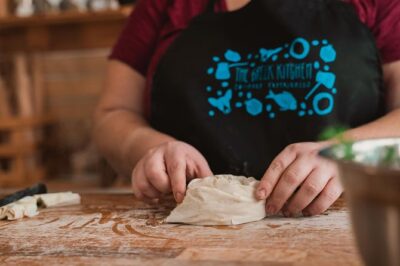
Classic Cooking Class with Market Visit and Wine
Read our review →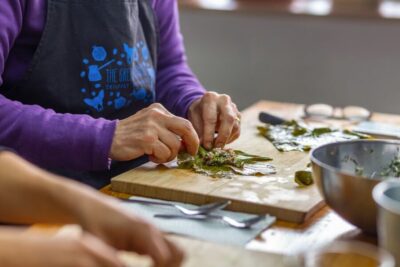
Food Market Visit and Cooking Class with Wine
Read our review →
Greek Cooking Class in Athens Including Rooftop Dinner with Acropolis View
Read our review →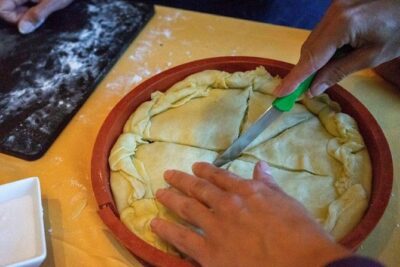
Greek Small-Group Athens Cooking Class & Dinner
Read our review →
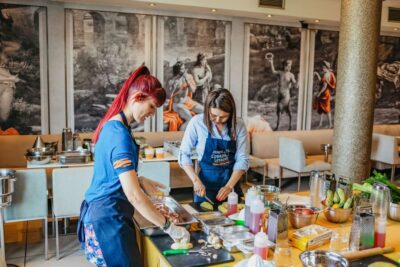
Greek Cuisine Cooking Class and 3-Course Dinner
Read our review →
Traditional Greek cooking class and lunch or dinner with an Acropolis view
Read our review →
Athens Greek Cooking Class Pita Gyros from Scratch with a Local
Read our review →Browse the lists this tour appears in