
Review · CRETE COOKING CLASSES
Chania: Authentic Cooking Class in the White Mountains
The most memorable part of this six-hour outing is not the recipe card. It is the setting: a family home and small farm below the White Mountains, where you cook with garden produce, hear family stories, and eat together at the end. Guides such as Alex, Yannis, and Costa add plenty of background on Cretan food, olive oil, history, and village life.
I like the warm family welcome and the way the meal brings the group together. I also like the mix of activities: garden walk, mountain stroll, shepherd’s enclosure, wine and cheese tasting, cooking, and dinner. The main drawback is the length. With pickup, travel, and a leisurely meal, your return may be late, and water is not always available early in the outing.
Key points to know before booking
- Family home below the White Mountains: You cook and dine in a real local setting rather than a formal city kitchen.
- More than a cooking lesson: Expect garden produce, animals, olive oil stories, local history, wine, cheese, and a shared meal.
- Several excellent guides: Alex, Yannis, Costa, Giannis, and Kosko are named by the operator at different times, so your guide may vary.
- Cretan dishes made together: You help prepare ntakos, tzatziki, appetizers, and a full dinner using local ingredients.
- Strong value at $129: Pickup, transport, instruction, food, wine, recipes, photos, and gifts are included.
- Plan for a long afternoon and evening: Wear good shoes, bring sunglasses and a jacket, and carry water.
A six-hour food outing with a real sense of place
This experience works because it connects food with the people and land behind it. You do not simply sit at a counter while someone demonstrates a recipe. You travel from Chania into the foothills, walk around a working property, meet a host family, and take part in a meal that unfolds at an unhurried Cretan pace.
The price is $129 per person. That is not a bargain-basement cooking class, but the fee covers far more than instruction. You get pickup and drop-off from selected places in the Chania region, an air-conditioned minivan, a local driver and guide, ingredients, utensils, an apron, wine and food tasting, dinner, a small commemorative gift, and recipes and photos sent by email.
I would think of this as a half-day cultural outing with cooking at its center. If you want a quick two-hour lesson in a city kitchen, this is not the right fit. If you want to understand how food, family, farming, and Cretan hospitality fit together, the extra time makes sense.
More Cooking Classes in Greece:
- Athens: Classic Cooking Class with Market Visit and Wine
★ 5.0 · 1,101 reviews - Athens: Food Market Visit and Cooking Class with Wine
★ 4.9 · 1,087 reviews - Greek Cuisine Cooking Class in Santorini with Recipes and Wine
★ 5.0 · 969 reviews
The drive from Chania with Alex, Yannis, Costa, or another local guide
Pickup is included, but only from specific locations within the Chania region. Check the pickup point before you book and make sure you can reach it easily. This matters more than it might seem, since the transport is part of the experience and not a private door-to-door service for every address.
The air-conditioned minivan is a welcome feature in the warmer months. On the ride, your guide provides context about Chania, Crete, local food, and the places you pass. Alex receives especially strong praise for his humor, warmth, and ability to keep the day moving. Yannis and Costa are also named as engaging guides who add history and local detail.
That guide role is important. The host family may not speak English fluently, so the guide helps translate cooking instructions and family stories. This allows you to follow the lesson while also learning about the property, Cretan customs, olive harvesting, and the island’s past.
The transport score is especially strong, with 95 percent of ratings giving it a perfect score. Still, keep your expectations practical. This is a shared outing, and the size can vary. It is described as a small group, though one group had around 15 people. The class remains social rather than private.
The garden is your first introduction to Cretan cooking
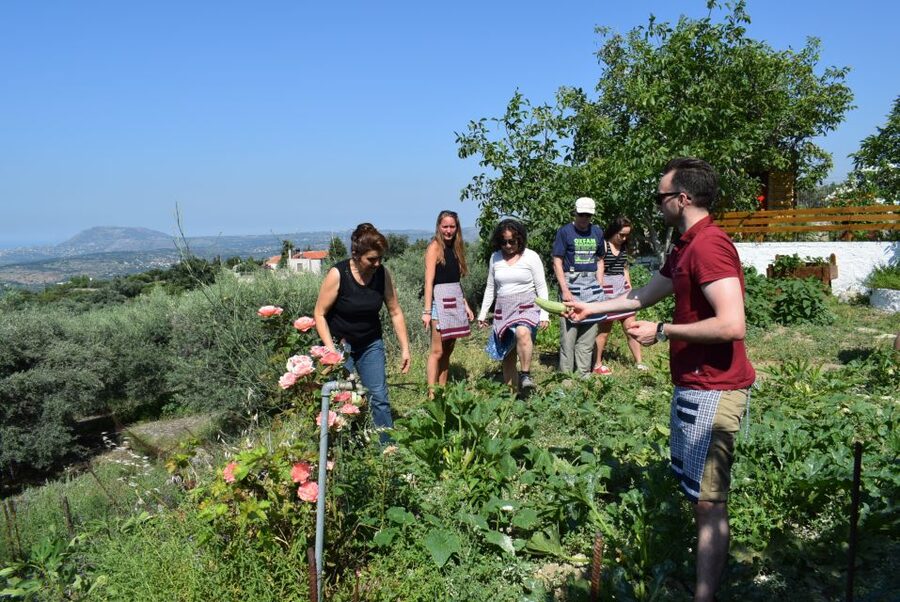
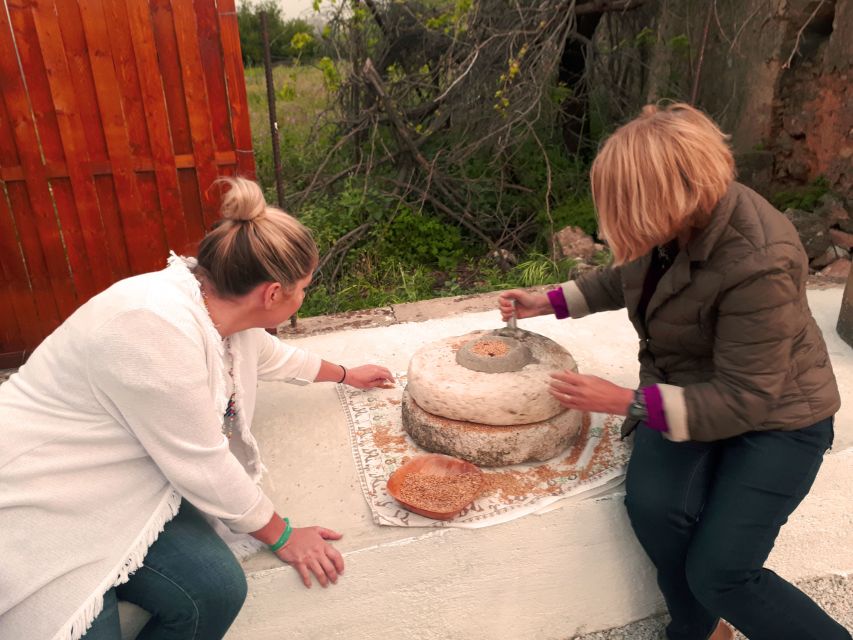
At the property, you begin with a walk through the vegetable garden. This is a useful start because it lets you see the raw materials before they appear on the table. You learn about fresh vegetables and the herbs used in Cretan cooking, with some ingredients coming directly from the garden.
The emphasis is on simple, high-quality staples: extra virgin olive oil, vegetables, herbs, locally sourced meat, cheese, and wine. You also hear about the healthy Mediterranean diet, but the lesson is practical rather than a lecture. You see how generous use of olive oil, fresh produce, and herbs creates food with plenty of flavor without relying on complicated methods.
I like this part because it gives you something to remember at home. A recipe is useful, but knowing how the ingredients grow and how they are used makes it easier to recreate the dish. You may also leave with a better sense of why olive oil is so central to Cretan cooking.
The property itself adds a lot. It is described as a beautiful family home with mountain views, old family photographs, fruit trees, and a farm setting. A restored older house and its family connection to the land give the visit more character than a purpose-built cooking venue.
A short mountain walk and stories about olive harvests
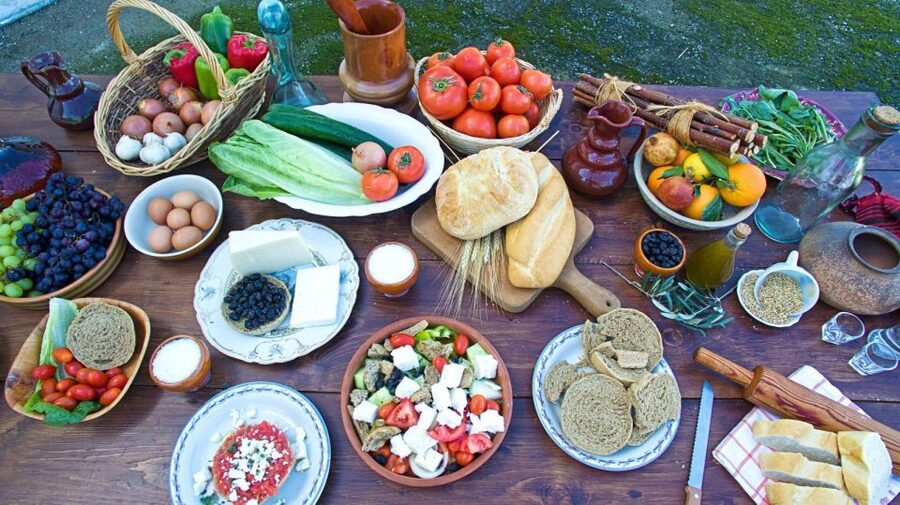
The outing includes a scenic walk to a shepherd’s enclosure. This is not presented as a demanding hike, but comfortable shoes are still a must. The path and farm setting give you a break from the kitchen and a closer look at rural life.
You may see or feed animals along the way. Several accounts describe feeding sheep or goats, including giving mulberry leaves to goats. That small task is one of the pleasures of the visit because it turns the farm from a backdrop into something you can interact with.
The guide also explains olive harvesting and the role of olive oil in local life. This is one of the most useful cultural parts of the day. Olive oil is not just a bottle placed on the table in Crete. It is tied to work, family land, food preparation, and local identity.
The walk also gives you time to enjoy the setting. The home sits at the base of the White Mountains, with views toward the surrounding mountains and, according to one account, down toward the bay. Bring sunglasses, and bring a jacket because the air can feel different in the mountains, especially later in the day.
Same region, a different dish to learn:
- Naxos: Half-Day Cooking Class at Basiliko Family Tavern
★ 5.0 · 887 reviews - Greek Cooking Class in Athens Including Rooftop Dinner with Acropolis View
★ 5.0 · 826 reviews - Greek Small-Group Athens Cooking Class & Dinner
★ 5.0 · 574 reviews - Exclusive Cooking Experience in our Cave Home by Petra Kouzina
★ 5.0 · 572 reviews
Cheese, wine, raki, and the first tasting
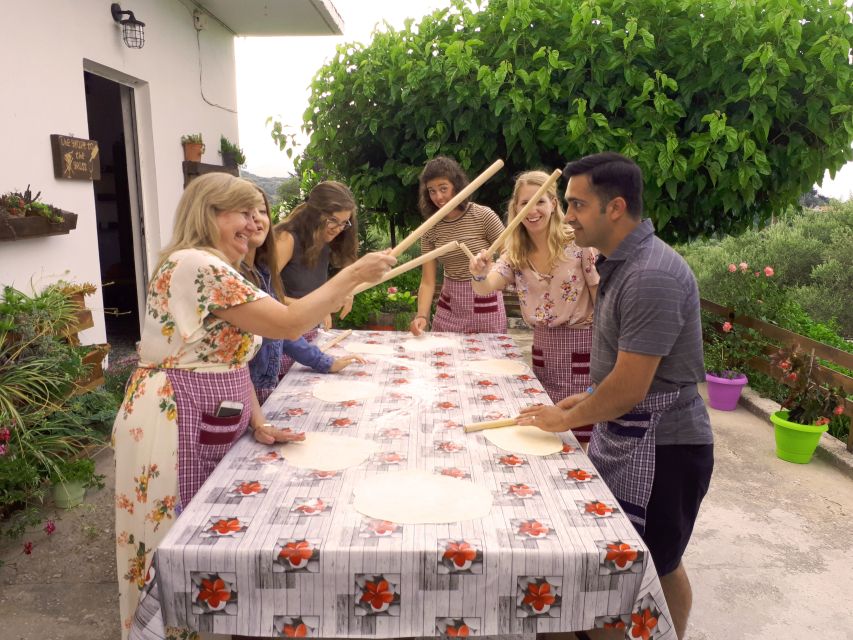
Back at the home, the food begins before the main cooking session. You taste Cretan cheese, olives, local produce, and wine, with some groups also receiving a welcome raki. This is a relaxed way to meet the hosts and the other people in the group.
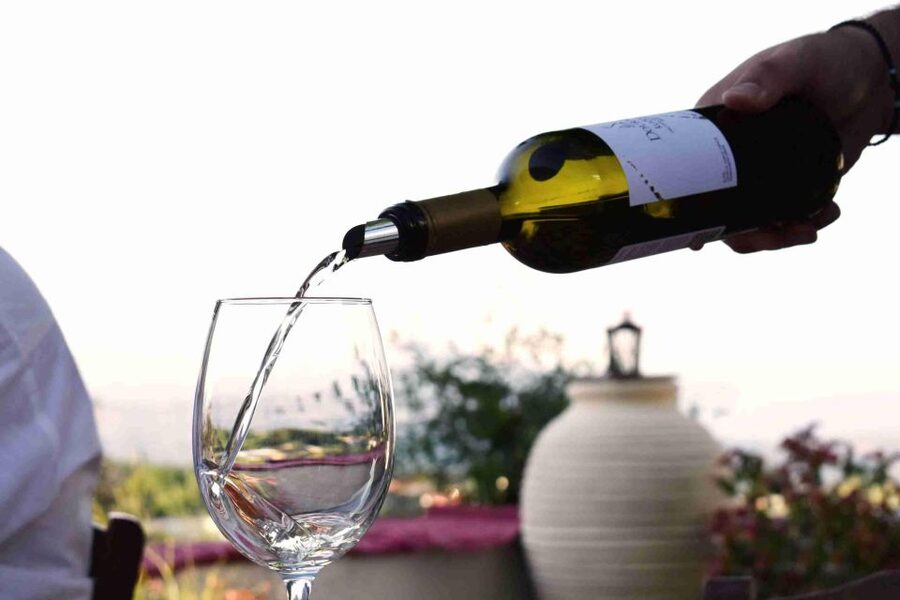
The wine is not merely a drink alongside the meal. The hosts share local bottles and stories connected to their own production and family traditions. One account describes tasting wine that had been aged for decades. That kind of detail gives the tasting a personal quality, though the exact wines and samples can vary.
The tasting is generous enough to make the meal feel like a full food experience rather than a narrowly timed class. If you do not drink alcohol, the provided information does not specify alternative beverages, so it is sensible to ask when booking if that matters to you.
You should also carry a water bottle. One person found that there was not much opportunity to get water during the first couple of hours. That is a small but useful preparation tip, especially during summer.
Learning ntakos and tzatziki with Maria
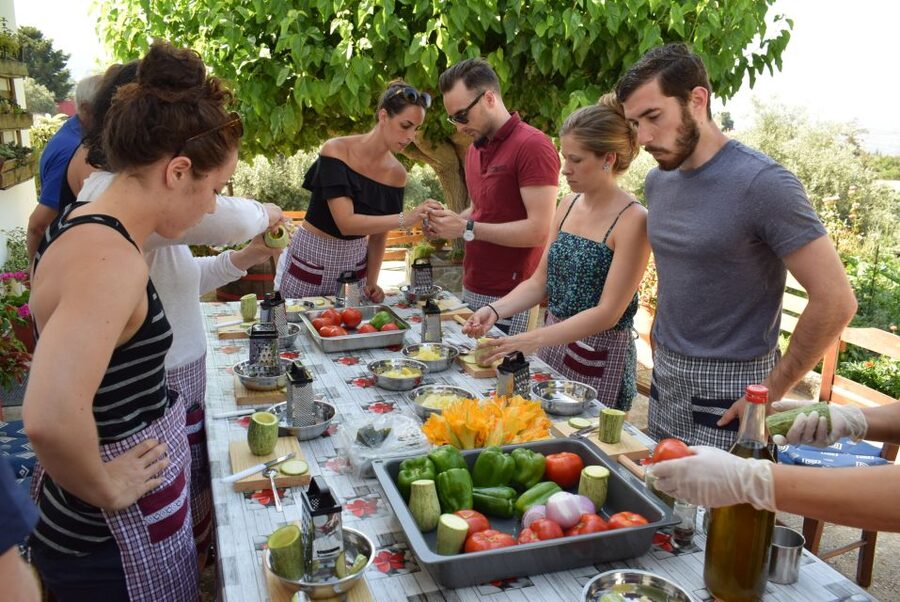
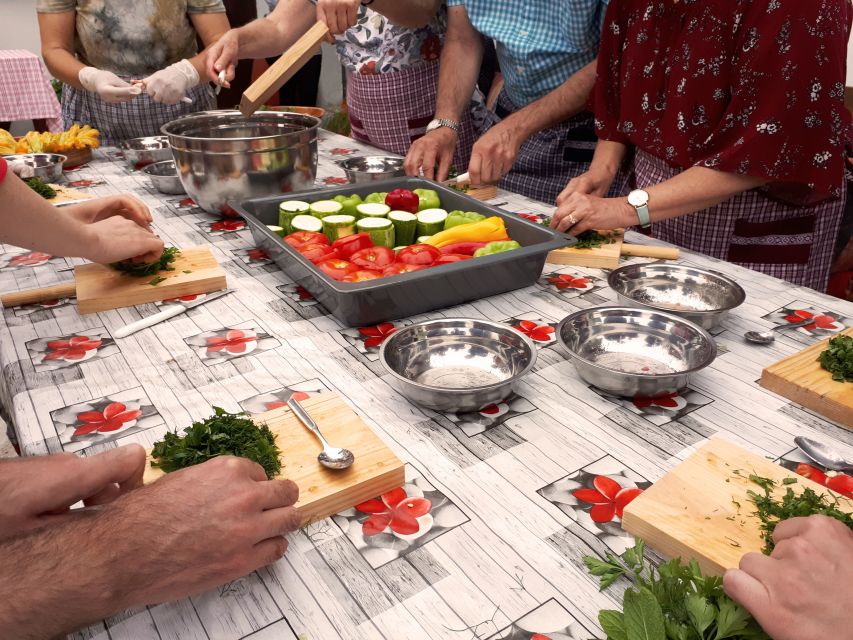
The hands-on class includes familiar Cretan favorites such as ntakos and tzatziki. Ntakos is a traditional barley rusk dish topped with ingredients such as tomato, cheese, herbs, and olive oil. Tzatziki gives you a chance to practice balancing yogurt, garlic, cucumber, and seasoning.
Maria is named repeatedly as the person leading the cooking demonstration. She is described as warm, cheerful, and passionate about teaching. Some instructions may be translated by the guide, so you do not need the host chef to conduct the entire lesson in English.
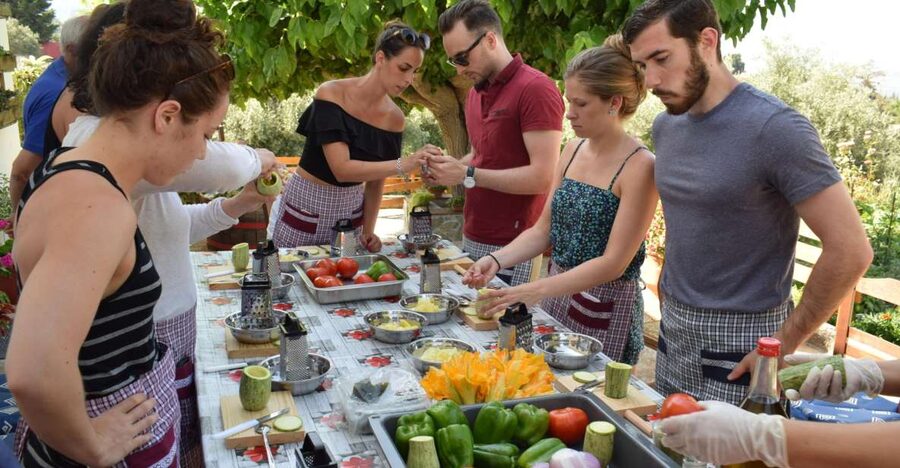
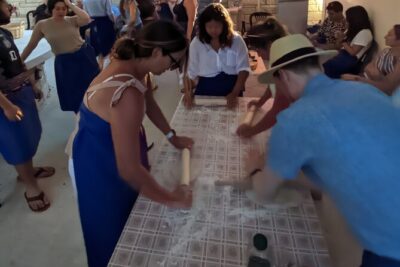
The class is not aimed at professional cooks. You take part in preparing the food, follow demonstrations, and work with the group. The hosts provide ingredients, utensils, and aprons, which means you do not need to bring cooking equipment.
Expect plenty of olive oil. The lesson gives you a clear sense of how much it contributes to Cretan dishes. The recipes are sent by email after the experience, along with photos, so you have a practical reminder of what you prepared.
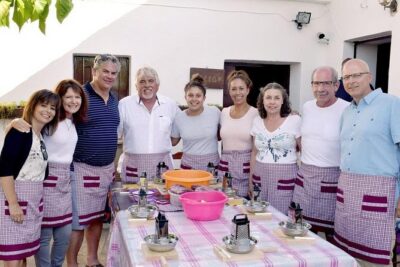
One useful feature is the social setup. You cook alongside people from different countries, then sit down with them to eat. Solo visitors are included in the group, and the shared tasks make conversation easier than it can be on a standard sightseeing tour.
Dinner under the mountain views
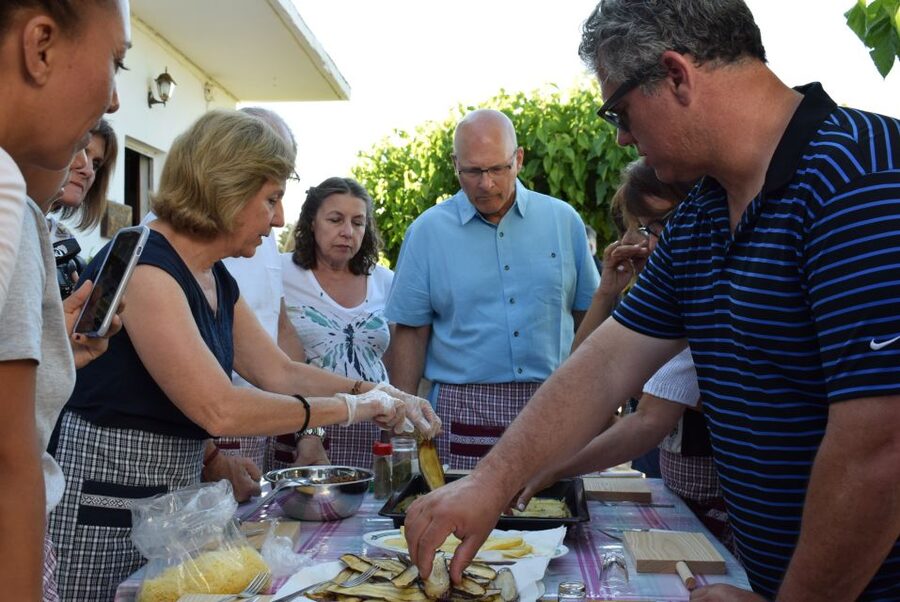
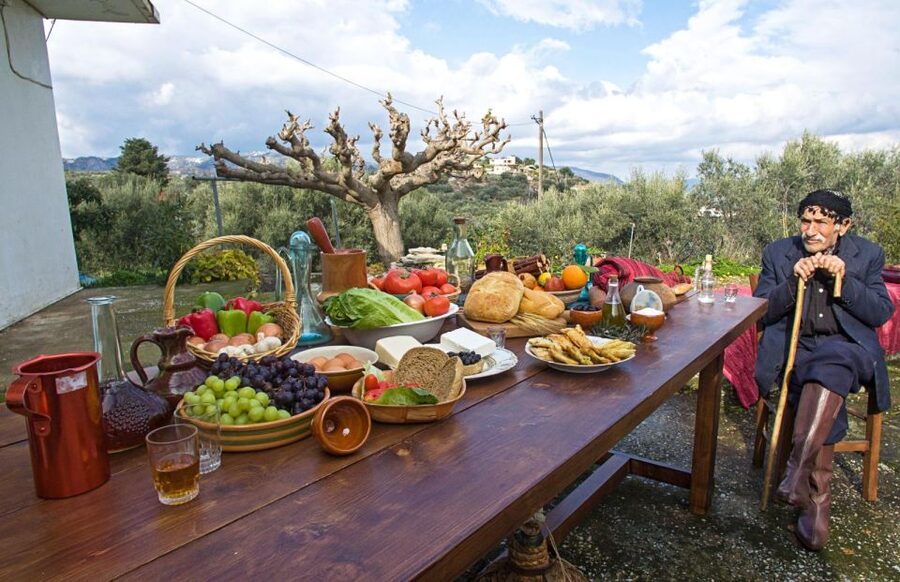
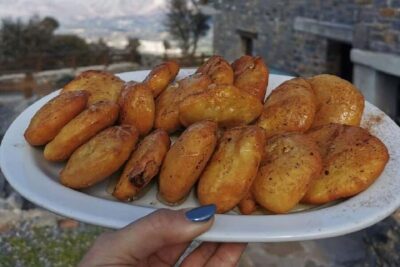
The meal is the payoff, but it does not feel like a rushed reward. Once the dishes are ready, everyone sits together and eats what they helped prepare. The dinner may include appetizers such as ntakos and tzatziki, a main dish such as slow-cooked pork, regional wine, and traditional jar desserts.
The exact menu can change with the season and the ingredients available. That is part of the appeal, but you should not book this expecting a fixed restaurant menu. The experience centers on Cretan home cooking, not on a polished tasting menu.
The setting adds to the meal. You may eat beneath a walnut tree or under the stars, with mountain views around you. The family home, old photographs, farm animals, and shared table create a sense of a personal invitation rather than a commercial dinner show.
I especially like the no-waste detail described by one participant: leftover food was given to the local community. That fits the practical, farm-based character of the outing and shows care beyond the plate.
The hosts are part of the meal’s appeal. The family welcomes you into their home, shares stories about the property, and helps create a relaxed atmosphere. You are not just watching local life through a bus window. You spend several hours in a place that has family meaning.
How much time should you allow?
The listed duration is six hours, but you should leave room for the day to run long. Pickup, the drive, the garden and mountain walk, tasting, cooking, dinner, and the return trip all take time. One account noted a return after 11 p.m., with the comment that the hours passed quickly.
That late finish can be a plus or a problem. It is wonderful if you have a free evening and want a slow meal. It is less convenient if you have a show, ferry, dinner reservation, or early morning departure.
The pace is deliberately relaxed. You will not rush from one activity to another, and that is important to the experience. Still, ask about the expected return time if you have firm plans later in the evening.
Free cancellation is available up to 24 hours before the activity for a full refund. You can also reserve and pay later, which is useful if your Chania plans are still taking shape.
Who will enjoy this cooking class most?
I would recommend it to anyone who values local contact over a checklist of sights. Couples, families, solo visitors, food lovers, and people curious about village life can all find something here.
It is a particularly good choice for solo visitors. The shared cooking and meal give you an easy way into the group, and several accounts describe solo participants feeling included. It also suits people who want more than food, since the day includes local history, family stories, olive oil, animals, and the mountain setting.
You should be comfortable with a long outing and some time standing or walking. Bring comfortable shoes, sunglasses, a jacket, and water. If you have mobility concerns, the available information does not explain the walking surface or accessibility, so ask the provider before booking.
This is also a good choice for repeat visitors to Greece. You may already know Greek restaurant food, but cooking in a family home gives you a different view of the cuisine. It is less about collecting another meal and more about seeing how ingredients, work, and hospitality connect.
Is the $129 price fair?
At $129, this is not the cheapest food activity around Chania. The value comes from the amount packed into the day. Transport, a guide, a cooking lesson, ingredients, dinner, wine and cheese tasting, photos, recipes, a gift, and local interpretation are all included.
You are also paying for access to a private family setting and for the time of several people who host, teach, translate, drive, and prepare the meal. That makes the price easier to justify than a simple class held in a city restaurant.
The value is strongest if you would otherwise pay separately for a countryside visit, food tasting, and evening meal. It is weaker if you want a short, technical cooking lesson or if you do not enjoy group dining.
The high 4.9 rating from 529 reviews supports the idea that the experience is consistently well received, but the practical details still matter. Pickup points are limited, the group size can vary, and the evening may finish late.
Should you book the White Mountains cooking class?
Book it if you want a warm, social introduction to Cretan food and rural life. The strongest reasons are the family home, the mountain views, the guide’s storytelling, the hands-on cooking, and the shared dinner.
I would skip it if your schedule is tight, you dislike group activities, or you want a formal chef-led lesson with precise culinary instruction. For most people with a free afternoon and evening in Chania, though, the combination of food, scenery, animals, and local welcome makes $129 a fair price.
Check the pickup location, carry water, and keep the rest of the evening open. Do that, and you are set up for a memorable taste of Crete that reaches well beyond the kitchen.
FAQ
Where does the cooking class take place?
The activity takes place in the White Mountains area of Crete, at a family home and farm near the base of the mountains. Pickup is available from specific locations within the Chania region.
How long does the experience last?
The listed duration is six hours. The actual return can be later in the evening, depending on the pickup time, travel, cooking, dinner, and group pace.
What food will I prepare?
The class includes traditional Cretan recipes and appetizers such as ntakos and tzatziki. The full meal may also include a main dish and traditional jar desserts.
Is wine included?
Yes. Wine and food tasting are included, along with Cretan cheese. Some groups also receive a welcome raki.
Are ingredients and cooking equipment provided?
Yes. The price includes all ingredients for dinner, an apron, and cooking utensils.
Who teaches the class?
Maria is named as the cooking teacher in several accounts. A local guide translates when needed and leads the cultural and historical parts of the outing. Guides may include Alex, Yannis, Costa, Giannis, or Kosko.
What should I bring?
Bring comfortable shoes, sunglasses, a jacket, and a water bottle. The walk and mountain setting make suitable footwear and an extra layer useful.
Can I cancel or pay later?
You can cancel up to 24 hours in advance for a full refund. The activity also allows you to reserve now and pay later.
Newest classes around Greece
- Authentic and Traditional Cooking Class in Chania Crete★ 5.0 · 5 reviews
- Chania Cooking Class in Crete with rustic, delicious and homely Cretan food!★ 4.5 · 14 reviews
- Private Cooking Class – A Culinary Journey in Argostoli★ 5.0 · 2 reviews
- Greek Cooking Class with Acropolis View★ 5.0 · 76 reviews
- Private Walking Meze Cooking Course★ 5.0 · 6 reviews
- Cook with Katerina: Authentic Greek Home Cooking Class in Athens★ 5.0 · 15 reviews
- Private Greek Cooking Class in Athens-Learn to Cook with Angelina★ 5.0 · 3 reviews
- Hands On Greek Cooking Classes in Athens★ 5.0 · 7 reviews
Crete Cooking Classes, compared.
Chania Cooking Class-The Authentic Enjoy traditional Cretan meal
Read our review →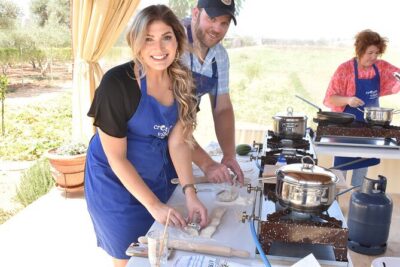
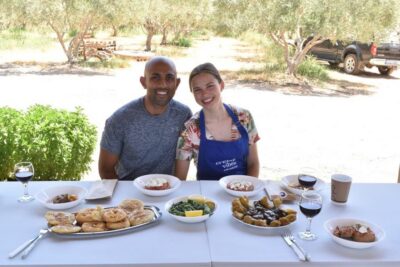
Moires: Cooking Class and Olive Oil Tasting at a Family Farm
Read our review →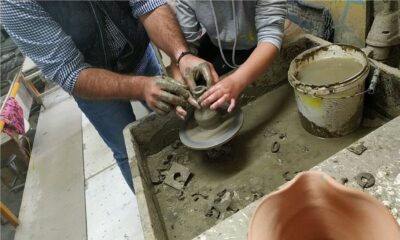
Sightseeing Day Trip with Cooking Lesson and Lunch
Read our review →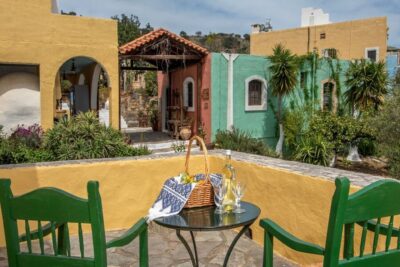
Heraklion: Cretan Cooking Lesson with Lunch in Arolithos
Read our review →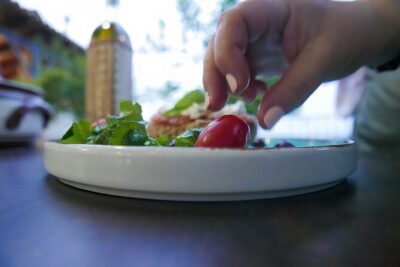
Browse the lists this tour appears in