
Review · CROATIA COOKING CLASSES
The story of Soparnik – Cooking class
Soparnik is not just a pie. It is a piece of Dalmatian village life, made with chard, onion, olive oil, garlic, and fire. In Gata, Nikolina and her family show you how this humble dish became a protected Croatian tradition.
I like the hands-on format, where each person gets a real job instead of simply watching a demonstration. I also like the family setting, the local dessert and aperitif at the start, and the glass of Plavac Mali served with the finished soparnik.
The main consideration is time. At 70 minutes, this is a compact introduction rather than a long cooking course. Transfer is not included, so you need to reach Gospe od Smova 50 in Gata on your own.
Key points to know before booking
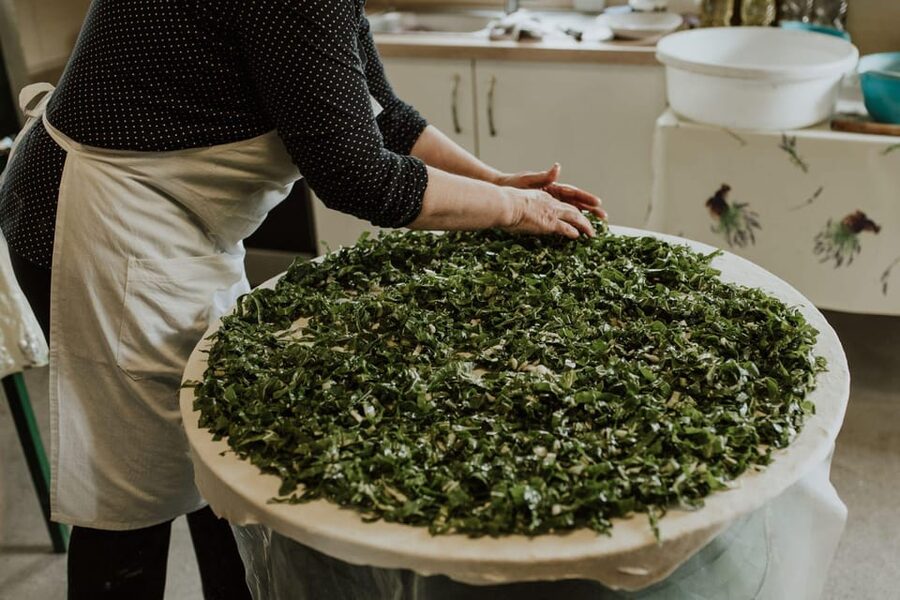
- You make one soparnik together, taking turns with the chard, dough, edges, and other tasks.
- Nikolina and her family host the class, with guidance in English and Croatian.
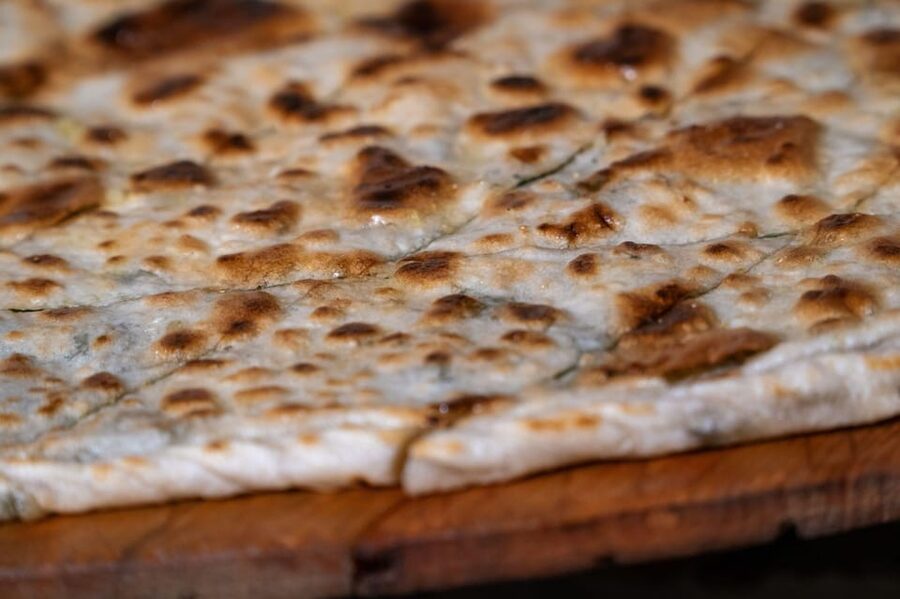
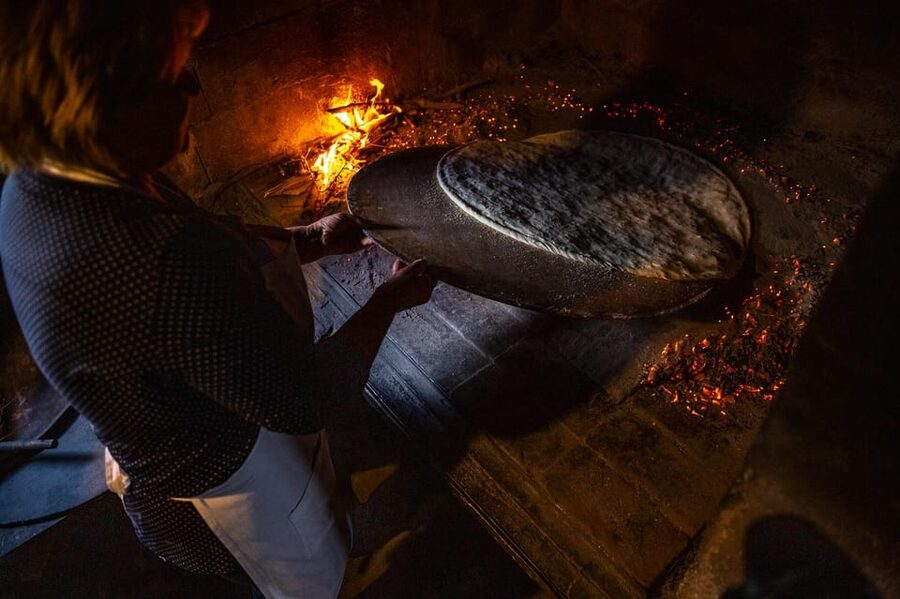
- The dish is baked under hot coals, giving this thin pie its traditional character.
- The tasting includes Plavac Mali wine, an aperitif, and a local dessert.
- The class is private, so the pace and attention are more personal than in a large group.
- You return to Gospe od Smova 50, with no transport included.
Why soparnik matters in Dalmatia
Soparnik comes from the Poljica region, an area of Dalmatia with a strong local identity. The dish is made from simple ingredients: thinly rolled dough, Swiss chard, onion, extra virgin olive oil, and garlic.
Its importance is not based on expensive ingredients or elaborate presentation. Soparnik is a practical food, the sort of dish that makes sense in a place where families used what they had close at hand. The dough is thin, the filling is fresh and savory, and the finished pie is seasoned after baking.
Croatia has declared soparnik an intangible cultural heritage, and it carries an EU geographical origin label. That gives the class more weight than a generic cooking lesson. You are learning a dish tied to one particular part of the country, not simply preparing a Mediterranean pie chosen for tourist appeal.
I find the story especially useful because it gives the food a reason to matter. You do not just hear a list of ingredients. You learn how a regional dish fits into local tradition and why its preparation has been preserved.
More Cooking Classes in the world:
- Half-Day Thai Cooking Class at Organic Farm in Chiang Mai
★ 5.0 · 19,087 reviews - Florence: Pasta Cooking Class with Unlimited Wine
★ 4.9 · 10,285 reviews - 3 in 1 Cooking Class near Navona: Fettuccine, Ravioli & Tiramisu
★ 5.0 · 7,376 reviews
Arriving at the family farm in Gata
The meeting point is Gospe od Smova 50 in Gata. Your guide waits at the exact address, and the activity begins and ends there.
On arrival, you receive an aperitif and a local dessert. This is a pleasant start because it gives you a moment to settle in before the cooking begins. It also signals that the visit is being treated as a welcome into a family setting, not as a rushed stop at a commercial kitchen.
The setting is part of the appeal. This takes place at a family farm, where the food story has a clear connection to home cooking and local life. The information provided does not promise a tour of the farm or a larger farm program, so you should think of the property mainly as the setting for the class and tasting.
The class is offered for a private group. That matters if you want to ask questions, take turns without feeling hurried, or keep the activity within your own party. It also makes the class a better fit for families and small groups who want to share one experience rather than split up among several stations.
Meeting the soparnik master
After the welcome, the guide introduces the story of soparnik and explains how it is made. The cooking then takes place under the direction of a master soparnik maker.
This structure works well for a short class. You first understand the dish, then take part in making it, then eat the result. There is no wasted time on a long menu or several unrelated recipes.
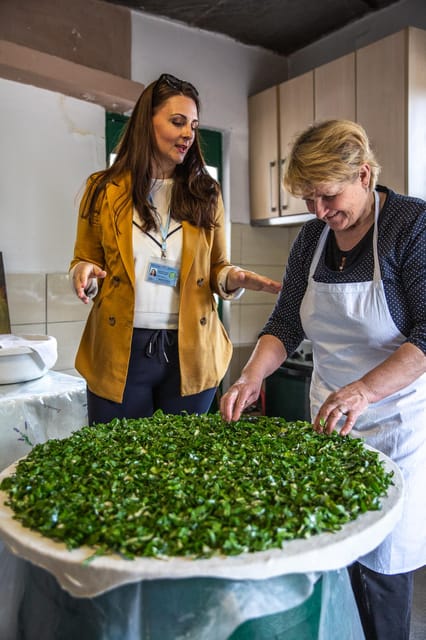
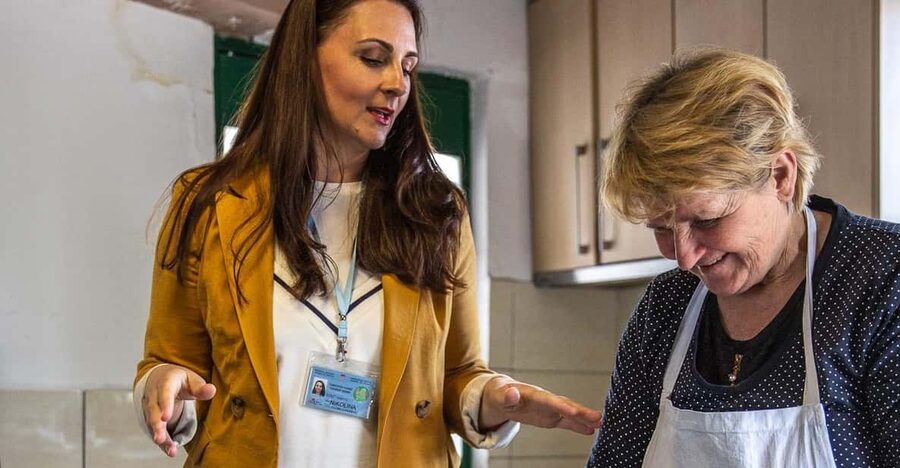
The family hosts, including Nikolina, are an important part of the experience. You can expect guidance in both English and Croatian, which makes the class accessible to English-speaking visitors while keeping the local character of the visit intact.
The two published ratings for this experience are both five out of five. More useful than the number itself is what the comments point to: a family group of five, with the youngest participant aged 17, enjoyed both the explanation of the dish and the local setting. Another party, familiar with Croatia after many visits, considered this their best experience in the country and appreciated the way Nikolina and her family made them feel at home.
That suggests the strongest feature is not just the recipe. It is the welcome and the chance to connect the food with the people who preserve it.
Your turn at the worktable
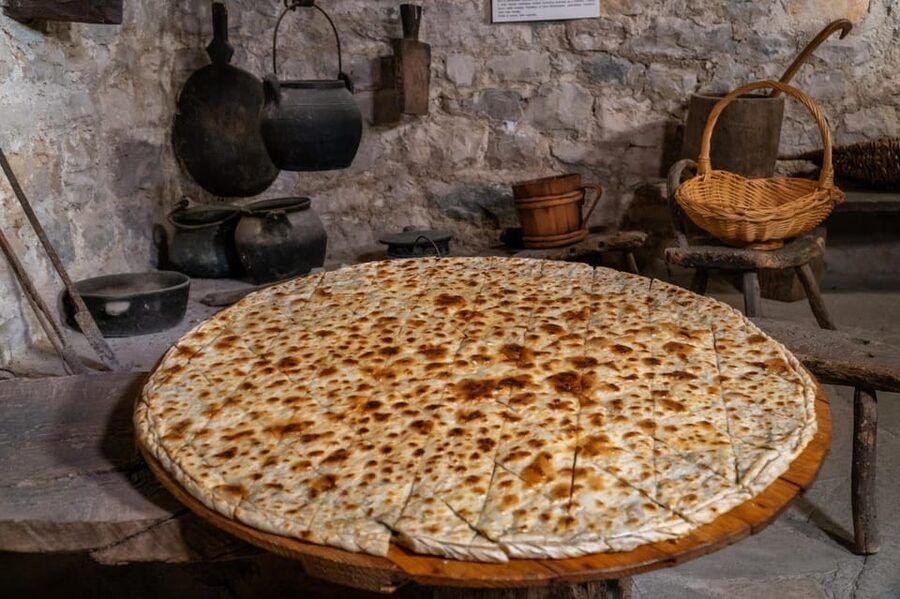
The group makes one soparnik together. You do not each prepare a separate pie, so the experience is collaborative rather than a personal cooking challenge.
Different participants take on different tasks, and you can trade jobs as the class continues. The work may include:
- Cutting the chard
- Preparing and rolling the dough
- Adding the filling
- Twisting the edges
- Helping with the final preparation
For me, this is the right amount of participation for a 70-minute activity. You get to handle the ingredients and learn the key stages, but you do not spend half a day waiting for dough to rest or repeating the same process several times.
The division of jobs also makes the activity suitable for a family or group with mixed cooking ability. Someone who enjoys working with dough can roll it. Someone else can handle the greens or the decorative edge. Since participants can take turns, nobody needs to be an expert before arriving.
Still, do not book this expecting a full professional course. You make one soparnik, and the goal is to understand the method, share the work, and enjoy the food. If you want detailed instruction on quantities, several recipes, or a dish to reproduce from start to finish alone, this class may feel brief.
Same region, a different dish to learn:
- Florence: Pasta & Tiramisu Cooking Class with Unlimited Wine
★ 4.9 · 6,708 reviews - Florence: Pasta Cooking Class with Unlimited Wine
★ 5.0 · 6,413 reviews - Hanoi Cooking Class: Culture, Local Market & Meaning CSR Impact
★ 5.0 · 5,147 reviews - 5 Traditional Dishes Hanoi Cooking Class with Market Trip
★ 5.0 · 4,890 reviews
The fire and the traditional finish
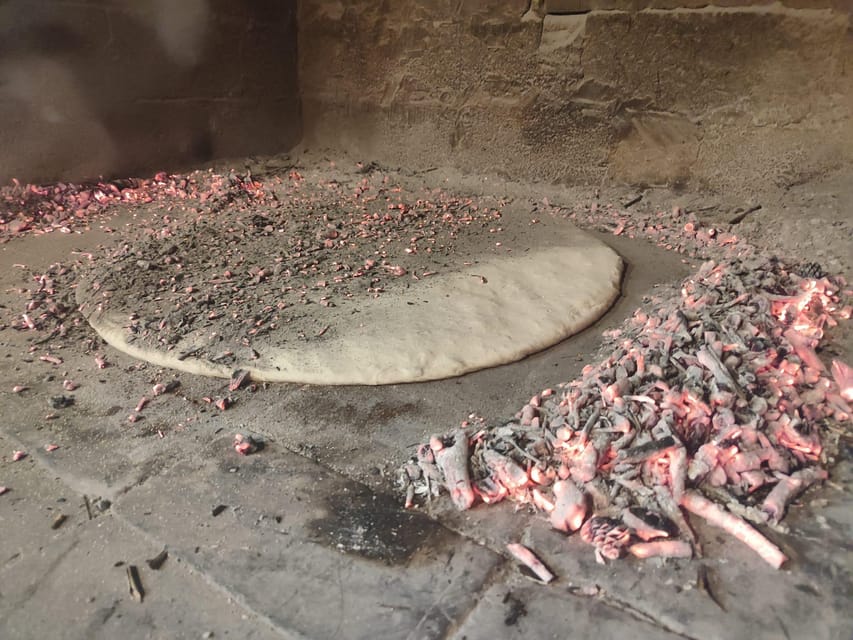
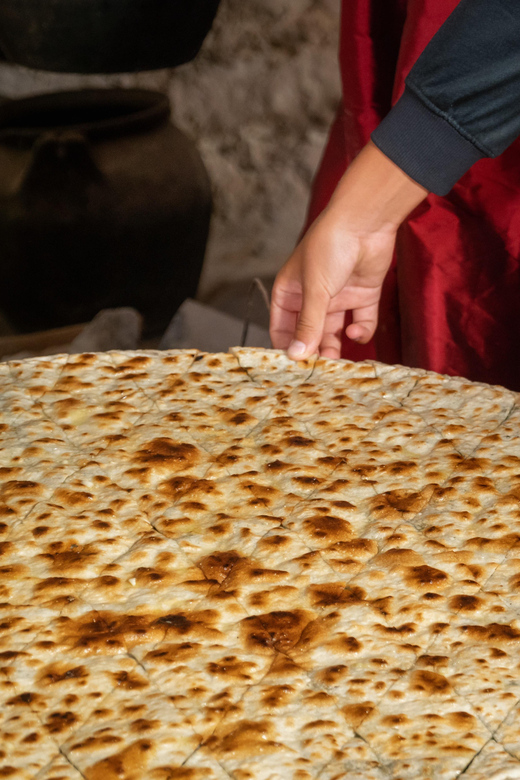
One of the most interesting parts of soparnik is the cooking method. The thin pie is baked on an open fire and covered with hot coals.
That is very different from placing a tray in a modern oven. The fire and coals are part of the traditional identity of the dish, and they help explain why the final tasting matters. You are eating something prepared in the same broad style that has helped define soparnik over generations.
The information provided does not specify how long the pie remains under the coals or give technical baking instructions. The master soparnik maker handles that part, while the group helps with the preparation. You should expect to learn the main process rather than take control of the fire yourself.
When it is ready, the soparnik is seasoned with extra virgin olive oil and garlic. Those finishing ingredients are simple but important. They add flavor to the chard and onion without turning the dish into something heavy.
The result is a thin savory pie rather than a thick pastry. That makes soparnik a good match for a food-focused visit in Dalmatia, where the appeal often lies in fresh ingredients and direct preparation.
Tasting soparnik with Plavac Mali
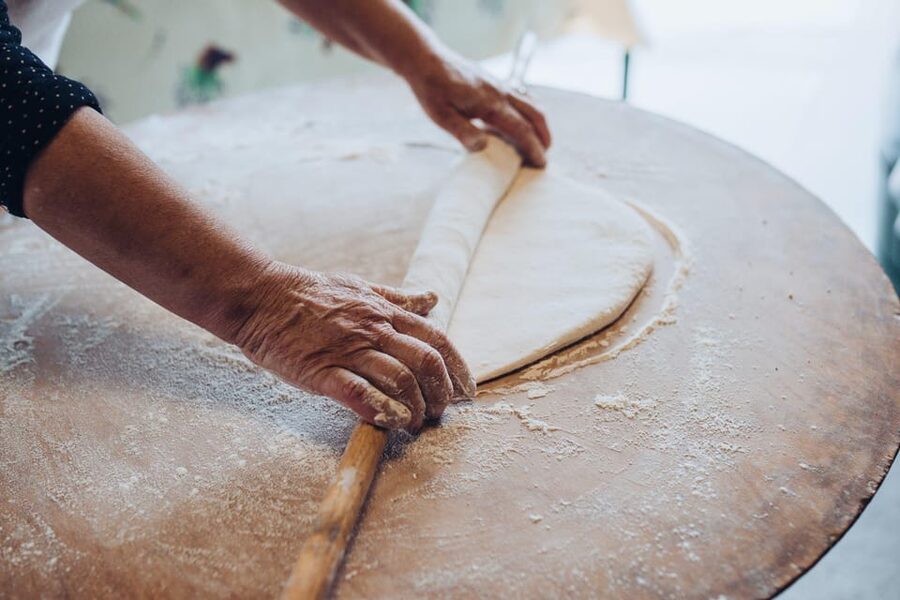
The final tasting is the reward for the shared work. You eat the soparnik you helped prepare and pair it with a glass of Plavac Mali from Wine House Skaramuča on the Pelješac peninsula.
Plavac Mali is one of Croatia’s best-known red wine varieties, so this pairing adds another local food note to the class. The wine is not an extra purchase at the end. It is included in the program, along with the earlier aperitif and local dessert.
The tasting is likely to be the most memorable part for anyone who enjoys food with a story. You can connect the ingredients, the preparation, the fire, and the final plate in one sitting. That gives the class a satisfying shape, especially since the program is short.
The dessert and aperitif also help keep the experience from feeling like a single-dish demonstration. You begin with a welcome, learn the dish, make it together, and finish with food and wine. It is a small meal built around one traditional recipe.
Do keep your expectations practical. The supplied details do not give a full menu or promise a large quantity of food. Think of the tasting as part of a cultural cooking experience, not as a substitute for a full lunch or dinner.
Is $94 a fair price?
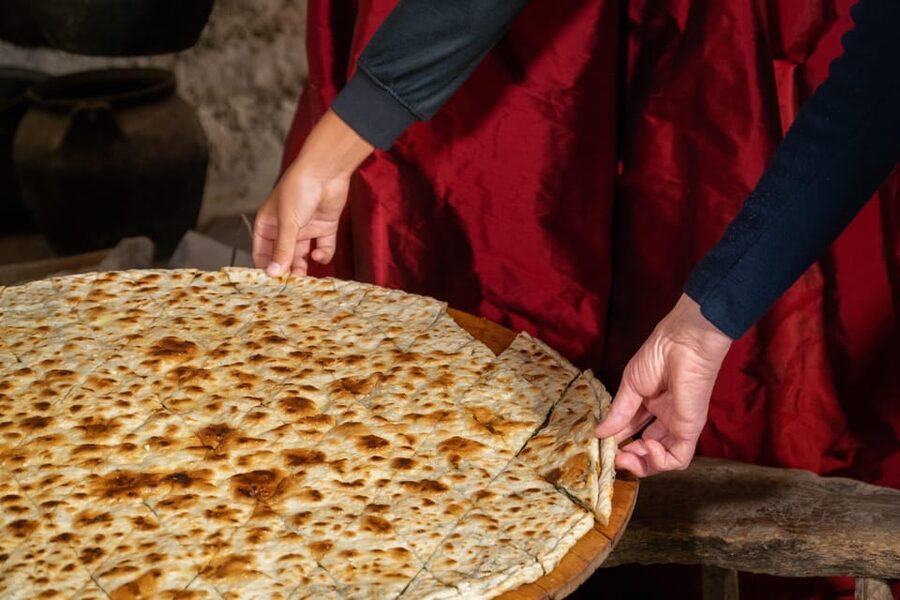
At $94 per person, this is not the least expensive way to eat in Dalmatia. You are paying for more than a slice of pie and a glass of wine, though. The price covers a private, guided activity, the cooking class, presentation, storytelling, aperitif, local dessert, soparnik tasting, and wine tasting.
The value is strongest if you care about personal contact and regional food traditions. A standard restaurant meal might cost less, but it would not give you the same access to the family hosts, the making of the dish, or the explanation of why soparnik belongs to the Poljica region.
The private-group format also changes the calculation. If you are traveling as a family or small party, the fee buys a shared activity with a clear beginning and end. You are not paying for a long itinerary filled with unrelated stops. You are paying for a focused visit built around one local specialty.
The value is weaker if you only want to sample soparnik quickly or if your schedule is tight enough that reaching Gata is inconvenient. Since transport is not included, factor in the cost and time of getting to Gospe od Smova 50. The class itself lasts 70 minutes, but the full outing will take longer once you include your journey there and back.
Who will enjoy this 70-minute class?
I would recommend this experience to anyone who wants a close look at Dalmatian food traditions without committing to a full-day cooking program.
It suits:
- Families with older children or teenagers
- Couples who prefer local food experiences to formal sightseeing
- Small private groups
- Visitors who enjoy meeting local hosts
- Anyone curious about Croatian heritage foods
- People who want a short activity that combines food, stories, and wine
The family review gives one useful clue about age. A group of five with a youngest participant aged 17 enjoyed the class, so it is clearly suitable for older teenagers. The supplied details do not state a minimum age, so families with younger children should confirm before booking if that matters.
The activity is wheelchair accessible, which is helpful for visitors who need that option. The information does not describe every surface or facility at the farm, so you may still want to confirm any specific access needs in advance.
This is not the best choice if you dislike shared tasks, cannot eat the ingredients used, or want a long, technical cooking lesson. The focus is one traditional dish, made as a group, followed by a tasting.
Timing, transport, and practical planning
The program lasts 70 minutes, with starting times shown according to availability. Because the class is short and begins at a fixed address, arriving at Gospe od Smova 50 with time to spare is sensible.
There is no included transfer. You must arrange your own way to Gata and back. The activity ends at the same meeting point, so you do not need to plan for a separate drop-off location.
The guide speaks English and Croatian. The group type is private, which means you can expect the experience to remain within your own booking party rather than joining a larger mixed group.
You can cancel up to 24 hours in advance for a full refund, and you can reserve now and pay later. Those terms are useful if your Dalmatian schedule is still changing, though they do not remove the need to plan your transport.
Should you book The Story of Soparnik?
Book it if you want to understand a regional Croatian food through the people who make it. The strongest reasons are the family setting, Nikolina’s welcoming guidance, the chance to take part in several stages of the preparation, and the traditional coal-baking method.
I would especially choose it for a private family group, a food-focused couple, or anyone who has already seen Croatia’s major sights and wants something more local. The two available ratings are both five out of five, and the comments highlight the history, the setting, and the warmth of Nikolina and her family.
Skip it if you need transport included, want a long cooking course, or are looking for a substantial multi-course meal. At $94, the value comes from the personal setting and cultural connection, not from the amount of food alone.
For the right visitor, this is a neat little window into Dalmatia: one dish, one family, one fire, and a story worth tasting.
FAQ
Where does The Story of Soparnik cooking class take place?
The class takes place in Gata at Gospe od Smova 50. The guide waits at the exact address.
How long does the activity last?
The program lasts 70 minutes. Starting times depend on availability.
What is included in the price?
The price includes an aperitif, local dessert, cooking class, presentation, storytelling, soparnik tasting, wine tasting, and guidance in English or Croatian.
Is transportation included?
No. Transfer is not included, so you must arrange your own transportation to and from Gata.
What wine is served with the soparnik?
The tasting includes Plavac Mali from Wine House Skaramuča on the Pelješac peninsula.
What is soparnik made from?
Soparnik is a thin pie made with Swiss chard and onion. It is baked over an open fire under hot coals and finished with extra virgin olive oil and garlic.
Can I participate in the cooking?
Yes. Participants take part in making one soparnik and may help with tasks such as cutting chard, rolling the dough, and twisting the edges.
What languages are available?
The live guide provides guidance in English and Croatian.
Is the activity wheelchair accessible?
Yes, the activity is listed as wheelchair accessible.
Newest classes around the world
- Aroidee’s Farm-Fresh Thai Cooking Experience★ 5.0 · 8 reviews
- Authentic Thai Cooking Class and Farm Visit in Chiang Mai★ 5.0 · 66 reviews
- Yummy Tasty Thai Cooking School in Chiang Mai★ 5.0 · 2 reviews
- Signature Thai Cooking Course★ 5.0 · 79 reviews
- Half Day Guided Thai Cooking Class in Chiang Mai★ 5.0 · 13 reviews
- Online Thai and Akha Cooking Class★ 5.0 · 70 reviews
- Northern Thai Cooking Class in Chiang Mai in a Countryside Home★ 5.0 · 2 reviews
- Private Half-Day Thai Cooking Class in Chiang Mai★ 5.0 · 4 reviews
Croatia Cooking Classes, compared.
Traditional Cooking Class in Dubrovnik Countryside
Read our review →
Traditional Dalmatian Cooking Class from Dubrovnik
Read our review →
Browse the lists this tour appears in