
Review · INDONESIA COOKING CLASSES
Ubud: Balinese Cooking Class at an Organic Farm
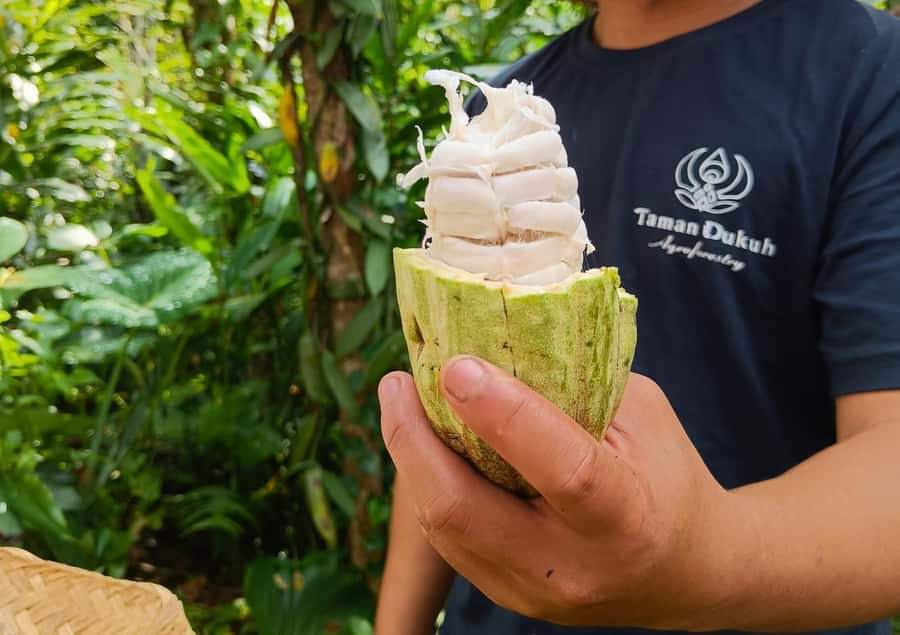
The best part of this Ubud cooking class happens before anyone turns on a stove. You visit a local morning market, taste unfamiliar fruit, walk through an organic farm, and pick vegetables that will soon land in your lunch. Then you cook six Balinese dishes in an open-air kitchen with a local instructor such as Buda, Depi, or Wayan.
I like the strong connection between farm and plate, and I like the generous menu. You do not merely prepare one curry and call it a class. You make spice paste, several savory dishes, and dessert, then eat the results. The main drawback is the travel time: the farm can be about an hour from central Ubud, and the return drive may meet heavy traffic.
Key points at a glance
- The 7:15 a.m. class includes a local market visit: This is the best choice if you want more contact with everyday Balinese food culture.
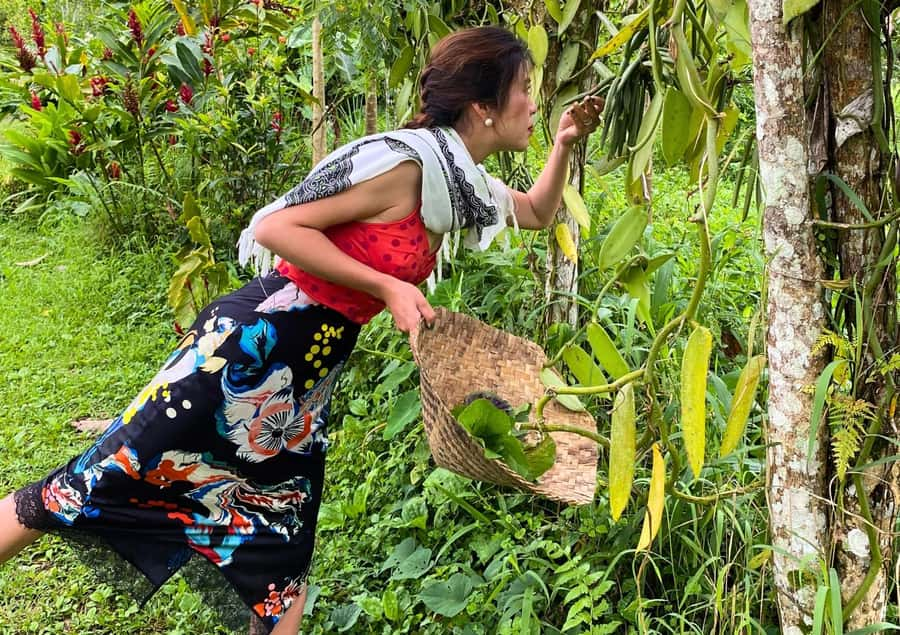
- You harvest ingredients at the farm: The vegetables you pick become part of the dishes you cook.
- Six dishes make this good value: You prepare starters, main dishes, and dessert rather than one short recipe.
- Vegetarians and vegans have a proper menu: The class includes gado gado, tempe curry, vegan sate lilit, and other plant-based dishes.
- The setting is peaceful and rural: The farm sits away from busy Ubud, among plants, trees, spices, and village scenery.
- You leave with recipes: A printed recipe book and downloadable PDF help you repeat the meal at home.
Why this cooking class feels different from a restaurant meal
Bali is full of cooking schools, but this one puts ingredients at the center. You start by seeing where food is bought and grown, not by sitting at a counter with prepared bowls in front of you.
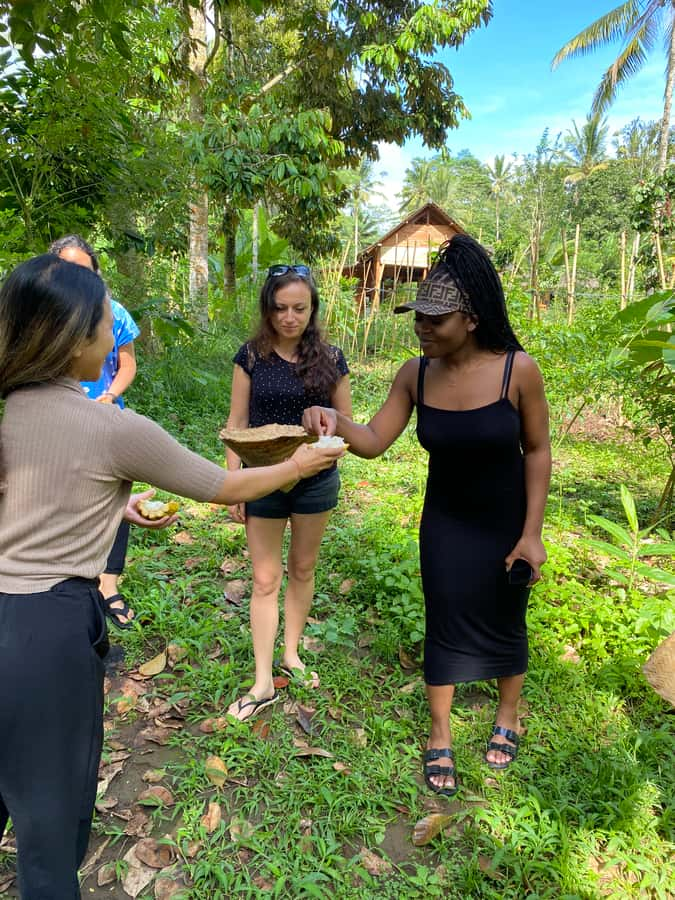
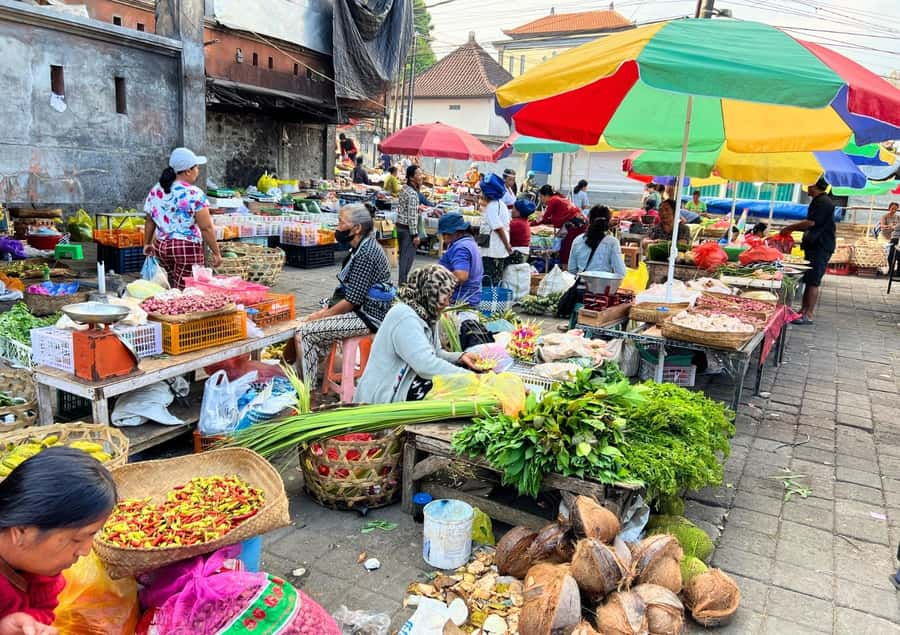
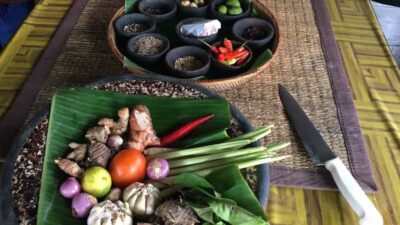
The morning option begins with a visit to a local market. Guides explain fruits, vegetables, and spices as vendors buy and sell the food needed for the day. You might taste local fruit and see ingredients that are easy to overlook on a restaurant menu. That makes the later cooking more meaningful, because you have already seen the food in its everyday setting.
After the market, transport takes you to the organic farm. The change is noticeable. Central Ubud can be crowded and noisy, while the farm provides a slower setting with trees, crops, fragrant spices, and open-air cooking stations. You receive coffee or tea and a light breakfast, often with fresh fruit and small bites, before the farm tour begins.
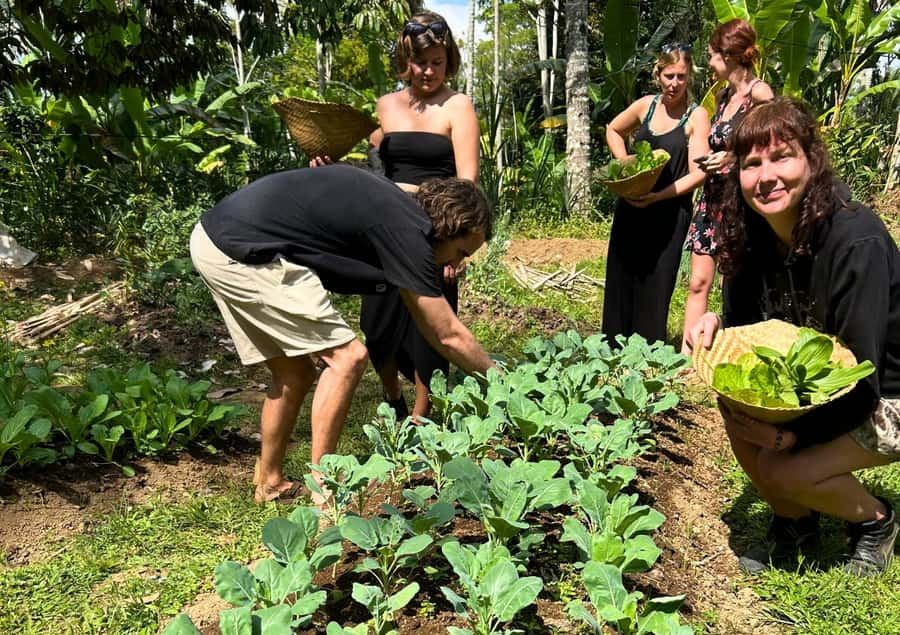
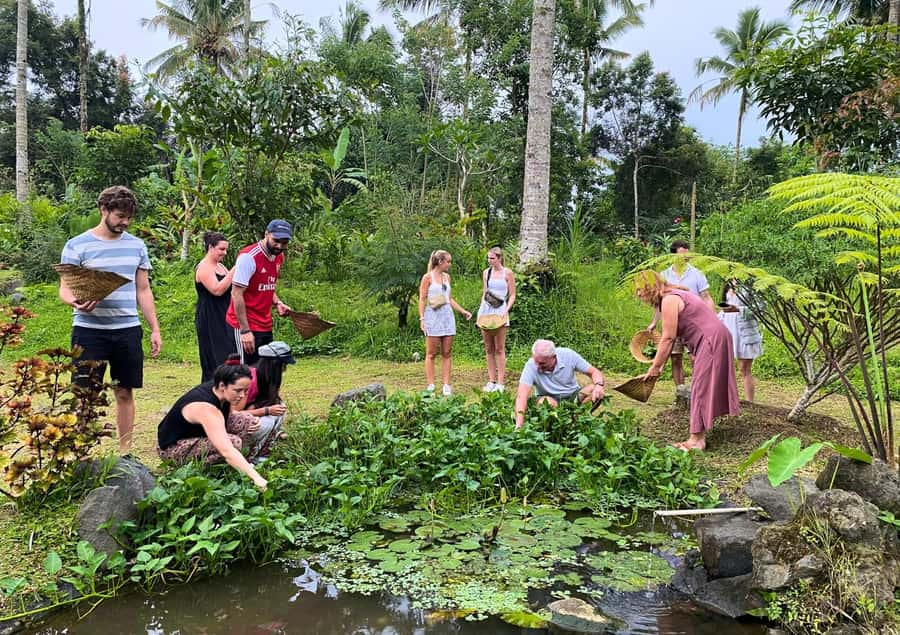
I especially like the farm walk because it gives you something to do with your hands. You are not just told that an ingredient is fresh. You help pick vegetables for the meal. The farm grows as much of its produce as possible, with additional ingredients coming from the local market when needed.
More Farm Cooking Classes in Indonesia
- From Ubud: Authentic Cooking Class in a Local Village
★ 4.9 · 1,325 reviews - Balinese Farm Cooking Class by Pemulan Bali
★ 5.0 · 410 reviews - From Ubud: Authentic Bali Farm Cooking School & Organic Farm
★ 5.0 · 122 reviews
The morning market and the ride beyond Ubud
The market visit is available with the morning class, and early timing matters. A start around 7:15 a.m. lets you see local shopping at the beginning of the day and leaves more time for the wider experience.
This is not presented as a large sightseeing market with a long list of stalls to photograph. Its value is more practical. You learn what people buy, how ingredients look before preparation, and how fruits and vegetables fit into Balinese cooking. Guides explain the food in English, and the market also provides a glimpse of ordinary daily routines.
The drive to the farm is part of the outing. The route may pass rice terraces, small villages, and jungle scenery. Some visitors have found the farm roughly an hour from the Ubud meeting point, so bring patience and consider the traffic when planning the rest of your day.
The shuttle from an Ubud meeting point is included, but the exact meeting point can vary by booking option. If you are staying farther from Ubud, ask about transport before committing. One participant received a private transfer after being outside the usual area, but you should not assume that arrangement is automatic.
For the shortest schedule, an afternoon or evening class may suit you better. You miss the market, but you still receive the farm visit and cooking lesson. Evening sessions have also been praised for their relaxed atmosphere, and the activity can run from 330 minutes to as long as eight hours depending on the option and timing.
Picking vegetables at the organic farm
The farm is more than a pretty backdrop. It explains why Balinese cooking relies so heavily on fresh aromatics, herbs, vegetables, coconut, and spice pastes.
Your guide takes you around the property and shows how a Balinese family uses nearby natural resources. You collect some of the vegetables for the class, then return to the open-air kitchen to prepare them. Seeing a plant in the soil before chopping it gives you a better sense of the food than a standard demonstration class can provide.
The farm also offers a welcome break from Ubud. If you like plants, gardens, or food production, you may enjoy this part as much as the cooking itself. One participant said the garden tour was the favorite portion of the day, even though the cooking was excellent.
Rain does not necessarily end the farm walk. Umbrellas may be provided, but you should still dress for a tropical outdoor activity and expect some walking on uneven ground. The experience is not suitable for wheelchair users, so mobility needs should be considered before booking.
Cooking six dishes in an open-air kitchen
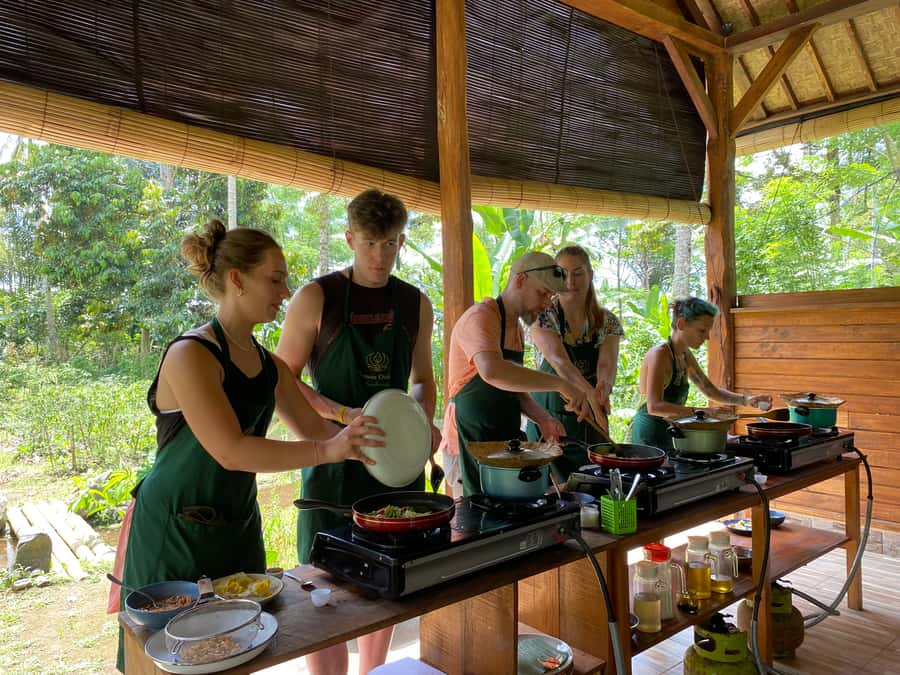
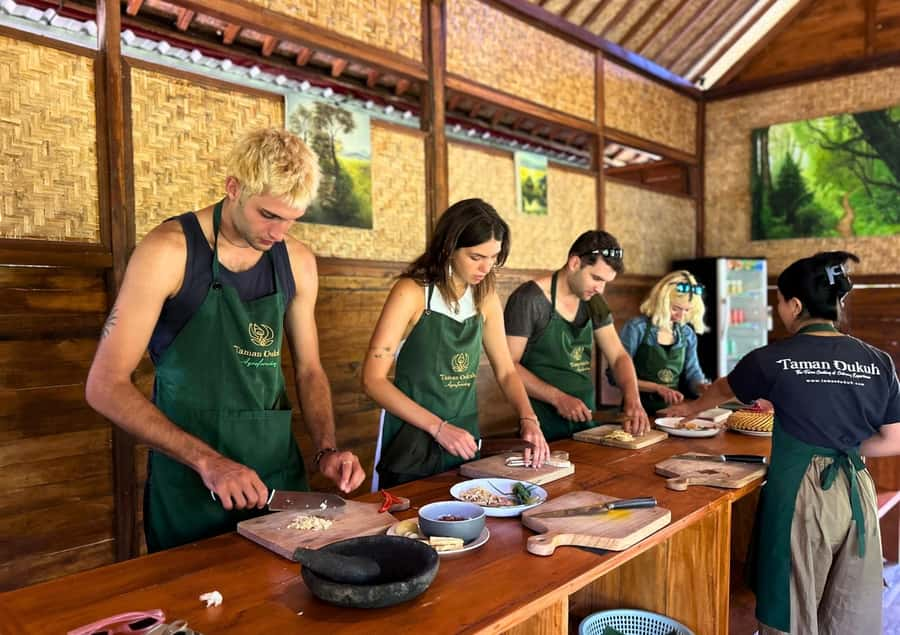
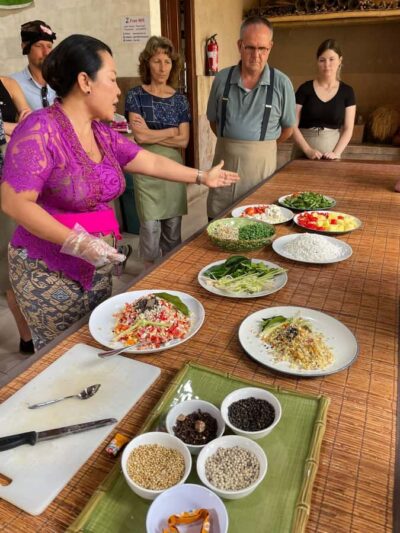
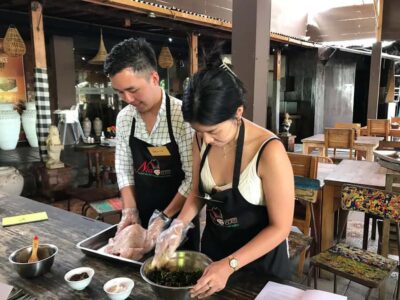
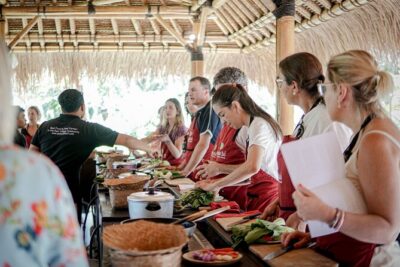
After the farm tour, your chef introduces the recipes and keeps the class moving. Each cooking station is shared by two people, and the group size can reach 14 people. There may be two or three groups at the farm during a session, so this is a social class rather than a private lesson.
The menu gives you a useful look at the structure of Balinese food. You begin with Base Gede, a traditional spice paste used as a foundation for many dishes. Learning this mixture is arguably more useful than memorizing one finished recipe, because it helps explain the flavor behind curries, vegetables, and meat dishes.
The regular menu includes:
- Sayur urab, mixed greens with coconut and spices
- Opor ayam, Balinese chicken curry
- Sate lilit, a kebab made with meat, coconut, and spice paste
- Pindang base tomat, fish with tomato sauce
- Tempe asam manis, sweet and sour tempe
- Pisang goreng or bubur injin for dessert
That is a substantial meal. Depending on how the class is organized, you may eat some dishes as they are finished rather than waiting for every course. This makes the session easier to follow and prevents the cooked food from sitting too long.
The class is suitable for beginners because the chef explains each step and handles some of the fiddly preparation. You still do meaningful work, but you are not expected to manage every technical detail alone. Guides such as Buda, Depi, and Wayan have been praised for clear explanations, humor, and patience. Instructor names can vary by date and session.
More Balinese and Indonesian Classes in Indonesia:
- Ubud Cooking Class Bali with Balinese Chef
★ 5.0 · 1,609 reviews - PRIVATE Authentic Balinese Cooking Class in Ubud at Putu’s Home
★ 5.0 · 644 reviews - Balinese Ubud cooking school (9 Dish Cooking and Market Tour)
★ 5.0 · 540 reviews - Ubud: Balinese Cooking Class and Market Tour
★ 4.8 · 531 reviews
The vegetarian menu is a real alternative
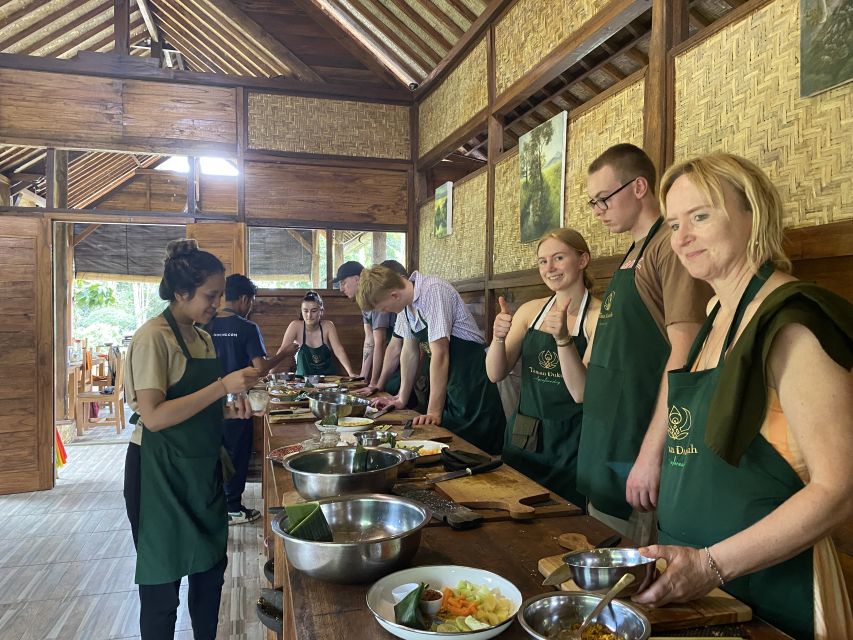
You do not have to choose meat to get a full meal. The vegetarian menu has its own set of dishes rather than simply removing chicken and fish from the regular menu.
You prepare Base Gede, then make gado gado with blanched vegetables and traditional peanut sauce. The menu also includes opor tempe, bergedel made with corn and Balinese spices, sweet and sour tempe, and vegan sate lilit made with jackfruit and spices.
Dessert is again either pisang goreng, banana fritters with coconut and palm sugar syrup, or bubur injin, a black rice pudding. This is a particularly good option for vegetarians and vegans who want to learn local food without receiving a reduced version of the standard class.
If you have strict dietary needs, state them when booking and again at the start of the class. A recent vegan group appreciated that non-vegan dishes were cooked separately, but the supplied details do not promise that every allergy or dietary request can be handled. Ask specific questions rather than relying on the menu label alone.
Eating the meal you prepared
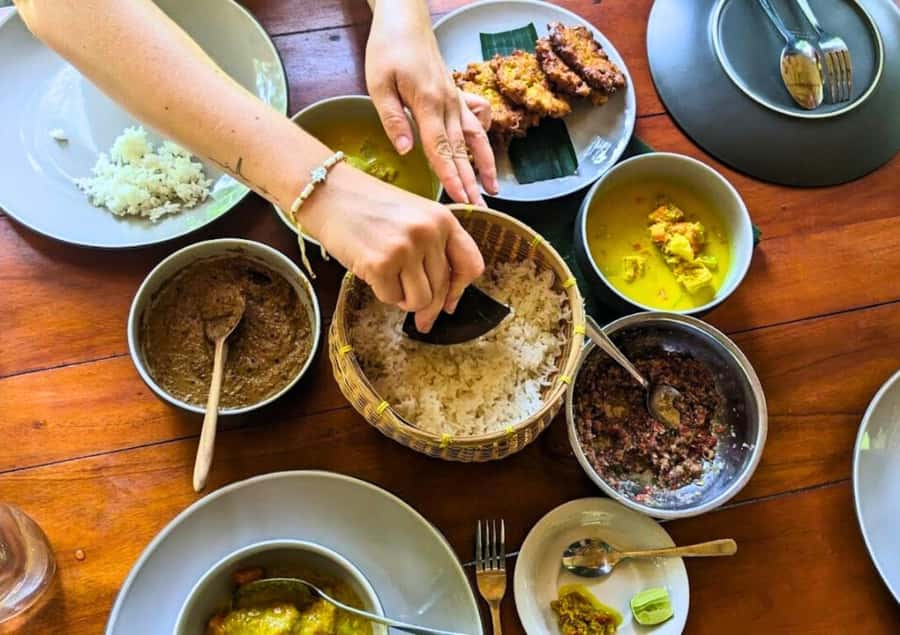
The final meal is the payoff, but it is not the only reason to book. The food is served in the farm setting, and the portions are large enough that many people leave very full.
You get to taste the difference between ingredients you have just picked and food prepared in a restaurant kitchen. You also understand the work behind the meal: pounding or combining spice paste, preparing vegetables, shaping sate, cooking the curry, and balancing sweet, sour, salty, and spicy flavors.
The class has a relaxed social side. You share a station with another person, work alongside other small groups, and eat together afterward. That suits couples, families, and solo visitors who enjoy meeting people. It may be less appealing if you want a quiet private lesson or a highly technical chef-training course.
Staff may take photos and short videos during the activity. Some participants have received a finished video afterward. This is a pleasant extra, but it should be treated as a bonus rather than a guaranteed part of the booking.
What the $32 price includes
At $32 per person, this is strong value if you use the full experience. The price covers the Ubud shuttle, morning market tour when you choose the early class, organic farm tour, harvesting, instruction, drinks during the class, and the meal you prepare.
You also receive a recipe book and a downloadable PDF with the latest recipes. That matters because a cooking class can be enjoyable in the moment but hard to repeat once you get home. Written recipes give you a real chance to make the spice paste, tempe dishes, curry, and dessert again.
Soft drinks and beer cost extra. Coffee, tea, mineral water, and the food you cook are included. The value is best for someone who wants a half-day or full-day activity, not someone seeking a quick one-hour lesson.
The total duration varies from 330 minutes to eight hours. Check the starting time and exact option carefully, especially if you have a dinner reservation, airport transfer, or another Ubud activity on the same day.
Group size, comfort, and practical limits
The maximum group size is 14, and two people share each cooking station. That is small enough for personal guidance, though the experience is not private. You should expect a working kitchen atmosphere with several pairs preparing food at once.
English and Indonesian are the available tour languages. The instructors are expected to guide the class throughout, and several have been praised for clear English explanations. Still, a cooking class involves demonstrations, shared equipment, and hands-on work, so it may feel less polished than a private kitchen studio.
Wear clothes you can move in and shoes suited to the farm. The experience includes outdoor walking, plant picking, and food preparation. Pets are not allowed, and the activity is not suitable for wheelchair users.
The cancellation policy is fairly flexible: you can cancel up to 24 hours before the activity for a full refund. You can also reserve now and pay later, which helps if your Bali schedule is still changing.
Who should book this Ubud cooking class?
I would choose this for anyone who wants more than a restaurant meal and prefers food experiences tied to local life. It suits first-time cooks, families, couples, solo visitors, and people who enjoy gardens as much as kitchens.
The morning class is the strongest choice if you want the fullest program. You see the market, taste fruit, visit the farm, pick ingredients, cook, and eat. The afternoon or evening option works better if you dislike early starts or already have plans in the morning.
You should think twice if you have limited mobility, dislike shared workstations, or want to remain close to central Ubud. The farm is outside the main center, and traffic can make the return slower than expected.
Should you book it?
Yes, if you can spare most of a day and want a hands-on introduction to Balinese food. The combination of market, farm, cooking, and a large meal gives you more substance than a short demonstration, while the $32 price includes transport, instruction, ingredients, drinks, and recipes.
Choose the early class for the market and the fullest cultural context. Choose the vegetarian menu if you want a serious plant-based lesson. Just allow extra time for the drive and remember that the class is shared, outdoors, and active.
FAQ
How much does the Balinese cooking class cost?
The listed price is $32 per person.
How long does the experience last?
The duration ranges from 330 minutes to eight hours, depending on the option and starting time. Check availability for the exact schedule.
Is transport from Ubud included?
Yes. A shuttle from an Ubud meeting point is included, though the meeting point may vary by booking option.
Does every class include a market visit?
The local market tour is included with the morning class. It is not listed as part of every afternoon or evening option.
How many dishes will I cook?
You prepare six dishes. The exact menu depends on whether you choose the regular or vegetarian option.
Is there a vegetarian or vegan menu?
Yes. The vegetarian menu includes dishes such as gado gado, opor tempe, bergedel, sweet and sour tempe, vegan sate lilit, and a dessert.
How large is the group?
The maximum is 14 people per group. Each cooking station is shared by two people, and there may be two or three groups at the farm during a session.
What do I take home after the class?
You receive a recipe book and a downloadable PDF containing the latest recipes. Drinks during the class and the meals you prepare are included. Soft drinks and beer cost extra.
Newest classes around Indonesia
- Pure Bali Village Experience, Cooking & Jamu Class+VIP Transfer★ 5.0 · 16 reviews
- Spice Garden, Jamu & Cooking Class in Bali Village★ 5.0 · 5 reviews
- The Authentic Balinese Cooking Experience★ 5.0 · 4 reviews
- Seminyak : cooking class traditional food bali★ 5.0 · 5 reviews
- Seminyak: Vegetarian Cooking Class★ 5.0 · 3 reviews
- Quad ride, waterfalls & aunthentic cooking class in munduk★ 4.9 · 53 reviews
- Pure Bali Village Experience Cooking & Jamu Class, Transfer★ 4.8 · 5 reviews
- Ubud: Organic Farm Harvest, Bali Cooking Class by Pemulan★ 4.8 · 12 reviews
Indonesia Cooking Classes, compared.
Cooking Class with Transfers and Optional Market Visit
Read our review →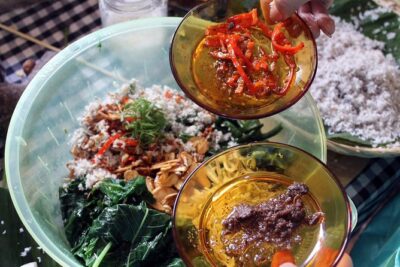
PRIVATE Authentic Balinese Cooking Class in Ubud at Putu’s Home
Read our review →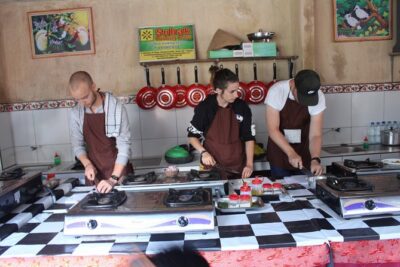
Balinese Ubud cooking school (9 Dish Cooking and Market Tour)
Read our review →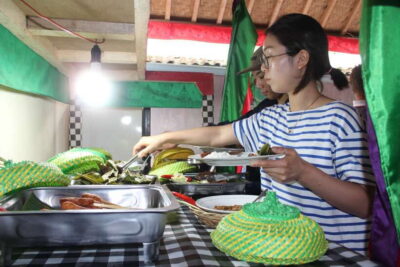
Browse the lists this tour appears in