
Review · VERONA COOKING CLASSES
Verona: Authentic Pasta Making Class with a Local Family
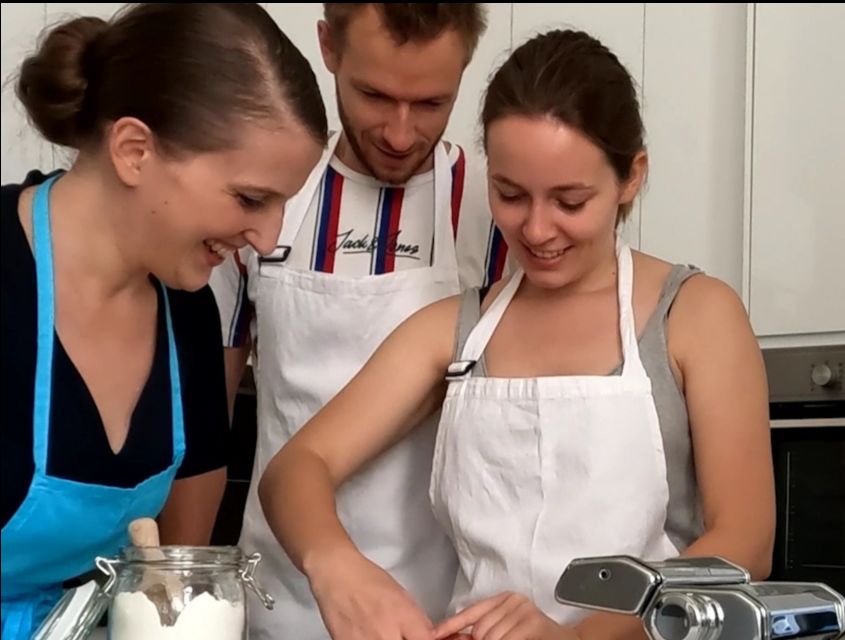
Fresh pasta is the heart of this experience. At Palazzo Balladoro, a historic building a minute from Castelvecchio, you work with flour and dough rather than simply watching a demonstration. Vallì, also known as Valentina, teaches the methods, while Dave helps keep the evening light and social.
I like the small group of up to 10, which gives you room to practice and ask questions. I also like the full meal at the end: you eat the tagliatelle and ravioli you made, along with two sauces, a third course, water, and a glass of regional wine. The main consideration is time. At four hours, this is a full evening, not a quick activity between major sights.
Key points to know
- Make several pasta shapes: Practice tagliolini, pappardelle, tagliatelle, farfalle, maltagliati, decorated pasta, colored pasta, and ravioli.
- Learn from Vallì and Dave: Vallì leads the pasta instruction, while Dave adds an entertaining, welcoming presence.
- Eat your own work: The class ends with a three-course dinner based on what you prepared.
- Taste food with little or no salt and sugar: This lets the basic ingredients come through clearly.
- Meet in central Verona: Palazzo Balladoro is about one minute from Castelvecchio and five minutes from the Arena.
- Take home practical help: Recipes and tips are included so you can keep practicing after your trip.
A pasta class that feels like a shared family meal
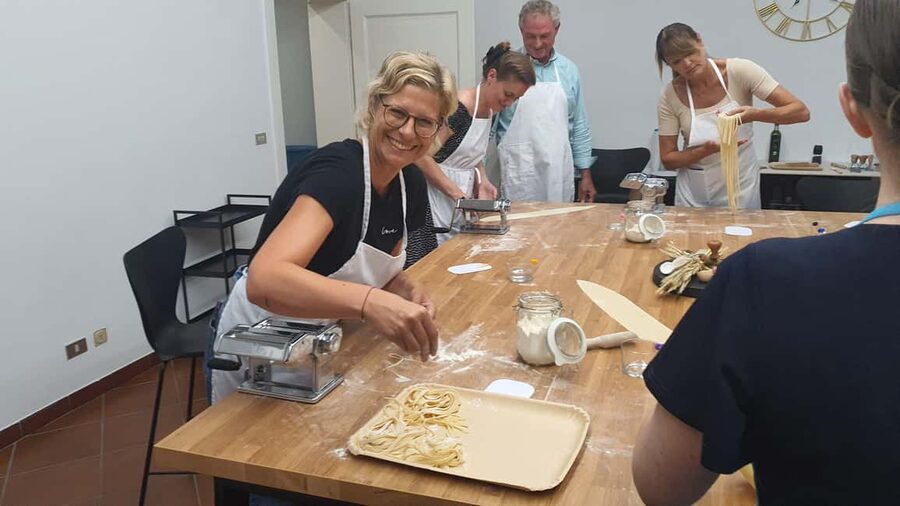
Many cooking classes put you behind a work surface, then send you away with a recipe card. This one aims for something more personal: you prepare food together, sit around the table, and share the meal in the same spirit as an Italian family dinner.
The experience is led by Vallì and Dave. Vallì teaches the pasta techniques, including the basic dough and the handling needed for different cuts. Dave helps create the easy conversation and humor that make a small group feel comfortable quickly. Several parts of the experience are clearly designed to be social, not just instructional.
That matters in Verona, where a meal can be as important as a monument. You still get a useful cooking lesson, but the evening also gives you time to meet people and talk over food. If you enjoy learning by doing, this is a better fit than a formal demonstration.
More Home Cooking Classes in Italy
- Pastamama, Home Cooking Classes at Grace’s Home
★ 5.0 · 521 reviews - Traditional Home Cooking Experience in Venice
★ 5.0 · 377 reviews - Catania: Pistachio Ravioli, Pasta Home Cooking Class w/ Wine
★ 4.7 · 204 reviews
Starting with dough, flour, and the basics
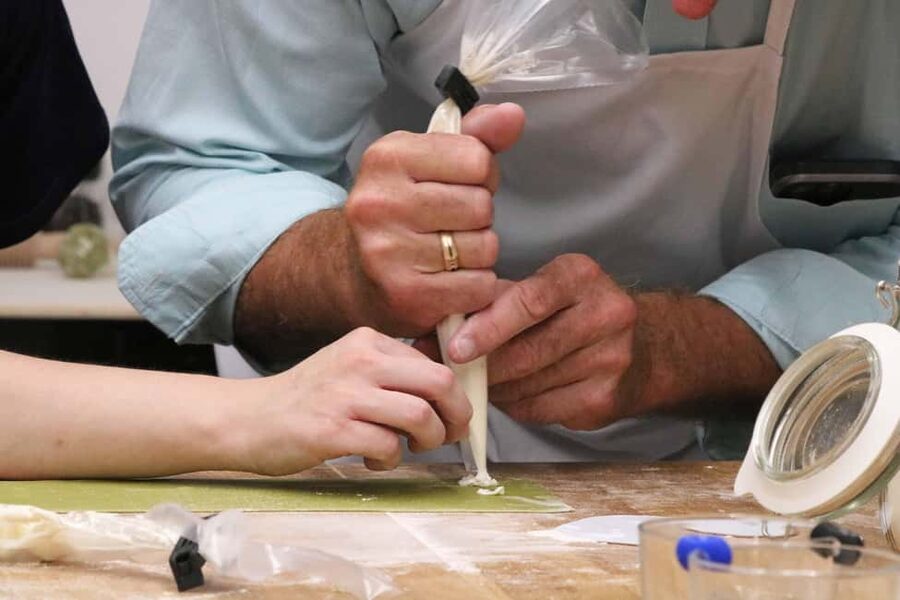
The class begins with pasta dough made from scratch. You put your hands in the flour, follow Vallì’s instructions, and work through the early steps that determine how the finished pasta will feel.
This is the useful part of the class for home cooks. Fresh pasta looks simple, but the dough needs the right texture and handling. Clear instructions are especially important here, and the format allows you to practice rather than just take notes.
You do not need to arrive as an experienced cook. The class is set up for different ability levels, with additional preparation options available. That makes it suitable for a first pasta lesson, while still giving more confident cooks new details to try.
The low or no salt and sugar approach is also deliberate. It lets you taste the pasta, fillings, and sauces without heavy seasoning covering them. You may find the food tastes plainer than you expect at first, but this helps you notice the basic ingredients and understand how the sauces work.
From tagliolini to pappardelle
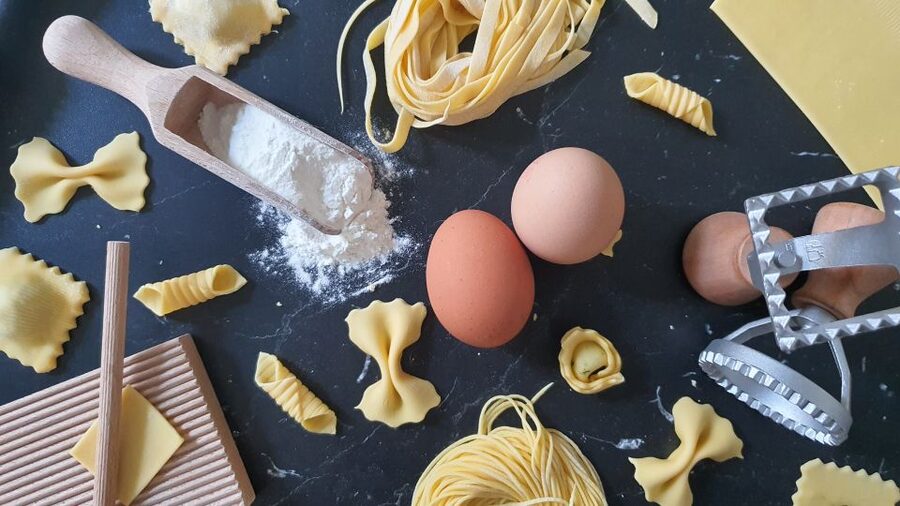
Once the dough is ready, the class moves through a broad set of pasta cuts. You learn the differences between fine tagliolini, wider pappardelle, and familiar tagliatelle. You also see how to make farfalle and maltagliati.
This range gives the lesson more value than a class focused on one shape. You begin to see that pasta is not only about a single recipe. The cut affects texture, sauce coverage, appearance, and cooking time.
Decorated and colored pasta are also included. These techniques add a visual element and can be a fun part of the lesson, especially if you enjoy making food for family or friends at home. The class does not appear to be limited to the quickest or most basic method, so you get a broader introduction to handmade pasta.
Still, the wide range means you should not expect professional-level mastery of every shape in one evening. The goal is a solid foundation. You will learn the method, practice several options, and leave with recipes and tips to continue working at home.
Making ravioli with a filling of your own
Fresh ravioli is another main part of the class. You learn how to prepare the pasta, form the filled pieces, and handle the dough so the ravioli holds together.
Ravioli adds a different skill from the long pasta cuts. You need to work carefully around the filling and seal the edges properly. It is a good lesson in precision, and it gives you another dish to repeat once you return home.
The combination of tagliatelle and ravioli also keeps the class varied. You are not repeating one task for four hours. You shift between long cuts, small shapes, decorative work, and filled pasta.
I would treat the recipes as a starting point rather than a final cooking course. The included tips help you practice later, but one session cannot cover every filling, dough variation, or sauce pairing. That is not a weakness so much as a realistic limit of the format.
More Pasta Making Classes in Italy:
- Florence: Pasta Cooking Class with Unlimited Wine
★ 4.9 · 10,285 reviews - 3 in 1 Cooking Class near Navona: Fettuccine, Ravioli & Tiramisu
★ 5.0 · 7,376 reviews - Florence: Pasta & Tiramisu Cooking Class with Unlimited Wine
★ 4.9 · 6,708 reviews - Florence: Pasta Cooking Class with Unlimited Wine
★ 5.0 · 6,413 reviews
Two quick sauces and a three-course dinner
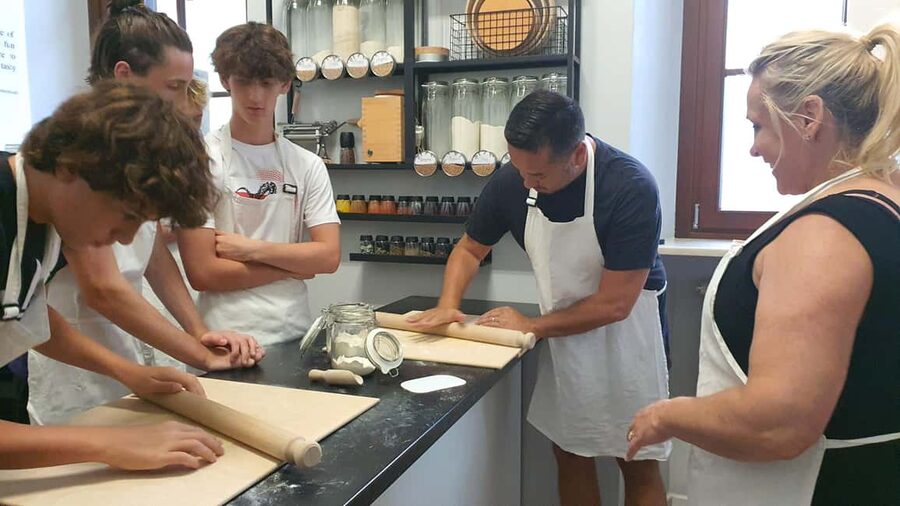
The class includes instruction in two quick and easy sauces. This is practical because pasta dough alone does not make a complete meal. You need to know how to finish the pasta and pair it with something that supports, rather than hides, the handmade texture.
After the preparation, you sit down and eat what you made. The meal is described as three courses, with unlimited still and sparkling water and one glass of a special wine from the Veneto region, produced by a small company.
This dinner is one of the strongest reasons to choose the experience. You are not merely carrying your pasta away or tasting one small portion at the counter. You get time to enjoy the food, talk with the hosts, and see how the class work comes together on the plate.
The meal also gives you a chance to compare the different cuts and preparations. Tagliatelle and ravioli can feel quite different, even when they come from related dough. The sauces help show why certain shapes are used for particular textures and flavors.
The wine is limited to one glass, so this is not a wine tasting. It is a regional accompaniment to dinner. If you are looking for a broader Veneto wine lesson, you will need a separate activity.
Vallì’s teaching and Dave’s easy humor
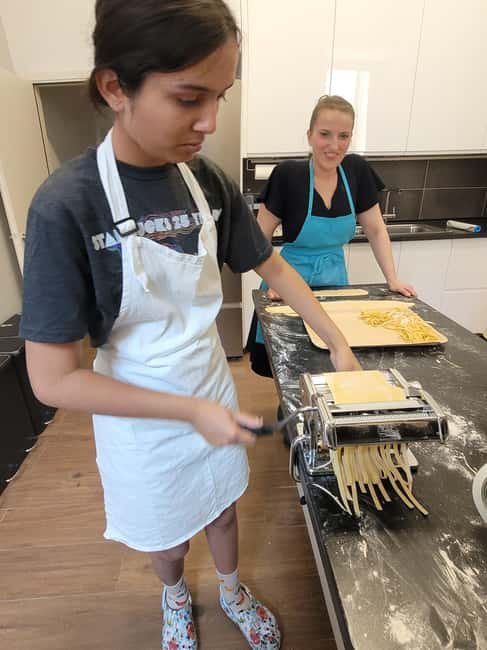
The hosts are a major part of the experience. Vallì, or Valentina, is described as the main teacher, with a clear and helpful approach to pasta making. Dave brings an amusing, relaxed presence to the evening.
That balance is valuable. A class can be technically sound but stiff, or friendly but disorganized. Here, the useful combination is clear instruction with plenty of laughter. The class is well planned, yet still feels informal enough for people with different cooking backgrounds.
You should expect to take part rather than sit quietly. The most useful moments come from trying the techniques yourself, asking questions, and correcting your dough or shaping as you go. If you prefer to watch a chef do everything, this may feel demanding. If you want to learn a skill you can repeat, the hands-on format is the right choice.
The group limit of 10 supports this style. It is small enough for personal guidance and conversation, without requiring the intimacy of a private lesson. Since the class is offered in English and Italian, you should check the language details when choosing your time if instruction language is important to you.
Palazzo Balladoro and an easy Verona location
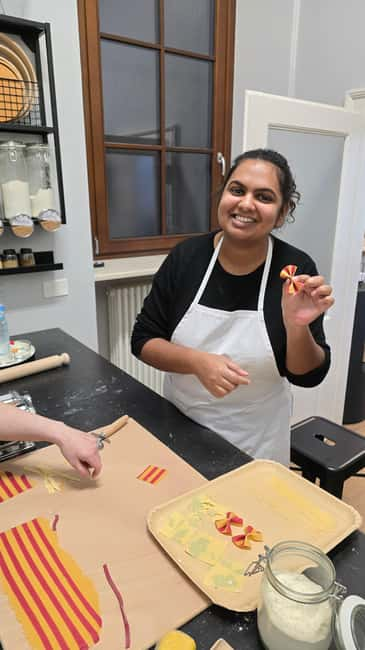
The meeting point is Palazzo Balladoro, a historic building in the center of Verona. It is about one minute on foot from Castelvecchio and roughly five minutes from the Arena.
That location makes the class easy to add to a day of sightseeing. You can spend the afternoon around Castelvecchio, walk through the central streets, and reach the cooking class without arranging transport across town. The activity ends back at the meeting point, so you are not left at a different part of Verona after dinner.
The central setting also helps the class fit into a short Verona visit. You can plan it around the city’s main sights rather than losing time on a long transfer.
The tradeoff is that this is an urban meeting point, not a rural food experience in the Veneto countryside. You come for the pasta lesson and family-style meal, not for farmland views, a market visit, or a tour of a food-producing estate.
How four hours affects your plans
The class lasts four hours, with starting times based on availability. Allow the entire block rather than trying to squeeze in another timed attraction immediately afterward.
This length makes sense for the program. You need time to make dough, try several pasta cuts, prepare ravioli, learn two sauces, and sit down for three courses. A shorter class would likely turn the lesson into a quick demonstration.
I would book this for an evening when you want one main plan. The class includes food, conversation, and instruction, so it can replace dinner and become one of your main Verona experiences for the day.
The activity is not ideal if you need a fast meal or have a packed schedule. It is also worth remembering that the class involves hands-on preparation. You should arrive ready to work, not expecting a passive dinner.
What the $107.62 price includes
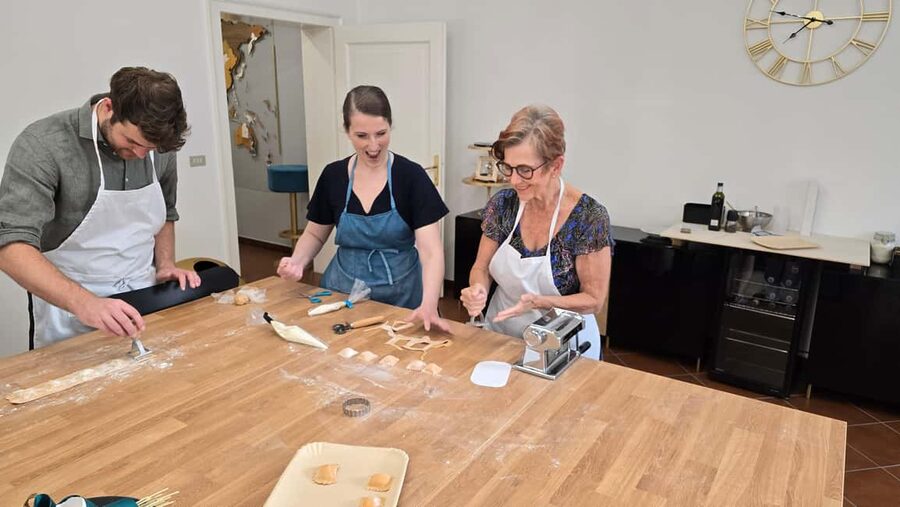
At $107.62 per person, the price is higher than a simple restaurant meal in Verona. The value comes from the combination of instruction, ingredients, a four-hour hosted experience, and dinner.
You receive a hands-on cooking class, a three-course meal, unlimited water, one glass of regional wine, recipes, and tips for making the pasta again at home. The practical part is important. You are paying for a skill you can continue using, not only for the meal served that night.
The small group also strengthens the value. A class limited to 10 people offers a better chance to receive corrections and ask questions than a large workshop. The family setting adds another layer, especially if you enjoy meeting your hosts rather than moving through a standard group tour.
The price may feel less worthwhile if you mainly want to eat pasta and do not care about learning the process. In that case, a restaurant will be cheaper and faster. But if you want a memorable evening with a useful cooking skill, the cost is reasonable for the amount of time and food included.
Who will enjoy this most
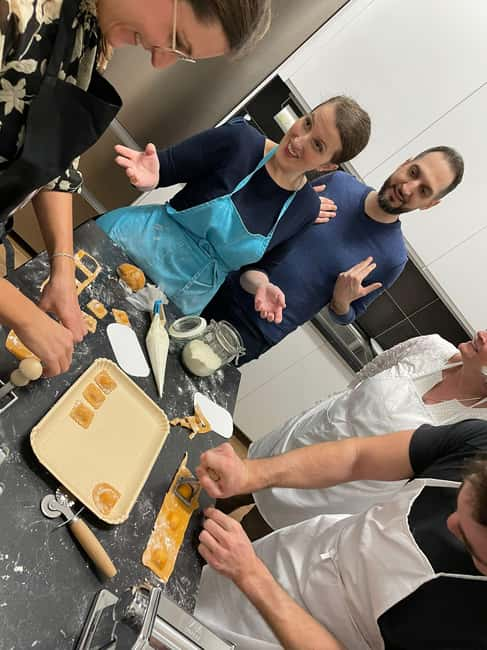
I would recommend this class to people who like active cultural experiences. You do not need serious cooking ability, but you should be willing to handle dough, practice several shapes, and participate in the meal.
It suits couples, friends, solo visitors who enjoy small groups, and families with an interest in food. The informal tone can also work well for people who want to meet others during a Verona stay.
The class is especially useful for:
- First-time pasta makers who want clear instruction
- Home cooks looking for fresh ideas and recipes
- Food-focused visitors who want dinner and an activity in one booking
- People who value a small group and direct contact with hosts
- Visitors staying near Castelvecchio or the Arena
You may want to choose another activity if you need a short, quiet, or highly formal lesson. The social side is central here, and the evening includes plenty of conversation and laughter.
Booking details worth keeping in mind
The experience accepts cancellations up to 24 hours before the start time for a full refund. You can also reserve now and pay later, which is useful when your Verona plans are still taking shape.
Bring an appetite, enthusiasm for Italian food, and a camera if you want photos of the evening. The hosts provide the cooking equipment and other essentials.
Since starting times vary, check the available slot before planning your day around it. The activity is offered in English and Italian, and the group is limited to 10 participants.
Should you book this Verona pasta class?
Book it if you want to do more than look at Verona’s famous sights. The class gives you a useful pasta foundation, a central location, a three-course dinner, and time with hosts who make the evening personal and fun.
I especially like the mix of practical instruction and shared meal. You learn tagliatelle, ravioli, several other cuts, colored and decorated pasta, plus two sauces. Then you eat the results with regional wine and take home recipes to keep practicing.
Skip it if you want a quick dinner, a large-scale chef demonstration, or a countryside food tour. For everyone else, the four-hour schedule and $107.62 price make sense when you count the meal, materials, small group, and instruction. This is a strong choice for a Verona evening that leaves you with both a full stomach and something useful to cook later.
FAQ
Where does the pasta class meet?
The class meets at Palazzo Balladoro, a historic building in central Verona. It is about one minute on foot from Castelvecchio and five minutes from the Arena.
How long does the experience last?
The cooking class and meal last four hours. Starting times depend on availability.
Who teaches the class?
Vallì, also known as Valentina, leads the pasta instruction. Dave helps host the evening and adds a humorous, welcoming presence.
What kinds of pasta can I learn to make?
You can learn tagliolini, pappardelle, tagliatelle, farfalle, maltagliati, decorated pasta, colored pasta, and fresh ravioli.
Is a meal included?
Yes. The experience includes a three-course meal made from the food prepared during the class, unlimited still and sparkling water, and one glass of regional wine.
What languages are available?
Instruction is available in English and Italian.
Can I cancel the booking?
You can cancel up to 24 hours in advance for a full refund. The experience also offers a reserve-now, pay-later option.
Newest classes around Italy
- Cooking Class in a Sicilian countryhouse★ 5.0 · 5 reviews
- Cesarine: Market Tour & Home Cooking Class in Catania★ 4.0 · 6 reviews
- Cesarine: Home Cooking Class & Meal with a Local in Catania★ 4.5 · 10 reviews
- Cooking Class in Taormina with Lunch Included★ 5.0 · 2 reviews
- Cooking class in Capri for small groups★ 4.0 · 4 reviews
- Cooking Class and Wine Pairing in Capri★ 5.0 · 57 reviews
- Lezione di Cucina : Pasta Fresca★ 5.0 · 12 reviews
- Private Cooking Class Experience in Reggio Calabria★ 5.0 · 5 reviews
Verona Cooking Classes, compared.
Verona: Pasta and Tiramisu Cooking Class with Fine Wine
Read our review →
Verona: Pasta and Tiramisu Cooking Class With Free Flowing Wine
Read our review →
Verona: Hands-on Fresh Pasta and Tiramisù Cooking Class
Read our review →
Verona: Italian Cooking Class with Pasta, Risotto and Tiramisù
Read our review →Browse the lists this tour appears in