
Review · SIENA COOKING CLASSES
Tuscan Cooking Class in Central Siena
The best part of this Siena cooking class is that you do not just watch a chef cook. You make fresh pasta by hand, help prepare a full Tuscan meal, and then sit down to eat it. Chef Francesco leads the class at a cooking school founded in 1996, with support from Giulia and an English-speaking interpreter when needed.
I like the simple, local character of the food, especially hand-rolled pici and pappa al pomodoro. I also like the small group limit of 15 people, since it gives you a better chance to handle ingredients and ask questions. The included Tuscan IGT wine turns the final meal into a relaxed shared dinner rather than a quick tasting.
The main thing to understand is that this is not always a fully hands-on class. You will work on key steps, especially pasta, chopping, and preparation, but the instructors may handle parts of the cooking to keep the meal on schedule. If you want to prepare every dish from start to finish, this may feel closer to a guided cooking demonstration.
Key points to know before booking
- A full Tuscan menu: You prepare food from starter through dessert, often around five recipes.
- Fresh pasta is central: The menu may include pici, ravioli, or gnocchi, depending on the day.
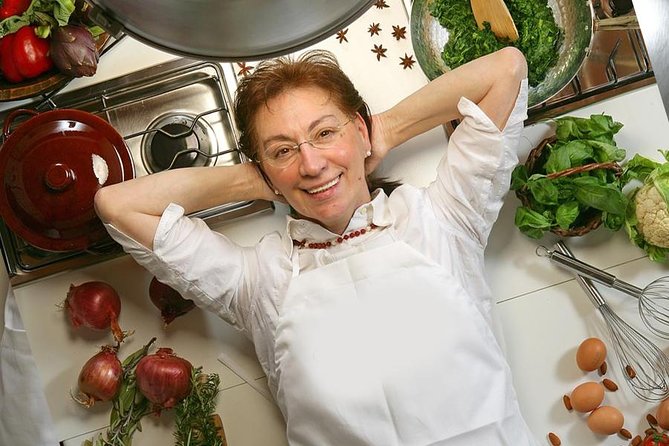
- Chef Francesco leads the lesson: His focus is traditional family cooking and local ingredients.
- Dinner follows the class: You eat the food prepared during the lesson with a quarter bottle of wine per person.
- Small group setting: The class accepts no more than 15 people.
- Central Siena location: Meet at Scuola di Cucina di Lella, Via Fontebranda 69, at 4 pm.
A four-hour introduction to Tuscan home cooking
This experience gives you a useful look at the food many visitors enjoy in restaurants but rarely learn to make. Instead of focusing on elaborate restaurant tricks, the class centers on familiar Tuscan dishes, fresh pasta, straightforward ingredients, and methods you can try again at home.
The exact menu changes. That is a good thing if you want a broader sense of Tuscan cooking, though it means you should not book expecting one fixed set of dishes. The class can include a starter, soup, handmade pasta with sauce, a meat course with vegetables or potatoes, and a traditional dessert.
One sample menu includes pappa al pomodoro, pici with Aglione sauce, arista in porchetta with roast potatoes, and typical Sienese cakes. Other classes have included chicken scaloppini, panna cotta, vegetarian soup, tomato sauce, and almond cookies.
The menu has a clear local identity. Pappa al pomodoro makes use of bread and tomatoes in a thick soup. Pici is a hand-rolled pasta typical of southern Tuscany, thicker and more rustic than many familiar pasta shapes. Arista in porchetta brings roast pork flavors and herbs to the table.
I appreciate this kind of menu because it explains Tuscan cooking through dishes rather than through a lecture. You learn how a few basic ingredients can become a satisfying meal when the technique is right.
More Italian Classes in Italy:
- Cooking Class and Lunch at a Tuscan Farmhouse with Local Market Tour from Florence
★ 5.0 · 4,831 reviews - Tuscan Cooking Class and Dinner in Florence
★ 4.5 · 732 reviews - Rome Pasta Making Class with Italian Sauces and Wine Included
★ 5.0 · 645 reviews
Meeting Francesco at Scuola di Cucina di Lella
The school is at Via Fontebranda 69, in central Siena. The activity begins at 4 pm and ends back at the same location after roughly four hours. You do not need to arrange transportation between stops because there is only one main location.
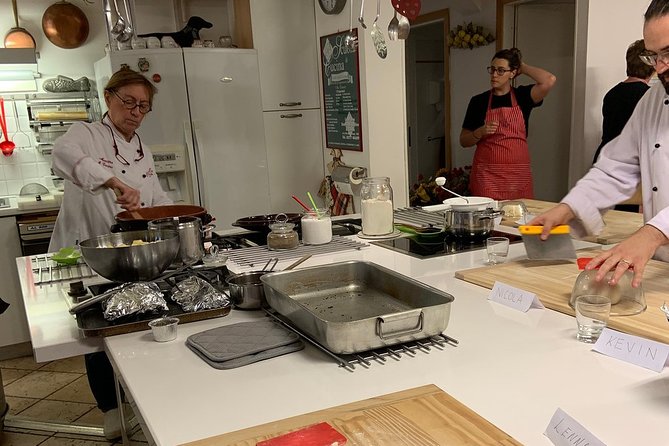
Scuola di Cucina di Lella was founded in 1996 and is described as Siena’s first cooking school. It is large and well equipped, which matters when several people need room to work around a kitchen.
Francesco, the owner, teaches the class. His approach is built around traditional Tuscan family recipes and local ingredients. The class is offered in English, and some sessions use an Italian presentation followed by English interpretation. Giulia has also helped with hosting and translation.
That bilingual rhythm can add a bit of time, but it also gives the lesson a more local feel. You may hear the name of an ingredient or technique in Italian before it is explained in English. The teaching is intended for cooks at different skill levels, and written recipes are provided so you can make notes and try the dishes later.
Bring a phone number when booking. The school requests it for quick communication, which is practical if the meeting details need to be clarified.
Making pici by hand
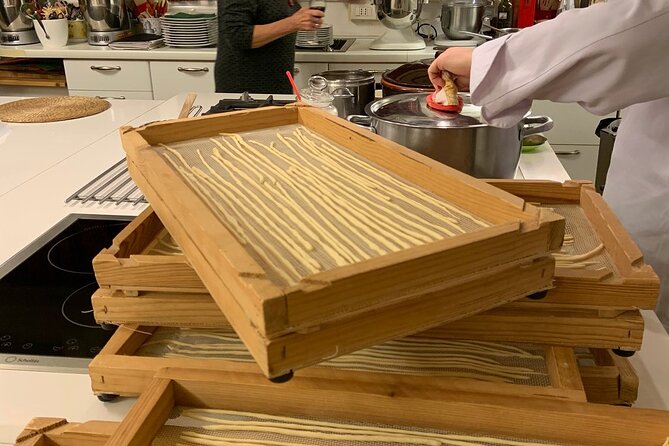
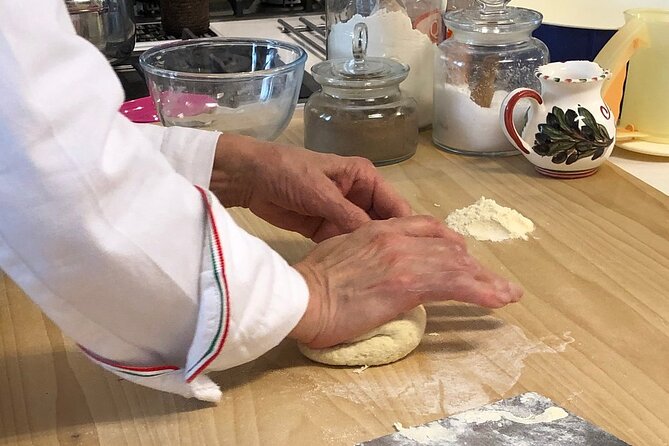
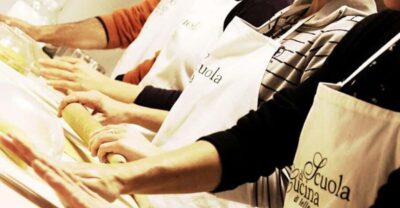
Fresh pasta is the main hands-on feature of the class. Depending on the menu, you may prepare pici, ravioli, or gnocchi. The sample menu uses pici with Aglione sauce, a local pasta that looks simple but takes practice to roll evenly.
Pici is made by hand into long, thick strands. It is not a polished factory product, and that is the point. You learn how touch, pressure, and consistency affect the finished pasta. Several people find this step harder than expected, but it is also the part most likely to give you a new skill to take home.
You may work in small turns while Francesco demonstrates and corrects the technique. Do not expect each person to make an entire portion of every dish. The class has a meal to finish, so the chef and assistants may take over some preparation.
That balance is worth knowing in advance. Beginners can enjoy the class without being left alone with an unfamiliar recipe, but experienced cooks may want more individual work. If your main goal is to make fresh pasta, pay close attention during the demonstration and take notes as you go.
From pappa al pomodoro to dessert
The starter or soup gives you a useful lesson in Tuscan thrift. Pappa al pomodoro turns bread, tomatoes, olive oil, and seasoning into a substantial dish. It is the kind of food that shows why Tuscan cooking often depends more on good handling than on a long list of ingredients.
The pasta course follows. You might prepare pici with Aglione sauce, tomato sauce, or another pairing. The sauces can change with the menu, as can the type of pasta. The school may also offer ravioli or gnocchi in place of pici.
A main course can include meat with a side dish. The sample menu features arista in porchetta and roast potatoes. Other sessions have used chicken scaloppini with herbs or shallots. These dishes are approachable for home cooks, and the recipes use ingredients you can generally find outside Italy.
Dessert may be a traditional Sienese cake or a sweet from another Italian region. Panna cotta has appeared on some menus, as have almond cookies. This variety keeps the class from feeling locked into a single formula, but it also makes the experience less predictable.
The class is especially useful if you want ideas you can recreate in your own kitchen. The food is not presented as a high-end performance. It is practical Italian cooking, with an emphasis on technique, balance, and knowing when a simple dish is ready.
More Cooking Classes in Italy:
- Florence: Pasta Cooking Class with Unlimited Wine
★ 4.9 · 10,285 reviews - 3 in 1 Cooking Class near Navona: Fettuccine, Ravioli & Tiramisu
★ 5.0 · 7,376 reviews - Florence: Pasta & Tiramisu Cooking Class with Unlimited Wine
★ 4.9 · 6,708 reviews - Florence: Pasta Cooking Class with Unlimited Wine
★ 5.0 · 6,413 reviews
How hands-on is the class?
This is the most important point to weigh before paying the price. The class includes participation, but the amount of work you personally do can vary. You may make pasta, chop herbs, stir a pot, or help with several stages of preparation. Francesco and the assistants may handle other tasks.
That approach makes sense for a group of up to 15 people. Cooking five recipes from starter to dessert takes time, and the instructors need to keep the courses moving so dinner is served within the four-hour window.
Some people will find the balance just right. You get direction, useful tips, and enough participation to understand the process without having to manage a full meal in an unfamiliar kitchen. Others may feel that the class is partly a demonstration, especially if they expected to prepare every dish themselves.
I suggest booking this with the right expectation: you are joining a guided group cooking lesson, not renting a workstation for a private chef course. Ask questions as soon as they arise, and take notes during the demonstrations. The written recipes are helpful, but some past participants found them brief and wished they had recorded more detail during the lesson.
The teaching style can also vary in how it feels from person to person. Most descriptions point to a lively, friendly, patient approach, but one account found the instruction too quick and the correction discouraging. If you are a nervous beginner, remember that the goal is to learn and enjoy dinner, not produce restaurant-perfect pasta.
Sitting down to eat what you made
After the cooking, the group eats the completed meal at the school. This is one of the strongest features of the experience. You see the food change from raw ingredients and half-finished dough into a complete Tuscan dinner, then taste the results with the people who helped make it.
The meal includes the dishes prepared during the class and a quarter bottle of Tuscan IGT wine per person. That is a modest serving rather than an open bar, but it is enough to pair wine with the meal. If you do not drink wine, check the arrangements when booking because the stated inclusion is wine.
The shared table adds a social side to the evening. Cooking gives people an easy way to talk, and dinner gives the group time to compare results and recipes. A class with only a few bookings may feel almost private, while a full group of 15 will be more active and less intimate.
The class begins at 4 pm, so plan for an evening activity rather than a quick afternoon stop. You may spend much of the first three hours preparing food before dinner is served. Do not arrive expecting to eat right away.
Is $157.28 a fair price?
At $157.28 per person, this is not a budget meal. The value depends on how much you want from the experience beyond dinner.
You are paying for about four hours of instruction, a meal with several courses, fresh pasta practice, the use of a well-equipped cooking school, recipes, and wine. You also get a central Siena activity that can replace an evening restaurant meal while giving you something to do together.
The price makes the most sense for you if you enjoy food, want direct contact with Tuscan cooking, or like bringing recipes home from a trip. It is less compelling if you only want to eat local food or if you expect intensive one-to-one instruction.
The school’s 15-person limit helps protect the value, but it does not guarantee constant hands-on work. A smaller class would give you more individual attention. If you happen to book on a quiet date, the experience may feel more personal, but the class size can change.
The activity is booked an average of 77 days ahead, so popular dates may fill early. You can cancel for a full refund up to 24 hours before the start time. If the minimum number of participants is not reached, the provider will offer another date or a full refund.
Who will enjoy this Siena cooking class?
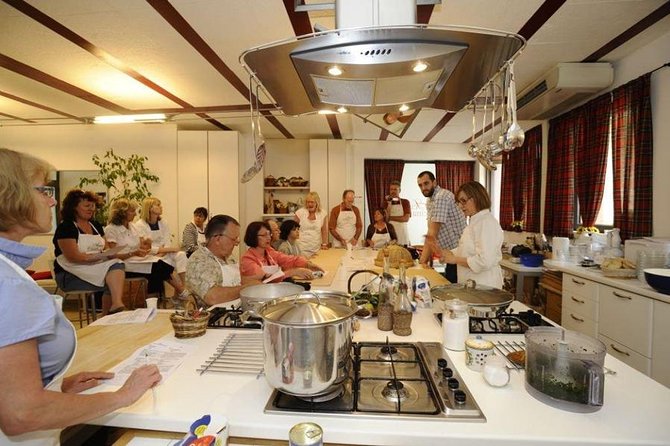
I would recommend it most strongly to:
- Couples who want a social evening with food at its center
- Families and friends who enjoy working on a shared meal
- Beginner cooks who want clear demonstrations and practical recipes
- Experienced home cooks looking for Tuscan ideas and small technique tips
- Visitors who prefer an activity that ends with dinner
- Anyone interested in handmade pasta, especially pici
It can also work well for teenagers, provided they enjoy participating in a group setting. One account describes a 16-year-old learning a lot from the class.
You may want to choose another experience if you need a private lesson, full control of every dish, or advanced culinary training. The class is in English for group sessions. Other languages, including French, German, Spanish, Japanese, Chinese, and Russian, are available only on request for private lessons.
Service animals are allowed, and the school is near public transportation. The supplied details do not specify allergy policies, vegetarian substitutions, or accessibility arrangements beyond that, so contact the provider before booking if those issues affect your choice.
My advice before you book
Read the menu as an example, not a promise. The school changes the recipes, although the format remains similar: starter, handmade pasta, main course, dessert, and wine.
Wear something you can cook in and be ready to participate. An apron may be available for purchase, but that detail is not included in the standard activity information, so ask the school if you want one.
Take notes during the lesson, particularly for pasta texture, cooking times, and sauce proportions. The supplied recipes are useful but may not include every detail you want when recreating the dishes at home.
I also recommend leaving the rest of your evening open. The class is scheduled for about four hours, and the meal comes at the end. You will get more from it if you treat the cooking and the dinner as one experience instead of waiting impatiently for the food.
Should you book it?
Book this class if you want to make fresh pasta, learn the logic of Tuscan home cooking, and eat a full meal in the same kitchen where you prepared it. Francesco’s traditional approach, the central Siena location, and the chance to share dinner with a small group make it a strong choice for food-focused visitors.
Skip it if you want every participant to cook every dish independently or if a cooking demonstration frustrates you. At $157.28, the experience earns its price through the length, the meal, the instruction, and the social evening, not through intensive private coaching. For most curious home cooks, that is a fair trade.
FAQ
Where does the cooking class take place?
The class takes place at Scuola di Cucina di Lella, Via Fontebranda 69, 53100 Siena, Italy.
What time does the class start?
The class starts at 4 pm.
How long does the experience last?
The cooking class lasts approximately four hours.
Is the class taught in English?
Yes. Group lessons are offered in English.
Can I request another language?
Other languages can be offered for private lessons on request. Listed options include French, German, Spanish, Japanese, Chinese, and Russian.
How many people can join the class?
The group has a maximum of 15 participants.
What food will I prepare?
You prepare a traditional Tuscan menu from starter through dessert, including fresh handmade pasta. The exact menu changes. A sample menu includes pappa al pomodoro, pici with Aglione sauce, arista in porchetta with roast potatoes, and a typical Sienese dessert.
Is dinner included?
Yes. After the lesson, you eat the food prepared during the class.
Is wine included?
Yes. The experience includes one quarter bottle of Tuscan IGT wine per person.
Can I cancel for a refund?
You can cancel at least 24 hours before the start time for a full refund. Cancellations or changes made less than 24 hours before the start time are not accepted for a refund.
Newest classes around Italy
- Cooking Class in a Sicilian countryhouse★ 5.0 · 5 reviews
- Cesarine: Market Tour & Home Cooking Class in Catania★ 4.0 · 6 reviews
- Cesarine: Home Cooking Class & Meal with a Local in Catania★ 4.5 · 10 reviews
- Cooking Class in Taormina with Lunch Included★ 5.0 · 2 reviews
- Cooking class in Capri for small groups★ 4.0 · 4 reviews
- Cooking Class and Wine Pairing in Capri★ 5.0 · 57 reviews
- Lezione di Cucina : Pasta Fresca★ 5.0 · 12 reviews
- Private Cooking Class Experience in Reggio Calabria★ 5.0 · 5 reviews
Siena Cooking Classes, compared.
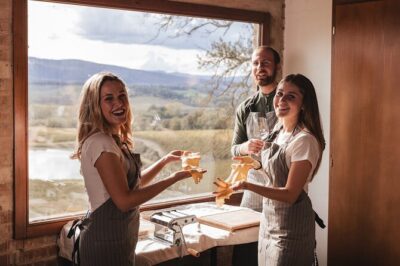
A Brunello Cooking Class with Vineyards View Winery
Read our review →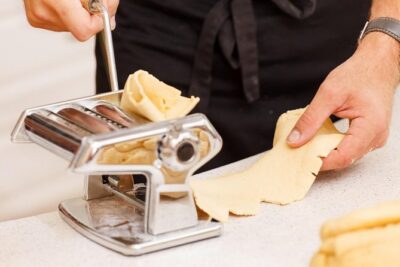
Small group Cooking Class in Chianti Farmhouse
Read our review →Small Group Cooking Class in Chianti Farmhouse
Read our review →
Traditional Tuscan Cooking Class with Fresh Pasta
Read our review →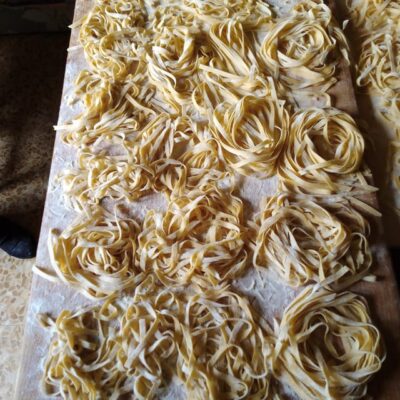
Siena countryside: cooking class in a real Tuscan farmhouse
Read our review →Browse the lists this tour appears in