
Review · FARM & COUNTRYSIDE COOKING CLASSES
Samarkand: Uzbek Cooking Class in a Village Home
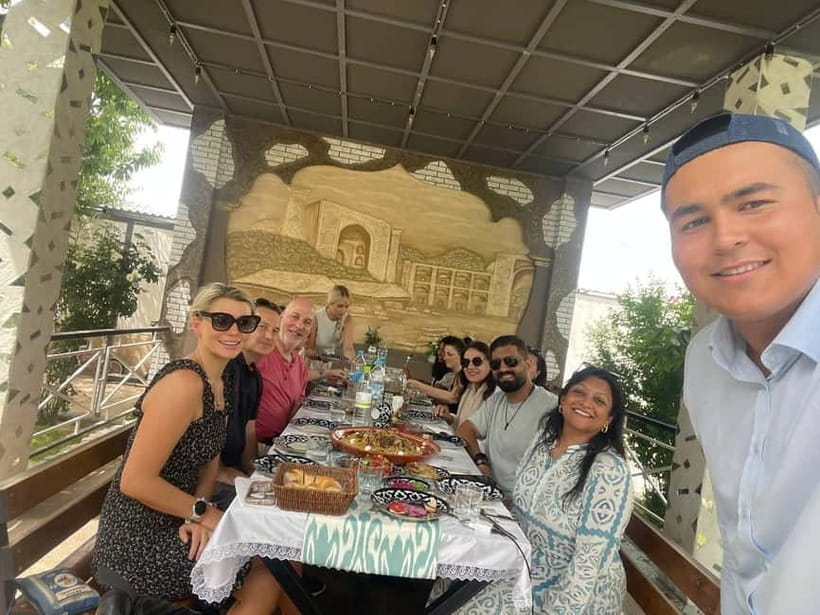
Uzbekistan’s best food lesson may happen far from a restaurant. About an hour outside Samarkand, Bekjon and his family welcome you into their village home, where you help prepare plov over an open fire and shape mantu dumplings by hand.
I like the family setting, especially the chance to cook with Bekjon’s mother and hear about ordinary village life. I also like the relaxed extras: feeding animals, walking through the garden, trying local snacks, and drinking green tea under a grapevine.
The main consideration is the food. Plov usually includes lamb or beef, and the cooking involves meat, so this is not a good match for vegans or most vegetarians. The one-hour drive each way also makes this a half-day commitment rather than a quick activity in Samarkand.
Key points at a glance
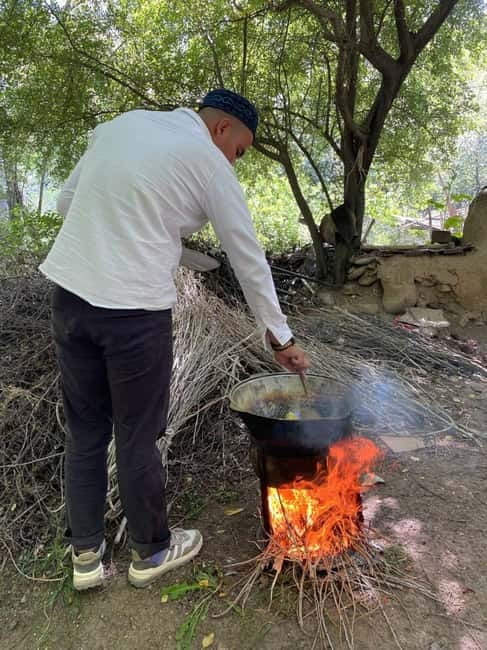
- Cook plov over a wood-fired stove: Help prepare rice, carrots, onions, meat, and spices in a traditional qozon.
- Make mantu by hand: Roll dough, add filling, shape the dumplings, and steam them in a mantuvarka.
- Meet Bekjon’s family: His mother often leads the hands-on cooking, with other family members helping explain local customs.
- See rural life near Samarkand: Walk through the garden, visit the animals, and see a clay-brick village home.
- Pickup is included: Bekjon can collect you from a hotel, train station, or airport in Samarkand.
- Plan for 5.5 hours: The village cooking portion lasts about 3 hours and 40 minutes, with transport included before and after.
Leaving Samarkand for a village kitchen
The experience begins with pickup in Samarkand. Bekjon has been praised for prompt communication and for asking about food needs and expectations before the day begins. That early contact matters, since the village is about an hour away and pickup can be arranged from a hotel, train station, or airport.
The drive gives you a useful change of pace. Samarkand is famous for its grand monuments and busy sightseeing schedule, but this outing moves into the countryside, where gardens, fields, and family homes replace tiled domes and city streets. You will not be rushing from one landmark to the next. The point is to see how food fits into everyday Uzbek life.
The route itself is part of the experience, though you should allow plenty of time for it. If your Samarkand visit is short, a 5.5-hour activity takes a sizable part of the day. I would schedule it on a day when you are not also trying to fit in several major monuments.
Some bookings have included a stop at a local market before reaching the family home. This offers a helpful look at the ingredients behind the meal and gives Bekjon a chance to explain local food traditions. The exact flow can vary, so treat the market visit as a possible addition rather than a guaranteed separate stop.
More Farm Cooking Classes in the world:
- Half-Day Thai Cooking Class at Organic Farm in Chiang Mai
★ 5.0 · 19,087 reviews - Cooking Class and Lunch at a Tuscan Farmhouse with Local Market Tour from Florence
★ 5.0 · 4,831 reviews - Chiang Mai: Authentic Cooking Class with Market & Farm Visit
★ 4.9 · 4,546 reviews
Entering the family home
The cooking takes place at a traditional village home made from clay brick, with fruit trees and vegetable patches around it. This is a working family setting, not a purpose-built cooking studio. That difference is important: the surroundings may feel less polished, but the experience is much closer to the way food is prepared for family gatherings.
Bekjon acts as guide and interpreter, while his mother and other family members help with the cooking. Several people have found the family atmosphere to be the strongest part of the day. You are not simply shown a finished dish and handed a recipe. You work alongside the hosts, ask questions, and sit down to eat what you helped prepare.
The home also gives you a window into daily village routines. Cows, sheep, chickens, and donkeys may be part of the visit, and you can feed the animals or stroll through the garden while the food cooks. These details may sound simple, but they add context to the meal. The vegetables, livestock, outdoor stove, and shared table all belong to the same way of life.
You should come ready for a rural home rather than a restaurant. Comfortable clothing is sensible, and sunscreen is useful when part of the cooking or waiting time takes place outdoors. Bring a camera if you want to record the garden, cooking process, and family setting.
Learning the slow art of Uzbek plov
Plov, also called pilaf, is the main event. In Uzbekistan, it is more than a rice dish. It is connected with family meals, holidays, weddings, and hospitality, and preparing it well takes patience.
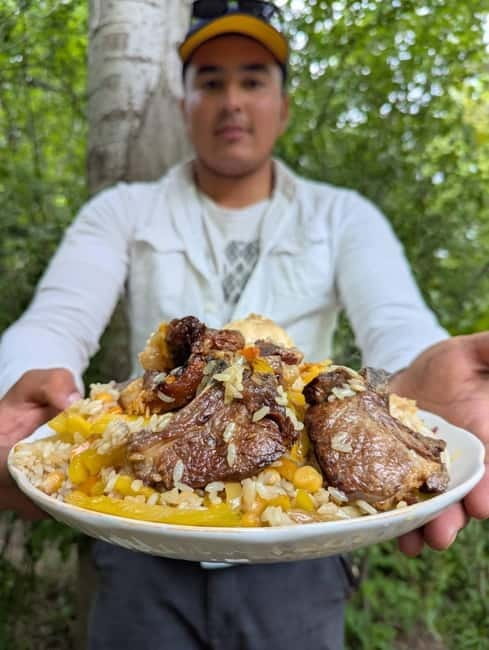
The dish is cooked in a qozon, a large cast-iron pot, over a wood-fired stove or open fire. You help prepare the core ingredients: rice, carrots, onions, lamb or beef, and spices. The host guides you through the order of preparation and shows you how the ingredients are layered so the flavors develop as the rice cooks.
This is hands-on, but it is not a technical cooking school with printed worksheets or formal stations. You will stir, taste, prepare ingredients, and help with the process while Bekjon and his family demonstrate the parts that require experience. That arrangement works well for a first introduction because you can ask questions as you go.
The open-fire cooking is especially memorable. It changes the pace of the lesson. You cannot simply turn a dial and walk away. The fire, heat, timing, and size of the qozon all matter, and the dish needs time to come together. While the plov simmers, the aroma spreads through the yard and gives you a natural pause in the activity.
The finished portion can be generous. One person has found it comfortable to share a plate with Bekjon’s mother, which also captures the communal nature of the meal. If you are not very hungry, do not expect a small tasting menu. This is home cooking prepared in a family-sized tradition.
Plov usually contains meat, so ask about your needs before booking. The stated restrictions specifically include vegans, vegetarians, people with food allergies, and people with diabetes. This is not a place to assume that every dietary adjustment can be made safely.
Making mantu with family guidance
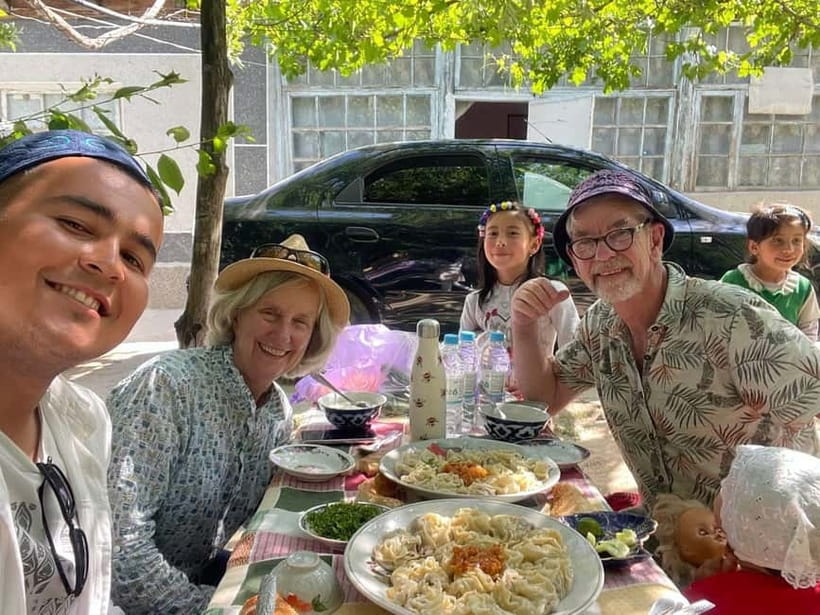
The second cooking task is mantu, steamed dumplings made from thin dough and a filling of minced meat and onions. You roll out the dough, add the filling, shape the dumplings, and place them in a multi-layered steamer called a mantuvarka.
Mantu takes a different kind of patience from plov. Instead of tending one large pot, you repeat a small series of steps many times. The shape does not need to be perfect on your first attempt. The useful part is learning how the dough is handled and how the family folds the dumplings for steaming.
This dish also shows the social side of Uzbek cooking. Mantu is often made by several people for holidays and family gatherings, so the work is shared. Sitting around the preparation area and making dumplings together gives you a better feel for that custom than eating mantu in a café would.
Vegetarian fillings such as pumpkin or potato are offered for mantu. That is a useful option, but it does not make the full experience vegetarian, since the class also focuses on meat-based plov and the setting involves cooking meat. Vegans should not book this activity.
The mantu portion can be particularly rewarding if you enjoy cooking with your hands. If you prefer a quick demonstration and a meal, this may feel slow. If you like learning a family technique and repeating it until the shape improves, it is one of the most engaging parts of the day.
More Cooking Classes in the world:
- Florence: Pasta Cooking Class with Unlimited Wine
★ 4.9 · 10,285 reviews - 3 in 1 Cooking Class near Navona: Fettuccine, Ravioli & Tiramisu
★ 5.0 · 7,376 reviews - Florence: Pasta & Tiramisu Cooking Class with Unlimited Wine
★ 4.9 · 6,708 reviews - Florence: Pasta Cooking Class with Unlimited Wine
★ 5.0 · 6,413 reviews
Tea, animals, and time to slow down
The cooking is only part of the visit. While the plov cooks or the mantu steams, you can explore the garden, feed the animals, and sit beneath a grapevine with green tea and local snacks.
This pause gives the experience its rural character. You have time to ask about the village, family customs, Uzbek food, history, and daily life. Bekjon speaks English, and his communication has been a major strength of the experience. Translation apps may occasionally help with family conversations, but the overall arrangement is designed for English-speaking visitors.
Some visits have also included traditional wedding clothes and an explanation of local customs. This is a pleasant cultural addition, but it is not listed as a guaranteed part of every booking. If it matters to you, ask Bekjon when arranging the activity.
The animal visit is simple rather than a formal farm tour. You may see cows, sheep, chickens, or donkeys and have the chance to feed them. That makes the activity appealing to families and anyone who wants a break from city sightseeing, though people with animal allergies should avoid it.
Eating what you helped prepare
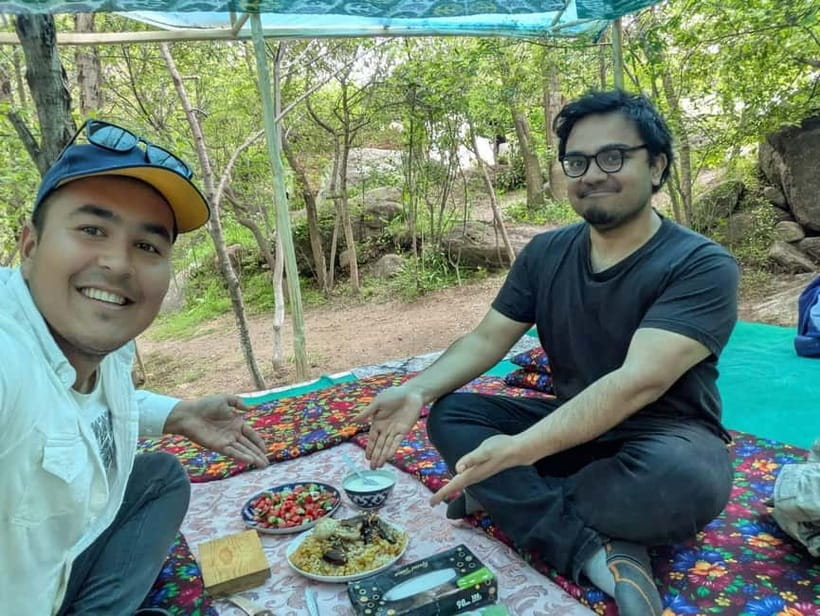
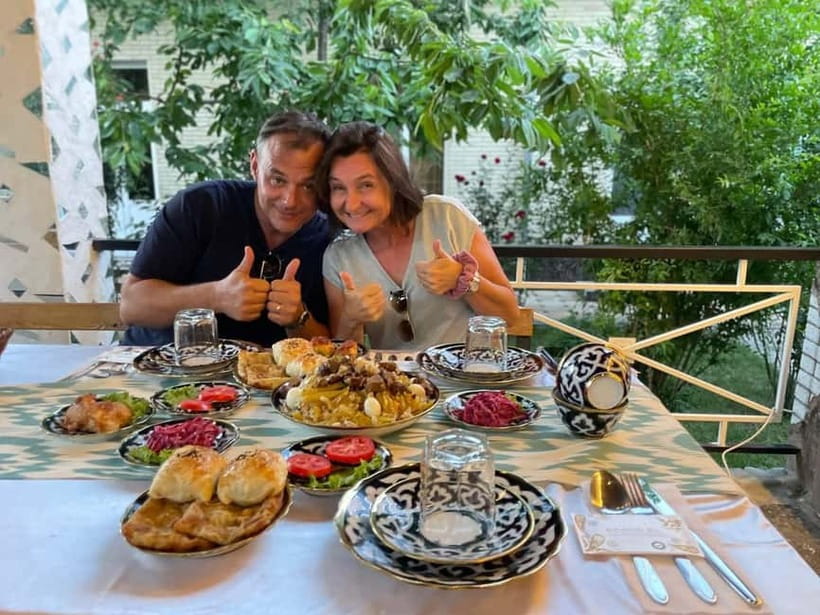
The meal is served after the cooking is complete, usually with tea and snacks. Eating together at the family home gives the day a clear purpose. You are not just watching a demonstration. You are sitting down to share food with the people who showed you how to make it.
The plov is prepared in the traditional outdoor style, and the setting adds flavor to the meal. The rice, carrots, onions, meat, and spices are tied to the work you have just done, so you can understand the dish as a process rather than a plate.
The shared meal may also require a little flexibility. Uzbek food is often served communally, and portions can be substantial. If you have a serious allergy, diabetes, or another medical concern, communicate it before booking and understand that the activity is specifically described as unsuitable for several dietary and health needs.
What the $52 price gets you
At $52 per person, the price is reasonable if you value personal transport and a family-hosted cultural activity. The fee includes the cooking class, ingredients, village tour, tea under the grapevine, and transfer from Samarkand to the village and back.
Transport is a meaningful part of the value. A private or arranged ride for roughly an hour each way removes the need to work out rural connections yourself. It also means you can spend the day focused on the experience rather than navigating unfamiliar roads.
You are also paying for access to a home setting that would be difficult to arrange independently. A restaurant can serve you plov, but it cannot easily show you the family garden, cooking fire, animals, household routines, and shared preparation that surround the meal.
The price is less attractive if you only want to taste Uzbek food or learn a quick recipe. You are committing 5.5 hours and spending much of that time in the countryside. For a short city break, that tradeoff may not suit you. For anyone interested in food, family life, and a slower look at the region, the inclusion of transport and ingredients makes the cost fair.
Personal expenses are not included, so bring some money for anything extra you may choose to buy. The core meal, tea, ingredients, and transfers are included.
Who will enjoy this experience most
I would recommend this outing to you if you want to:
- Learn how plov is made rather than simply order it
- Cook with a local family in a real home
- Spend time outside Samarkand
- Ask practical questions about Uzbek culture and daily life
- Try both plov and mantu
- Meet animals and see a village garden
- Enjoy a slower half-day with tea and conversation
It is also a good choice for solo visitors. Bekjon’s pickup service and active conversation help make the day feel personal rather than awkward, and the family setting gives you natural company.
Families and small groups may enjoy the hands-on tasks, especially the mantu shaping and animal feeding. Still, the activity is not suited to babies under one year, people with recent surgeries, people with serious back problems, people with animal allergies, or people over 95. The cooking may involve standing, bending, and working around an outdoor stove, so consider your mobility before booking.
Practical details before you reserve
The experience lasts 5.5 hours, including transport, with about 3 hours and 40 minutes set aside for the village cooking program. Starting times depend on availability.
Pickup is available from a Samarkand hotel, train station, or airport. Send the exact pickup address in advance so Bekjon can coordinate the meeting point.
The guide language is English. Bekjon has been described as easy to communicate with and able to discuss Uzbek history, culture, and village life. The family may sometimes use translation apps for more detailed conversations.
Wear comfortable clothes and bring sunscreen and a camera. Fireworks are not allowed, which is not likely to affect most visitors, but it is part of the activity rules.
You can cancel up to 24 hours before the activity for a full refund, and the reserve-now, pay-later option gives you some flexibility while finalizing your Samarkand plans.
Should you book this village cooking class?
Book it if you want a personal introduction to Uzbek food and family life, not just another meal. The combination of wood-fired plov, handmade mantu, tea under a grapevine, animals, garden time, and conversation with Bekjon’s family gives you a fuller picture of the countryside than a restaurant visit can offer.
Skip it if you are vegan, have serious food allergies, need a fully accessible activity, or have only a few hours in Samarkand. For everyone else, especially food lovers and curious first-time visitors to Uzbekistan, this is a strong-value half-day that connects the famous dishes to the people and routines behind them.
FAQ
How far is the village from Samarkand?
The village is about one hour from Samarkand. The full activity lasts 5.5 hours, including transportation.
Is pickup included?
Yes. Pickup and return transfer are included from a Samarkand hotel, train station, or airport. You need to provide the exact pickup address.
What dishes will I learn to make?
You will learn to prepare Uzbek plov and handcraft mantu, steamed dumplings. The plov is cooked over an open fire in a qozon, while the mantu is steamed in a mantuvarka.
Is the cooking class suitable for vegetarians or vegans?
The activity involves cooking with meat and is not suitable for vegans or vegetarians. Vegetarian fillings such as pumpkin or potato are available for the mantu, but the full experience still includes meat-based cooking.
Is the tour conducted in English?
Yes. The guide language is English, and Bekjon leads the experience. Translation apps may sometimes be used for conversations with other family members.
What should I bring?
Bring comfortable clothes, sunscreen, and a camera. You may spend time outdoors near the cooking fire, in the garden, and around the animals.
Can I cancel the booking?
Yes. Cancellation up to 24 hours before the activity qualifies for a full refund. You can also reserve now and pay later.
Newest classes around the world
- Aroidee’s Farm-Fresh Thai Cooking Experience★ 5.0 · 8 reviews
- Authentic Thai Cooking Class and Farm Visit in Chiang Mai★ 5.0 · 66 reviews
- Signature Thai Cooking Course★ 5.0 · 79 reviews
- Half Day Guided Thai Cooking Class in Chiang Mai★ 5.0 · 13 reviews
- Yummy Tasty Thai Cooking School in Chiang Mai★ 5.0 · 2 reviews
- Online Thai and Akha Cooking Class★ 5.0 · 70 reviews
- Northern Thai Cooking Class in Chiang Mai in a Countryside Home★ 5.0 · 2 reviews
- Private Half-Day Thai Cooking Class in Chiang Mai★ 5.0 · 4 reviews
Farm & Countryside Cooking Classes, compared.
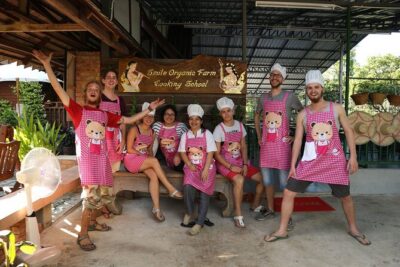
Half-Day Thai Cooking Class at Organic Farm in Chiang Mai
Read our review →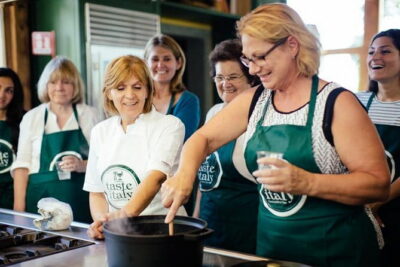
Cooking Class and Lunch at a Tuscan Farmhouse with Local Market Tour from Florence
Read our review →
Authentic Cooking Class with Market & Farm Visit
Read our review →

Hands-On Cooking Class & Farmhouse Tour on the Amalfi Coast
Read our review →Browse the lists this tour appears in