
Review · MOROCCO COOKING CLASSES
Rabat: Authentic Moroccan Cooking Class with Expert Chefs
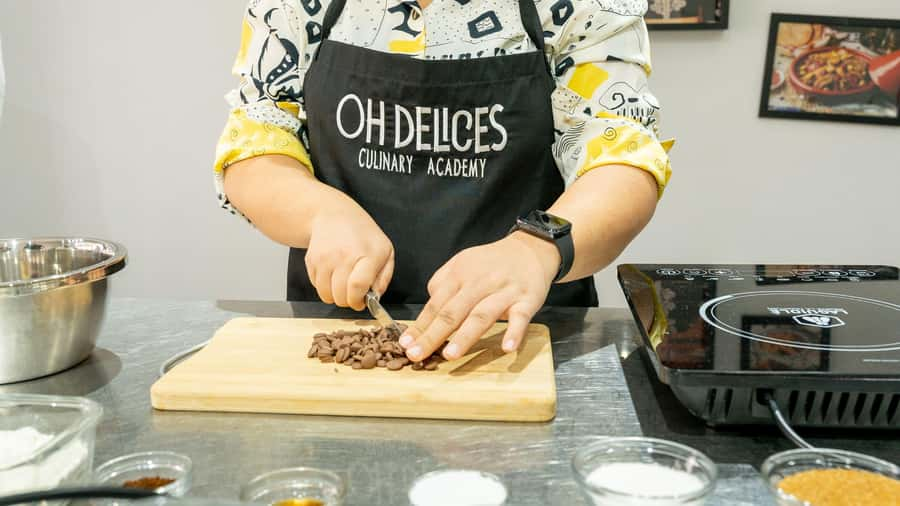
The best part of this Rabat cooking class is the chance to work with ingredients you may not meet in an ordinary restaurant, including fermented butter and preserved lemon. At OhDelices Culinary Academy, you cook a complete Moroccan meal rather than simply watch a chef work.
I like the small group of up to 10, which gives the class a friendly, practical feel. I also like the choice built into the menu: you may be asked what you want to prepare, although the final dishes can change to suit the group. The main drawback is that the cooking leaves strong spice smells on clothing, so do not wear your best shirt on the first night of a trip.
Key points at a glance
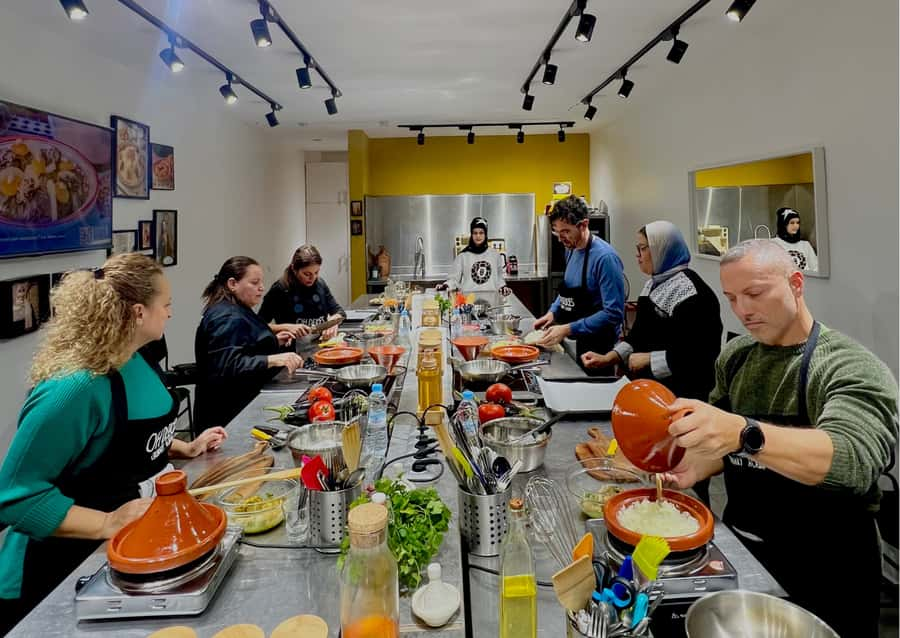
- Hands-on Moroccan cooking: Prepare dishes such as tagine, couscous, msemen, pastilla, starters, and desserts.
- Special local ingredients: Work with preserved lemon, fermented butter, Moroccan spices, and other ingredients that may be hard to find at home.
- Small and social: Groups are limited to 10, making it easier to ask questions and get help.
- Language support: Classes are offered in Arabic, English, and French, with a translator available for English sessions when needed.
- Meal included: Sit down afterward to eat the food you prepared, with Moroccan mint tea and conversation.
- Practical value: You receive the recipes, ingredients, equipment, chef instruction, and meal for $65 per person.
Cooking Moroccan food at OhDelices Culinary Academy
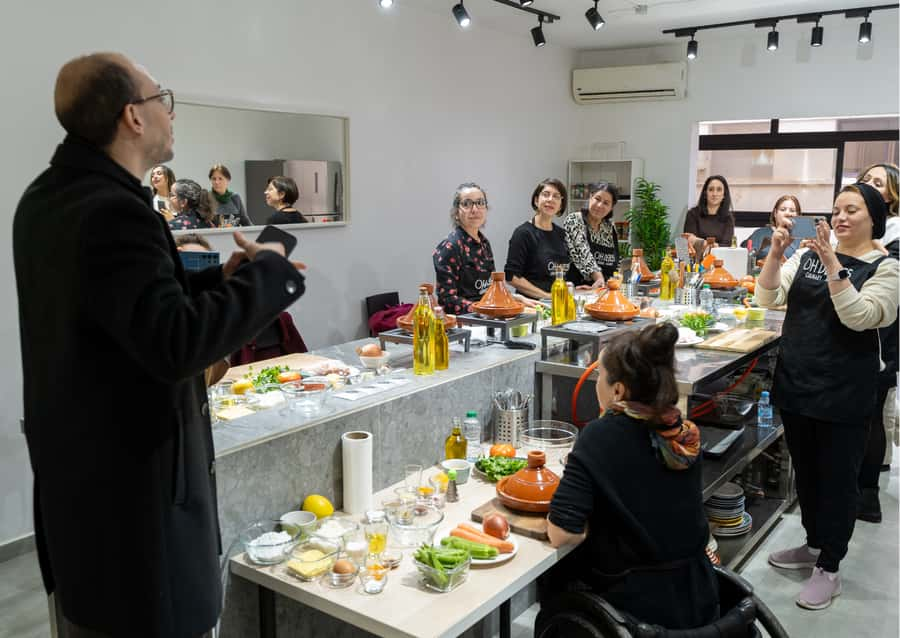
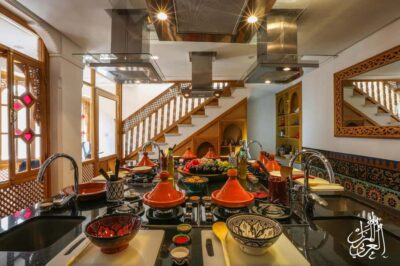
This is a three-hour class in Rabat, held at OhDelices Culinary Academy near the Goethe Center. You make your way to the studio yourself, since transportation is not included. The meeting point is in a building next to the Goethe Center building, so keep that landmark in mind when finding the entrance.
The class is designed for beginners as well as confident home cooks. You are not expected to arrive knowing how to shape bread or balance Moroccan spices. The chefs guide the work step by step, and the small group size means you should have room to participate rather than watch from the edge of the room.
The teaching team can vary. Chefs named in the experience include Loubna, Najat, Hannane, and Fatimah, with assistants and translators such as Malak and Oumaima helping during some sessions. In French-led classes, an assistant can translate the instructions into English. If clear English instruction matters to you, confirm the language arrangement when booking.
The tone is practical and relaxed. You chop, mix, season, shape, and cook, then sit down to eat. That simple pattern makes the class feel less like a demonstration and more like an afternoon spent in a Moroccan kitchen.
More Moroccan Classes in Morocco:
- Marrakech: Moroccan Cooking Class with Pickup
★ 4.6 · 1,862 reviews - Marrakech: Traditional Moroccan Cooking Class & Market Visit
★ 4.8 · 1,861 reviews - Marrakesh: Moroccan Dishes Cooking Class with a Local Chef
★ 5.0 · 1,615 reviews
Choosing dishes and building a full meal
The menu is not necessarily identical at every class. You may be asked what you would like to cook, but the final plan can be adjusted to suit the group and the ingredients available that day. That flexibility is useful, though it means you should not book expecting one exact dish with absolute certainty.
The class can include a full meal from starter through dessert. Possible dishes include:
- Moroccan tagine
- Couscous
- Pastilla
- Msemen and other traditional breads
- Eggplant starters
- Sweet Moroccan pastries and desserts
- Moroccan mint tea
A beef tagine, lemon chicken tagine, eggplant starter, and dessert pastry have all featured in recent sessions. The lemon chicken version is especially useful for understanding how Moroccan cooks use preserved lemon and fermented butter. These are not just decorative additions. They create the salty, sharp, rounded flavors that make the dish taste different from a standard chicken stew.
You may also work with spice blends and fresh seasonal produce. The important lesson is not only which spices to use, but how to use them without allowing one flavor to overpower the dish. The chefs can show you when to add spices, how to build flavor gradually, and how traditional ingredients affect the final result.
The hands-on cooking process
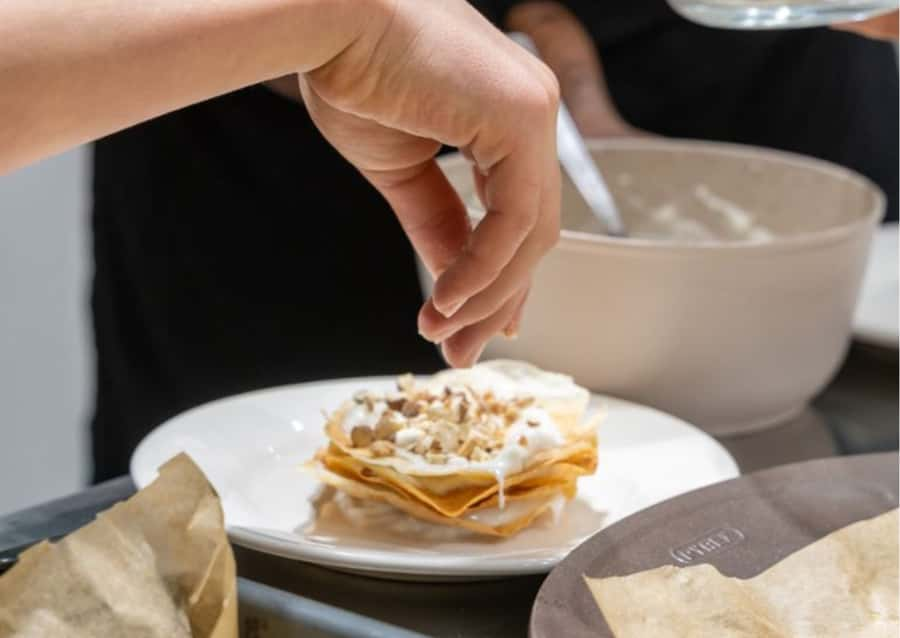
The class covers more than a single pot of tagine. You help prepare several parts of the meal, which gives you a better sense of how Moroccan cooking fits together.
A tagine may be the main project, but bread and pastry work add a different kind of skill. Msemen requires attention to dough, oil, and shaping. Pastilla and sweet pastries call for careful assembly. These tasks are useful because they show the contrast between slow-cooked savory food and delicate baked or pan-cooked items.
Couscous may also be included, depending on the group’s menu. It is a good dish for learning how texture matters. Moroccan food is not only about seasoning. Moisture, cooking time, layering, and the order in which ingredients are added all affect the result.
The chefs provide all cooking equipment and ingredients. You do not need to shop before arriving or bring specialist tools. Wear comfortable clothing and shoes, since you will be standing and working around food for much of the three hours.
I would bring only what you need. Spices can leave a lingering smell on fabric, and one participant noted that the scent stayed on clothing for the rest of the trip. That is not a serious problem, but it is worth knowing if this class falls on your first evening in Rabat.
What makes the ingredients worth learning about
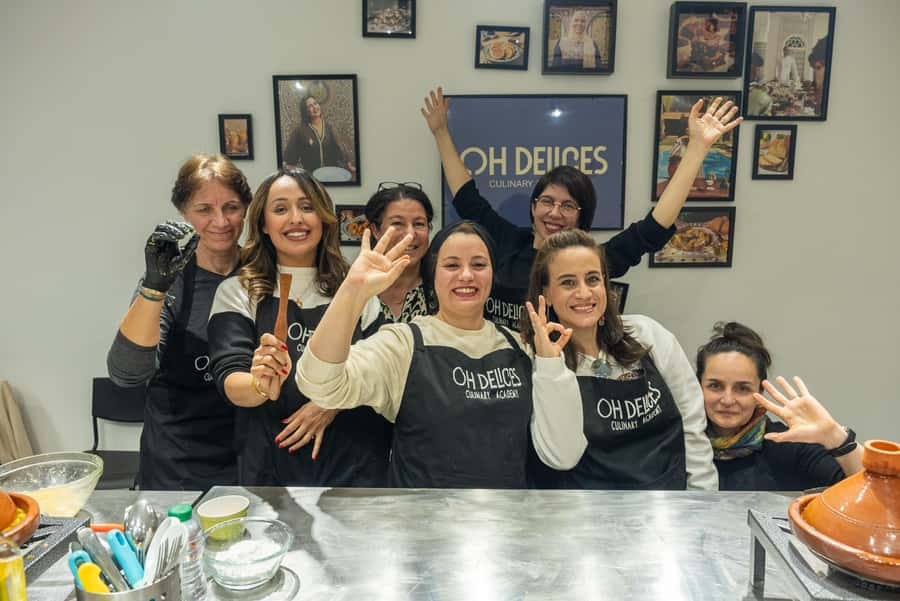
A restaurant meal shows you the finished dish. This class gives you the reasons behind it.
Preserved lemon is a good example. In a lemon chicken tagine, it contributes more than fresh citrus juice would. You learn how a preserved ingredient changes the balance of salt, acidity, and aroma. Fermented butter offers another lesson. It is a distinctly Moroccan touch that you may not encounter unless you shop for it or cook with someone who uses it regularly.
The spice lesson is also more useful when you handle the ingredients yourself. You can smell and taste them at different stages, then see how they settle into the sauce or dough. That makes the recipe easier to remember later.
The class is not presented as a formal lecture on Moroccan food. The cultural information comes naturally through the cooking, the stories, and the questions you ask. That suits me. You learn enough context to understand the meal without spending the whole session listening while someone else does the work.
More Cooking Classes in Morocco:
- Moroccan Cooking Class & Marrakech Market Visit with Chef Khmisa
★ 5.0 · 1,504 reviews - Half-Day Cooking Class with Local Chef Laila in Marrakech
★ 5.0 · 952 reviews - Marrakech: Moroccan Cooking Class with a Local Family
★ 4.9 · 668 reviews - Marrakech: Moroccan Cuisine Cooking Class in Local Home
★ 4.8 · 508 reviews
Sitting down to eat what you made
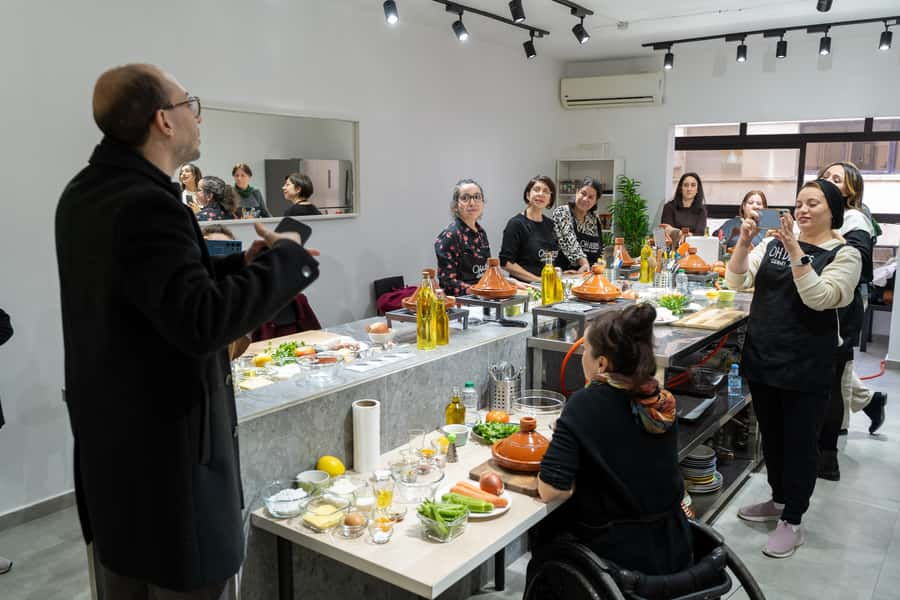
After the cooking, you sit down to enjoy the full meal. This is an important part of the experience, not an afterthought. You can see how the separate tasks fit together and judge the seasoning, texture, and pastry work for yourself.
Moroccan mint tea is included. The tea service gives the class a calmer finish and leaves time for conversation with the chefs and other participants. If you are visiting Rabat alone, this social time is one of the better reasons to choose a class instead of a standard restaurant meal.
The food can be substantial. A starter, main dish, bread or pastry, and dessert make this more than a small tasting. Come hungry, but do not expect to rush through the meal. The cooking and eating together fill most of the three-hour schedule.
The final meal also gives you a chance to ask last questions. You can clarify a spice measurement, check a dough technique, or find out how to repeat a dish at home. Recipes are provided to take with you, so the experience continues beyond the studio.
Group size, teaching, and language
The maximum group size is 10, though some sessions may be smaller. A small class matters here because cooking needs table space and direct help. You should have a reasonable chance to handle the ingredients and ask about a technique rather than simply stand behind someone else.
The instruction is available in Arabic, English, and French. English sessions may use a translator, particularly when the main chef teaches in French. Malak and Oumaima have assisted with translation in past classes, helping explain the steps and answer questions.
This setup worked well for people who wanted both cooking instruction and cultural conversation. Still, translation can add a little time to the process. If you are an experienced cook looking for fast, technical instruction, the class may feel slower than a professional kitchen lesson. If you are a beginner, that extra explanation is likely to be helpful.
The class also suits couples, families, solo visitors, and small groups. Families should keep in mind that everyone needs to follow the studio rules and remain properly dressed for cooking. Bare feet, smoking, vaping, alcohol, drugs, weapons, and sharp objects brought from outside are not allowed.
Who gets the best value for $65
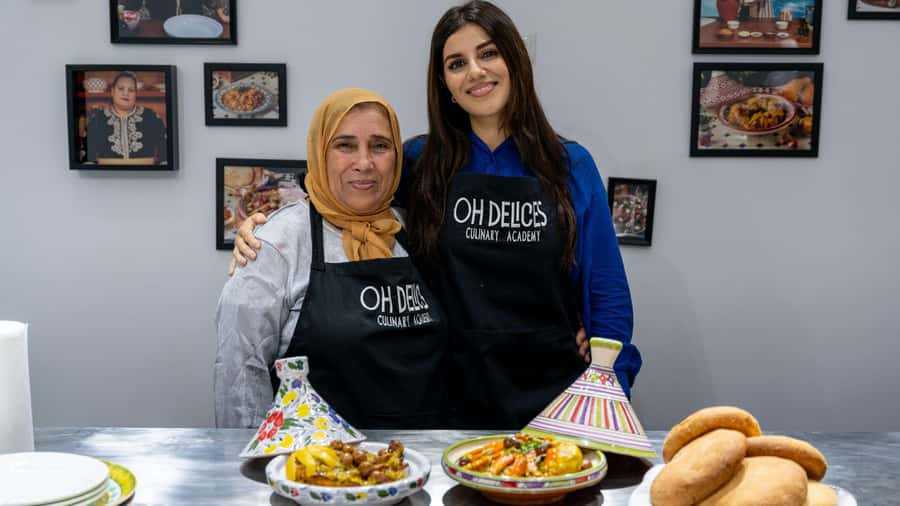
At $65 per person, the price includes the ingredients, equipment, professional instruction, a full meal, mint tea, and recipes. That is a fair package if you value participation rather than only food. You are paying for three hours of guided activity, not just a plate at the end.
The value is strongest for anyone who wants to recreate Moroccan food at home. You learn with the actual ingredients, see the texture of the dough and sauces, and receive recipes afterward. The preserved lemon and fermented butter lesson alone may be useful for cooks who want to move beyond generic versions of Moroccan dishes.
It is also a good choice if you want a social activity in Rabat. The meal gives you time to talk, and the group is small enough to feel personal. Couples can book it as a shared activity, while solo visitors have an easy way to meet people without joining a large tour bus.
The value is weaker if you dislike cooking, have limited time, or only want a quick food tasting. Three hours is a real commitment, and the class requires active participation. You also need to arrange your own transportation to the studio.
Practical details before you book
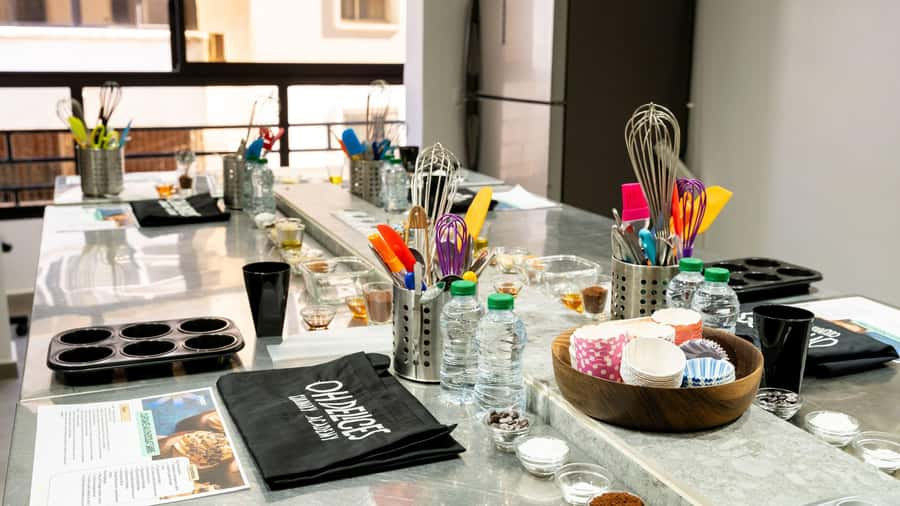
Wear comfortable clothes and shoes suitable for cooking. Avoid clothing you are especially concerned about, since the smell of spices can remain in fabric.
Tell the provider about dietary restrictions or food preferences in advance. The menu can change to suit the group, but advance notice gives the cooking team a better chance to plan.
The activity is wheelchair accessible. Starting times vary, so check availability for your date. You can reserve now and pay later, and cancellation is free up to 24 hours in advance for a full refund.
The meeting point is next to the Goethe Center building. Since transport is not included, allow enough time to reach the studio and locate the correct building before the scheduled start.
Should you book the Rabat cooking class?
I would book this if you want more than a restaurant meal and like the idea of learning by doing. The strongest reasons are the hands-on format, the small group, the full meal, and the chance to use ingredients such as preserved lemon and fermented butter.
Choose it especially if you cook at home, enjoy Moroccan food, or want a relaxed cultural activity in Rabat. It is less suitable if you want a quick demonstration, need a fixed menu, or dislike spice smells on clothing.
For $65, you receive a three-hour class, all supplies, chef guidance, food, tea, and recipes. That makes it a solid choice for a first activity in Rabat, provided you wear practical clothes and tell the academy about dietary needs before arriving.
FAQ
How long is the Rabat cooking class?
The class lasts three hours, including the cooking session and the meal afterward.
Where does the class take place?
It takes place at OhDelices Culinary Academy in Rabat. The building is next to the Goethe Center building.
What dishes can I learn to prepare?
Possible dishes include tagine, couscous, msemen, pastilla, traditional breads, eggplant starters, Moroccan desserts, and mint tea. The exact menu can change based on group preferences.
Is the class suitable for beginners?
Yes. The class is designed for all skill levels, including people with no previous Moroccan cooking experience.
What languages are available?
Instruction is available in Arabic, English, and French. English classes may include a translator when the chef teaches in French.
Is food included in the price?
Yes. You prepare and eat a full meal after the class, and Moroccan mint tea is included.
Are ingredients and equipment provided?
Yes. The price includes all ingredients and cooking equipment, as well as recipes to take home.
What should I bring?
Wear comfortable shoes and clothing suitable for cooking. Tell the provider about dietary restrictions or preferences in advance.
Newest classes around Morocco
- Private Tagine Cooking Class in Chefchaouen with Lunch★ 5.0 · 5 reviews
- Chefchaouen Private Cooking Class with Mountain View★ 5.0 · 16 reviews
- Moroccan Cooking Class with a Local Family & Market Visit★ 5.0 · 16 reviews
- 3-Hour Cooking Class overlooking the Blue City★ 5.0 · 36 reviews
- Chefchaouen Cooking Class★ 5.0 · 4 reviews
- Market Tour & Moroccan Cooking Class in Casablanca with Transfers★ 5.0 · 18 reviews
- Private CousCous Cooking Class in a Traditional Family Home★ 5.0 · 7 reviews
- Traditional Cooking Courses in Casablanca★ 5.0 · 2 reviews
Morocco Cooking Classes, compared.

Traditional Moroccan Cooking Class & Market Visit
Read our review →
Moroccan Dishes Cooking Class with a Local Chef
Read our review →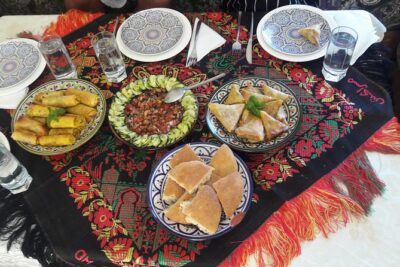
Moroccan Cooking Class & Marrakech Market Visit with Chef Khmisa
Read our review →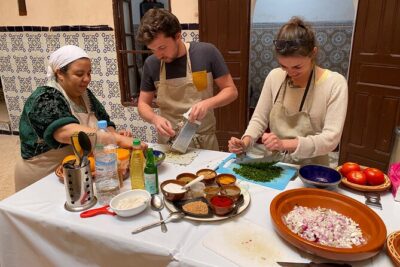
Half-Day Cooking Class with Local Chef Laila in Marrakech
Read our review →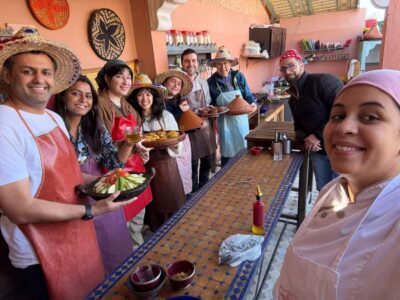
Browse the lists this tour appears in