
Review · BAKING & BREAD CLASSES
Prague: Traditional Czech Baking Class
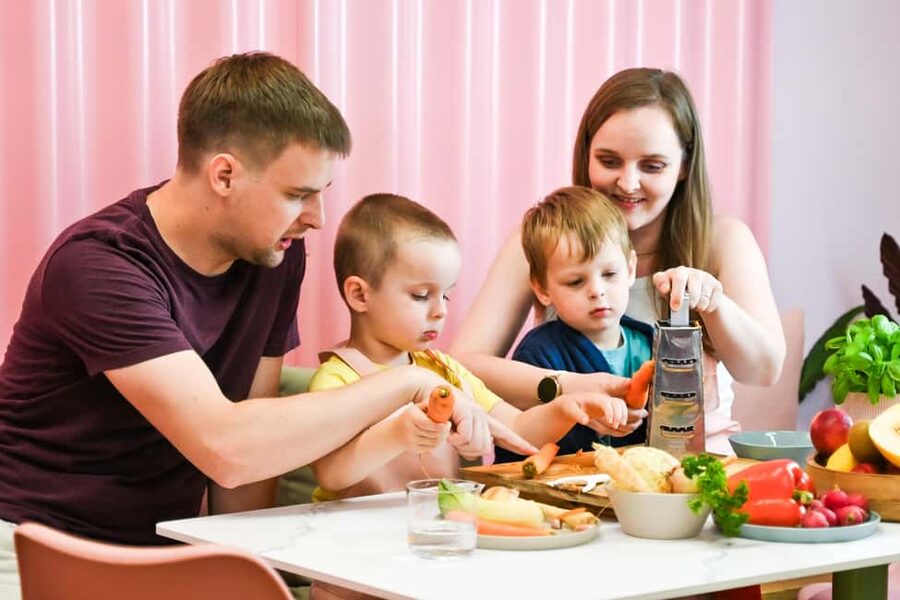
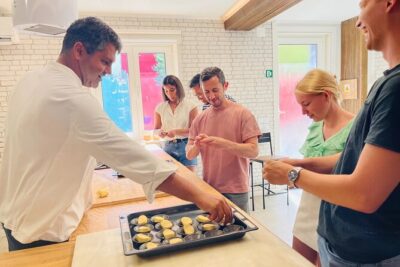
The best part of this Prague activity is its cheerful mix of old-fashioned baking and playful modern fun. You make apple strudel with homemade puff pastry and seasonal fruit cakes by hand, then head downstairs to five ball pits while the dough rests or the pastries bake.
I like the small group, limited to 10 people, and the clear setup with measured ingredients, aprons, tools, recipes, and packages for your finished treats. I also like the 25-minute introduction to Czech baking traditions, which gives the recipes a bit of context instead of making this just a standard cooking lesson.
The main drawback is timing. This is offered on weekday mornings, and the class is not suitable for wheelchair users, babies under 1, children under 2, or people over 95. The venue is easy to spot, though: look for the very pink place.
Key details before you book
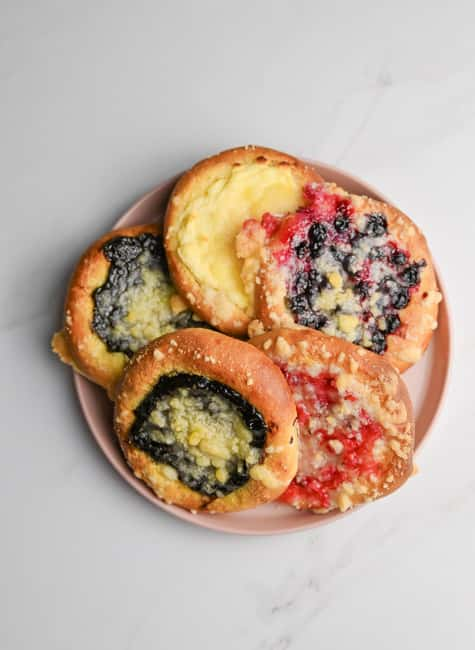
- Make two Czech favorites: Prepare apple strudel with handmade puff pastry and seasonal fruit cakes with handmade dough.
- Expect a small class: The group is limited to 10 people, with a minimum of two participants.
- Use the waiting time well: Five interactive ball pits give you something unusual to do while dough proofs or pastries bake.
- Everything is supplied: Ingredients, equipment, aprons, printed recipes, and packages for your baked goods are included.
- Enjoy drinks during class: Specialty coffee and homemade lemonades are provided.
- Plan for a weekday morning: The three-hour activity is available on weekday mornings, with English and Czech instruction.
Making Czech pastry in a pink Prague venue
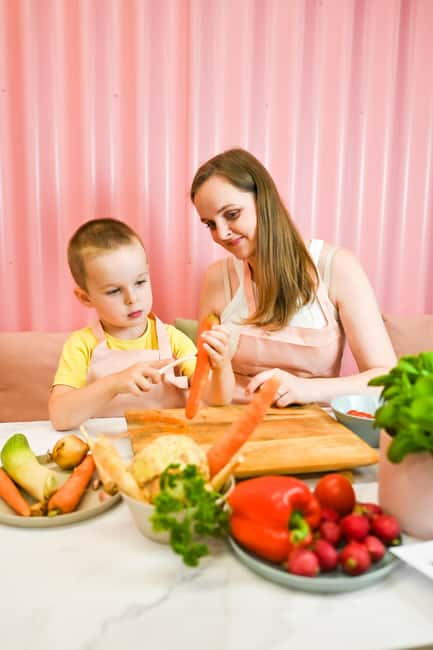
Kuličkário gives this baking class a setting you will not confuse with a formal culinary school. The meeting point is a very pink place, easily recognizable in central Prague. That bright, playful atmosphere carries through the activity, especially when you leave the work area for the ball pits.
The class lasts three hours. About 25 minutes are set aside for an introduction to Czech baking traditions, followed by roughly two hours of hands-on work. The remaining time allows for preparation, baking, packing your food, and the ball-pit breaks.
I see this as a good choice for a morning when you want something indoors and social. Prague has plenty of grand sights, but a hands-on food class gives you a more ordinary look at local life. Here, the focus is on sweets made in Czech homes and bakeries, rather than on restaurant technique or complicated chef-level dishes.
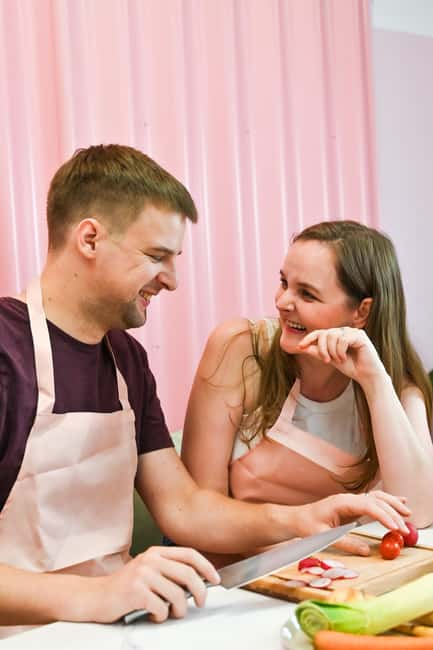
You do not need to bring ingredients, pans, utensils, or protective clothing. Aprons are provided, and the ingredients are prepared for the class. One useful detail from the class setup is that ingredients can be pre-measured, so you spend your time learning the method instead of weighing every item from scratch.
More Baking Classes in the world:
- Lisbon: Pastel de Nata Baking Class
★ 4.9 · 2,106 reviews - Paris Croissant Small-Group Baking Class with a Chef
★ 5.0 · 910 reviews - Paris: French Croissant Baking Class with a Chef
★ 4.9 · 712 reviews
The 25-minute introduction to Czech baking traditions
The class begins with a short talk about Czech baking. At 25 minutes, it is long enough to give the recipes a setting, but not so long that you are sitting through a lecture before getting to work.
This introduction matters because apple strudel and fruit cakes are not just random European pastries. They are familiar, home-style sweets, and the class presents them as part of Czech culinary tradition. You get a sense of what makes the recipes local, how Czech sweets fit into everyday food culture, and which details are worth carrying into your own kitchen.
The instructor teaches in English or Czech. That makes the class accessible to English-speaking visitors, while the bilingual format may suit mixed-language groups. The information provided does not name the individual instructor, so do not book expecting a particular named teacher.
The introduction also sets a sensible pace. You learn what you will make, then move into the practical part with the ingredients and equipment ready. If you are mainly interested in baking, the short opening keeps the focus where you want it.
Preparing apple strudel from homemade puff pastry
The first major project is apple strudel. The important point is that you are not simply filling a ready-made sheet of pastry. You work with homemade puff pastry, which gives you a chance to understand the dough rather than just assemble the final dessert.
Puff pastry rewards care. Rolling, handling, and preparing the dough all affect the final result. A hands-on class lets you see how the dough feels and how the instructor handles each stage. That is useful for anyone who has bought prepared pastry at home but wants to understand what goes into making it.
The class provides the needed ingredients and equipment, so you can focus on technique. The small group size should also make it easier to follow the steps and ask for help. With no more than 10 participants, this is more personal than a large demonstration where you watch from the back of a room.
The finished strudel is packed for you to take away. That is a practical touch. You can taste the result later, share it with someone back at your accommodation, or carry it home for another snack, depending on your plans and local food-handling conditions.
Making seasonal fruit cakes with handmade dough

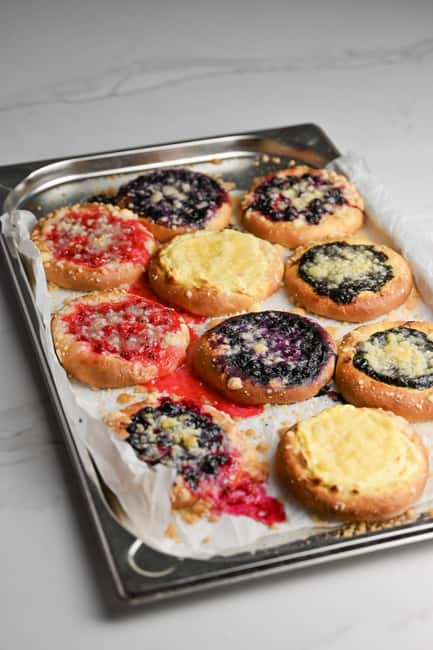
The second project is a seasonal fruit cake. The exact fruit depends on the time of year, so the recipe can change with the calendar. That seasonal element makes the activity feel more connected to Czech home baking than a fixed, identical menu all year.
You prepare handmade dough for the fruit cake. Again, the value is in learning a basic process you can repeat later. The dough, fruit, and baking stages show how a simple cake can depend on texture, moisture, and timing.
This is also a good class for mixed ability levels. A confident baker can pay attention to handling and shaping, while a beginner can follow the instructor one stage at a time. The materials are supplied, and the instructions are designed around participation rather than prior training.
The class does not include a full meal. The pastries are the food you make, and specialty coffee and homemade lemonades are provided. If you need a substantial breakfast, eat beforehand or plan another meal afterward.
More Cooking Classes in the world:
- Half-Day Thai Cooking Class at Organic Farm in Chiang Mai
★ 5.0 · 19,087 reviews - Florence: Pasta Cooking Class with Unlimited Wine
★ 4.9 · 10,285 reviews - 3 in 1 Cooking Class near Navona: Fettuccine, Ravioli & Tiramisu
★ 5.0 · 7,376 reviews - Florence: Pasta & Tiramisu Cooking Class with Unlimited Wine
★ 4.9 · 6,708 reviews
Ball pits between the dough and the oven
The most unusual feature is the access to five interactive ball pits. While the dough is proofing or the pastries are baking, you can spend time downstairs instead of standing around the worktable.
That sounds whimsical, and it is. It also solves a real problem with baking classes: some stages require waiting. Rather than filling that time with a long explanation, Kuličkário gives you a playful break. The ball pits make this more appealing for families with older children and for adults looking for an activity that is not too serious.
You should understand the tone before booking. This is not a quiet, refined pastry workshop. It combines Czech sweets, café drinks, and a playful entertainment space. If you want a formal lesson focused only on advanced baking technique, the ball pits may feel like a distraction. If you like unusual activities and a relaxed mood, they are part of the charm.
The supplied information does not describe the ball pits in detail beyond the number and interactive format, so you should not expect a particular game or organized program there. Think of them as a fun option during the natural pauses in the baking schedule.
What the three-hour schedule feels like

The activity has a clear rhythm:
- You arrive at the recognizable pink venue and meet the instructor.
- You spend about 25 minutes learning about Czech baking traditions.
- You prepare the dough and fillings for apple strudel and seasonal fruit cakes.
- You bake the pastries, with time for the dough to rest or proof.
- You can use the ball pits during those waiting periods.
- You enjoy specialty coffee and homemade lemonades.
- You pack the finished pastries and receive printed recipes.
The two-hour hands-on portion is the heart of the class. It is long enough to work through two recipes, but not so long that the morning becomes exhausting. The full three-hour duration includes the explanation, preparation, baking time, and informal pauses.
The exact start times vary, so check availability before you build the class into your Prague schedule. Since it is available on weekday mornings, it can fit well before an afternoon museum visit or city walk. It will not suit a short Prague stop if your only free time is on a weekend or in the evening.
Why the small group matters
A maximum of 10 participants is one of the strongest practical features here. Baking involves details that are easy to miss when you are watching from a distance. In a small group, you have a better chance of seeing how the dough is handled and getting help if your pastry does not behave as expected.
The minimum group size is two people. Solo visitors should keep this rule in mind when making plans. If the minimum is not met, the activity may not run as expected, so confirm the booking conditions for your date.
The class is taught in English and Czech. That makes it workable for international visitors, though the experience may feel different depending on the language mix in your group. The instructor is described as clear, kind, and helpful, and the class setup includes step-by-step guidance.
Printed recipes are included. This is more useful than it sounds. A pastry class can be enjoyable in the moment but hard to repeat once you are home. Having the recipes gives you a way to recreate the strudel and fruit cake after your trip, using the techniques you learned rather than relying on memory.
Is the $80 price good value?
The listed price is $80 per person, while the local price is 1,650 Kč per person. Since exchange rates change, compare the amount shown at checkout with your card provider’s conversion rate.
For that price, you receive a three-hour activity, a 25-minute cultural introduction, two baked projects, all ingredients and equipment, an apron, specialty coffee, homemade lemonade, printed recipes, and packaging for the finished food. You also receive access to the five ball pits during the waiting periods.
I consider that a fair price for a small-group activity in Prague, especially if you value participation over sightseeing from the sidelines. You are paying for instruction, supplies, food, and entertainment in one session.
The value is weaker if you are only looking for a cheap pastry to eat. A bakery purchase will cost much less. This class makes sense when you want to learn, meet a small group, take home recipes and pastries, and enjoy a playful setting.
Meals outside the class and alcoholic drinks are not included. Transportation is also not included, so you need to make your own way to the venue. The meeting point is easy to identify, but check the exact address and allow time to arrive before the weekday morning start.
Who will enjoy this baking class most?
I would recommend it to couples, friends, families with suitable-age children, and solo visitors who enjoy small-group activities. It works especially well for anyone who wants a break from Prague’s churches, museums, and historic streets.
It is also a good rainy-day plan. The activity takes place indoors and gives you something active to do rather than simply sitting in a café. The ball pits add a playful edge that can keep the morning lively.
Families should read the age restrictions carefully. Children under 2 are not suitable, and babies under 1 are not allowed. The activity is also not suitable for wheelchair users or people over 95. Those limits are important because the venue includes ball-pit access and may involve moving between areas.
Baking beginners should feel comfortable booking. You do not need to bring equipment or ingredients, and the class is designed around guided preparation. Experienced bakers may still enjoy it, but the main appeal is the Czech recipes and the social setting, not advanced professional instruction.
Booking, cancellation, and practical planning
You can cancel up to 24 hours in advance for a full refund. The reserve-now, pay-later option lets you hold a place without paying immediately, which helps if your Prague schedule is still changing.
Book with the weekday morning schedule in mind. The class is not presented as an evening activity, and the three-hour length means you should avoid placing a tight appointment right afterward.
Wear clothing you do not mind using in a baking setting, even though aprons are provided. Bring your enthusiasm, but no ingredients or equipment. You will receive packages for the baked goods, though the information does not specify how long they are designed to remain fresh, so treat them as food for the same day unless the instructor advises otherwise.
Should you book Kuličkário?
Book this class if you want a hands-on Prague activity with local baking, a small group, useful recipes, and a playful twist. The combination of homemade puff pastry, seasonal fruit cake, Czech food traditions, drinks, and ball pits is unusual enough to make a memorable morning.
Skip it if you need a weekend or evening slot, want a full meal, use a wheelchair, or prefer a serious pastry lesson without entertainment. For everyone else, the class offers solid value at $80, particularly because the fee covers the supplies, instruction, recipes, drinks, finished treats, and a three-hour indoor activity.
FAQ
How long does the Prague traditional Czech baking class last?
The activity lasts three hours. It includes a 25-minute introduction to Czech baking traditions and about two hours of hands-on baking.
What will I make during the class?
You will make apple strudel with homemade puff pastry and seasonal fruit cakes with handmade dough.
Are ingredients and equipment provided?
Yes. The class provides all ingredients and equipment, as well as aprons.
Are drinks included?
Yes. Specialty coffee and homemade lemonades are included. Alcoholic drinks are not included.
Can I take the baked goods home?
Yes. Packages for your baked products are included, along with printed recipes.
Is the class available in English?
Yes. Instruction is available in English and Czech.
What are the age and accessibility restrictions?
The activity is not suitable for children under 2, babies under 1, wheelchair users, or people over 95. The minimum group size is two participants.
Newest classes around the world
- Aroidee’s Farm-Fresh Thai Cooking Experience★ 5.0 · 8 reviews
- Authentic Thai Cooking Class and Farm Visit in Chiang Mai★ 5.0 · 66 reviews
- Yummy Tasty Thai Cooking School in Chiang Mai★ 5.0 · 2 reviews
- Signature Thai Cooking Course★ 5.0 · 79 reviews
- Half Day Guided Thai Cooking Class in Chiang Mai★ 5.0 · 13 reviews
- Online Thai and Akha Cooking Class★ 5.0 · 70 reviews
- Northern Thai Cooking Class in Chiang Mai in a Countryside Home★ 5.0 · 2 reviews
- Private Half-Day Thai Cooking Class in Chiang Mai★ 5.0 · 4 reviews
Baking & Bread Classes, compared.

Paris Croissant Small-Group Baking Class with a Chef
Read our review →

Paris Macarons Small-Group Baking Class with a Chef
Read our review →


Browse the lists this tour appears in