
Review · SPAIN COOKING CLASSES
Málaga: Spanish Cooking Workshop with Paella and Sangria
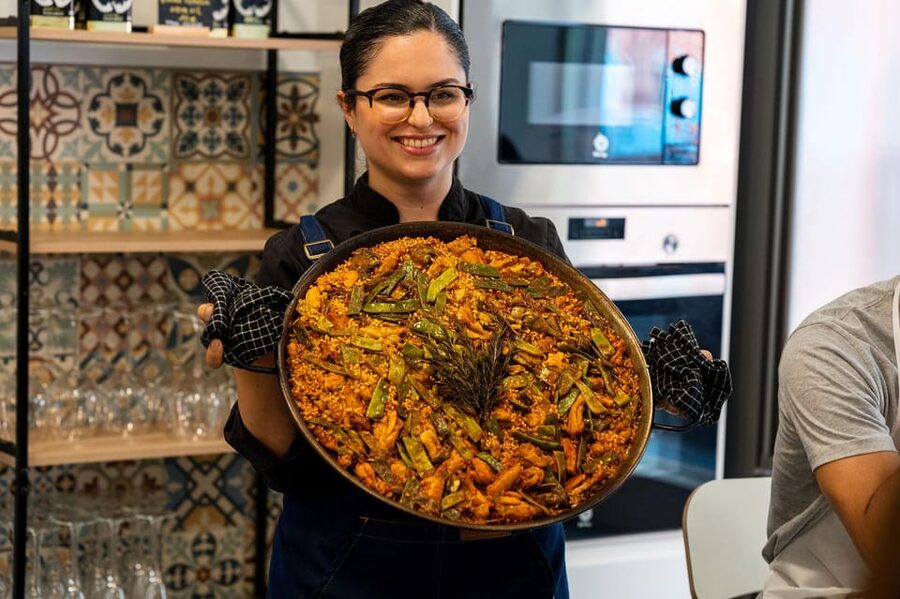
Málaga’s best cooking lesson is not just about paella. You also prepare ajoblanco, the chilled almond soup of Andalusia, and remojón malagueño, a local salad, before sitting down to eat what you made. I like the way the class connects these dishes to Málaga rather than treating paella as a standalone tourist trick. I also like the location, five minutes from Atarazanas Market, in the historic center.
Chefs Laura and Diego bring different strengths. Laura trained at Le Cordon Bleu in London and has worked in Michelin-starred kitchens, while Diego grew up and trained in Málaga and focuses on Andalusian food and desserts. The main consideration is that this is a social, shared class, not a quiet private lesson. A minimum of four people is required, and some sessions reach nine or ten participants.
Key points at a glance
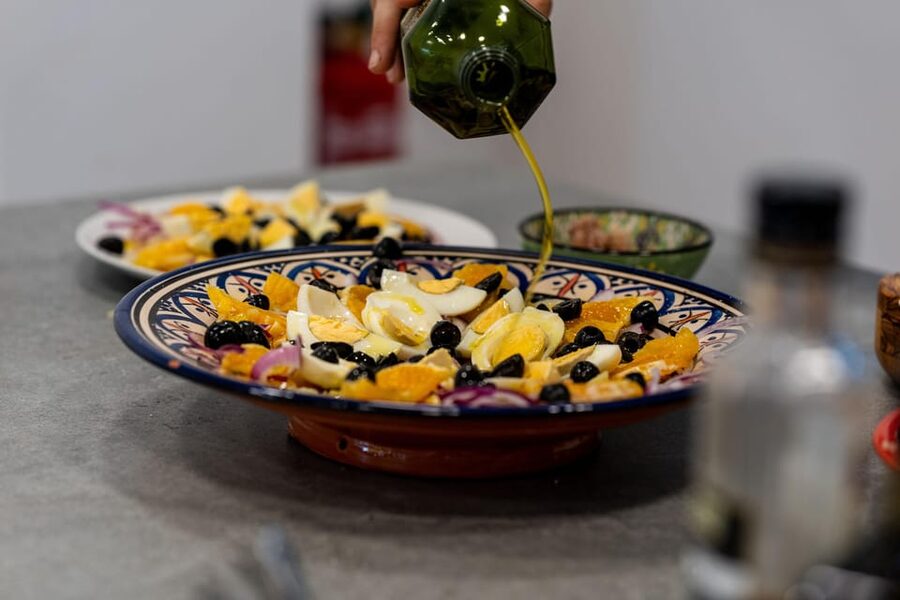
- Three Andalusian dishes plus dessert: Prepare ajoblanco, paella, remojón malagueño, and a surprise sweet course.
- Laura and Diego teach different angles: Laura focuses on paella and Spanish ingredients, while Diego brings local Málaga knowledge and a strong dessert background.
- You do the cooking: The class is fully participatory, with hands-on preparation rather than a chef-only demonstration.
- Central Málaga location: The kitchen is near Atarazanas Market, making it easy to fit into a day in the old center.
- Sangria is part of the meal: You make and drink sangria while learning about Spanish food and customs.
- Good for mixed ages and abilities: Comfortable high stools with backs are available, and the kitchen is wheelchair accessible.
What the three-hour Málaga cooking class feels like
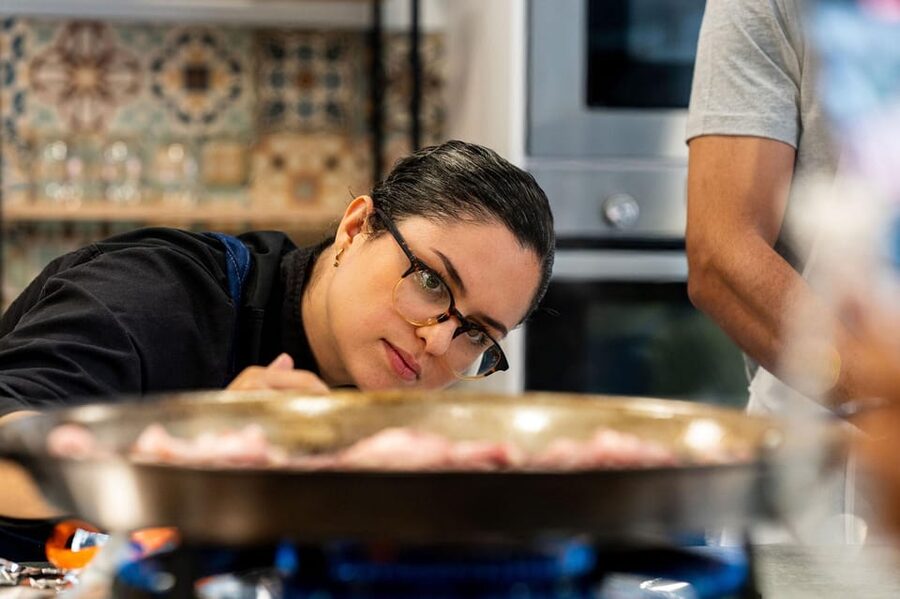
This is a cooking lesson wrapped around a long Spanish meal. You arrive at a modern kitchen in central Málaga, meet the chef leading your session, and settle into a practical class that mixes preparation, conversation, food stories, and tasting.
The tone is friendly rather than formal. Laura and Diego explain each step, answer questions, and invite you to take part. You will not simply watch someone make paella while standing at the edge of the room. You help prepare the ingredients and work through the dishes with the group.
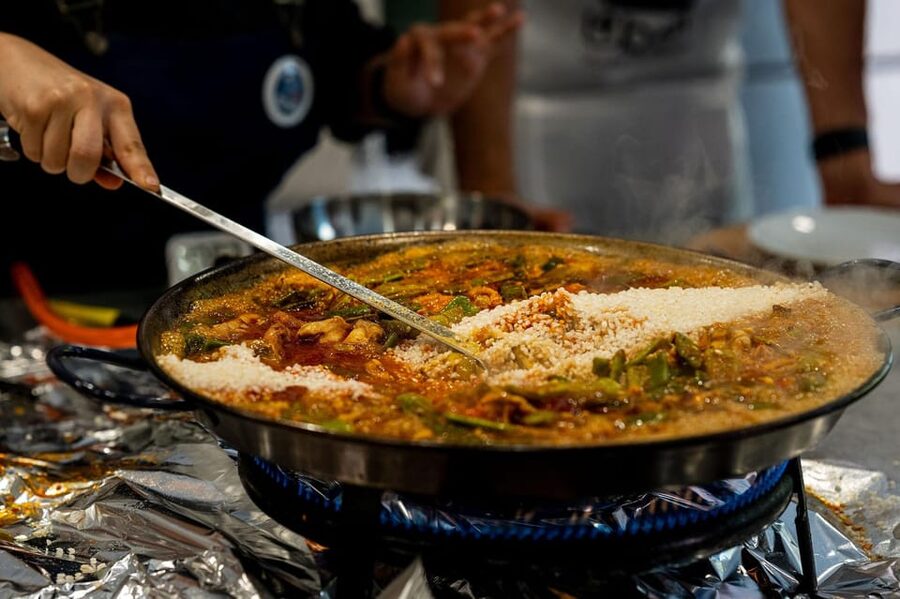
That hands-on approach matters. Paella looks simple in a photograph, but the rice, stock, heat, timing, and pan all affect the result. The class gives you a chance to see those choices made in real time, then try the method yourself.
The three-hour length is well judged. It allows time to cook several dishes without forcing the class into a rushed demonstration. It also leaves room for the social part, which is a central feature of the evening. You eat together, compare results, and ask about Málaga restaurants, markets, and local food.
More Paella and Spanish Classes in Spain:
- Barcelona: Paella Cooking Experience & Boqueria Market Tour
★ 4.8 · 3,661 reviews - Barcelona Paella Cooking Class with Market Visit, Tapas & Sangria
★ 5.0 · 2,531 reviews - Barcelona Interactive Spanish Cooking Experience
★ 4.5 · 2,155 reviews
Laura, Diego, and the cooking style
Laura brings formal training and a particular focus on paella. She studied at Le Cordon Bleu in London, worked in Michelin-starred restaurants, and trained with a Valencian chef who specializes in paella.
Her teaching goes beyond a recipe. She explains Spanish ingredients, food customs, and the reasons behind certain methods. If you want practical advice for finding local markets, shops, or places to eat in Málaga, she also offers recommendations during the class.
Diego’s connection is more specifically Andalusian. Originally from Uruguay, he was raised and trained in Málaga, beginning his culinary path at age nine. His professional work has included traditional Andalusian kitchens and more exclusive restaurants in the city.
He is especially associated with Málaga-style food and desserts. His strength is storytelling mixed with useful instruction. Several sessions have included comments about his humor, patience, and ability to explain techniques in a relaxed way.
You may have Laura or Diego as your main chef, and other team members can help with the session. That means the style may vary slightly, but the central idea stays the same: cook local dishes, learn why they matter, and eat them together.
A menu that goes beyond paella
Paella gets top billing, but the menu is one of the strongest reasons to choose this class. You prepare several dishes that show different sides of southern Spanish food.
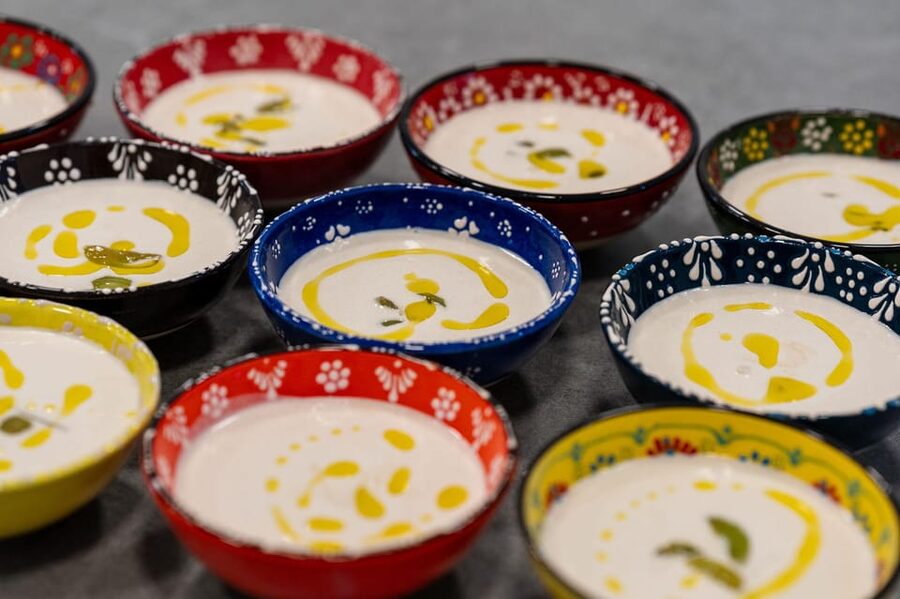
Ajoblanco is a cold almond soup made with garlic, bread, olive oil, and other simple ingredients. It has a smooth, refreshing character and gives you a useful introduction to Andalusian cooking. It is also a good reminder that Spanish food is not all saffron, seafood, and large pans of rice.
The soup has been a favorite part of the meal for many people, and one participant called the almond soup the best dish of the session. If you want to understand Málaga’s food traditions, this is the sort of local detail that makes the lesson worthwhile.
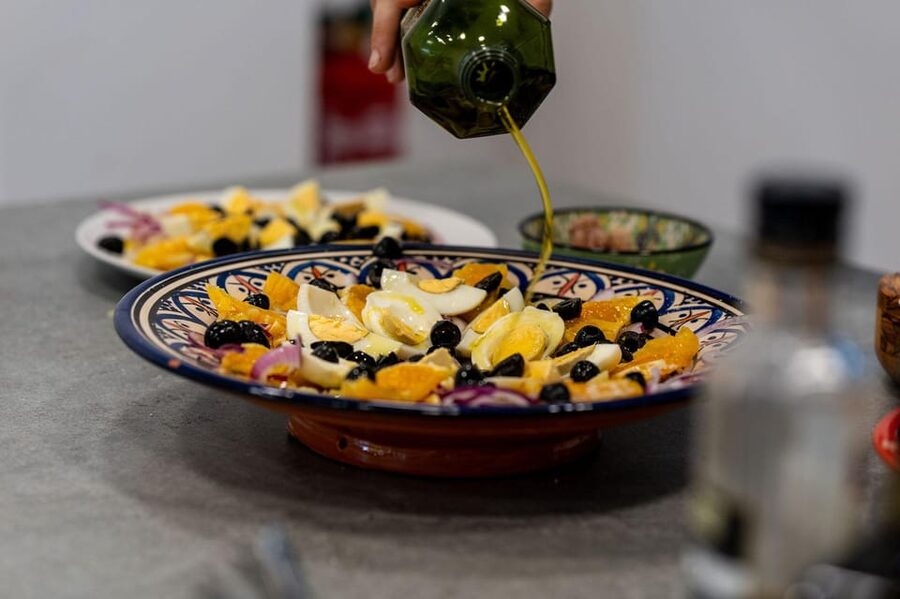
Next comes remojón malagueño, a typical Málaga salad. It adds a fresh contrast to the soup and paella. Preparing an extra local dish also gives you more than one recipe to take home, which improves the value of the class.
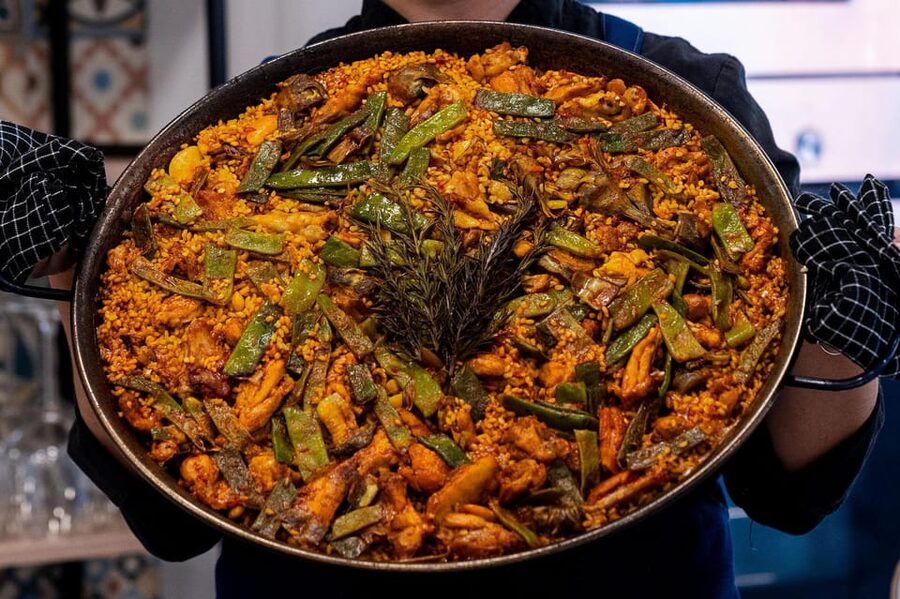
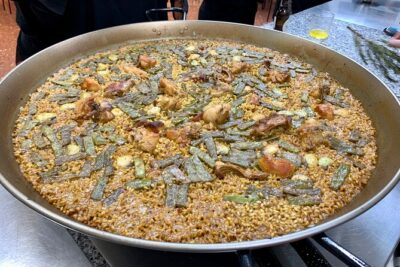
Then comes paella, the dish most people expect. Laura’s training with a Valencian paella specialist gives this part a clear focus. You learn about the origins of paella, the role of rice, and the small decisions that help produce a good final texture.
The exact ingredients and preparation may depend on the class menu, so you should not assume one fixed seafood or meat version. The supplied information confirms paella, but not a specific recipe for every session.
A surprise dessert finishes the meal. Diego’s Andalusian dessert background makes this more than an afterthought, though the exact dessert is not announced in advance. That element adds a little fun, but it also means you cannot plan around a particular sweet.
Why the hands-on format matters
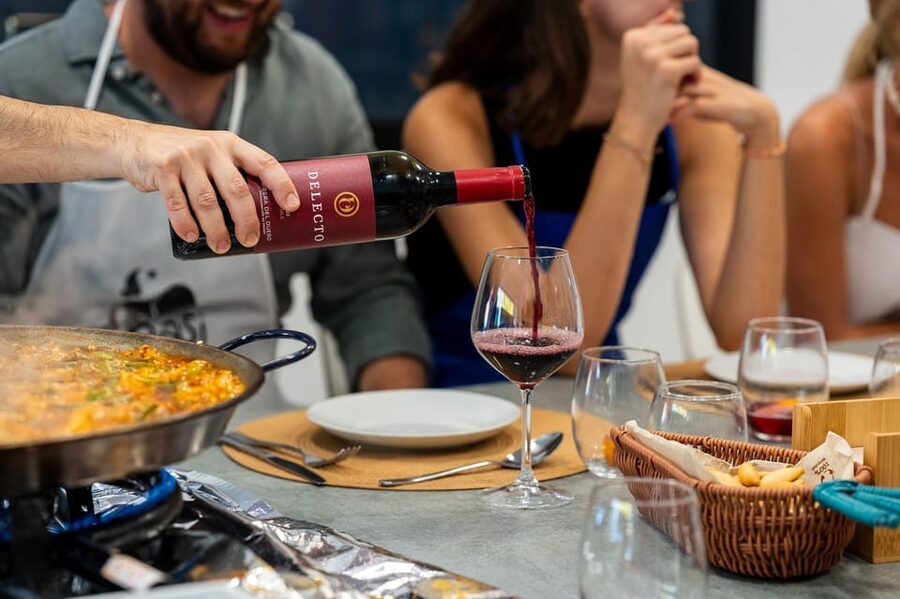
A demonstration can be entertaining, but it does not always teach you how to repeat the dish at home. Here, you help prepare ingredients and take part in the cooking, which makes the techniques easier to remember.
The class also leaves room for one-on-one help. One recent session included individual instruction when needed, while another described the pace as relaxed and easy to follow. That combination should suit beginners who want guidance without feeling put on the spot.
You will hear plenty of small tips. These include advice on getting the rice right, choosing local ingredients, and handling the stages of paella. Several people left with the confidence to try the dish at home, which is a useful test of any cooking class.
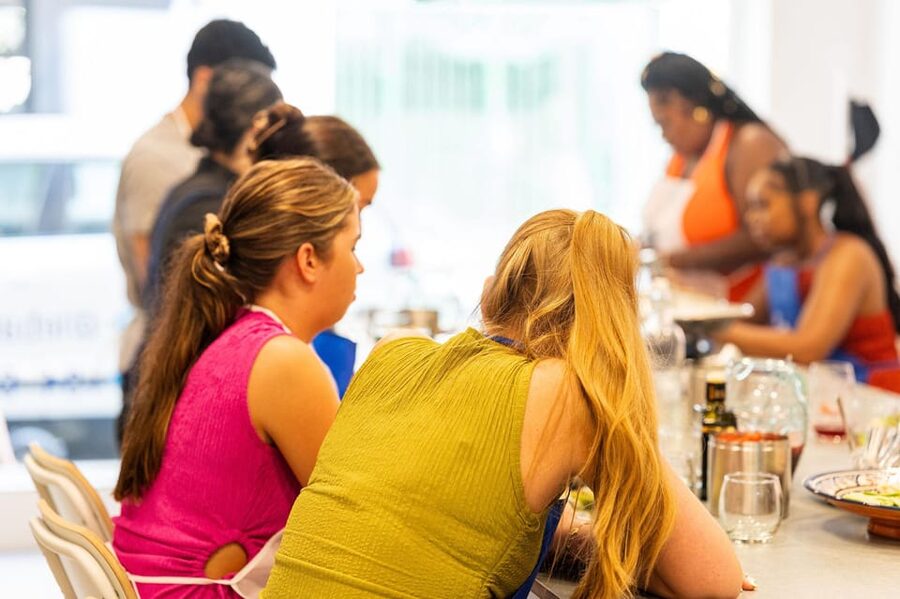
The format works well for families and couples, but it is also a good choice if you are traveling alone. A shared table and a small cooking group give you an easy way to meet people from different countries without signing up for a loud nightlife activity.
There is one tradeoff. Because the class is social, the pace can depend on the group. If you want a private chef lesson focused only on your own questions, this may feel less tailored. If you enjoy cooking with other people, that same setup is a major advantage.
More Cooking Classes in Spain:
- Spanish Cooking Class Paella Tapas and Sangria in Madrid
★ 5.0 · 1,340 reviews - Paella Cooking Class, Wine Tasting & Central Market in Valencia
★ 5.0 · 1,150 reviews - Paella Cooking Class in Madrid with Bottomless Wine Pairing
★ 5.0 · 985 reviews - Seville: Spanish Cooking Class with Dinner
★ 4.9 · 900 reviews
The kitchen, location, and comfort
The kitchen is modern and comfortable, and its central position is practical. You are about five minutes from Atarazanas Market, a useful food stop before or after class. The historic-center location also makes the workshop easy to combine with sightseeing in Málaga.
You do not need to arrange transport outside the city center. The activity information describes it as easy to reach, though you should still check the exact meeting details when booking.
Comfort is better considered than you might expect from a standing cooking lesson. The room has high stools with backs, which can make a real difference if you are in your 70s, have tired legs, or simply do not want to stand at a counter for two hours.
The kitchen is wheelchair accessible. Dietary needs can also be accommodated when arranged in advance. Vegetarian and vegan options are available with advance notice, and food allergies or intolerances can be addressed.
That advance notice is important. Do not wait until you arrive to explain a serious allergy or a strict diet. Tell the provider before the class so the menu can be adjusted safely and sensibly.
Sangria, conversation, and the shared meal
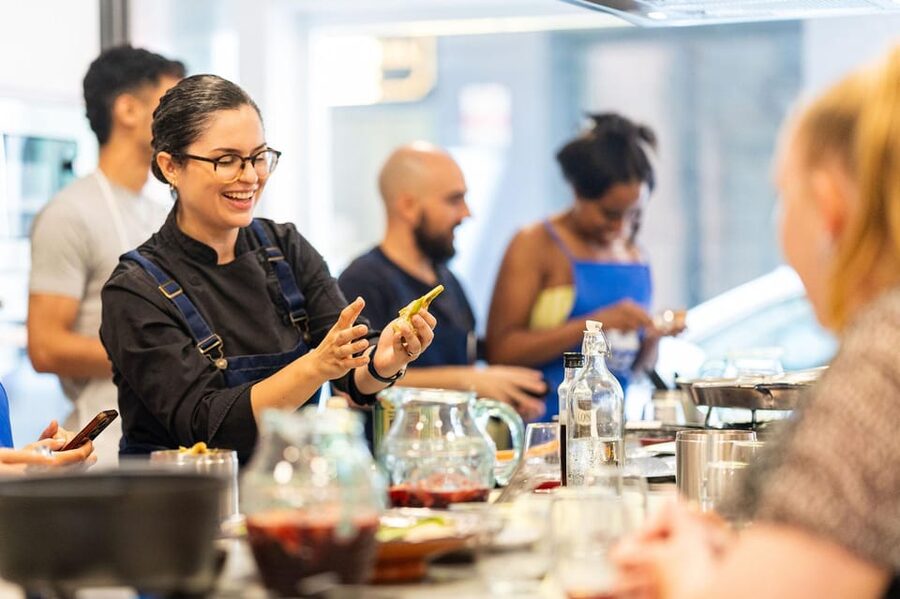
Sangria is part of the experience, not just a drink handed to you at the end. You learn how it is made, prepare it with the group, and drink it alongside the food.
The class includes sangria during the meal, with additional servings indicated in the activity details. This makes the evening feel more like a Spanish dinner party than a technical kitchen course.
The food and drink also create natural pauses between cooking tasks. You can ask about local restaurants, Andalusian customs, or places to visit while you eat. Laura and Diego are especially useful for this sort of informal advice.
Past sessions have included people from the United Kingdom, United States, Canada, Austria, Switzerland, Portugal, Germany, and other countries. A small international group can make the meal lively without making it impersonal.
Alcohol is part of the activity, so this is not the right pick if you avoid drinking altogether. Alcohol and drugs are not allowed beyond the included, supervised food experience, and you should book a non-drinking activity if sangria would be a problem.
Price, timing, and overall value
The price is $78 per person for three hours. That is not the cheapest way to eat in Málaga, but it covers instruction, several dishes, dessert, sangria, and a social meal in a central kitchen.
You are paying for more than the ingredients. The value lies in learning techniques you can repeat, getting local food advice, and enjoying a meal you helped make. The recipes may also be sent afterward, which gives the class use beyond the evening.
The price looks strongest for people who care about food and want an activity with substance. If you only want to taste paella, a restaurant will be simpler and likely cheaper. If you want to understand how the dish works and leave with several recipes, the workshop makes more sense.
Three hours is long enough to feel substantial but short enough to fit into a Málaga stay. It works as an evening plan, a rainy-day activity, or a break from churches, museums, and sightseeing in the old center.
The cancellation policy is traveler-friendly: you can cancel up to 24 hours ahead for a full refund. You can also reserve now and pay later, which helps if your schedule is still changing.
Who should book this class
I would recommend it most strongly to:
- Couples who want a meal and activity in one
- Families looking for something all ages can share
- Solo visitors who enjoy meeting people over food
- Beginner cooks who want clear instruction
- Food lovers curious about Andalusian dishes beyond paella
- People who want local restaurant and market suggestions
- Older participants who need a place to sit during some of the class
It is less suitable for anyone seeking a private, highly technical culinary course. The teaching is practical and friendly, not an intensive professional workshop.
You should also check the timing if you have a tight evening schedule. The class lasts three hours, and the shared meal is part of the experience, so it is not designed as a quick stop between other bookings.
Should you book the Málaga paella workshop?
Yes, if you want to cook rather than simply watch. The strongest parts are the hands-on format, the three local dishes, the useful paella instruction, and the easygoing guidance from Laura or Diego.
I especially like that the menu includes ajoblanco and remojón malagueño. Those dishes give you a clearer taste of Málaga than paella alone, and the local tips make the class useful for the rest of your stay.
Book it in advance if you have dietary needs, and remember that a minimum of four participants is required. Choose another activity if you do not drink alcohol, dislike group cooking, or want a private lesson.
For $78, this is a good-value Málaga experience for anyone who wants food, culture, and practical skills in the same three hours.
FAQ
How long does the Spanish cooking workshop last?
The workshop lasts three hours.
Where does the cooking class take place?
It takes place in a modern kitchen in central Málaga, about five minutes from Atarazanas Market.
Which dishes will I prepare?
The menu includes ajoblanco, paella, remojón malagueño, and a surprise dessert.
Is sangria included?
Yes. You prepare and enjoy sangria during the meal, and the activity includes additional sangria according to the supplied booking details.
Who teaches the class?
The class is taught by chefs Laura and Diego. Laura trained at Le Cordon Bleu in London and specializes in paella, while Diego was raised and trained in Málaga and focuses on Andalusian cooking and desserts.
Is the class taught in English?
Yes. The live guide language is English.
Can the menu accommodate allergies or dietary restrictions?
Yes. Food allergies and intolerances can be accommodated, and vegan and vegetarian options are available with advance notice.
Is the cooking workshop wheelchair accessible?
Yes. The activity is wheelchair accessible, and the kitchen has comfortable high stools with backs for participants who prefer to sit during parts of the class.
Newest classes around Spain
- Pintxos and Tapas Cooking Class in Bilbao★ 5.0 · 38 reviews
- Basque Pintxos and Tapas Cooking Class in Bilbao★ 5.0 · 73 reviews
- Small-group Immersive Basque Cooking Class in Bilbao with Open Bar★ 5.0 · 65 reviews
- Paella and Burnt Basque Cheesecake Cooking Class (in Bilbao)★ 5.0 · 46 reviews
- Rooftop Paella Seafood Cooking Class Experience in Barcelona★ 5.0 · 59 reviews
- Private Authentic Paella Cooking Class in Barcelona with Josh★ 5.0 · 3 reviews
- Barcelona Tapas Cooking & Cocktail Class with Veronique & Mattias★ 5.0 · 3 reviews
- Private Barcelona Market Tour & Paella Cooking Class with Josh★ 5.0 · 4 reviews
Spain Cooking Classes, compared.
Paella Cooking Experience & Boqueria Market Tour
Read our review →
Barcelona Paella Cooking Class with Market Visit, Tapas & Sangria
Read our review →
Barcelona Interactive Spanish Cooking Experience
Read our review →
Spanish Cooking Class Paella Tapas and Sangria in Madrid
Read our review →
Paella Cooking Class, Wine Tasting & Central Market in Valencia
Read our review →
Paella Cooking Class in Madrid with Bottomless Wine Pairing
Read our review →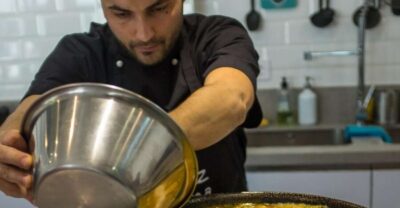
Valencian paella cooking class, tapas and visit to Ruzafa market.
Read our review →Browse the lists this tour appears in