
Review · HOME COOKING CLASSES
Home Cooking Class by Auntie K
The most memorable part of this Accra experience is not simply eating jollof rice. It is seeing how Ghanaian food comes together, from pounding spices in a mortar to managing a charcoal fire and shaping fufu by hand. Auntie K and her family create a relaxed, home-based setting where cooking and conversation share the same space.
I like the optional market visit, which gives you a look at the ingredients before they reach the cooking pot. I also like the generous menu and the chance to learn useful techniques, including spice blending without a blender. The main consideration is that the class may feel more like a demonstration for some groups, so do not expect every moment to be fully hands-on.
- Local market option: Help shop for the ingredients before cooking.
- Traditional methods: Use a pestle and mortar, charcoal cooking, and hand-prepared fufu.
- Large Ghanaian meal: Menus may include jollof rice, kelewele, soup, fufu, fish, chicken, vegetables, or dessert.
- Private booking: Your group is the only group booked for the activity.
- Flexible instruction: The menu can be adjusted for dietary needs and lower spice levels.
- Unhurried schedule: The class can last from about three to six hours, depending on your group.
Arriving at Auntie K’s Home in Accra
This is a home cooking experience, not a polished culinary studio. You meet at Club 69 on La Crescent in Accra’s Osu area, then take part in a session hosted by Auntie K and members of her family or cooking team.
That setting is part of the appeal. You are not standing behind a restaurant counter watching a chef perform a recipe for tourists. You are closer to the way many Ghanaian households prepare food: with several people sharing tasks, talking while they work, and adjusting the meal as it comes together.
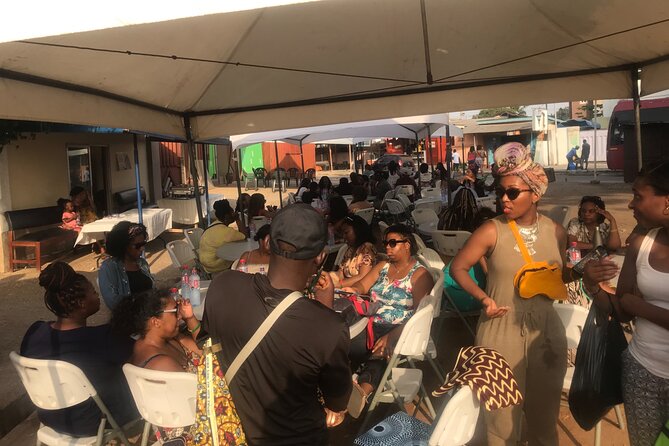
It can also feel informal. The cooking may take place in a front yard or outdoor area, and people may pass through during the session. If you want a quiet, highly organized classroom with individual workstations, this may not be the right fit. If you enjoy a social home setting, the informality helps the experience feel personal.
The activity is private, meaning only your group participates in the booking. That matters for families, couples, and small groups with different tastes. You can ask questions freely, spend more time on a technique, or discuss spice levels without trying to keep up with a large class.
Starting at the Market, If You Choose
The market visit is optional. If you add it, you begin by helping buy the food for the class. This is a useful part of the experience because Ghanaian cooking depends on fresh produce, spices, starches, meat, and fish that can look unfamiliar if you only encounter them on a restaurant plate.
Shopping also gives the meal a clear beginning. Instead of arriving to find every bowl already measured and every vegetable already chopped, you can see some of the ingredients before preparation starts. Auntie K can explain what is being bought and how it will be used.
The market portion may also affect the total length of the day. The stated class time ranges from three to six hours, and a market stop can add to that schedule. Plan this as a substantial half-day, not a quick activity to squeeze between other appointments.
Transportation deserves attention. An air-conditioned vehicle is not included, and the listed meeting point is Club 69, Osu la Crescent, in Accra. Confirm the exact meeting instructions when you book, especially if you are arranging your own ride to the starting point.
More Home Cooking Classes in the world:
- Khmer Cooking Class at a Local’s Home in Krong Siem Reap
★ 5.0 · 2,731 reviews - Local Home Korean Cooking Class & Market Adventure in Seoul
★ 5.0 · 1,024 reviews - Marrakech: Moroccan Cooking Class with a Local Family
★ 4.9 · 668 reviews
Preparing Jollof Rice, Kelewele, and More
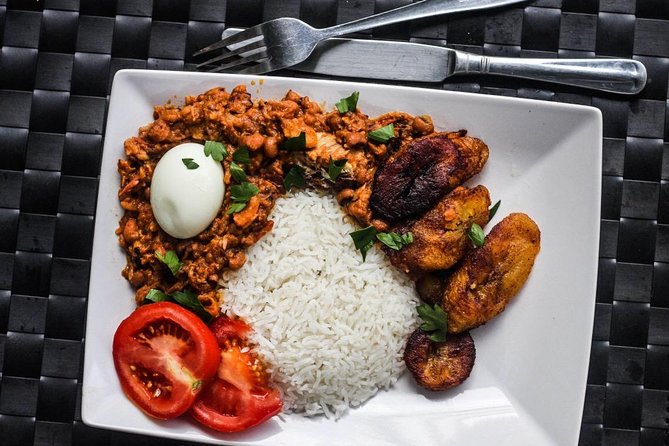
The menu is built around familiar Ghanaian favorites, but the exact dishes can vary. Jollof rice is a regular highlight, often joined by soup, a protein, vegetables, a starch, and dessert.
Kelewele, spicy seasoned plantains, is another possible favorite. It is a simple dish on paper, but the seasoning makes the difference. You may also work with fish, chicken, goat soup, okra and fish stew, banku, or fufu, depending on the menu prepared for your group.
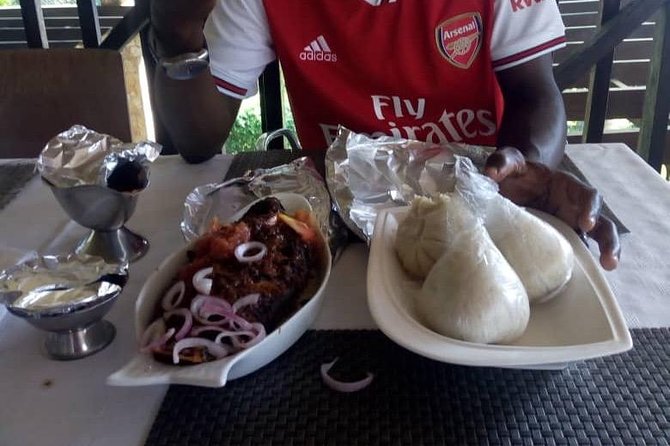
Fufu is worth special attention. Preparing it by hand takes real effort, and you may need to roll up your sleeves. That physical work helps explain why the dish has such a different character from a starch simply boiled and served from a pot.
The food is usually plentiful. Come with an appetite, since lunch is included and the meal is the payoff for the work. Some people have even taken leftovers back with them, though you should not count on that as a formal part of the service.
Learning With a Mortar, Pestle, and Charcoal Fire
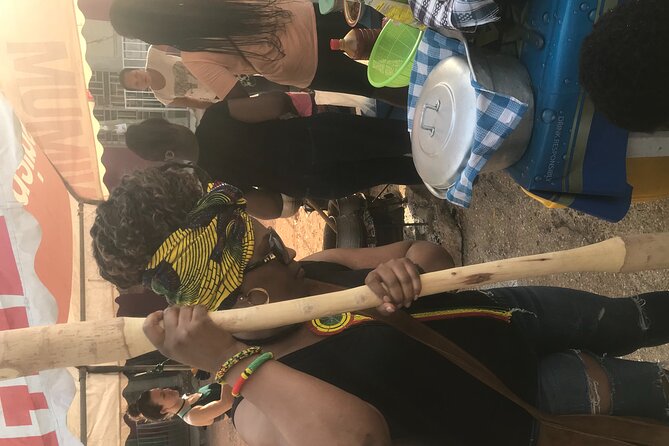
One of the strongest reasons to book this class is the use of traditional cooking methods. Instead of relying only on an electric blender, you may grind vegetables and spices with a pestle and mortar. The process takes longer, but it lets you feel the texture change under your hands.
That difference matters. A machine can produce a smooth mixture quickly. A mortar and pestle gives you a closer sense of the ginger, peppers, onions, and spices as they are worked together. Auntie K can also show you how seasoning choices affect the finished food.
Cooking over charcoal adds another layer. Heat control is less automatic than it is on a modern stove, and the fire may require attention as the meal progresses. This is not the easiest method, but it connects the cooking to a more traditional home practice.
Your role may depend on the group and the day. Many bookings include peeling, cutting, sorting beans, mixing, seasoning, or helping with preparation. Some people get deeply involved, while others spend more time watching Auntie K cook. The description promises hands-on work, but the experience is not guaranteed to feel like a fully participatory school for every guest.
That is the clearest point to understand before booking. One account of the activity described most of the group sitting and watching, with only limited preparation work. Another described plenty of active cooking and learning. The difference may come from group size, timing, preparation before arrival, or how much each person chooses to do.
If hands-on practice is your main goal, say so at the beginning. Ask which dishes you will prepare yourself and which steps will be demonstrated. That simple conversation can help set expectations.
A Family-Style Lesson With Auntie K
Auntie K is the center of the experience, but she is often joined by family members and assistants. Deborah is named as an assistant in several descriptions of the class, while Auntie Mary, Nicole, her daughters, and her sister may also help depending on the session.
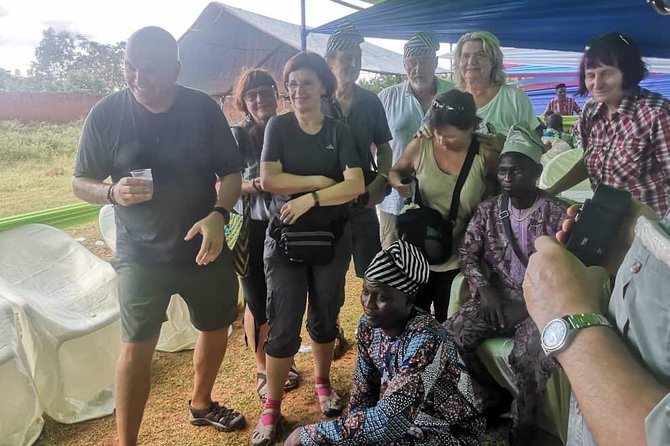
The tone is warm and informal. You are likely to hear plenty of conversation while food is being prepared, and the cooking can feel like a family gathering rather than a formal lesson. Auntie K has a habit of treating people in a friendly, familiar way, which works especially well for solo visitors or small groups who want a human connection with the food.
This friendliness does not replace instruction, but it shapes the lesson. You can learn why certain spices are used, how food is seasoned, and how Ghanaian dishes fit into daily life. The value here is not only a list of recipes. It is a sense of how the food is handled, shared, and adjusted in a home kitchen.
The relaxed approach has a downside. Instructions may not always be written in a neat, step-by-step format, and the pace may feel slow if you are waiting for a dish to finish. One class lasted close to four hours even though the menu was described as abbreviated. Good food takes time, but you should keep the rest of your day open.
More Cooking Classes in the world:
- Half-Day Thai Cooking Class at Organic Farm in Chiang Mai
★ 5.0 · 19,087 reviews - Florence: Pasta Cooking Class with Unlimited Wine
★ 4.9 · 10,285 reviews - 3 in 1 Cooking Class near Navona: Fettuccine, Ravioli & Tiramisu
★ 5.0 · 7,376 reviews - Florence: Pasta & Tiramisu Cooking Class with Unlimited Wine
★ 4.9 · 6,708 reviews
Eating the Results at Lunch
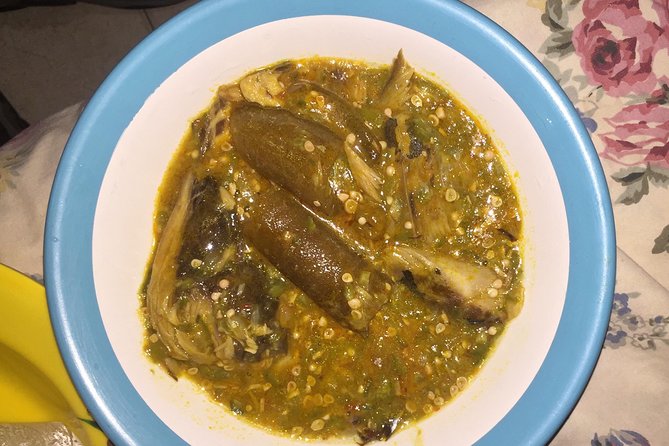
The meal comes after the preparation, and it is a substantial part of the experience. You sit down to eat the dishes made during the class, with conversation continuing around the table or cooking area.
This is where the variety of Ghanaian food becomes clear. You might move from jollof rice to spicy plantains, grilled fish, chicken, soup, fufu, banku, vegetables, or dessert. Not every menu includes every item, so treat these as examples rather than a promised list.
The food is a strong point. Dishes are described as flavorful, fresh, and generous, with special praise for kelewele, jollof rice, grilled fish, and seasoned meats. The cooking method helps explain the appeal: fresh ingredients, hand-ground spices, and charcoal heat give the food a character that is hard to copy from a restaurant buffet.
Spice can be discussed and adjusted. Auntie K has prepared lower-spice meals for people who requested them, and dietary needs have been accommodated in past classes. Still, you should communicate your needs before the activity rather than waiting until the cooking starts.
This is also a good setting for asking questions about the meal while you eat. If you want to recreate a dish at home, take notes as you go. One visitor successfully made fried turkey wings at home after the class, which suggests that the practical tips can carry beyond the afternoon.
How Much Time and Money Should You Allow?
The listed price is $89 per person. That is not a bargain-priced lunch, but the comparison should not be with a restaurant meal alone. You are paying for several hours of hosting, instruction, food, conversation, and the chance to take part in a private activity.
The value improves if you use the market option and take an active role in the cooking. It also makes more sense for a small private group that wants a personal schedule and a meal built around its needs. If you only want to sample Ghanaian dishes, a restaurant will cost less and take much less time.
The class is advertised at about five hours, with a broader range of three to six hours. Do not book it immediately before an airport transfer, tour, or fixed dinner reservation. The cooking pace can be unhurried, and the market option may stretch the day.
The experience is generally booked well ahead, with an average lead time of about 35 days. That is useful planning information for a trip to Accra. If your schedule is fixed, reserve early rather than assuming you can find a place at the last minute.
The activity is offered Monday through Saturday, with the published opening window from 9:00 a.m. to noon. Because the cooking itself may run several hours, confirm the precise start time and meeting details before you go.
Who Will Enjoy This Accra Cooking Class?
I would choose this experience if you want food to be the doorway into Ghanaian culture. It suits curious eaters, solo visitors, couples, families, and groups that enjoy talking as much as cooking.
It is especially good for you if:
- You want to learn about Ghanaian food in a private home.
- You are willing to work with traditional tools and charcoal heat.
- You want a large meal rather than a quick tasting.
- You have dietary needs or prefer lower spice.
- You like flexible, social instruction.
- You want ideas you can try again at home.
I would be more cautious if you need a polished classroom, exact timing, printed recipes, or guaranteed individual cooking stations. The informal format is part of the charm, but it can also mean that you watch more than expected.
Service animals are allowed, and the meeting point is near public transportation. The activity requires good weather, so poor conditions can lead to a new date or a full refund. You can cancel for a full refund up to 24 hours before the start time. Changes or cancellations inside that window are not refunded.
Should You Book Auntie K’s Cooking Class?
Book it if you want a generous, social introduction to Ghanaian cooking and you are comfortable with a home setting. The best parts are the charcoal fire, mortar and pestle, market option, family atmosphere, and wide meal. Those details give you more than a standard cooking demonstration.
Before paying, decide how much hands-on work you need. If active cooking is essential, contact the provider and ask what your group will prepare, who will do the chopping, and how the menu will be adjusted. With the right expectations, this can be one of the most memorable food experiences in Accra.
FAQ
Where does the cooking class meet?
The listed meeting point is Club 69, Osu la Crescent, La Crescent, Accra, Ghana. The activity ends back at the meeting point.
How long does the class last?
The activity is listed at approximately five hours. The class can take between three and six hours, depending on the number of people and how the session proceeds.
Is the market visit included?
The market visit is optional. You may meet up and shop for the foodstuffs used in the cooking class.
What food will I prepare?
Possible dishes include jollof rice, soup, dessert, kelewele, fufu, goat soup, fish, chicken, vegetables, banku, and okra and fish stew. The exact menu can vary.
Is lunch included?
Yes. Lunch made during the cooking class is included.
Is this a private activity?
Yes. Only your group participates in the private tour or activity.
Can I cancel for a full refund?
Yes, if you cancel at least 24 hours before the experience start time. Cancellations made less than 24 hours in advance are not refunded. If poor weather causes the activity to be canceled, you will be offered another date or a full refund.
Newest classes around the world
- Authentic Thai Cooking Class and Farm Visit in Chiang Mai★ 5.0 · 66 reviews
- Aroidee’s Farm-Fresh Thai Cooking Experience★ 5.0 · 8 reviews
- Signature Thai Cooking Course★ 5.0 · 79 reviews
- Half Day Guided Thai Cooking Class in Chiang Mai★ 5.0 · 13 reviews
- Yummy Tasty Thai Cooking School in Chiang Mai★ 5.0 · 2 reviews
- Online Thai and Akha Cooking Class★ 5.0 · 70 reviews
- Northern Thai Cooking Class in Chiang Mai in a Countryside Home★ 5.0 · 2 reviews
- Private Half-Day Thai Cooking Class in Chiang Mai★ 5.0 · 4 reviews
Home Cooking Classes, compared.
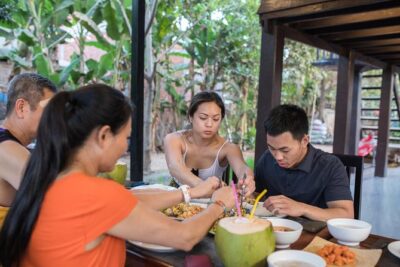
Khmer Cooking Class at a Local’s Home in Krong Siem Reap
Read our review →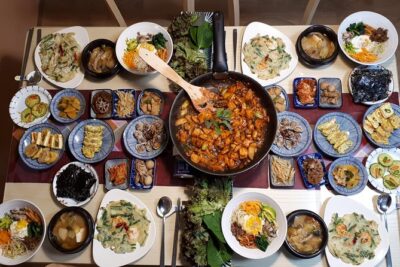
Local Home Korean Cooking Class & Market Adventure in Seoul
Read our review →

Mexican Cooking from Scratch in a Local Home in Tulum
Read our review →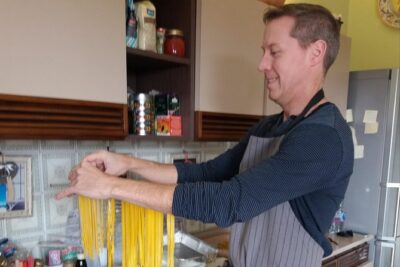
Pastamama, Home Cooking Classes at Grace’s Home
Read our review →
Traditional Cooking Class & meal with Local Family
Read our review →
Browse the lists this tour appears in