
Review · LUCCA COOKING CLASSES
Hands On Pasta and Gelato Cooking Class in LUCCA
Fresh pasta and gelato make a fine pair in Lucca. In this hands-on cooking class, you work with local flour, Tuscan ricotta, Pecorino Toscano DOP, herbs, tomatoes, and seasonal fruit. Ariela leads the session in English, showing you how the dough, fillings, sauces, and gelato come together.
I like the strong local focus, and I like that you actually prepare several dishes instead of watching a demonstration. The class also ends with a shared meal, so you eat the pasta and gelato you made. The main drawback is that it is not suitable for people with food allergies, and a group of up to 18 can feel less personal than a private lesson.
Key points at a glance
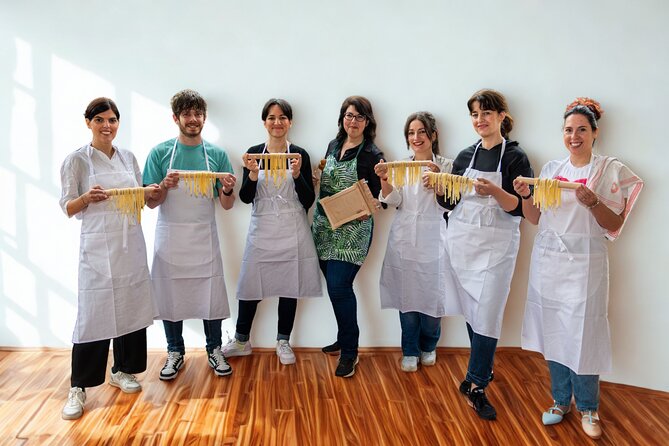
- Three dishes in about three hours: Make spaghetti alla chitarra or tagliatelle, ricotta ravioli, and seasonal gelato.
- A true local-food lesson: Flour comes from a nearby mill, ricotta comes from Tuscan farms, and gelato uses seasonal local fruit.
- Ariela brings regional context: Her teaching includes practical cooking tips and information about Tuscan ingredients and farming.
- You eat what you make: The class finishes with a shared meal featuring your pasta, ravioli, and gelato.
- A useful hot-weather detail: The cooking room has air conditioning, an appreciated feature during Lucca’s summer heat.
- Simple planning: The class starts at 10:00 am at Via di Tiglio 1697 and returns to the same meeting point.
Why this Lucca cooking class works
Many Italian cooking lessons promise a taste of local life, then spend most of the time on a single dish. This class gives you more to do. In roughly three hours, you make two pasta preparations and a dessert, then sit down to eat them.
That range matters. Pasta dough teaches you about flour, moisture, kneading, and cutting. Ravioli adds filling, shaping, and sealing. Gelato changes the subject completely, showing you how fruit and a creamy base become a cold dessert. You get a wider picture of Italian home cooking than you would from a short pasta demonstration.
The class is held in Lucca, a good setting for a food experience because the city encourages a slower pace. You do not need to spend the whole day on this activity. A 10:00 am start leaves your afternoon free for Lucca’s streets, churches, and walls, while the meal gives you a substantial lunch.
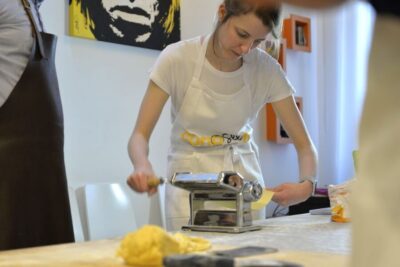
The tone also appears intentionally practical. You are not just watching a chef perform polished restaurant tricks. You handle the ingredients, use the tools, shape the ravioli, and take part in the work. That makes the lesson useful after you return home, especially if you want to repeat the recipes in your own kitchen.
More Pasta Making Classes in Italy:
- Florence: Pasta Cooking Class with Unlimited Wine
★ 4.9 · 10,285 reviews - 3 in 1 Cooking Class near Navona: Fettuccine, Ravioli & Tiramisu
★ 5.0 · 7,376 reviews - Florence: Pasta & Tiramisu Cooking Class with Unlimited Wine
★ 4.9 · 6,708 reviews
Meeting Ariela at 10:00 am
The class begins at Via di Tiglio 1697, 55100 Lucca. The activity ends at that same meeting point, which keeps the logistics simple. Confirmation is provided when you book, and the location is near public transportation.
Ariela is the instructor named in the available class information. Her role goes beyond giving instructions. She explains local products and the care involved in making pasta, and she connects the cooking to Tuscany’s farms and food traditions.
That regional angle is one of the best reasons to choose this class. You are not simply mixing flour and water with a recipe in front of you. You learn why the ingredients matter. The flour comes from a nearby mill, the ricotta comes from local farms, and the fruit for the gelato follows the season.
You should arrive ready to work. This is a practical class, not a formal meal with a cooking show attached. Wear something comfortable and expect to spend much of the session standing, shaping, stirring, and preparing food.
Making spaghetti alla chitarra or tagliatelle
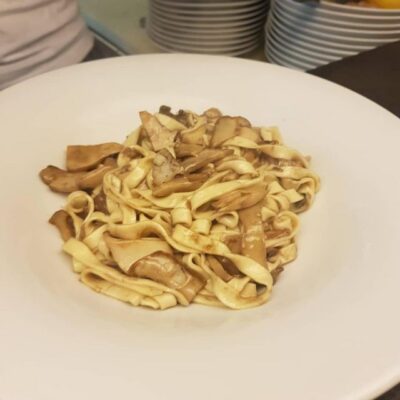
The first pasta preparation is either spaghetti alla chitarra or tagliatelle. Both give you a chance to see how fresh dough changes as you work it and cut it.
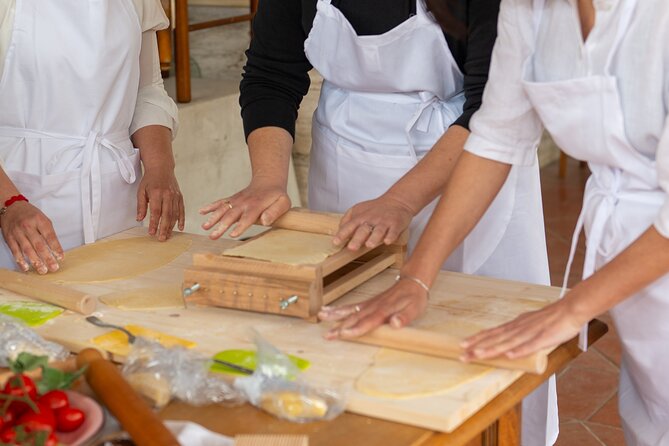
Spaghetti alla chitarra is especially interesting because it is made with a chitarra, a traditional cutting tool with taut wires. Pressing the pasta sheet through the wires creates square-edged strands. It is a fun bit of equipment, and it gives the class a detail you may not meet in a standard pasta lesson.
Tagliatelle offers a more familiar route, with broad ribbons of pasta. The exact shape you make can depend on the class setup, but the point is the same: you learn to turn fresh dough into a finished pasta shape rather than opening a packet.
The pasta is served with a creamy Pecorino Toscano DOP sauce. Pecorino Toscano is a Tuscan sheep’s milk cheese, and the DOP designation signals that it follows protected production standards. In practical terms, this sauce gives you a clear taste of the region without burying the pasta under a complicated recipe.
I like this part because it keeps the focus on technique and ingredients. A simple cheese sauce leaves less room for mistakes to hide. You will notice the texture of the pasta, the quality of the cheese, and the balance of the sauce.
Shaping ricotta-filled ravioli
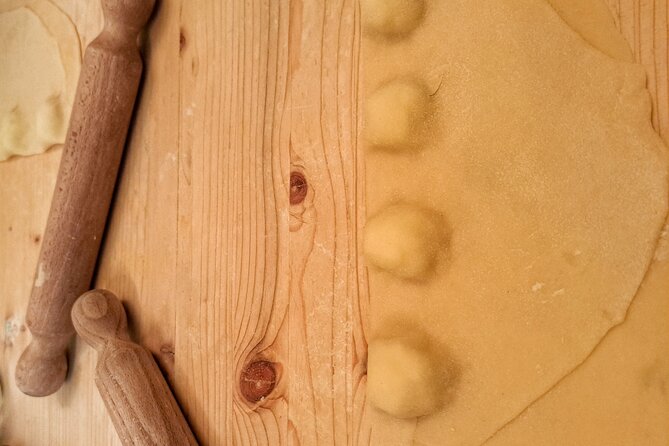
Next comes ravioli filled with fresh ricotta from a Tuscan farm. Ravioli teaches a different set of skills from long pasta. You must portion the filling, place it carefully, press out excess air, and seal the edges so the pasta stays closed in the pot.
This is the part where patience helps. The shapes do not need to look identical to be delicious, but the edges need a firm seal. If you rush, filling can escape during cooking. The class gives you the chance to learn these details under guidance instead of trying to guess from a printed recipe at home.
The ravioli is served with a fresh herbed tomato sauce. It is a useful contrast to the Pecorino sauce: one dish is creamy and cheese-led, while the other uses tomato and herbs to bring a lighter, brighter flavor.
The ingredient choice also tells you something about Tuscan cooking. Fresh ricotta is soft, mild, and delicate, so the ravioli does not need a heavy filling. The herbs and tomato sauce add character without taking over. You get to taste how local, straightforward ingredients can produce a full meal.
More Tiramisu and Dessert Classes in Italy:
- Rome: Pasta Making Class with Wine, Limoncello, and Dessert
★ 4.9 · 3,177 reviews - Rome: 3-in-1 Fettuccine, Ravioli, and Tiramisu Cooking Class
★ 4.9 · 2,704 reviews - Florence: Cooking Class Pasta & Tiramisu Making Unlimited Wine
★ 5.0 · 2,234 reviews - Fettuccine & Tiramisù: Cooking Class with Wine & Limoncello
★ 4.9 · 2,103 reviews
Making seasonal Italian gelato
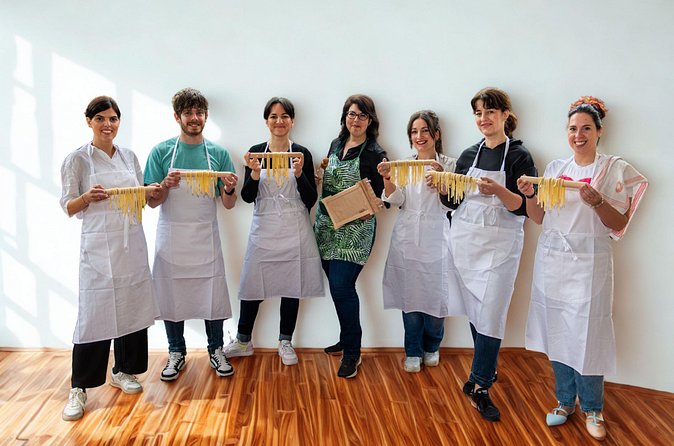
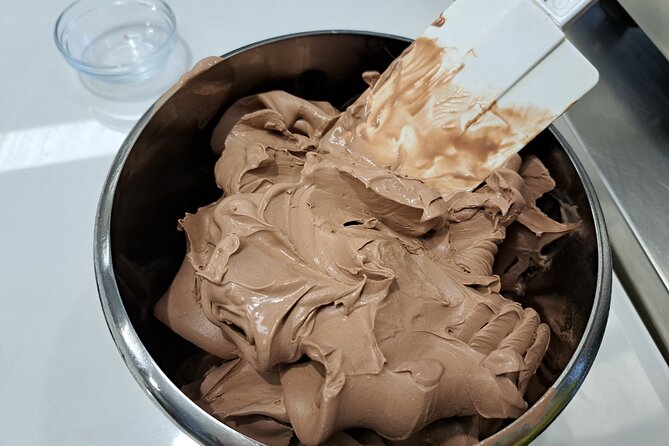
The final preparation is homemade gelato using seasonal ingredients. The exact flavor is not fixed, because the fruit depends on what is available. That is a good sign for an Italian food lesson. Seasonality is not just a slogan here; it affects what you make.
Gelato also changes the rhythm of the class. After working with pasta dough and shaping ravioli, you move to a dessert that depends on texture, balance, and careful preparation. The result should be creamy rather than simply frozen and sweet.
The gelato earned especially strong praise for its creamy texture. That is worth noting because gelato can be the weak point in a cooking class if it is treated as an afterthought. Here, it is a full part of the lesson and the meal.
The use of local seasonal fruit gives you a practical idea to take home. You can adapt the recipe to what is good at the market instead of searching for one exact fruit all year. That approach fits Tuscan cooking well: use good ingredients when they are ready, and do not add unnecessary fuss.
Sitting down to eat your work
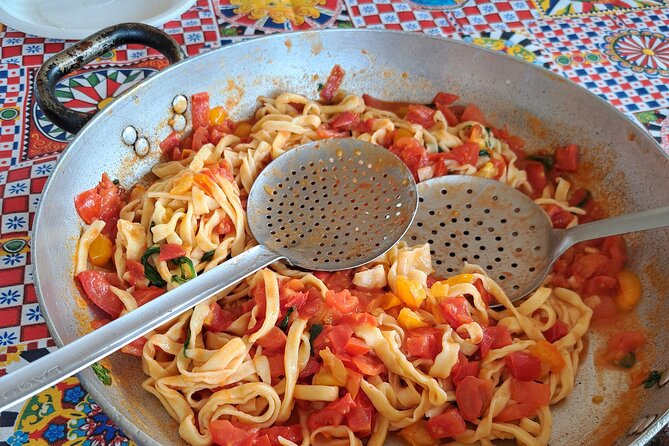
After the cooking, everyone shares the meal. You eat the spaghetti or tagliatelle with Pecorino Toscano sauce, the ricotta ravioli with herbed tomato sauce, and the homemade gelato.
This shared meal is important. It turns the lesson into a social food experience rather than a series of cooking stations. You have time to taste the results, compare textures, and enjoy the dishes without rushing straight back into sightseeing.
The menu is also substantial for a three-hour activity. You are not making one small sample and then leaving hungry. There are two pasta courses and dessert, so the class can serve as a late breakfast or lunch depending on your appetite.
The group size can reach 18 people. That is large enough to create a lively meal, but it may mean less one-to-one time with Ariela than you would get in a private class. If you want constant personal correction, ask about the group setup before booking. If you enjoy meeting other people over food, the shared format should suit you.
Local ingredients are the real lesson
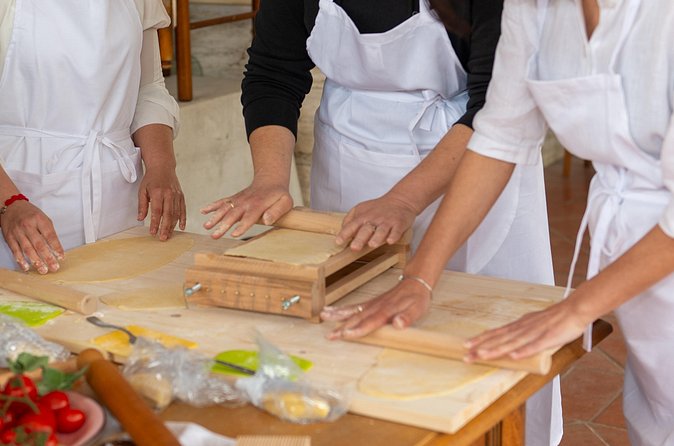
The strongest feature of this experience is not only the number of dishes. It is the attention to where the food comes from.
The flour is sourced from a nearby mill. The ricotta comes from local farms. The gelato uses seasonal fruit from Tuscan producers. These details help you connect the finished food with the countryside around Lucca.
You also learn why ingredient quality matters in simple dishes. Fresh pasta has nowhere to hide behind strong seasoning. A sauce made from a few ingredients depends on the cheese, tomato, herbs, and pasta all being in good shape.
I would choose this class over a more elaborate menu if your goal is to understand everyday Italian cooking. The recipes are familiar enough to repeat at home, but the local products give them a clear Tuscan identity.
Comfort, group size, and the summer heat
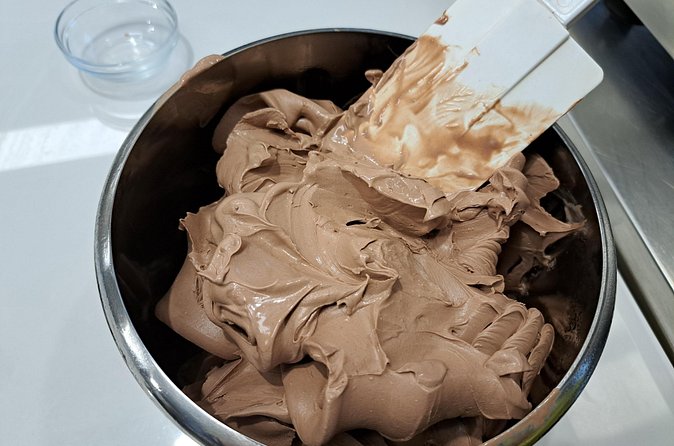
Cooking in Lucca during warm weather can be tiring, especially when you are working around boiling water and a busy kitchen. The room has air conditioning, which is a practical advantage during a heat wave.
The air conditioning does not change the food, but it can change your enjoyment of the class. You can focus on making pasta instead of thinking about how hot you are. This is especially useful for anyone planning a morning activity in the summer.
The class is offered in English, so you can follow the instructions and ask questions without needing to rely on gestures. The available information does not describe every physical feature of the cooking space, so you should contact the provider if you have mobility needs or require specific equipment.
Food allergies are the clearest limitation. This class is not suitable for people with food allergies. Do not assume substitutions are available. If you have dietary restrictions, ask before booking rather than arriving and hoping the menu can be changed.
Is $86.61 a good value?
At $86.61 per person, this is not the cheapest meal you will find in Lucca. But you are paying for about three hours of instruction, hands-on preparation, several dishes, local ingredients, and the final meal.
The value is strongest if you want to learn skills you can use later. You make pasta from scratch, shape ravioli, prepare sauces, and make gelato. A restaurant meal might cost less, but it would not teach you how to repeat the dishes.
The price also makes more sense for people who enjoy food as part of the trip, not just as a break between sights. You are buying an activity and a meal in one package. The local flour, farm ricotta, Pecorino Toscano DOP, and seasonal fruit add substance to the experience rather than serving as decorative talking points.
Still, you should be clear about what this is not. It is not a private chef lesson, a market tour, or a formal tasting menu. A group of up to 18 may limit personal attention, and the class does not suit people with food allergies. For most visitors who want an active morning and a generous meal, the price is reasonable.
Who should book this class
I would recommend it to first-time pasta makers, couples, families with older children, and anyone who likes meeting people around a table. It is also a good choice if you want a break from museums and churches without giving up a strong connection to local culture.
You do not need advanced cooking skills. The class is built around basic techniques, and Ariela’s approachable teaching style should help beginners keep up. You will get more from it if you are willing to work with your hands and accept that handmade pasta may look a little uneven.
Food-focused visitors will get the most from the local ingredient details. You can ask about the flour mill, the farms, the ricotta, and the seasonal fruit while you cook. Those small conversations can make the meal feel connected to Tuscany rather than like a generic Italian lesson.
I would hesitate if you have allergies, want a very quiet or private setting, or dislike group activities. The class is social and practical. It is not designed for someone who prefers to watch a professional chef do the work.
Booking and cancellation details
The class is offered in English, uses a mobile ticket, and requires advance planning. It is booked an average of 37 days ahead, so reserve early if your Lucca dates are fixed.
Free cancellation is available if you cancel at least 24 hours before the 10:00 am start time. Cancellations or changes made less than 24 hours before the start are not refunded. The class also requires a minimum number of participants. If that minimum is not met and the activity is canceled, you can receive a full refund or choose another date or experience.
Should you book the Lucca pasta and gelato class?
Book it if you want to do more than eat Italian food. You will make three different preparations, work with Tuscan ingredients, learn from Ariela, and sit down to enjoy the results. The combination of pasta, ravioli, and creamy seasonal gelato gives the morning good variety.
Skip it if you have food allergies, need a private lesson, or prefer a quick demonstration. For everyone else, this is a practical and fairly priced way to spend a morning in Lucca, especially during hot weather when the air-conditioned kitchen offers welcome relief.
FAQ
Where does the cooking class start?
The class starts at Via di Tiglio 1697, 55100 Lucca LU, Italy.
What time does the class begin?
The start time is 10:00 am.
How long does the experience last?
The cooking class lasts approximately three hours.
What pasta dishes will I make?
You will make spaghetti alla chitarra or tagliatelle, plus ricotta-stuffed ravioli.
What dessert will I prepare?
You will make authentic Italian gelato with seasonal ingredients, including local seasonal fruit.
Is the class offered in English?
Yes. The class is offered in English.
Can I cancel for a full refund?
Yes, if you cancel at least 24 hours before the experience start time. Cancellations or changes made less than 24 hours before the start are not refunded.
Newest classes around Italy
- Cooking Class in a Sicilian countryhouse★ 5.0 · 5 reviews
- Cesarine: Market Tour & Home Cooking Class in Catania★ 4.0 · 6 reviews
- Cesarine: Home Cooking Class & Meal with a Local in Catania★ 4.5 · 10 reviews
- Cooking Class in Taormina with Lunch Included★ 5.0 · 2 reviews
- Cooking class in Capri for small groups★ 4.0 · 4 reviews
- Cooking Class and Wine Pairing in Capri★ 5.0 · 57 reviews
- Lezione di Cucina : Pasta Fresca★ 5.0 · 12 reviews
- Private Cooking Class Experience in Reggio Calabria★ 5.0 · 5 reviews
Lucca Cooking Classes, compared.
Lucca Walking Tour & Traditional Cooking Class with Wine
Read our review →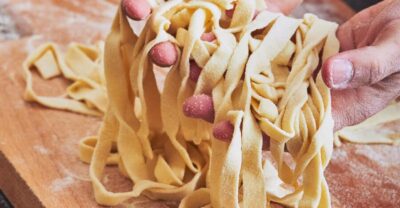
Traditional-Traditional Cooking Class cuisine course
Read our review →
Browse the lists this tour appears in