
Review · COOKING CLASSES
Explore Typical Czech Foods: Tasting, cooking & dining event
Czech food makes the most sense when you cook it with someone who knows why it exists. At Good Mood Food’s 400-year-old Karlin setting, you taste local staples, hear how farming and household habits shaped the cuisine, then prepare several dishes yourself before sitting down to eat.
I like the mix of tasting and hands-on cooking, since you are not simply watching a chef work. I also like the generous all-inclusive format: food, drinks, ingredients, instruction, and recipes sent afterward are covered in the $172 price. The main consideration is cost, which is high for a three-hour food activity, and the setting is in Prague 8, not a rural farm outside the city.
Key points before you book
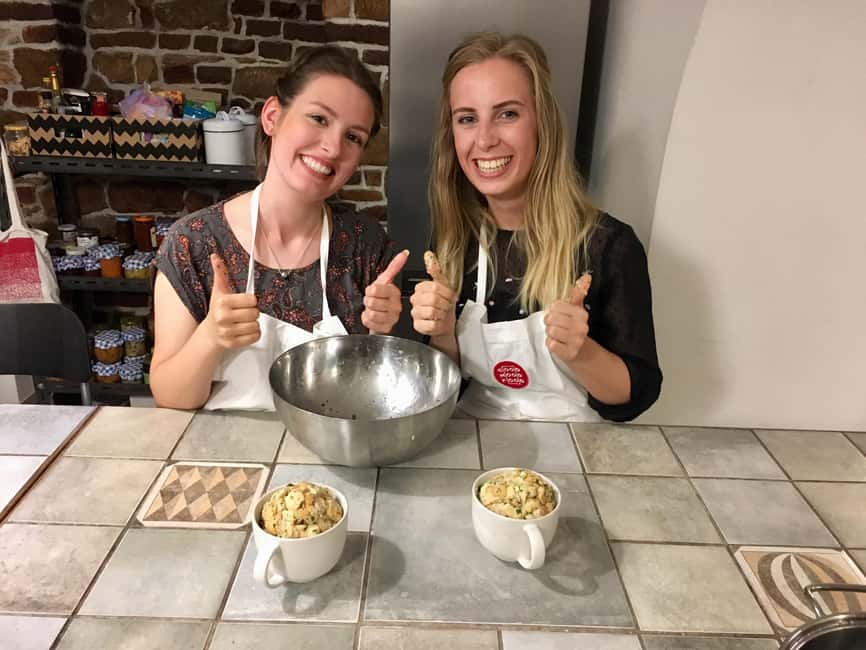
- Three ways to experience Czech food: You taste traditional products, cook several recipes, and finish with a seated meal.
- A very small group: The class is limited to eight people, allowing a more personal kitchen session.
- Classic dishes on the menu: Bread dumplings, fruit dumplings or kremrole, and potato-sauerkraut pancakes are part of the cooking.
- Drinks are included: Expect Czech wines, homemade lemonades, infusions, and other non-alcoholic drinks.
- Karlin location: The Good Food Atelier is at Krizikova 67, behind a large wooden gate in Prague 8.
- Useful take-home material: Recipes are emailed after the class, so the experience can continue in your own kitchen.
A Czech food lesson that begins at the table
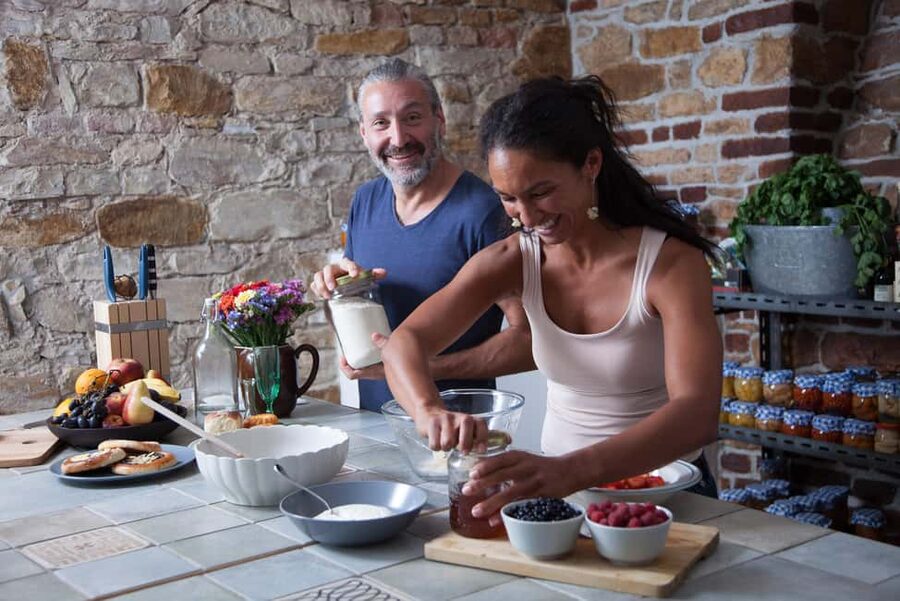
This experience is not a standard cooking class where you arrive, chop vegetables, and leave with a plate. It is built around the full food story: what Czech households commonly ate, what local farms could produce, and how geography, money, and tradition shaped familiar recipes.
You begin with a selection of Czech delicacies. The spread includes cheese, sausages, bread, jams, pickles, and other homemade products. This opening tasting matters because it gives you a sense of the everyday pantry before you start cooking.
I like this approach. You get to sample several flavors without waiting for the cooking to finish, and the hosts can connect each item to Czech habits and food traditions as you go. It also gives you a chance to settle into the relaxed, home-style mood of the class.
The food is meant to be typical rather than fancy. That is a useful distinction. If you want polished restaurant plates or modern tasting-menu techniques, this may not be the right choice. If you want to understand what people actually ate and still recognize on a Czech table, the format is much more useful.
More Dinners Out in the world:
- Palermo: Pizza and Gelato Cooking Class with Dinner and Wine
★ 4.9 · 951 reviews - Seville: Spanish Cooking Class with Dinner
★ 4.9 · 900 reviews - Greek Cooking Class in Athens Including Rooftop Dinner with Acropolis View
★ 5.0 · 826 reviews
Inside the Good Food Atelier at Krizikova 67
The class takes place in the Good Food Atelier, a self-designed food space in a 400-year-old place in Karlin. Karlin is one of Prague’s rapidly changing districts, and this address gives you a local neighborhood setting rather than a formal culinary school.
The meeting point is Krizikova 67, Prague 8. Look for a large wooden gate between U Pani Loan restaurant and Anthony bar. The doorbells are on the right, and you should ring the one marked Good Food Atelier.
There is one practical address detail worth noting. Online map information may show 70/67, but the orientation number you need is 67. If you use a taxi or Uber, tell the driver house number 67. This small point could save you from being dropped at the wrong entrance.
The atmosphere is intended to feel homey and easygoing. You are not being rushed through a commercial kitchen. The hosts lead the experience in English or Czech, and the small group keeps the class from feeling like a large demonstration.
The group limit is eight. That is a good size for a food activity because you can listen, ask questions, and take part without being lost in a crowd. It also means the experience depends in part on the group at your session. A lively group can make the cooking more social, while a quieter one may make the meal feel more intimate.
The tasting table: cheese, sausages, bread, and homemade goods
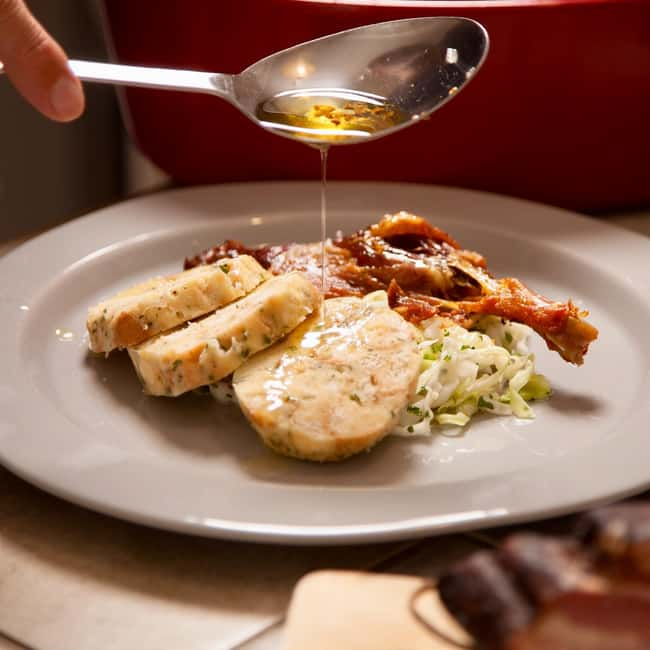
The first food section is a broad tasting of Czech ingredients and prepared foods. You can expect cheese, sausages, bread, jams, pickles, and other homemade products, along with drinks.
This opening course helps you notice the balance of Czech food. Preserved foods, bread, dairy, meat, and seasonal produce all have a place. The hosts use these foods to explain what was grown or farmed in the region and how those ingredients became dishes suited to local households.
I would pay attention to the stories here rather than treating the tasting as a quick snack. The point is not simply to identify each sausage or spread. It is to see how food preservation, available crops, and household economics affected cooking.
The homemade items also fit the tone of the event. Jams and pickles are not just decorative additions to a plate. They show how people made use of produce and kept food available beyond its growing season. Bread and sausage offer another practical look at the Czech table.
Because everything is included, you do not need to budget separately for food or drinks during the session. That makes the experience easier to enjoy, especially when several tastings are part of the program.
Czech drinks, from wine to homemade lemonades
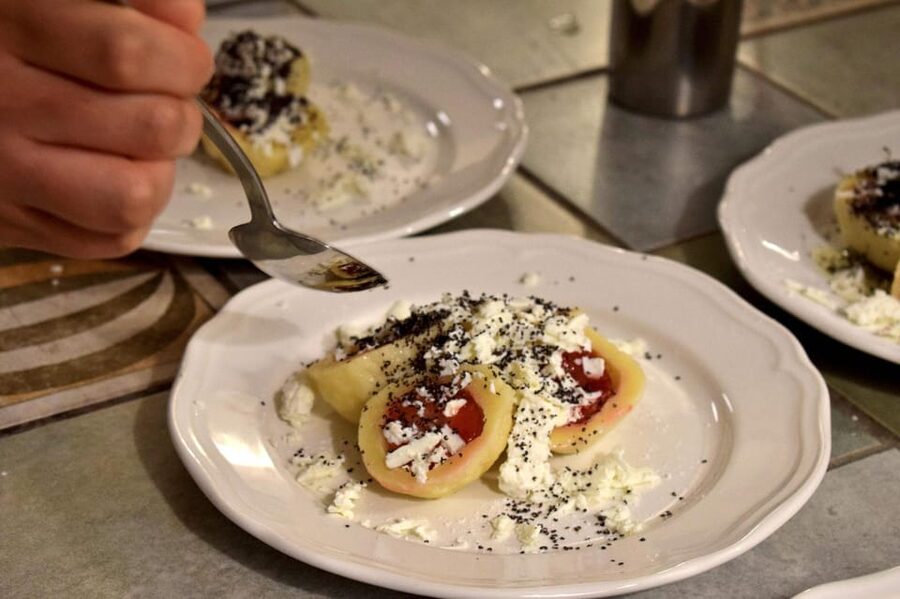
Drinks are part of the lesson, not an afterthought. You taste three Czech wines or sample homemade lemonades, infusions, and other non-alcoholic beverages.
The wording allows for different drink preferences, which is helpful for a mixed group. If you do not want alcohol, the homemade drinks give you another way to take part in the tasting. If you enjoy wine, the Czech selections add a regional element that you may not encounter in a standard city food walk.
The available information does not specify the individual wines or the exact non-alcoholic menu for each date. I would treat that as part of the session’s flexibility rather than expect a fixed wine list.
This is also a good activity for people who want food culture without spending an entire evening at a restaurant. You get drinks, conversation, instruction, and dinner in one three-hour block.
More Places to Eat in the world:
- Tuscan Cooking Class and Dinner in Florence
★ 4.5 · 732 reviews - Greek Small-Group Athens Cooking Class & Dinner
★ 5.0 · 574 reviews - Paella Cooking Class with Professional Chef: Four Course Dinner
★ 5.0 · 561 reviews - Lisbon Portuguese Cooking Class with 3-Course Dinner
★ 5.0 · 445 reviews
Cooking three traditional Czech dishes
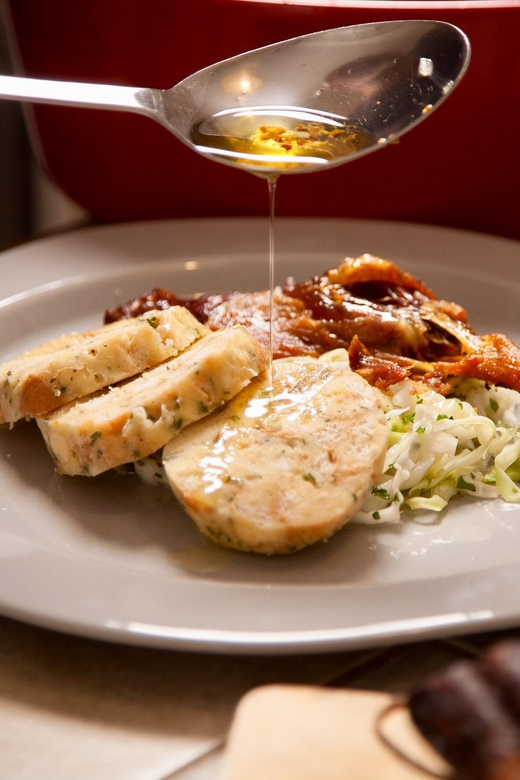
The hands-on section focuses on three easy but traditional preparations. These include bread dumplings, potato-sauerkraut pancakes, and either fruit dumplings or kremrole.
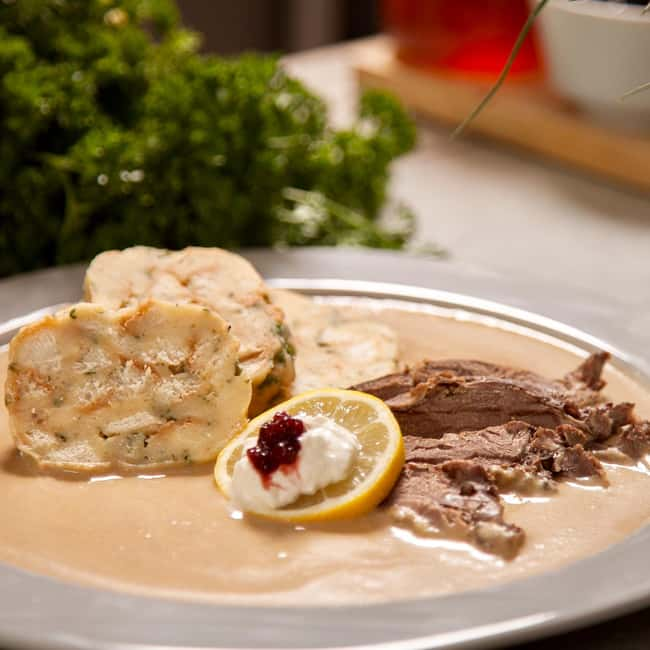
Bread dumplings are a key part of the meal because they are served with the main dish at the end. Learning to prepare them gives you a direct connection to one of the most familiar Czech accompaniments, rather than simply receiving them on a plate.
The potato-sauerkraut pancakes bring together two ingredients with strong roots in home cooking. The combination is simple and practical, which is exactly why it belongs in this kind of class. You are learning food that reflects local habits, not a restaurant-only specialty.
For the third preparation, the class makes fruit dumplings or kremrole. These offer a sweeter finish and show a different side of Czech cooking. The precise choice may vary, so do not book expecting both desserts in every session.
The recipes are described as easy, which makes this suitable for cooks of different levels. You do not need professional technique to take part. The value is in learning the method, understanding the ingredients, and seeing how the dishes fit together.
The hosts lead this part themselves, and the class is designed around participation. You should expect to do more than watch, but the supplied information does not promise that every person will complete every step independently. With a maximum of eight people, there should be room for active involvement, though the exact division of tasks can vary.
The main dish is prepared ahead
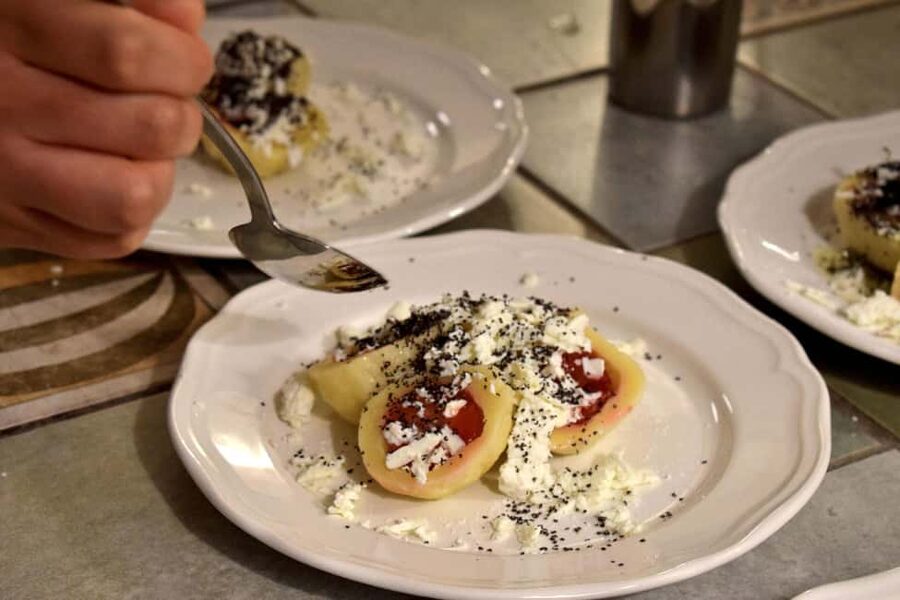
The main dish is cooked in advance, while the group prepares the three selected recipes during the class. This is a sensible arrangement for a three-hour experience.
A main course often needs more time than a class can spare, especially if it involves slow cooking or several stages. Preparing it ahead means you can focus on the teaching and hands-on dishes without waiting for dinner to finish.
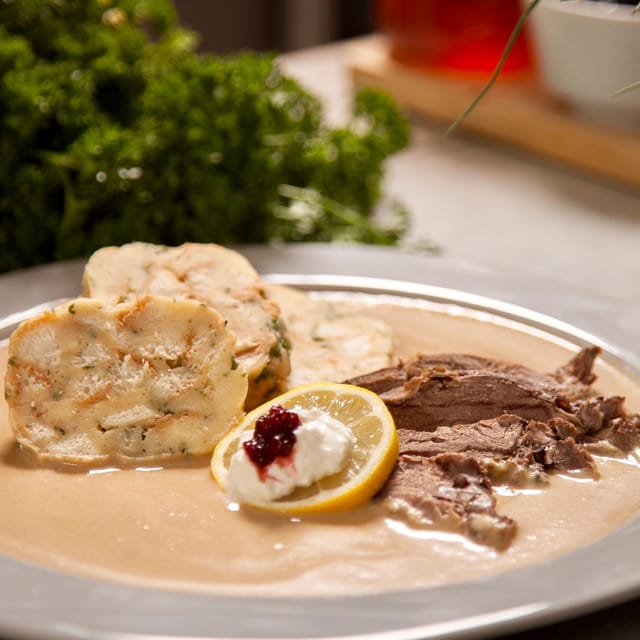
At the seated meal, the bread dumplings are served with one selected main dish, followed by dessert. The information provided does not name the main dish, so you should expect a traditional Czech pairing chosen by the hosts rather than a guaranteed specific entree.
This setup also gives the class a clear rhythm. You taste first, cook together, then sit down to eat what the lesson has been building toward. The meal is not an extra restaurant stop. It is the final part of the food lesson.
Why the $172 price may make sense
At $172 per person, this is not a budget food activity. The price is easier to justify if you place value on the full package rather than comparing it with the cost of an ordinary Prague meal.
You receive a three-hour session, a small group capped at eight, a broad tasting, drinks, ingredients, cooking instruction, and a seated dinner. Recipes are also sent by email after the class, giving you something practical to keep.
The price includes all food and drinks, so you do not need to add separate charges for the wine, lemonade, cooking supplies, or final meal. That makes the cost more predictable.
Still, I would be honest about the tradeoff. If your main goal is simply to eat Czech food cheaply, $172 is a lot. You could find a less expensive meal elsewhere. This experience is aimed at people who want context, conversation, participation, and a small-group setting.
The two available ratings are both five out of five. One short comment singles out the chef, while another says the experience was better than expected. Those comments support the strongest point of the format: the quality of the host-led cooking and the sense that the session offers more than a basic meal.
Who will enjoy this experience most
I would recommend it to you if food is one of the main ways you like to understand a place. The class links ingredients with household habits, farming, economics, and culture, so it suits curious eaters who want more than a list of dishes.
It also works well for couples, solo visitors, and small groups. The relaxed setting and eight-person limit make it easy to take part without needing to organize a large private event.
This is a good pick for:
- People who want to cook instead of only watch
- Visitors interested in traditional Czech home food
- Couples looking for a social meal with an activity attached
- Small groups that prefer a private-feeling kitchen setting
- Cooks who want recipes to try after returning home
- Non-drinkers, since homemade lemonades and other non-alcoholic drinks are included
I would think twice if you want a countryside farm visit, a market tour, or a restaurant-style tasting menu. The location is in Karlin, and the experience centers on the atelier rather than on visiting farms or food producers.
You should also tell the hosts about allergies before the experience. The menu includes dairy, meat, bread, and several prepared foods, so advance notice matters.
Timing, language, and booking details
The activity lasts three hours, with starting times based on availability. It is led in English or Czech, and an English audio guide is included.
You can cancel up to 24 hours before the start for a full refund. The reserve-now, pay-later option lets you keep your plans flexible and pay nothing at the time of booking.
The address is easy to reach once you know the entrance details, but do not rely only on the map pin. Use Krizikova 67, look for the wooden gate, and ring the Good Food Atelier bell on the right.
Should you book the Czech food experience?
Book it if you want Czech food explained through tasting, cooking, and a shared meal. The strongest features are the small eight-person group, the homey Karlin atelier, and the range of food and drinks included in one price.
I would especially choose it early in a Prague visit. The class can give you useful background for later restaurant meals, since you will recognize dumplings, preserved foods, and traditional flavor combinations more easily.
Skip it if your budget is tight or you only want a quick local lunch. At $172, you are paying for instruction and cultural context as much as for food. For the right eater, that makes the cost worthwhile. For someone focused only on the cheapest meal, it does not.
FAQ
Where does the Czech food experience take place?
It takes place at the Good Food Atelier, Krizikova 67 in Prague 8, in the Karlin district.
How do I find the entrance?
Look for a large wooden gate between U Pani Loan restaurant and Anthony bar. The doorbells are on the right. Ring the bell marked Good Food Atelier.
How long does the activity last?
The experience lasts three hours.
How many people can join?
The group is limited to eight participants.
What food will I taste?
The tasting includes Czech cheese, sausages, bread, jams, pickles, homemade products, and other typical delicacies.
What dishes will I help prepare?
You help prepare bread dumplings, potato-sauerkraut pancakes, and either fruit dumplings or kremrole.
Are drinks included?
Yes. The price includes drinks, including three Czech wines or homemade lemonades, infusions, and other non-alcoholic beverages.
Are recipes provided after the class?
Yes. The recipes are sent by email after the cooking class.
More Food and Drink Outings in the world
- Small Group Cooking Class & Market Food Tour in Florence
★ 5.0 · 1,574 reviews - Paella Cooking Class, Wine Tasting & Central Market in Valencia
★ 5.0 · 1,150 reviews - Athens: Food Market Visit and Cooking Class with Wine
★ 4.9 · 1,087 reviews - Undiscovered Charleston: Half Day Food, Wine & History Tour with Cooking Class
★ 5.0 · 948 reviews
Newest classes around the world
- Aroidee’s Farm-Fresh Thai Cooking Experience★ 5.0 · 8 reviews
- Authentic Thai Cooking Class and Farm Visit in Chiang Mai★ 5.0 · 66 reviews
- Signature Thai Cooking Course★ 5.0 · 79 reviews
- Half Day Guided Thai Cooking Class in Chiang Mai★ 5.0 · 13 reviews
- Yummy Tasty Thai Cooking School in Chiang Mai★ 5.0 · 2 reviews
- Online Thai and Akha Cooking Class★ 5.0 · 70 reviews
- Northern Thai Cooking Class in Chiang Mai in a Countryside Home★ 5.0 · 2 reviews
- Private Half-Day Thai Cooking Class in Chiang Mai★ 5.0 · 4 reviews
Cooking Classes, compared.
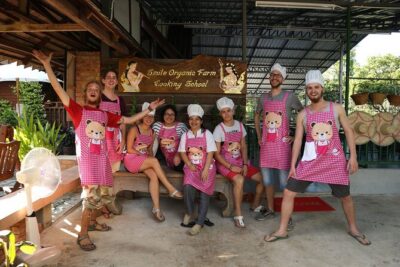
Half-Day Thai Cooking Class at Organic Farm in Chiang Mai
Read our review →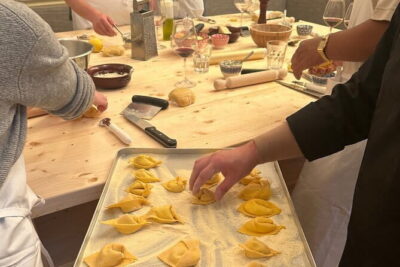

3 in 1 Cooking Class near Navona: Fettuccine, Ravioli & Tiramisu
Read our review →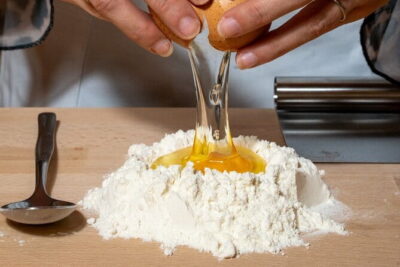
Pasta & Tiramisu Cooking Class with Unlimited Wine
Read our review →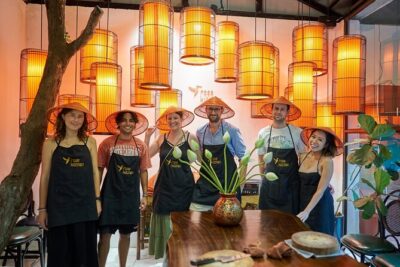
Hanoi Cooking Class: Culture, Local Market & Meaning CSR Impact
Read our review →
5 Traditional Dishes Hanoi Cooking Class with Market Trip
Read our review →
Cooking Class and Lunch at a Tuscan Farmhouse with Local Market Tour from Florence
Read our review →Browse the lists this tour appears in