Review · CHIANG MAI COOKING CLASSES
Evening Cooking Class by Chef not over 4 people market visit
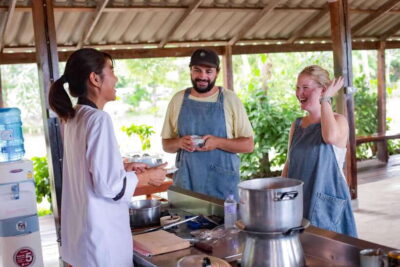
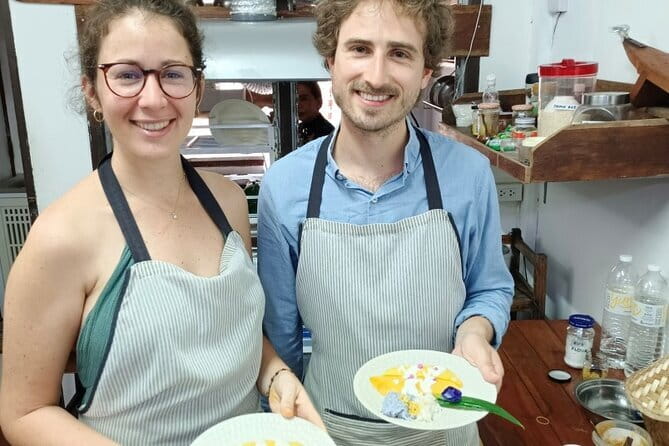
The best part of this Chiang Mai cooking class is its small size. Chef Arm teaches no more than four people, taking you from a local market to his home kitchen, where you handle the ingredients and cook dinner at your own station. I like the market stop and the herb garden, which give you useful context before the pans come out.
I also like that Arm draws on culinary-school training, hotel kitchen work, and Northern Thai cooking from his mother. The main caution is coordination: one booking was cancelled at short notice, so you should keep an eye on your phone and email before setting out.
Key points
- Market visit around 4 p.m.: See Thai vegetables, mushrooms, meat, rice, and seasonal fruit before cooking.
- Seasonal fruit guidance: Arm explains how to choose mango, papaya, rambutan, mangosteen, lychee, and longan when available.
- Home herb garden: Identify lemongrass, kaffir lime, turmeric, pandan, sweet basil, and holy basil.
- Four-person maximum: Everyone gets a personal cooking station and direct help.
- Dinner and recipes included: You eat what you prepare and take home a printed or PDF recipe book.
- Evening timing: Pickup is planned around 4 p.m., with return to your hotel around 7:30 p.m.
Why the Small Group Matters in Arm’s Kitchen
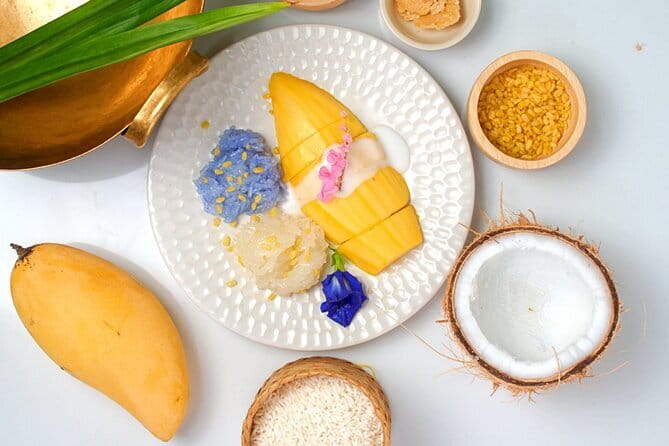
Many cooking classes become demonstrations with a little chopping added at the end. This one is designed differently. You prepare the ingredients yourself, work at your own cooking station, and receive help from Chef Arm as you move through each step.
The four-person limit is the key detail. With a larger class, you may spend much of the evening watching someone else slice, stir, or season. Here, you should have room to ask questions and correct mistakes while the dish is still on the stove.
Arm’s background gives the class a useful mix of influences. He trained at culinary school and worked in a hotel kitchen, but the recipes also come from his mother, who cooks Northern Thai food. That combination matters because Thai food is not just about adding chili, lime, or fish sauce. Technique, timing, and local habits shape the result.
I would book this class if you want practical instruction rather than a polished show. You should be ready to take part. The appeal lies in doing the work, not simply eating a meal prepared for you.
More Cooking Classes with a Market Tour in Chiang Mai
- Chiang Mai: Cooking Class, Market & Thai Herbs Garden Tour
★ 4.9 · 4,824 reviews - Chiang Mai: Authentic Cooking Class with Market & Farm Visit
★ 4.9 · 4,546 reviews - Chiang Mai: Cooking Class with Market and Pickup
★ 4.9 · 1,365 reviews
The 4 p.m. Pickup and Local Market Start
The evening begins with pickup from your hotel at about 4:00 to 4:15 p.m. An air-conditioned vehicle is included, which is useful after a warm Chiang Mai afternoon and keeps the start simple.
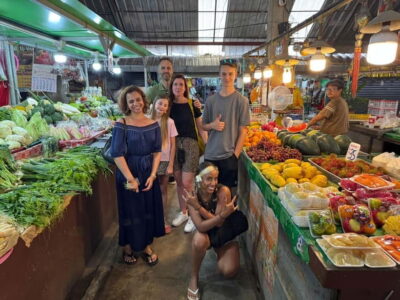
The first stop is a local Thai fresh market. You can expect the usual building blocks of a home kitchen: vegetables, mushrooms, fruit, meat, and rice. The value of this visit is not just seeing ingredients on display. Arm uses the market to explain what to look for and how Thai cooks choose produce.
Fruit gets special attention. Depending on the season, he may discuss mango, papaya, rambutan, mangosteen, lychee, and longan. These are familiar names to many people, but choosing good fruit can be less obvious than eating it. A short explanation about ripeness, appearance, and season can make later market visits much easier.
The timing also works well. At 4 p.m., you are starting before dinner, but not committing your whole day to a cooking activity. If you have spent the morning sightseeing, this gives you time to return to your hotel, collect your things, and get ready.
One practical point: the class depends on smooth communication about pickup. Because a prior booking was cancelled at short notice, I would confirm your hotel details and watch for messages on the day of the class. Do not assume you will always have your phone or incoming email in view.
From Market Produce to Arm’s Herb Garden
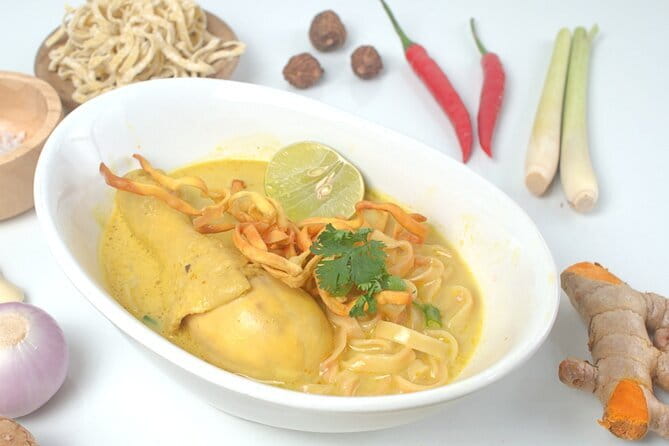
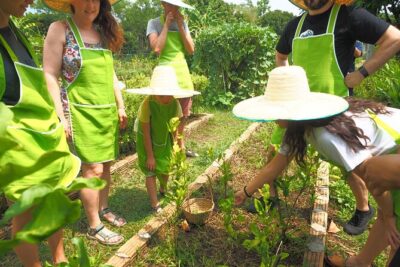
At Arm’s home, the food lesson continues outdoors with a look at herbs used in Thai cooking. The garden includes kaffir lime leaves, lemongrass, turmeric, and pandan leaves. The class description also identifies sweet basil and holy basil among the herbs introduced.
This is a small feature, but it can make a big difference. Thai herbs are often reduced to names on a menu or ingredients in a recipe. Seeing them as living plants helps you understand how they differ and why they are used in particular dishes.
Kaffir lime leaves, for example, bring a sharp citrus aroma without simply adding lime juice. Lemongrass gives a fresh, lemony note, while pandan has a distinct fragrance often linked with sweets and drinks. Turmeric adds color and earthy flavor. Sweet basil and holy basil are not interchangeable, and learning that distinction is useful if you plan to cook Thai food at home.
I like this part because it connects the final meal to the place where the ingredients come from. You are not only following instructions from a printed page. You are learning to recognize the plants that shape Thai cooking.
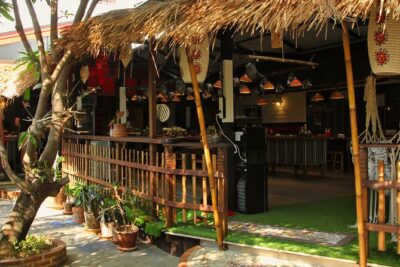
The garden is also a good reason to choose this class over one held entirely in a commercial kitchen. The setting is personal, although you should not expect a formal culinary school facility or a large demonstration space. The small home setting is part of the experience.
Your Own Station and Hands-On Preparation
After the market and garden visit, you prepare the ingredients yourself. Arm explains the steps and helps as needed, but you remain responsible for your part of the cooking.
That arrangement suits you if you want to learn by repetition. Cutting, sorting, mixing, and cooking are easy to understand when someone else does them. They become useful skills only when your own hands perform the work.
The class is built around direct instruction. Arm explains the background of the dishes as you cook, so the meal is not just a set of disconnected commands. You can learn why an ingredient is used, how it affects the finished dish, and how the recipe reflects Thai cooking traditions.
The available information does not name a fixed menu. That means you should not book expecting a particular dish unless you confirm it in advance. The recipes draw from culinary-school training, hotel kitchen experience, and Northern Thai cooking from Arm’s mother, but the exact dishes are not specified.
That lack of a set menu can be a benefit if you like learning about ingredients and methods. It can also be a drawback if you have your heart set on one particular curry, noodle dish, or dessert. Ask before booking if a specific menu matters to you.
More Cooking Classes with a Market Tour in Thailand
- Chiang Mai: Evening Cooking Class and Local Market Visit
★ 4.9 · 648 reviews - Evening Cooking Class in Organic Farm with Local Market Tour
★ 5.0 · 394 reviews - Cooking Morning Class Chiang Mai Visit Organic Garden and Market
★ 5.0 · 211 reviews - Cooking Evening Class Chiang Mai Visit Organic Garden and Market
★ 5.0 · 187 reviews
Dinner Around 7:30 p.m.
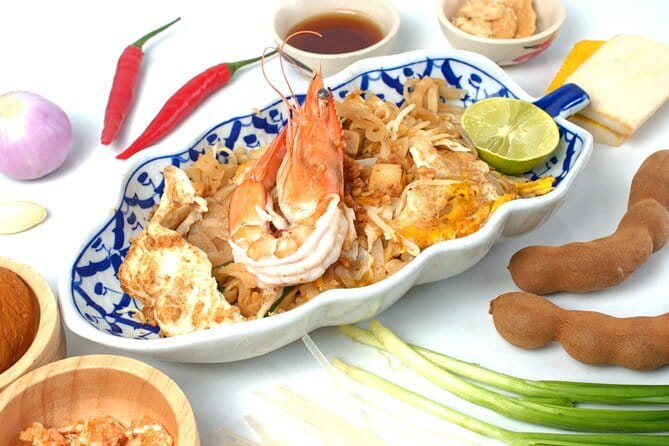
The meal you prepare becomes your dinner, and coffee, tea, bottled water, and the food itself are included. This is a sensible format for a four-hour evening class. You are not rushing away just as the cooking ends, and you can taste the results while the instructions are still fresh.
The planned return to your hotel is around 7:30 p.m. The schedule leaves the evening open for a quiet walk, a drink, or an early night. It also makes the class workable for you if you are fitting it between daytime sightseeing and other plans.
I would allow some flexibility around the return time. The stated duration is approximately four hours, and cooking involves real preparation rather than a quick demonstration. A question, a slower chopping pace, or extra help at the stove could shift the schedule slightly.
The meal is an important part of the value. At $37.96 per person, you are paying for more than a restaurant dinner. You receive transportation, instruction, ingredients, drinks, a home-based activity, and a recipe book. If you only want to eat Thai food, a restaurant will likely be simpler. If you want to learn how to reproduce the meal, this price is more reasonable.
The Recipe Book Adds Value After Chiang Mai
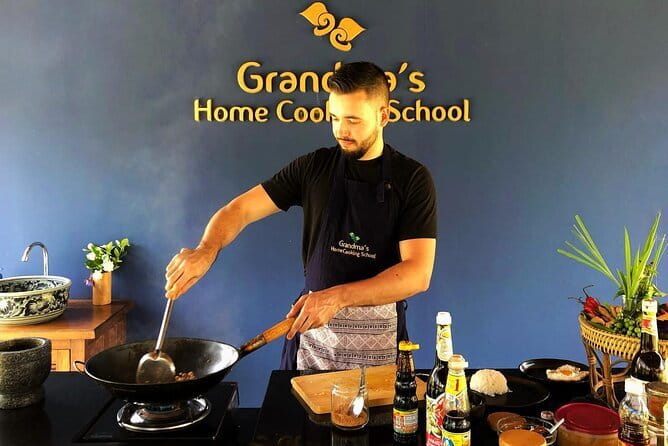
A printed or PDF Thai food recipe book is included. That matters because cooking classes can be enjoyable in the moment but hard to remember a month later. A written guide gives you something to consult when you try the dishes at home.
One person described the cookbook as something worth keeping, and that fits the practical strength of this class. The recipes are tied to the food you prepare rather than being a generic collection handed out at the door.
Do not expect the book to replace the lesson. Thai cooking often depends on taste and adjustment, especially with salty, sour, sweet, and spicy elements. The class gives you the chance to see how Arm handles those steps, while the book helps you remember the sequence later.
You receive the recipe material as printed pages or a PDF file. That flexibility is useful. A paper copy is easy to mark during class, while a PDF is easier to store and carry home.
English and Japanese Guidance
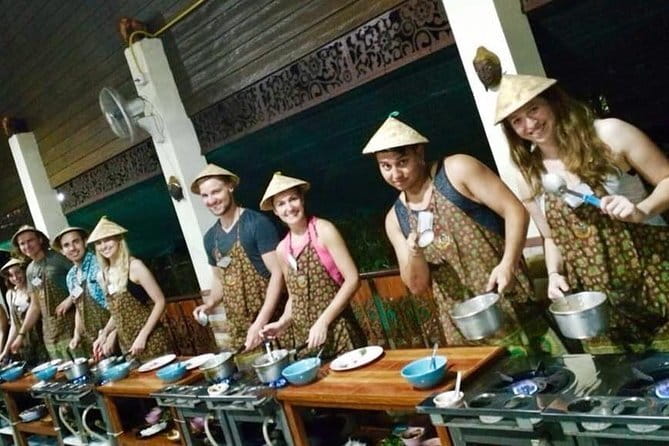
Live guidance is available in English and Japanese. The class description does not promise other languages, so you should select this experience with that in mind.
Arm’s teaching style appears to focus on explaining both the ingredients and the background of the dishes. That is especially useful for first-time Thai cooks, who may not know which herbs can be substituted or why an ingredient is added at a particular moment.
The small class makes language support more practical. With only four people, you can stop and ask for clarification instead of losing the explanation in a crowd. If you are nervous about using a knife, handling unfamiliar produce, or balancing flavors, direct help is one of the strongest reasons to choose this format.
The experience is not described as a professional certification course. Think of it as a friendly, structured home cooking lesson led by someone with formal training and hotel experience.
What Works Best, and What Needs Care
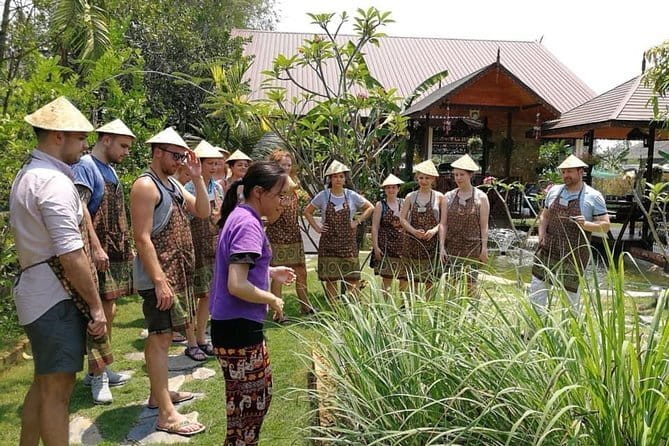
The strongest parts are the ones that connect the meal to everyday Thai cooking:
- You see ingredients at a local market before using them.
- You learn about fruit selection and seasonal produce.
- You can see Thai herbs growing at Arm’s home.
- You prepare the ingredients instead of watching from the side.
- You cook at your own station.
- You receive direct help in a group of no more than four.
- You eat dinner and take home recipes.
The main weakness is the limited operating information. The exact dishes are not listed, and the class has only two published ratings with a mixed overall score. One account praised Arm as an exceptional teacher and described the cooking lesson as an experience worth remembering. Another described a short-notice cancellation and poor coordination.
I would not ignore that second point. The cancellation policy allows free cancellation up to 24 hours before the start time, but changes or cancellations inside that window are not accepted for a refund. Because the class is small, a change in availability may affect the entire evening.
For your own protection, confirm the pickup arrangement and keep your phone or email available on the day. This is simple advice, but it matters more for a small, owner-led activity than for a large company running several departures each day.
Who Should Book This Chiang Mai Cooking Class?
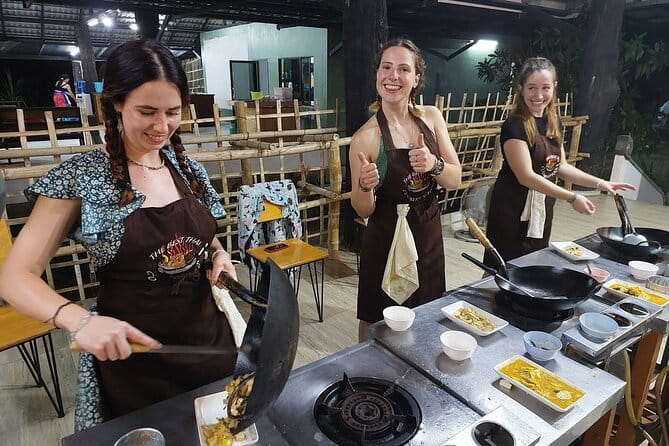
I think this class suits you best if you want personal attention, local ingredients, and a meal you help create. It is particularly good for first-time Thai cooks, couples, solo visitors who enjoy small groups, and anyone who wants more contact with ingredients than a standard restaurant meal provides.
The four-person limit also makes it attractive for friends or family who want to learn together without being separated into different work areas. Group discounts are offered, although the amount is not specified, so ask for the current price before booking.
You may want a different class if you need a fixed menu, a large social group, a highly polished cooking-school setting, or guaranteed last-minute flexibility. The home setting and personal teaching are the appeal, but they also mean the experience may be more dependent on coordination and availability.
The class is also a good fit for people who care about the story behind a dish. Arm’s connection to culinary school, hotel kitchens, and his mother’s Northern Thai cooking gives the lesson a personal thread. You are not just following a recipe without context.
Should You Book It?
Book this experience if the idea of visiting a local market, identifying Thai herbs, and cooking dinner in a group of four appeals to you. At $37.96, the combination of transport, food, drinks, instruction, and recipes offers solid value for a hands-on evening.
Before paying, confirm the pickup details and ask about the current menu if specific dishes matter to you. I would also keep the cancellation terms in mind and stay reachable on the day.
For a small, practical introduction to Thai home cooking in Chiang Mai, this is a promising choice. Its greatest strength is direct access to Chef Arm and the chance to do the work yourself. Its main risk is that the small operation may not handle last-minute changes as smoothly as a larger company.
FAQ
How long does the cooking class last?
The experience lasts approximately four hours. Pickup is planned around 4:00 to 4:15 p.m., and return to your hotel is expected around 7:30 p.m.
How many people can join the class?
The class has a maximum of four participants.
Is hotel pickup included?
Yes. Pickup is offered from your hotel, with the activity scheduled to start around 4:00 p.m.
What languages are available for the live guide?
Live activity guidance is available in English and Japanese.
Is dinner included?
Yes. Dinner, coffee or tea, and bottled water are included.
What is the cancellation policy?
You can cancel for a full refund up to 24 hours before the experience start time. Cancellations or changes made less than 24 hours in advance are not accepted for a refund.
More Evening Classes in Chiang Mai
- Evening Cooking Class
★ 5.0 · 164 reviews - Sunset Thai Cooking with Grandma – Farm & Evening Feast
★ 5.0 · 127 reviews - Half Day Evening Cooking Class with Market Tour in Chiang Mai
★ 5.0 · 91 reviews - Evening Thai cooking class
★ 5.0 · 28 reviews
Newest classes around Chiang Mai
- Aroidee’s Farm-Fresh Thai Cooking Experience★ 5.0 · 8 reviews
- Authentic Thai Cooking Class and Farm Visit in Chiang Mai★ 5.0 · 66 reviews
- Signature Thai Cooking Course★ 5.0 · 79 reviews
- Half Day Guided Thai Cooking Class in Chiang Mai★ 5.0 · 13 reviews
- Yummy Tasty Thai Cooking School in Chiang Mai★ 5.0 · 2 reviews
- Online Thai and Akha Cooking Class★ 5.0 · 70 reviews
- Northern Thai Cooking Class in Chiang Mai in a Countryside Home★ 5.0 · 2 reviews
- Private Half-Day Thai Cooking Class in Chiang Mai★ 5.0 · 4 reviews
Chiang Mai Cooking Classes, compared.
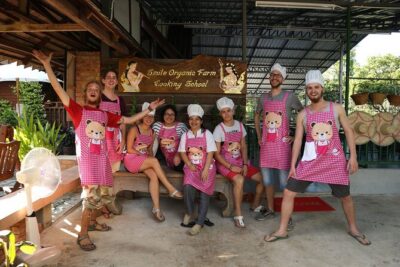
Half-Day Thai Cooking Class at Organic Farm in Chiang Mai
Read our review →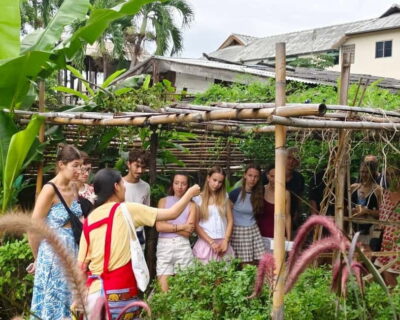
Cooking Class, Market & Thai Herbs Garden Tour
Read our review →
Authentic Cooking Class with Market & Farm Visit
Read our review →