
Review · MOROCCO COOKING CLASSES
Essaouira : Moroccan Cooking Workshop
Essaouira’s food market is the real starting point here. You walk through the souk to see the spices, herbs, and fresh ingredients that shape Moroccan cooking, then return to l’Atelier Essaouira to turn them into a full meal. It is a useful way to connect the smells of the market with what lands on your plate.
I like the seasonal menus, which can include seafood caught locally, and the small class size, capped at eight people. I also like that you can suggest the dishes you want to learn, from a kefta tajine to chicken pastilla or Souiri tajine with sardine balls.
The main consideration is timing. The class begins at 10:30 a.m., runs for about two and a half to three hours, and finishes with lunch around 3 p.m. You will need to set aside most of your day, and some dishes depend on the season or the fishermen’s catch.
Key points to know before booking
- The market visit comes before lunch: A guided walk through the food and spice souk shows you the ingredients used in the kitchen.
- Menus change with the season: Seafood, vegetables, and some starters or main dishes may vary from the sample list.
- You help prepare a complete meal: The class includes a starter and main course, followed by lunch in a private dining room.
- The group stays small: A maximum of eight participants gives the class a more personal feel.
- Three teaching languages are available: Instruction is offered in English, French, and Arabic.
- The price covers more than the cooking: At 600 Moroccan dirhams, or about $68, you get the class, lunch, drinks other than alcohol, and the market tour.
Starting in Essaouira’s food and spice souk
The day begins at 10:30 a.m. with a walk through the souk. This is not just a quick photo stop before the cooking starts. The tour is meant to introduce you to the spices and aromatics used in the recipes, giving you a practical sense of how Moroccan dishes are built.
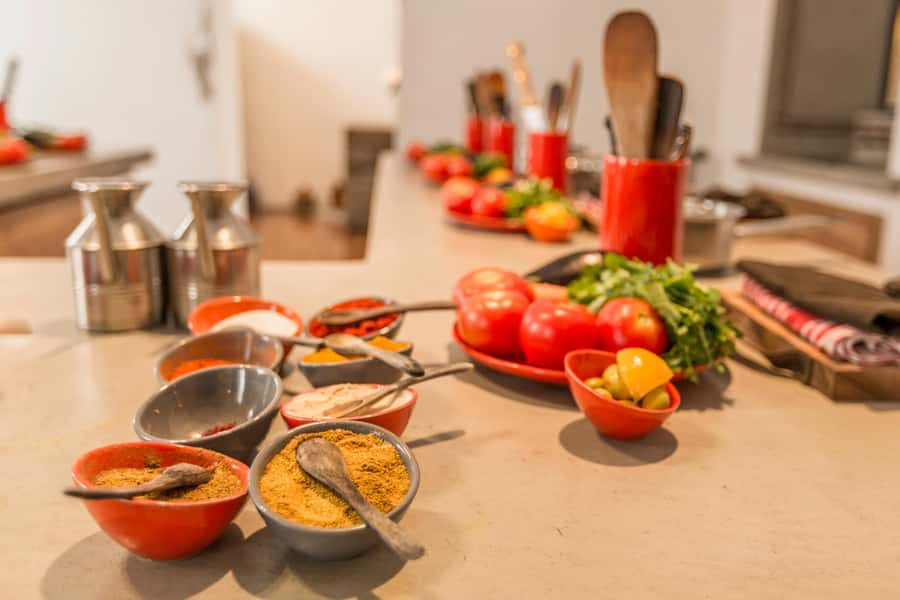
That matters because Moroccan cooking often depends on the balance between a few key ingredients. You may encounter the spices and herbs that later flavor a tajine, chermoula, couscous, or a cooked salad. Seeing them in the market gives the cooking lesson a clear local setting instead of making it feel like a generic class in a restaurant kitchen.
A guide leads the food and spice market visit, and the walk includes a stop at a spice shop with an herbalist. You can expect explanations about the wide range of herbs and spices on display. This part is especially useful if you have been buying spice blends without knowing how individual ingredients affect a dish.
The souk visit also helps you understand the seafood options. Several of the possible main courses depend on what local fishermen bring in, including sea bream with vegetables, squid tajine, seafood pastilla, and the Souiri tajine made with sardine balls. If you are interested in the food of coastal Essaouira, ask about these options before the cooking begins.
More Moroccan Classes in Morocco:
- Marrakech: Moroccan Cooking Class with Pickup
★ 4.6 · 1,862 reviews - Marrakech: Traditional Moroccan Cooking Class & Market Visit
★ 4.8 · 1,861 reviews - Marrakesh: Moroccan Dishes Cooking Class with a Local Chef
★ 5.0 · 1,615 reviews
Choosing a menu that fits the day
The menu is created daily from local and seasonal products. You are invited to say which dishes interest you, although the starter may be changed so the class works properly with the available ingredients and schedule.
This flexibility is a real advantage, but you should not treat the sample menu as a guarantee. Marinated bean salad and bakkoula, a mallow salad, are winter dishes. Tajine with apples and quinces is an autumn option, while peas and artichokes also depend on the season. Seafood dishes depend on the catch.
The starter choices cover a good range of Moroccan home cooking:
- Zaalouk, a cooked eggplant salad
- Tchakchouka, a cooked pepper salad
- Harira soup
- Courgettes with chermoula
- Briouates
- Grated carrots with chermoula
- Lentil salad
- Bissara, a broad bean purée
- Marinated bean salad in winter
- Bakkoula, a mallow salad in winter
These are not all heavy dishes. A cooked vegetable salad or lentil preparation lets you learn how Moroccan cooks use seasoning without relying on meat. Bissara offers a different texture and shows how simple legumes can become a satisfying dish.
For the main course, you can request several types of tajine. Options include beef or lamb with almonds and dates, caramelized carrots and tomatoes, apricots and dried figs, or seasonal apples and quinces. There is also kefta tajine with eggs, chicken tajine with olives and preserved lemons, and chicken with raisins and sweet onion.
The list also includes seven-vegetable couscous with tfaya, chicken pastilla, and chicken seffa with vermicelli. These dishes give you a wider look at Moroccan cooking than a class devoted only to tajine. Pastilla introduces pastry and a sweet-savory filling, while seffa focuses on vermicelli and presentation.
If seafood appeals to you, mention it when you arrive. Sea bream and vegetables, sardine-ball Souiri tajine, squid tajine, and seafood pastilla are among the possible choices. Availability is not guaranteed, but the coastal setting makes these options worth asking about.
Cooking at l’Atelier Essaouira
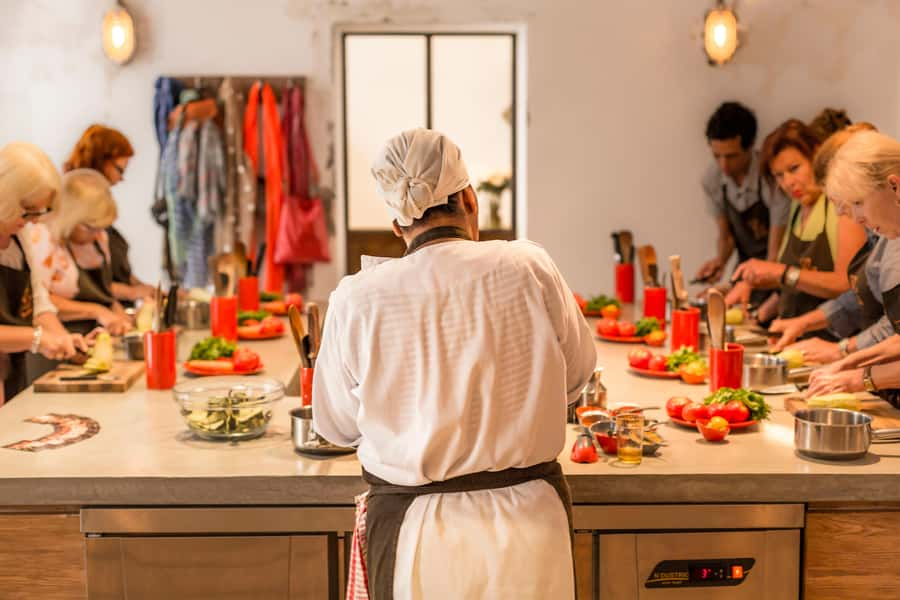
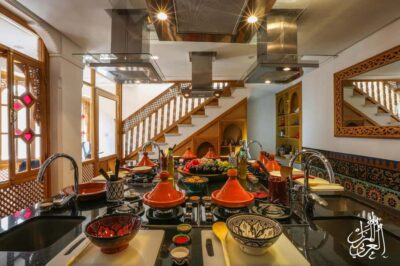
After the market walk, you return to the workshop kitchen. The cooking portion lasts roughly two and a half to three hours, followed by the meal. The class is designed as a hands-on lesson, not a demonstration where you simply watch someone else prepare lunch.
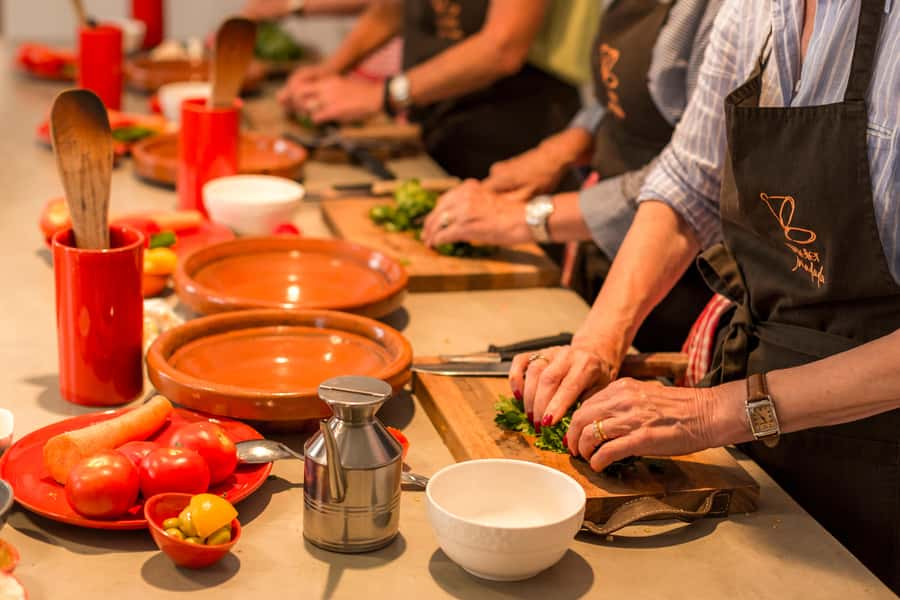
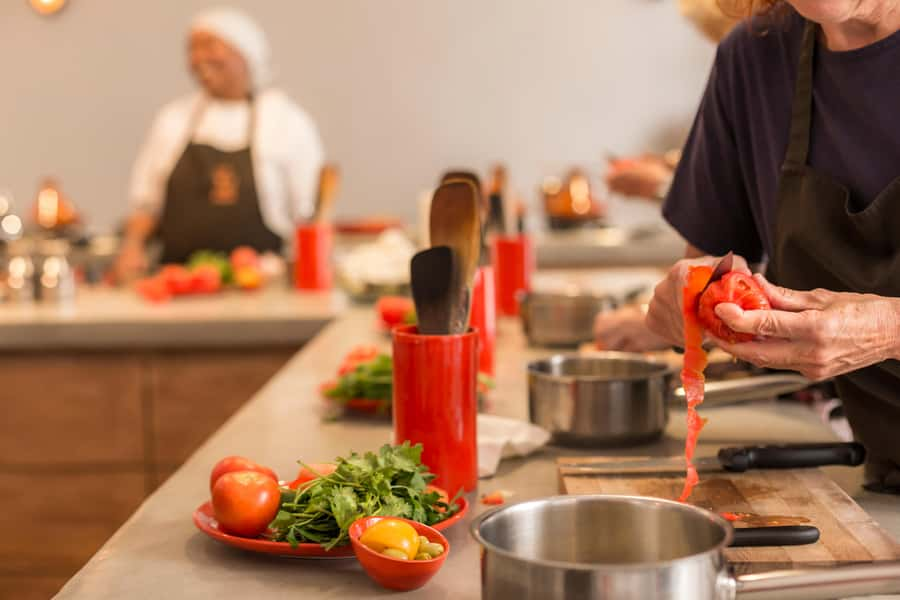
The kitchen is described as professional, clean, and well prepared. You should have the equipment and ingredients needed to make your selected dish, with instruction from the team as you work. The small maximum of eight people is important here. It does not guarantee one-on-one teaching every minute, but it should make it easier to ask questions and keep track of the steps.
The timing also has a practical logic. Once your tajine or other main dish is prepared, it needs time to cook. The market walk can take place while the food is cooking, giving the morning a natural rhythm: see the ingredients, prepare the meal, let it cook, then sit down to eat.
You may be working with several cooking methods rather than one single recipe. The starters include cooked salads, soup, purées, and pastry. The main dishes cover slow-cooked tajines, couscous, vermicelli, and pastilla. That variety makes the lesson more useful for anyone hoping to recreate Moroccan food at home.
Instruction is available in English, French, or Arabic. The information does not name individual instructors, so you should not book expecting a particular guide. Instead, choose the language that will make it easiest for you to follow cooking instructions and ask about ingredients.
Eating the meal you prepared
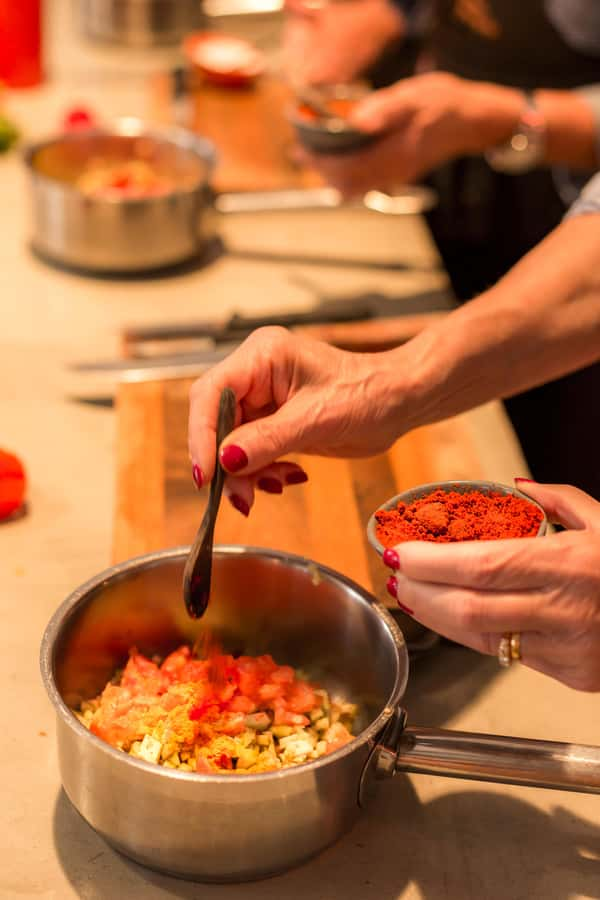
The class ends with lunch in the café’s private dining room. Your meal includes the food you prepared, along with drinks other than alcohol.
This final meal is more than a convenient finish. It lets you taste the result while the steps are still fresh in your mind. You can compare the finished dish with what you expected from the ingredients in the souk, and you have a chance to ask last questions before leaving.
The setting also adds a pleasant change of pace after the kitchen work. The café and shop are described as clean and well maintained, with a large café area connected to the workshop. If you prefer a cooking class that finishes with a proper sit-down meal rather than a rushed tasting, this format works well.
Do remember that alcohol is not included. The included drinks are nonalcoholic, so budget separately if you want something else.
More Cooking Classes in Morocco:
- Moroccan Cooking Class & Marrakech Market Visit with Chef Khmisa
★ 5.0 · 1,504 reviews - Half-Day Cooking Class with Local Chef Laila in Marrakech
★ 5.0 · 952 reviews - Marrakech: Moroccan Cooking Class with a Local Family
★ 4.9 · 668 reviews - Marrakech: Moroccan Cuisine Cooking Class in Local Home
★ 4.8 · 508 reviews
What makes the seafood options special
Essaouira’s position on the Atlantic gives the class a seafood angle that many inland Moroccan cooking lessons cannot offer. The possible dishes include sea bream and vegetables, sardine-ball tajine, squid tajine, and seafood pastilla.
The Souiri tajine is particularly tied to the local setting. It uses sardine balls rather than the more familiar chicken, beef, or lamb found in many Moroccan cooking classes. That makes it a good choice if you want something connected to Essaouira rather than a standard dish you might find anywhere in the country.
The catch is that seafood availability changes. You may not be able to choose a specific fish dish on a particular day. If your main goal is seafood, ask about the catch and the menu before the class gets underway.
How the $68 price compares
The listed price is $68 per person, also given as 600 Moroccan dirhams. For that amount, you receive the cooking class, the market and spice tour, lunch, and all drinks except alcohol.
I consider that a fair package because the class is not just a meal or a short demonstration. You are paying for several hours of instruction, a guided market visit, the ingredients, the prepared lunch, and a small group capped at eight. The market tour would also be useful on its own, especially if you want help identifying spices and aromatics.
The value depends partly on how much you participate. If you want a hands-on lesson and plan to use the recipes at home, the price makes more sense than if you simply want to eat Moroccan food. The recipes are available on the workshop’s website after you return, which adds practical value for home cooks.
There is no hotel pickup included. Plan to make your own way to the workshop, and allow enough time to arrive for the 10:30 a.m. start.
Who should book this class
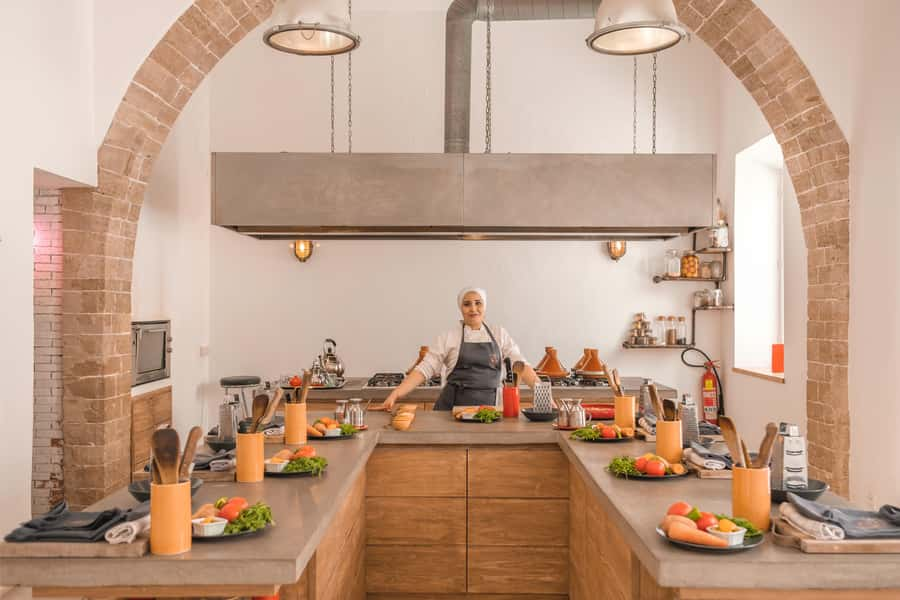
I would recommend this for adults and older teenagers who enjoy food, markets, and practical activities. Children under 12 are not permitted, so families with younger children will need another plan.
It suits you especially well if you want to understand Moroccan dishes rather than merely order them. The list includes familiar choices such as chicken with preserved lemons, but also less common options such as bakkoula, seffa, seafood pastilla, and sardine-ball tajine.
It is also a good fit for a short stay in Essaouira. In four hours, you get a market orientation, a cooking lesson, and lunch. You leave with recipes you can use later, provided the seasonal menu gives you the dishes you hoped to learn.
The class may be less suitable if you want a quick activity or a fixed menu. The morning stretches into the afternoon, and the daily ingredients can change. You should also expect to work with other people rather than cook entirely alone.
Timing, cancellations, and practical details
The total duration is about four hours. The course begins at 10:30 a.m., the cooking takes around two and a half to three hours, and the day finishes at approximately 3 p.m. The exact start time should be checked when booking.
The group is limited to eight participants. Classes are offered in English, French, and Arabic. You can reserve and pay later, which is useful if your Essaouira plans are not fully settled.
Cancellation is free up to 24 hours before the activity for a full refund. That policy gives you some breathing room, but you still need to arrange your own transport because hotel pickup is not included.
Should you book the Essaouira cooking workshop?
Book it if you want a hands-on Moroccan food lesson with a local market visit and a proper lunch. The strongest reasons are the small class size, the daily seasonal menu, the coastal seafood possibilities, and the chance to take the recipes home.
I would choose this class over a standard tajine demonstration if you care about ingredients and want to understand how Moroccan food is made. I would also choose it if you are curious about Essaouira’s seafood traditions.
Think twice if you need a guaranteed dish, a short morning activity, or a family outing with children under 12. For everyone else, the combination of souk, kitchen, and private lunch offers a useful and flavorful way to spend half a day in Essaouira.
FAQ
Where does the Moroccan cooking workshop take place?
The workshop takes place in Essaouira, in Morocco’s Marrakesh-Safi region, at l’Atelier Essaouira.
How long does the workshop last?
The full activity lasts about four hours. It begins at 10:30 a.m., with the cooking lasting around two and a half to three hours before lunch. The day finishes at approximately 3 p.m.
What is included in the price?
The price includes the cooking course, lunch, all drinks except alcohol, and a guided tour of the food and spice market.
Is hotel pickup included?
No. Hotel pickup is not included, so you must arrange your own way to the workshop.
Which languages are available?
Instruction is available in English, French, and Arabic.
Can I choose the dishes I learn?
You can say which dishes interest you from the possible menu. The starter may be changed to make the class work, and some dishes depend on the season or the fishermen’s catch.
Are children allowed to join?
Children under 12 are not permitted to take part.
Newest classes around Morocco
- Private Tagine Cooking Class in Chefchaouen with Lunch★ 5.0 · 5 reviews
- Moroccan Cooking Class with a Local Family & Market Visit★ 5.0 · 16 reviews
- Chefchaouen Private Cooking Class with Mountain View★ 5.0 · 16 reviews
- 3-Hour Cooking Class overlooking the Blue City★ 5.0 · 36 reviews
- Chefchaouen Cooking Class★ 5.0 · 4 reviews
- Market Tour & Moroccan Cooking Class in Casablanca with Transfers★ 5.0 · 18 reviews
- Private CousCous Cooking Class in a Traditional Family Home★ 5.0 · 7 reviews
- Traditional Cooking Courses in Casablanca★ 5.0 · 2 reviews
Morocco Cooking Classes, compared.

Traditional Moroccan Cooking Class & Market Visit
Read our review →
Moroccan Dishes Cooking Class with a Local Chef
Read our review →
Moroccan Cooking Class & Marrakech Market Visit with Chef Khmisa
Read our review →
Half-Day Cooking Class with Local Chef Laila in Marrakech
Read our review →
Browse the lists this tour appears in