
Review · MOROCCO COOKING CLASSES
cooking with rabab Tagahzout
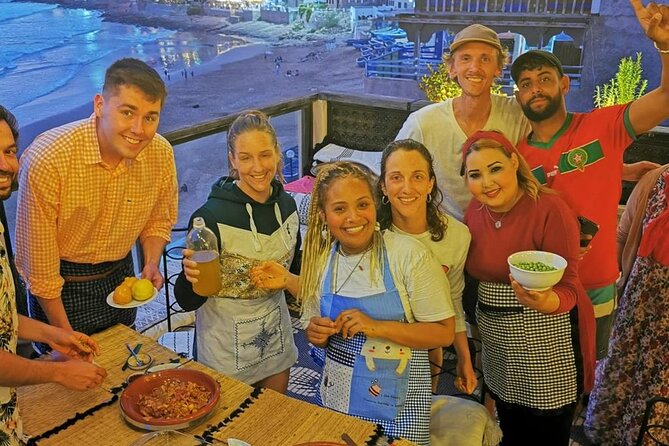
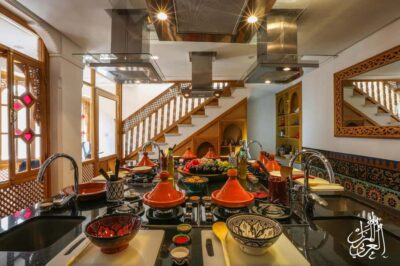
Taghazout’s best food lesson may begin not in a polished cooking school, but in a Berber village kitchen or a guesthouse above the sea. With Rabab, you cut, mix, season, cook, and eat the food yourself. The session can include tagine, Moroccan salad, fresh bread from a stone oven, mint tea, homemade sweets, and cake.
I like the hands-on format, since you are not simply watching a demonstration. I also like the strong sense of place: past sessions have taken place in a Berber village and at kitchens with direct views across Taghazout Bay. The main consideration is that the exact menu and setting can vary, so you should not book expecting one fixed set of dishes.
Key points to know before booking
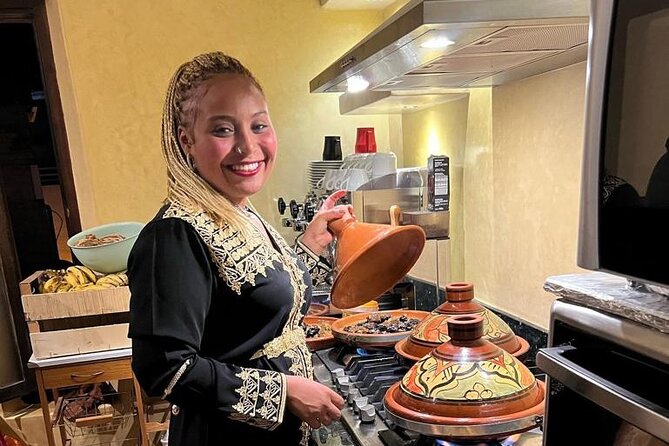
- Rabab teaches by doing: You prepare the ingredients, cook the dishes, taste as you go, and can ask questions throughout.
- The menu can change: Past meals have included chicken tagine with preserved lemons, vegetable tagine, kofta tagine, fish tagine, Moroccan salad, bread, mint tea, and cake.
- The setting is part of the meal: You might cook in a Berber village or at a guesthouse with views over the Atlantic and Taghazout Bay.
- It lasts about three hours: That gives you time to cook several dishes without turning the class into a rushed demonstration.
- It is priced at $47.12 per person: The value comes from the meal, instruction, cultural exchange, and private format rather than from a long list of sightseeing stops.
- Pickup is offered: The activity is also near public transportation, and confirmation arrives when you book.
Cooking Moroccan food with Rabab
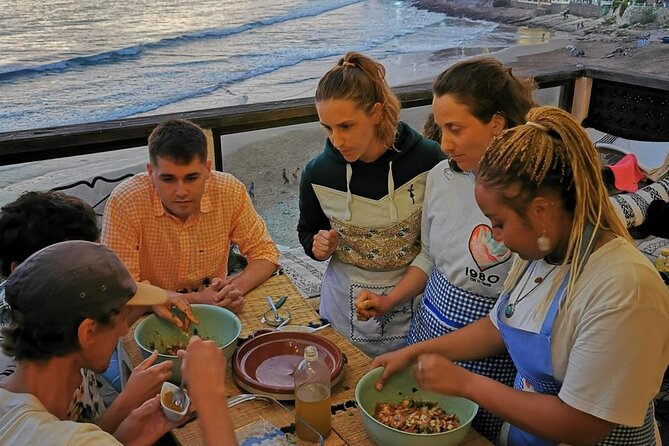
This is a cooking class first, but it is also a social look at everyday Moroccan food. Rabab’s approach is practical. She gives instructions, then has you work through the recipe by cutting, mixing, cooking, and assembling the dishes.
That matters because Moroccan cooking often depends on small choices that are easy to miss in a restaurant. You learn how ingredients are combined, how a tagine develops flavor during slow cooking, and how simple items such as bread, salad, and mint tea fit around the main dish.
You should expect to participate rather than sit at a counter with a notebook. The class invites questions, tasting, and conversation with Rabab and the other people present. If you enjoy learning through your hands, this format is likely to suit you better than a formal chef-led demonstration.
The pace is about three hours. That is long enough for several dishes and a shared meal, but short enough to fit into a day in the Agadir or Taghazout area. A cooking class also gives you a useful break from the usual cycle of beaches, cafés, and sightseeing.
More Cooking Classes in Morocco:
- Marrakech: Moroccan Cooking Class with Pickup
★ 4.6 · 1,862 reviews - Marrakech: Traditional Moroccan Cooking Class & Market Visit
★ 4.8 · 1,861 reviews - Marrakesh: Moroccan Dishes Cooking Class with a Local Chef
★ 5.0 · 1,615 reviews
The opening welcome: sweets, tea, and local hospitality
The food experience may begin with homemade sweets and Moroccan mint tea. This opening is more than a snack while you wait. Mint tea is central to Moroccan hospitality, and learning how it is made gives the session a cultural starting point before the main cooking begins.
The tea also sets the tone. This is meant to feel friendly and relaxed, not like a timed exam in a professional kitchen. You can ask questions while Rabab explains the food and local customs, and the social side seems to be an important part of the afternoon.
In one setting, the cooking takes place with Berber women in a village. In another, it is held at a guesthouse or kitchen associated with Boris, including Teddy Pirate. These details suggest that the class is connected to real local homes and communities rather than a generic cooking studio.
That said, you should treat the village, guesthouse, and sea-view descriptions as possible settings, not guaranteed stops on every booking. The supplied details identify Agadir as the main location, while the cooking references point specifically to Taghazout and nearby places. Confirm the meeting point and setting before you go.
Preparing tagine, salad, and bread
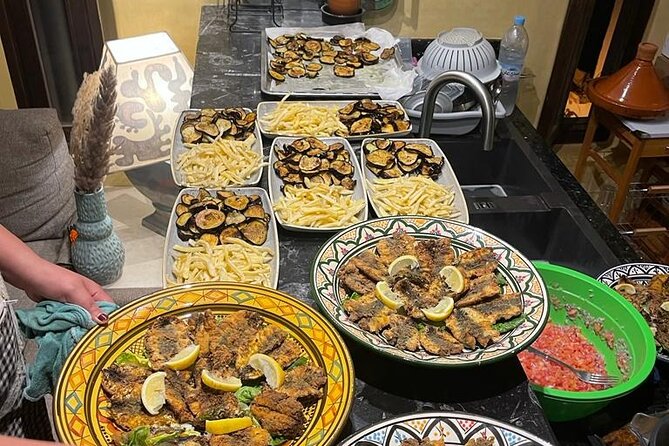
The central part of the class is the preparation of traditional Moroccan food. The menu is not fixed in the information provided, but the dishes described give you a good sense of what may appear.
Chicken tagine with preserved lemons is one possibility. Preserved lemon brings a salty, sharp flavor that changes the character of the dish as it cooks. Vegetable tagine is another option, giving the class a meat-free preparation and showing how Moroccan seasoning can carry a dish without relying on meat.
Kofta tagine has also been prepared. This version uses seasoned meatballs cooked in the tagine, and it has been singled out as a memorable dish. Fish tagine is another possibility, especially fitting for a coastal area. Fresh fish cooked slowly with Moroccan seasoning can make the class feel tied to Taghazout rather than copied from a restaurant menu anywhere in the country.
You may also prepare Moroccan salad. It is a useful counterpoint to the warm tagine, and it shows how vegetables are treated as an important part of the meal rather than a token side dish.
Bread can be part of the experience too. One session included making bread in a stone oven, a detail that gives the class a more traditional feel than simply buying a loaf at the market. If bread is important to you, ask ahead whether it will be included on your date, since the menu appears to change.
The same applies to cake. Homemade cake has been served at some sessions, along with plenty of mint tea. These additions make the experience feel like a family meal rather than a narrow lesson built around one recipe.
A meal with Atlantic views
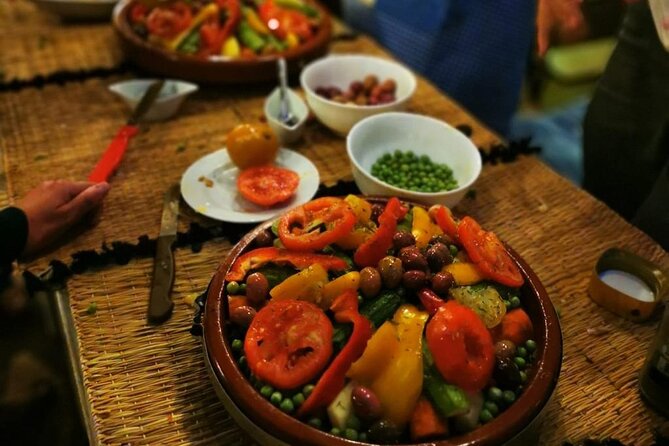
After the preparation comes the reward: eating what you made. The meal may be served from a balcony or kitchen with views over Taghazout Bay and the Atlantic.
The setting is a real strength. Moroccan food tastes different when you are eating it above the coast, especially after spending time preparing it yourself. You are not just ordering a tagine and waiting for it to arrive. You have handled the ingredients, followed the cooking process, and watched several simple preparations become a shared meal.
The sea view also gives the class a sense of place. Taghazout is known for its coastal setting, and the cooking experience connects that setting with Berber culture and Moroccan home cooking. If you are choosing between a standard restaurant meal and this activity, the view and participation are the main reasons to choose the class.
Still, the view is not guaranteed in every version of the experience. The available information refers to kitchens, balconies, a guesthouse, and a Berber village. Ask where your session will be held if the setting is important to you.
Same region, a different dish to learn:
- Moroccan Cooking Class & Marrakech Market Visit with Chef Khmisa
★ 5.0 · 1,504 reviews - Half-Day Cooking Class with Local Chef Laila in Marrakech
★ 5.0 · 952 reviews - Marrakech: Moroccan Cooking Class with a Local Family
★ 4.9 · 668 reviews - Marrakech: Moroccan Cuisine Cooking Class in Local Home
★ 4.8 · 508 reviews
How private is the experience?
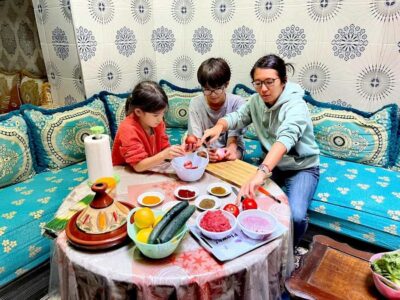
The activity is described as a private tour, meaning only your booked group participates. That is useful for families, couples, and small groups who want to cook at their own pace and ask personal questions.
At the same time, the descriptions of the experience refer to other Berber women or other people present at some sessions. That may reflect the local setting, shared cooking environment, or different booking arrangements. The safest reading is that your booked group is private, while the wider setting may include local people connected with the kitchen.
This is worth clarifying before booking if you want complete seclusion. If you prefer a warm, social setting, the presence of local people may add to the experience rather than detract from it.
The relaxed tone is another advantage. Rabab is described as friendly and easy to talk with, and the class has been compared to cooking with a friend. You will get more from it if you are willing to chat, ask questions, and take part in the meal instead of treating the session as a strict technical course.
What the $47.12 price buys you
At $47.12 per person, this is not the cheapest way to eat Moroccan food. A restaurant tagine will cost less in many places, and you could buy mint tea and bread without taking a three-hour class.
The value comes from the full package. You are paying for Rabab’s instruction, the ingredients, the preparation, the meal, the cultural exchange, and the setting. If the session includes several courses, bread, tea, sweets, or cake, the price becomes easier to justify.
I would especially consider it good value for a couple, family, or small group that wants one meaningful food activity during a stay in Agadir or Taghazout. It gives you a story to take home and techniques you can try again, not just another meal eaten and forgotten.
The price is less compelling if you dislike cooking or mainly want a quick lunch. Three hours is a substantial block of time, and you will be expected to participate. This is not a sightseeing stop with a short tasting at the end.
The activity is often booked about 19 days ahead. That does not mean you must reserve exactly three weeks early, but it is a useful sign that you should not leave it until the last day of a short stay, especially if your schedule is fixed.
Who will enjoy this class most?
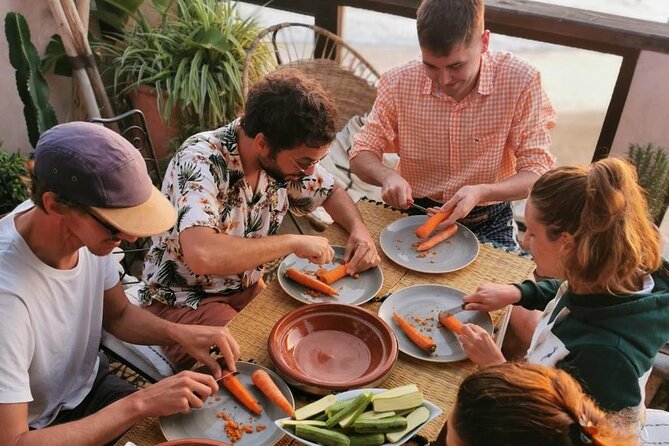
I would recommend it to people who want food tied to local life. You do not need professional cooking skills. The class is built around following Rabab’s instructions, and the chance to ask questions makes it suitable for beginners.
It should work particularly well for:
- Couples who want a relaxed shared activity
- Families looking for something beyond beach time
- Small groups interested in cooking together
- People curious about Berber culture
- Anyone who wants to learn how Moroccan tagine is prepared
- Visitors who enjoy food, conversation, and a scenic meal
It may be less suitable if you want a set menu, a strictly private kitchen with no local participants nearby, or a fast activity with little hands-on work. The flexible menu is a benefit for some people, but a drawback if you have your heart set on one exact recipe.
People with food allergies or strict dietary needs should ask about the menu before booking. The available details show meat, fish, vegetable, salad, bread, tea, sweets, and cake preparations, but they do not specify substitutions or allergy procedures.
Practical planning for Agadir and Taghazout
The experience is listed in Agadir, with the cooking descriptions pointing to Taghazout and nearby coastal locations. Since the exact meeting point matters, check the address carefully after booking. Pickup is offered, and the area is near public transportation, which gives you more than one way to reach the activity.
Confirmation is provided at the time of booking. Keep the confirmation details handy, since the cooking may take place in a private home, guesthouse, village kitchen, or another local setting rather than at a large attraction with an obvious entrance.
Plan for about three hours. You will need enough time to follow instructions, prepare several ingredients, cook the dishes, and sit down to eat. Do not place a tightly timed excursion immediately afterward unless you have allowed plenty of room.
Free cancellation is available if you cancel at least 24 hours before the local start time. Cancellations made less than 24 hours before the experience are not refunded, and late changes are not accepted.
The food and cultural value
The strongest part of this experience is the connection between food and daily life. Tagine is not presented as a museum object or a restaurant performance. You work with it as a meal people actually prepare and share.
The Berber element adds another layer. Cooking in a Berber village, meeting local women, making bread in a stone oven, and talking about local customs gives the session cultural weight. You are still taking a cooking class, but the lesson reaches beyond ingredients and cooking times.
The sea-view settings add a different kind of pleasure. A balcony above the Atlantic turns the final meal into a memorable part of your time on the coast. The two elements work well together: traditional food on the table, and Taghazout’s coastal setting outside.
Rabab is central to the experience. The available details consistently point to her as the host and teacher, with a warm, social approach. She explains ingredients, guides the preparation, and makes room for conversation. That personal contact is likely to matter more than the precise menu.
Should you book cooking with Rabab?
Book this experience if you want to do more than eat Moroccan food. You will prepare it yourself, learn about mint tea and local cooking, and may make tagine, salad, bread, and dessert in a Berber or coastal setting.
I would book it for a family, couple, or small group with three free hours in the Agadir and Taghazout area. The $47.12 price is fair when you value instruction, a full meal, local contact, and the chance of Atlantic views.
Think twice if you need a guaranteed menu, guaranteed sea view, or a formal cooking-school format. Ask about the meeting point, exact dishes, and setting before paying. For most food-focused visitors who enjoy a relaxed pace and real participation, this is a strong way to spend an afternoon or evening.
FAQ
Where does cooking with Rabab take place?
The activity is listed in Agadir, while the cooking descriptions refer to Taghazout, a Berber village, Boris’s Guesthouse, and Teddy Pirate. Confirm the exact meeting point when booking.
How long does the cooking class last?
The experience lasts approximately three hours.
What food might I prepare?
Possible dishes include chicken tagine with preserved lemons, vegetable tagine, kofta tagine, fish tagine, Moroccan salad, bread, mint tea, homemade sweets, and cake. The exact menu may vary.
Do I get to cook, or is it only a demonstration?
You take part in the preparation. Rabab guides you as you cut, mix, cook, assemble dishes, taste the food, and ask questions.
Is pickup available?
Yes. Pickup is offered, and the activity is also near public transportation.
Is this a private activity?
Yes. It is described as a private tour or activity, with only your booked group participating.
How much does the experience cost?
The listed price is $47.12 per person.
Can I cancel for a refund?
Yes, if you cancel at least 24 hours before the experience start time. Cancellations or changes made less than 24 hours before the local start time are not accepted for a refund.
Newest classes around Morocco
- Private Tagine Cooking Class in Chefchaouen with Lunch★ 5.0 · 5 reviews
- Chefchaouen Private Cooking Class with Mountain View★ 5.0 · 16 reviews
- Moroccan Cooking Class with a Local Family & Market Visit★ 5.0 · 16 reviews
- 3-Hour Cooking Class overlooking the Blue City★ 5.0 · 36 reviews
- Chefchaouen Cooking Class★ 5.0 · 4 reviews
- Market Tour & Moroccan Cooking Class in Casablanca with Transfers★ 5.0 · 18 reviews
- Private CousCous Cooking Class in a Traditional Family Home★ 5.0 · 7 reviews
- Traditional Cooking Courses in Casablanca★ 5.0 · 2 reviews
Morocco Cooking Classes, compared.

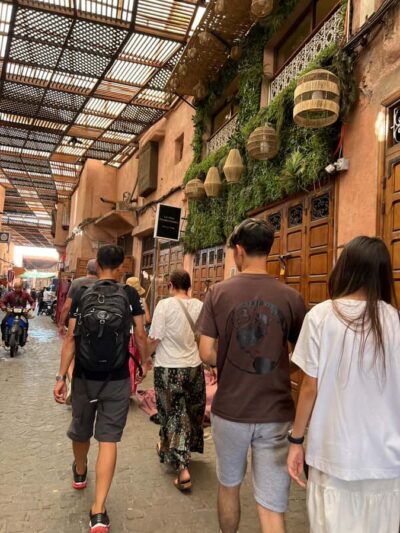
Traditional Moroccan Cooking Class & Market Visit
Read our review →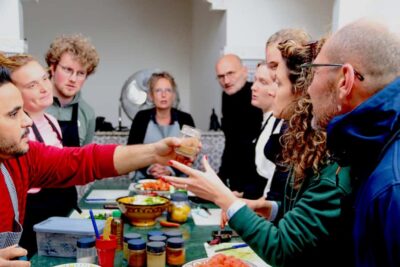
Moroccan Dishes Cooking Class with a Local Chef
Read our review →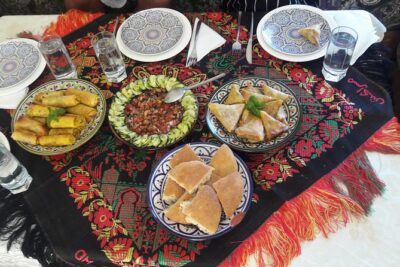
Moroccan Cooking Class & Marrakech Market Visit with Chef Khmisa
Read our review →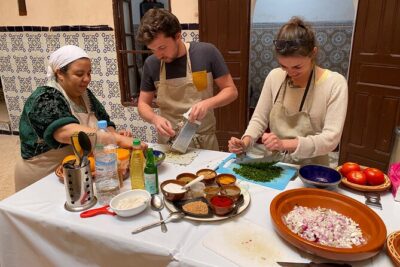
Half-Day Cooking Class with Local Chef Laila in Marrakech
Read our review →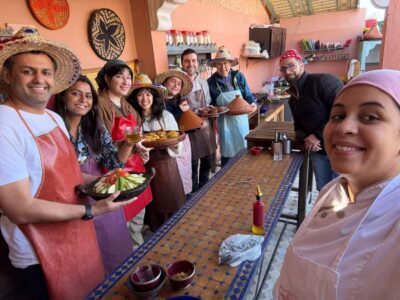
Browse the lists this tour appears in