
Review · GREECE COOKING CLASSES
Chania: Authentic Cooking Class
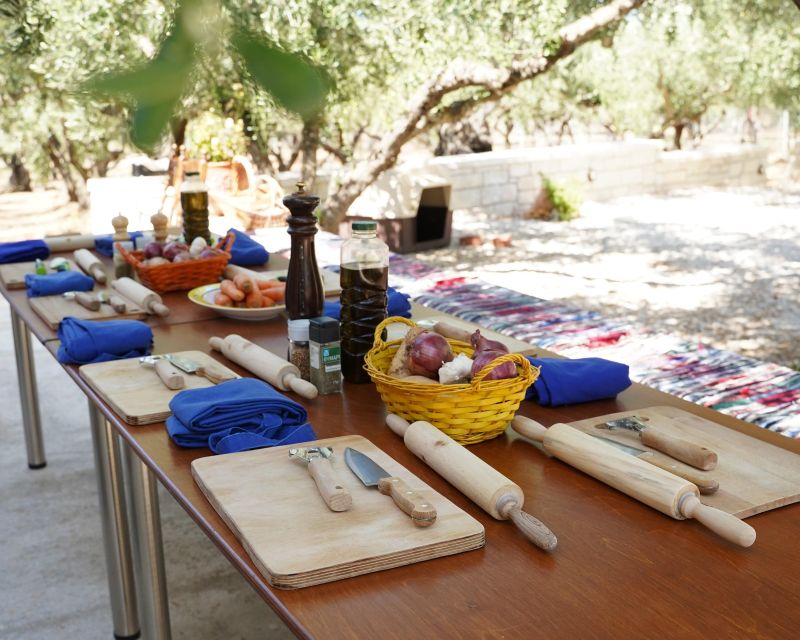
The best part of this Chania cooking class is that it takes place at the family home of Veerna and her relatives, not in a polished city studio. Beneath olive and avocado trees in Nerokourou, you help prepare a full Cretan meal, then sit down together to eat it.
I like the garden-to-table cooking and the warm family setting. You pick herbs and vegetables for the fillings, learn the story behind the oven-roasted thieves dinner, and work with Veerna on traditional kalitsounia, the small cheese and wild-green pies she has made for years. The main drawback is location: you need a taxi, car, or paid transfer from central Chania, and the four-hour session can run closer to four and a half hours.
Key points to know before booking
- Five classic Cretan dishes: Prepare lamb, stuffed vegetables, dolmades, kalitsounia, tzatziki, and dakos.
- A real family home: Veerna, Kostas, Nikos, and other relatives help create a social, informal evening.
- Fresh local produce: Herbs and vegetables come from the garden, with other ingredients supplied by local farmers.
- Wood-fired cooking: The lamb cooks for more than two hours in a traditional stone oven.
- Food and drinks included: Your meal comes with generous local wine, raki, and a sweet finish.
- Easy but not central: Nerokourou is about 10 to 15 minutes from Chania by car, with parking along the fence.
From Chania to a Cretan family kitchen
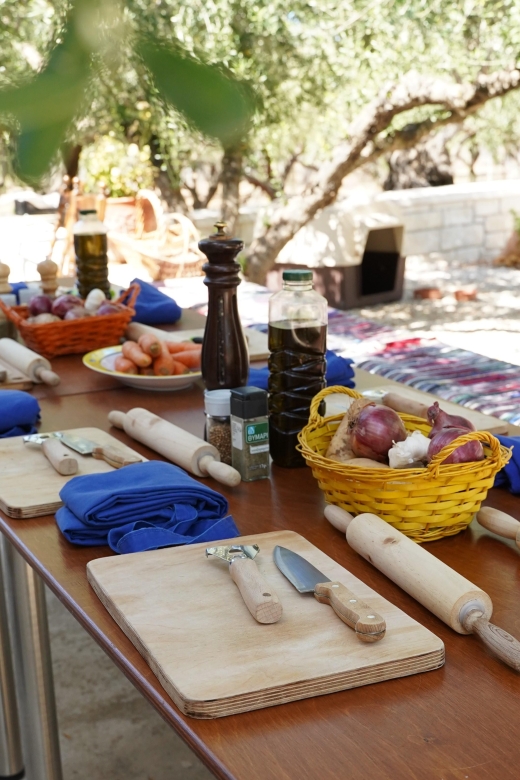
The cooking class is in Nerokourou, a pretty residential area roughly 10 to 15 minutes from central Chania. The setting includes olive trees, avocado trees, a herb garden, farm animals, and a purpose-built outdoor cooking area. You are not being led through a tourist demonstration and sent away with a small tasting plate. You take part in preparing a substantial meal.
On arrival, Veerna welcomes you with a homemade refreshment or Greek coffee, along with cookies. This opening matters because it sets the pace for the afternoon or evening. You have time to meet the other people in the group, settle under the trees, and hear what you will be cooking before anyone starts chopping.
Veerna is the main instructor, with members of her family helping at different points. The tone is friendly and lively rather than formal. Her brothers Kostas and Nikos are part of the family welcome, and several accounts of the class describe the hosts as funny, warm, and quick to include everyone in the conversation.
That family connection is the heart of the experience. Relatives may stop by to greet the group, and the final meal is shared with the hosts rather than served as a quick end to the lesson. If you want a quiet, highly structured class with little conversation, this may feel loose. If you want to meet people and see how food fits into a Cretan home, it is a strong match.
More Cooking Classes in Greece:
- Athens: Classic Cooking Class with Market Visit and Wine
★ 5.0 · 1,101 reviews - Athens: Food Market Visit and Cooking Class with Wine
★ 4.9 · 1,087 reviews - Greek Cuisine Cooking Class in Santorini with Recipes and Wine
★ 5.0 · 969 reviews
The thieves dinner starts the cooking
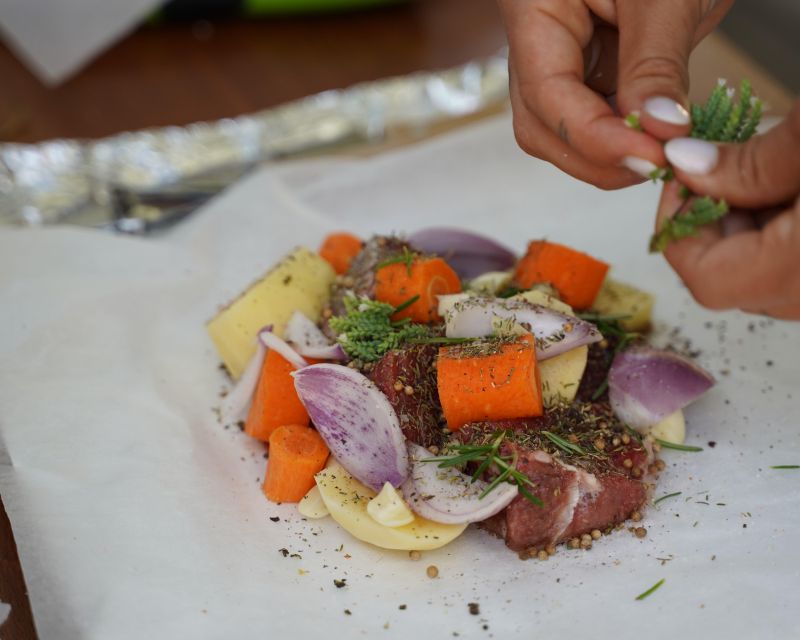
The first major dish is oven-roasted lamb, known locally as the thieves dinner. Veerna explains the story behind the name and its place in Cretan history while the lamb goes into the wood-fired stone oven. It needs more than two hours to cook, so starting it first gives the class a clear rhythm.
This is a useful cooking lesson, not just a bit of folklore. You see how a slow dish can anchor a meal while other foods are prepared around it. The wood-fired oven also gives the class a sense of place that you will not get from a standard indoor cooking school.
The exact preparation can involve several steps, and the point is to work alongside the hosts rather than simply watch them. You learn the reason for the dish’s name, prepare food for a group, and return to the oven later when the meal is ready.
If you are visiting from a cruise ship, timing deserves attention. The class lasts about four hours, and one cruise-port visitor estimated a taxi from the port at around 20 euros. Build in enough time for the ride back, especially if your ship has a firm departure time.
Garden herbs, stuffed vegetables, and dolmades
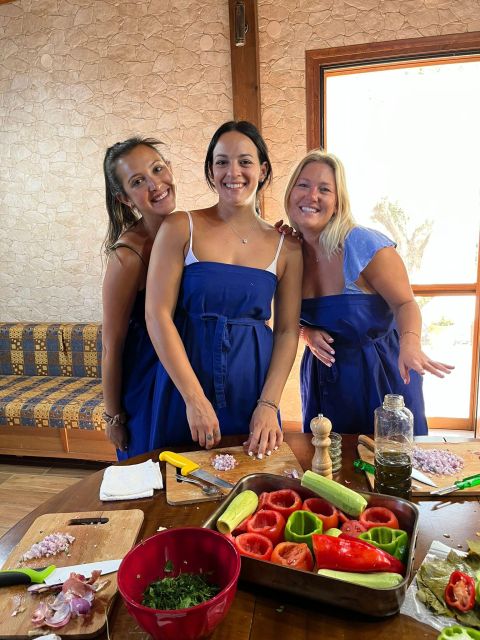
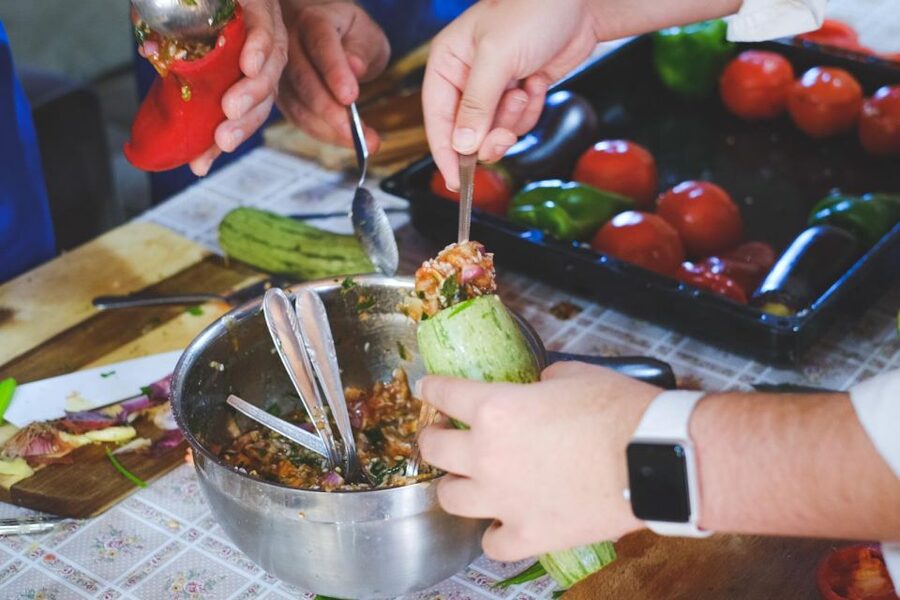
Next comes the part that makes the setting especially useful. You gather herbs and vegetables from the garden for the stuffing. The produce is either grown on the property or bought from local farmers, so the ingredient lesson is tied to the place around you.
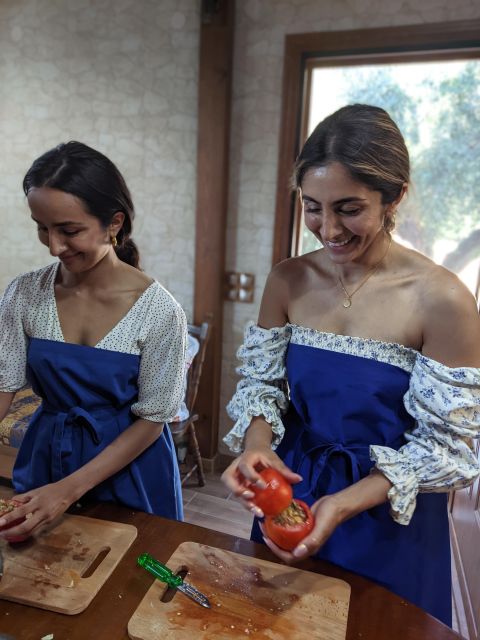
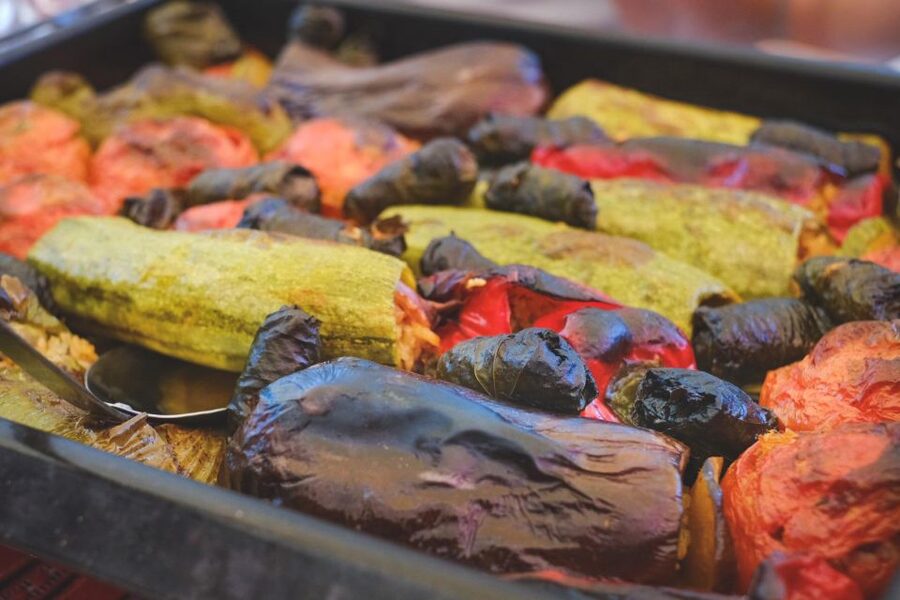
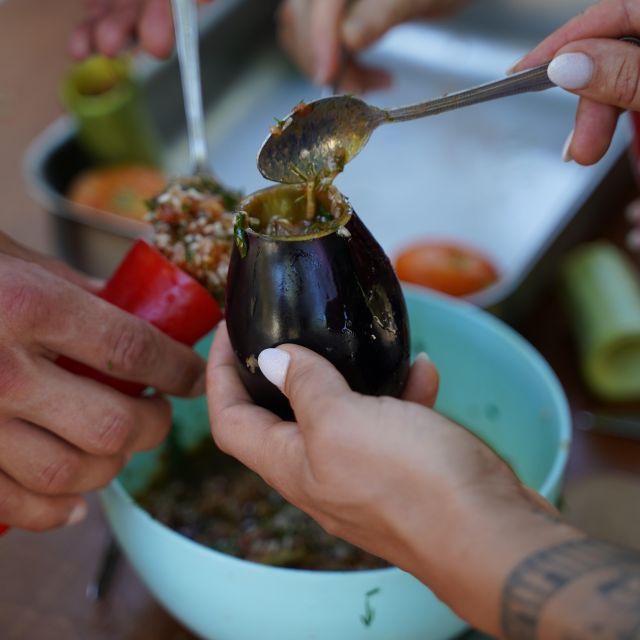
You prepare stuffed vegetables and grape leaves, then learn how to roll dolmades. Rolling grape leaves is a small skill, but it is one of those tasks that becomes easier after a few tries. The first leaf may be too loose or too full. By the end, you should have a better feel for how tightly to fold and roll it.
The stuffed vegetables and dolmades go into the oven while you move on to other work. This keeps the session active. You are not left standing around while one dish cooks, and the timing lets you see how a Cretan meal builds in stages.
The class is also adaptable in practical ways. A vegetarian alternative has been provided when needed, and one participant with a broken wrist received help with the cooking techniques. You should still state dietary needs when booking, since the available information does not promise every type of substitution.
Kalitsounia and the art of handling dough
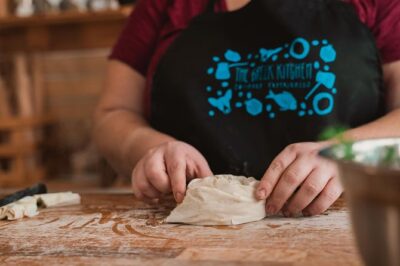
The dough for kalitsounia is one of the most hands-on parts of the class. You use a rolling pin to prepare the dough, then fill the pies with cheese and wild greens. These pastries are closely associated with Crete, and Veerna is known for making them for sale over many years.
This is a good reason to book the class even if you already know how to make basic Greek food. Kalitsounia require more than assembling ingredients. You must roll the dough, add the filling in the right amount, and shape the pies without tearing them.
The technique is approachable, but you should not expect every homemade pastry to look perfect on the first attempt. That is part of the fun. You learn by doing, and the recipe is sent to you afterward so you can try again at home.
One useful point is that the recipes are practical enough to recreate. Several parts of the meal use familiar ingredients and straightforward methods. You may need to adapt the wild greens depending on what is available where you live, but the class gives you a working starting point rather than a recipe that only makes sense in Crete.
Same region, a different dish to learn:
- Naxos: Half-Day Cooking Class at Basiliko Family Tavern
★ 5.0 · 887 reviews - Greek Cooking Class in Athens Including Rooftop Dinner with Acropolis View
★ 5.0 · 826 reviews - Greek Small-Group Athens Cooking Class & Dinner
★ 5.0 · 574 reviews - Exclusive Cooking Experience in our Cave Home by Petra Kouzina
★ 5.0 · 572 reviews
Tzatziki and dakos keep the class relaxed
The appetizers are prepared near the end, but eaten first. You make tzatziki and dakos, two simple dishes that need less time than the lamb or pastries.
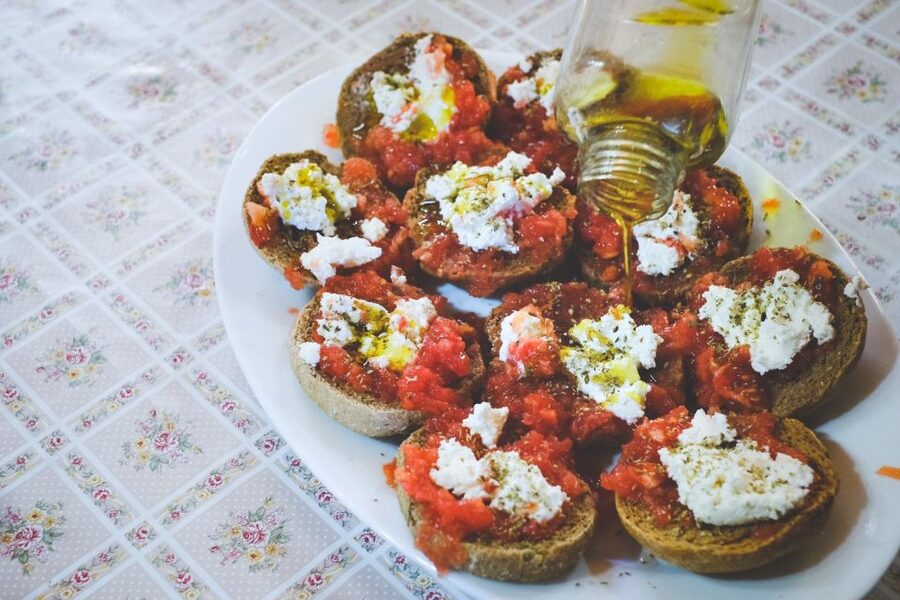
Dakos is a Cretan staple built around barley rusks, tomatoes, cheese, olive oil, and seasoning. Tzatziki brings yogurt, cucumber, garlic, and herbs to the table. These are easy dishes to remember, and they are likely to become the most useful recipes for a quick meal at home.
Preparing them last also gives the group something to snack on while the baked dishes finish. The pace is active without feeling rushed. You move between cooking, tasting, conversation, and short pauses in the garden or olive grove.
The experience is not only about difficult techniques. In fact, part of its value is learning how a few fresh ingredients can make a complete meal. You see how Cretan cooking uses vegetables, herbs, olive oil, cheese, and slow cooking without requiring complicated equipment for every dish.
The meal is part of the lesson
At the end, everything comes to the table: the lamb, stuffed vegetables, dolmades, kalitsounia, tzatziki, dakos, and dessert. Local wine is served generously, and raki is included as well. A sweet dish is offered at the end, although the specific dessert is not fixed in the available details.
The meal is not a rushed tasting. You sit and eat with the family and the rest of the group. That shared table is where the class shifts from instruction to hospitality. It is also where you can ask follow-up questions about the food, the family, and Cretan customs.
Raki deserves a small warning. It is strong, and generous servings of wine and raki can add up quickly. Pace yourself, especially if you are driving or have an early start the next morning. Anyone who does not drink should ask about alternatives when booking, since the listed inclusions focus on wine and raki.
The class can also be a good choice for families. An 11-year-old and a 14-year-old were included successfully in one family booking, with both children taking part and eating the vegetables. Children who enjoy practical activities may get more from this than from a standard sightseeing stop, though adults should remember that the session lasts several hours.
Is $129 good value?
At $129 per person, this is not a cheap lunch. It is also more than a short market visit or a basic cooking demonstration. The value comes from the combination of instruction, a full meal, drinks, ingredients, the setting, and the time spent with a local family.
You are paying for five substantial food preparations rather than one recipe. You also receive the meal you help make, local wine, raki, dessert, and the social side of the afternoon. For someone interested in Cretan food, that is a fair package.
The price looks less attractive if you only want to watch a chef cook or if you are already planning several expensive food experiences in Chania. Transportation is not included, and an optional pickup costs extra. If you are traveling as a family, multiply the price carefully, then add taxi or transfer costs.
For me, the value is strongest for people who will use what they learn. The recipes are sent to you, and dishes such as dakos, tzatziki, stuffed vegetables, and kalitsounia can become lasting souvenirs. You are taking home cooking skills, not just photographs.
Getting there and planning the day
The exact location is available through the provided map link. If you drive, parking is along the fence. A car or taxi is the simplest option from Chania.
Paid transfer service is available from your location if requested in the booking form. Transport uses either a nine-seat van or a five-seat electric vehicle, and you may share the ride with other people joining the class. The transfer is semi-private, not a dedicated private car.
Pickup details should be settled before the day of the class. The listed activity says pickup is included, but the more specific instructions say that transportation from your location carries an extra fee. Treat the transfer as an optional add-on and confirm the cost before you commit.
The class is taught in English and is wheelchair accessible. Starting times vary, so check availability for the date you want. Free cancellation is available up to 24 hours before the class, and you can reserve now and pay later, which helps if your Chania plans are still shifting.
Wear clothes that can handle flour, olive oil, and cooking splashes. The source information does not list a dress code, but hands-on pastry work is rarely spotless. Also plan for a full meal, not a light snack, and avoid scheduling another large dinner immediately afterward.
Who will enjoy this Chania cooking class?
I would choose this for you if you want:
- A meal with a strong local connection
- Practical Greek cooking skills you can repeat at home
- Time outdoors in an olive grove and garden
- A social activity where you meet people from several countries
- A family-friendly experience with plenty of food
- A break from Chania’s old-town streets and crowded sights
It is especially suited to couples, families, cruise passengers with enough time, and anyone who values conversation as much as technique. Solo participants should also fit in well because the class naturally brings people together around shared tasks.
I would hesitate if you need a short activity, dislike group participation, or want a strictly scheduled professional kitchen. You may also prefer a city-center class if you do not want to arrange transport.
Should you book it?
Yes, if you want to connect food with family, place, and daily Cretan life. The strongest parts are the garden ingredients, the wood-fired lamb, the chance to make kalitsounia from dough, and the long meal with Veerna and her family.
Book with realistic expectations. This is a generous, social four-hour visit to a family property, not a quick class squeezed between old-town sights. Confirm transport, mention dietary or mobility needs, and leave room in your schedule for the meal to run a little long.
For a first cooking class in Crete, I think the $129 price is justified by the amount of food, instruction, drinks, and personal attention. If you want something polished but impersonal, choose another format. If you want to cook, laugh, eat well, and leave with recipes you can try at home, this is one of the better food choices near Chania.
FAQ
How long does the Chania cooking class last?
The scheduled duration is four hours. It can run to about four and a half hours, so allow extra time if you have a later appointment or transportation deadline.
Where is the cooking class located?
It is in Nerokourou, a beautiful neighborhood about 10 to 15 minutes from central Chania by car. The exact location is provided through the supplied map link.
Is transportation from Chania included?
Transportation is not included in the basic activity. You can arrive by car or taxi, park along the fence, or request a semi-private transfer for an extra fee.
What dishes will I prepare?
You prepare oven-roasted lamb, stuffed vegetables, stuffed grape leaves, kalitsounia filled with cheese and wild greens, tzatziki, and dakos. Dessert is also served at the end.
Are food and drinks included?
Yes. Ingredients, lunch or dinner, generous amounts of local wine, raki, and a sweet finish are included.
Is the class taught in English?
Yes. The listed language for the instructor is English.
Is the cooking class wheelchair accessible?
Yes, the activity is listed as wheelchair accessible. You should still share any specific access needs when booking.
Can I cancel the booking?
You can cancel up to 24 hours in advance for a full refund. Reserve now and pay later is also available.
Is the class suitable for children?
The class can suit children who enjoy hands-on activities. An 11-year-old and a 14-year-old took part successfully in a family booking, but the session lasts several hours and includes cooking, food preparation, and a full meal.
Newest classes around Greece
- Authentic and Traditional Cooking Class in Chania Crete★ 5.0 · 5 reviews
- Chania Cooking Class in Crete with rustic, delicious and homely Cretan food!★ 4.5 · 14 reviews
- Private Cooking Class – A Culinary Journey in Argostoli★ 5.0 · 2 reviews
- Greek Cooking Class with Acropolis View★ 5.0 · 76 reviews
- Private Walking Meze Cooking Course★ 5.0 · 6 reviews
- Private Greek Cooking Class in Athens-Learn to Cook with Angelina★ 5.0 · 3 reviews
- Cook with Katerina: Authentic Greek Home Cooking Class in Athens★ 5.0 · 15 reviews
- Hands On Greek Cooking Classes in Athens★ 5.0 · 7 reviews
Greece Cooking Classes, compared.
Classic Cooking Class with Market Visit and Wine
Read our review →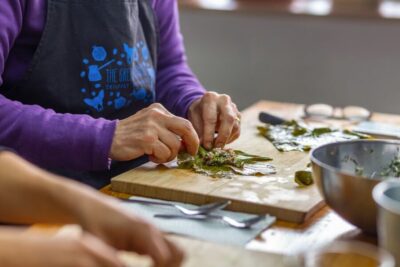
Food Market Visit and Cooking Class with Wine
Read our review →
Greek Cuisine Cooking Class in Santorini with Recipes and Wine
Read our review →
Naxos: Half-Day Cooking Class at Basiliko Family Tavern
Read our review →
Greek Cooking Class in Athens Including Rooftop Dinner with Acropolis View
Read our review →
Greek Small-Group Athens Cooking Class & Dinner
Read our review →
Exclusive Cooking Experience in our Cave Home by Petra Kouzina
Read our review →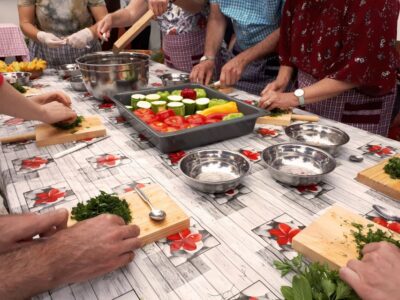
Chania: Authentic Cooking Class in the White Mountains
Read our review →Browse the lists this tour appears in