
Review · SPAIN COOKING CLASSES
Bilbao: Immersive Basque Cooking Class
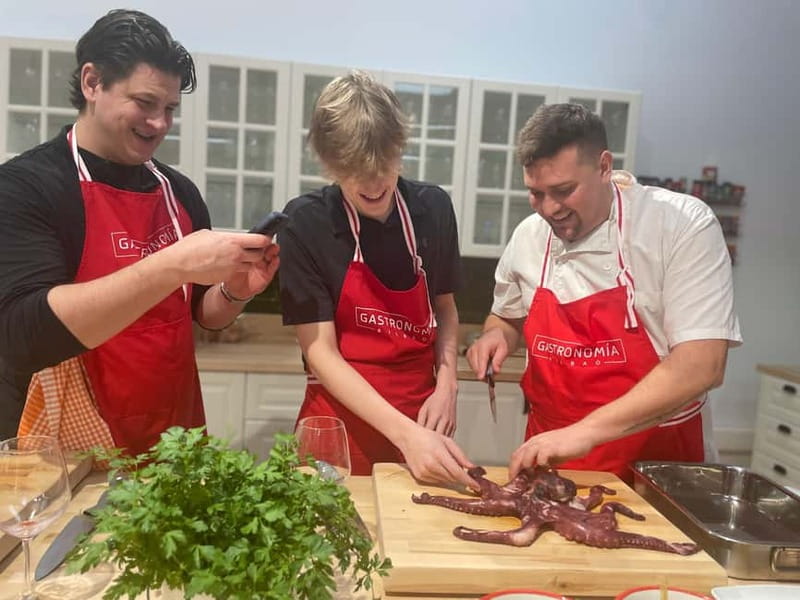
Basque cooking is at its best when it feels generous and unfussy, and this class puts you right at the chopping board. With chef Mikel, you prepare several local dishes, from the famous gilda to Marmitako, a tuna stew made with Northern Spain’s bonito, then sit down to eat the full meal you helped make.
I like the hands-on format, which gives you more than a tasting and leaves you with recipes to use at home. I also like the wine pairing, with refreshing Txakoli and Rioja served as you cook and eat. The main point to consider is that participation may vary by session. One seven-person class involved plenty of chopping and cooking, while another attendee felt the hands-on work was limited.
What makes this Bilbao cooking class worth your time
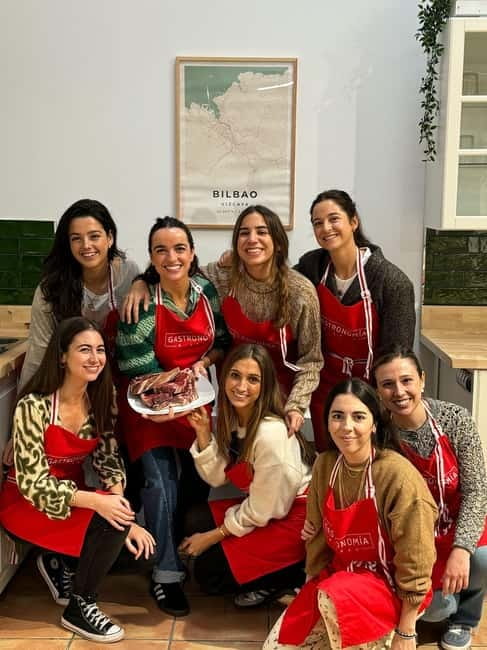
- Chef Mikel leads the class: You cook with a Basque chef who explains local food, ingredients, and kitchen methods in English.
- The menu covers a full meal: Prepare two or three starters, a main course, and dessert, then eat everything afterward.
- Market produce can change the dishes: The exact menu depends on what is available, so expect a seasonal touch rather than a fixed script.
- Wine is part of the experience: Txakoli and Rioja are included, along with non-alcoholic drinks.
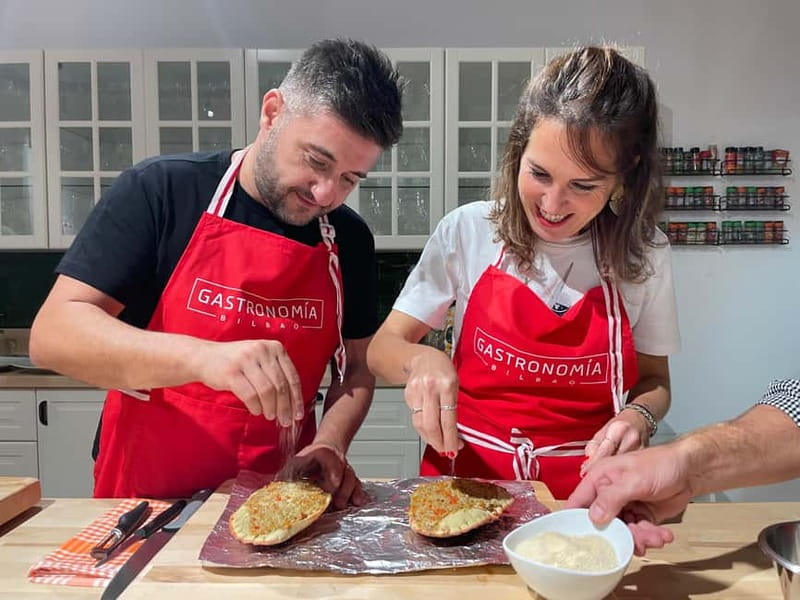
- You learn Basque food through familiar dishes: Gilda, Marmitako, cider-cooked chorizo, steak, peppers, salad, and Basque toast may all appear.
- The setting is convenient: Check in by the gourmet shop at Gastronomía Bilbao, a central food and wine venue in downtown Bilbao.
Starting at Gastronomía Bilbao
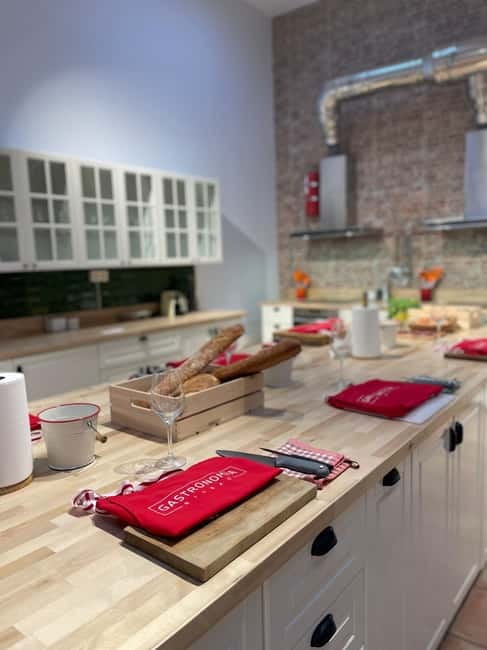
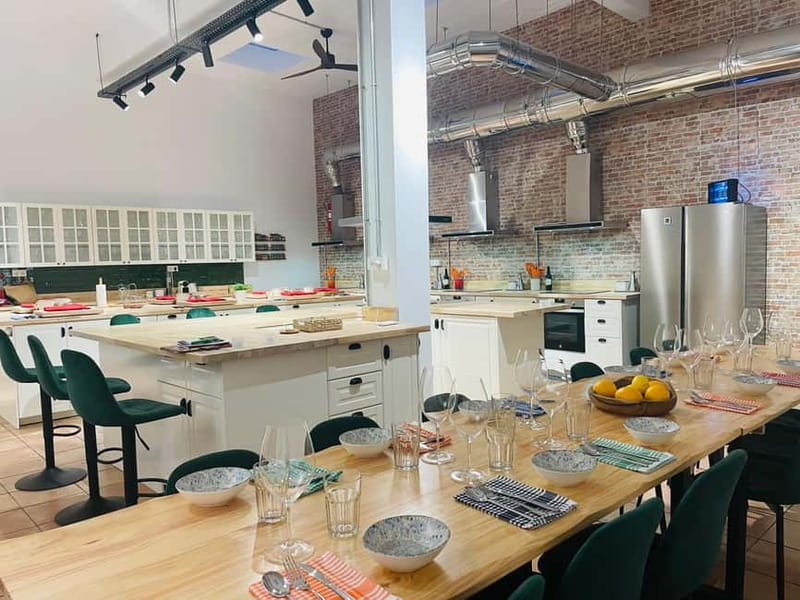
Your meeting point is the gourmet shop at Gastronomía Bilbao, where someone will meet you for check-in. This is useful for a city break because you do not need to travel out to a country kitchen or a distant cooking school. The class takes place in downtown Bilbao and lasts about three and a half hours.
Gastronomía Bilbao is also a wine bar and gourmet shop, so the setting fits the subject from the start. You are not just entering a generic classroom. The venue connects cooking with Basque food products and wine, which gives the class a clear local identity.
The activity is conducted in English. Mikel is a Basque chef and instructor, and the class is described as bilingual, with English available for the instruction. If you have food allergies or intolerances, tell the provider in advance. The menu can change according to market availability, and advance notice gives the kitchen a chance to plan properly.
More Cooking Classes in Spain:
- Barcelona: Paella Cooking Experience & Boqueria Market Tour
★ 4.8 · 3,661 reviews - Barcelona Paella Cooking Class with Market Visit, Tapas & Sangria
★ 5.0 · 2,531 reviews - Barcelona Interactive Spanish Cooking Experience
★ 4.5 · 2,155 reviews
Cooking the Basque menu with Mikel
The class is designed to be 100 percent hands-on, though the amount of work you personally do can depend on the group and the pace of the session. You should expect to chop, prepare ingredients, work on cooking bases, and follow Mikel’s instructions. The class also includes stories about the dishes, the ingredients, and the small tricks that help you repeat them at home.
A typical menu can include two or three starters, one main course, and dessert. That sounds like a lot because it is. You will not be preparing a single dish and then heading off for lunch. The food made during class becomes the meal you eat at the end.
The opening dishes may include a gilda, one of the best-known small bites associated with Basque food culture. You may also work with sweet red peppers prepared in the Etxebarri style, a refreshing green salad, or chorizo cooked in cider. These dishes give the class variety: small bites, vegetables, a salad, and a warm preparation with a strong regional character.
The menu can also include Marmitako. This is a Basque stew made with bonito, the tuna of Northern Spain. It is a useful dish to learn because it shows how a few well-chosen ingredients can become a satisfying meal. One attendee described working on the base for a soup and rice dish, so the exact preparation may shift with the menu and the day’s ingredients.
For the main course, the class may feature a traditional T-bone steak. This is a welcome contrast to the lighter starters and fish stew. It also gives you a chance to learn how the kitchen handles a substantial cut of meat rather than focusing only on pintxos.
Dessert may be Basque toast, described as a fabulous local-style sweet ending. Another session included a bread pudding dessert. That difference is worth noting: you should expect a Basque dessert, but not assume the same exact plate every time.
What you actually learn, not just what you eat
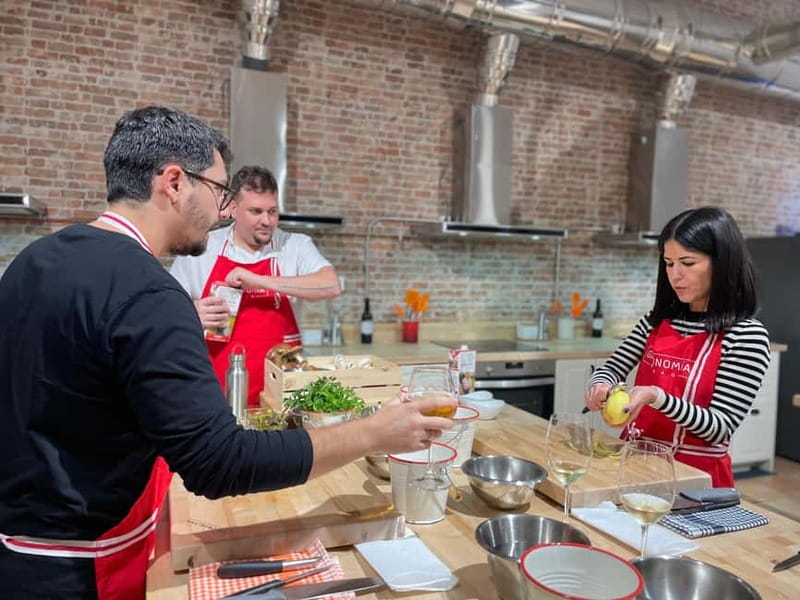
The value here comes from the explanation around the food. Mikel talks about the story behind each dish, the role of individual ingredients, and practical methods you can use in your own kitchen. One class included work on sofrito, soup, rice, pintxos, ribeye, and bread pudding, showing how the lesson can move between simple foundations and finished dishes.
I like this format because it gives you a clearer sense of Basque food than a restaurant meal alone. At a restaurant, you taste the result. Here, you see how several plates come together and learn why they belong to the region’s food culture.
Still, keep your expectations realistic. A cooking class is not always equal in every session. Group size, timing, and the number of dishes can affect how much direct work you get. One person found the class very hands-on, while another felt participants did less cooking than expected. If you want an intensive technical lesson with every guest preparing every component, this may feel relaxed rather than rigorous.
The relaxed pace is part of the appeal for many people. You are cooking, talking, and tasting instead of racing through a strict professional kitchen routine. One session with seven people included time to get to know the other participants, which makes this a social activity as well as a food lesson.
The food and wine are part of the lesson
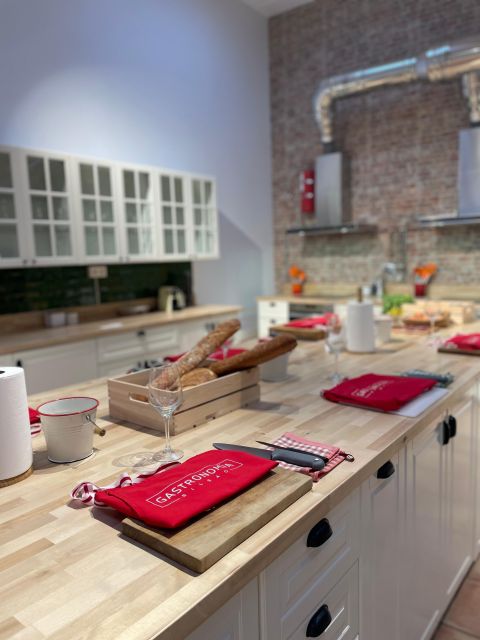
Wine is available throughout the cooking experience, not just poured with the final meal. You can taste local Txakoli and Rioja, giving you two recognizable Basque Country and northern Spanish wine styles to compare. Non-alcoholic drinks are included too.
Txakoli is presented as a refreshing local wine, while Rioja offers a red option for the meal. The pairing helps explain why the class is more than a basic cooking demonstration. You are learning how food and drink work together at the table, with the wine served as you prepare and eat.
A cheese and charcuterie board is offered as a complement. This gives you something to enjoy while dishes are being prepared and adds another taste of the region’s food culture. It also helps pace the class, since several dishes take time to cook and assemble.
The full meal is served after the cooking portion in a private dining room with your group. That matters. You are not expected to eat standing at the counter or leave before trying the finished dishes. Since the class includes multiple starters, a main course, dessert, cheese, charcuterie, and drinks, you probably will not need to schedule another meal afterward.
There is one practical point here: this is a substantial food experience. If you have a light appetite, the amount of food and wine may feel generous. If you enjoy long meals and want a proper evening activity, it should fit well.
Same region, a different dish to learn:
- Spanish Cooking Class Paella Tapas and Sangria in Madrid
★ 5.0 · 1,340 reviews - Paella Cooking Class, Wine Tasting & Central Market in Valencia
★ 5.0 · 1,150 reviews - Paella Cooking Class in Madrid with Bottomless Wine Pairing
★ 5.0 · 985 reviews - Seville: Spanish Cooking Class with Dinner
★ 4.9 · 900 reviews
How the 3.5-hour schedule feels
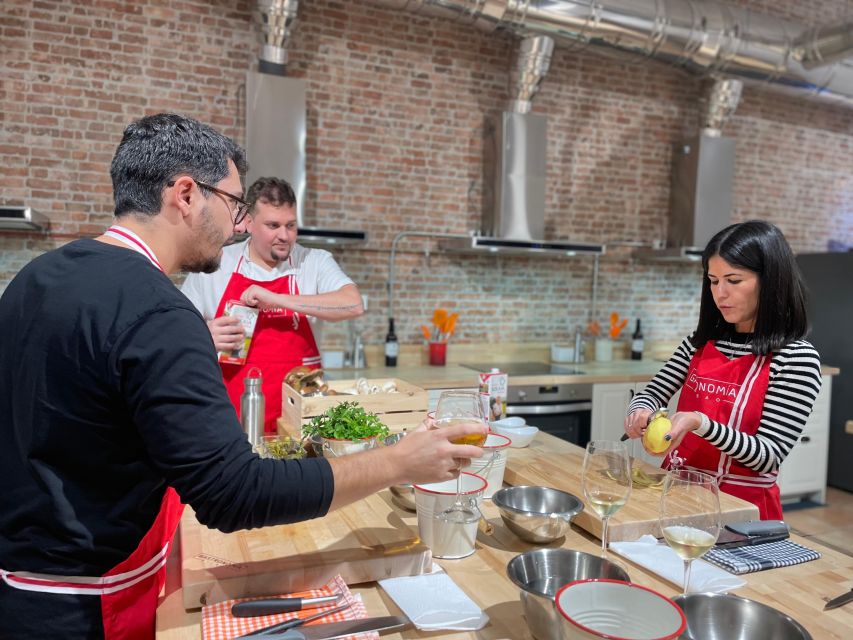
The listed duration is three and a half hours, though one attendee said their session lasted four hours. Plan your day with some flexibility rather than booking a tight museum visit or train immediately afterward.
The first part covers introductions, ingredients, and preparation. Then the cooking develops through several stages, with tastings and drinks along the way. The final section is the sit-down meal in the private dining room.
This structure makes the experience feel more like a long Basque lunch or dinner than a short workshop. You have time to talk with Mikel, ask about local food, and meet the other people in your group. It also means the class may feel slow if you want nonstop knife work.
I would schedule it on a day when you can take your time. It works especially well as a midday activity followed by a quiet afternoon, or as an early evening plan when you want dinner built into the experience.
Price, inclusions, and overall value
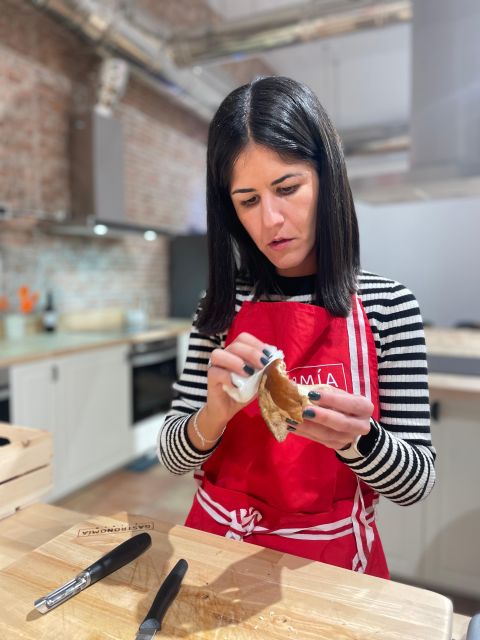
The price is $165 per person. That is not a bargain cooking lesson, but it includes more than instruction. You receive the cooking equipment, apron, recipes, ingredients for a full meal, charcuterie, local wine, non-alcoholic drinks, and the private dining portion.
The real value depends on what you want from a food activity. If you only want a quick demonstration, the price will seem high. If you want a three-and-a-half-hour cultural experience, a large meal, wine pairings, and recipes to take home, the cost is easier to justify.
You are also paying for convenience. The class is in central Bilbao, conducted in English, and organized around a complete menu. You do not need to choose a restaurant afterward or arrange a separate wine tasting. The cooking equipment and apron are supplied, which keeps the experience simple for visitors staying in the city.
The class received an overall rating of 4.9 from 12 ratings, and the strongest praise centers on Mikel’s warmth, the quality and quantity of food, and the easygoing atmosphere. I would treat that as a good sign, while still remembering the one concern about limited participant cooking. Ask yourself what matters more: a relaxed shared meal with instruction, or a tightly structured class where you personally prepare every plate.
Who should book this experience
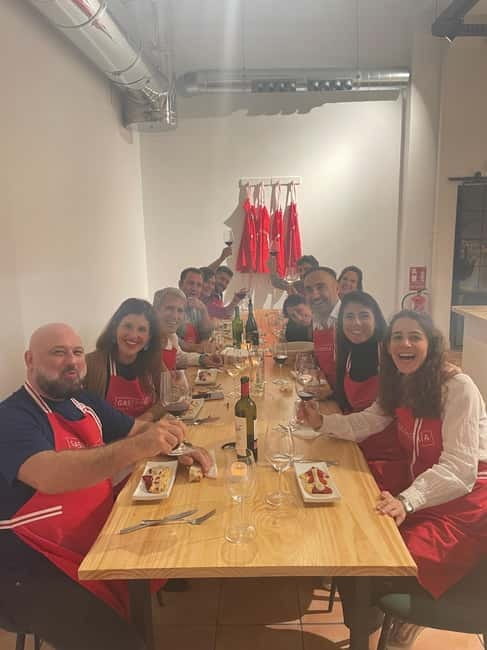
This class is a strong choice for you if food is a major part of your trip and you want context behind what you eat in Bilbao. It suits couples, friends, and solo visitors who enjoy meeting people over a long meal.
It also works well for cooks at different levels. Beginners can follow the basic methods and learn regional dishes without needing advanced skills. More experienced home cooks may appreciate the ingredient stories, Basque techniques, and chance to compare local food with their own cooking.
The experience is less suited to someone seeking a quiet, private lesson with one-on-one attention. The class is social, and the level of direct cooking can vary. It is also not the best fit if you do not drink wine, although non-alcoholic drinks are included and the food remains the focus.
Families and mixed-age groups should check the booking details before reserving, since the supplied information does not specify a minimum age. The same applies to accessibility details, which are not provided.
Small details that help you decide
Tell the provider about food intolerances before the class, not at the door. The menu changes with market availability, so advance notice is especially useful.
Expect the recipes to be practical rather than souvenir material. The point is to leave with methods you can repeat at home, along with a better feel for Basque ingredients and meal structure.
If you are considering a food tour too, Gastronomía Bilbao offers a food tour and may provide a combined price. Ask about the combination when booking, since the savings and scheduling are not specified here.
Cancellation is flexible up to 24 hours before the activity for a full refund. You can also reserve now and pay later, which helps if your Bilbao plans are still moving around.
Should you book the Bilbao Basque cooking class?
I would book this if you want a social, food-filled introduction to Basque cooking rather than a strict chef-training session. Mikel’s personal connection to the region, the mix of dishes, the local wines, and the private meal make it a useful way to understand Bilbao through its table.
The main caution is the variable amount of hands-on work. If you need to prepare every dish yourself, confirm how the class is organized for your date. Otherwise, the $165 price is reasonable for the time, food, drinks, equipment, recipes, and full meal included.
For a first visit to Bilbao, this is especially appealing because you leave with more than a full stomach. You get a working introduction to gilda, Marmitako, Basque steak, local peppers, regional wine, and the relaxed way a Basque meal comes together.
FAQ
Where does the Bilbao cooking class meet?
Meet at the gourmet shop of Gastronomía Bilbao in downtown Bilbao. Someone will be there to handle check-in.
How long does the cooking class last?
The listed duration is three and a half hours. One session lasted about four hours, so leave some extra time in your schedule.
Is the class taught in English?
Yes. English instruction is provided, and the instructor is a bilingual Basque chef.
What food will I prepare?
You will prepare two or three starters, a main course, and dessert. Possible dishes include gilda, Marmitako made with bonito, chorizo cooked in cider, T-bone steak, sweet red peppers, green salad, and Basque toast. The menu can change based on market availability.
Are wine and non-alcoholic drinks included?
Yes. Local Txakoli and Rioja wines are included, as are non-alcoholic drinks. A cheese and charcuterie board is also provided.
Can I cancel or pay later?
You can cancel up to 24 hours in advance for a full refund. The activity also offers reserve now and pay later booking.
Newest classes around Spain
- Pintxos and Tapas Cooking Class in Bilbao★ 5.0 · 38 reviews
- Basque Pintxos and Tapas Cooking Class in Bilbao★ 5.0 · 73 reviews
- Small-group Immersive Basque Cooking Class in Bilbao with Open Bar★ 5.0 · 65 reviews
- Paella and Burnt Basque Cheesecake Cooking Class (in Bilbao)★ 5.0 · 46 reviews
- Rooftop Paella Seafood Cooking Class Experience in Barcelona★ 5.0 · 59 reviews
- Private Authentic Paella Cooking Class in Barcelona with Josh★ 5.0 · 3 reviews
- Barcelona Tapas Cooking & Cocktail Class with Veronique & Mattias★ 5.0 · 3 reviews
- Private Barcelona Market Tour & Paella Cooking Class with Josh★ 5.0 · 4 reviews
Spain Cooking Classes, compared.
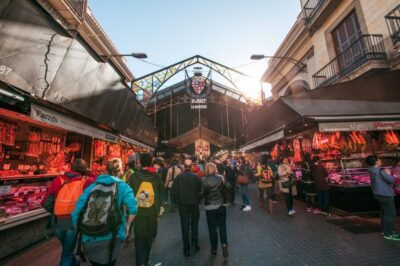
Paella Cooking Experience & Boqueria Market Tour
Read our review →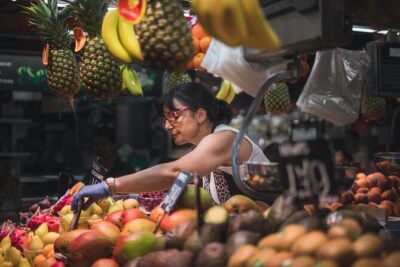
Barcelona Paella Cooking Class with Market Visit, Tapas & Sangria
Read our review →
Barcelona Interactive Spanish Cooking Experience
Read our review →
Spanish Cooking Class Paella Tapas and Sangria in Madrid
Read our review →
Paella Cooking Class, Wine Tasting & Central Market in Valencia
Read our review →
Paella Cooking Class in Madrid with Bottomless Wine Pairing
Read our review →
Valencian paella cooking class, tapas and visit to Ruzafa market.
Read our review →Browse the lists this tour appears in