
Review · ITALY COOKING CLASSES
Apulian cooking class and typical dinner
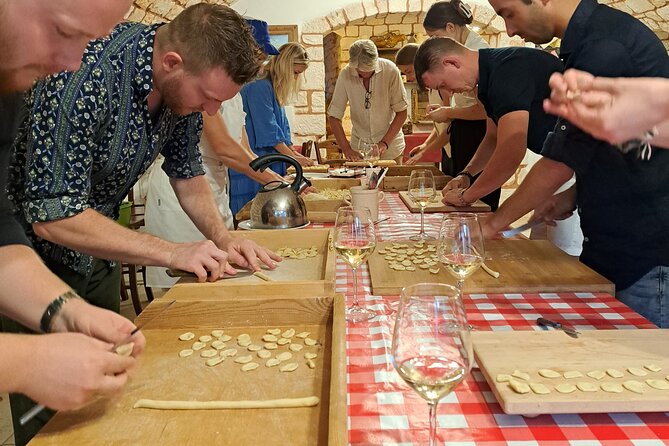
The best part of this Apulian cooking experience is that you do not simply sit down to eat local food. You help make it. At Vigna il Castagno, mother Beatrice welcomes you to her family property near Martina Franca, where you pick produce from the garden, visit the vineyard, shape pasta, work the wood-fired oven, and finish with an open-air dinner as the sun goes down. The cooking is hands-on, not a demonstration from across the room.
I like the wide range of dishes, from orecchiette and cavatelli to focaccia, broad bean purée, and brasciole in tomato sauce. I also like the setting: a natural farm environment with trulli in the background, house wine, and a relaxed family welcome. The main consideration is location. The experience is listed in the Brindisi area, but the meeting point is at Trulli il Castagno on Strada Noci near Martina Franca, in the wider Alberobello and Valle d’Itria area. Check your route carefully before booking.
Key points at a glance
- Make several kinds of pasta: You may work with orecchiette, cavatelli, pappardelle, strascinate, and other local shapes.
- Cook with Beatrice: The family welcome and informal style give the afternoon a personal feel.
- Use the wood-fired oven: You get hands-on practice with focaccia and bread, not just a tasting.
- Taste wine at the vineyard: A vineyard tour and aperitif with wines produced at the property are part of the experience.
- Eat at sunset: The final meal includes freshly baked focaccia, homemade pasta, seasonal products, and Apulian brasciole.
- Plan for a full half-day: The activity lasts about five hours and may include up to 24 people.
From the family garden to the vineyard
Your afternoon begins at Vigna il Castagno, a family property near Martina Franca. The setting is part of the experience. Instead of meeting in a town kitchen or a formal culinary school, you spend time around a working garden and vineyard, with the trulli of the Valle d’Itria nearby.
The first step is tied to the land itself. You harvest from the family garden and see some of the ingredients before they reach the table. That small detail matters. It gives you a clearer sense of how much Apulian cooking depends on simple produce, careful preparation, and food served soon after it is made.
You also tour the vineyard and enjoy an aperitif with wines produced at the property. The wine portion is not presented as a separate tasting course with technical detail, so you should think of it as a relaxed introduction to the family’s own production. It is a pleasant way to begin before the flour comes out.
I like this opening because it gives the meal a sense of place. You are not just told that the food is local. You see the garden, walk through the vineyard, and then use your hands to prepare the dishes. If you want a strictly structured cooking lesson with exact recipes and a professional kitchen, this may feel informal. If you prefer a family afternoon with food, wine, and conversation, the setting should suit you well.
More Dinners Out in Italy:
- Pasta Making & Wine Tasting with Dinner in Frascati from Rome
★ 5.0 · 1,326 reviews - Rome: Pasta Making with Wine Tasting and Dinner in Frascati
★ 4.9 · 979 reviews - Palermo: Pizza and Gelato Cooking Class with Dinner and Wine
★ 4.9 · 951 reviews
Learning the many shapes of Apulian pasta
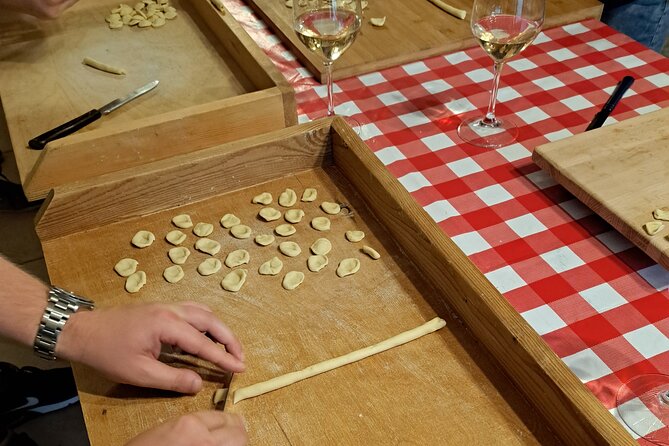
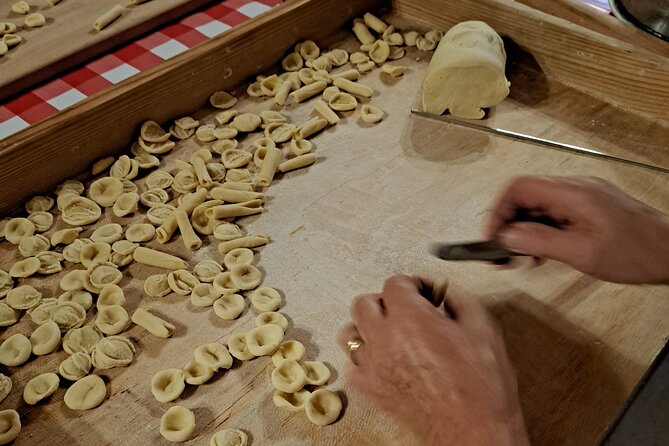
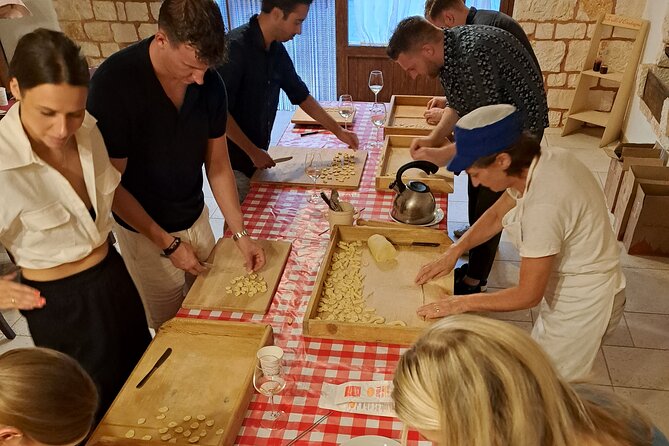
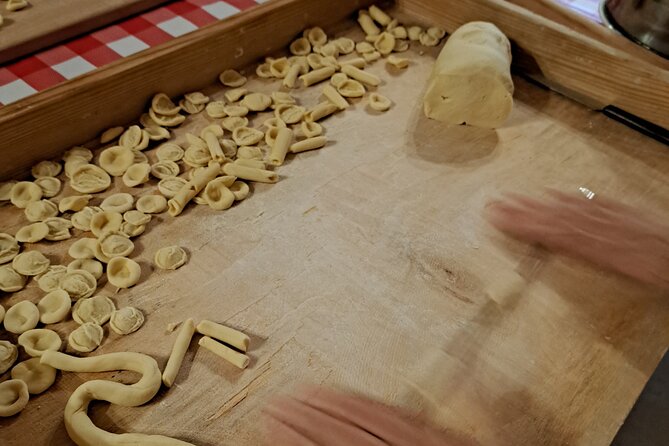
Pasta is the heart of the cooking session. You will make your own orecchiette, the small ear-shaped pasta associated with Puglia, along with other local forms. The list includes cavatelli, pappardelle, strascinate, i fricid, and a sagn.
That variety is unusual for a short cooking experience. You are not limited to shaping one type of pasta and then moving on. The different forms show how a single region can have many pasta traditions, each with its own shape and handling. Orecchiette may be the most familiar name, but the other forms make the lesson feel broader and more rooted in local cooking.
The key point is that you will get your hands dirty. Expect to mix, roll, shape, and handle the dough yourself. The practical value is simple: you leave with a better understanding of how fresh pasta feels and why handmade shapes do not all look identical.
Do not expect the polished uniformity of factory pasta. The pleasure here is in learning by doing. A few uneven pieces are part of the afternoon. You will also be making several dishes, so the focus is likely to be on shared work and eating together rather than a long technical explanation of every pasta shape.
Focaccia, bread, and a wood-fired oven
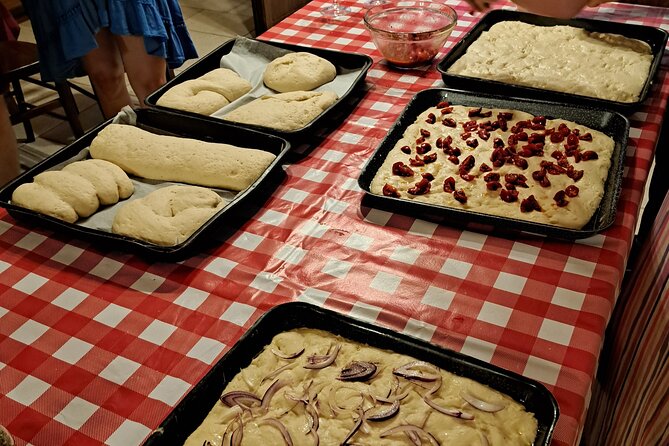
The menu includes focaccia from Bari with tomato or onion, along with bread. You will prepare the focaccia and turn on and use the wood-fired oven. This is one of the strongest practical details of the experience because the oven becomes part of the activity rather than simply a source of heat hidden behind the scenes.
Fresh focaccia is also the first taste of the final meal. The combination of dough, tomato or onion, and wood-fired cooking keeps the dish simple, but it connects the preparation to the setting. You make it, bake it, and later eat it outdoors.
The oven work adds a physical element that a standard pasta class may not offer. You should be ready to participate rather than watch. The description specifically says you will get your hands dirty, so comfortable clothing and shoes make sense. No special dress code is provided, but cooking with dough, sauce, and outdoor equipment is not the place for your finest outfit.
The exact teaching format is not spelled out. You may find that the pace depends on the group and on Beatrice’s informal way of working. With a maximum of 24 people, the class can be fairly social. That is good for a shared meal, though it may mean less one-to-one correction than you would receive in a very small class.
From broad beans to brasciole in tomato sauce
The meal goes beyond pasta. The sample menu starts with Bari-style focaccia topped with tomato or onion, a broad bean purée, and seasonal products. The broad bean purée is a useful taste of traditional southern Italian cooking, where legumes can be treated as a central dish rather than a side note.
The main course includes homemade orecchiette and Apulian brasciole cooked in tomato sauce. Brasciole are meat rolls prepared in a tomato-based sauce, and here you help make the chops yourself. That gives the class another useful contrast: fresh pasta teaches you about dough and shape, while brasciole shows how a family-style sauce can carry a dish through slow cooking.
You will also prepare the dessert, sugared almonds. It is a modest finish, but it fits the character of the meal. This is not a menu built around elaborate pastry. It is a generous country-style spread with familiar ingredients handled in a local way.
The menu is substantial for a five-hour experience. You are tasting during the afternoon, then sitting down for a full dinner. If you have dietary restrictions, the supplied details do not say how substitutions are handled, so ask the provider before booking rather than assuming the menu can be changed.
More Places to Eat in Italy:
- Tuscan Cooking Class and Dinner in Florence
★ 4.5 · 732 reviews - Cooking class, dinner and wine tasting near Lecce
★ 5.0 · 350 reviews - Cooking lesson in Catania with lunch or dinner
★ 5.0 · 154 reviews - Naples: Traditional Italian Food Cooking Class at Restaurant
★ 4.8 · 106 reviews
An open-air dinner beside the trulli
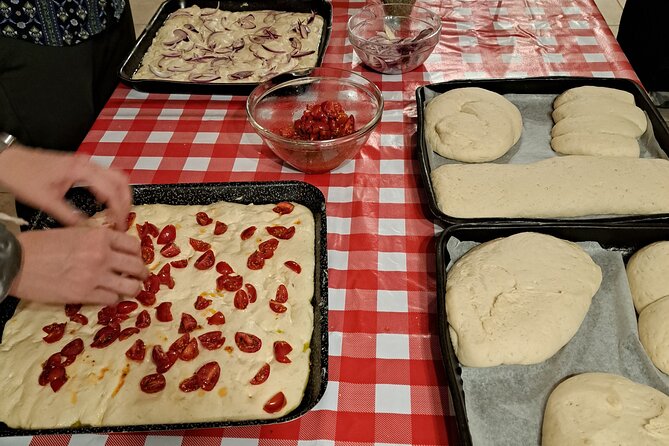
The final dinner is the payoff. After preparing the food, you sit down for an open sunset meal with freshly baked focaccia, broad bean purée, seasonal products, orecchiette, brasciole, and sugared almonds.
The timing matters. The meal is not simply served at the beginning, when you are still getting settled. It comes after the garden visit, vineyard tour, wine aperitif, pasta work, and oven cooking. You have seen the ingredients and taken part in the preparation. That makes the dinner feel more personal than a regular restaurant meal.
The trulli in the background add a strong sense of place. These conical stone buildings are closely associated with the Valle d’Itria, and their presence gives the evening a distinctly Apulian setting. The experience is not promising a major sightseeing tour of Alberobello, but the trulli provide an atmospheric backdrop while you cook and eat.
The outdoor setting is also something to consider. The description emphasizes the natural setting and sunset dinner, but it does not provide details about weather arrangements or seating. If the forecast is uncertain, check directly with Vigna il Castagno. The same outdoor character that makes a clear evening special may require more planning when conditions change.
How the location affects your plans
The stated location is Brindisi, but the actual meeting point is Trulli il Castagno, Strada Noci, 315 Bis, 74015 Martina Franca, Italy. The activity ends back at that same meeting point.
This is important if you are planning from Brindisi, Alberobello, Ostuni, or another Puglian base. Do not rely only on the broad Brindisi label when arranging your day. Use the full Martina Franca address to estimate your travel time and decide how you will reach the property.
The itinerary identifies I Trulli di Alberobello as a stop and describes it as a World Heritage Site, but the provided details do not explain whether there is a separate guided visit, free time in Alberobello, or simply a nearby setting with trulli. Treat the cooking property as the definite focus. If seeing Alberobello itself is essential to your plans, confirm how that stop fits into the schedule before you pay.
This is a mobile-ticket experience, and English is offered. Confirmation is provided at booking. The group can have up to 24 people, so you should expect a shared, social afternoon rather than a private lesson. That size can work well for a family-style dinner, but it may feel less intimate than a class limited to six or eight people.
Is the $113 price good value?
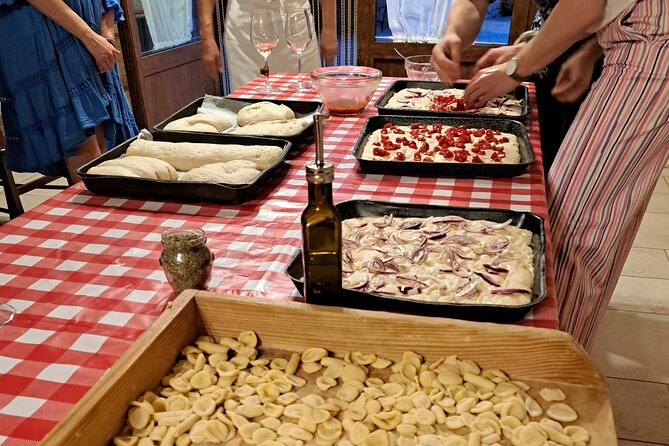
At $113.18 per person, the price is not just paying for one meal. You are receiving roughly five hours of activity, a garden visit, a vineyard tour, an aperitif with house wines, hands-on cooking, several courses, and a sunset dinner.
That makes the value strongest for people who want a full food experience rather than a quick class. The menu covers starters, pasta, meat, dessert, and wine. You also get the use of the wood-fired oven and the chance to prepare several dishes. If you would otherwise book a separate vineyard visit and restaurant dinner, the combined price may compare well.
The value is less clear if you mainly want a short lesson focused on one recipe. Much of the cost goes toward the setting, food, drinks, time, and shared hospitality. It is not designed as a rapid, technical workshop.
The five-hour length also affects the price calculation. You should set aside most of an afternoon and evening, not squeeze it between two short sightseeing stops. The experience earns its price through the time spent cooking and eating, so rushing to the meeting point or leaving early would undercut much of what you are paying for.
Who will enjoy this afternoon most?
I would recommend this experience to you if food is one of the main reasons you visit Puglia. It suits people who enjoy learning by doing, trying several dishes, and sharing a long meal in an informal family setting.
It also works well for visitors who want a countryside experience near Martina Franca and the trulli area. The garden, vineyard, outdoor cooking, house wine, and sunset meal offer a change from town sightseeing.
Families and groups may enjoy the social format, though the maximum of 24 people means you should not expect a private gathering. Couples can enjoy it too, especially if they like food-based activities and do not mind spending most of the afternoon with a larger group.
I would hesitate to recommend it if you want a formal culinary certificate, detailed written instruction, or a tightly timed lesson with precise measurements. The appeal here is the family welcome, the local setting, and the pleasure of making a meal together.
Service animals are allowed. The supplied details do not provide broader information about mobility access, transport, dietary substitutions, or weather arrangements, so contact Vigna il Castagno if any of those points affect your decision.
Cancellation and booking details
You can cancel free of charge up to 24 hours before the experience begins for a full refund. Cancellations made less than 24 hours before the start time are not refunded, and changes within that period are not accepted.
The cut-off uses local time. The experience also requires a minimum number of participants. If that minimum is not met and the activity is canceled, you are offered another date or experience, or a full refund.
Should you book the Vigna il Castagno cooking class?
Book it if you want to spend a full afternoon making and eating Apulian food in a family vineyard setting. The strongest reasons are the variety of dishes, the chance to use the wood-fired oven, the house wine, and the sunset dinner with trulli behind you.
Before booking, confirm the route to Martina Franca and clarify how the Alberobello stop is handled. Also ask about food substitutions if needed. For a hands-on, social, generously paced introduction to Puglian cooking, the $113 price is reasonable. For a short, highly technical cooking lesson, choose something smaller and more focused.
FAQ
Where does the cooking experience begin?
It begins at Trulli il Castagno, Strada Noci, 315 Bis, 74015 Martina Franca, TA, Italy.
Where does the activity end?
The activity ends back at the meeting point at Trulli il Castagno.
How long does the experience last?
The experience lasts approximately five hours.
What language is offered?
The experience is offered in English.
What food will be prepared?
You will prepare pasta such as orecchiette, cavatelli, pappardelle, strascinate, i fricid, and a sagn, along with bread, focaccia, broad bean purée, brasciole, and sugared almonds.
What is included in the sample dinner?
The sample menu includes Bari-style focaccia with tomato or onion, broad bean purée, seasonal products, homemade orecchiette, Apulian brasciole in tomato sauce, and sugared almonds.
Is wine part of the experience?
Yes. You will tour the vineyard and have an aperitif with wines produced at the property.
How many people can join the activity?
The activity can accommodate a maximum of 24 participants.
Newest classes around Italy
- Cooking Class in a Sicilian countryhouse★ 5.0 · 5 reviews
- Cesarine: Market Tour & Home Cooking Class in Catania★ 4.0 · 6 reviews
- Cesarine: Home Cooking Class & Meal with a Local in Catania★ 4.5 · 10 reviews
- Cooking Class in Taormina with Lunch Included★ 5.0 · 2 reviews
- Cooking class in Capri for small groups★ 4.0 · 4 reviews
- Cooking Class and Wine Pairing in Capri★ 5.0 · 57 reviews
- Lezione di Cucina : Pasta Fresca★ 5.0 · 12 reviews
- Private Cooking Class Experience in Reggio Calabria★ 5.0 · 5 reviews
Italy Cooking Classes, compared.

3 in 1 Cooking Class near Navona: Fettuccine, Ravioli & Tiramisu
Read our review →
Pasta & Tiramisu Cooking Class with Unlimited Wine
Read our review →
Cooking Class and Lunch at a Tuscan Farmhouse with Local Market Tour from Florence
Read our review →
Pasta Making Class with Wine, Limoncello, and Dessert
Read our review →
Rome Cooking Class: Make Pasta and 3 Spritz Cocktails
Read our review →Browse the lists this tour appears in