
Review · GREECE COOKING CLASSES
18th century Watermill Cooking Experience
The best part of this experience is the setting: an 18th century watermill beside a running stream in Potamia. You are not cooking in a modern studio. You are working in a place tied to the village’s old milling and baking traditions, with the miller’s house and its four wood-fired ovens nearby.
I like the use of local and homegrown ingredients, and I like that you make four different dishes rather than one recipe. The main consideration is practical: transportation is not included, and the class is not suitable for anyone with gluten intolerance.
Key things to know
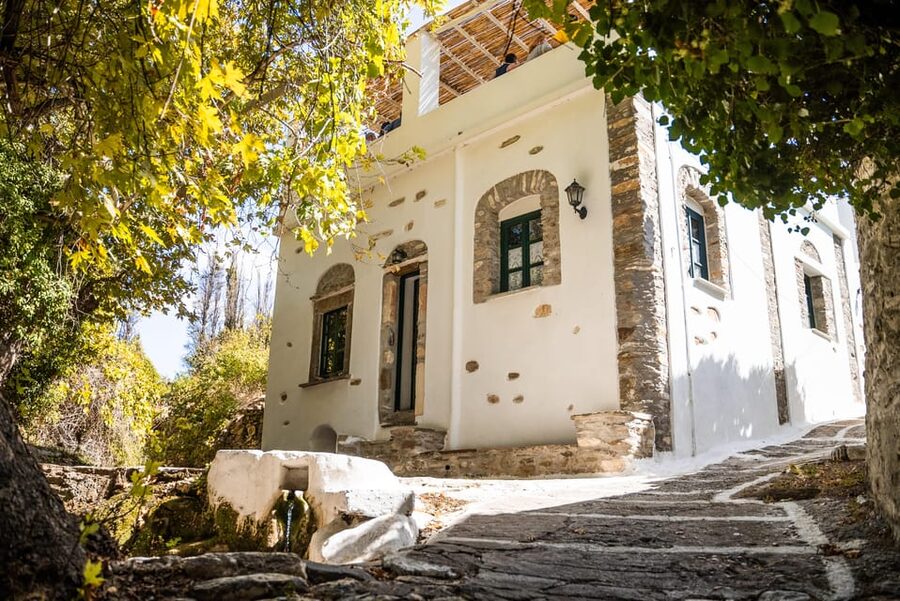
- Cook in Naxos’ only restored watermill: The mill is estimated to be 250 to 300 years old and sits beside a Potamia stream.
- Make four local dishes: Expect handmade seasonal pies, stews, roasts, and appetizers.
- Eat what you prepare: Lunch, water, and homemade wine are included in the $141 price.
- Learn from an English-speaking host: Constantine is named as the chef and host in the available booking feedback.
- Plan around the location: You meet at the front yard of a small chapel, and transport to and from the site is your responsibility.
- Allow most of an afternoon: The class runs for about four to four-and-a-half hours.
Cooking beside Potamia’s old water stream
Potamia means river in Greek, and the name fits. Water runs through this green village in the Naxian hills, where 14 watermills once operated. Most have been taken apart or left in ruins, so the surviving restored mill gives this class a strong sense of place.
That setting matters. You are not simply being shown a few island recipes. You are learning food traditions in a building connected to the work that once supported the village. Flour was milled here, dough was brought in by local people, and bread was baked in the adjoining house.
The restored mill is estimated to be around 250 to 300 years old. That does not mean every part you see is untouched from the 18th century, but it does give the class a genuine link to older Naxos. If you care about local culture, this is more rewarding than a standard cooking lesson in a generic kitchen.
The meeting point is the front yard of a small chapel. Pay close attention to the directions you receive before setting out, since you will need to arrange your own transportation. The class does not include a transfer from your hotel or another part of Naxos.
More Cooking Classes in Greece:
- Athens: Classic Cooking Class with Market Visit and Wine
★ 5.0 · 1,101 reviews - Athens: Food Market Visit and Cooking Class with Wine
★ 4.9 · 1,087 reviews - Greek Cuisine Cooking Class in Santorini with Recipes and Wine
★ 5.0 · 969 reviews
Inside the miller’s house and four ovens
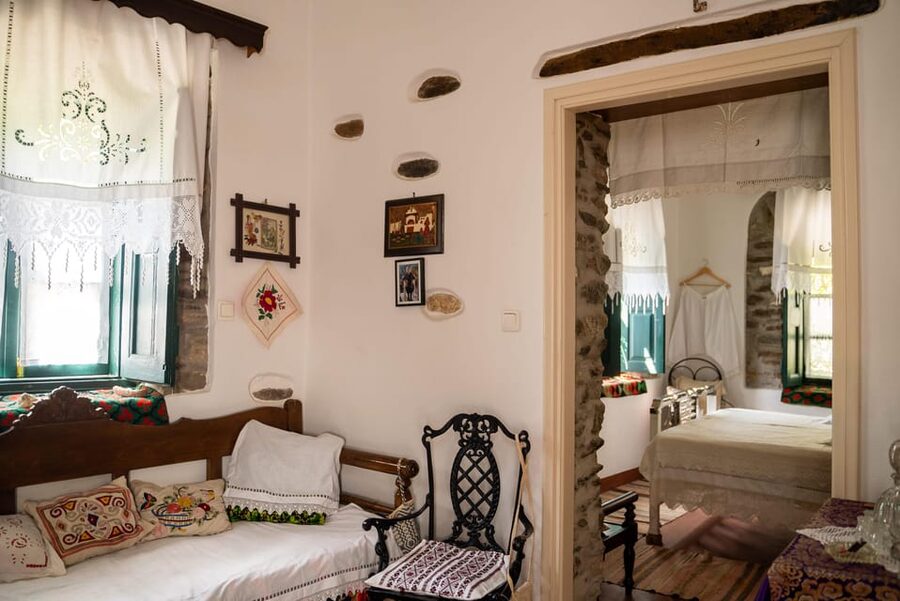
The watermill is joined to the traditional house where the miller once lived. The house also served the wider village. Local people brought their dough there to bake in one of four large wood-fired ovens.
Those ovens help explain why baking and handmade pies are central to the activity. Even if the exact recipes change with the season, the food is tied to the tools and routines of the old house. You get a look at how food production once worked at a village level, rather than hearing only a short explanation of Naxian cuisine.
I would not book this class expecting a museum tour with a long formal presentation. The main purpose is cooking and eating. The old mill and house provide the setting and context, while the hands-on work takes up the heart of the visit.
That balance is a good thing for most people. You spend less time standing around and more time making food. If your main interest is the engineering of watermills, however, ask for more details when you book, since the supplied information focuses on the cooking rather than a technical mill demonstration.
Four dishes, four different ways to eat Naxos
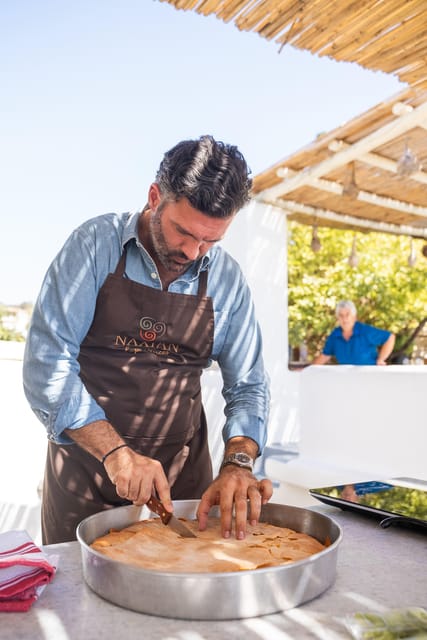
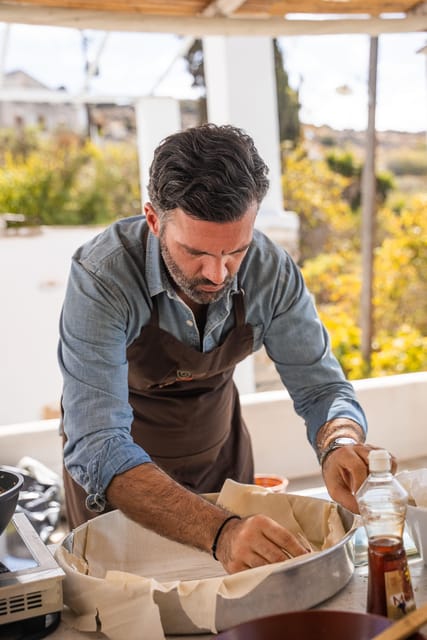
The class teaches you to prepare four local dishes. The food includes handmade pies made with seasonal goods, stews and roasts, and smaller appetizers. This gives you a wider taste of home cooking than a class built around one main course.
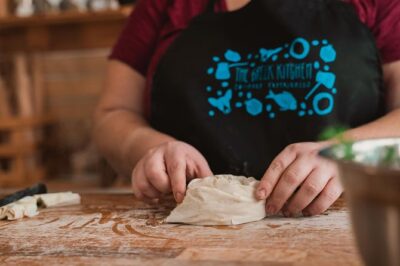
The seasonal pies are likely to be the most hands-on part of the lesson. You work with dough and fillings, and the ingredients can change depending on what is available. That seasonal approach is useful because it shows you how Greek home cooking adjusts to the produce at hand instead of following a fixed restaurant menu.
Stews and roasts bring a different lesson. These dishes are less about quick preparation and more about building a meal that can feed a household. Appetizers round out the table and give you smaller tastes before the main dishes are ready.
The details of the four recipes are not set out in advance, so do not book this expecting a guaranteed menu. That uncertainty is part of the appeal for some people, but it matters if you have strong food preferences or need to plan around specific ingredients.
An available verified booking from Canada praised Constantine as both host and chef, along with the food and the chance to learn about local cuisine. The same booking noted that a copy of the recipes was expected afterward. If taking recipes home matters to you, confirm how and when they will be provided, since the experience information does not formally promise a recipe booklet.
Local ingredients make the lesson more useful
The ingredients are locally sourced, and some are homegrown. This is one of the strongest reasons to choose the class over a more polished cooking studio. You are working with the kind of produce that shapes everyday cooking on Naxos, not ingredients chosen only for easy presentation.
Fresh, seasonal food also changes the way you learn. You see how a recipe depends on what is available, how several simple ingredients can form a full meal, and why Greek cooking often places as much emphasis on good raw materials as on complicated technique.
You should still keep your expectations sensible. The information does not name every ingredient, explain the farm sources, or promise a visit to a garden or market. What it does promise is a cooking session using local produce, with some ingredients grown at home.
That is enough to make the class feel connected to the island. It also means the experience should appeal to cooks who want ideas they can adapt later, rather than people looking only for a photo opportunity.
Same region, a different dish to learn:
- Naxos: Half-Day Cooking Class at Basiliko Family Tavern
★ 5.0 · 887 reviews - Greek Cooking Class in Athens Including Rooftop Dinner with Acropolis View
★ 5.0 · 826 reviews - Greek Small-Group Athens Cooking Class & Dinner
★ 5.0 · 574 reviews - Exclusive Cooking Experience in our Cave Home by Petra Kouzina
★ 5.0 · 572 reviews
Lunch at the table you helped prepare
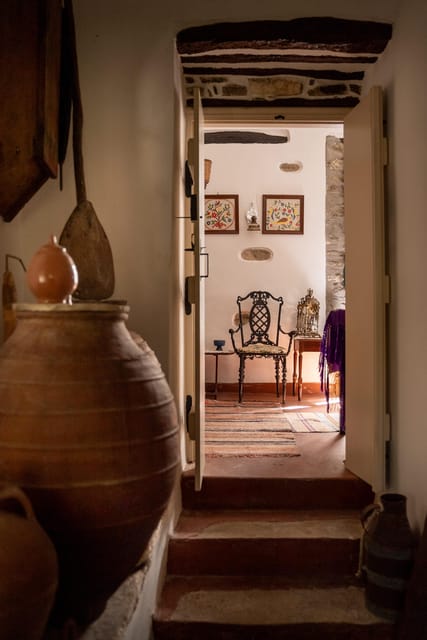
Once the cooking is finished, the table is set and you eat the meal you made. Lunch is included, along with water and homemade wine. This shared meal is not an extra add-on. It is the natural payoff for several hours of preparation.
I like this format because it gives the class a clear rhythm. You start by learning, continue by working, and finish by sitting down to eat. The food has a story because you handled the ingredients and helped prepare the dishes.
The homemade wine adds another local touch, but you should remember that wine is optional for you even though it is included. Water is also provided. If you do not drink alcohol, the meal still includes a nonalcoholic option.
The available booking feedback called the food delicious and described the experience as an excellent way to spend a final night on Naxos. That timing makes sense. A relaxed meal in a historic village setting can be a pleasant farewell to the island, especially after several days of sightseeing.
The class lasts four to four-and-a-half hours, so do not schedule a tight activity immediately afterward. You need time for the cooking, the meal, and the natural pauses that come with a small group experience.
Is $141 a fair price?
At $141 per person, this is not a cheap lunch. It is also more than the price of simply ordering a plate of food at a Naxos taverna. The comparison is not quite fair, though, because your fee covers a cooking class, an English-speaking instructor, the ingredients, lunch, water, wine, and access to a historic watermill setting.
The value depends on what you want from your holiday meal. If you only want to eat local food, spend less at a taverna. If you want an activity that combines food, village heritage, and a meal lasting several hours, the price is easier to justify.
The class is also offered privately or in small groups. A private booking can make the cost feel more worthwhile if you want personal guidance or are celebrating something. A smaller group should also make it easier to follow the cooking and ask questions, though the supplied information does not specify the maximum group size.
Transportation is not included, so add that cost and planning time before you compare the experience with other cooking classes. The meeting point is at the chapel yard, not necessarily at your accommodation.
Who will enjoy this cooking experience?
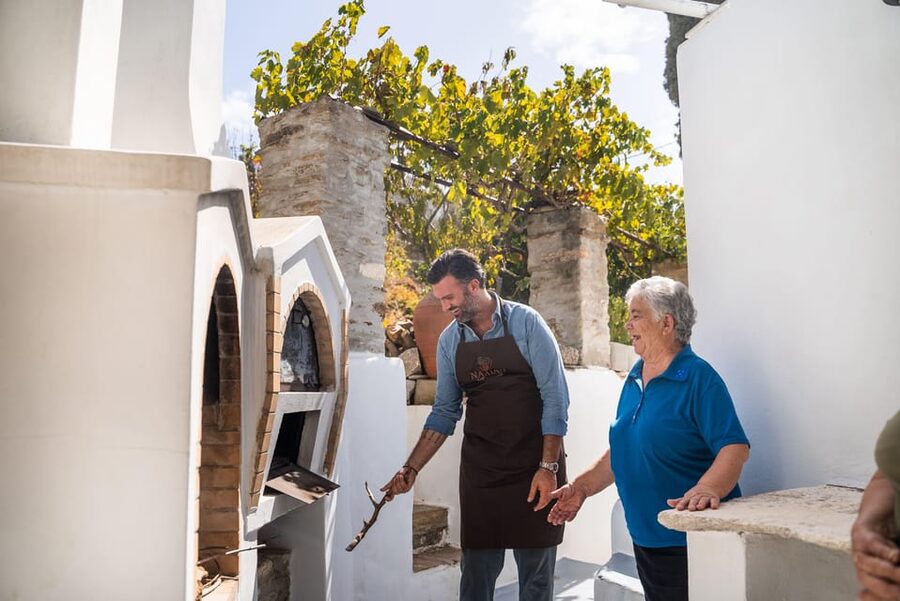
I would recommend it most strongly to people who like food with a sense of place. You will get more from the class if you care about old village buildings, seasonal ingredients, traditional recipes, and the chance to sit down with the food you helped prepare.
It is also a good choice for couples, families with older children, and small groups of friends who want a shared activity. The private or small-group format gives the day a more personal feel than a large demonstration class.
The class may suit first-time cooks, since it covers several familiar categories of Greek food rather than demanding advanced technique. You should not assume, however, that the instructor will adjust every dish to your dietary needs.
People with gluten intolerance should not book this experience. Handmade pies and other flour-based cooking are part of the class, and the activity is specifically marked as unsuitable for gluten intolerance. No other dietary information is provided, so ask before booking if you have another serious food restriction.
English instruction and the host
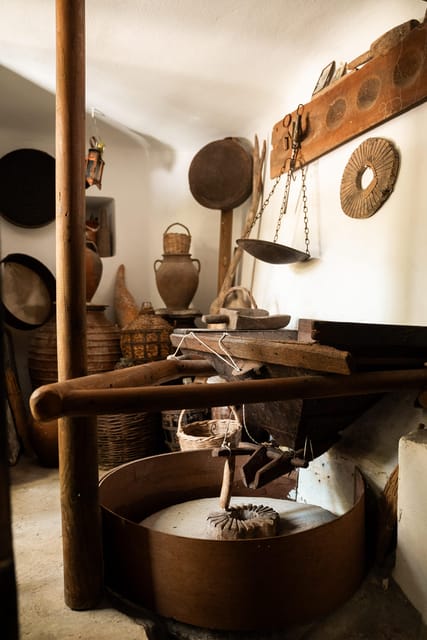
The class is taught in English. Constantine is identified as the host and chef in the available booking feedback, and was praised for teaching about local cuisine as well as preparing good food.
That combination matters. A cooking class can be technically well organized but still feel flat if the instructor only gives instructions. Here, the useful promise is that you learn about the food in its local setting, with an English-speaking person guiding the work.
The experience is not advertised in several languages. If English is not comfortable for you, confirm that instruction will be clear enough before booking. The listed language is English.
You should also remember that the class is practical. Expect to participate, handle ingredients, and help prepare the meal. It is not a passive food tasting.
Timing, transport, and booking choices
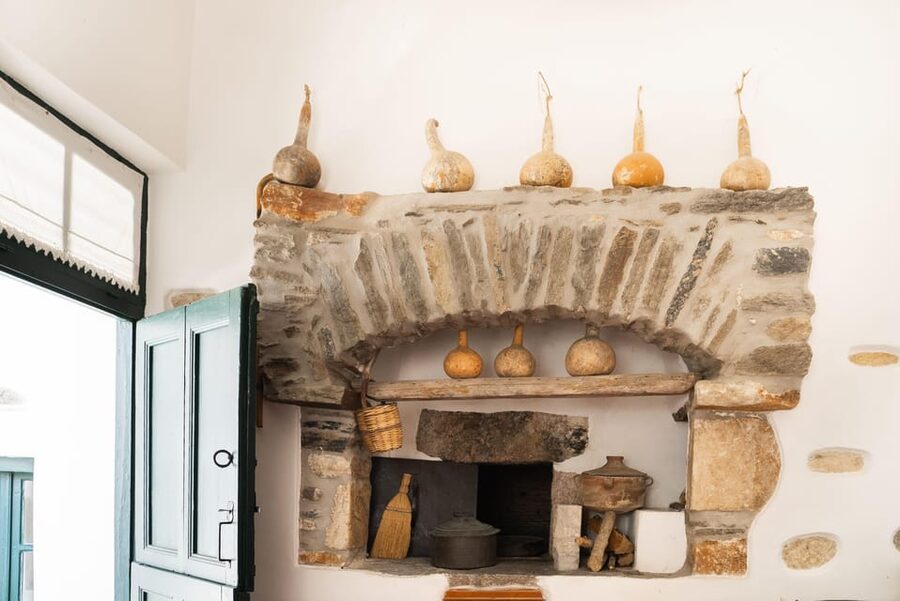
The activity takes four to four-and-a-half hours, with starting times based on availability. Check the date carefully and leave room around the class. A meal and a cooking session can take longer than a quick scheduled attraction, especially in a private or small group.
You meet at the front yard of the small chapel. Since transportation is excluded, arrange your own way to the meeting point and allow extra time to find it. The information does not say that hotel pickup, a return transfer, or parking is included.
You can cancel up to 24 hours in advance for a full refund. You can also reserve now and pay later, which helps if your Naxos plans are still changing. Those policies reduce some booking risk, but they do not remove the need to confirm the meeting details and dietary suitability.
The activity has a current rating of 5 out of 5 from two published bookings. That is encouraging, especially since one booking singled out Constantine, the food, and the local cooking lesson. It is still a small number of ratings, so I would treat it as a positive sign rather than a guarantee that every class will feel identical.
Should you book the 18th century watermill cooking experience?
Book it if you want a hands-on meal in a genuine village setting, and if the story behind the food matters as much as the food itself. The restored watermill, the old miller’s house, the seasonal ingredients, and the four-dish format give the class more substance than a short recipe demonstration.
The $141 price makes sense for a four-hour activity that includes lunch, wine, water, instruction, and a historic setting. It makes less sense if you only want a budget meal or if transport to Potamia is difficult.
Before paying, confirm your route to the chapel yard, check the available start time, and make sure the menu works for you. If you can handle gluten and enjoy cooking with other people, this is a strong choice for a slower, food-focused day on Naxos. If you need a gluten-free menu or prefer a quick tasting, choose something else.
FAQ
Where does the cooking experience take place?
It takes place at a restored 18th century watermill in Potamia on Naxos, beside a water stream. The adjoining traditional house was once the miller’s home and includes four large wood-fired ovens.
How long does the experience last?
The cooking experience lasts about four to four-and-a-half hours.
What dishes will I prepare?
You will prepare four local dishes. The food includes handmade pies with seasonal ingredients, stews and roasts, and appetizers. The exact menu is not specified.
Is lunch included?
Yes. Lunch is included, along with water and homemade wine.
Is transportation included?
No. Transportation to and from the site is not included. The meeting point is at the front yard of a small chapel.
What language is the class taught in?
The class is taught in English.
Who leads the cooking class?
Constantine is identified as the host and chef in the available booking information.
Is the experience suitable for someone with gluten intolerance?
No. The experience is specifically listed as unsuitable for people with gluten intolerance.
Can I cancel the booking?
Yes. You can cancel up to 24 hours in advance for a full refund. You can also reserve now and pay later.
Newest classes around Greece
- Authentic and Traditional Cooking Class in Chania Crete★ 5.0 · 5 reviews
- Chania Cooking Class in Crete with rustic, delicious and homely Cretan food!★ 4.5 · 14 reviews
- Private Cooking Class – A Culinary Journey in Argostoli★ 5.0 · 2 reviews
- Greek Cooking Class with Acropolis View★ 5.0 · 76 reviews
- Private Walking Meze Cooking Course★ 5.0 · 6 reviews
- Cook with Katerina: Authentic Greek Home Cooking Class in Athens★ 5.0 · 15 reviews
- Private Greek Cooking Class in Athens-Learn to Cook with Angelina★ 5.0 · 3 reviews
- Hands On Greek Cooking Classes in Athens★ 5.0 · 7 reviews
Greece Cooking Classes, compared.
Classic Cooking Class with Market Visit and Wine
Read our review →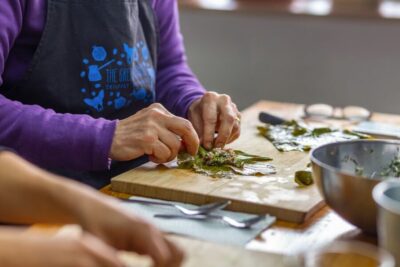
Food Market Visit and Cooking Class with Wine
Read our review →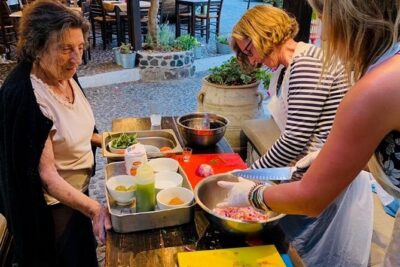
Greek Cuisine Cooking Class in Santorini with Recipes and Wine
Read our review →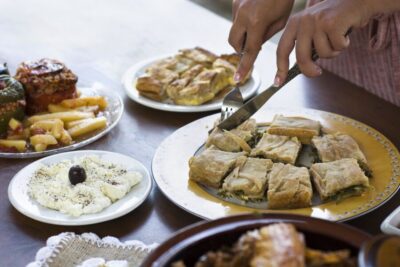
Naxos: Half-Day Cooking Class at Basiliko Family Tavern
Read our review →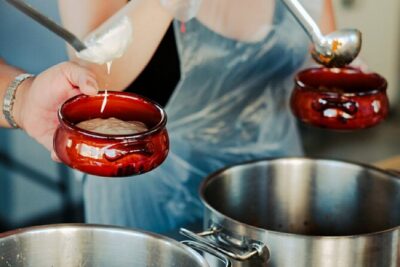
Greek Cooking Class in Athens Including Rooftop Dinner with Acropolis View
Read our review →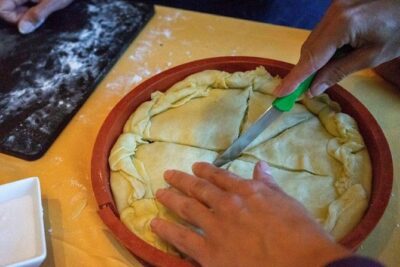
Greek Small-Group Athens Cooking Class & Dinner
Read our review →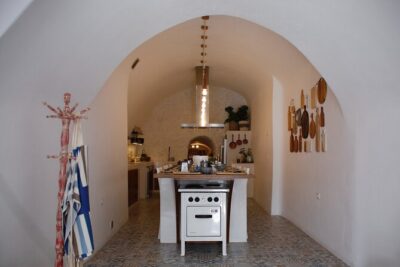
Exclusive Cooking Experience in our Cave Home by Petra Kouzina
Read our review →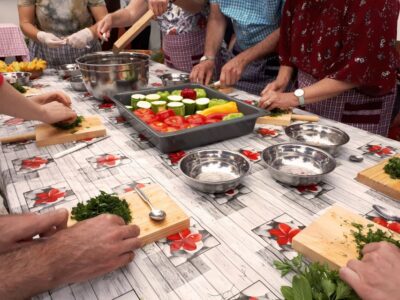
Chania: Authentic Cooking Class in the White Mountains
Read our review →Browse the lists this tour appears in