
Review · LIMA COOKING CLASSES
#1 Rated Cooking Classes with Local Market Tour & Pickup
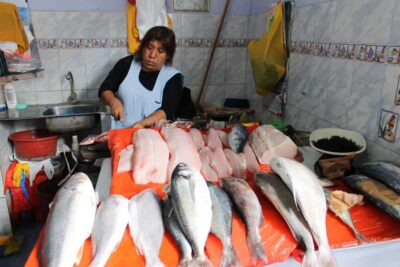
Lima’s best food lesson begins before you reach the kitchen. At Mercado nro 1 de Surquillo, you’ll see the produce, meats, herbs, fruits, and cheeses that give Peruvian cooking its character, then use some of those ingredients in class. The market visit makes the cooking feel connected to daily life, not just a staged recipe lesson.
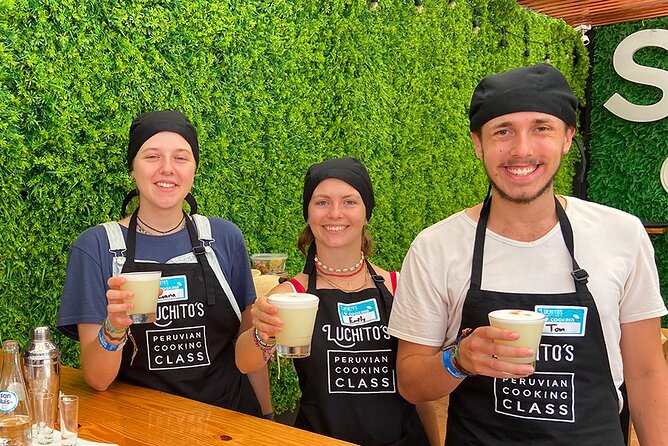
I like two things here: the small group limit of 12, which gives you room to ask questions, and the hands-on menu built around ceviche and causa. Guides including Camila, Dasha, and Lucho bring different strengths, from fruit tasting and market explanation to cooking and bartending. The Pisco cocktail and recipe certificate add a nice finish.
The main consideration is timing. The advertised duration is only about one hour, so this is a compact introduction rather than a long culinary workshop. Confirm the schedule and meeting details carefully, especially if you want a relaxed market stroll and plenty of time at the stove.
Key points at a glance
- Mercado nro 1 de Surquillo: See where local ingredients are sold before using them in class.
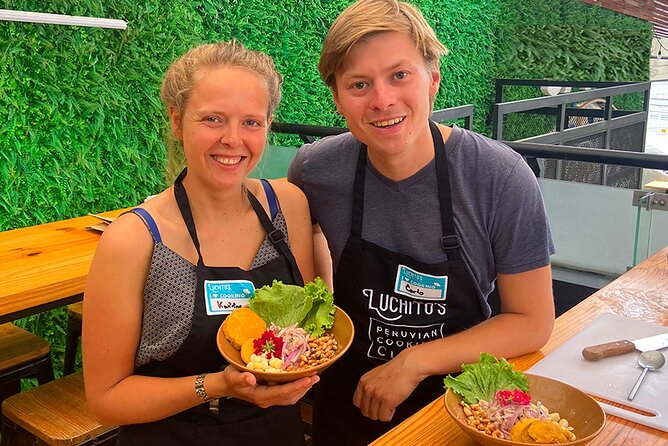
- Ceviche and causa: Learn two well-known Peruvian dishes with step-by-step guidance.
- Fruit and ingredient tasting: Sample produce, cheese, and other market foods during the visit.
- Local guides and chefs: Camila, Dasha, and Lucho have led different parts of the experience.
- Small class size: A maximum of 12 people keeps the lesson more personal.
- Included food and drink: You receive a two-course meal, Pisco cocktail, bottled water, recipes, and a certificate.
Starting at Surquillo Market at 12:30 pm
The tour begins at 12:30 pm, with transportation included. Your first stop is Mercado nro 1 de Surquillo, one of Lima’s best-known places to see Peruvian food in an everyday setting.
This matters because Peruvian cuisine is not built around a short list of export-famous ingredients. The cooking depends on contrasts: fresh fish with lime, creamy potatoes with bright sauces, herbs with heat, and fruit with flavors you may not recognize at first glance. A market guide can give those ingredients a name and a purpose before you try to cook with them.
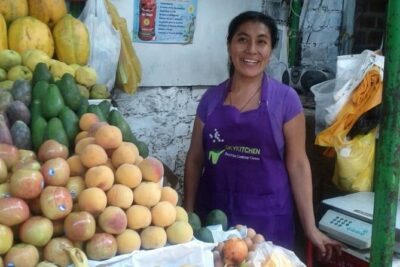
You’ll have a guided walk inside the market rather than simply being dropped off to browse on your own. The focus is on the range of goods for sale, including fruits, vegetables, meats, herbs, and other foods. The exact route and vendors can vary, but the market visit gives you a useful starting point for understanding the food on your plate later.
The guides named in the experience include Camila, Dasha, and Lucho. Several portions of the class have been led by different members of that team, so your guide and chef may not always be the same person. Camila has handled both market walks and cooking instruction, while Dasha has guided fruit tastings and also worked as a chef. Lucho has been praised for explaining both Peruvian dishes and their cultural background.
More Cooking Classes with a Market Tour in Peru:
- Cusco: Peruvian Cooking Class, Cocktails & Local Market Tour
★ 4.9 · 512 reviews - Cooking class and market tour with a local chef
★ 5.0 · 186 reviews - Market Tour, Tasting of 35 Fruits, and 4-Course Peruvian Cooking Class in Lima
★ 5.0 · 86 reviews
Why the market visit earns its place
Many cooking classes begin with bowls of measured ingredients. That is efficient, but it can make the food feel detached from the place you are visiting. Here, the market comes first. You can see the produce in its normal setting, ask what it is, and sample some items before the recipes begin.
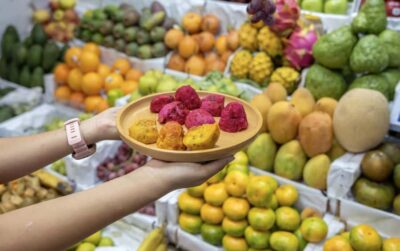
The fruit tasting is one of the more distinctive details. You may try fruits that are new to you, along with cheese or other market products. That small tasting session gives the guide a chance to explain flavors in practical terms. If you are unsure what to order at a Peruvian restaurant later, this part can help you recognize ingredients and make better choices.
I also like the chance to compare the market’s raw ingredients with the finished dishes. Fresh produce is not just decoration for the lesson. It becomes a way to connect Peru’s agricultural range with the food you prepare.
Still, keep your expectations sensible. This is a guided market visit, not a dedicated shopping tour or a multi-hour food crawl. You should see and taste a useful selection, but the main purpose is to prepare you for the cooking class.
From market samples to the cooking station
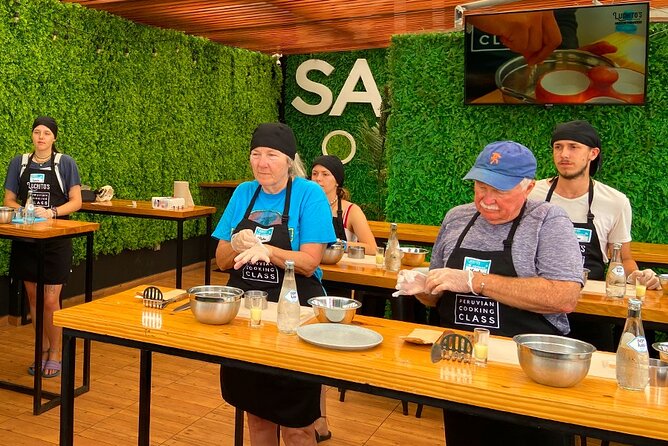
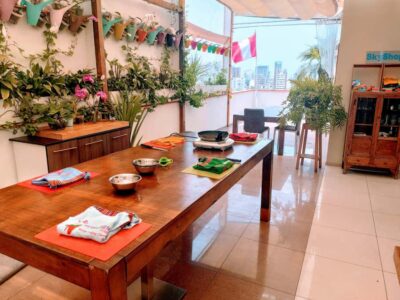
After the market visit, you continue to the cooking school or class setting. The supplied details promise a two-course meal, a Pisco cocktail, and bottled water. The class is designed to be participatory, so you should expect to prepare the dishes yourself with guidance rather than simply watch a chef work.
Ceviche is a natural choice for a Lima cooking class. It is closely tied to the city’s coastal food culture and requires attention to freshness, seasoning, texture, and timing. Lucho has taught the dish as a fun, hands-on recipe, while Camila has guided participants through recipes step by step.
Causa gives the class a useful contrast. It is a potato-based Peruvian dish, and preparing it shows a different side of the country’s cooking from the sharp, citrus-led character of ceviche. Making both dishes lets you work with contrasting textures and flavors in the same session.
The recipes are explained clearly, according to the information provided about the class. That is useful for beginners, since you can focus on technique instead of trying to copy a fast demonstration. It also suits experienced home cooks who want ideas they can repeat after returning home.
The exact preparation sequence is not specified, so I would not book this expecting a fixed professional-school syllabus. The value lies in guided participation, local ingredients, and the chance to eat what you make.
Camila, Dasha, and Lucho bring different strengths
The experience is not built around one single named instructor. Camila, Dasha, and Lucho have all been associated with different parts of the activity, and that is worth knowing before you reserve.
Camila has led market tours and cooking classes. She has been described as friendly, clear, and personable, with particular attention to fruits, vegetables, and the recipes for causa and ceviche. If she leads your market visit, you can expect the ingredient discussion and kitchen lesson to feel closely linked.
Dasha has guided market visits with a strong focus on fruit and cheese tasting. She has also worked as the chef for a class and has been praised for friendly instruction and good energy. One useful detail is that she has bartending skills as well, which may add some flair when the Pisco cocktail is prepared.
Lucho brings an interest in Peruvian culinary traditions and history. He has taught ceviche and explained the background of the dishes as well as the cooking steps.
Staff assignments can change, so treat these names as possible instructors rather than a guarantee. The broader advantage is that the team appears able to cover the full experience, from market orientation to cooking and drinks.
More Cooking Classes in Peru:
- Miraflores: Amazing Peruvian Cooking Class Ceviche Seafood and Pisco Sour
★ 4.9 · 57 reviews - Cook with Maido’s creative chef and chef de cuisine
★ 5.0 · 53 reviews - Cusco: Peruvian Cooking Class & Market Tour
★ 4.9 · 19 reviews - Lima: Cooking Workshop and Water Circuit Tour
★ 5.0 · 16 reviews
What the two-course meal means for value
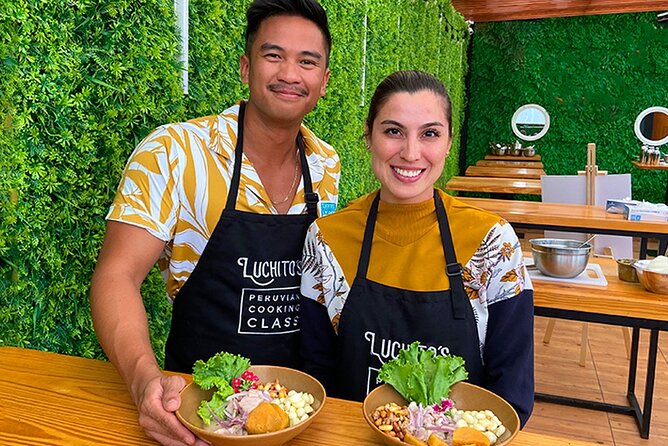
At $66.75 per person, this is not the cheapest way to eat lunch in Lima. You could order a filling meal for less, especially at a local restaurant. The price makes more sense if you want instruction, transportation, market access, a drink, and the chance to prepare the food yourself.
The package includes:
- Transportation
- A professional guide for the market visit
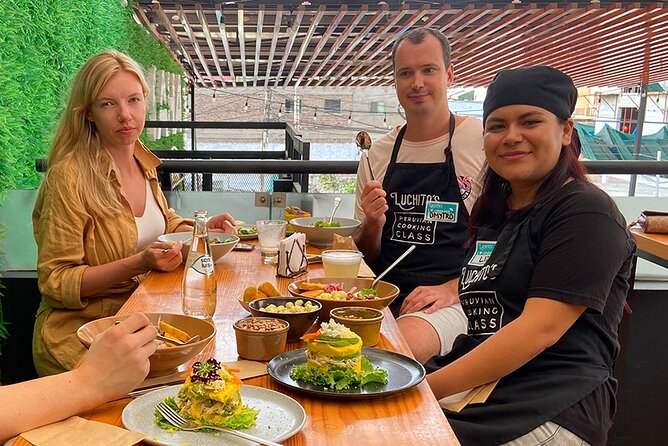
- A two-course meal
- A Pisco cocktail
- Bottled water
- A certificate and recipes
That is a solid bundle for a short, food-focused activity. You are paying for more than the final plate. You are also paying for the market explanation, ingredient tasting, kitchen guidance, and the social part of learning in a small class.
The certificate is a simple souvenir, but the recipes are more useful. If you enjoy the dishes, having the instructions at home gives the experience some life after Lima. The Pisco cocktail is another welcome touch, since it introduces a well-known Peruvian drink without requiring you to arrange a separate tasting.
Additional drinks are not included, and tips are also outside the listed price. Bring a little extra if you expect to order anything beyond the included water and cocktail.
A compact class, not an all-day food school
The listed duration is approximately one hour. That is the biggest point to clarify before booking. A market walk, tasting, cooking lesson, meal, cocktail, and certificate can make for a brisk schedule at that length.
For you, the short format may be ideal. It fits neatly into an afternoon and works well if you have limited time in Lima. Families, first-time visitors, and people who want a quick introduction to Peruvian food may prefer this structure to a long class with several recipes.
If you cook slowly, want extensive questions answered, or hope to spend a long time browsing the market, the time limit may feel tight. I would check the exact operating schedule at booking and avoid placing an important appointment immediately afterward.
The maximum group size is 12. That is small enough for a more personal feel, though the class will not necessarily be private. If you want a private session, the provided information does not promise one.
Who will get the most from this experience
This class suits you if food is part of the reason you came to Lima, but you do not want a full-day culinary program. It is especially useful for first-time visitors who want a quick introduction to local ingredients and two recognizable Peruvian dishes.
It also works for friends and couples. A group of five has taken part together, and the format encourages people to cook, taste, and compare results. The friendly tone described by the guides should help if you are looking for a social activity rather than a formal lesson.
Families and mixed-ability groups may also find it approachable, since most people can participate and the recipes are taught step by step. The provided information does not list special child pricing or a child-specific menu, so check those points if you are traveling with young children.
This may be less suitable if you are seeking advanced cooking skills, a long market shopping session, or a broad survey of many dishes. You will focus on a small number of recipes, not an entire course in Peruvian cuisine.
Practical details before you reserve
Confirmation is provided when you book. The meeting time is 12:30 pm, and transportation is included. The location is near public transportation, which gives you another way to reach the starting point if needed.
The activity allows most people to participate. No special accessibility details are provided, so contact the operator if you have mobility, dietary, or other practical needs that could affect the market visit or cooking session.
Free cancellation is available if you cancel at least 24 hours before the start time. Cancellations made inside that window are not refundable, and late changes are not accepted. The cut-off follows Lima’s local time.
Since the activity is often reserved about 35 days ahead, booking early is sensible if your Lima dates are fixed. The small capacity of 12 can make popular times unavailable, especially during busy travel periods.
Final verdict: book it for a focused taste of Lima
I would book this class if you want a short, social introduction to Peruvian food that begins in a real market and ends with food you prepare yourself. The combination of Surquillo Market, fruit tasting, ceviche, causa, and a Pisco cocktail gives you more context than a stand-alone cooking demonstration.
The $66.75 price is fair when you value transportation, instruction, the included meal, and recipes. It is less attractive if your only goal is an inexpensive lunch or if you want several hours of advanced cooking practice.
Check the one-hour duration before committing, and keep some flexibility around the 12:30 pm start. If that compact format works for your schedule, this is a practical way to meet local guides such as Camila, Dasha, or Lucho, learn how Peruvian ingredients are used, and take home recipes you can actually try again.
FAQ
Where does the experience take place?
The market portion takes place at Mercado nro 1 de Surquillo in Lima. The cooking class follows at the cooking school or class location.
What time does the activity start?
The start time is 12:30 pm.
How long does the experience last?
The listed duration is approximately one hour.
What food will I prepare?
The class includes a two-course meal, with ceviche and causa highlighted in the available experience details.
Is transportation included?
Yes. Transportation is included, along with a professional guide for the market visit.
Can I cancel for a full refund?
Yes, if you cancel at least 24 hours before the experience start time. Cancellations made less than 24 hours before the start are not refunded.
Newest classes around Peru
- Lima: Market Tour and Cooking Class with Pisco Sour★ 5.0 · 3 reviews
- Lima: Cooking Workshop and Water Circuit Tour★ 5.0 · 16 reviews
- Lima: Peruvian cooking class and tour of Surquillo market★ 5.0 · 2 reviews
- Lima: Market Tour, 35 Fruits Tasting & Cooking Class★ 5.0 · 3 reviews
- Lima: 4-Course Peruvian Cooking Class in Miraflores★ 5.0 · 4 reviews
- Lima : Cooking Class – A Peruvian Culinary exploration★ 5.0 · 2 reviews
- Lima: Demo Cooking Class with Lunch at Cala Restaurant★ 4.1 · 4 reviews
- Cusco: Peruvian Cooking Class★ 5.0 · 2 reviews
Lima Cooking Classes, compared.
Market Tour, Tasting of 35 Fruits, and 4-Course Peruvian Cooking Class in Lima
Read our review →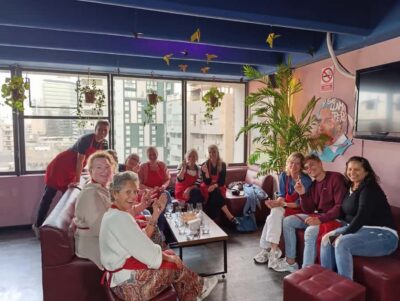
Miraflores: Amazing Peruvian Cooking Class Ceviche Seafood and Pisco Sour
Read our review →
Cook with Maido’s creative chef and chef de cuisine
Read our review →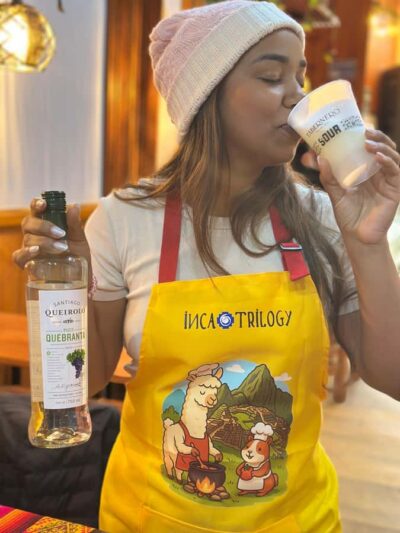
Browse the lists this tour appears in