
Review · OAXACA CITY COOKING CLASSES
Oaxaca de Juarez: Traditional Oaxacan Cooking Class
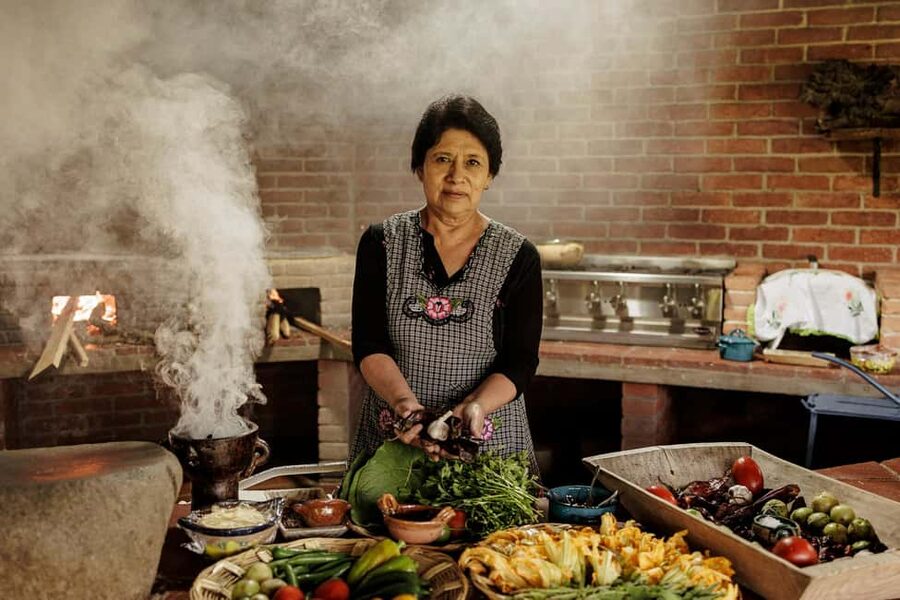
Oaxaca’s best cooking lessons do not begin with a recipe card. They begin with a smoke kitchen, a garden of herbs and chiles, and a metate worn smooth by use. At Cocina Oaxaqueña Sonia, you travel outside the city to a mountain village and help turn simple ingredients into tortillas, tetelas, memelas, tlayudas, sauces, and mole.
I like two things right away: the hands-on work with traditional tools, and the family welcome led by Baldo, Sonia’s son. I also like that cheese, quesillo, and fresh produce are part of the day, rather than decorative details. The one consideration is clear: five hours around smoke, fire, rich food, mezcal, and unfamiliar snacks can feel like a lot if you prefer a short or gentle tasting.
Key points to know before you book
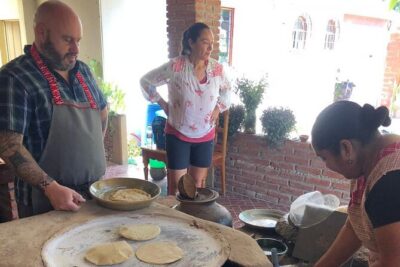
- Cook in a real smoke kitchen: Use comals, metates, molcajetes, firewood, and charcoal embers instead of watching a polished demonstration.
- Meet Baldo at Santo Domingo Temple: Air-conditioned transport carries you from central Oaxaca to a village outside the city and back.
- Make Oaxaca’s essential foods: Prepare handmade tortillas, tetelas, memelas, tlayudas, seasonal sauces, and one of the seven traditional moles.
- Try local snacks and drinks: The tasting includes mezcal, fresh drinks, chocolate, coffee, dessert, and Oaxacan specialties such as gusanos, chicatanas, and chapulines.
- Expect a family-style welcome: Sonia, Baldo, Teresa, Esperanza, and the rest of the team make the class feel personal and social.
- Plan for a small group: The class is limited to 10 people, with English and Spanish instruction and advance options for vegan and vegetarian cooking.
From Santo Domingo Temple to the mountain village
Your day begins at the main entrance of Santo Domingo Church, one of the easiest central meeting points in Oaxaca. Baldo, Sonia’s son, meets you there. You receive his clothing details on the day of the experience, so keep your phone handy and arrive ready to identify the guide.
The included van ride matters more than it might seem. You do not need to arrange a taxi to a rural meeting point, and the air-conditioned vehicle has comfortable seats. Pickup and drop-off at Santo Domingo also make this a practical choice if you are staying in central Oaxaca.
The class takes place in a village outside the city, surrounded by mountains. That setting changes the feel of the day. You are not simply sitting in an urban studio making a few dishes. You are being taken to a home-style cooking space where the tools, ingredients, and pace connect more closely to daily Oaxacan food.
The exact village route and timing are not specified, so you should check the available start times before booking. The activity lasts five hours, including transportation and the meal, making it a substantial half-day outing.
More Cooking Classes in Mexico:
- Cabo San Lucas Mexican Cooking Class Experience and Local Markets
★ 5.0 · 915 reviews - Puerto Vallarta Cooking Class Experience with Market Tour
★ 5.0 · 698 reviews - Mexican Cooking from Scratch in a Local Home in Tulum
★ 5.0 · 585 reviews
Start with the ingredients in an Oaxacan home
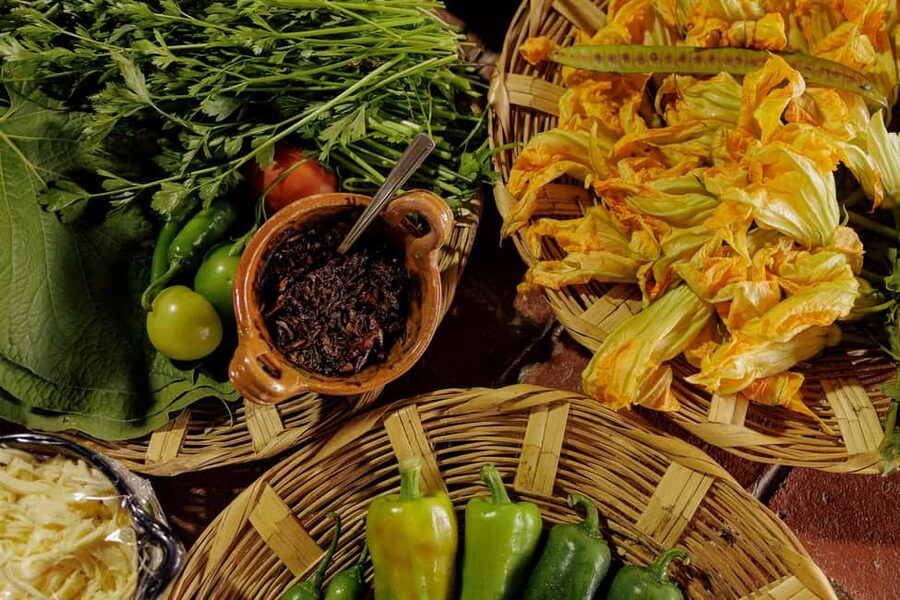
The first part introduces the ingredients commonly found in Oaxacan kitchens. This gives you useful context before the cooking begins. Instead of treating chiles, herbs, cheese, and corn as anonymous items, you see how they fit into the food you are about to prepare.
A garden provides organic herbs and chiles for the class. That is a practical advantage because you can connect the plant to the finished sauce, rather than learning only a list of ingredients from a printed recipe.
The hosts also make quesillo and fresh cheese every day. Those details tell you something about the character of the class: dairy is not merely bought, unwrapped, and placed on a plate. It is part of the kitchen’s regular work.
You should expect to participate from the start. Cutting, grinding, mixing, shaping, and tasting are all part of the process. If you prefer a cooking show where the instructor does most of the work, this may feel demanding. If you want to learn by using your hands, it is a strong match.
Corn, comals, and the work of the metate
Oaxacan cooking makes more sense when you understand corn preparation and the tools used to transform it. Here, you learn how tortillas are made by hand, then use the dough for several different dishes.
You make tortillas, tetelas, memelas, and tlayudas. Each one shows a different way to shape and cook corn dough, and the repetition helps you get a feel for the texture. You are not just eating a famous dish. You are handling the base ingredient yourself.
The comal is central to the cooking. It provides the hot surface for tortillas and other preparations, while firewood and charcoal embers add the heat and smoke that define the kitchen. That gives the class a stronger sense of place than an indoor electric cooktop would.
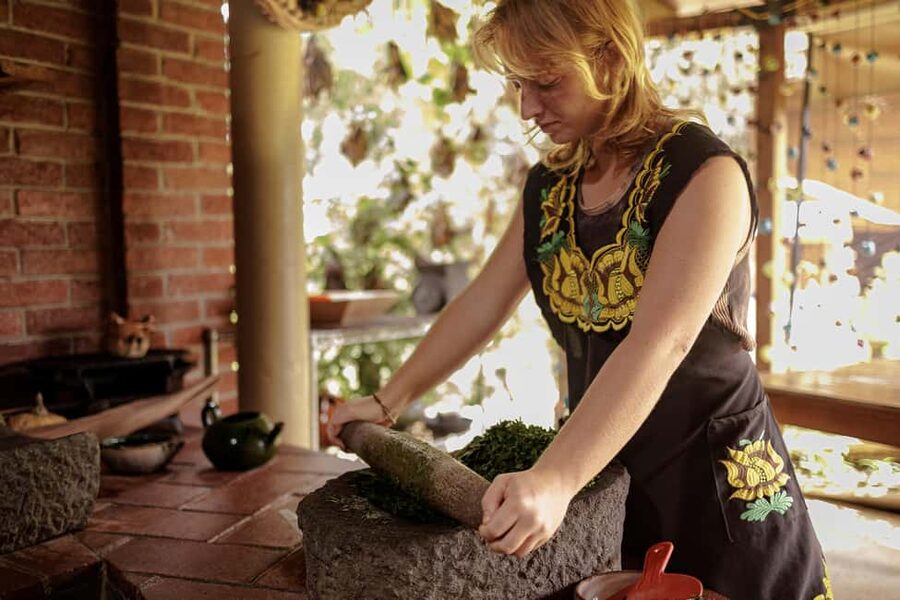
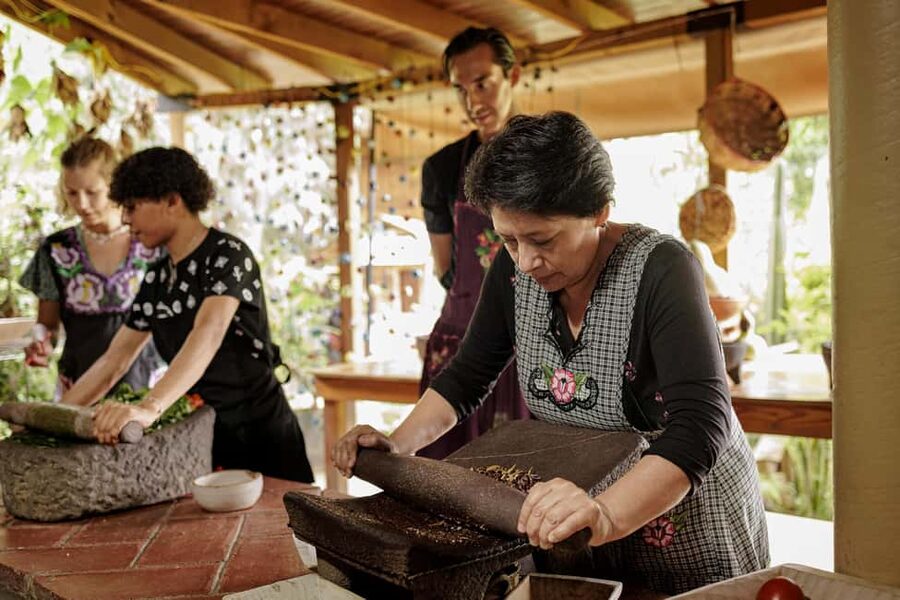
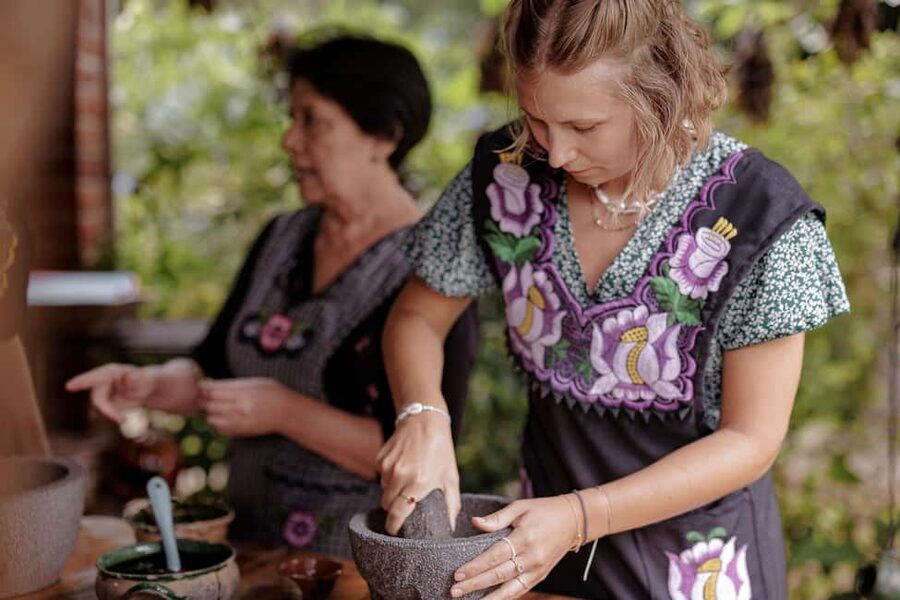
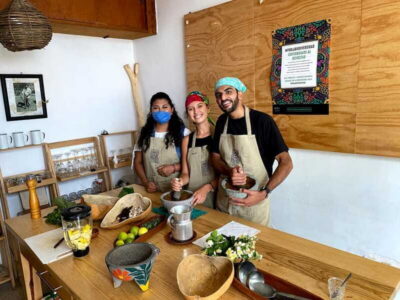
You also use a metate and molcajete. The metate is especially important for grinding the mole, and the molcajete helps turn ingredients into sauces. These tools require more effort than a blender, but that effort is part of the lesson. You learn why traditional cooking takes time and why texture can change when ingredients are ground by hand.
Wear comfortable shoes, as requested by the hosts. The setting is a working kitchen, not a formal dining room, and you will be moving through several stages of preparation.
Making sauces and one of Oaxaca’s seven moles
Sauces are prepared with seasonal ingredients and cooked on the comal, over firewood, and on charcoal embers. The method gives you a direct look at how heat affects chiles and other ingredients before they are ground.
The class includes one of Oaxaca’s seven moles, prepared with the metate. The specific mole may depend on the day, but black mole is also included as a dish to try. That distinction is useful: you may help prepare one mole and still taste the famous black version during the meal.
Black mole is not a quick sauce. It represents the layered, patient side of Oaxacan cooking, and tasting it after working with the ingredients gives you a better sense of the labor involved. The class does not reduce mole to a vague symbol of local cuisine. It puts the grinding and cooking process in front of you.
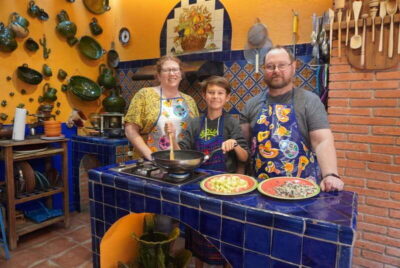
The cooking is collaborative. You might be cutting ingredients while someone else works at the metate, then switch tasks. The group size is limited to 10 participants, which should give the instructor room to guide the work without turning the class into a crowded assembly line.
English and Spanish instruction is available. Bilingual teaching is included, so you can ask questions and follow the process in the language that suits you.
Same region, a different dish to learn:
- Authentic Mexican Legacy Cooking Class in Cabo San Lucas
★ 5.0 · 530 reviews - Mexican Cooking Class with Food Market Visit in Mexico City
★ 5.0 · 506 reviews - Authentic Mayan Cooking Class in Cozumel
★ 5.0 · 344 reviews - Flavors of Oaxaca: Cooking Class with No Set Menu and Local Market Tour
★ 4.5 · 333 reviews
Mezcal, chocolate, and Oaxacan snacks
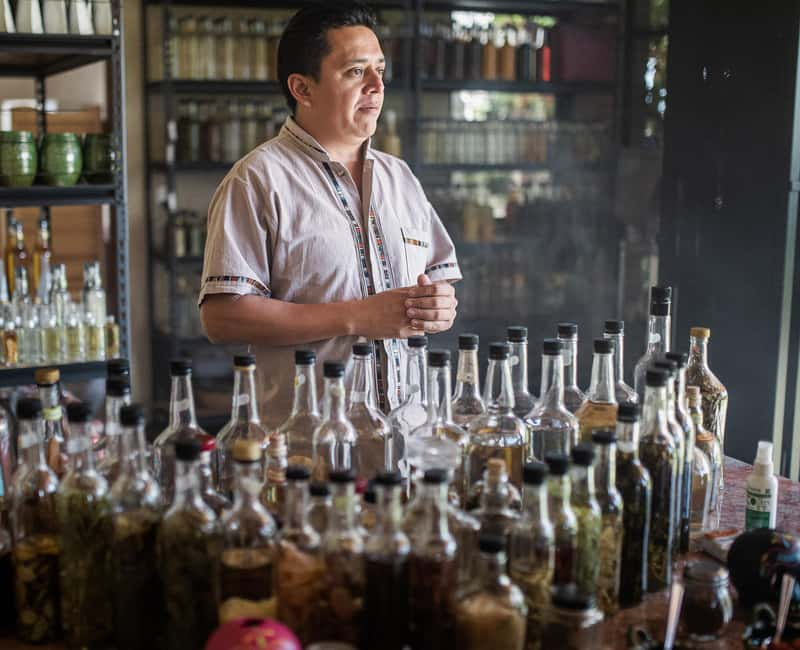
Baldo leads the mezcal portion of the experience. He shares his knowledge about mezcal and offers a tasting, with drinks available throughout the day. The included refreshments also cover fresh water, soft drinks, and juices.
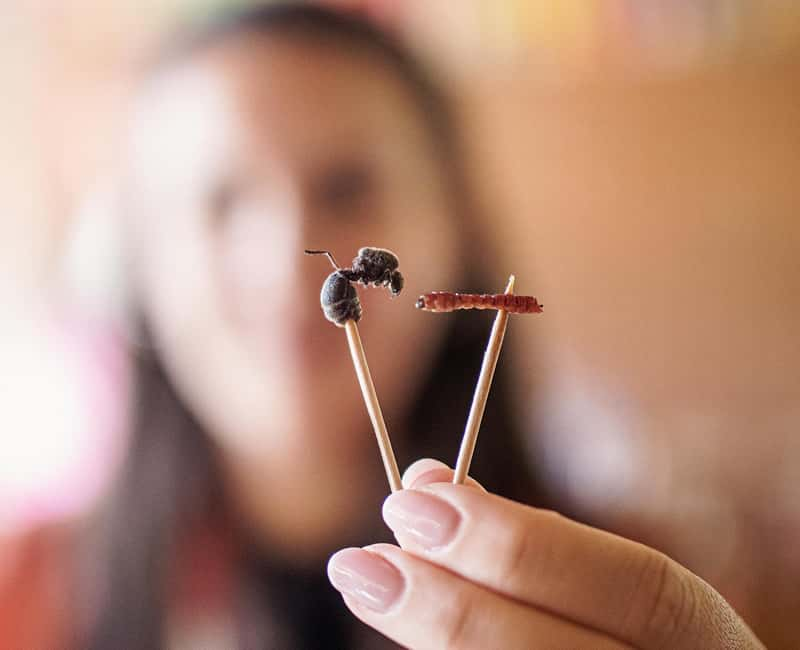
The snack list is distinctly Oaxacan: gusanos, chicatanas, and chapulines. These are not required simply because they are on the table, but they are part of the traditional food experience described by the hosts. If you are curious about ingredients outside your usual diet, this is a chance to try them in a social setting.
You should think about the mezcal and tasting schedule when planning your day. The experience includes unlimited food and drinks, and the description invites you to sample as much mezcal as you like. Eat steadily, use the nonalcoholic drinks, and do not plan another demanding activity immediately afterward.
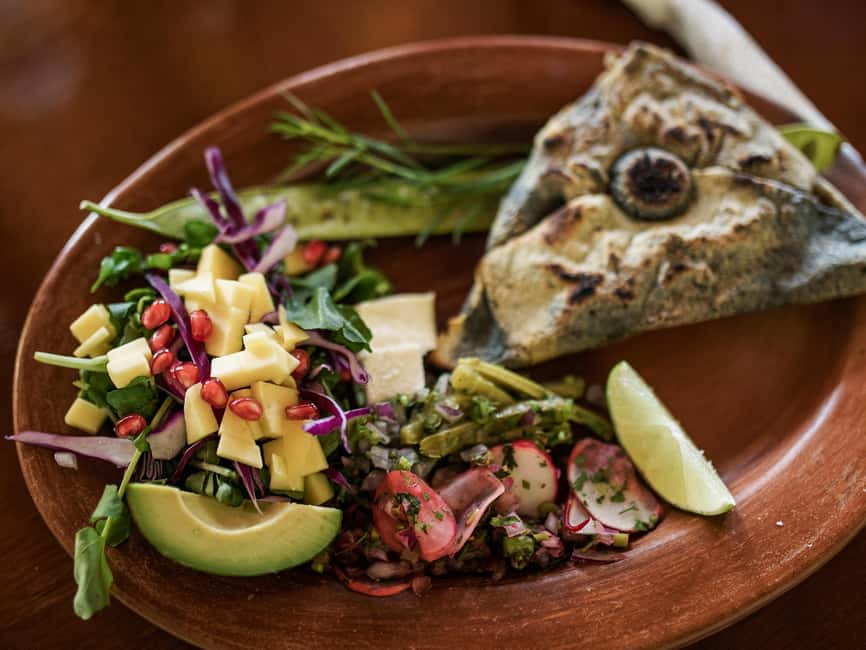
The meal continues with black mole, water chocolate, pot coffee, ice cream, and cake. Water chocolate is a particularly good detail because it points to an everyday Oaxacan drink rather than only the restaurant version of the region’s food.
Dessert is included at the end. Since the class already includes tortillas, sauces, mole, cheese, snacks, and drinks, come hungry. The hosts specifically advise arriving with an empty stomach, and that is sound advice here.
A family kitchen rather than a formal demonstration
The human side of this class is a major reason to book it. Baldo handles the meeting and mezcal presentation, while Sonia, Teresa, Esperanza, and the rest of the team take part in the welcome and cooking.
The atmosphere is intended to feel like entering an Oaxacan home. You are welcomed, fed, taught, and included in the work. That does not mean the class is passive or polished into a hotel activity. You should expect a warm, active session where everyone contributes.
The strongest praise around the experience centers on the kindness of the team and the feeling of being treated like family. That fits the format: the food is made together, eaten together, and explained by people connected to the kitchen.
The five-hour length gives the group time to talk and cook without rushing through every dish. It also means you should choose this over a shorter class only if you want the full sequence, from ingredients and tools to meal and dessert.
What the $87 price includes
At $87 per person, the class costs more than a simple market visit or a basic cooking demonstration. The value comes from the combination of transport, instruction, a rural setting, a full meal, drinks, mezcal, dessert, and a digital recipe book.
You are also getting a small group capped at 10 participants. That matters when you are working with a metate or shaping dough. A large group can turn hands-on cooking into a brief turn at the table, while a smaller group gives you more chance to participate.
Included transportation adds practical value. The van is air-conditioned, has comfortable seats, and takes you from Santo Domingo Temple to the village and back. Passenger insurance is included as well.
Aprons are provided, and a child seat is available in the van when required. Those details make the class easier for families, though the activity is not suitable for wheelchair users.
The digital recipe book is useful after the trip, but keep your expectations reasonable. Traditional tools and local ingredients may not be easy to duplicate at home. Still, the recipes can help you recreate the spirit of the meal or remember the names and structure of the dishes.
Who will enjoy this five-hour class
I would choose this experience if you want food to be the main way you understand Oaxaca. It suits people who like active classes, local homes, traditional equipment, and meals that continue well beyond the main dish.
It is also a good fit for anyone curious about the work behind Oaxacan food. Grinding mole on a metate, shaping corn dough, and cooking over charcoal gives you a physical sense of the cuisine that a restaurant meal cannot provide.
Vegetarians and vegans can join if you notify the hosts in advance. That is important because the class includes cheese, quesillo, and several animal-based or insect snacks in its normal food offering.
Families may appreciate the child seat and the broad range of foods, though the five-hour duration and mezcal tasting may not suit every child. The class is not wheelchair accessible, so wheelchair users should choose another activity.
You should also be comfortable with smoke, fire, unfamiliar ingredients, and a full day of eating. The setting is authentic partly because it is not stripped of those kitchen realities.
Who may want a different Oaxaca food experience
This is not the best choice if you want a quick lesson near your hotel. The transport to a village and the five-hour schedule make it a bigger commitment than a short city cooking class.
It may also be a poor fit if you dislike insects, mezcal, smoky cooking, or rich meals. You can ask about dietary needs in advance for vegan or vegetarian participation, but the description does not promise that every ingredient can be replaced for every allergy or preference.
People looking for a quiet, private class should note the small-group format. The group is limited to 10, but it is still a shared experience. You will cook and eat alongside other participants.
Finally, do not book it for the scenery alone. The mountain setting is a welcome part of the day, but the real focus is the kitchen, the tools, the food, and the family teaching it.
Booking details worth knowing
Free cancellation is available up to 24 hours before the experience for a full refund. You can also reserve now and pay later, which helps if your Oaxaca schedule is still changing.
The meeting point is the main door of Santo Domingo Church. Baldo’s clothing details are provided on the day, so pay attention to the message from the operator and keep your meeting time clear.
Classes are offered in English and Spanish. Comfortable shoes are the only listed item to bring, while aprons, transportation, food, drinks, and the digital recipe book are supplied.
Transport received a perfect score from all reviewers in the supplied rating information, and the overall experience is rated 5 out of 5 from 31 reviews. The strongest praise focuses on a well-planned day, delicious food, and the kindness of Baldo, Sonia, Teresa, Esperanza, and the wider team.
Should you book Cocina Oaxaqueña Sonia?
Book it if you want to spend half a day working with corn, fire, stone tools, local drinks, and a welcoming family team. The combination of a village setting, active cooking, mezcal, insects, mole, chocolate, coffee, and dessert gives you much more than a standard recipe lesson.
Skip it if you need wheelchair access, dislike smoky kitchens, or want a short and light food outing. For everyone else, $87 is a fair price for the transport, small group, full meal, drinks, instruction, and unusual chance to cook Oaxacan food in a home-style setting.
FAQ
Where does the cooking class take place?
The class takes place in a village outside Oaxaca de Juarez, surrounded by mountains.
Where do I meet the group?
Meet Baldo at the main entrance of Santo Domingo Church in Oaxaca.
How long does the experience last?
The cooking class and related activities last five hours.
How much does the experience cost?
The listed price is $87 per person.
Is transportation included?
Yes. Air-conditioned transportation with comfortable seats takes you from Santo Domingo Temple to the village and back.
Is the class offered in English?
Yes. The instructors teach in English and Spanish.
How many people can join the class?
The group is limited to 10 participants.
Can vegans and vegetarians participate?
Yes, but you must notify the hosts in advance so they can prepare for your dietary needs.
What food and drinks are included?
The experience includes unlimited food and drinks, mezcal tasting, fresh water, soft drinks, juices, handmade tortillas, tetelas, memelas, tlayudas, sauces, mole, black mole, water chocolate, pot coffee, ice cream, and cake.
Is the experience wheelchair accessible?
No. The activity is not suitable for wheelchair users.
Newest classes around Mexico
- Private Pre-Hispanic Cooking Class in Mexico City with Martha★ 5.0 · 19 reviews
- Tasty Mexican Cooking Class with Feast in Riviera Maya★ 5.0 · 99 reviews
- Flavors of Mexico: Cancun Cooking Class & Market Visit★ 4.5 · 5 reviews
- Private Authentic Mexican Cooking Class in Cancun with Alberto★ 5.0 · 3 reviews
- Cancun small group Cooking Class with Local Chef★ 5.0 · 61 reviews
- Cancun Hands-On Mexican Cooking Class★ 4.5 · 95 reviews
- 4h Cooking Class in Cancun with 8 Recipes & Bottomless Drinks★ 5.0 · 50 reviews
- Private Mexican Cooking Class in Your Cabo San Lucas Villa or Condo★ 5.0 · 8 reviews
Oaxaca City Cooking Classes, compared.
Flavors of Oaxaca: Cooking Class with No Set Menu and Local Market Tour
Read our review →
Traditional Oaxaqueña Cooking with Grandma’s Recipes
Read our review →
The Real Traditional Oaxaca culinary Cooking experience
Read our review →
Traditional Oaxacan Cooking Class with Market Visit
Read our review →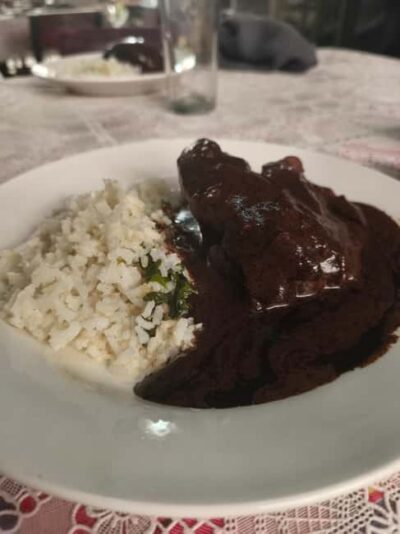
Browse the lists this tour appears in