
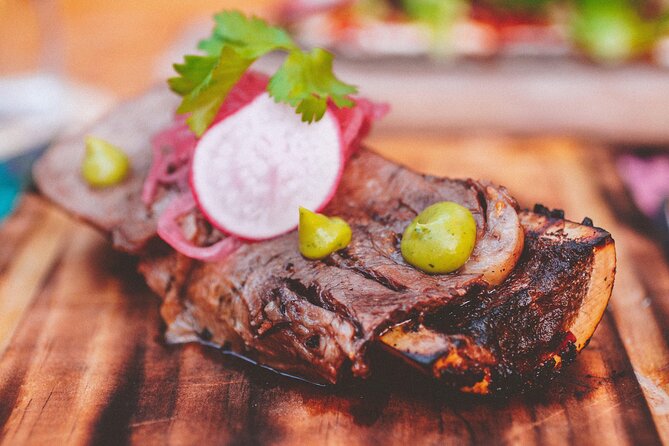
Review · MEXICO COOKING CLASSES
Authentic Mexican Legacy Cooking Class in Cabo San Lucas
The best part of this Cabo experience happens before you sit down to eat. You walk through Metate’s garden, learn how ingredients such as epazote, pumpkin flower, herbs, and chiles fit into Mexican cooking, then head to the bar to make a fresh cocktail with the chef. Roberto and Chef Su have both led sessions, and the guide can make the night feel personal when the group is small.
I like the garden-to-table setting and the generous amount of food: cocktail, appetizers, a main course, and dessert. I also like that you learn practical kitchen skills, from pressing corn tortillas to balancing lime, herbs, and seafood in ceviche. The main caution is important: this is a guided food experience with some hands-on work, not a full cooking school. Much of the chopping, filling, and main-course cooking may already be done.
Key points to know before booking
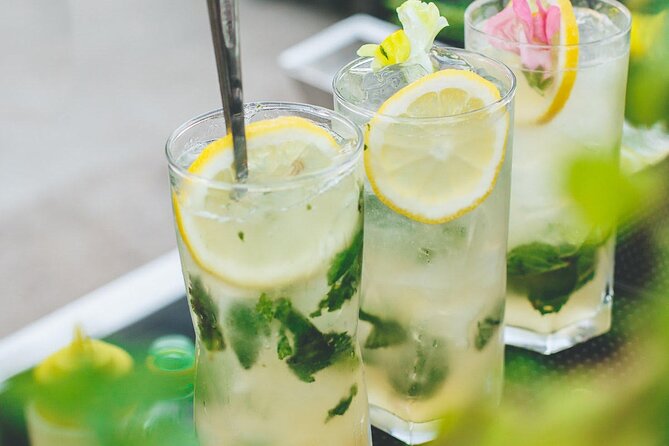
- The evening begins in Metate’s own garden, where you learn about plants and ingredients used in the restaurant.
- You make a cocktail and several small dishes, including versions of ceviche, tortillas, empanadas, quesadillas, or fish tacos.
- The main course is usually prepared by the restaurant, with pork shank appearing often in the meal.
- The setting is open-air and highly social, with a maximum of 10 people.
- The class lasts about three hours, so plan it as a full evening rather than a quick activity.
- It suits food-curious couples, families, and friends, but serious home cooks may want more hands-on instruction.
Starting at Metate in El Tezal
Metate Cabo is at Av. Crispin Ceseña S/N in El Tezal, Cabo San Lucas. The class begins at 5:00 pm and returns to the same meeting point, which keeps the evening simple once you arrive.
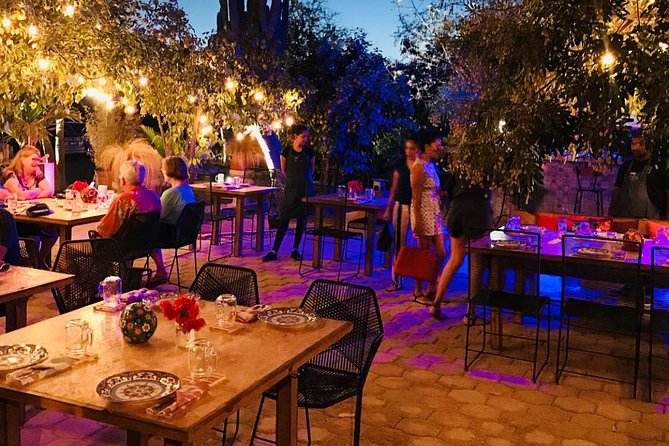
The setting is part restaurant, part outdoor garden, and part cultural display. You are not ushered straight to a classroom table. Instead, the experience opens with a welcome drink and an introduction to the property. The outdoor layout gives the evening a relaxed feel, though it also means the activity is less formal than a culinary school lesson.
The group size is capped at 10 people. That is a useful limit for a cooking activity, since you can ask questions without competing with a large busload of people. Still, the actual feel depends on the group. A small party can gather around the chef and see each step clearly. A full group may need to stand close, and one session became hard to follow because the chef spoke quickly and there was no microphone.
I would arrive ready for a social evening rather than a quiet dinner. The class is offered in English, but the speed and clarity of the guide’s speech matter. If you have trouble hearing, move close to the chef and ask for a repeat early in the class.
More Mexican Classes in Mexico:
- Cabo San Lucas Mexican Cooking Class Experience and Local Markets
★ 5.0 · 915 reviews - Mexican Cooking from Scratch in a Local Home in Tulum
★ 5.0 · 585 reviews - Mexican Cooking Class with Food Market Visit in Mexico City
★ 5.0 · 506 reviews
A garden lesson about Mexican ingredients
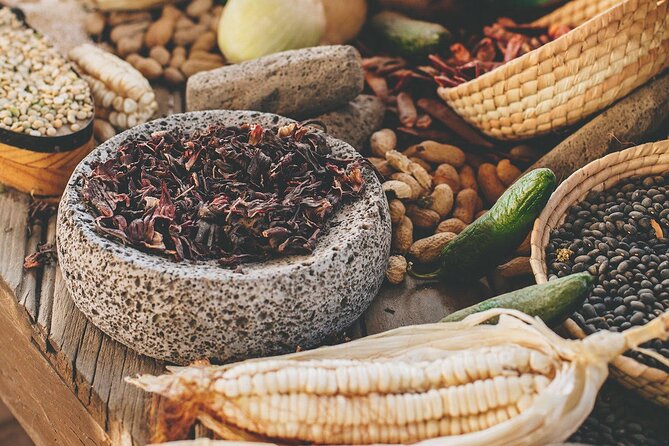
The first real stop is Metate’s garden. This is more than a pleasant walk around restaurant plants. The guide explains how herbs, vegetables, fruit, and native plants are used in the kitchen, giving you context for the food you will prepare later.
You may see or learn about ingredients such as epazote, pumpkin flower, fresh herbs, tomatoes, and chiles. The point is not to memorize a long list. It is to understand that Mexican cooking depends on choosing good produce and knowing how each ingredient behaves.
This part is especially useful if you normally buy ingredients without knowing their purpose. Epazote, for example, is not simply a green garnish. It has a distinct flavor and often appears with beans and other traditional dishes. Pumpkin flower and huitlacoche also show you a side of Mexican food that many visitors do not encounter in standard resort menus.
I like that the garden gives the meal a sense of place. You are not just assembling food from anonymous bowls. You can connect the herbs and vegetables to the restaurant’s cooking, then taste how those ingredients work in the dishes.
The garden walk is also one of the calmer parts of the evening. If the class later feels a little rushed or crowded, this opening section still gives you a useful introduction to the kitchen.
Making a cocktail at the bar
After the garden, you move to the bar for a short mixology lesson. This is one of the most popular hands-on parts because everyone can take part at once.
The drink may include mezcal, fresh herbs, ginger, or fruit. You muddle and combine ingredients, then taste the balance between smoky spirits, citrus, sweetness, and herbs. The exact drink can vary, so do not expect one fixed recipe every time.
The cocktail lesson works well as an introduction to Mexican flavors. Mezcal has a smoky profile that can dominate a drink if handled badly. Fresh lime, ginger, herbs, or fruit help soften it and give the drink a clearer shape.
A welcome drink is also part of the evening, and several people have received a hibiscus drink at the start. Food and drinks are included as part of the experience, but bring this practical point to mind: bottled water may cost extra. If you prefer water throughout the class, ask about it before ordering.
The bar segment is not a full professional mixology course. You are learning one drink and the logic behind it. Still, it adds a useful break between the garden tour and the food preparation.
What you actually prepare
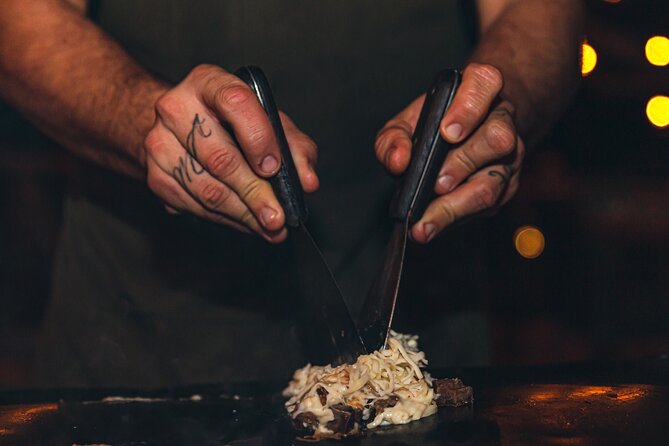
This is where expectations matter most. The class includes genuine hands-on work, but not every dish is made from the first cut to the final plate.
You may chop ingredients for ceviche, squeeze lime, press masa for fresh tortillas, and fill an empanada. You may also prepare quesadillas, fish tacos, or another appetizer, depending on the menu. Some sessions have included huitlacoche, a traditional Mexican corn fungus often treated as a delicacy.
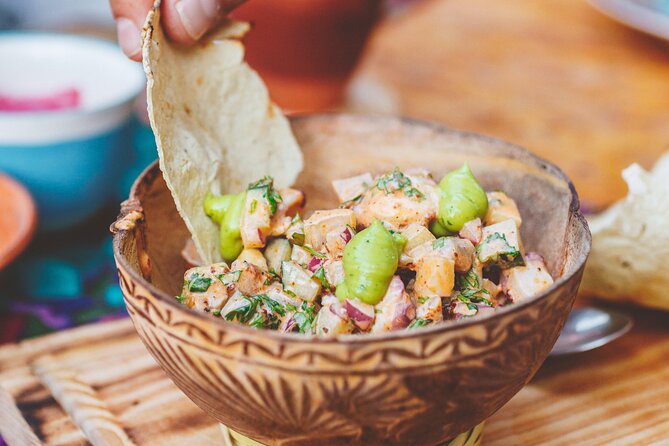
The ceviche process can be partly assembled rather than fully cooked from scratch. In some versions, the vegetables are already cut and the fish is portioned, leaving you to combine the ingredients and season the bowl. That still teaches the basic balance of seafood, lime, onion, herbs, and seasoning, but it is not the same as learning knife work, fish preparation, and full timing from start to finish.
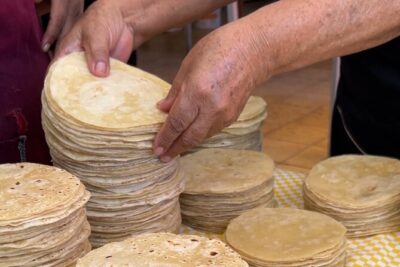
The tortilla work is more tactile. You press masa into a round, then hand it to the staff for cooking. This is a worthwhile skill because fresh corn tortillas depend on texture and pressure more than on complicated equipment. You will understand the feel of the dough, even if you do not manage the griddle yourself.
Empanadas follow a similar pattern. You may fill and shape the dough, while the kitchen handles the frying or baking. In one less satisfying setup, finished empanadas were served randomly, so you did not necessarily eat the one you made. That detail will not matter to everyone, but it can disappoint children or anyone hoping to track their own creation from preparation to plate.
Families should know that much of the work is semi-prepared. That makes the class friendly for beginners and keeps the pace manageable, but it limits the lesson for confident cooks. You will learn methods and flavor combinations more than professional kitchen technique.
More Cooking Classes in Mexico:
- Puerto Vallarta Cooking Class Experience with Market Tour
★ 5.0 · 698 reviews - Authentic Mayan Cooking Class in Cozumel
★ 5.0 · 344 reviews - Flavors of Oaxaca: Cooking Class with No Set Menu and Local Market Tour
★ 4.5 · 333 reviews - Playa del Carmen Mexican Cooking Class
★ 5.0 · 306 reviews
The dinner: pork shank, tacos, and a changing menu

Once the appetizers are ready, the restaurant takes over much of the main course. Pork shank has appeared often, served tender enough to fall from the bone, with guacamole, pico de gallo, tortillas, and other taco fixings.
The portion may be presented for sharing, sometimes between two people. That is worth knowing if you arrive very hungry or prefer individual plates. The meal is built for conversation and tasting several things, not for a private restaurant-style entrée for each person.
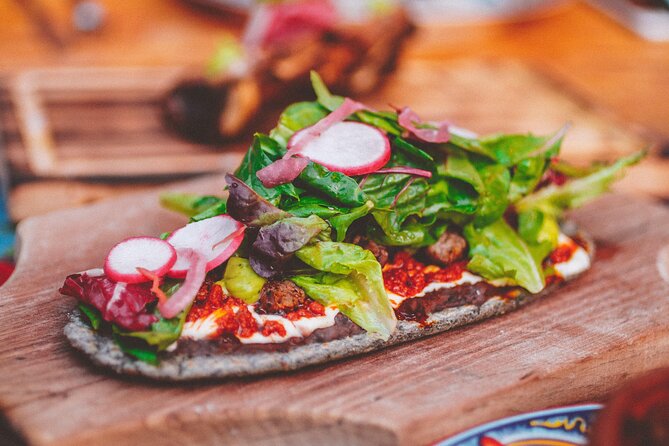
The sample menu lists a tlayuda called Tlayuda de la Huerta, with black beans, Oaxaca cheese, mushrooms, tomatoes, pumpkin flower, avocado, and epazote. Other meals have included fish tacos, ceviche, empanadas, quesadillas, and pork shank. The difference tells you that the menu is not fixed in every detail.
That flexibility can be a plus. You may get a broader look at Mexican cooking than one advertised dish would suggest. It can also be a drawback if you booked specifically to learn one recipe. Ask at the start what your group will prepare and which parts the kitchen has already made.
The food receives the strongest praise for good reason. You get to eat what you helped assemble, then try restaurant-prepared dishes that require more time and control than a group class can provide. The pork shank and flan are especially useful examples of the difference between a demonstration meal and a home kitchen exercise.
Dessert and the rhythm of the evening
Flan often closes the meal. It is served as a small portion, sometimes to share, but it gives the evening a classic Mexican finish.
Do not expect a constant stream of activity for all three hours. There can be pauses while the restaurant cooks, plates food, or resets the next part of the class. Some people enjoy that slower rhythm because it leaves room for conversation and drinks. Others find the waiting frustrating, especially with teenagers or anyone expecting continuous cooking.
I see the pacing as best for couples and groups of friends who want a long social evening. If your ideal class has everyone chopping, stirring, and cooking at every moment, this may feel too passive.
The open-air restaurant setting helps during the pauses. You are in a place designed for lingering, not a bright instructional kitchen where every minute must be filled. That atmosphere is part of the value, but it also means you are paying for dinner, setting, service, and instruction together.
The guide makes a major difference
The strongest sessions have been led by chefs who explain not just what to do, but why a dish works. Roberto has been praised for explaining the ingredients and guiding the group through the evening. Chef Su has also led classes with humor, practical chopping tips, and a clear introduction to garden plants.
The server matters, too. Job has been singled out for keeping drinks, plates, and the background details moving while the chef teaches. That division of work can make the night feel smooth, since the instructor does not have to stop constantly to manage service.
The weak point is communication. A guide who speaks rapidly can lose people, especially in an outdoor space with several conversations happening at once. If your group includes anyone who is not fully comfortable in English, or anyone with hearing difficulty, ask the chef to slow down and demonstrate close to the group.
The limited group size helps, but it cannot solve every problem. I would choose a seat or standing position near the preparation area and stay engaged by asking questions. This is a personalized activity when you participate actively.
Value, timing, and who should book
No price is provided here, so I cannot judge the exact cost. The right comparison is not a basic restaurant meal. You are receiving a welcome drink, a cocktail lesson, several appetizers, a main course, dessert, garden instruction, service, and roughly three hours of entertainment.
That can be good value for a couple or group that wants dinner to be the evening’s main event. It is less compelling if you only want to learn recipes, since the restaurant prepares the main course and several components before you handle them.
I would book this for:
- Couples wanting an interactive date night
- Families with older children who enjoy food and conversation
- Friends who want a shared meal with a local cooking theme
- Beginners who prefer guided, low-pressure preparation
- People curious about Mexican herbs, masa, mezcal, and less familiar ingredients
I would think twice if you want advanced knife skills, full recipe development, or a dish made entirely by your own hands. A standard dinner at Metate may suit you better if the setting and food appeal more than the instructional side.
The activity is near public transportation, but the provided details do not include a transfer service. Plan your arrival at the El Tezal meeting point rather than assuming pickup from your hotel.
Should you book the Metate cooking class?
Book it if you want a friendly evening built around food, stories, garden ingredients, drinks, and a shared meal. The setting, garden tour, tortillas, cocktail, and broad tasting menu give you more than a normal dinner.
Skip it if the phrase cooking class makes you expect three hours of serious kitchen work. You will prepare and assemble several items, but the restaurant handles much of the difficult cooking. The best way to view it is as a chef-led Mexican food experience with hands-on sections, not as a rigorous culinary course.
The cancellation terms are straightforward: cancel at least 24 hours before the 5:00 pm start for a full refund. Changes made inside 24 hours are not accepted, and there is no refund for a late cancellation. Poor weather or failure to meet the minimum group size can lead to a new date, another experience, or a full refund.
FAQ
Where does the cooking class take place?
It takes place at Restaurant Bar Metate Cabo, at Av. Crispin Ceseña S/N, El Tezal, 23454 Cabo San Lucas, Baja California Sur, Mexico.
What time does the experience start?
The class starts at 5:00 pm.
How long does the experience last?
It lasts approximately three hours.
Is the activity offered in English?
Yes. The cooking class is offered in English.
How many people can join?
The maximum group size is 10 people.
What food and drinks are included?
The experience includes a cocktail and meal, with hands-on preparation of several dishes. Examples include ceviche, tortillas, empanadas, quesadillas, fish tacos, pork shank, and flan, though the exact menu may vary.
Where does the activity end?
It ends back at the Metate meeting point.
What is the cancellation policy?
You can cancel at least 24 hours before the start time for a full refund. Cancellations or changes made less than 24 hours before the start time are not accepted and are not refunded. If poor weather or an insufficient number of bookings cancels the activity, you are offered another date, another experience, or a full refund.
Newest classes around Mexico
- Private Pre-Hispanic Cooking Class in Mexico City with Martha★ 5.0 · 19 reviews
- Tasty Mexican Cooking Class with Feast in Riviera Maya★ 5.0 · 99 reviews
- Flavors of Mexico: Cancun Cooking Class & Market Visit★ 4.5 · 5 reviews
- Private Authentic Mexican Cooking Class in Cancun with Alberto★ 5.0 · 3 reviews
- Cancun small group Cooking Class with Local Chef★ 5.0 · 61 reviews
- Cancun Hands-On Mexican Cooking Class★ 4.5 · 95 reviews
- 4h Cooking Class in Cancun with 8 Recipes & Bottomless Drinks★ 5.0 · 50 reviews
- Private Mexican Cooking Class in Your Cabo San Lucas Villa or Condo★ 5.0 · 8 reviews
Mexico Cooking Classes, compared.
Cabo San Lucas Mexican Cooking Class Experience and Local Markets
Read our review →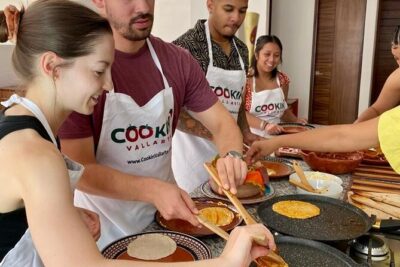
Puerto Vallarta Cooking Class Experience with Market Tour
Read our review →
Mexican Cooking from Scratch in a Local Home in Tulum
Read our review →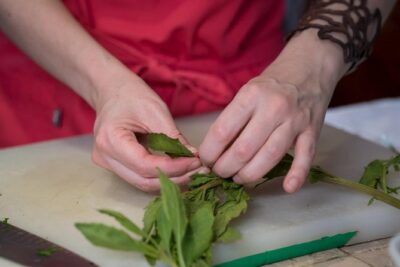
Mexican Cooking Class with Food Market Visit in Mexico City
Read our review →
Flavors of Oaxaca: Cooking Class with No Set Menu and Local Market Tour
Read our review →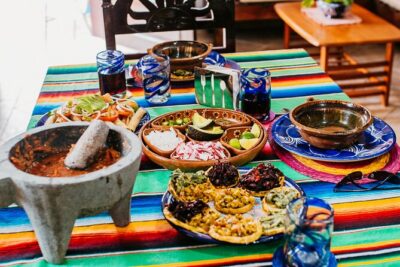
Taste of the Yucatan: Merida Cooking Class and Market Visit
Read our review →Browse the lists this tour appears in