Review · CHIANG MAI COOKING CLASSES
Chiang Mai: Traditional Thai-Akha Cooking Class& Market Tour
The most interesting part of this Chiang Mai cooking class is the Akha connection. You do not simply learn standard Thai restaurant dishes. You also taste food shaped by the traditions of the Akha people, whose families moved to Thailand in the early 1900s. The class links market ingredients, home cooking, and culture in one half-day outing.
I like the local market tour, where you can see and select the fresh ingredients before cooking. I also like the generous menu: you prepare Akha dishes, curry, soup, a stir-fry, appetizers, and dessert, with spice levels adjusted to your taste. The main drawback is that 5 to 6 hours, including a cooking session of roughly three hours, may feel long if you only want a quick lesson.
Key points to know before booking
- Akha food meets Thai cooking: Learn tomato dipping sauce, Akha salad, and Akha soup alongside familiar Thai favorites.
- A real market comes first: See the ingredients before they reach the chopping board, and sample local treats during the tour.
- You cook a lot of food: The menu includes appetizers, desserts, three Akha dishes, and several choices of curry, soup, and stir-fry.
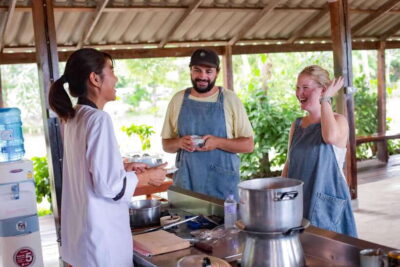
- An, Xuan, and Evelyn may lead the class: The instructors are described as friendly, funny, and attentive, with English and Thai spoken.
- Hotel pickup is included: The activity is designed as an easy half-day outing from a Chiang Mai hotel.
- You leave with useful takeaways: A recipe book, recipes, and spices are included, so the class can continue in your own kitchen.
Why the Akha angle makes this class different
Chiang Mai has no shortage of Thai cooking classes. The useful question is what makes one different from the next. Here, the answer is the focus on Thai-Akha food.
The Akha people have their own food traditions, shaped by life in the mountains of Northern Thailand. The cooking centers on fresh ingredients, straightforward preparation, and food that is both filling and health-conscious. This gives the class a broader purpose than learning how to make Pad Thai.
You get a look at how ingredients carry cultural meaning. Tomatoes, herbs, chilies, cucumber, lime, peanuts, coconut milk, and fresh vegetables are not just items on a shopping list. They are the building blocks of everyday cooking across Northern Thailand, with Akha methods and flavors adding another layer.
The class also offers a useful introduction to food sustainability. The stated focus is on freshness and making good use of local ingredients. You will not need to know much about Akha culture before arriving. The instructor explains the food as you work, so the cultural information has a practical connection to what is in front of you.
That said, this is still a cooking class first. It is not presented as a full cultural or village visit, and you should not expect a long formal lesson on Akha history. The cultural value comes through the food, the market, and the stories shared while cooking.
More Cooking Classes with a Market Tour in Chiang Mai
- Chiang Mai: Cooking Class, Market & Thai Herbs Garden Tour
★ 4.9 · 4,824 reviews - Chiang Mai: Authentic Cooking Class with Market & Farm Visit
★ 4.9 · 4,546 reviews - Chiang Mai: Cooking Class with Market and Pickup
★ 4.9 · 1,365 reviews
Starting at Chiang Mai’s local market
The day begins with hotel pickup in Chiang Mai, followed by a visit to a local market. Exact pickup times depend on availability, so check the schedule before reserving. The full activity lasts about 5 to 6 hours, making it best suited to a morning or afternoon when you do not have another major tour planned.
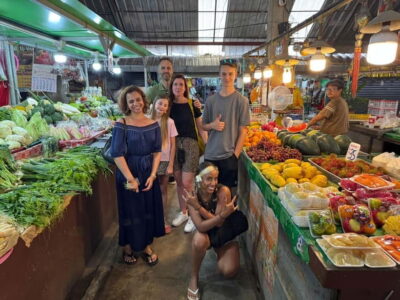
The market stop is important because it gives you context before the cooking starts. Instead of meeting prepared ingredients at the school, you see where the meal begins. You can look at the produce, herbs, spices, and other items used in Thai and Akha cooking.
The market also gives you a chance to see ingredients that may be unfamiliar at home. The point is not only to buy food. It is to connect taste and appearance with the finished dish. Afterward, the same ingredients make more sense when you chop, pound, mix, and cook them yourself.
One particularly appealing part of the market visit is the chance to sample local delicacies and treats. The available information does not specify exactly which foods are offered, so you should keep expectations flexible. Still, this tasting element adds something that a classroom-only lesson cannot provide.
I recommend arriving ready to look closely and ask questions. If you cook Thai food at home, pay attention to the balance of sour, salty, sweet, spicy, and fresh flavors. Those ideas will help you understand the recipes better than simply copying measurements.
The market can also be the less polished part of the outing. Markets are working food spaces, not staged attractions, and the pace can depend on the group and the day. That is a benefit if you want something local and practical, but less so if you prefer a quiet, highly organized tour.
Entering Thai Akha Kitchen

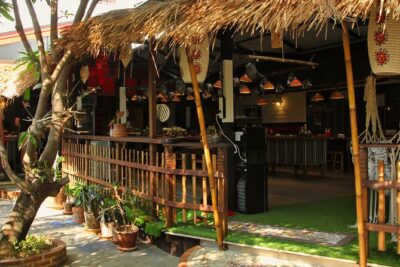
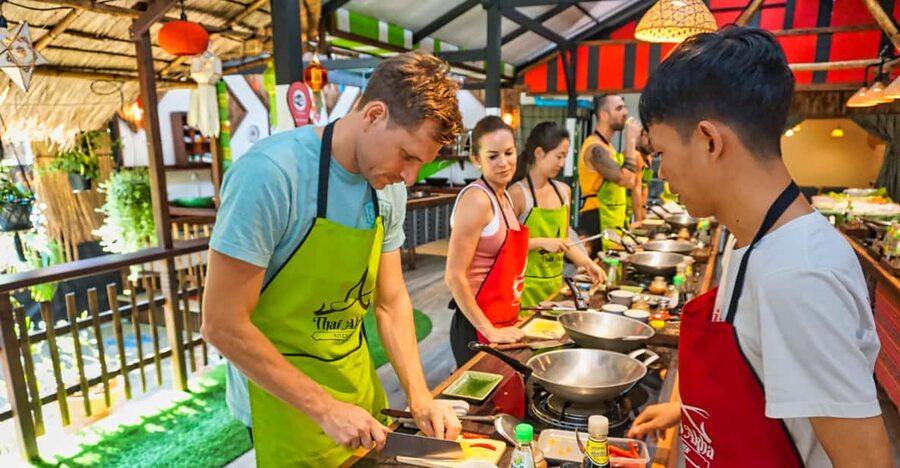
After the market, you head to Thai Akha Kitchen for the hands-on class. The cooking session lasts about three hours according to the detailed program described by one participant, although the entire activity runs 5 to 6 hours once pickup and the market tour are included.
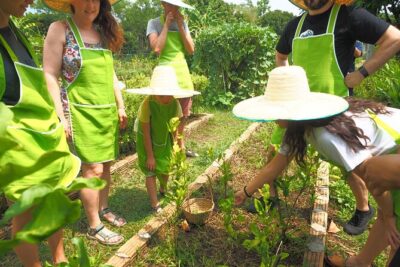
The school’s aim is to teach you through doing. You are not simply watching an instructor prepare one dish while taking notes. You work with the ingredients, follow the steps, and eat the food you help prepare.
The instructors speak English and Thai. An is specifically praised for her warm teaching style, while Xuan and Evelyn are also identified as friendly and fun instructors. Names can depend on the class schedule, but the teaching team is clearly a central part of the experience.
The tone sounds relaxed rather than formal. That matters when you are working with unfamiliar ingredients or handling a mortar, curry paste, or hot pan for the first time. A good cooking class should leave room for mistakes, questions, and different levels of kitchen confidence.
You can also adjust the level of heat to suit your taste. This is a practical detail, especially if you enjoy Thai food but do not normally eat very spicy dishes. It means the lesson is not built around proving how much chili you can tolerate.
What you cook during the class
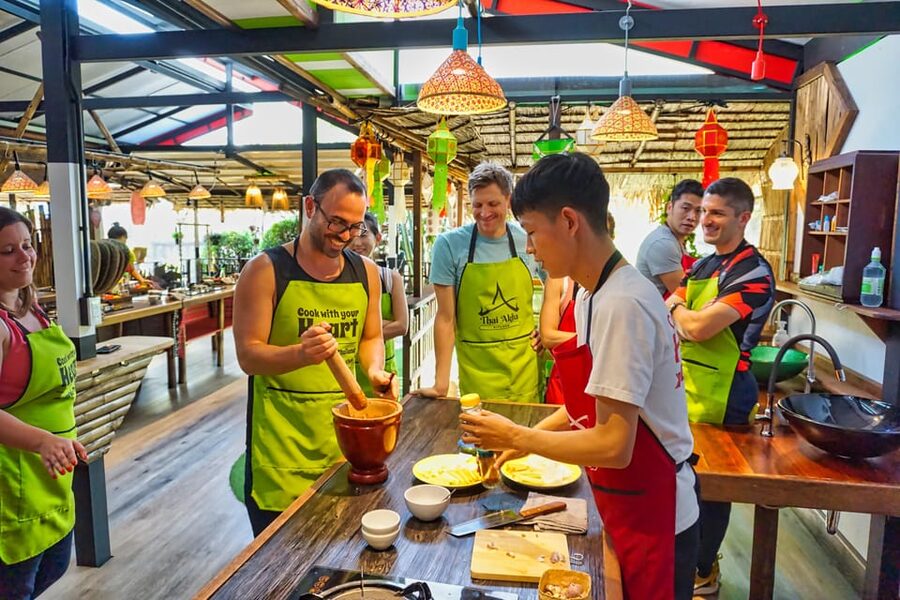
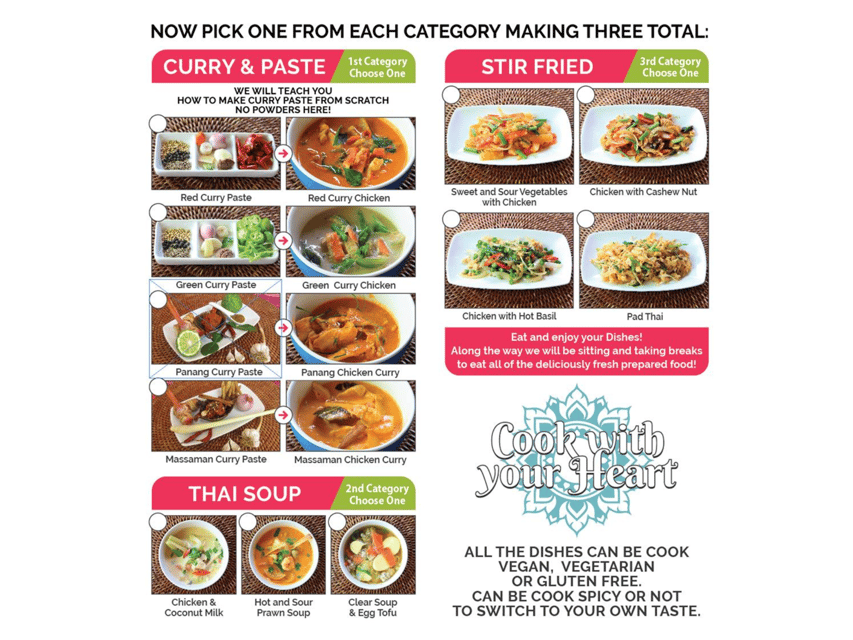
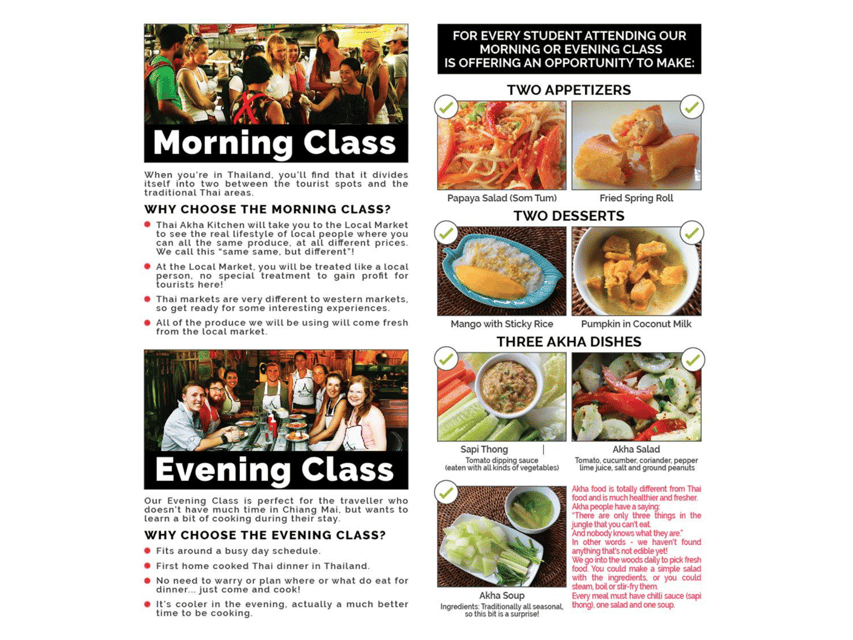
The menu is unusually broad for a half-day lesson. You prepare two appetizers, two desserts, three Akha dishes, one curry, one Thai soup, and one stir-fried dish. The exact number of finished plates can vary with the choices, but the program gives you plenty of food to prepare and taste.
More Cooking Classes with a Market Tour in Thailand
- Chiang Mai: Evening Cooking Class and Local Market Visit
★ 4.9 · 648 reviews - Evening Cooking Class in Organic Farm with Local Market Tour
★ 5.0 · 394 reviews - Cooking Morning Class Chiang Mai Visit Organic Garden and Market
★ 5.0 · 211 reviews - Cooking Evening Class Chiang Mai Visit Organic Garden and Market
★ 5.0 · 187 reviews
Appetizers and desserts
The appetizer choices are papaya salad and fried spring rolls. Papaya salad teaches you about fresh, sharp flavors, while spring rolls give you a chance to work with wrappers and a cooked filling.
For dessert, you make mango with sticky rice and pumpkin in coconut milk. These dishes show a different side of Thai cooking, where coconut, fruit, rice, and gentle sweetness take over from chili and herbs.
I like this menu structure because it keeps the class from becoming a single-note lesson. You move from fresh salad to fried food, then to savory dishes and sweet finishes. It also means you can remember a full meal rather than one famous recipe.
Three Akha dishes
The Akha portion includes Sapi Thong, Akha salad, and Akha soup. Sapi Thong is a tomato dipping sauce, while the salad combines tomato, cucumber, coriander, pepper, lime juice, salt, and ground peanuts.
Those ingredients sound simple, but they show how much flavor can come from fresh produce, acidity, herbs, and texture. The ground peanuts add richness without making the dish heavy. This is a useful lesson for anyone who wants to cook healthier meals without ending up with bland food.
Akha soup completes the trio. The available information does not give the exact recipe, so the instructor will be the best source for its background and method on the day. That is one reason to pay attention during the cultural explanations, rather than treating the class as a sequence of recipes only.
Choose one curry
You choose one curry from four options:
- Red curry chicken
- Green curry chicken
- Panang chicken curry
- Massaman chicken curry
This is a helpful choice because the curries differ in flavor and intensity. Red and green curry are familiar Thai standards, Panang is generally thicker and richer, and Massaman brings a milder, more warming profile.
The class is not asking you to prepare every curry on the list. Your choice keeps the workload manageable while letting you select a dish you are most likely to cook again. If you are unsure, ask the instructor which option best matches your preferred spice level.
Choose one Thai soup
For soup, you select one of three dishes:
- Chicken with coconut milk
- Hot and sour prawn soup
- Clear soup with egg tofu
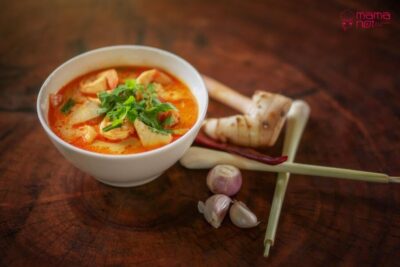
This is another place where your food preferences matter. The prawn soup may appeal if you want strong sour and spicy flavors, while chicken with coconut milk offers a softer, creamier style. Clear soup with egg tofu is the gentler choice.
All three options also show how Thai soups can be very different from one another. You are not learning one fixed national flavor. You are seeing how broth, coconut milk, seafood, chicken, tofu, herbs, and spice create separate dishes.
Choose one stir-fried dish
The stir-fried choices are sweet and sour vegetables with chicken, chicken with hot basil, chicken with cashew nuts, and Pad Thai.
Pad Thai is the familiar crowd-pleaser, but chicken with hot basil may be the better pick if you want a dish that feels more like an everyday Thai meal. Chicken with cashew nuts offers crunch, while sweet and sour vegetables provide a lighter balance.
Because the menu includes choices, it helps to decide what you want from the class. Choose Pad Thai if you want a reliable souvenir recipe. Choose an Akha dish or basil chicken if you want something less obvious. You can also ask how well each recipe adapts to ingredients available where you live.
How the teaching style affects the day
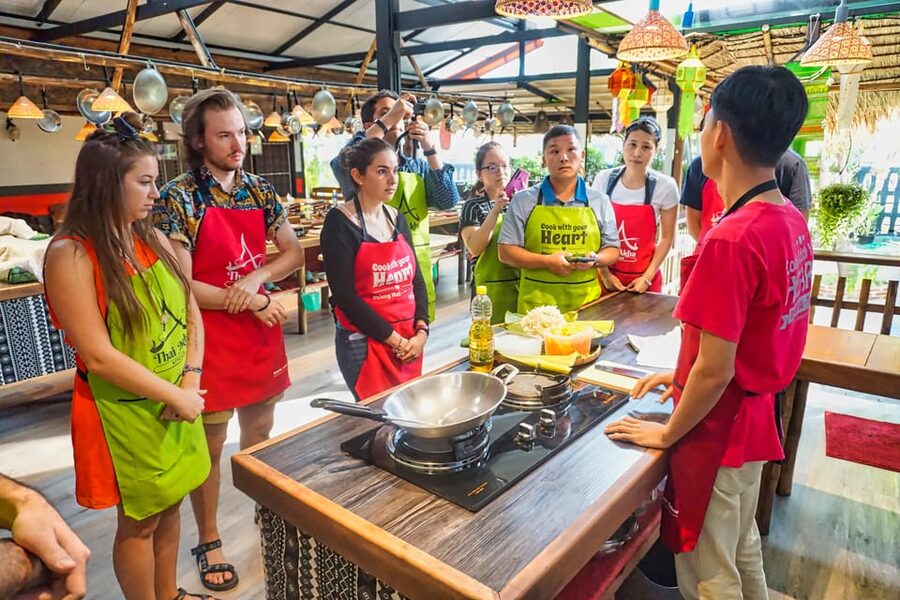
A long menu can be a problem if the class feels rushed. Here, the cooking portion is designed to last around three hours, which gives the instructors time to move through the dishes step by step.
The pacing is worth considering. You are preparing many dishes, so this is not the right choice if you want an in-depth workshop on one curry paste or one regional technique. The advantage is range. You get a broad sample of Thai and Akha cooking in one session.
The instructors also adapt the spice level. That small bit of flexibility can make a big difference. You can learn the proper method without forcing yourself to eat a dish hotter than you enjoy.
The teaching is in English and Thai, and the tone is described as friendly, funny, and helpful. I would still expect some moments when you need to watch carefully or ask for a step to be repeated. Cooking instruction is hands-on, and language ability can vary by instructor.
The best approach is to stay involved. Ask why an ingredient is added, how to substitute it at home, and what changes the spice level. You will get more from the class if you treat the recipe book as a starting point rather than the whole lesson.
What you take home besides a full stomach

You receive recipes and a cookbook, along with spices. These are useful inclusions because Thai cooking often depends on remembering proportions, timing, and the order in which ingredients enter the pan.
The cookbook gives you a written record after the aromas and activity of the class have faded. Spices make it easier to try at least one recipe soon after returning home, though you should still check what ingredients are available locally.
The food itself is another major part of the value. You prepare a large selection, and the class is designed to leave you well fed. Plan accordingly. A substantial meal in the middle or at the end of a cooking class can affect what you want to do afterward.
I also like that the recipes connect directly to the market visit. You see the ingredients first, use them later, and then take home instructions for repeating the dishes. That three-step flow gives the class more staying power than a meal that appears fully prepared in front of you.
Is $41 a good value?
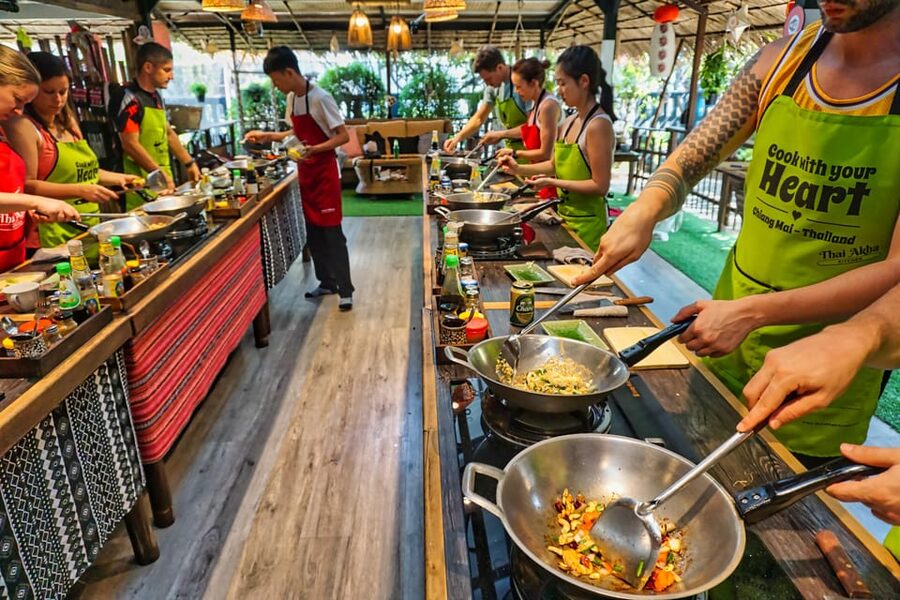
At $41 per person, the price is reasonable for a 5 to 6 hour outing that includes hotel pickup, a market tour, organic ingredients, the cooking session, food, recipes, a cookbook, and spices.
The value improves if you would otherwise pay separately for transport, a market visit, and lunch or dinner. You are also receiving instruction and a cultural connection, not just a meal. The number of dishes is generous, especially for a class that includes two desserts and several main-course choices.
The price may feel less attractive if your only goal is to learn one recipe quickly. A half-day class takes a real portion of your Chiang Mai schedule, and you may not want to spend that time in a kitchen if you prefer temples, outdoor activities, or unplanned wandering.
For food lovers, couples, families, and small groups with mixed cooking skills, the balance is strong. The ability to adjust spice levels also makes it easier for people with different tastes to share the class.
Free cancellation is available up to 24 hours in advance for a full refund, and you can reserve now and pay later. Those terms help if your Chiang Mai schedule is still changing. Allergies should be reported by email or WhatsApp before the class, not when you arrive.
Who should book this Chiang Mai cooking class?
You should book it if you want to connect food with local culture and prefer a class with plenty of cooking rather than a short demonstration. It is especially suitable if Thai food is a major reason for your visit, or if you want recipes you can use after returning home.
It also suits first-time visitors who would like hotel pickup and a clear half-day plan. You do not need to arrange your own route to the market or cooking school, which removes some of the usual friction from a cooking lesson.
Families and mixed groups may appreciate the choice of dishes and adjustable spice. Someone who dislikes prawns can choose chicken or tofu soup. Someone who wants a classic dish can select Pad Thai, while another person can choose an Akha recipe or curry.
You may want to skip it if you dislike structured activities, have a very limited schedule, or want a class focused on one advanced technique. The menu is broad, not narrowly specialized, and the market visit adds time.
Should you book Thai Akha Kitchen?
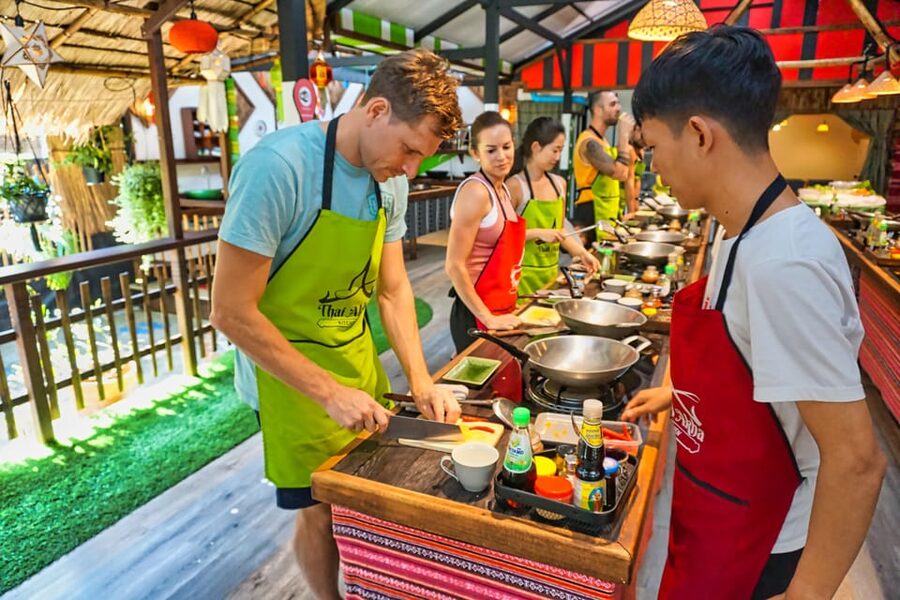
I would book this class if you want more than a standard Pad Thai lesson. The market visit, Akha dishes, broad menu, friendly instructors such as An, Xuan, and Evelyn, and take-home recipes give it a clear sense of purpose.
The main tradeoff is time. This is a full half-day, and the cooking session involves many dishes rather than one slow, detailed recipe. But at $41, with hotel pickup, ingredients, food, a cookbook, and spices included, it offers strong value for a hands-on introduction to Northern Thai and Akha cooking.
Choose your dishes with care, tell the school about allergies in advance, and arrive ready to ask questions. If you want to understand what goes into Chiang Mai food and then make some of it yourself, this is a good use of a day.
FAQ
How long does the Thai Akha cooking class last?
The activity lasts about 5 to 6 hours, including the local market tour, transportation from your Chiang Mai hotel, and the cooking session.
What languages do the instructors speak?
The instructors speak English and Thai.
Is hotel pickup included?
Yes. Pickup service from a Chiang Mai hotel is included.
What dishes can I cook?
The menu includes papaya salad, fried spring rolls, mango with sticky rice, pumpkin in coconut milk, Sapi Thong tomato dipping sauce, Akha salad, Akha soup, one of four curries, one of three Thai soups, and one of four stir-fried dishes.
Can I choose dishes and adjust the spice level?
You choose one curry, one Thai soup, and one stir-fried dish. The spice level can be adjusted to suit your taste.
What is included besides the cooking lesson?
The price includes the market tour, organic ingredients, recipes, a cookbook, spices, and hotel pickup. Personal expenses are not included.
More Thai Classes in Chiang Mai
- Half-Day Thai Cooking Class at Organic Farm in Chiang Mai
★ 5.0 · 19,087 reviews - Thai and Akha Cooking Class in Chiang Mai
★ 5.0 · 4,358 reviews - Full Day Thai Cooking at Farm (Chiang Mai)
★ 5.0 · 1,127 reviews - Chiang Mai: HALF-DAY COOKING COURSE at a Thai Cooking Farm
★ 4.9 · 705 reviews
Newest classes around Chiang Mai
- Aroidee’s Farm-Fresh Thai Cooking Experience★ 5.0 · 8 reviews
- Authentic Thai Cooking Class and Farm Visit in Chiang Mai★ 5.0 · 66 reviews
- Signature Thai Cooking Course★ 5.0 · 79 reviews
- Half Day Guided Thai Cooking Class in Chiang Mai★ 5.0 · 13 reviews
- Yummy Tasty Thai Cooking School in Chiang Mai★ 5.0 · 2 reviews
- Online Thai and Akha Cooking Class★ 5.0 · 70 reviews
- Northern Thai Cooking Class in Chiang Mai in a Countryside Home★ 5.0 · 2 reviews
- Private Half-Day Thai Cooking Class in Chiang Mai★ 5.0 · 4 reviews
Chiang Mai Cooking Classes, compared.
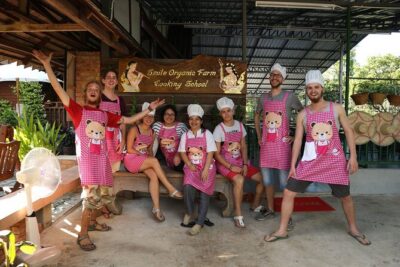
Half-Day Thai Cooking Class at Organic Farm in Chiang Mai
Read our review →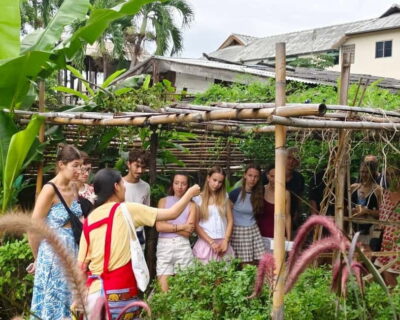
Cooking Class, Market & Thai Herbs Garden Tour
Read our review →
Authentic Cooking Class with Market & Farm Visit
Read our review →