
Review · CHIANG MAI COOKING CLASSES
Chiang Mai: Morning Cooking Class with Market Visit
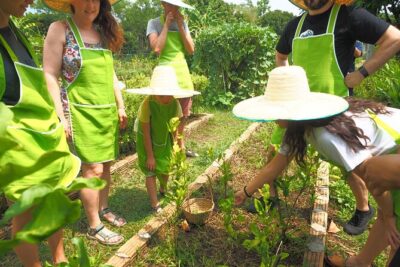
The best part of this Chiang Mai cooking class happens before you touch a wok. You begin at a local market, where you can see the ingredients used in Thai kitchens before learning how they become curry, soup, noodles, salads, and dessert. Then you pick herbs at an organic garden and carry some of that produce into the lesson.
I like the six-dish format, which gives you more than a quick Pad Thai demonstration. I also like the practical recipe PDF, since it turns a pleasant morning into something you can use at home. The main thing to consider is the early pickup window and the uneven transport coverage outside central Chiang Mai, so confirm your hotel address before booking.
Key points to know
- Start with the market: Visit a local food market and see fresh Thai ingredients before cooking.
- Pick herbs yourself: Explore an organic garden and learn how vegetables and herbs are grown.
- Choose six dishes: Make a starter, main course, soup, curry paste and curry, plus dessert.
- New teaches in English: The instructor has been praised for clear explanations and useful cooking tips.
- Good for varied diets: Vegan, vegetarian, Halal, gluten-free, and allergy-related requests are supported.
- Hotel transfers save time: Pickup and drop-off are included in many central Chiang Mai areas, but not every address.
Why this class offers more than a Pad Thai lesson
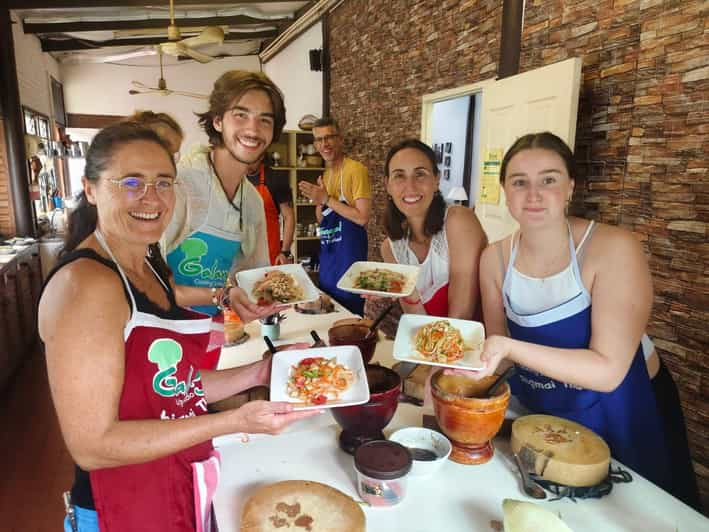
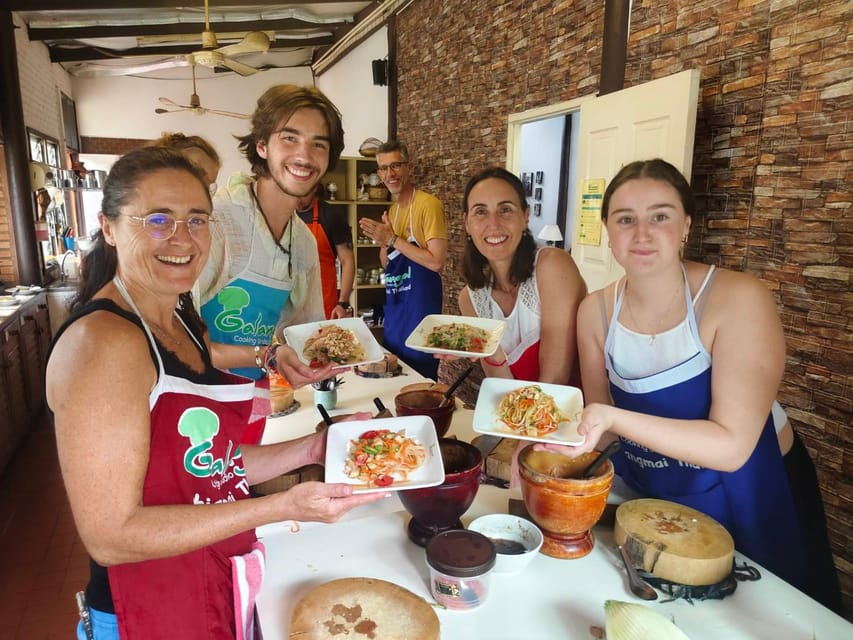
At $41 per person for about five hours, this is a full morning of food, instruction, and transport rather than a single recipe demonstration. You are not simply watching someone cook. You choose dishes, prepare ingredients, practice Thai cooking methods, and sit down to eat what you have made.
The class is run by Galangal Cooking Studio, with English-speaking instructors including New. New has received especially strong praise for clear English, patience, and practical advice about ingredients. That matters here. Thai cooking can involve unfamiliar herbs, pastes, sauces, and cuts of food, so good explanations make the difference between following a recipe and understanding it.
You should arrive with an empty stomach, but not because the morning is only about eating. The work is part of the experience. You will smell fresh ingredients at the market, walk through the garden, chop and mix in the studio, then eat several dishes at the end.
The class also works well for first-time cooks. It is paced for beginners while still giving confident cooks room to learn how Thai flavors are built. If you already know your way around a kitchen, the most useful parts may be the market visit, curry paste preparation, and discussion of substitutions for ingredients that are hard to find at home.
More Cooking Classes with a Market Tour in Chiang Mai
- Chiang Mai: Cooking Class, Market & Thai Herbs Garden Tour
★ 4.9 · 4,824 reviews - Chiang Mai: Authentic Cooking Class with Market & Farm Visit
★ 4.9 · 4,546 reviews - Chiang Mai: Cooking Class with Market and Pickup
★ 4.9 · 1,365 reviews
The morning starts at a Chiang Mai market
Hotel pickup is scheduled in the morning, generally between 8:30 and 9:00. The driver asks you to wait in your hotel lobby five to ten minutes before the scheduled time. Traffic and several pickup points can cause delays, so keep your morning open rather than planning something immediately afterward.
The pickup area covers hotels in Chiang Mai’s old city, Santitham, and parts of Huay Keaw Road from Kad Suan Kaew toward Maya Shopping Mall. Some addresses around Nimmanhaemin Road, Sirimongkrajan Road, Wat Ket Road, Chang Phueak, Chang Khlan, and Chang Moi are also covered.
This detail is worth checking before you pay. If your accommodation is outside the service area, you may need to arrange your own transport to the cooking school or market. You can also come directly to the studio if you prefer. One past booking had a transport communication problem, so I would confirm the pickup address rather than assume every Chiang Mai hotel is included.
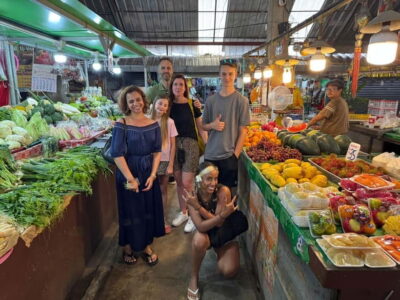
At the market, the focus is on seeing ingredients in their everyday setting. You can examine the fresh produce, smell herbs, and learn what goes into the dishes you will make later. The market visit is listed as depending on interest, but it is one of the most useful parts of the morning if you want context for Thai food.
A market teaches you something a recipe card cannot. You begin to recognize the raw form of ingredients that often arrive in Western kitchens already packaged or prepared. You can also ask about the items you do not know, which makes the cooking lesson easier to follow.
The market is still a public food market, not a quiet classroom. Expect a real working stop with sensory activity and ordinary local trade. Wear comfortable shoes and be ready to keep moving. If you skip the market and go directly to the studio, you will save time but lose one of the more local parts of the experience.
Picking herbs in the organic garden
After the market, you visit an organic garden and learn how Thai vegetables and herbs are grown. You can pick some ingredients for your own cooking session, giving the garden visit a direct purpose rather than making it a separate sightseeing stop.
This is a small but valuable connection. Thai cooking depends heavily on fresh herbs and aromatic ingredients, and picking them yourself helps you understand why freshness matters. You may find the garden more interesting if you enjoy food origins and simple farming practices. If you mainly want to cook, it also gives you a short break between the market and the studio.
The supplied information does not promise a long farm tour or a particular list of crops, so I would not book this expecting a full agricultural program. Think of it as an ingredient-focused garden visit. You learn how produce is grown, collect selected herbs, and then use that knowledge in the kitchen.
Six dishes, with plenty of choice
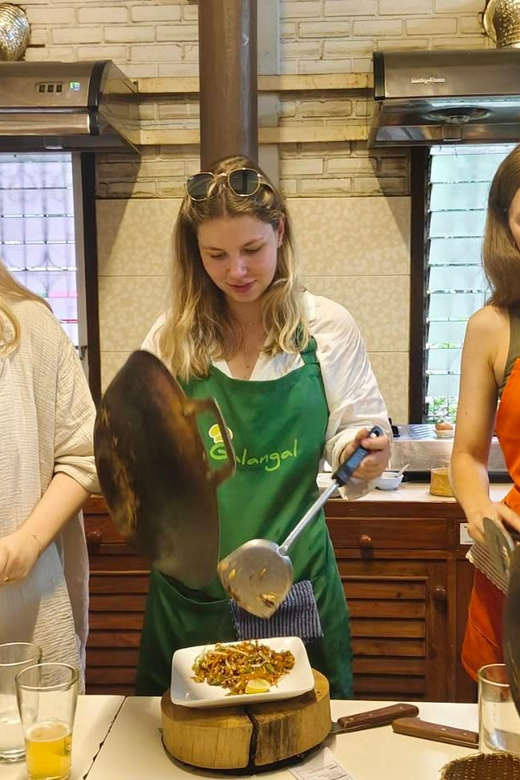
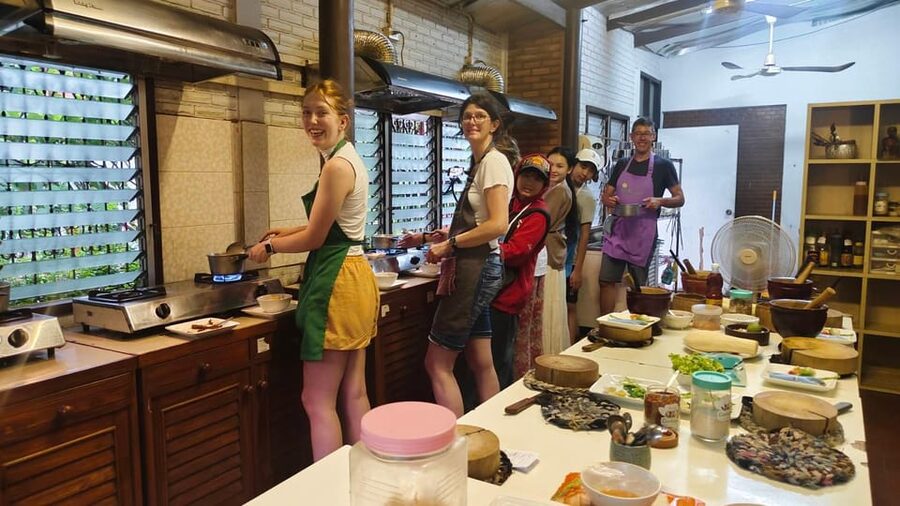
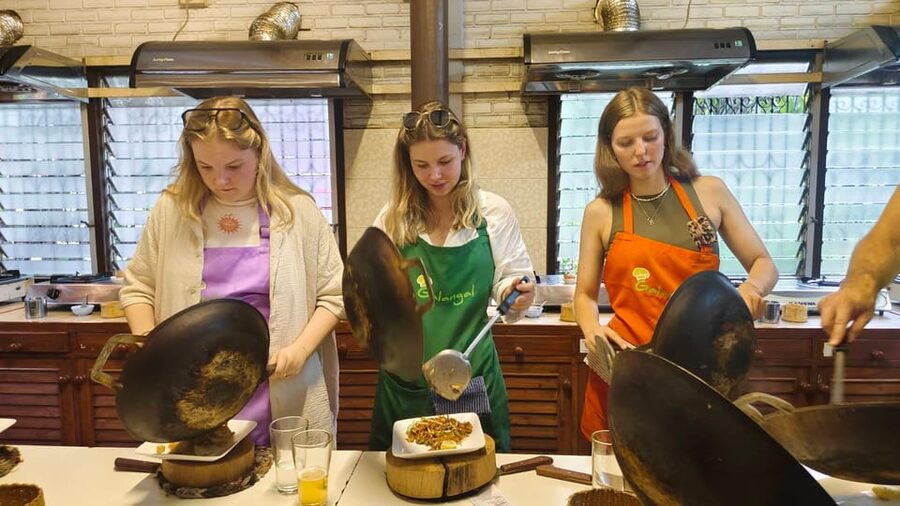
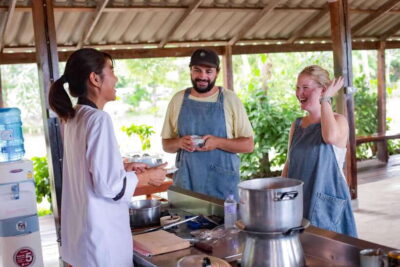
The cooking portion takes place in an indoor kitchen and air-conditioned dining room. That is a practical advantage in Chiang Mai, especially during a warm morning. You can work at the stove, prepare food, and eat in a more comfortable setting than an open-air cooking station.
You choose one dish from each category. The available choices create a broad menu:
- Starter: Som Tam, Por Pia Thod, Larb Kai, or Yam Woon Sen
- Main course: Pad Thai, Pad See Ew, Kai Pad Med Mamuang Him Ma Pan, or Pad Kaphao Kai
- Soup: Tom Yum Kung, Tom Kha Kai, Tom Kha Je, or Tom Zap Kai
- Curry: green, red, yellow, Massaman, or Panang
- Dessert: mango sticky rice with ice cream or fried banana
The final count is described as six dishes, including a starter, main course, soup, curry paste and curry, and dessert. You should make your choices before the cooking begins or follow the studio’s instructions for selecting them. The exact menu can therefore vary from one participant to another.
That choice is one of the class’s strongest features. You are not locked into a standard menu that may include food you do not eat. You can choose Pad Thai if you want a familiar Thai classic, or Pad See Ew for a different noodle dish. Chicken with cashews and minced chicken with holy basil give you options beyond noodles.
For a starter, Som Tam brings raw papaya, fresh texture, and the sweet-sour-spicy balance associated with northeastern Thai food. Spring rolls are a more approachable pick if you want a straightforward hands-on dish. Larb Kai and glass noodle salad offer a different lesson in mixing herbs, dressings, and protein or noodles.
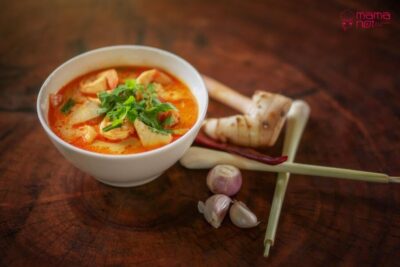
The soup choices also change the character of the class. Tom Yum Kung is hot and sour with prawns. Tom Kha Kai uses coconut milk and chicken, while Tom Kha Je provides a vegan option. Tom Zap Kai gives you another hot and sour choice with chicken.
The curry choice is especially useful because you learn about curry paste rather than simply opening a jar. Green, red, yellow, Massaman, and Panang curries each give you a different flavor direction. I would choose the style you most want to recreate at home, since the recipe PDF lets you repeat it later.
More Cooking Classes with a Market Tour in Thailand
- Chiang Mai: Evening Cooking Class and Local Market Visit
★ 4.9 · 648 reviews - Evening Cooking Class in Organic Farm with Local Market Tour
★ 5.0 · 394 reviews - Cooking Morning Class Chiang Mai Visit Organic Garden and Market
★ 5.0 · 211 reviews - Cooking Evening Class Chiang Mai Visit Organic Garden and Market
★ 5.0 · 187 reviews
What the cooking lesson is really teaching
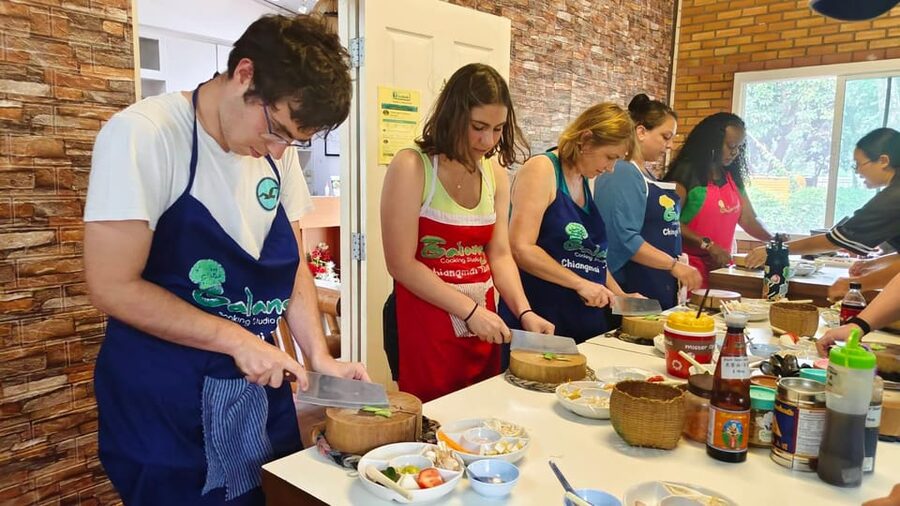
The value is not only the food you eat. The chef explains cooking skills used in Thai cuisine and guides you through each dish. You learn how the ingredients work together, how to prepare them, and how to follow the method in the correct order.
That structure helps you avoid a common problem with cooking classes: making one dish successfully but having no idea why it worked. Here, you move through several types of Thai food. You handle a salad, noodles or stir-fry, soup, curry, and dessert, so you get a wider view of the cuisine.
The menu can also reveal how Thai meals balance contrasts. A soup may be hot and sour, a curry creamy and aromatic, and a dessert sweet and soft. Cooking the dishes yourself gives you a better sense of how Thai meals use different tastes and textures together.
The instructors have been praised for speaking clear English, which is important when you are learning unfamiliar food terms. You can also ask about ingredients that may be difficult to find in your own country. One useful part of the lesson is guidance on possible substitutions, so your recipes do not become useless the moment you leave Thailand.
There is no need to be an experienced cook. The class has worked for beginners and families, and a four-year-old was welcomed to cook alongside the adults during one session. Children still need supervision around hot surfaces and sharp tools, but the setting can suit a family group.
Eating what you made, then taking the class home
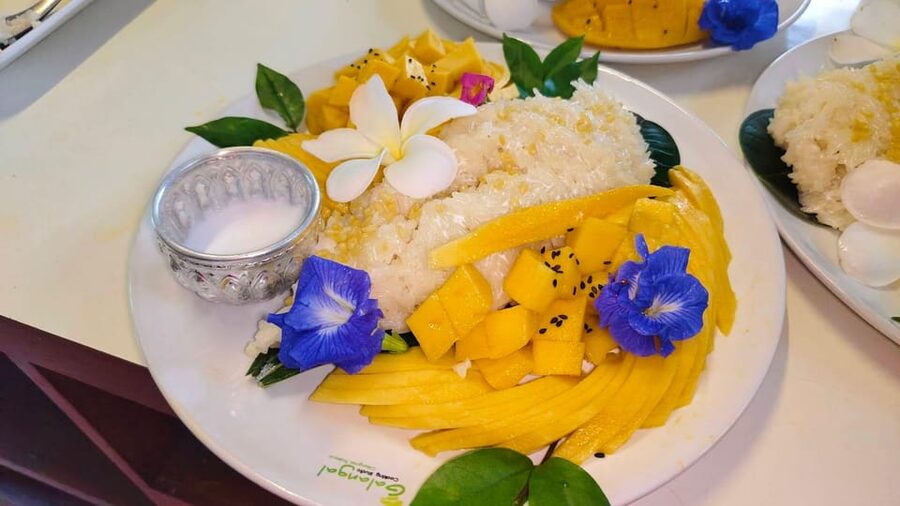
After the cooking work, you eat the food you prepared in the indoor dining room. This is not a tasting menu prepared by someone else. Your meal reflects the choices and methods you followed during the lesson.
The dessert provides a pleasant finish. Mango sticky rice with ice cream is the more familiar choice for anyone who wants a classic Thai sweet, while fried banana is a simple, warm alternative. If you have already eaten plenty of savory food, dessert makes the meal feel complete rather than leaving the class as a series of separate cooking tasks.
The PDF recipe book is one of the best practical inclusions. You receive the recipes after the class so you can try them again. It is especially helpful because you may cook five or six dishes in one morning and not remember every measurement or step.
Keep the recipe PDF somewhere easy to find. Back in your own kitchen, you may need to replace certain Thai ingredients, so the instructor’s advice about alternatives can be as useful as the recipes themselves.
Dietary needs and comfort
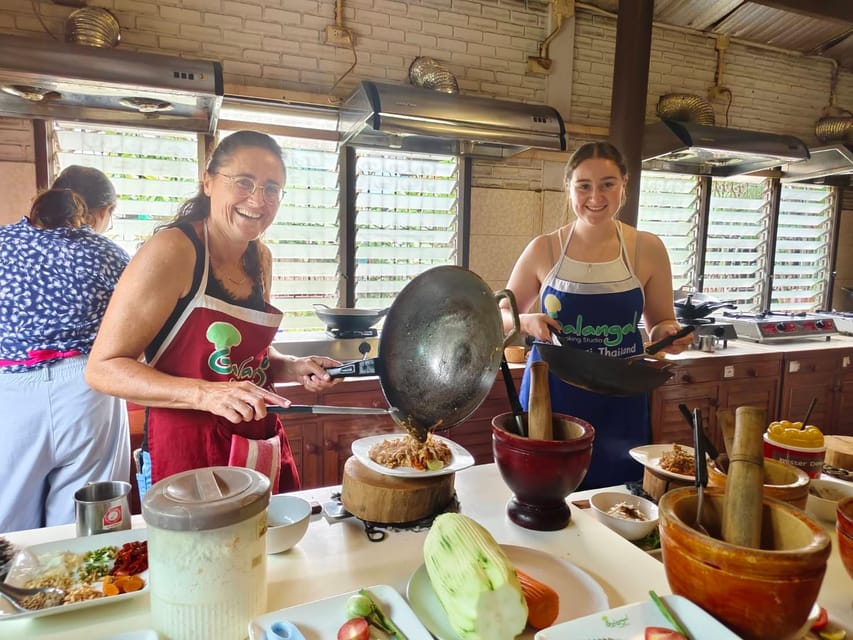
The class accepts vegan, vegetarian, Halal, gluten-free, and allergy-related requests. Tell the provider about your needs when booking, and repeat them to the instructor at the start. The range of available dishes includes clear choices such as Tom Kha Je, but not every recipe will suit every dietary requirement without adjustment.
Water, tea, and coffee are included, along with all ingredients and cooking equipment. Personal medication is not supplied, so bring your own if needed. Alcohol and drugs are not allowed.
The venue is wheelchair and stroller accessible, and infant seats are available. It is also near public transportation. These details make the class easier for families and people who need step-free access, though hotel pickup coverage should still be checked separately.
Is $41 good value in Chiang Mai?
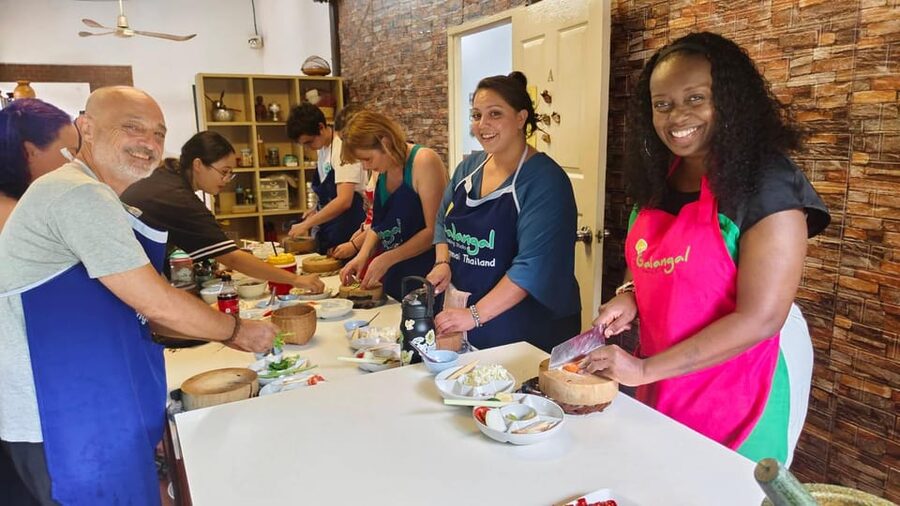
For $41, you receive a five-hour activity with hotel pickup and drop-off in covered areas, a market visit, an organic garden stop, an English-language lesson, ingredients, equipment, drinks, a full meal, and a PDF recipe book. That is a strong package if you want an activity that fills a morning and gives you something useful to take home.
The value depends on how much of the menu you use. If you choose dishes you already cook often, the class may feel less worthwhile than if you use it to learn curry paste, unfamiliar salads, or soup. The market and garden also matter. Skip both and the experience becomes closer to a standard cooking lesson.
There is an extra charge for a visiting adult, listed as 500 baht per person, and 350 baht for a visiting child aged six to twelve. Clarify this fee before bringing someone who will watch rather than cook, since it is separate from the $41 participant price.
Free cancellation up to 24 hours before the start and reserve-now, pay-later booking make the activity fairly flexible. Still, the morning pickup is time-sensitive. The driver waits no longer than five minutes after the scheduled pickup time, so be in the lobby early.
Who should book this Chiang Mai cooking class?
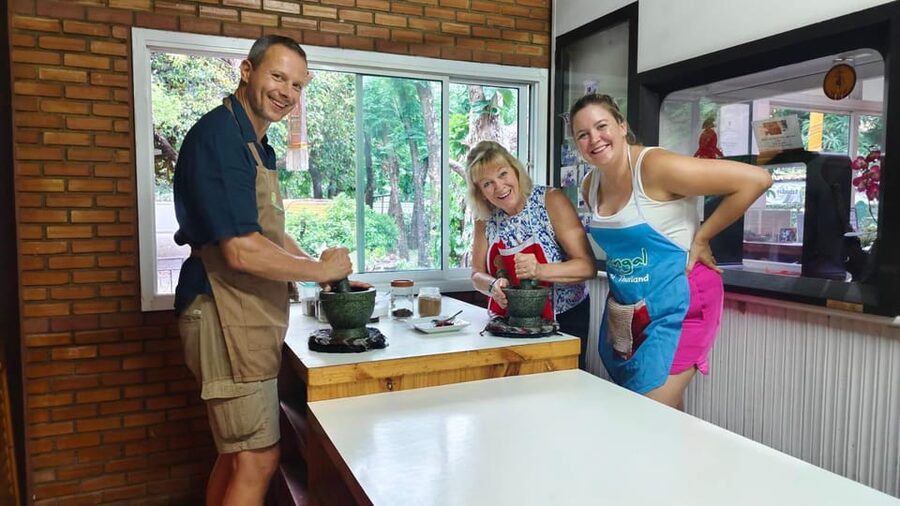
I would recommend it to first-time visitors who want a food experience with some local context, not just a restaurant meal. It is also a good fit for couples, families, solo visitors, and small groups who want to eat a substantial lunch they have helped prepare.
It suits you especially well if you enjoy choosing your own menu. The selection covers familiar dishes and less common options, while vegetarian and vegan participants have room to adapt. The clear English instruction is another reason to choose it if Thai food vocabulary is new to you.
You may want another activity if you dislike early starts, market visits, group instruction, or hands-on food preparation. The five-hour schedule is not a quick stop, and the morning can feel full if you are not interested in several different dishes.
Should you book it?
Book this class if you want more than a single Pad Thai recipe. The market, garden, curry paste lesson, six-dish menu, and recipe PDF give you a useful picture of Thai cooking from ingredients to finished meal.
Before booking, check that your hotel is inside the pickup zone and confirm any dietary needs. Choose dishes you genuinely want to repeat at home, arrive early with an empty stomach, and keep the rest of your day flexible. At $41, it is a good-value Chiang Mai activity for curious eaters, beginner cooks, and families who want to turn lunch into a hands-on cultural experience.
FAQ
How long does the Chiang Mai cooking class last?
The activity lasts about five hours, including hotel pickup, the market visit, the organic garden, cooking, eating, and hotel drop-off.
What time does hotel pickup take place?
Pickup takes place in the morning, with the scheduled window generally between 8:30 and 9:00 AM. You should wait in your hotel lobby five to ten minutes before the scheduled time.
Which Chiang Mai areas offer hotel pickup?
Pickup is offered in the old city, Santitham, and parts of Huay Keaw Road from Kad Suan Kaew to Maya Shopping Mall. Some addresses around Nimmanhaemin Road, Sirimongkrajan Road, Wat Ket Road, Chang Phueak, Chang Khlan, and Chang Moi are also included.
Can I come directly to the cooking studio?
Yes. You can come directly to the cooking studio if you do not want hotel transport. The provider will give you the arrival time and address.
Which dishes can I cook?
You can choose a starter, main course, soup, curry, and dessert from the available menu. Choices include Som Tam, spring rolls, Pad Thai, Pad See Ew, Tom Yum Kung, Tom Kha Kai, several curry styles, mango sticky rice with ice cream, and fried banana.
Is the class suitable for vegetarians and vegans?
Yes. Vegetarian and vegan options are available, including Tom Kha Je, a vegan coconut milk soup. Tell the provider about your dietary needs before the class.
Can people with food allergies join?
Yes. The activity is available for people with allergies, as well as people who need Halal or gluten-free food. Share your requirements in advance so the class can prepare appropriately.
Is the cooking studio wheelchair accessible?
Yes. The activity is wheelchair accessible and stroller accessible. Infant seats are also available.
What is included in the $41 price?
The price includes hotel pickup and drop-off where available, the market tour, expert instruction, ingredients, cooking equipment, water, tea, coffee, and PDF recipe books.
Is there an extra fee for someone who only watches?
A visiting adult costs 500 baht per person, and a visiting child aged six to twelve costs 350 baht per person. Confirm the fee when booking if someone will attend without taking part as a cooking student.
More Morning Classes in Chiang Mai
- Morning Cooking Class in Organic Farm with Local Market Tour
★ 5.0 · 157 reviews - Morning Thai Cooking with Grandma – Market Visit & Farm Tour
★ 5.0 · 148 reviews - Half Day Morning Cooking Class with Market Tour in Chiang Mai
★ 5.0 · 84 reviews - Morning Thai cooking class
★ 5.0 · 48 reviews
Newest classes around Chiang Mai
- Aroidee’s Farm-Fresh Thai Cooking Experience★ 5.0 · 8 reviews
- Authentic Thai Cooking Class and Farm Visit in Chiang Mai★ 5.0 · 66 reviews
- Half Day Guided Thai Cooking Class in Chiang Mai★ 5.0 · 13 reviews
- Yummy Tasty Thai Cooking School in Chiang Mai★ 5.0 · 2 reviews
- Signature Thai Cooking Course★ 5.0 · 79 reviews
- Online Thai and Akha Cooking Class★ 5.0 · 70 reviews
- Northern Thai Cooking Class in Chiang Mai in a Countryside Home★ 5.0 · 2 reviews
- Private Half-Day Thai Cooking Class in Chiang Mai★ 5.0 · 4 reviews
Chiang Mai Cooking Classes, compared.
Half-Day Thai Cooking Class at Organic Farm in Chiang Mai
Read our review →
Cooking Class, Market & Thai Herbs Garden Tour
Read our review →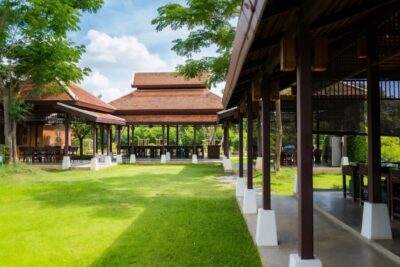
Authentic Cooking Class with Market & Farm Visit
Read our review →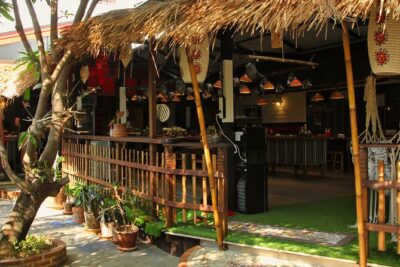
Browse the lists this tour appears in