
Review · SPAIN COOKING CLASSES
Feed the Fire Private Cooking Class & Market Tour
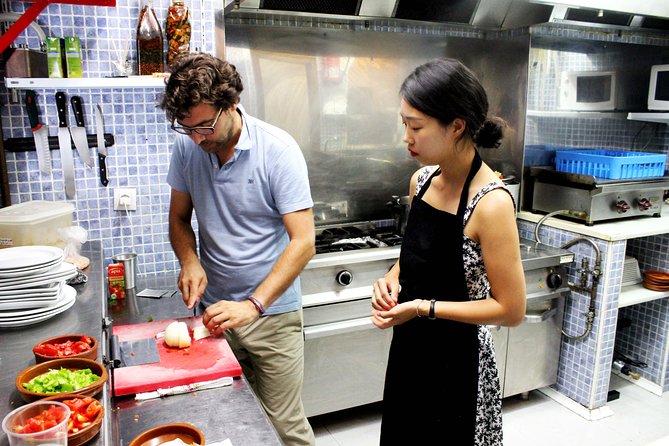
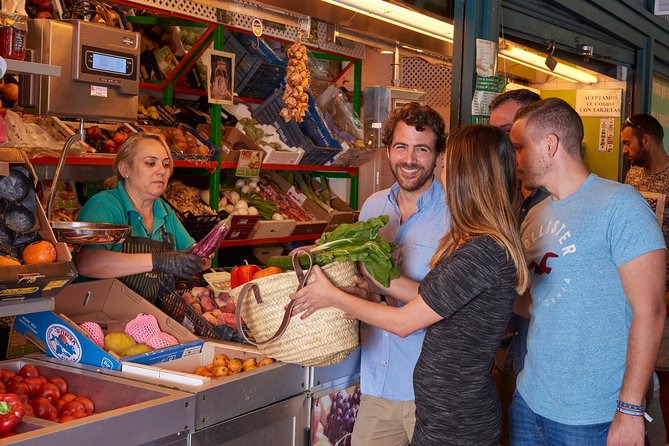
The best part of Feed the Fire is that the meal begins before you reach the kitchen. You meet Gaby at Mercado de la Corredera, taste what catches your eye, and help choose the ingredients for a Spanish lunch. Back at her natural wine shop, you chop, cook, drink, and eat in a relaxed setting rather than sitting through a formal demonstration.
I like the flexible menu and the private format. You can shape the meal around what looks freshest, and Gaby can give your group her full attention. I also like the easy social rhythm: market shopping, natural wine, table olives, craft beer, and cooking all happen as one long Córdoba food experience.
The main thing to understand is that this is not a cooking class in a local home. It takes place in Gaby’s small wine shop, and your hands-on role may depend on the group and the dish. If you want precise instruction and a recipe packet, ask clearly during the class.
Key points to know before booking
- The market visit sets the menu: You shop at Mercado de la Corredera and adjust lunch to the freshest ingredients available.
- Gaby leads a private, relaxed class: Only your group participates, so the pace and level of cooking help can suit your party.
- The cooking takes place at a wine shop: Jugo is a natural wine shop and Gaby’s working kitchen space, not a private residence.
- Lunch and drinks are included: Ingredients, cooking equipment, snacks, table olives, craft beer, lunch, and Spanish wines come with the experience.
- The menu is seasonal and flexible: Possible dishes include salmorejo, mazamorra, paella, grilled fish, prawns, and simple fruit desserts.
- Plan on three and a half hours: The experience starts and ends at Plaza de las Cañas, near Córdoba’s historic center.
Starting at Mercado de la Corredera
Feed the Fire begins at Mercado de la Corredera, at Plaza de las Cañas. This is a smart meeting point because the experience gets straight to the food rather than spending the first half-hour on introductions and transport.
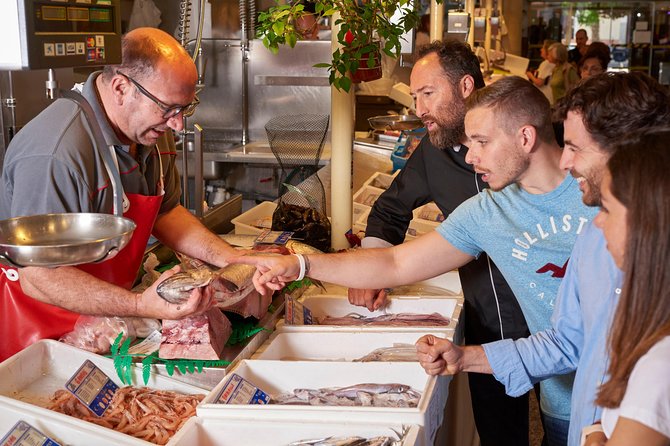
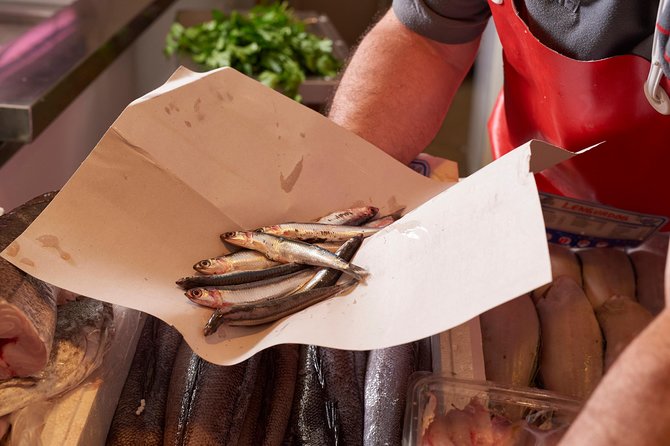
Gaby leads you through the market and buys the ingredients for the meal. The plan is intentionally loose. Instead of handing you a fixed menu before you arrive, she looks at the day’s produce, seafood, meat, and other market finds, then builds lunch around what seems freshest and most appealing.
That approach gives you a more local way to think about Spanish cooking. You are not simply following a recipe designed weeks ahead. You are learning how a cook adapts to the market. If you see something unfamiliar that you want to taste, the idea is to buy it and work it into the meal when possible.
The market portion is also the most useful part for anyone who wants more than a meal. You get a sense of how ingredients are selected, what catches a local cook’s eye, and how a Córdoba lunch can begin with small decisions at the stall.
There is one tradeoff. A changing menu means you cannot count on cooking every dish listed in the description. Salmorejo, mazamorra, revueltos, cogollos with toppings, and cabbage salad are possible starters, while the main course might be paella, grilled fish, chorizo a la riojana, papas con choco, or gambas al ajillo. Think of the menu as a set of examples, not a promise.
More Cooking Classes with a Market Tour in Spain
- Barcelona: Paella Cooking Experience & Boqueria Market Tour
★ 4.8 · 3,661 reviews - Barcelona Paella Cooking Class with Market Visit, Tapas & Sangria
★ 5.0 · 2,531 reviews - Paella Cooking Class, Wine Tasting & Central Market in Valencia
★ 5.0 · 1,150 reviews
Walking to Jugo, the natural wine shop
After shopping, you walk back to Gaby’s wine shop. The walk connects the market to the cooking session and keeps the experience centered in the historic part of Córdoba.
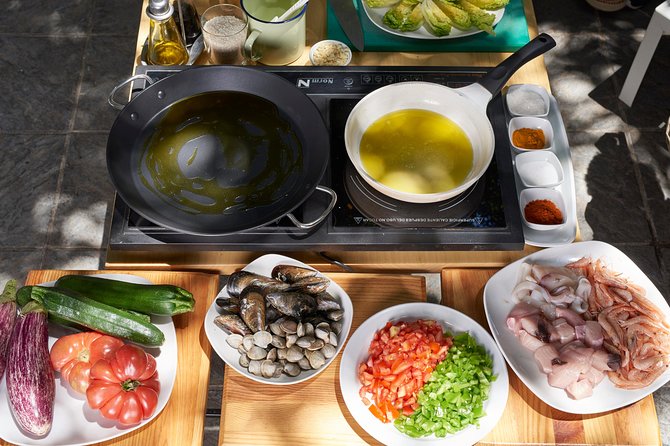
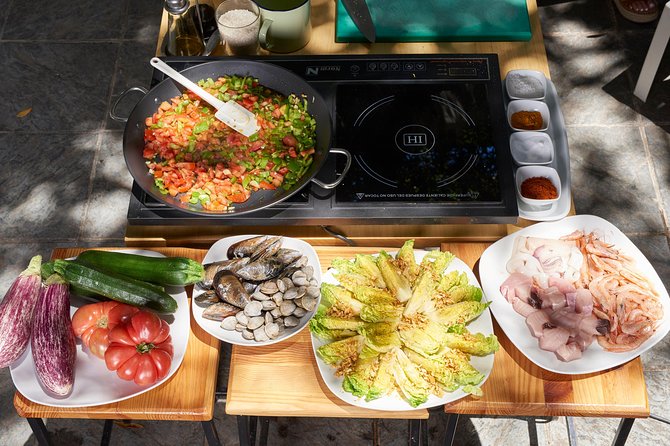
Jugo is not presented as a polished cooking school. It is a small, charming wine shop that doubles as the class space. The setup is more like being invited into a friend’s food-and-wine hangout, with a table, chopping boards, ingredients, and cooking equipment ready for the group.
That setting is a real strength if you prefer conversation and a loose pace. Several dishes are prepared while people chat, taste, and share wine. You are not separated from the meal by a demonstration counter.
It can also be a drawback for anyone expecting a spacious kitchen or a highly structured lesson. One critical account described the shop as very small and felt that the cooking role was limited. Other participants had a more hands-on experience, chopping and helping with preparation. Your experience may depend on the size of your party, the menu, and how directly you ask to take part.
My advice is simple: tell Gaby at the start that you want to cook, not only watch. In a private class, it should be easier to make that preference clear.
Cooking a menu that changes with the season
The food is built around familiar Spanish dishes, but the class is not tied to one fixed regional menu. That makes the meal more personal and gives you a chance to see how several classic preparations fit together.
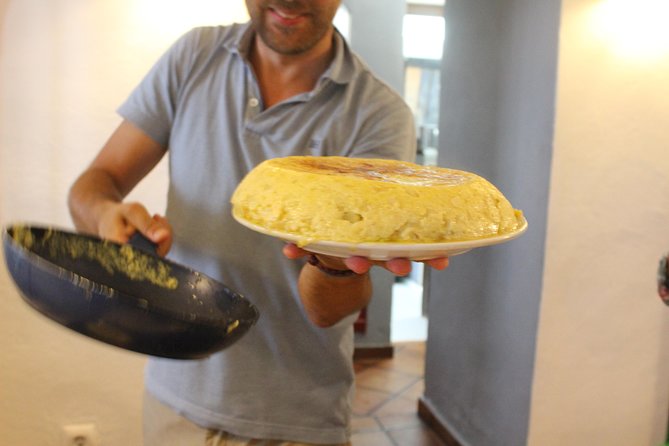
A starter could be salmorejo, Córdoba’s cool, thick tomato and bread soup, or mazamorra, another cold almond-based preparation. You might also help with egg dishes, salad, or seasonal vegetables. These are useful recipes to learn because they rely more on good ingredients and balance than on complicated equipment.
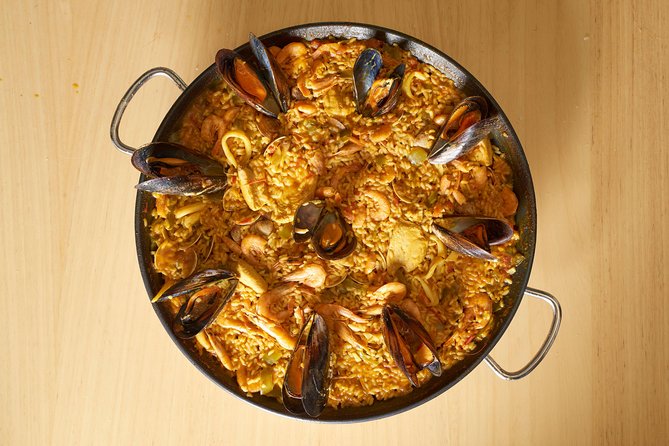
The main course is where the market has the most influence. Paella, grilled fish, spicy prawns, chorizo a la riojana, papas con choco, and gambas al ajillo all appear among the possible choices. One session included arroz negro, while another featured spicy prawns followed by meat paella.
The lesson here is less about mastering one official recipe and more about learning how Spanish dishes come together. You may chop, season, stir, or help prepare the components, depending on the menu. The casual format encourages questions, so speak up if you want to understand why a dish is prepared a certain way.
Dessert stays simple: chocolate and fruit, oranges with olive oil and sugar, or strawberries with fresh cream. This is a fitting finish after a substantial lunch. It also keeps the focus on Spanish produce rather than on an elaborate pastry lesson.
If you have a dietary need, mention it when booking and again at the beginning. Gaby has adapted a menu for a participant with celiac disease, but the supplied information does not promise that every dietary request can be met. You should confirm your needs directly.
Natural Spanish wine and the social pace
Wine is not an add-on here. Natural Spanish wines are poured throughout the meal, and craft beer and table olives are also served during the class and at the end. Snacks, lunch, and alcoholic drinks are included in the price.
This makes the experience feel closer to a long Spanish lunch than to a quick lesson. You may spend as much time talking about food and wine as you do measuring ingredients. For many people, that is the point.
The wine focus is especially useful if you want an introduction to natural wine in Spain. You get to taste it alongside food rather than studying bottles in isolation. Still, bottomless pouring may not suit everyone. If you do not drink alcohol, or simply want to limit it, say so early. The supplied details confirm alcoholic drinks, but they do not specify a nonalcoholic pairing.
The social element is another major part of the appeal. The private booking means only your group participates, yet the relaxed setting can still feel communal. If you are traveling as a couple, family, or small group of friends, this is a good way to spend an afternoon without joining a large class of strangers.
More Private Cooking Classes in Spain
- Private visit to a ham factory with show cooking in Salamanca
★ 5.0 · 122 reviews - Private Paella Cooking Class and Market Visit with Personal Chef
★ 5.0 · 94 reviews - Private Paella & Tapas Cooking Class in a Local Chef’s Home
★ 5.0 · 19 reviews - Authentic Tapas Cooking Class at a Private Eatery in Madrid
★ 4.3 · 6 reviews
What the three-and-a-half-hour schedule feels like
The advertised duration is about three hours and thirty minutes. That is enough time for three distinct parts: market shopping, the walk to the wine shop, and cooking and eating lunch.
Do not schedule a major museum visit immediately afterward. The timing is approximate, and the meal is designed to unfold at an unhurried pace. A power outage once interrupted a class, but the group continued with portable gas stoves. That story captures the spirit of the experience: the focus is on keeping the meal going rather than maintaining a strict classroom timetable.
Because the meeting point and end point are the same, you finish back at Mercado de la Corredera. The start address is Plaza de las Cañas, 1, in central Córdoba. The location is near public transportation, and the activity is wheelchair and stroller accessible. Service animals are allowed.
The walking and cooking combination makes comfortable shoes sensible. The supplied details do not give the exact walking distance or the number of market stops, so you should ask if mobility is a concern beyond the stated accessibility.
Is the $156.03 price good value?
At $156.03 per person, this is not a budget lunch. You are paying for more than the food on the plate, though. The price covers a private experience, a market visit, all ingredients and equipment, snacks, lunch, craft beer, table olives, and alcoholic drinks.
The value is strongest for you if you enjoy personal attention and want a meal built around your group. A private class can be worth more than a cheaper group lesson when you want to ask questions, adjust the menu, or accommodate different appetites.
The value is weaker if your main goal is to collect detailed recipes or learn a precise technique from start to finish. The class is informal, and the cooking role is not guaranteed for every person unless you request it. You are also paying for the social setting and the wine experience, which may matter less if you do not drink.
The 4.8 rating from 20 reviews and the 95 percent recommendation rate point to a generally strong experience, but the small number of ratings means I would not treat those figures as a promise. The repeated strengths are clear: Gaby’s warmth, the market shopping, the relaxed cooking, the food, and the natural wine. The main warning is equally clear: expectations about the setting and your level of participation need to match the reality.
Who will enjoy Feed the Fire most?
I would choose this for food-focused couples, small families, and friends who want a social Córdoba afternoon. It suits you if you like asking questions, tasting unfamiliar ingredients, and allowing the menu to change.
It is also a good choice for people who value a host’s personality as much as formal instruction. Gaby is described as warm, enthusiastic, easy to understand, and generous with conversation about Córdoba and Spanish food.
You may want another type of class if you need a professional teaching kitchen, a fixed menu, or a detailed lesson plan. This is not the best match for someone who wants every participant to cook each course or receive a formal recipe booklet without asking.
The class can work for different appetites because the meal is designed together. Still, communicate allergies, religious restrictions, and food preferences before the shopping begins. The private format gives you a better chance of shaping the meal, but it does not remove the need to plan ahead.
Booking details and cancellation
The experience is offered in English, and confirmation is provided when you book. It is often reserved about 28 days ahead, so I would not leave it until the final day of a Córdoba stay if the date matters to you.
Free cancellation is available up to 24 hours before the local start time for a full refund. Cancellations or changes made less than 24 hours ahead are not accepted for a refund.
Should you book this Córdoba cooking class?
Book Feed the Fire if you want a market-to-table afternoon with flexible food, natural wine, and a host-led meal in an intimate setting. The best part is the connection between the market and the final plate. You see the ingredients, help choose them, and then enjoy them with the person who bought them.
Before booking, decide what kind of cooking class you want. If you picture a local family home, this is different. If you want a roomy teaching kitchen and guaranteed individual cooking time, this may disappoint. If you want to eat well, talk about Córdoba, taste Spanish wine, and cook in a relaxed shop with Gaby, it offers a distinctive use of three and a half hours.
FAQ
Where does Feed the Fire begin and end?
The experience begins and ends at Mercado de la Corredera, at Plaza de las Cañas, 1, in central Córdoba.
How long does the cooking experience last?
The activity lasts approximately three hours and thirty minutes.
Is the class private?
Yes. Only your group participates in the private tour or activity.
What food might be prepared?
The menu changes with the market. Possible dishes include salmorejo, mazamorra, revueltos, salad, paella, grilled fish, chorizo a la riojana, papas con choco, gambas al ajillo, chocolate with fruit, oranges with olive oil and sugar, and strawberries with fresh cream.
Are food and drinks included?
Yes. Ingredients, materials, snacks, lunch, alcoholic drinks, craft beer, and table olives are included.
Is the experience accessible?
The class is wheelchair and stroller accessible, and service animals are allowed. It is also near public transportation.
Newest classes around Spain
- Pintxos and Tapas Cooking Class in Bilbao★ 5.0 · 38 reviews
- Basque Pintxos and Tapas Cooking Class in Bilbao★ 5.0 · 73 reviews
- Small-group Immersive Basque Cooking Class in Bilbao with Open Bar★ 5.0 · 65 reviews
- Paella and Burnt Basque Cheesecake Cooking Class (in Bilbao)★ 5.0 · 46 reviews
- Rooftop Paella Seafood Cooking Class Experience in Barcelona★ 5.0 · 59 reviews
- Private Authentic Paella Cooking Class in Barcelona with Josh★ 5.0 · 3 reviews
- Barcelona Tapas Cooking & Cocktail Class with Veronique & Mattias★ 5.0 · 3 reviews
- Private Barcelona Market Tour & Paella Cooking Class with Josh★ 5.0 · 4 reviews
Spain Cooking Classes, compared.
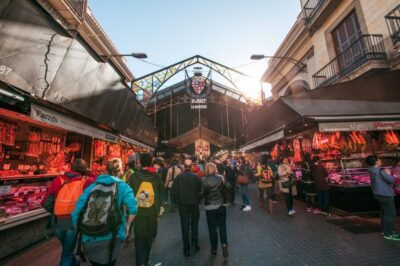
Paella Cooking Experience & Boqueria Market Tour
Read our review →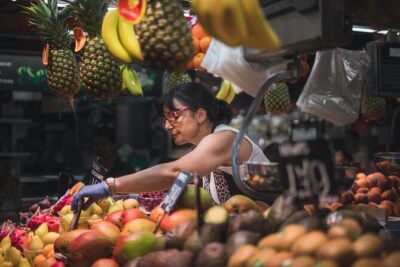
Barcelona Paella Cooking Class with Market Visit, Tapas & Sangria
Read our review →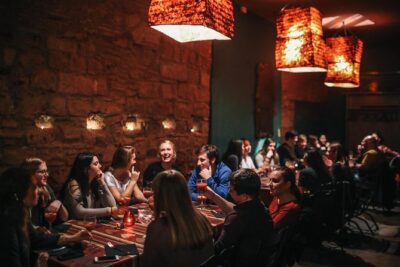
Barcelona Interactive Spanish Cooking Experience
Read our review →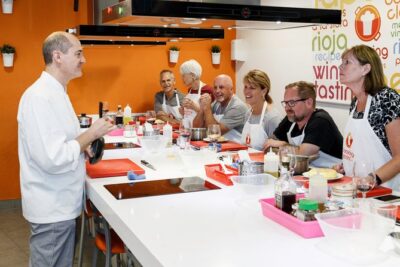
Spanish Cooking Class Paella Tapas and Sangria in Madrid
Read our review →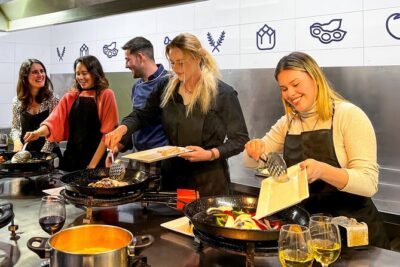
Paella Cooking Class, Wine Tasting & Central Market in Valencia
Read our review →
Paella Cooking Class in Madrid with Bottomless Wine Pairing
Read our review →
Valencian paella cooking class, tapas and visit to Ruzafa market.
Read our review →Browse the lists this tour appears in