
Review · CHIANG MAI COOKING CLASSES
Half-Day Thai Cuisine Cooking Experience in Chiang Mai
The best part of this Chiang Mai cooking class is that you do more than watch a chef work. You choose your own menu, handle the ingredients, cook at your own station, and sit down to eat a full meal you made yourself. I like the small maximum of eight people and the choice between four or six dishes. The school also offers hotel pickup and drop-off, which makes a six-hour class easy to fit into a Chiang Mai day.
I also like the setting: a Lanna-style wooden house near Chiang Mai Gate and the Saturday walking street. The chefs explain Thai herbs, vegetables, spices, tamarind, and palm sugar in practical terms. One consideration is the long half-day length. If you only want a quick pad Thai lesson, six hours may feel like more cooking than you need, and poor weather or low enrollment can lead to a cancellation.
Key points at a glance
- Choose four or six dishes: Build a menu from fried food, salad, soup, curry, stir-fry, and dessert.
- Cook at your own station: You receive your own wok, chef’s knife, and clean utensils for hands-on practice.
- Small group size: The class is limited to eight people, allowing more room for questions and help.
- Authentic Chiang Mai setting: The school is close to Chiang Mai Gate and the Saturday walking street, in a Lanna-style wooden building.
- Useful pickup service: Hotel pickup and drop-off are offered, while the listed meeting point is Tha Phae Gate.
- A full meal at the end: You eat the dishes you prepare, including options such as khao soi, tom yum, green curry, mango sticky rice, and Pad Thai.
A six-hour Thai cooking day near Chiang Mai Gate
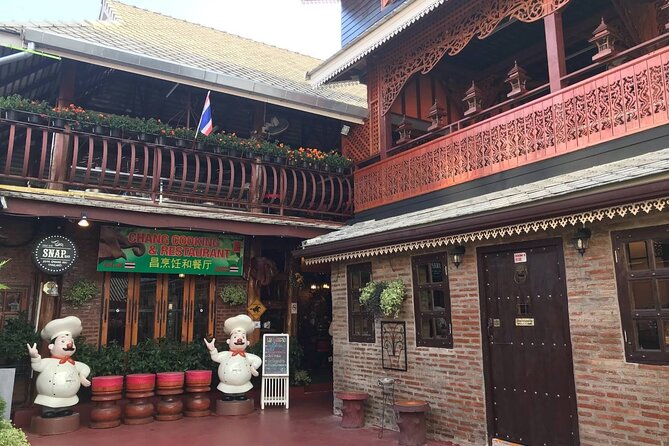
This is a hands-on Thai cuisine class at Chang Cooking, a school near Chiang Mai Gate. The listed meeting point is Tha Phae Gate, and the activity finishes back at the meeting point. Hotel pickup and drop-off are offered, so confirm the exact arrangement when you book.
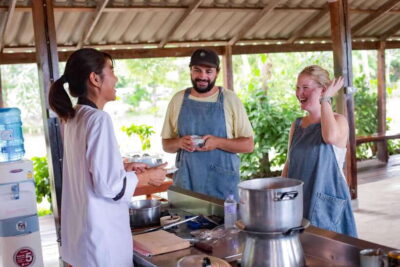
The school uses a Lanna-style wooden building with two kitchen areas. One has a restaurant-style layout, while the other is an open-air kitchen on the first floor. That gives the class a more local feel than a standard indoor demonstration room, though the open-air setup also means weather matters.
You do not need to bring cooking tools. Your station includes a wok, knife, and clean utensils. Bring enthusiasm, an appetite, and perhaps a phone if you want to remember the menu or ingredients. The experience lasts about six hours, so allow most of one morning or afternoon rather than trying to squeeze it between two short sightseeing stops.
The class can be offered in English, Chinese, Japanese, and Thai. That matters in a practical way: cooking instruction works best when you can ask about texture, heat, and timing. A participant who was the only English speaker in a group received individual instruction, so a smaller language group may work especially well for solo visitors.
More Thai Classes in Chiang Mai:
- Half-Day Thai Cooking Class at Organic Farm in Chiang Mai
★ 5.0 · 19,087 reviews - Chiang Mai: Cooking Class, Market & Thai Herbs Garden Tour
★ 4.9 · 4,824 reviews - Thai and Akha Cooking Class in Chiang Mai
★ 5.0 · 4,358 reviews
Choosing your six-course Thai menu
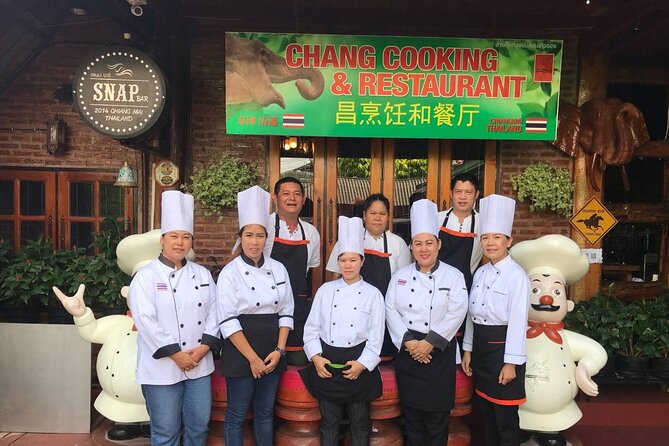
The first useful decision is how much you want to cook. You can choose four or six dishes from the available menu. Four dishes should give you a substantial lesson without making the day feel too long. Six dishes suits anyone who wants a wider sample of Thai cooking and a larger meal at the end.
Your choices are divided into six categories:
- Deep-fried dishes: spring rolls, golden noodles, fried banana, or fish cakes
- Salads: glass noodle salad, fruit salad, papaya salad, or raw spring rolls
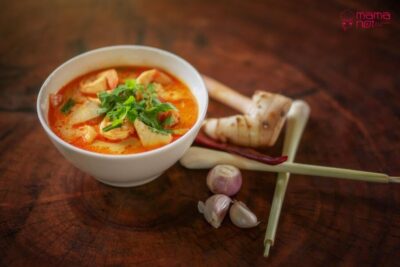
- Soups: tom kha kai, yellow chicken soup, clear tofu soup, or tom yum goong
- Curries: panang curry with chicken, khao soi, Massaman curry with chicken, or green curry with chicken
- Stir-fries: fried rice, pineapple rice, Pad Thai, or chicken with cashew nuts
- Desserts and drinks: mango sticky rice, herbal drink, khanom krok coconut cakes, or Thai jelly
This menu is broad enough to show how different Thai dishes are built. A curry teaches you about spice paste and coconut-based sauce. A salad shows how lime, chili, sugar, and fish sauce can balance each other. A soup gives you a lesson in aroma and seasoning, while stir-fried dishes focus on speed and heat.
I would choose dishes with different cooking methods rather than six similar recipes. For example, pair Pad Thai with a curry, a salad, and mango sticky rice. If you already know the classics, choose khao soi or khanom krok for something more closely tied to northern Thai cooking.
The exact menu is selected from the listed choices, so check how four or six dishes are counted before you decide. Dessert and herbal drink options may form part of the total rather than an extra course. That small detail is worth confirming if you are planning your choices around a particular number of dishes.
Learning the ingredients before the heat rises
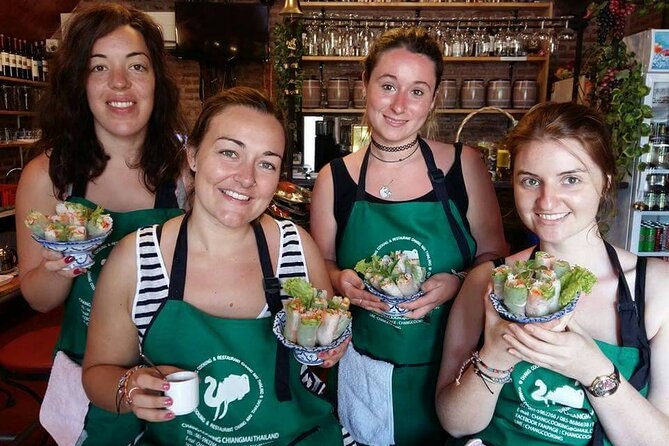
The class begins with an introduction to the herbs, vegetables, and spices used in Thai food. You also get to taste ingredients such as tamarind and palm sugar. This is one of the more useful parts of the experience because Thai cooking depends on balance, not simply on adding chili.
Tamarind brings a sour, fruity note. Palm sugar gives dishes a round sweetness that is different from ordinary white sugar. Once you taste these ingredients on their own, you can better understand why a Thai salad, soup, or stir-fry may include sour, sweet, salty, spicy, and savory notes in the same bowl.
The school’s stated aim is to make authentic Thai cooking approachable, and the format supports that. You are not expected to arrive with professional knife skills or prior kitchen training. The chef and assistant guide you through the work, explain the ingredients, and help when needed.
The most useful questions to ask are practical ones. How finely should an ingredient be chopped? When should the curry paste hit the pan? How do you know when a sauce has reduced enough? A cooking class earns its price when you leave with answers you can use again, not just a plate you enjoyed once.
Your own station, wok, and meal
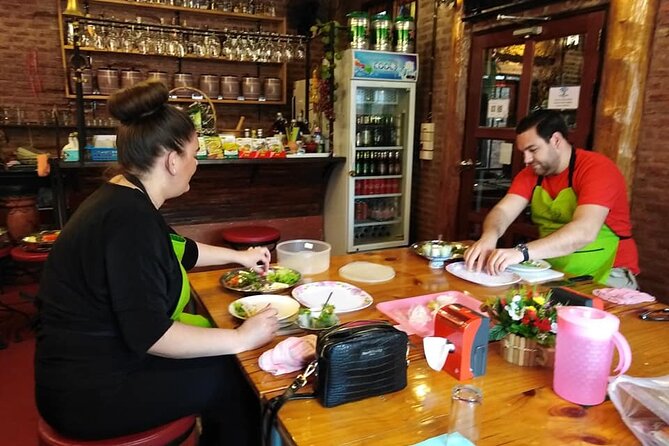
Each person has a cooking station, which keeps the class active. You are not standing behind a crowd trying to see a demonstration. You get your own wok, knife, and utensils, then work through the recipes with guidance from the chef.
That setup is especially helpful for first-time cooks. You can see how much oil goes into a pan, how quickly ingredients cook, and how the dish changes as you add each component. Thai stir-fries move quickly, so having your own equipment makes it easier to follow the timing.
The small group limit of eight people is another strong point. It does not guarantee private instruction, but it gives the chef a better chance to notice if you need help. It also avoids the assembly-line feel that can come with large cooking schools.
If the class language mix is uneven, your experience may vary. The school offers several languages, and individual instruction may be possible when only one person speaks a particular language. Still, it is sensible to confirm the language arrangement before booking if detailed English instruction is important to you.
More Half-Day Outings in Chiang Mai:
- Chiang Mai: HALF-DAY COOKING COURSE at a Thai Cooking Farm
★ 4.9 · 705 reviews - Half-Day Cooking Class with Market Tour
★ 5.0 · 163 reviews - Half-Day Thai Cooking Class on a Local Farm Near Chiang Mai
★ 4.9 · 32 reviews - Half-Day Chiang Mai Cooking Class: Make Your Own Thai Foods
★ 5.0 · 17 reviews
What the cooking sequence means for you
The exact order of the dishes is not specified, but you can expect a progression through Thai ingredients and cooking methods. Fried dishes require hot oil and quick handling. Salads depend on tasting and adjusting the dressing. Soups teach you to build fragrance and broth, while curry and stir-fry dishes show the importance of heat and timing.
The chef introduces the ingredients before you cook, then helps you prepare the selected recipes. You can expect explanations of the herbs, vegetables, spices, tamarind, and palm sugar included in Thai cooking. Since the menu is your choice, the lesson should feel more personal than a fixed demonstration.
A curry such as green curry, panang curry, or Massaman curry gives you a useful look at the differences between Thai spice blends. Khao soi is an appealing choice for anyone interested in Chiang Mai food, since it is a northern noodle dish rather than a generic restaurant favorite.
For soup, tom yum goong brings a sharper, more sour-spicy profile, while tom kha kai is softer and coconut-based. Papaya salad offers a fresh, punchy contrast to fried food. If you want a gentler menu, clear tofu soup, fruit salad, and pineapple rice may be easier choices.
You will probably eat at different points as dishes are completed, or sit down for a final feast, depending on the class flow. The important point is that the meal is made by you. This makes the class feel like both a lesson and lunch or dinner.
Is the $31.30 price good value?
At $31.30 per person, this is a reasonably priced cooking experience for a six-hour activity. You receive instruction, cooking equipment, ingredients, a meal, and the chance to prepare four or six dishes. Hotel pickup and drop-off can add practical value, especially if you are staying outside the immediate Chiang Mai Gate area.
The price works best for people who care about learning, not just eating. If you compare it with a restaurant meal, you are paying more than you would for one simple dish. But you are also getting several hours of instruction and the chance to repeat the recipes at home.
The value is less clear if your schedule is tight or you do not enjoy cooking. Six hours is a serious block of time, and you may spend part of it preparing dishes that you could order cheaply in Chiang Mai. The class makes the most sense when you want an activity that combines food, local ingredients, and practical skills.
The four-dish option may be the better value for a relaxed first lesson. The six-dish option is better if Thai food is a main interest, or if you want to sample several styles in one sitting. Ask about the daily menu and timing before you arrive so your choices match your appetite and energy.
Location, pickup, and the Chiang Mai day plan
The school is close to Chiang Mai Gate and the Saturday walking street. That location makes it easy to pair the class with an evening of food stalls and local shopping if your schedule lines up with Saturday.
The published meeting point is Tha Phae Gate, a central place in Chiang Mai. The activity ends back at the meeting point. Pickup is offered, but the information does not specify every hotel or the exact pickup time, so you should provide your hotel details and confirm the arrangement.
Nearness to public transportation is useful if you prefer to make your own way there. If you use the pickup service, remember that hotel collection can take time, especially when several people are being collected. The six-hour estimate should be treated as the class duration, not necessarily the full door-to-door time.
Weather is relevant because one kitchen is open air. If conditions are poor, the experience may be canceled and you will be offered another date or a full refund. A minimum number of participants is also required, so a small booking may be moved if the class does not reach that number.
Free cancellation is available when you cancel at least 24 hours before the start time. Within 24 hours, changes and refunds are not accepted. That policy is reasonable, but keep it in mind if your Chiang Mai plans are still shifting.
Who will enjoy this class most?
I would recommend this experience to anyone who wants to take Thai food home as a skill rather than a memory. It suits couples, solo cooks, and small groups who like working with their hands and eating a proper meal afterward.
It is also a good choice for people who want a taste of northern Thai food. Khao soi gives you a reason to choose a dish associated with Chiang Mai, while the broader menu lets you compare northern cooking with familiar Thai favorites.
Families may enjoy the class, but check the booking details carefully for child ages and any applicable extra charges. The activity information warns that a mismatch in details such as age or group size can lead to an extra payment on arrival.
You should think twice if you want a short, polished demonstration with little effort. This class asks you to participate for much of the day. That is its strength, but it may feel like work if cooking is not part of your holiday plans.
Should you book this Chiang Mai cooking class?
Book it if you want a small, practical class with a meal included, especially if you like the idea of choosing your own recipes. The combination of an eight-person maximum, personal cooking equipment, several language options, and hotel pickup gives it a useful balance of comfort and local character.
Choose four dishes for a manageable introduction, or six if you want a full Thai food lesson and a generous meal. I would build a varied menu that includes one curry, one soup or salad, one stir-fry, and a dessert. Choose khao soi if you want your menu to connect more closely with Chiang Mai.
Skip it if your schedule cannot spare six hours, or if you would rather spend the day sightseeing. Weather and minimum enrollment can also affect plans, so keep some flexibility. For food-focused visitors, though, the chance to taste tamarind and palm sugar, work at your own station, and cook an entire menu makes the $31.30 cost easy to justify.
FAQ
Where does the cooking class take place?
The class takes place at Chang Cooking in Chiang Mai, near Chiang Mai Gate and the Saturday walking street.
What is the meeting point?
The listed meeting point is Tha Phae Gate on Tha Phae Road in Chiang Mai.
Where does the activity end?
The activity ends back at the meeting point.
How long does the experience last?
The cooking experience lasts approximately six hours.
How many dishes can I prepare?
You can choose either four or six dishes from the available menu.
What types of food are on the menu?
The choices include deep-fried food, salads, soups, curries, stir-fries, desserts, and an herbal drink.
Can I choose khao soi?
Yes. Khao soi is one of the curry choices on the menu.
Is hotel pickup available?
Yes. Pickup and drop-off from your Chiang Mai hotel are offered.
How large is the class?
The activity has a maximum of eight participants.
Can I cancel for a full refund?
Yes, if you cancel at least 24 hours before the experience start time. Cancellations made less than 24 hours in advance are not refunded.
Newest classes around Chiang Mai
- Aroidee’s Farm-Fresh Thai Cooking Experience★ 5.0 · 8 reviews
- Authentic Thai Cooking Class and Farm Visit in Chiang Mai★ 5.0 · 66 reviews
- Signature Thai Cooking Course★ 5.0 · 79 reviews
- Half Day Guided Thai Cooking Class in Chiang Mai★ 5.0 · 13 reviews
- Yummy Tasty Thai Cooking School in Chiang Mai★ 5.0 · 2 reviews
- Online Thai and Akha Cooking Class★ 5.0 · 70 reviews
- Northern Thai Cooking Class in Chiang Mai in a Countryside Home★ 5.0 · 2 reviews
- Private Half-Day Thai Cooking Class in Chiang Mai★ 5.0 · 4 reviews
Chiang Mai Cooking Classes, compared.
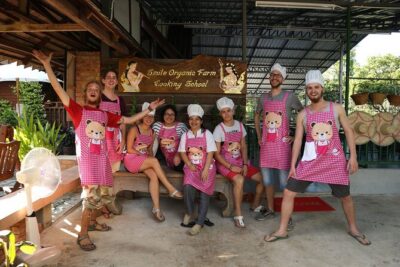
Half-Day Thai Cooking Class at Organic Farm in Chiang Mai
Read our review →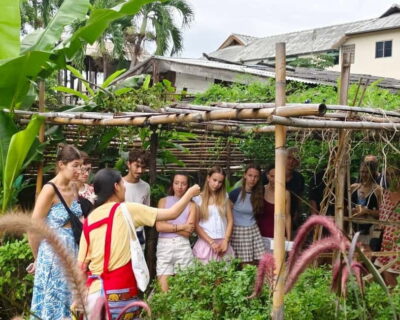
Cooking Class, Market & Thai Herbs Garden Tour
Read our review →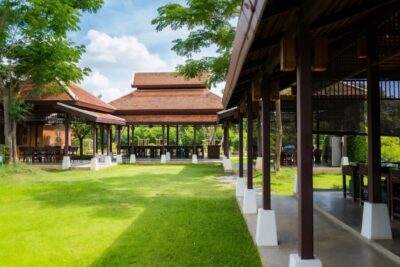
Authentic Cooking Class with Market & Farm Visit
Read our review →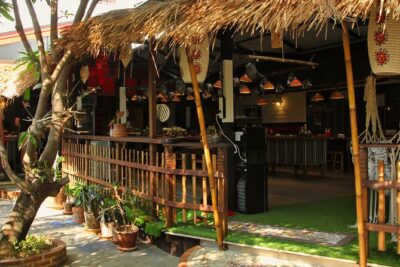
Browse the lists this tour appears in