
Review · MOROCCO COOKING CLASSES
Chefchaouen Cooking Class
Chefchaouen’s blue lanes are lovely, but its food market tells you more about daily life. This three-hour cooking class begins at the local market, where you choose fresh ingredients with a chef before preparing and eating a Moroccan meal. It is a hands-on look at how food moves from market stall to table.
I like the small group of 10 or fewer, since you have a better chance to ask questions and work near the chef. I also like the full sequence: shopping, cooking, eating, then finishing with Moroccan mint tea or coffee and cookies. The main thing to consider is that the class may cover several dishes, so the amount of actual cooking you do can vary.
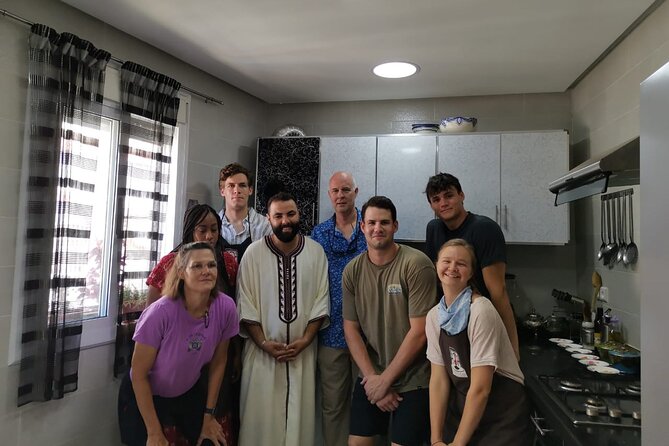
Youssef is a local Chefchaouen guide with strong English and an easy manner, and he brings food, local culture, and town history into the experience. The setting is friendly and personal, though anyone wanting a formal, technique-heavy cooking school may find the class more social than instructional.
Key points at a glance
- Market shopping comes first: Walk through a local market and help select the ingredients used in class.
- Three-course meal included: You cook, then sit down to eat the food prepared during the session.
- Small group format: The maximum is 10 people, which allows more room for questions and help.
- Local hosts matter: Youssef is praised for his English, warmth, and knowledge of Chefchaouen’s food and culture.
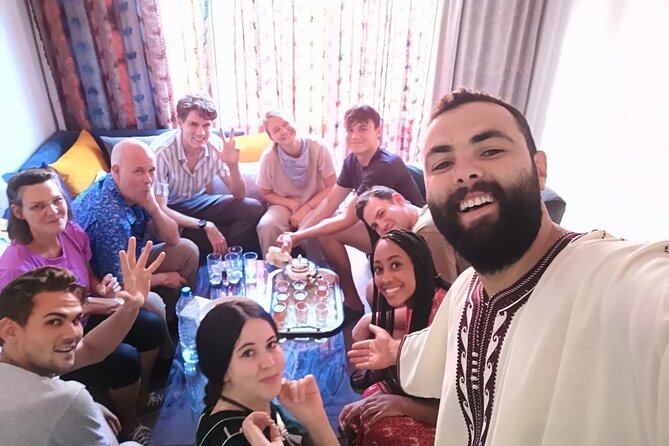
- Tea or coffee closes the meal: After lunch, choose Moroccan mint tea or coffee with cookies.
- Convenient timing: Meet at Hotel Bab El Ain at 11:00 am, and finish back at the same location.
Starting at Hotel Bab El Ain at 11:00 am
The meeting point is Hotel Bab El Ain, at Rue Lala Horra Kayssariya No. 77. Look for the hotel’s salon de thé, or tea room. The activity begins at 11:00 am and ends back at the meeting point, so you do not need to arrange a second pickup point or find your way home after lunch.
This is useful in Chefchaouen, where the old town’s lanes can feel confusing at first. The meeting point is near public transportation, though the supplied details do not specify a private transfer or hotel pickup. Plan to reach Hotel Bab El Ain on your own.
Bring a comfortable appetite. The experience includes a three-course lunch, and the class is built around eating what you help prepare. Alcoholic drinks are not included, so do not count on wine or beer with the meal.
More Cooking Classes in Morocco:
- Marrakech: Moroccan Cooking Class with Pickup
★ 4.6 · 1,862 reviews - Marrakech: Traditional Moroccan Cooking Class & Market Visit
★ 4.8 · 1,861 reviews - Marrakesh: Moroccan Dishes Cooking Class with a Local Chef
★ 5.0 · 1,615 reviews
Choosing ingredients in Chefchaouen’s local market
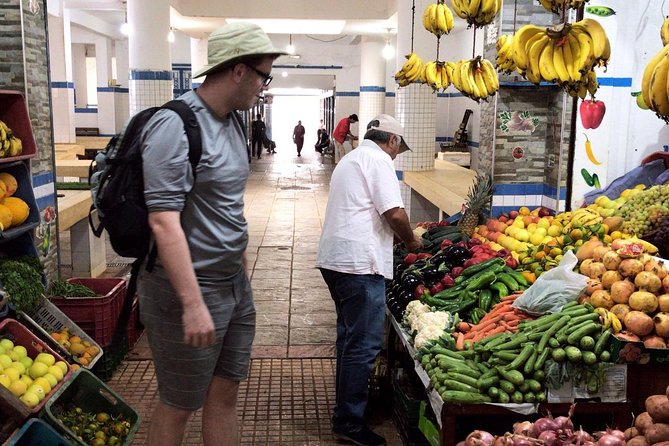
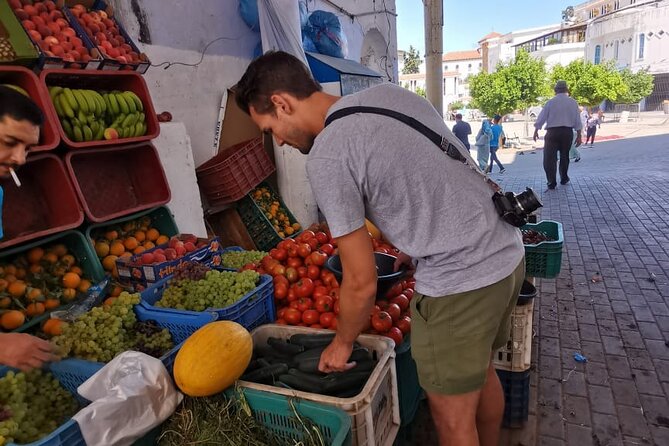
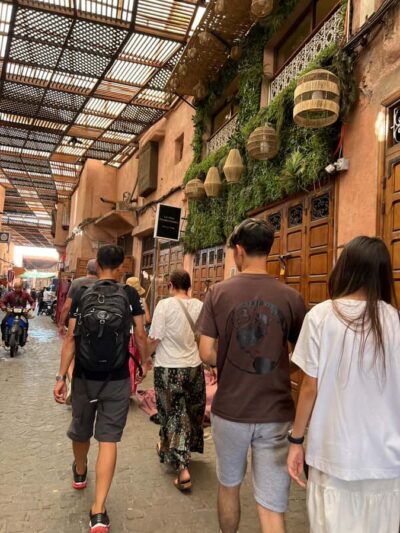
The market visit gives the class its strongest sense of place. Rather than beginning with bowls of pre-measured ingredients, you walk with the chef and select the products needed for the meal. You see how Moroccan shoppers buy fresh food for the day, then carry those choices into the cooking session.
I like this part because it explains Moroccan food through ordinary habits. You are not just told that ingredients are fresh. You see the buying process, the range of products, and the way a local cook decides what belongs in the meal.
The market also provides useful context for the dishes. A recipe can look simple on a printed menu, but the market shows how much the final result depends on the quality and selection of the raw ingredients. Ask the chef why a particular product was chosen, how it is used at home, and what might change with the season.
Do not expect a long guided market tour with a stop at every stall. The visit is tied to the cooking class, so its purpose is to gather what you need. That keeps the schedule practical, but it also means the market portion may feel brief if you want a detailed food history lesson.
From shopping basket to Moroccan cooking session
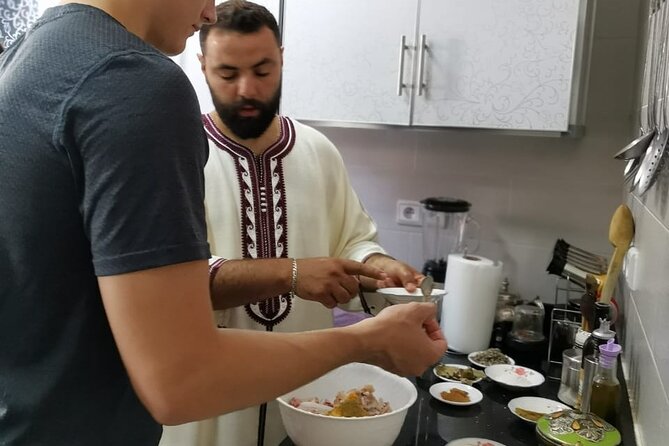
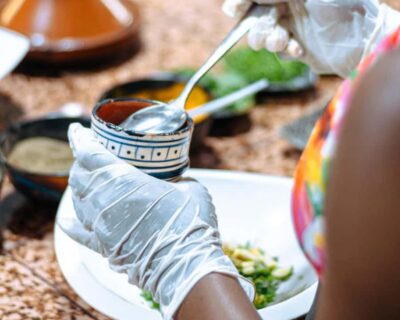
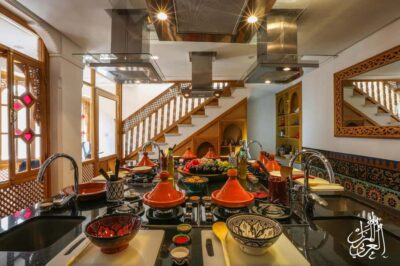
After the market, you take the ingredients to the cooking setting and begin preparing the meal with the chef’s help. Kitchen tools and assistance are included, so you do not need to bring equipment or worry about knowing Moroccan cooking methods in advance.
The class is designed for participation, but the amount of work you personally do can depend on the group and the pace of the session. One useful point to keep in mind is that several dishes are prepared within about three hours. If the chef has many steps to manage, some tasks may be demonstrated while others are shared among the group.
That is not necessarily a flaw. It can make the class easier for beginners and keep lunch on schedule. But if your main goal is to practice every stage yourself, tell the chef early that you want as much hands-on time as possible. The small group helps here, since fewer people are competing for the same cutting board, pan, or preparation task.
The cooking also gives you a chance to ask about methods rather than just ingredients. You can ask how Moroccan cooks build flavor, which steps are done ahead of time, and how the dishes are served at home. The exact recipes are not provided in the tour details, so do not book this expecting a fixed list of named dishes.
A three-course lunch you helped prepare
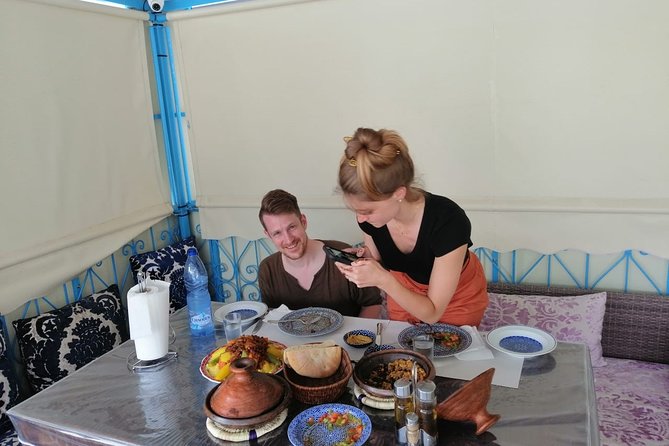
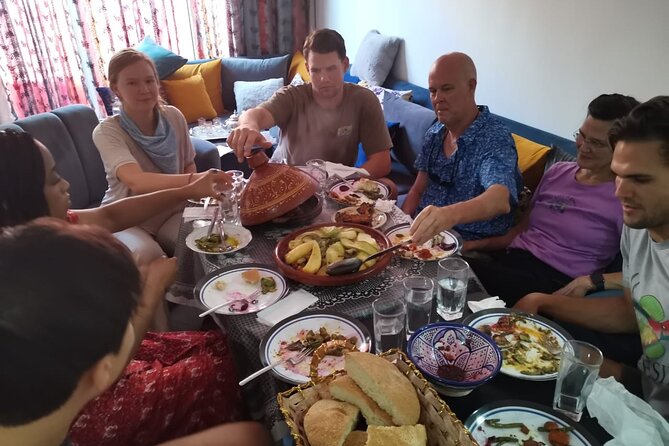
The best payoff comes after the cooking: you sit down and eat the three-course meal. This is more satisfying than sampling a few bites while standing in a kitchen. You get time to see how the dishes work together and to enjoy the meal at a relaxed pace.
The included lunch is a real part of the activity, not an optional extra. That helps explain the price of $68.95 per person. You are paying for the market visit, chef instruction, kitchen use and tools, and a full three-course meal, rather than only for a short demonstration.
The meal is also where the cross-cultural side of the class becomes most natural. Food gives you an easy way to compare cooking habits without turning the experience into a lecture. You can ask questions during lunch, discuss the market choices, and learn how the dishes fit into Moroccan home cooking.
Afterward, choose coffee or Moroccan mint tea with cookies. Tea is the more traditional choice, but having both options is useful if you do not usually drink mint tea. The details do not specify the type of coffee or the cookie selection, so treat these as a simple finish rather than a separate tasting course.
Same region, a different dish to learn:
- Moroccan Cooking Class & Marrakech Market Visit with Chef Khmisa
★ 5.0 · 1,504 reviews - Half-Day Cooking Class with Local Chef Laila in Marrakech
★ 5.0 · 952 reviews - Marrakech: Moroccan Cooking Class with a Local Family
★ 4.9 · 668 reviews - Marrakech: Moroccan Cuisine Cooking Class in Local Home
★ 4.8 · 508 reviews
Youssef, local stories, and the human side of the class
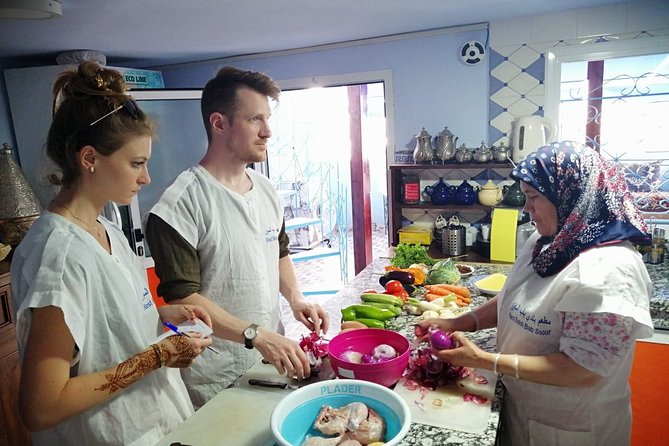
Youssef is the named guide associated with the strongest praise for the experience. He is from Chefchaouen, speaks very good English, and brings local history and culture into the food activity. His personality appears to be a major part of the class, especially for people who want conversation along with instruction.
A local guide can make the market easier to understand. You learn not only what an ingredient is, but how it fits into the daily life of the town. In a place as visually famous as Chefchaouen, that local connection helps move your attention beyond the blue-painted streets.
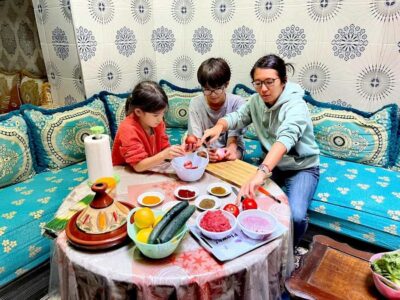
The class is also described as family-run and welcoming. That makes it appealing if you prefer a personal setting over a polished culinary studio. You may find the tone warm and informal, with the meal serving as a social gathering as much as a lesson.
Language should still be handled with reasonable expectations. Youssef speaks English well, but the experience may involve other local hosts or family members who do not speak English fluently. Communication can still work through demonstration, shared food, and simple explanations, but a person seeking detailed technical instruction in English may want to confirm this point before booking.
How much hands-on cooking should you expect?
This is the most important question for deciding if the class suits you. The experience is advertised as hands-on, and you will help prepare the food, but the class covers three courses in a limited time.
I would book it if you want a blend of market shopping, local conversation, cooking, and lunch. I would be more cautious if you want a strict workshop in which you personally prepare every dish from start to finish. The schedule and group size make participation possible, but they do not guarantee that every person will handle every step.
The best approach is to be clear at the start. Tell the chef which techniques interest you and ask to take part in those steps. If you are vegetarian, say so when booking and again at the beginning. A vegetarian cooking session has been offered, so dietary preferences can be relevant to the menu and the shopping choices.
The class may work especially well for couples, families, and small groups of friends. Solo participants can also benefit from the small-group format, since the meal creates an easy setting for conversation. Children may enjoy the market and tasting elements, but the supplied details do not state a minimum age or provide a child-specific format.
Is $68.95 good value?
At $68.95, this is not the cheapest way to eat lunch in Chefchaouen. You can find less expensive meals in Morocco if all you want is food. The value comes from combining lunch with a market visit, instruction, kitchen tools, and time with a local chef.
The three-hour length makes the price easier to justify. You are not paying for a quick cooking demonstration followed by a small sample. You get a complete activity that fills a substantial part of the day and includes a three-course menu.
The small maximum of 10 also matters. Large cooking groups can turn a class into a demonstration where you watch from the back. Here, the group limit gives you a better chance to ask questions and receive help, though the actual amount of personal cooking still depends on the menu and the number of people who attend.
I see the price as fair for someone who values a local food experience and a full meal. It is less compelling for someone who already plans to eat cheaply and mainly wants written recipes or advanced culinary training.
Timing, booking, and cancellation details
The class starts at 11:00 am, which places the market visit and lunch around midday. That timing works well if you want a substantial meal during the day, but it may conflict with a morning sightseeing plan. Allow enough time to reach Hotel Bab El Ain without rushing.
Your confirmation is issued at booking, and the activity uses a mobile ticket. Free cancellation is available if you cancel at least 24 hours before the local start time. Cancellations or changes made inside that window are not refunded or accepted.
The class requires a minimum number of participants. If the provider cancels because that number is not reached, you can choose another date or experience, or receive a full refund. The activity returns to the starting point, and public transportation is nearby.
Who should book this Chefchaouen cooking class?
I would recommend it to you if you want to connect food with everyday life in Chefchaouen. It suits people who like markets, shared meals, informal conversation, and learning by watching and doing.
It is a particularly good choice for:
- First-time visitors who want a local introduction to Moroccan food
- Couples and small groups seeking a shared activity
- People who enjoy eating lunch as part of the lesson
- Vegetarians who notify the provider in advance
- Anyone who values a local guide and a personal setting
- Visitors who want an activity lasting about three hours, not a full-day excursion
I would think twice if you need a formal culinary school, a guaranteed recipe list, extensive one-to-one instruction, or alcoholic drinks. The class is social and practical, not designed as advanced chef training.
Should you book it?
Book this class if the idea of choosing ingredients in a local market, preparing Moroccan food with a Chefchaouen host, and sitting down to eat it sounds better than simply ordering lunch. The combination is the real value, and Youssef’s local knowledge and English make the experience easier for many international visitors.
Go in with flexible expectations about the cooking time. You will take part, but you may not personally complete every task in all three courses. For most people, that tradeoff is worthwhile because the class also gives you market context, cultural conversation, and a generous meal.
If you want an informal introduction to Moroccan food with a small group and a clear three-hour schedule, I would book it. If you want a technique-heavy workshop where every minute is spent at the stove, choose a more formal cooking school instead.
FAQ
Where does the cooking class begin?
It begins at Hotel Bab El Ain, Rue Lala Horra Kayssariya No. 77, at the hotel salon de thé in Chefchaouen.
What time does the activity start?
The start time is 11:00 am.
How long does the cooking class last?
The activity lasts about three hours.
How many people can join the class?
The maximum group size is 10 people.
Is lunch included?
Yes. A three-course lunch is included, consisting of the food prepared during the class.
Are drinks included?
Coffee or Moroccan mint tea with cookies is included after the meal. Alcoholic beverages are not included.
Where does the activity finish?
The activity ends back at the original meeting point, Hotel Bab El Ain.
Can I cancel for a full refund?
Yes, if you cancel at least 24 hours before the local start time. Cancellations made less than 24 hours in advance are not refunded.
Newest classes around Morocco
- Private Tagine Cooking Class in Chefchaouen with Lunch★ 5.0 · 5 reviews
- Chefchaouen Private Cooking Class with Mountain View★ 5.0 · 16 reviews
- Moroccan Cooking Class with a Local Family & Market Visit★ 5.0 · 16 reviews
- 3-Hour Cooking Class overlooking the Blue City★ 5.0 · 36 reviews
- Market Tour & Moroccan Cooking Class in Casablanca with Transfers★ 5.0 · 18 reviews
- Private CousCous Cooking Class in a Traditional Family Home★ 5.0 · 7 reviews
- Traditional Cooking Courses in Casablanca★ 5.0 · 2 reviews
- Private Moroccan Cooking Class in Casablanca with Hotel Transfers★ 5.0 · 2 reviews
Morocco Cooking Classes, compared.
Traditional Moroccan Cooking Class & Market Visit
Read our review →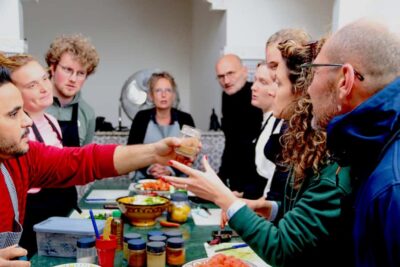
Moroccan Dishes Cooking Class with a Local Chef
Read our review →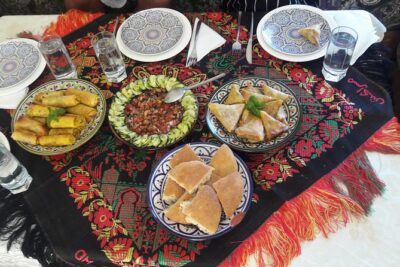
Moroccan Cooking Class & Marrakech Market Visit with Chef Khmisa
Read our review →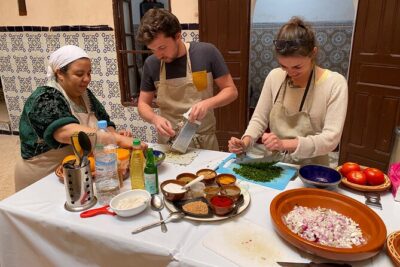
Half-Day Cooking Class with Local Chef Laila in Marrakech
Read our review →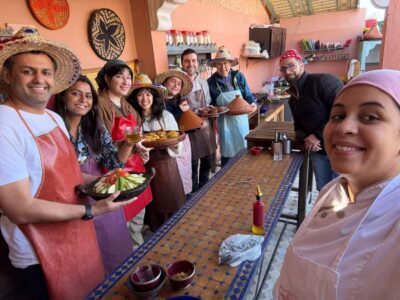
Browse the lists this tour appears in