
Review · SPAIN COOKING CLASSES
Paella & Sangria Class with Tapas and Market Visit
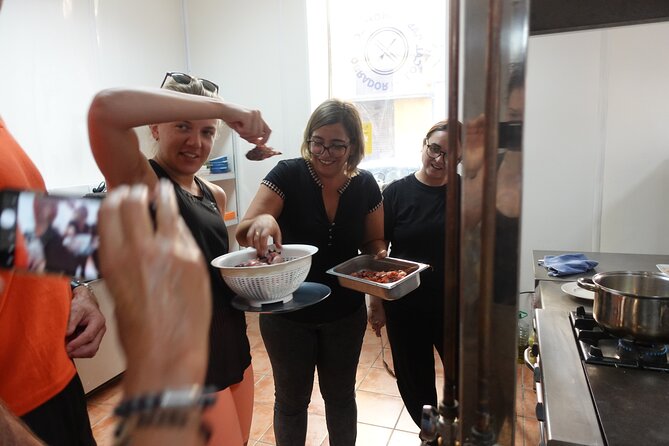
A market-to-table cooking class is one of the best ways to understand Alicante’s food culture. You begin at Mercado Central, choosing ingredients with a local guide, then prepare paella, tapas, and sangria in a working restaurant kitchen, not a staged classroom. I especially like the market visit and the choice of seafood, meat, or vegetarian paella.
I also like the hands-on format. You help with the ingredients, broth, salmorreta, rice, and sangria, then sit down to eat what the group has made. The main caution is that paella here follows Alicante tradition: the rice and stock matter more than a mountain of seafood, and some diners may find the portions of fish or shellfish modest.
Key points at a glance
- Mercado Central comes first: You shop for the ingredients while learning about Iberian ham, olives, seafood, local produce, and Alicante cooking.
- Paella is made from scratch: The class covers the broth, salmorreta sofrito, preparation, cooking, and final seasoning.
- Three paella choices: Pick seafood, meat, or vegetarian paella, a useful option for mixed groups.
- A real kitchen setting: Cooking takes place inside a local restaurant rather than a tourist demonstration room.
- Friendly small-group format: The advertised group size is about 15, with booking details listing a maximum of 16.
- A full meal is included: Along with paella and sangria, you may prepare or enjoy tapas such as tomato salad with salted fish, olives, cured ham, sausage, crisps, and fruit.
Starting at Alicante’s Mercado Central
The meeting point is Plaza 25 de Mayo, directly by Alicante’s central market. This makes the opening easy to find and gives you a useful first look at one of the city’s main food halls before the cooking begins.
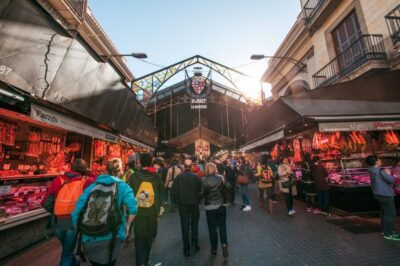
The market visit is not just a quick stop to collect preselected groceries. Your guide leads you through the stalls and explains what you are buying. Depending on the day’s ingredients, that can include seafood from Alicante Bay, vegetables, fruit, meat, wine, olives, ham, and other items used during the meal.
This part is particularly valuable if you are not familiar with Spanish food shopping. You learn the difference between local Mediterranean shrimp and larger ocean shrimp, see how cured products are presented, and get an introduction to ingredients such as salted fish, squid, cuttlefish, and Iberian ham.
Guide Federico, also called Fred by some participants, receives especially strong praise for his easy manner and clear English. He has also been described as comfortable switching between English and Spanish while continuing to explain the food and customs. That matters in a market, where the guide needs to keep the group moving while answering questions and pointing out small details.
You should allow about an hour for this portion. It is one of the best reasons to choose this class over a simple cooking demonstration. You are not only being shown a finished dish. You are seeing how the ingredients are selected before they reach the kitchen.
More Cooking Classes with a Market Tour in Spain
- Barcelona: Paella Cooking Experience & Boqueria Market Tour
★ 4.8 · 3,661 reviews - Barcelona Paella Cooking Class with Market Visit, Tapas & Sangria
★ 5.0 · 2,531 reviews - Paella Cooking Class, Wine Tasting & Central Market in Valencia
★ 5.0 · 1,150 reviews
Walking from the market to the kitchen
After shopping, the group walks roughly three blocks to the restaurant kitchen. The activity ends at the original meeting point, so the market is also your beginning and final reference point.
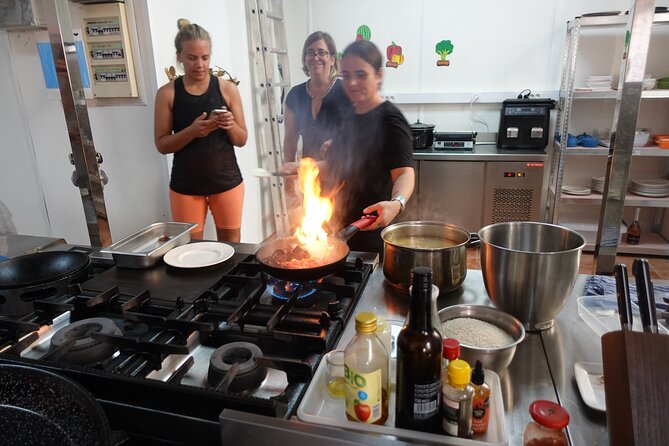
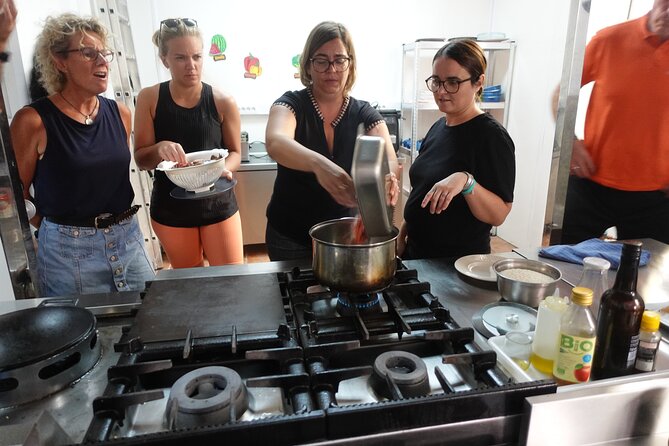
The kitchen is described as a real working kitchen inside a local restaurant. That gives the class a more practical feel than a purpose-built tourist studio. You are working in the same sort of setting where food is prepared for local diners, with a chef and host guiding the group.
The tradeoff is that a working kitchen may feel less polished or spacious than a dedicated cooking school. With a group of up to 15 or 16 people, you should expect shared tasks rather than a private workstation for every person. Still, the format is designed so everyone can take part, and the hands-on nature is one of the class’s strongest features.
Chef Maria is named alongside Fred in the cooking instruction. Together, the guide and chef help divide the preparation among the group, explain the steps, and keep the meal moving on schedule.
Learning the foundations of Alicante paella
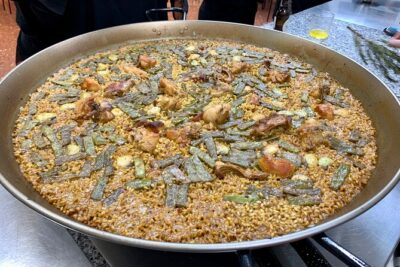
The class treats paella as a rice dish built on flavor, not as a pile of toppings. You prepare the broth, make the salmorreta, and work through the steps that give the rice its character.
Salmorreta is a sofrito-style base associated with Alicante cooking. It helps provide the deep savory flavor that carries through the rice. The stock is also central. Fresh fish and other ingredients are used to build the base, and the paella’s final taste depends heavily on that preparation.
This point is worth keeping in mind before you book. Some visitors expect each serving to contain large amounts of shrimp, squid, meat, or vegetables. The local approach puts more emphasis on the rice and the broth. One complaint about the class focused on small shrimp and limited seafood, but the response from the provider explained that the shrimp were Mediterranean shrimp from the local bay and that the dish was being made in an Alicante style.
That distinction will help you set the right expectations. If you want a paella loaded with oversized shellfish, this may not be your ideal meal. If you want to understand why cooks focus so carefully on the stock, salmorreta, and rice, the lesson is useful.
The seafood version may include shrimp and squid or cuttlefish. One group received sepionet, a small local cuttlefish considered a higher-quality ingredient than standard squid. The exact ingredients can change with market supply, so the dish is tied to what is fresh and available that day.
You can also choose meat or vegetarian paella. This flexibility makes the class easier to recommend to couples or families who do not all want the same dish. The information provided does not specify how far the vegetarian option can be adapted for particular allergies or dietary restrictions, so you should confirm those needs before booking.
Preparing tapas, tomato salad, and sangria
Paella takes time to cook, so the class fills the waiting period with other Spanish foods. You may help prepare a tomato salad with salted fish, arrange olives, sample Iberian ham and local sausage, and enjoy crisps or fresh fruit.
These additions give you a broader taste of Alicante than paella alone. The salted fish and olives show how preservation and brining shape the local table. Iberian ham and cured sausage add a glimpse of Spain’s long-standing charcuterie traditions.
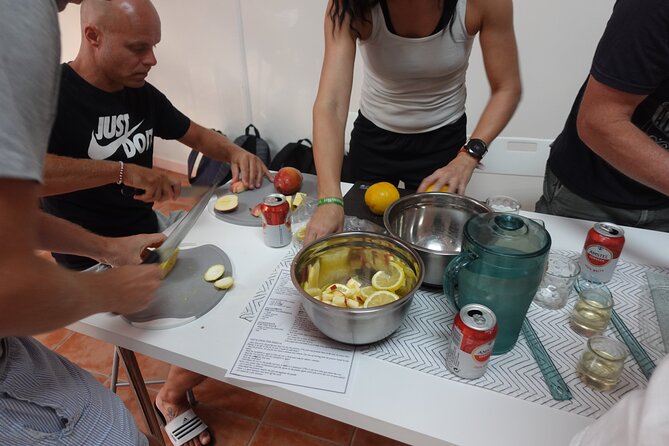
The sangria is prepared during the class rather than poured from a ready-made jug. The wine may come from a barrel, and the recipe includes orange juice, soda, syrup, liquor, and fruit. If you prefer a strong glass of wine, this may taste too light. Traditional sangria is not meant to be served as straight wine, so the fruit, sweetness, and mixer are part of the drink’s style.
You should be at least 18 to consume alcohol. The supplied information does not say that a separate nonalcoholic version is included, so ask ahead if you do not drink.
More Paella and Spanish Classes in Spain:
- Barcelona Interactive Spanish Cooking Experience
★ 4.5 · 2,155 reviews - Spanish Cooking Class Paella Tapas and Sangria in Madrid
★ 5.0 · 1,340 reviews - Paella Cooking Class in Madrid with Bottomless Wine Pairing
★ 5.0 · 985 reviews - Seville: Spanish Cooking Class with Dinner
★ 4.9 · 900 reviews
How much participation should you expect?
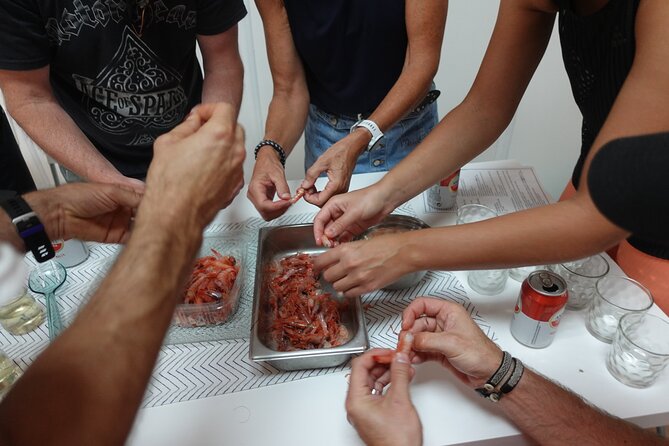
This is not a sit-and-watch presentation. The group helps prepare ingredients, mix the sangria, assemble the salad, and cook the paella. Some participants take turns with specific jobs, including preparing seafood or using a blow torch for fish.
The work is shared, which helps keep the class social. You may be asked to volunteer for a task, but the structure is meant to give everyone a part in the meal. The group size matters here. A class of seven or eight gives you more time at the counter and makes it easier to ask questions. Larger groups can still work, but your individual cooking time may be shorter.
The advertised maximum is around 15 people, while the additional booking information gives a maximum of 16. Smaller departures do occur, and a group of five, seven, or eight allows a more personal exchange with the guide. You cannot count on a tiny class, but the overall limit keeps it from becoming a huge demonstration.
The social element is part of the appeal. You eat with people you met at the market, and the shared jobs give the group an easy way to talk. This works well for solo visitors, couples, and friends who want an activity with more conversation than a standard food tour.
The meal at the end
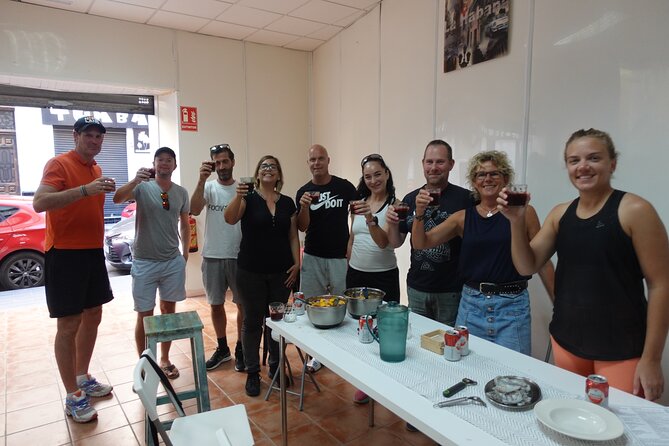
After the cooking, you sit down to eat the paella, tapas, and sangria together. The meal is the payoff, but it also lets you judge how the technique affected the finished dish.
The strongest feedback centers on the food being fresh and the paella turning out well. Many participants describe the final rice as delicious, and several specifically praise the tomato and salted-fish salad, ham, olives, sausage, and drinks. Recipes are provided, so you can try to repeat the dishes at home.
Do not expect a formal restaurant tasting menu. This is a meal produced by a mixed group of cooks with guidance from a chef. The pleasure comes from knowing how the dish was built and from sharing the result. If you are looking for perfect plating or a lavish quantity of seafood, a restaurant dinner may suit you better.
The meal is substantial enough to feel like more than a token sample. It includes the paella and sangria plus several small plates and extras. At the same time, the precise menu can shift with the market. That is a fair trade for using fresh ingredients rather than relying on a fixed display.
The guides and teaching style
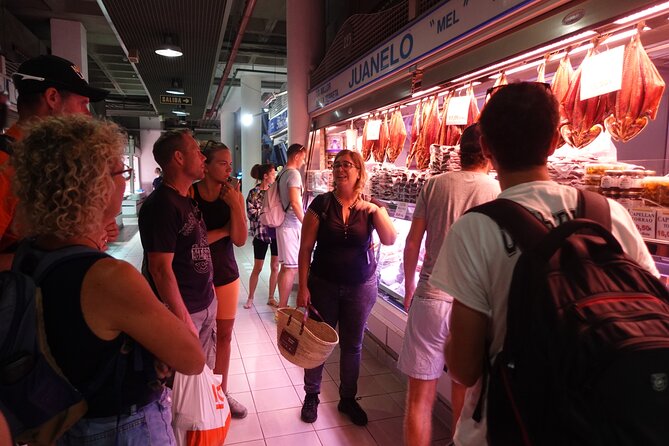
The people leading the class make a large difference, and Fred or Federico is repeatedly singled out for his warmth, humor, English, and ability to involve the whole group. He explains the food without making the lesson feel like a lecture, and he has a knack for turning unfamiliar ingredients into something approachable.
His market explanations cover more than names. You learn about ham quality, olives and their brines, shrimp, squid, cuttlefish, and the role of local products. In the kitchen, he explains what you are doing and why, while the chef helps with the technical cooking.
A good guide is especially important in a class where several people work at once. Fred’s role is part teacher, part host, and part traffic controller. That combination helps the class stay relaxed while the food is being prepared.
The experience is offered in English. Spanish may also be used at times, but English is the listed language.
Is the $59.26 price good value?
At $59.26 per person, this is not the cheapest way to eat paella in Alicante. It is also more than the price of a basic market visit or a short tasting.
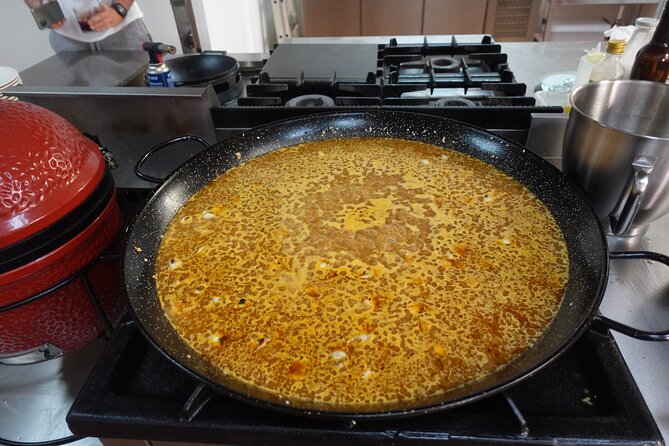
The value comes from the amount packed into three and a half hours. You get a guided market visit, ingredient selection, instruction from a guide and chef, hands-on cooking, tapas, sangria, a full shared meal, and recipes to take home. You are paying for an activity as well as lunch.
I would consider it good value if you want to learn and participate. The price is less attractive if your main goal is simply to eat a large serving of seafood paella. The most important thing to understand is that the class teaches local technique, and local technique does not always match the version served abroad.
The high overall score, 4.8 from 122 ratings, and 95 percent recommendation rate point to a consistently well-received activity. Still, one low rating highlights a real concern: expectations about shellfish quantity and sangria strength can differ from the provider’s traditional approach. Read the description as a cooking lesson first and a meal second.
Timing, meeting point, and cancellation
The class lasts about three hours and 30 minutes. Start at Plaza 25 de Mayo by Mercat Central d’Alacant, and plan to stay with the group until it returns to the same meeting point.
The meeting area is near public transportation, which is helpful if you are staying outside the old center. Confirmation is provided at booking, and mobile tickets are accepted.
Free cancellation is available if you cancel at least 24 hours before the local start time. Cancellations or changes made inside that window are not refunded or accepted. The class also requires a minimum number of participants, so if the provider cancels for that reason, you are offered another date or experience, or a full refund.
Who should book this Alicante cooking class?
I would choose this for you if you enjoy local food, want to meet people, and like learning by doing. It is particularly good for first-time visitors who want an introduction to Alicante ingredients without giving up most of a day.
It also suits mixed groups because of the seafood, meat, and vegetarian choices. Families should note the alcohol age rule, and anyone with strict dietary needs should ask about adaptations before booking.
You may want to skip it if you dislike group activities, prefer quiet restaurant meals, or want a high-end cooking school with individual stations. It is also not the best match if you judge paella by the amount of shellfish on top.
Should you book it?
Yes, if you want to connect Alicante’s market culture with the food on your plate. The market shopping, salmorreta lesson, shared cooking, and guidance from Fred or Federico give the class a clear sense of place.
Book it with sensible expectations: the rice and stock are the stars, the sangria is mixed with juice and soda, and the group shares the preparation. At $59.26, the combination of a market tour, cooking lesson, drinks, tapas, and meal makes it a strong choice for an active half-day in Alicante.
FAQ
Where does the paella and sangria class begin?
The class begins at Plaza 25 de Mayo, next to Mercat Central d’Alacant in Alicante.
How long does the experience last?
The activity lasts approximately three hours and 30 minutes.
What types of paella can I choose from?
You can choose seafood, meat, or vegetarian paella.
Is the class taught in English?
Yes. English is the listed language for the experience.
How many people can join the class?
The advertised group size is a maximum of 15 participants, while the additional booking information lists a maximum of 16 travelers.
Can I cancel for a full refund?
Yes. You can receive a full refund if you cancel at least 24 hours before the experience’s local start time. Changes or cancellations inside 24 hours are not accepted or refunded.
Newest classes around Spain
- Pintxos and Tapas Cooking Class in Bilbao★ 5.0 · 38 reviews
- Basque Pintxos and Tapas Cooking Class in Bilbao★ 5.0 · 73 reviews
- Small-group Immersive Basque Cooking Class in Bilbao with Open Bar★ 5.0 · 65 reviews
- Paella and Burnt Basque Cheesecake Cooking Class (in Bilbao)★ 5.0 · 46 reviews
- Rooftop Paella Seafood Cooking Class Experience in Barcelona★ 5.0 · 59 reviews
- Private Authentic Paella Cooking Class in Barcelona with Josh★ 5.0 · 3 reviews
- Barcelona Tapas Cooking & Cocktail Class with Veronique & Mattias★ 5.0 · 3 reviews
- Private Barcelona Market Tour & Paella Cooking Class with Josh★ 5.0 · 4 reviews
Spain Cooking Classes, compared.
Paella Cooking Experience & Boqueria Market Tour
Read our review →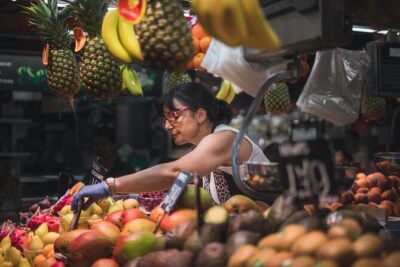
Barcelona Paella Cooking Class with Market Visit, Tapas & Sangria
Read our review →
Barcelona Interactive Spanish Cooking Experience
Read our review →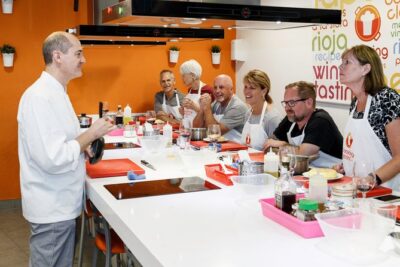
Spanish Cooking Class Paella Tapas and Sangria in Madrid
Read our review →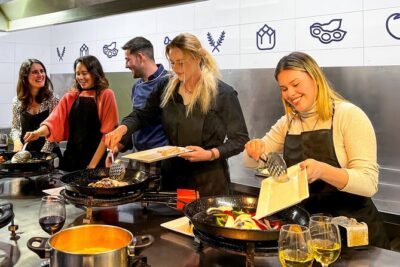
Paella Cooking Class, Wine Tasting & Central Market in Valencia
Read our review →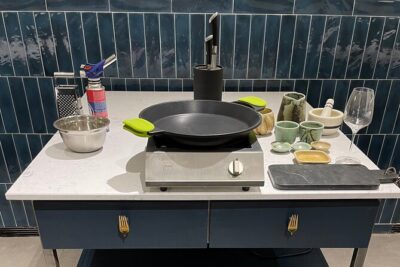
Paella Cooking Class in Madrid with Bottomless Wine Pairing
Read our review →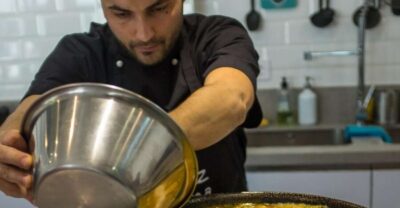
Valencian paella cooking class, tapas and visit to Ruzafa market.
Read our review →Browse the lists this tour appears in