Review · COOKING CLASSES
Local Ghanaian Cooking Class in Accra to help support wellness community center
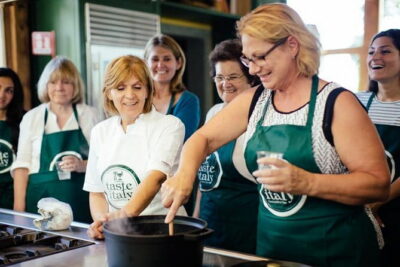
Accra’s best food lessons do not begin with a recipe card. This one starts at a local market, where you help gather ingredients before returning to a community center kitchen. You may pound fufu, shape banku or rice balls, and prepare a soup or stew such as okra, groundnut, palm-nut, light, or plain soup.
I like the local setting and the clear community purpose. Your booking helps fund programs at the Wellness Community Center, including nutrition education, health screenings, children’s after-school lectures, exercise, art, and dance. I also like the small-group format, which can give you more time with cooks such as Auntie Irene, Ms. Gifty, or Ms. Pat.
The main caution is that the amount of hands-on cooking can vary. Some of the preparation may already be done, and one account found the class lasted about two hours rather than the advertised six. Confirm the schedule and how much cooking you will do before booking.
Key points to know before you book
- Market first, kitchen second: You ride by car from Global Wellness Mission to a local market to help collect the ingredients.
- Traditional Ghanaian staples: The class can include fufu, banku, jiji, rice balls, jollof rice, fried fish, chicken, and several soups or stews.
- A social, family-style setting: Cooking takes place with local hosts and family members, with plenty of room for conversation and laughter.
- Akpeteshie-based spirits: Emergency, Hatso, and Uwuba are served as local tastings, each prepared with bark or tree leaves.
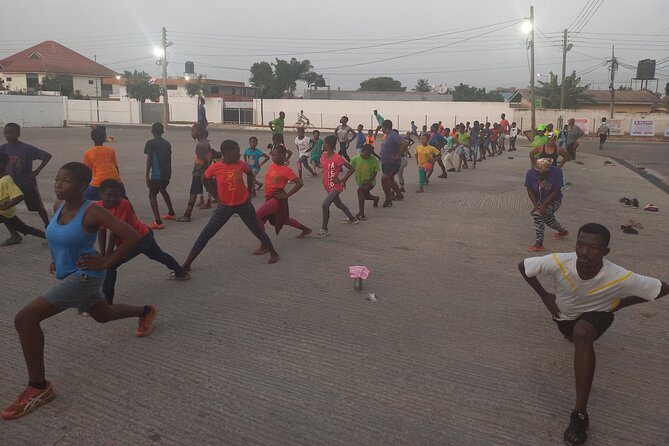
- Community support is part of the price: Your payment helps programs in fitness, nutrition, health screening, and children’s activities.
- Ask about timing and preparation: The listed duration is about six hours, but the actual class may be shorter and less hands-on than expected.
Starting at Global Wellness Mission in Accra
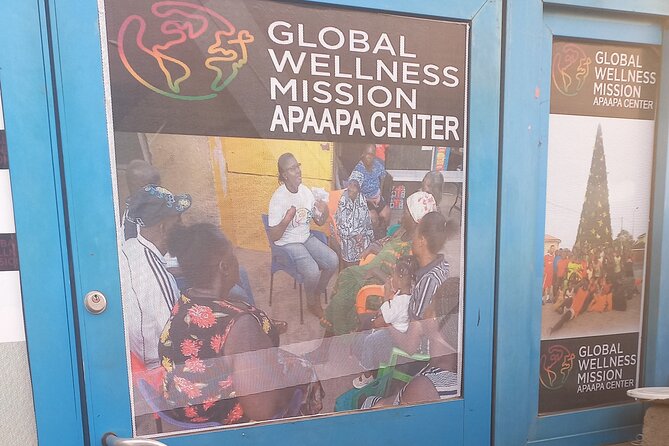
You meet at Global Wellness Mission, at CM7, Third Oloti Street, Accra. The activity returns to this same point, which makes the day easier to manage than a class with a different drop-off location.
The meeting window is listed as Monday through Saturday, from 8 a.m. to noon. The experience includes transportation by car to the market, so you do not need to arrange your own ride between the center and the food-shopping stop.
The center gives this cooking class a purpose beyond lunch. Booking supports physical activity programs, nutrition lessons, health screenings, art and dance programs, and after-school lectures for children. I consider that a meaningful part of the value, especially if you want your food activity to connect with local community work rather than exist as a stand-alone kitchen demonstration.
The group can reach up to 20 people. That is still manageable, but it is larger than a private family lesson. If you want the most personal instruction, ask how many people are booked for your date and request details about the cooking roles.
More Ways to Unwind in the world:
- Mini Group: Authentic Thai Cooking & Wellness Experience
★ 4.9 · 7 reviews - Thai Culinary Class by the Beach at Melati Resort & Spa
★ 5.0 · 6 reviews
Shopping for ingredients at an Accra market
The market visit is a useful beginning because it puts the food in context. Instead of arriving at a table with measured ingredients, you travel with the group to buy what is needed for the meal.
The information provided does not name the market or list every ingredient. That means the exact shopping experience can vary. You might help select produce, fish, meat, grains, or other items based on the soup, stew, and starch chosen for the class.
This part is also where you can ask practical questions. Find out which ingredients are common in Ghanaian home cooking, which foods are local staples, and how the cook decides what to prepare. The market stop may be brief, but it helps connect the finished plate with the everyday food culture of Accra.
There is one point to keep in mind: the class may not offer a full market lesson. The stated purpose is to collect ingredients for cooking, not to provide a guided market tour. I would treat this as a useful shopping stop, not a separate sightseeing attraction.
Cooking fufu, banku, jiji, and rice balls
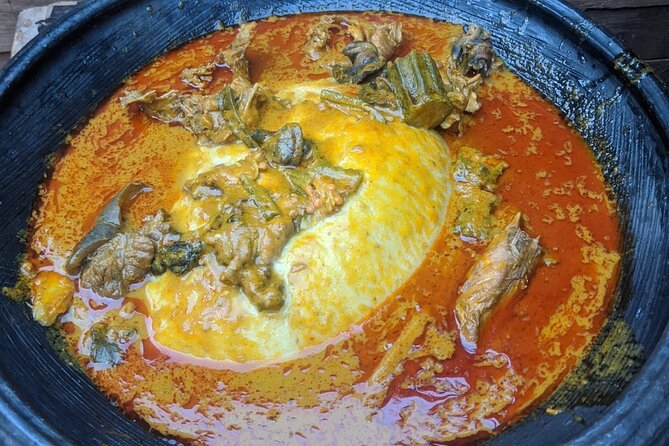
The heart of the experience is learning how Ghanaian starches are made. Depending on the class, you may pound fufu, prepare banku, make jiji, or shape rice balls. These foods are not just side dishes. They are often the vehicle for eating soup or stew, and their texture matters.
Pounding fufu gives you the clearest physical task. It takes effort and coordination, and you can expect the host to guide you through the process. Banku also requires attention to texture while it is cooked and worked together. If you are hoping to take part with your own hands, ask at the start which steps you can handle.
That question matters because preparation may not always begin from scratch. One account specifically found that some ingredients were already prepared and that the cooking was less hands-on than expected. This does not make the meal uninteresting, but it can disappoint you if you book it mainly as a practical cooking workshop.
The class is best approached as a shared food lesson. You may do some pounding, stirring, shaping, or seasoning, while the host handles other stages that require more time or careful control.
Choosing your soup or stew

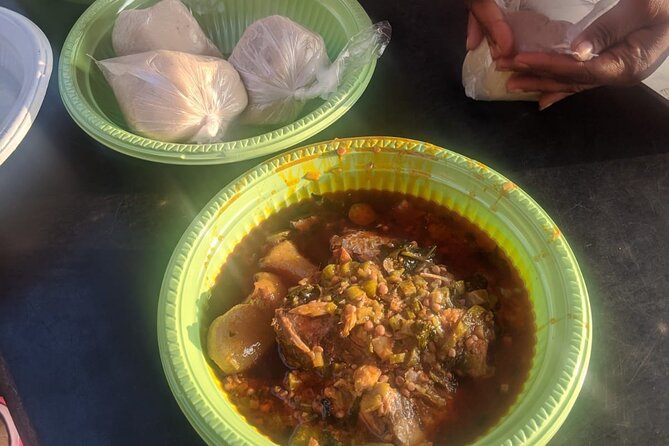
You may prepare one of several Ghanaian soups or stews. Choices listed for the class include okra soup, groundnut soup, palm-nut soup, light soup, and plain soup.
Okra soup is a good choice if you want to learn how a familiar vegetable becomes a thick, savory dish. Groundnut soup introduces the use of peanuts in a hearty soup. Palm-nut soup brings a distinct ingredient and flavor profile, while light soup offers a thinner style. Plain soup is also available.
The exact choice may depend on what is available and what the group selects. Ask before the class begins which options can be made that day. If you have allergies or dietary restrictions, contact the provider in advance. Requests can be accommodated upon request, but the information does not promise that every special diet can be handled on the day without notice.
This is also a good moment to clarify the main dish. Some cooking accounts describe meals including banku, fried fish, stew, chicken, and jollof rice, while another describes fufu served with soup. The menu may change, so do not assume that every listed dish will appear in one class.
More Cooking Classes in the world:
- Half-Day Thai Cooking Class at Organic Farm in Chiang Mai
★ 5.0 · 19,087 reviews - Florence: Pasta Cooking Class with Unlimited Wine
★ 4.9 · 10,285 reviews - 3 in 1 Cooking Class near Navona: Fettuccine, Ravioli & Tiramisu
★ 5.0 · 7,376 reviews - Florence: Pasta & Tiramisu Cooking Class with Unlimited Wine
★ 4.9 · 6,708 reviews
Jollof rice, fried fish, and the final meal
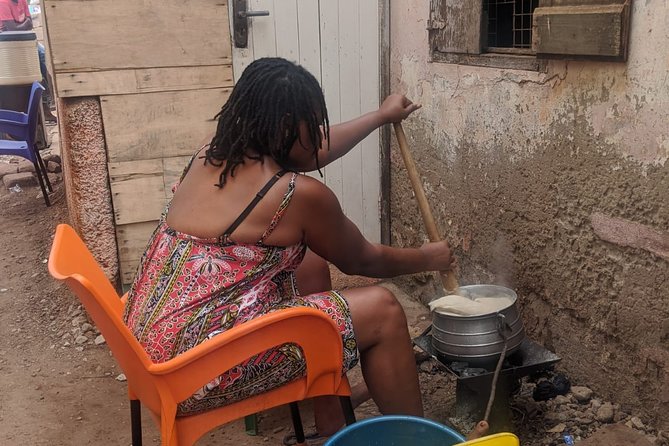
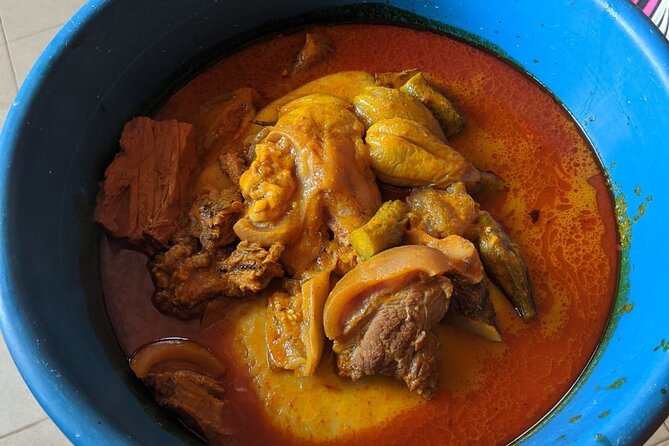
Jollof rice receives especially strong praise from the available feedback, and one person called it the best they had eaten. The class may also include fried fish, chicken, stew, and banku, depending on the menu chosen.
Jollof is worth paying attention to because it is a dish where small choices affect the final result. Ask about the seasoning, cooking order, and how the cook prevents the rice from becoming too wet or too dry. The class may not provide a formal recipe sheet, so take notes if you want to recreate the meal later.
The meal is included in the price, and it is the natural payoff for the morning’s work. You eat what the group has prepared and have time for conversation with the host and other people at the table. Several accounts describe the food as delicious and the hosts as warm, funny, and welcoming.
Do not expect a restaurant-style service sequence. This is a community cooking setting, so the meal is part of the gathering. If you prefer a quick demonstration followed by a polished tasting menu, this may feel informal. If you like food served with conversation and shared effort, the relaxed format should suit you.
Tasting Ghanaian spirits made with akpeteshie
Local alcoholic drinks are included. The listed options are Emergency, Hatso, and Uwuba, all made from akpeteshie and soaked with local bark or tree leaves.
This is an unusual part of the class and gives you a small introduction to local drinking customs. The tasting is not the main event, but it adds a cultural detail you would not get from a standard international cooking lesson.
You should pace yourself. The class does not include soda, beer, or other soft drinks, and alcoholic beverages are specifically identified as part of what is included. If you do not drink alcohol, tell the host in advance and ask what nonalcoholic option, if any, can be provided. The supplied information does not confirm a substitute.
Meeting the local cooks and hosts
The people leading the lesson are an important part of its character. Names connected with the cooking sessions include Auntie Irene, Ms. Gifty, and Ms. Pat, with Pat and Maggie identified as the experience providers.
Auntie Irene is associated with a class that included banku, fried fish, stew, chicken, and jollof rice. Ms. Gifty is described as attentive and flexible, including making the dishes requested. Ms. Pat and her family are associated with a warm, welcoming home-style setting.
You may not meet every named cook. The specific host can depend on the date, group, and arrangements. Still, these details tell you what kind of interaction to expect: this is built around local cooks and personal conversation, not a chef performing behind a counter.
The setting can also be useful if you want more than food. One person was connected with a local seamstress through Linda during the cooking visit. That connection is not a promised part of the activity, but it shows how a community-based experience can lead to practical local introductions.
Is $45 a fair price?
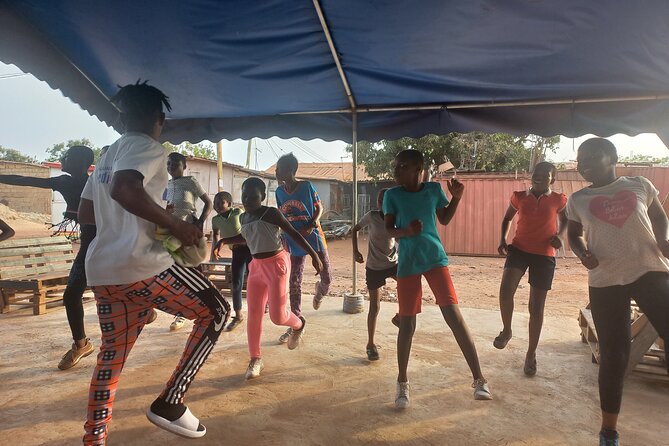
At $45 per person, the value depends on what you want from the day. The price includes lunch, local spirits, transportation by car to the market, the cooking instruction, and the chance to support the wellness center’s programs.
For a small-group cultural activity in Accra, that is a reasonable package if the class runs close to the advertised six hours and gives you real preparation work. The community contribution strengthens the value because your payment supports health, nutrition, youth, exercise, art, and dance programs.
The value is weaker if your session lasts only about two hours or if most of the ingredients are prepared before you arrive. In that case, you are paying for a shorter social meal and demonstration rather than a full cooking course.
I would ask two questions before paying: How long will this specific session last? Which dishes and preparation steps will I personally do? Clear answers will help you decide if $45 fits your plans.
Timing, group size, and practical details
The experience is described as lasting about six hours, with Monday through Saturday availability and morning meeting times. At the same time, one account describes a class lasting about two hours, so timing is the biggest detail to confirm.
The maximum group size is 20. That is not a tiny private lesson, but the format is still designed around a local host rather than a large coach tour. Smaller groups should mean more chances to ask questions and handle ingredients.
Confirmation is provided at booking. You receive a mobile ticket, and the activity ends back at the starting point. Service animals are allowed, and the meeting point is near public transportation.
Free cancellation is available if you cancel at least 24 hours before the start time. Cancellations or changes made less than 24 hours ahead are not accepted for a refund, and the cut-off follows Accra local time.
Who will enjoy this Accra cooking class?
I would choose this class if you want to meet local cooks, eat a home-style Ghanaian meal, and support a community center at the same time. It suits people who care more about conversation and food culture than a polished culinary school setting.
It is also a good fit for anyone curious about fufu, banku, jollof rice, and Ghanaian soups but unsure where to begin. The host can help you understand how these foods fit together on the plate.
Families and mixed-age groups may appreciate the welcoming setting, though the class includes alcohol and some physical pounding or stirring. People with dietary needs should contact the provider in advance.
I would be more cautious if you need a tightly timed six-hour itinerary, a formal recipe workbook, or guaranteed hands-on work from start to finish. The experience appears to be flexible, and that flexibility is part of its charm, but it also means the exact session can vary.
Should you book it?
Book it if you want a personal Accra food experience with a clear community benefit. The market stop, local spirits, shared meal, and chance to cook with people such as Ms. Gifty or Auntie Irene give it more character than a basic restaurant meal.
Before you commit, confirm the actual duration, the menu, and which preparation tasks you will handle. If those details match your expectations, $45 is a fair price for lunch, transportation to the market, local instruction, and support for wellness programs. If you need a strict six-hour, fully hands-on course, ask careful questions first or choose a more formal cooking school.
FAQ
Where does the cooking class meet?
The meeting point is Global Wellness Mission, CM7, Third Oloti Street, Accra, Ghana. The activity ends back at the same meeting point.
How long does the experience last?
The advertised duration is approximately six hours. One account describes a class lasting about two hours, so you should confirm the expected timing before booking.
What foods can I learn to prepare?
The class may cover fufu, banku, jiji, rice balls, jollof rice, fried fish, chicken, and stews or soups such as okra, groundnut, palm-nut, light, and plain soup. The exact menu can vary.
Is transportation included?
Transportation by car from the meeting point to the local market is included. The activity returns to the meeting point afterward.
Are food and drinks included?
Lunch and local alcoholic beverages are included. The listed spirits are Emergency, Hatso, and Uwuba, made from akpeteshie and soaked with local bark or tree leaves. Soda and beer are not included.
Can dietary requests be accommodated?
Dietary requests can be accommodated upon request. Contact the provider before the class so your needs can be discussed in advance.
Newest classes around the world
- Aroidee’s Farm-Fresh Thai Cooking Experience★ 5.0 · 8 reviews
- Authentic Thai Cooking Class and Farm Visit in Chiang Mai★ 5.0 · 66 reviews
- Yummy Tasty Thai Cooking School in Chiang Mai★ 5.0 · 2 reviews
- Signature Thai Cooking Course★ 5.0 · 79 reviews
- Half Day Guided Thai Cooking Class in Chiang Mai★ 5.0 · 13 reviews
- Online Thai and Akha Cooking Class★ 5.0 · 70 reviews
- Northern Thai Cooking Class in Chiang Mai in a Countryside Home★ 5.0 · 2 reviews
- Private Half-Day Thai Cooking Class in Chiang Mai★ 5.0 · 4 reviews
Cooking Classes, compared.
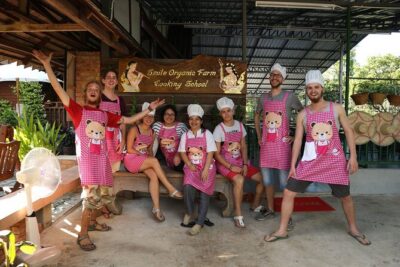
Half-Day Thai Cooking Class at Organic Farm in Chiang Mai
Read our review →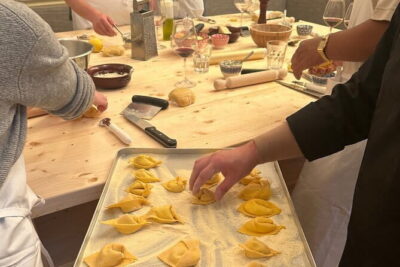

3 in 1 Cooking Class near Navona: Fettuccine, Ravioli & Tiramisu
Read our review →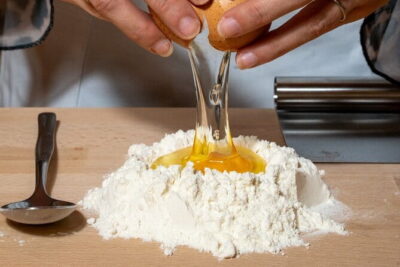
Pasta & Tiramisu Cooking Class with Unlimited Wine
Read our review →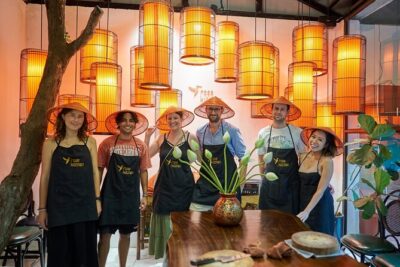
Hanoi Cooking Class: Culture, Local Market & Meaning CSR Impact
Read our review →
5 Traditional Dishes Hanoi Cooking Class with Market Trip
Read our review →