
Review · BANGKOK COOKING CLASSES
Mini Group: Authentic Thai Cooking & Wellness Experience
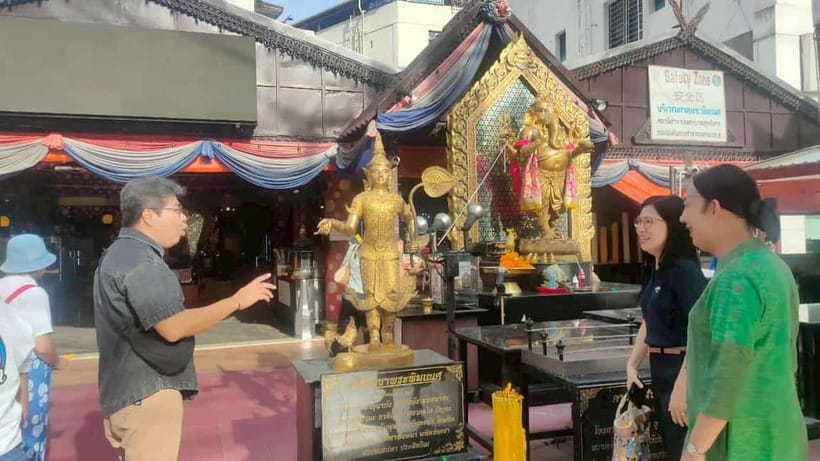
This five-hour experience gets you into the useful heart of Thai food: the market, the herbs, the curry paste, and the family kitchen. You begin at the Ganesha Shrine, walk 400 meters to Huai Khwang Market, then cook at Uncle and Aunty Cooking House with a group capped at eight.
I like the market-to-kitchen link, since you choose ingredients before learning how they are used. I also like the personal scale: Sunee and her family create a cozy setting where you cook four dishes under supervision, rather than simply watching a chef work.
The main consideration is the rotating menu. You get five dishes in many schedules, but the exact recipes depend on the day, and the morning includes moderate walking and standing. Tell the operator about allergies or dietary restrictions at least 48 hours ahead.
Key points to know before booking
- A real market visit: Walk from Ganesha Shrine to Huai Khwang Market to select vegetables, herbs, fruit, and spices.
- Four hands-on dishes: The menu changes daily and can include curry, soup, stir-fry, salad, noodles, and dessert.
- Small group attention: No more than eight people take part, with instruction in English or German.
- Thai cooking foundations: Make coconut milk and curry paste from scratch, then use them in your dishes.
- Useful take-home extras: You receive digital recipes and a certificate, with photos included according to the experience details.
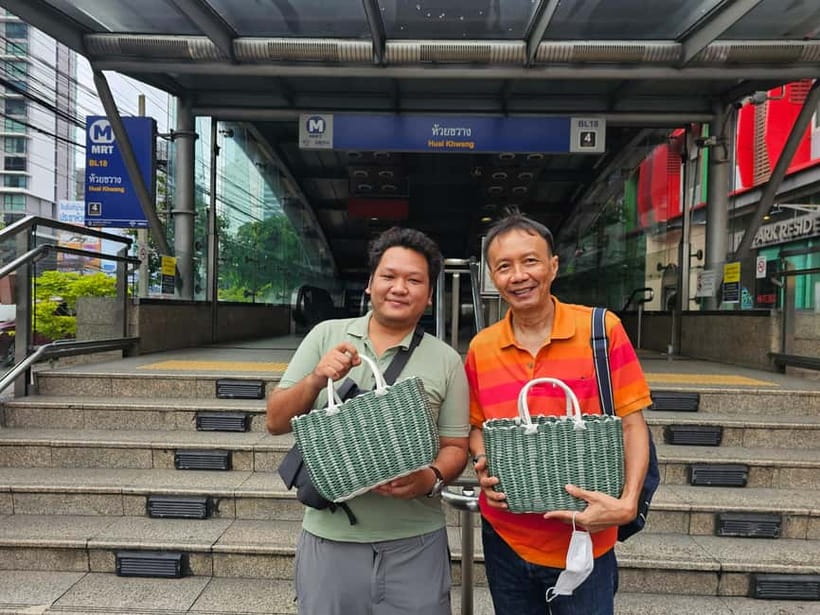
- Simple meeting point: Start and finish at MRT Huai Khwang Station, Exit 4, with transfers between the market and kitchen included.
From Ganesha Shrine to Huai Khwang Market
Your morning starts at 8:00 AM at MRT Huai Khwang Station, Exit 4. The guide meets you there, so arrive ready to walk rather than trying to find the cooking house on your own.
The first stop is the Ganesha Shrine, a spiritual site where you can observe offerings and traditional rituals. This is a brief cultural opening, not a full shrine tour, but it gives the morning a sense of place before the food work begins.
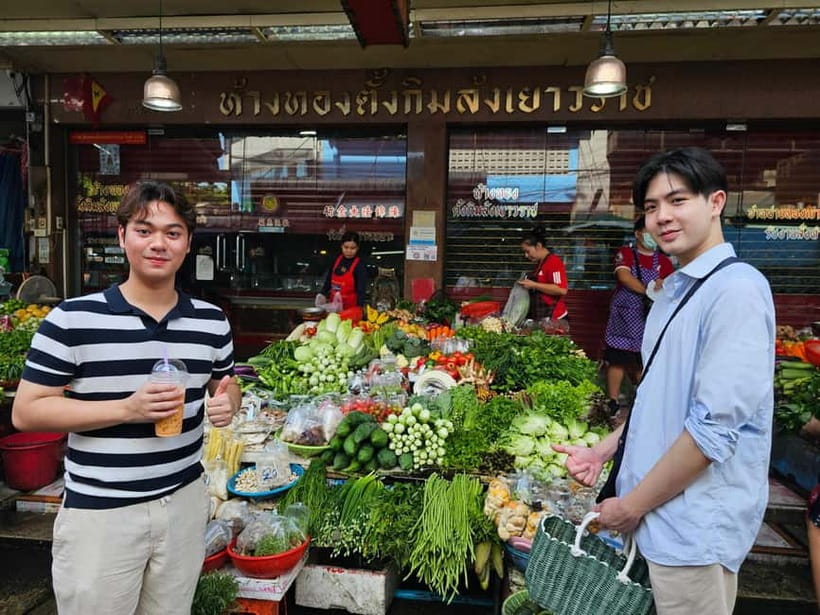
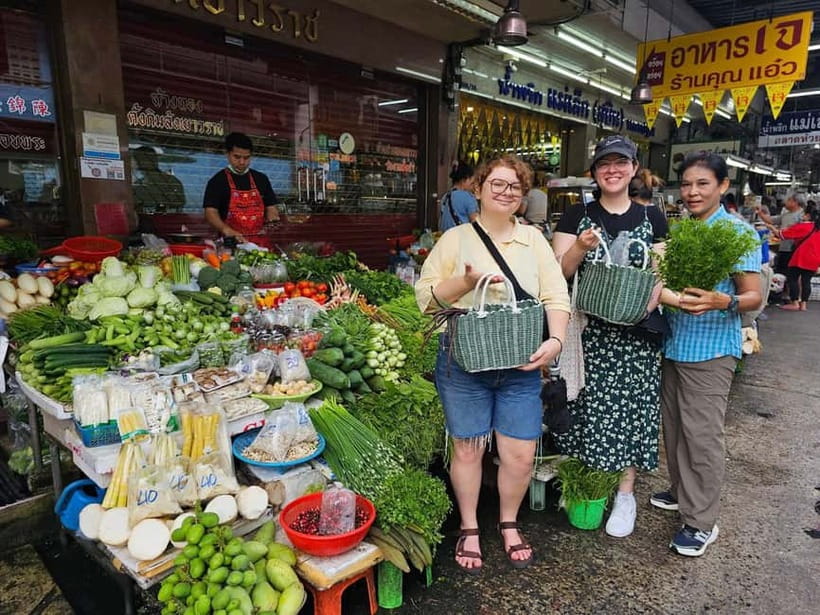
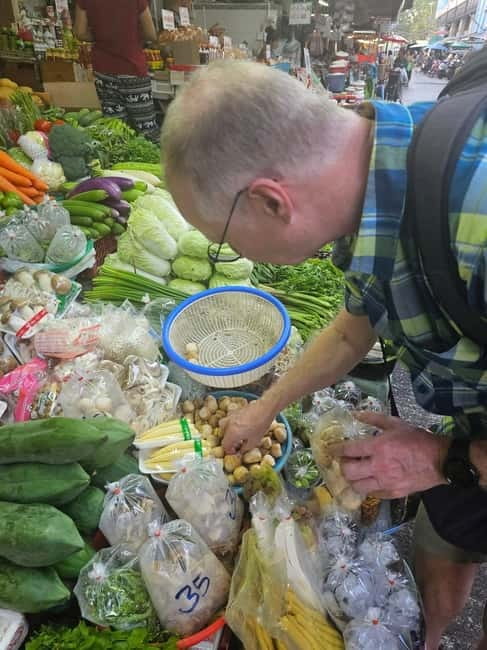
From the shrine, you walk about 400 meters to Huai Khwang Market. That short distance matters. You move from a familiar transport hub into a working neighborhood market, where ingredients are sold for daily cooking rather than displayed as souvenirs.
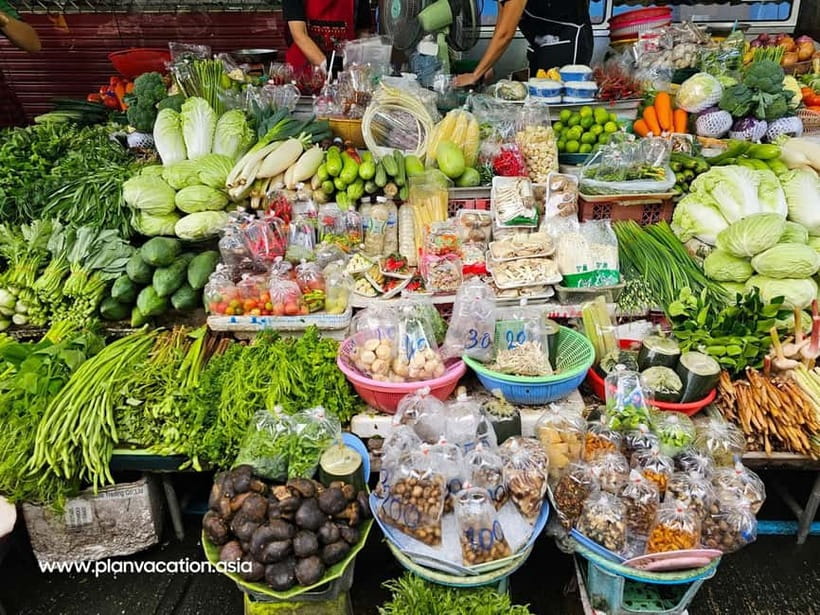
You’ll see vegetables, herbs, tropical fruit, spices, and less familiar ingredients used in Thai home kitchens. The guide helps you select what you need for the day’s menu and explains how ingredients behave in cooking.
I like this part because it answers questions that recipe cards often skip. You can look at the herbs before they are chopped, compare fresh produce, and understand that Thai flavor comes from balance, not simply from adding more chili.
The market can be lively, and the walk involves standing and moving through active stalls. Wear comfortable shoes and light clothing suitable for both the market and the kitchen. Bring your passport or ID card, as requested in the tour information.
More Thai Classes in Bangkok:
- Bangkok: Hands-on Thai Cooking Class and Market Tour
★ 4.9 · 1,614 reviews - Bangkok: Tingly Thai Cooking School Half-Day Cooking Class
★ 4.9 · 1,191 reviews - Bangkok: Maliwan Thai Cooking Class with Market Tour
★ 4.9 · 1,133 reviews
A short ride to Sunee’s family cooking house
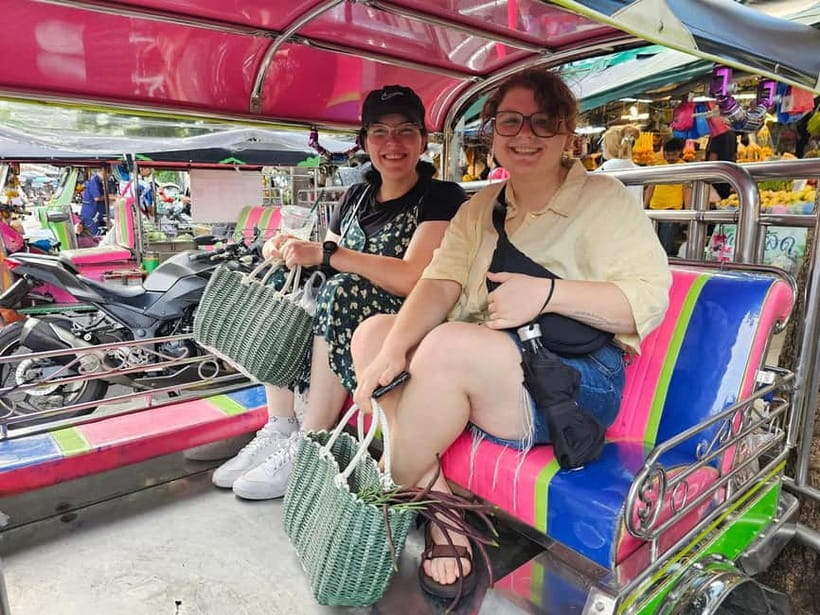
After the market, transportation takes you to Uncle and Aunty Cooking House. One review describes this as a short tuk-tuk ride, which adds a pleasant local touch, though the exact vehicle may depend on the day’s arrangements.
At the house, you receive a herbal welcome drink before walking through the garden. The garden contains herbs and flowers used in Thai cooking, giving you another chance to see ingredients in their natural setting.
This garden stop is practical, not just decorative. When you later handle the herbs in the kitchen, you have already seen where some of them grow and smelled them before they are mixed into a dish.
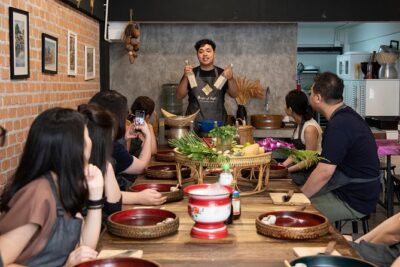
The atmosphere is designed to feel family-run. Sunee, her family, and the staff lead the class, and the small group lets you ask questions without shouting across a large demonstration room.
That personal setting is one of the strongest reasons to choose this class. With a maximum of eight participants, the instructor can watch your chopping, stirring, and seasoning. You are still part of a group, but the format avoids the impersonal feel of a large cooking school.
Making coconut milk and curry paste from scratch
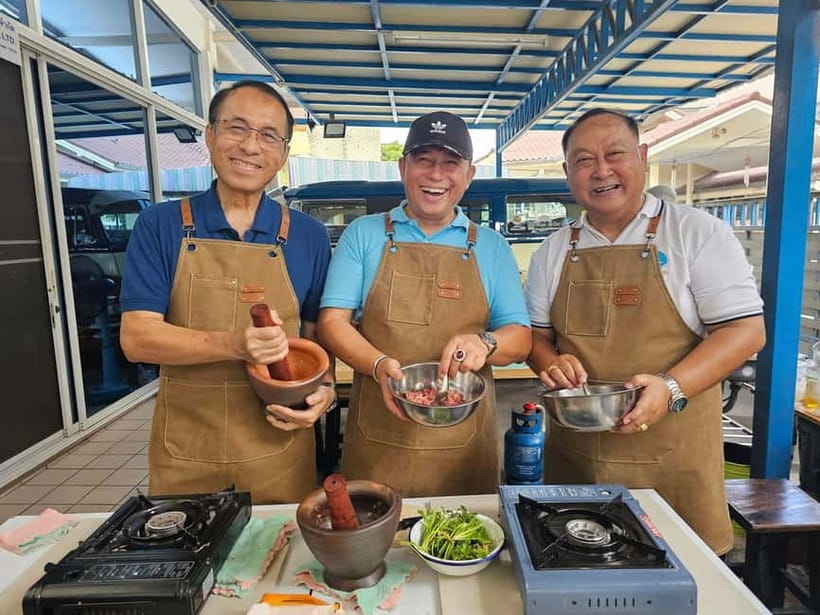
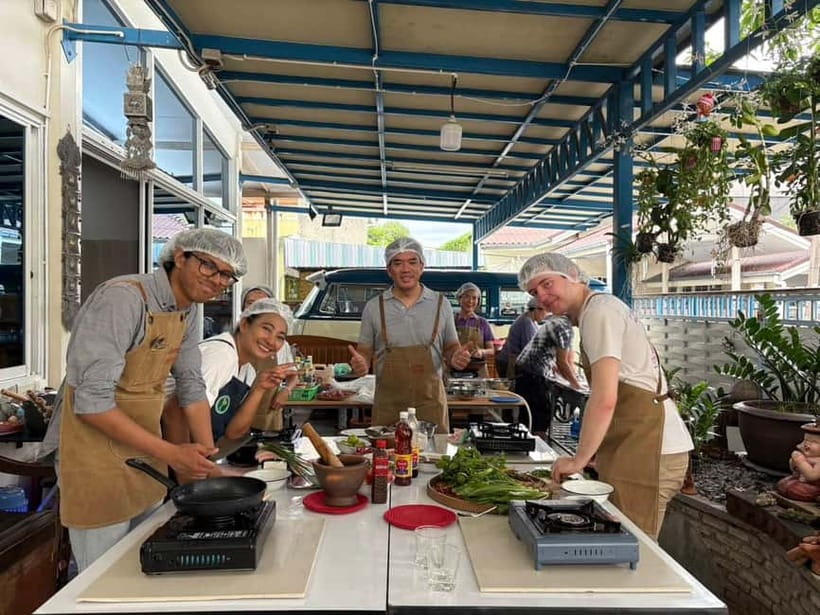
At about 9:00 AM, the class begins with an introduction to the ingredients you have selected at the market and found in the garden. You learn what they are used for and how their flavors change during cooking.
Two key lessons are making coconut milk and curry paste from scratch. These are basic building blocks of Thai food, and they help you understand why a curry made in a home kitchen tastes different from one assembled from ready-made products.
The class is hands-on, with step-by-step instruction in English or German. All ingredients and cooking equipment are supplied, so you only need to bring yourself, suitable clothes, and a willingness to stand at the work area.
The schedule lists cooking sessions from 10:00 AM, covering soup or stir-fry, salad, curry, and dessert. The exact combination varies by day, but the format gives you several different techniques in one morning.
You are not limited to making a single signature dish. One day may focus on soup, noodles, chicken, and a coconut dessert. Another may include papaya salad, a spicy minced meat salad, hot soup, fried chicken, and banana in coconut milk.
The seven-day menu rotation
The menu changes each day, so check the date before booking if you have a particular dish in mind. The listed rotation includes five preparations on most days, with participants cooking four dishes while the dessert may receive additional preparation help.
Monday brings Beef Panang Curry, stir-fried morning glory with red chili, poached eggs, fried chicken with Thai herbs, and Khanom Tom, a coconut-filled Thai sweet.
Tuesday features Tom Kha Gai, stir-fried tofu with bean sprouts, deep-fried pork with herbs, fried rice, and steamed pandan layer cake.
Wednesday includes hot and sour shrimp soup with mixed vegetables, stir-fried chicken with holy basil, Thai omelet, Thai-style fried noodles, and Kanom Tuay, a steamed coconut milk custard.
Thursday shifts to stir-fried bamboo shoot with curry paste, clear tofu soup, deep-fried pork belly with herbs, Chinese-style fried noodles, and steamed banana cake.
Friday offers chicken green curry, stir-fried kale with salted fish, fried chicken with garlic and pepper, stir-fried rice noodles with soy sauce, and a soft mung bean crepe.
Saturday is the salad-and-soup day, with Som Tum, spicy minced meat salad, hot and spicy soup, fried chicken with Thai herbs, and banana in coconut milk.
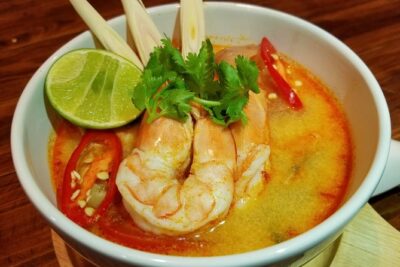
Sunday includes Tom Yum Gai, stir-fried Napa cabbage, stir-fried beef with red curry paste, stir-fried rice noodles with chicken, and poached pumpkin in coconut milk.
The rotation is broad enough to suit repeat visits, but it also creates a possible mismatch. If you want Green Curry or Pad Thai specifically, do not assume they appear every day. Pad Thai, mango sticky rice, and other familiar favorites are examples of dishes that may be offered as the menu changes, not fixed promises for every class.
More Ways to Unwind in Bangkok:
- Local Ghanaian Cooking Class in Accra to help support wellness community center
★ 4.5 · 22 reviews - Thai Culinary Class by the Beach at Melati Resort & Spa
★ 5.0 · 6 reviews
Cooking, eating, and the family-style finish
The cooking session is built around four dishes, with the instructor guiding you through each one. You can expect to work on different types of Thai food rather than making four versions of the same recipe.
That variety is useful for a first class. You may practice a soup, a stir-fry, a curry, and a dessert in one sitting, learning how Thai meals balance texture, heat, salt, sweetness, and acidity.
You then sit down to eat what you have prepared. Lunch is scheduled for noon, after the cooking is finished, and the meal is part of the class rather than an added restaurant bill.
One important detail is the shared setting. You cook with other participants and then eat together, which suits people who enjoy conversation and a social meal. If you prefer a private lesson or a quiet, restaurant-style lunch, this may feel more communal than expected.
The experience details also promise photos during the cooking process, and one participant received recipes along with many photos. Digital recipes are provided after the class, giving you a practical way to repeat the dishes at home instead of leaving with only a certificate.
At about 1:00 PM, transportation takes you back to MRT Huai Khwang Station, Exit 4. The return to the first meeting point makes the half-day easy to combine with other Bangkok plans.
Is $44 a good value?
At $44 per person, the price covers more than the cooking lesson. You get the guided market tour, ingredients, equipment, herbal drink, garden visit, hands-on instruction, the meal, digital recipes, a certificate, transportation from the market to the cooking house, and the return transfer to the station.
Travel insurance is also included. You still pay for your own transport to MRT Huai Khwang, personal purchases, extra snacks, and alcoholic drinks, but the main costs of the class are already covered.
I see the strongest value in the combination of market access and practical cooking. A cheaper demonstration might show you how a dish is made, but it may not include ingredient shopping, curry paste preparation, a garden tour, and a full meal.
The small group adds value too. Eight participants is enough for a social morning but small enough for personal instruction. The class is especially worthwhile if you want recipes you can use later, not just a meal you eat once.
The price is less compelling if you are mainly looking for a single famous dish or a quick food tasting. Five hours is a substantial block of time, and you should enjoy cooking, walking, and sitting down for a shared meal to get the most from it.
Who will enjoy this class most?
I would recommend it to first-time visitors who want a grounded introduction to Thai food without spending a full day outside Bangkok. The market gives you local context, while the kitchen keeps the experience organized and comfortable.
It also suits couples, solo visitors, and small groups who like meeting other people. The group limit of eight is useful for solo participants because the class has a built-in social setting without the size of a large bus tour.
Home cooks will get the most from the curry paste and coconut milk lessons. These techniques give you a better starting point for Thai cooking than simply receiving a list of ingredients.
Families should consider the walking, heat, standing, and cooking tasks before booking. The provided information does not set a minimum age, so ask the operator if you are booking for children.
People with allergies or dietary restrictions should contact the provider at least 48 hours ahead. The menu includes meat, seafood, tofu, eggs, salted fish, and chili, and the rotating schedule makes advance notice especially important.
The class may be less suitable if you need a fully accessible program, since the activity includes a market walk and moderate standing. No detailed accessibility information is provided, so ask before reserving if mobility is a concern.
Timing, language, and practical preparation
The standard schedule begins at 8:00 AM and ends around 1:00 PM. That early start works well in Bangkok, since you finish before the afternoon, but it means you should plan your route to Huai Khwang carefully.
English and German instruction is available. The group is limited to eight, which should make it easier to follow the cooking steps and ask about ingredients.
Wear comfortable shoes and clothing suitable for walking and cooking. Avoid bringing alcohol or drugs, and pets are not allowed.
The activity offers free cancellation up to 24 hours before the start time, and you can reserve now and pay later. Those terms help if your Bangkok schedule is still shifting, but you still need to arrive on time to take part in the market visit.
Should you book the Thai cooking and wellness experience?
Book it if you want Thai cooking to make sense from market stall to finished meal. The strongest features are the small group, the family setting with Sunee and her team, the ingredient shopping, and the chance to make curry paste and coconut milk yourself.
Check the menu first if you have a particular dish in mind. Also allow for walking, standing, and a shared meal rather than expecting a private lesson.
For $44, this is a well-rounded half-day choice for food-minded visitors who value instruction and local context. It is not simply a cooking demonstration, and it is not a sightseeing tour with a token recipe at the end. You leave with food in your stomach, recipes to try again, and a clearer sense of how Thai home cooking is built.
FAQ
Where does the Thai cooking experience begin?
The experience begins at MRT Huai Khwang Station, Exit 4. Your guide will meet you there at the scheduled start time.
Where does the activity finish?
The activity ends back at MRT Huai Khwang Station, Exit 4. Transportation from the cooking venue to the first meeting point is included.
How long does the experience last?
The experience lasts about five hours. The listed schedule runs from 8:00 AM until approximately 1:00 PM.
How many people are in the cooking group?
The group is limited to eight participants. This small format allows for more personal guidance during the cooking sessions.
What languages are available?
The live tour guide service is available in English and German.
Is transportation included?
Transportation from Huai Khwang Market to the cooking venue is included, as is the return transfer from the cooking venue to MRT Huai Khwang Exit 4. Your transportation to the initial MRT meeting point is not included.
What food will I cook?
The menu rotates by day and can include curries, soups, salads, stir-fries, noodles, fried dishes, rice, and Thai desserts. Examples include Green Curry, Tom Yum Gai, Som Tum, Pad Thai, Mango Sticky Rice, and several regional-style sweets.
What should I bring?
Bring your passport or ID card and wear comfortable shoes. Clothing should also be suitable for walking and cooking.
Can I request changes for allergies or dietary restrictions?
Yes, you should inform the provider about dietary restrictions or allergies at least 48 hours before the activity. The menu changes daily, so advance notice is important.
Newest classes around Bangkok
- Thai cooking class experience in Bangkok with Tingly Thai cooking school★ 5.0 · 59 reviews
- Hands-On Thai Cooking Class Bangkok with Local Chef (Small Group)★ 5.0 · 119 reviews
- Bangkok Udomsuk Thai Cooking Class with local market tour★ 5.0 · 5 reviews
- Thai Cooking Class in Bangkok★ 5.0 · 23 reviews
- Thai Cooking Class★ 5.0 · 25 reviews
- Baipai Thai Cooking School: Authentic Cooking Class Tour★ 5.0 · 3 reviews
- Sompong Thai Cooking School★ 5.0 · 92 reviews
- Sompong Thai Cooking School: Hands-On Culinary Experience★ 5.0 · 4 reviews
Bangkok Cooking Classes, compared.
Tingly Thai Cooking School Half-Day Cooking Class
Read our review →
Tingly Thai Cooking Class with Morning Market Tour
Read our review →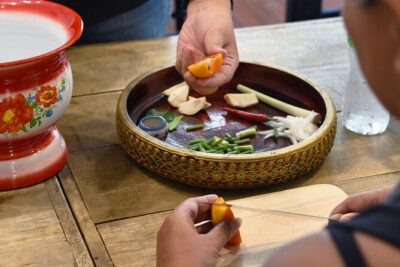
Hands-on Thai Cooking Class & Market Tour in Sukhumvit
Read our review →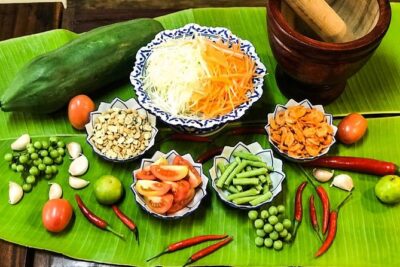
Pink Chili – Thai Cooking Class and Market Tour in Bangkok
Read our review →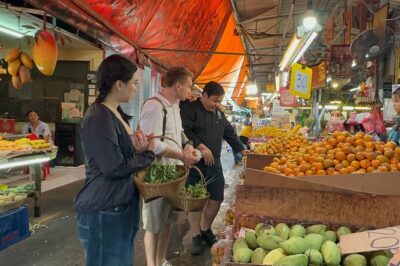
Authentic Thai Cooking with the Largest market visit &TukTuk ride
Read our review →Browse the lists this tour appears in