
Review · MEXICO CITY COOKING CLASSES
Tamales 101: Multi-variety tamal cooking class and feast
Tamales are not one dish but a whole family of dishes, and this class gives you a tasty introduction to that idea. In Jim’s Condesa home, you’ll make green tamales with tomatillo filling and a seasonal fresh-corn version, then eat both while the steamers are still doing their work.
I like the hands-on format, since you help prepare the food rather than simply watch a cooking show. I also like the personal touches: local artisan dinnerware, drinks, and a host who has adjusted recipes for allergies and made birthday surprises happen. The main drawback is price. At $130 per person, it is a significant spend for a four-hour meal, especially since the same class may cost less when booked directly through Martaja.
Key points at a glance
- Two tamal styles in one class: Prepare a classic green tamal and a seasonal fresh-corn version.
- Chipotle salsa from scratch: Balance the sweet corn tamal with your own smoky, spicy sauce.
- A home setting in Condesa: The class takes place in Jim’s home, not a large commercial kitchen.
- A meal with local character: Eat from beautiful dinnerware made by Mexican artisans.
- Flexible instruction: Jim teaches in English or Spanish and can adjust much of the food for dietary needs.
- Small-group or private format: The setting suits couples, families, and friends who want time to ask questions.
Why two tamales tell a bigger Mexican food story
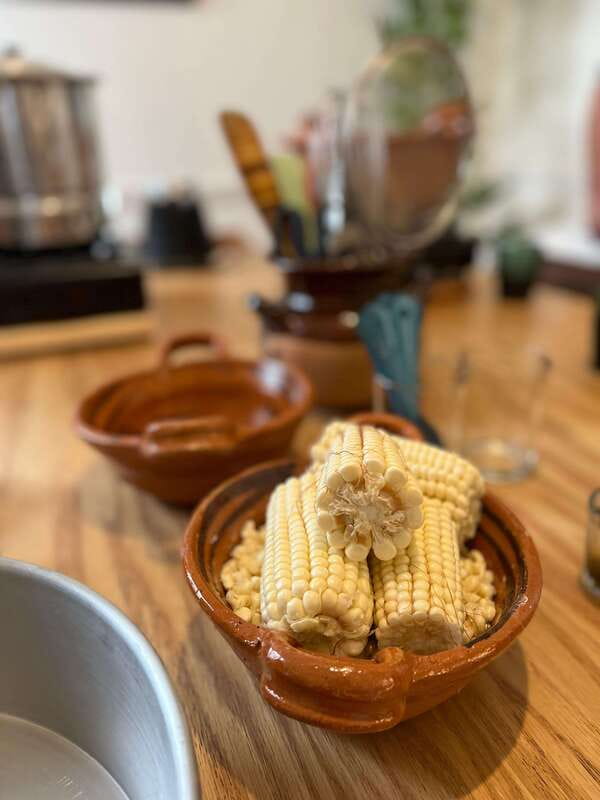
The best feature here is the contrast between the two tamales. The green version uses a tangy tomatillo-based filling, giving you the savory, fresh flavor many people expect from a classic Mexican tamal. The fresh-corn tamal takes you in another direction, with natural sweetness and a seasonal character.
That pairing makes the class more useful than a single-recipe lesson. You see how tamales can change with ingredients, season, region, and cooking style. Mexican tamales are wrapped parcels of masa, but that simple description hides a huge range of fillings, textures, and methods. Jim begins by explaining that wider world before you start cooking.
I like that the lesson does not treat tamales as a novelty food. You get context for why this dish matters and how one basic technique can produce very different results. If your Mexico City plans already include markets and restaurants, this class adds the practical side of the food story.
More Mexican Classes in Mexico:
- Cabo San Lucas Mexican Cooking Class Experience and Local Markets
★ 5.0 · 915 reviews - Mexican Cooking from Scratch in a Local Home in Tulum
★ 5.0 · 585 reviews - Authentic Mexican Legacy Cooking Class in Cabo San Lucas
★ 5.0 · 530 reviews
Entering Jim’s Condesa kitchen
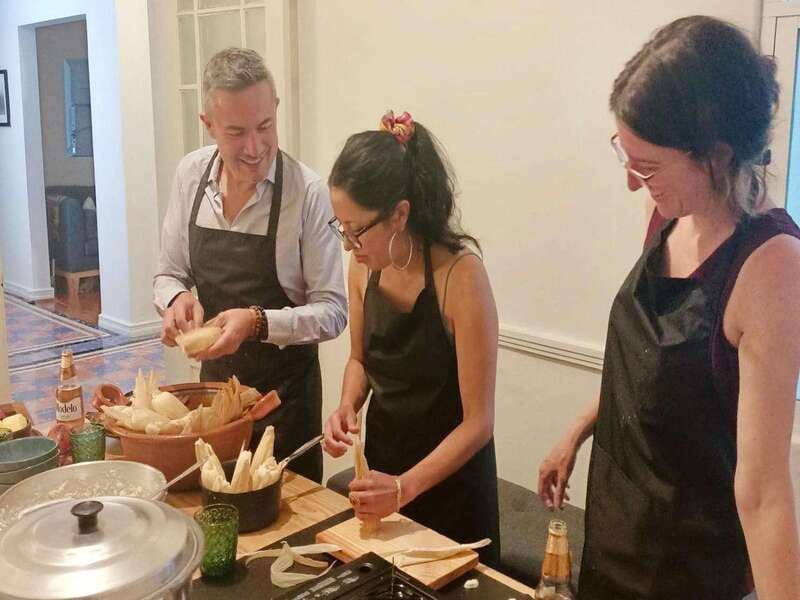
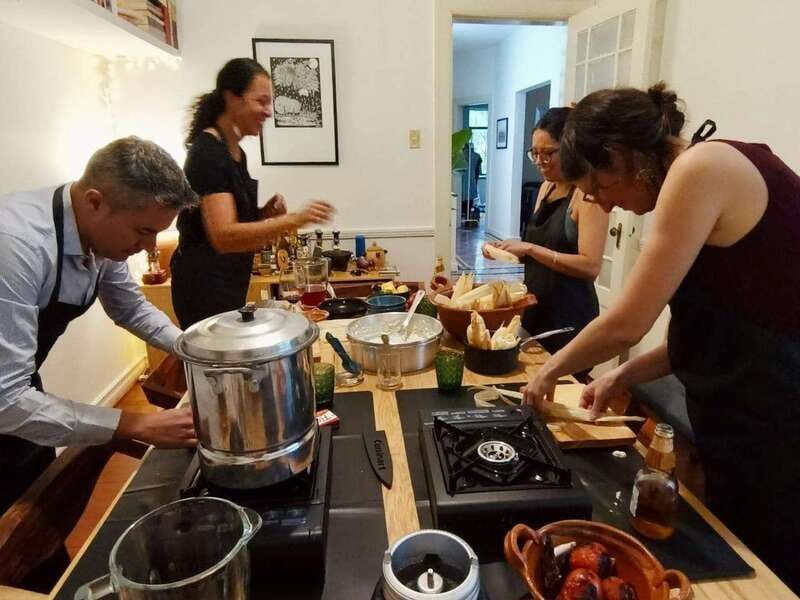
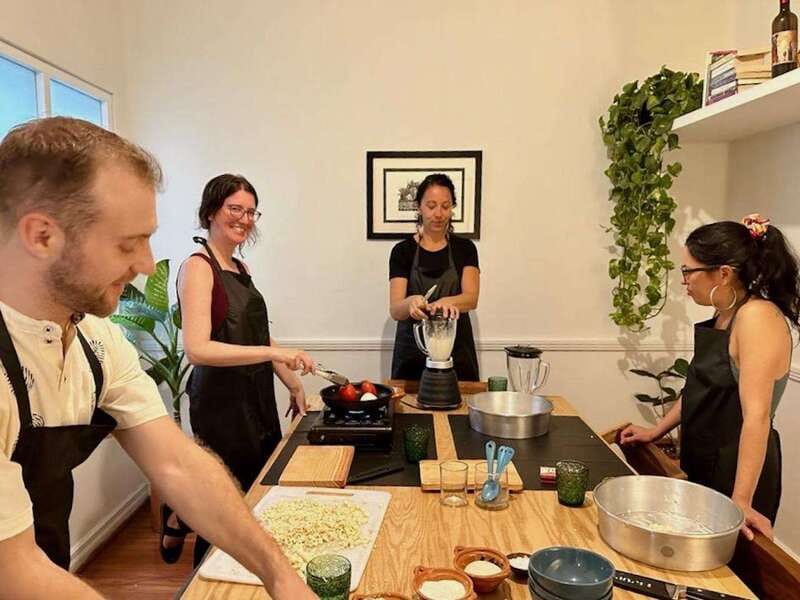
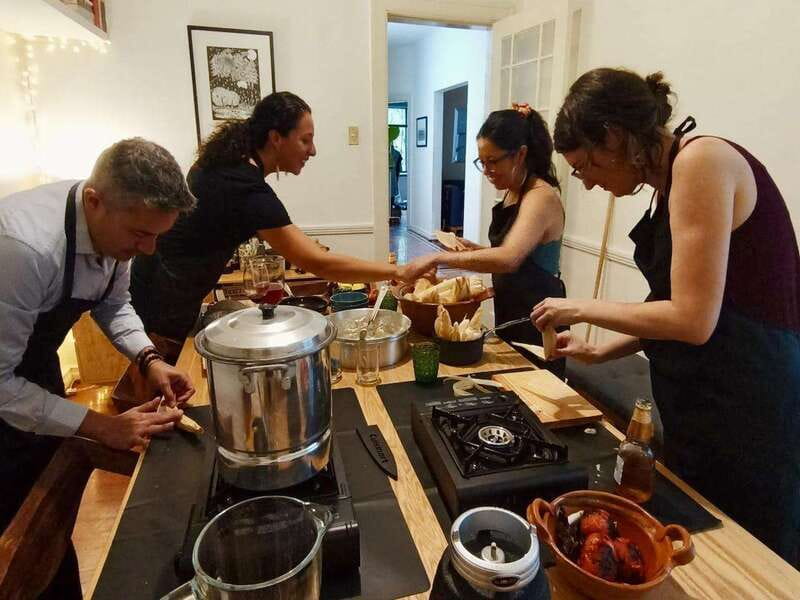
The class takes place at Jim’s home in Condesa. That changes the mood from a standard cooking studio. You are working in a lived-in setting, setting the table together, and sharing the final meal in the same place where the preparation happened.
The schedule lasts four hours, but the cooking itself gets moving fairly quickly. After the opening explanation, you roll up your sleeves and prepare both tamal versions. The class then moves naturally from cooking to eating, rather than separating the lesson from the meal.
You should expect to take part. This is not a demonstration where you sit back while the instructor does all the work. Participants help prepare the tamales and sauces, and everyone has a part in getting dinner onto the table. That makes it a good choice if you enjoy learning by doing, though less suitable if you want a quiet, passive food tasting.
Jim teaches in English and Spanish. He also encourages questions about Mexican food and the area, so you can use the class to ask about dishes and traditions that may not be obvious from a restaurant menu. The tone appears personal and conversational, with room for laughter and shared work.
The first hour: preparing green tamales
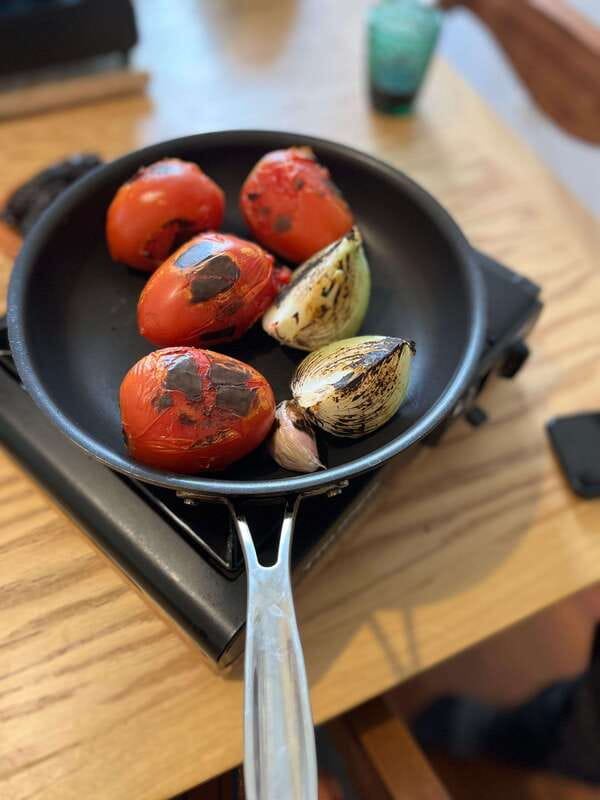
The green tamal gives the class a familiar starting point. Its tomatillo-based filling brings tang and freshness, and it shows how a sauce can carry much of a tamal’s character.
You will prepare the ingredients for two types of tamales, then work through the basic process of assembling them. The provided information does not specify each individual step or filling ingredient, so you should not expect a detailed published menu before arrival. What is clear is that all ingredients are supplied, and the recipes are emailed afterward.
That recipe follow-up matters. Tamales take effort, and it is easy to forget the proportions once you return home. Having the recipes in your inbox gives you a better chance of trying the dish again, perhaps with ingredients available in your own kitchen.
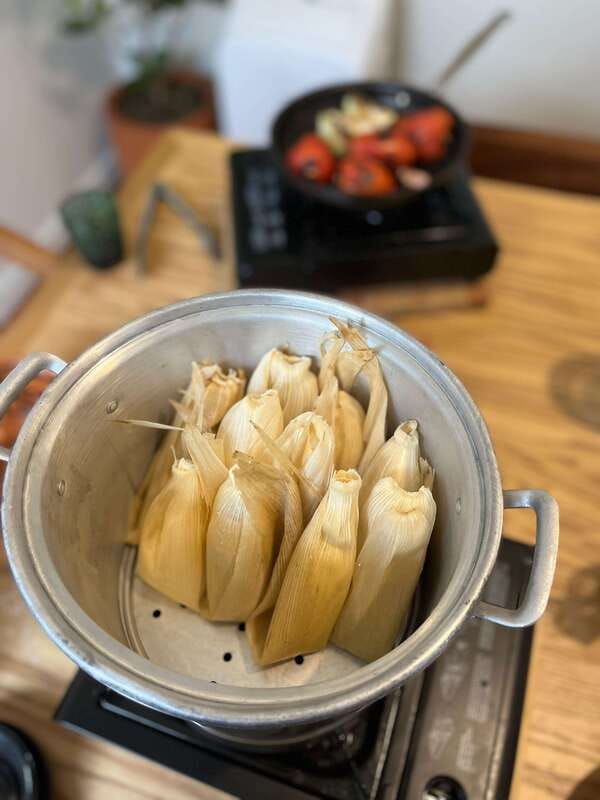
The class also gives you a chance to understand the work behind a tamal. The dish may look modest when it arrives wrapped and steaming, but making several varieties requires preparation, assembly, and timing. I find that useful context when eating tamales later in Mexico. You begin to notice the masa, filling, sauce, and texture instead of treating every tamal as the same.
Fresh corn, seasonal sweetness, and chipotle heat
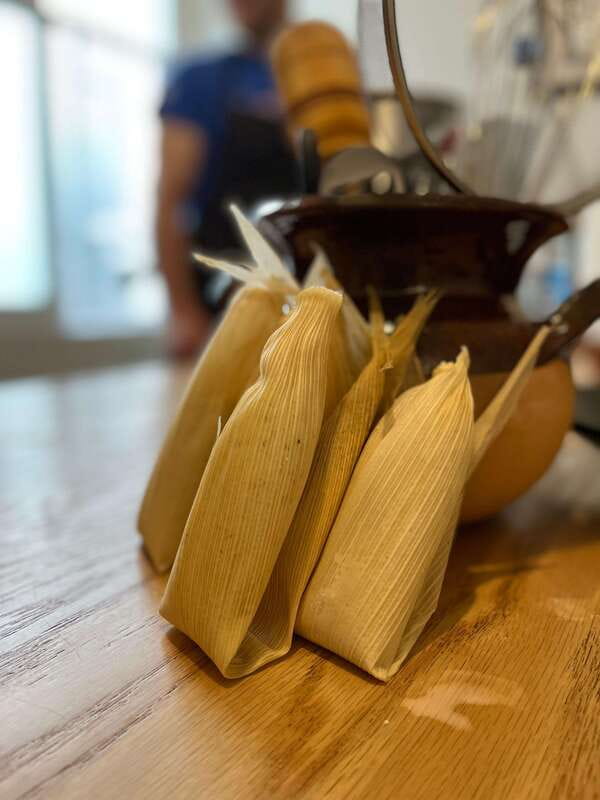
The second version is the more unusual pairing. This fresh-corn tamal uses the natural sweetness of the corn rather than relying on a strongly savory filling. Its flavor needs contrast, so you make a smoky chipotle salsa to serve with it.
This is the part of the class that gives you the clearest sense of variety. One tamal is tangy and savory. The other is sweet and seasonal. The chipotle salsa acts as the bridge, bringing smoke and heat to the corn.
I like the teaching value here. You are not just learning two unrelated recipes. You are learning how cooks balance flavor. Sweet corn can become too gentle on its own, while chipotle can dominate if used without care. Putting the two together gives the meal a clear purpose.
The seasonal element also means the fresh-corn version may vary with availability. That is part of the appeal, but it also means the class is not as fixed as a restaurant menu. If you want the exact same meal every time, this may feel less predictable. If you enjoy food tied to the season, it is a plus.
More Cooking Classes in Mexico:
- Puerto Vallarta Cooking Class Experience with Market Tour
★ 5.0 · 698 reviews - Mexican Cooking Class with Food Market Visit in Mexico City
★ 5.0 · 506 reviews - Authentic Mayan Cooking Class in Cozumel
★ 5.0 · 344 reviews - Flavors of Oaxaca: Cooking Class with No Set Menu and Local Market Tour
★ 4.5 · 333 reviews
Setting the table with artisan dinnerware
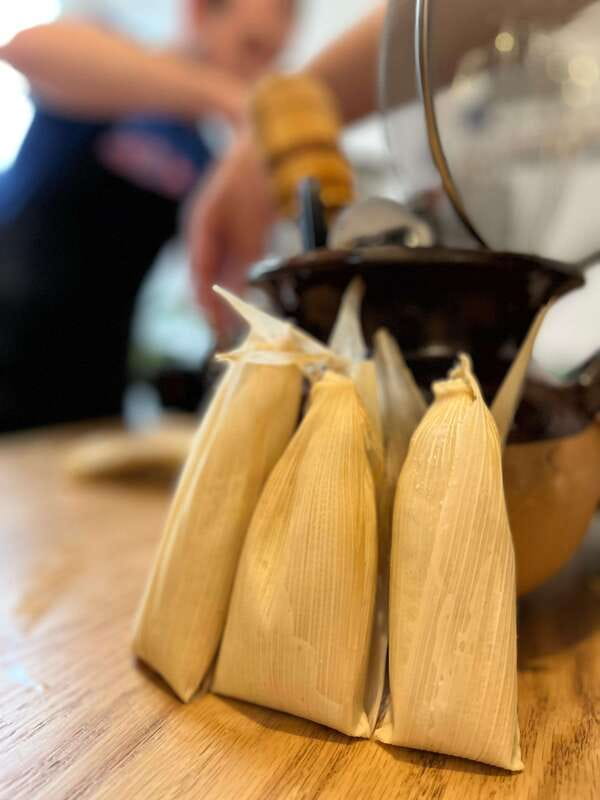
Once the cooking is finished, you help set the table with dinnerware made by local artisans. This is a small detail, but it gives the meal a stronger sense of place. The food is not presented on anonymous plates in a classroom. The setting connects the meal to Mexican craft traditions as well as Mexican cooking.
The table setting also marks the shift from lesson to shared dinner. You have spent the first part of the class preparing food together. Now you get to eat the result, with the green tamal and fresh-corn tamal served as the central dishes.
Mexican beer, wine, and soft drinks are included. That makes the class feel like a full evening meal rather than a short workshop followed by a search for dinner. You should still check the available options if you have specific drink needs, since the details supplied do not list particular brands or nonalcoholic choices.
The meal is likely the emotional high point of the class, but it is also where value becomes easier to judge. At $130, you are paying for instruction, ingredients, drinks, the home setting, and a prepared dinner. If you compare the cost only with the price of tamales from a market stall, it will seem high. If you want a private or small-group food lesson with a sit-down meal, the price becomes easier to understand.
Dietary needs, allergies, and mobility
Dietary requirements can be accommodated in many cases, but you need to respond to Jim’s email after booking. Strict kosher food is not currently possible, so that should be a deciding factor before you reserve.
A tomato allergy has already been handled by creating a different recipe, which suggests that Jim is willing to make thoughtful changes rather than simply remove one ingredient. Still, you should provide complete information in advance. Do not wait until you arrive and hope the kitchen can adjust at the last moment.
There are two cats in the house. Allergy medication is available, and people with allergies are kept out of the cooking area, but this setting is not fully pet-free. If cats cause a serious reaction, you may want to choose a different food activity.
People with mobility issues have attended successfully. One participant was made comfortable with a seated arrangement during the class. The building does not have an elevator, though, so wheelchair users should ask about access before booking. The fact that the class has accommodated mobility needs is encouraging, but the building limitation remains important.
Who will get the most from four hours here
This class suits people who like food with a story and a practical side. You will get the most from it if you enjoy asking questions, sharing tasks, and sitting down to eat with the people in your group.
It is a particularly good fit for:
- Couples seeking a relaxed evening activity
- Families who want an activity beyond sightseeing
- Friends who enjoy cooking together
- First-time visitors curious about Mexican food traditions
- Diners with manageable dietary restrictions who communicate early
- People who prefer a small group over a large commercial class
The class may be less suitable if you dislike eating in a private home, need a fully accessible building, or want a quick lesson. Four hours is enough time for conversation and a meal, but it is too long for anyone hoping to fit in several other major activities the same evening.
The private or small-group format is also worth considering. With fewer people, you can ask more questions and get more direct help with the tamal-making process. A private booking could make sense for a birthday, family gathering, or special occasion, especially since Jim has arranged birthday surprises before.
How the price compares with the experience
The $130 price is not a bargain food class. You can find cheaper ways to eat tamales in Mexico City. The real question is how much you value the teaching, the home setting, the drinks, and the chance to prepare the food yourself.
I would judge the price in three parts:
First, the ingredients and meal are covered. You prepare two types of tamales, make salsa, and eat dinner afterward. You are not paying for a lesson and then buying a separate meal.
Second, the class gives you personal instruction in English or Spanish. That matters if you want to understand what you are doing rather than copy movements without context.
Third, the format is limited to private or small groups. You are paying for a more personal setting, not a high-volume activity.
There is one important money-saving note: the same experience may be available for less when booked directly through Martaja. Check both prices before paying. If the difference is small, the booking platform may be worthwhile for its flexible cancellation terms. If the difference is large, direct booking could offer better value, but confirm the exact conditions before committing.
Free cancellation is available up to 24 hours in advance, and you can reserve now and pay later. Those policies help if your Mexico City schedule is still changing, but they do not remove the need to check the meeting location for the option you choose.
What the highest praise tells you
The strongest pattern is Jim’s personal attention. He has adapted food for a tomato allergy, helped someone with mobility issues take part comfortably, and added birthday surprises. Those details show the kind of flexibility you should expect from a small home-based class.
The other repeated strength is the balance of instruction and fun. You are involved in making the meal, but the class is not presented as a strict technical course. There is time for questions, conversation, and a shared dinner.
The food itself receives clear approval, especially the tamales and sauces. That is important because a cooking class can be enjoyable even when the final meal is only average. Here, the meal is treated as the payoff, not an afterthought.
The sample size is still small, with six total ratings and a top score. I would read that as a strong early signal, not a guarantee that every dietary or access need will work perfectly. Contact Jim before booking if your requirements are complex.
Should you book Tamales 101?
Book this class if you want a personal food evening that combines cooking, Mexican food context, and a proper meal. The two tamal varieties give you a useful comparison, while the Condesa home and artisan dinnerware make the setting feel more personal than a standard classroom.
I would especially recommend it for couples, families, and friends who enjoy doing something together. It is also a good choice for a birthday or other small celebration, since Jim has shown that he can add personal touches.
Think twice if $130 feels high for a meal, if you need strict kosher food, or if a building without an elevator creates a problem. Check the direct Martaja price, send dietary details early, and confirm the meeting point for your chosen option.
For the right person, this is not simply a tamale lesson. It is a four-hour look at how one of Mexico’s most familiar foods can change in flavor, season, and setting.
FAQ
Where does the tamale class take place?
The class takes place at Jim’s home in Condesa. The exact meeting point may vary depending on the option booked.
How long does Tamales 101 last?
The experience lasts four hours. Starting times vary, so you should check availability for your preferred date.
What types of tamales will I prepare?
You will prepare two varieties: a classic green tamal with a tomatillo-based filling and a seasonal fresh-corn tamal.
Will I make salsa during the class?
Yes. You will make a smoky chipotle salsa to serve with the fresh-corn tamal.
Are drinks included?
Yes. Mexican beer, wine, and soft drinks are included.
Can dietary requirements be accommodated?
Most dietary requirements can be accommodated if you provide the details after booking. Strict kosher food is not currently possible.
Is the class suitable for wheelchair users?
Wheelchair users have attended before, but the building does not have an elevator. You should confirm your specific access needs before booking.
What languages does Jim speak?
Instruction is available in English and Spanish.
Newest classes around Mexico
- Private Pre-Hispanic Cooking Class in Mexico City with Martha★ 5.0 · 19 reviews
- Tasty Mexican Cooking Class with Feast in Riviera Maya★ 5.0 · 99 reviews
- Flavors of Mexico: Cancun Cooking Class & Market Visit★ 4.5 · 5 reviews
- Private Authentic Mexican Cooking Class in Cancun with Alberto★ 5.0 · 3 reviews
- Cancun small group Cooking Class with Local Chef★ 5.0 · 61 reviews
- Cancun Hands-On Mexican Cooking Class★ 4.5 · 95 reviews
- 4h Cooking Class in Cancun with 8 Recipes & Bottomless Drinks★ 5.0 · 50 reviews
- Private Mexican Cooking Class in Your Cabo San Lucas Villa or Condo★ 5.0 · 8 reviews
Mexico City Cooking Classes, compared.
Mexican Cooking Class with Food Market Visit in Mexico City
Read our review →
Essence of Mexico: Authentic Mexican Cooking Class & Market Tour
Read our review →
Private Mexican Cooking Class with Gastronomic Historian, Lucia
Read our review →
Mexican Street Tacos Hands-on Cooking Class and Market Tour
Read our review →
Market tour, cooking class & three-course Mexican feast
Read our review →Browse the lists this tour appears in