
Review · SYRACUSE COOKING CLASSES
Syracuse: Traditional Cooking Class & Ancient Market Visit
Syracuse’s best cooking lesson begins before you reach the stove. Chef Ettore takes you through Ortigia’s ancient market, greeting vendors, tasting local products, and choosing ingredients for the meal ahead. The cooking then feels connected to the island, not pulled from a standard classroom menu.
I like two things here: the small group, limited to eight, and the flexible menu. You may help prepare seafood pasta, pistachio pesto, tuna with peppers, arancini, fresh bread, or cannoli, depending on the day and your preferences. The main consideration is the meeting point at Bar Cristina, which can be hard to identify in a busy piazza. Confirm who you are looking for before the start.
Key points to know before booking
- Market first, cooking second: You shop for ingredients in Ortigia before entering the kitchen.
- Chef Ettore leads the experience: He knows many market vendors and shares practical Sicilian cooking tips.
- Menus can change: The dishes depend on the market’s supply and what you like to eat.
- A real lunch is included: You eat the dishes you prepare, with drinks outside the listed menu handled separately.
- Small groups help: With no more than eight participants, you should get useful time at the counter.
- Sunday needs special planning: Ortigia Market is closed, so the chef takes you through the streets to buy local products instead.
Starting in Piazza Pancali with Chef Ettore
The experience begins at Bar Cristina, at Piazza Pancali 24 in Syracuse. This is a central spot on Ortigia, but the bar is large enough that a first-time visitor may not immediately know whom to approach. I would arrive a few minutes early and make sure you have the chef’s name and contact details ready.
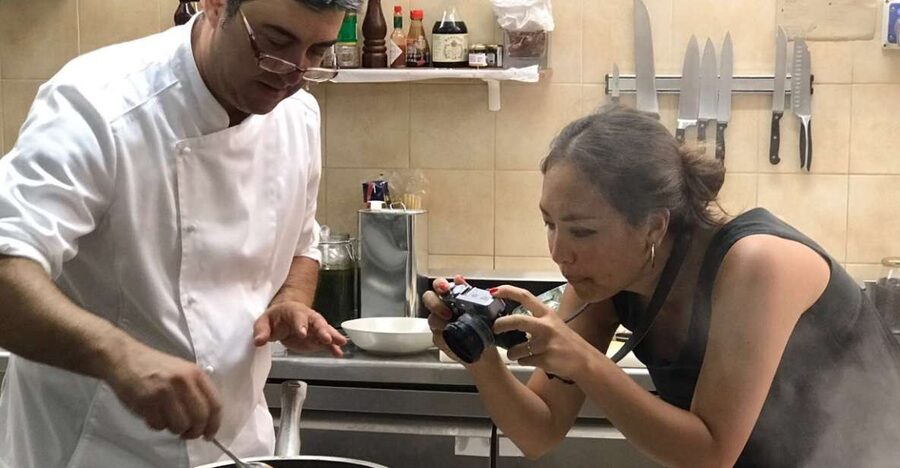
Chef Ettore is the guide most often associated with this experience. He is described as a professional pasta chef who previously worked at a two-Michelin-star restaurant. That background matters, but the tone appears to be less formal chef school and more generous local instruction. You are there to cook, ask questions, and eat well, not sit quietly through a demonstration.
English and Italian are offered. The small group size, capped at eight people, is useful in a kitchen setting. You should have more opportunity to handle ingredients and ask about technique than you would in a large class.
More Cooking Classes with a Market Tour in Italy
- Cooking Class and Lunch at a Tuscan Farmhouse with Local Market Tour from Florence
★ 5.0 · 4,831 reviews - Small Group Cooking Class & Market Food Tour in Florence
★ 5.0 · 1,574 reviews - Pasta and Tiramisu Cooking Class with optional Local Market Tour
★ 5.0 · 515 reviews
Walking through Ortigia’s ancient market
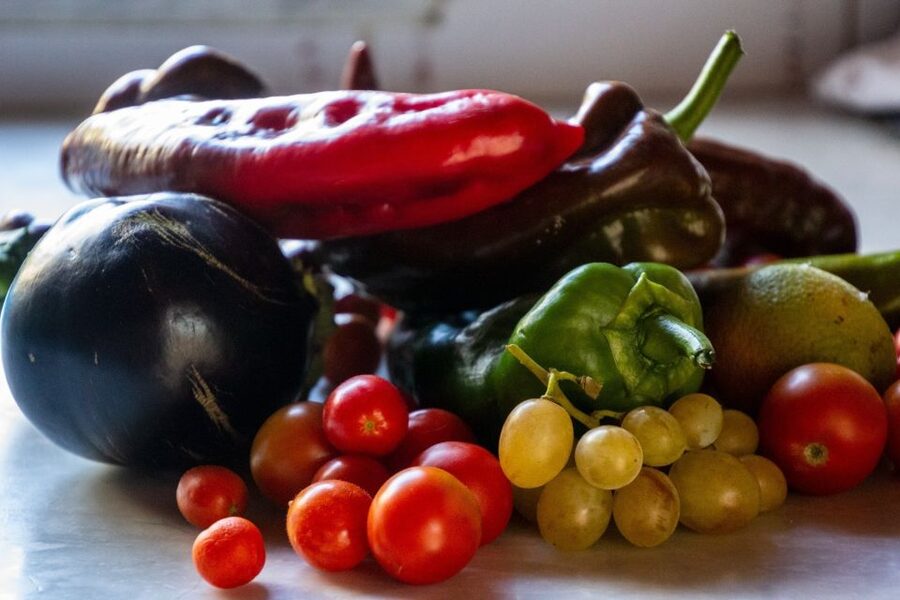
The first substantial part of the outing takes place at the Ortygia Street Market. This is not just a quick stop to buy tomatoes and disappear indoors. You walk among the stalls, see the fish and produce, and learn how the chef chooses ingredients for the meal.
Ettore’s relationships with the vendors are a major part of the appeal. He can introduce you to sellers, explain products, and arrange tastes of items such as fresh fish, red prawns, mortadella, pistachio spread, fruit, and other local foods. You may also hear the calls of the stallholders as they compete for attention, which gives the market a proper local feel.
The shopping also gives you a better sense of Sicilian cooking. The menu is not fixed in the way it might be at a chain cooking school. The chef looks at what is good that day and asks what you want to eat. If you prefer seafood, you may help select fish, prawns, mussels, squid, or cuttlefish. If fish is not your favorite, the menu can be adjusted. One particularly useful point is that the food choices can reflect your tastes rather than forcing everyone into the same meal.
You may taste several products during the market walk, but remember that the listed price does not include food and drinks outside the planned menu. The chef organizes the ingredients for the class, while additional items or beverages may cost extra. Ask what is covered before you begin if you want to keep spending clear.
From market ingredients to the chef’s kitchen
After shopping, you travel from the market to the cooking location if needed. The exact transfer depends on where the class takes place, and the organizer arranges it. This is a practical benefit, since you do not have to figure out the route while carrying market purchases.
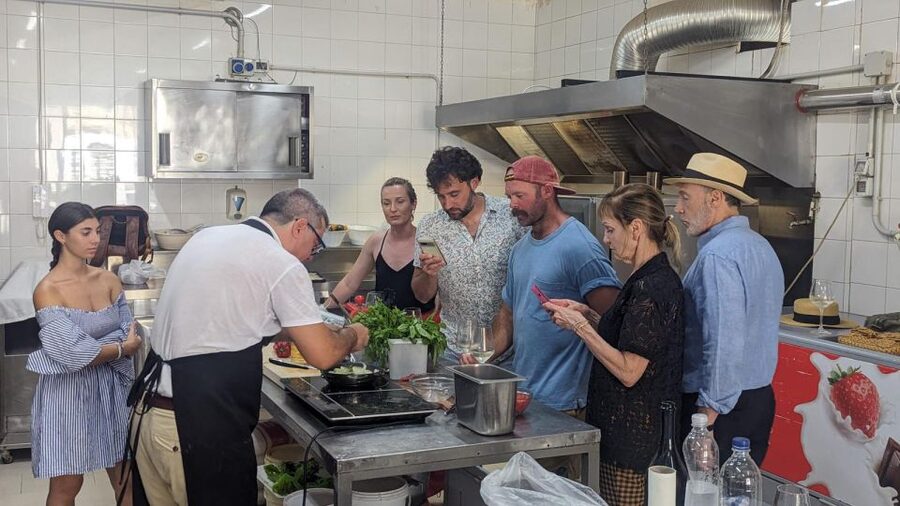
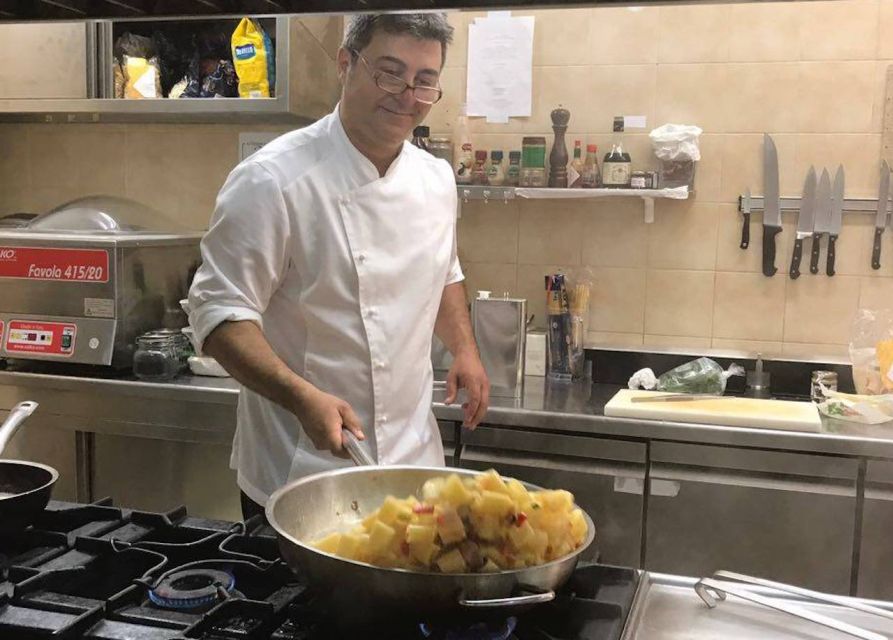
The cooking venue can vary in character. Some descriptions place the class in a restaurant kitchen, including a professional kitchen connected with Cortile di Bacco. Another account refers to a rugby club kitchen, and several people praise the setting and its views. The common thread is a working kitchen rather than a generic hotel conference room.
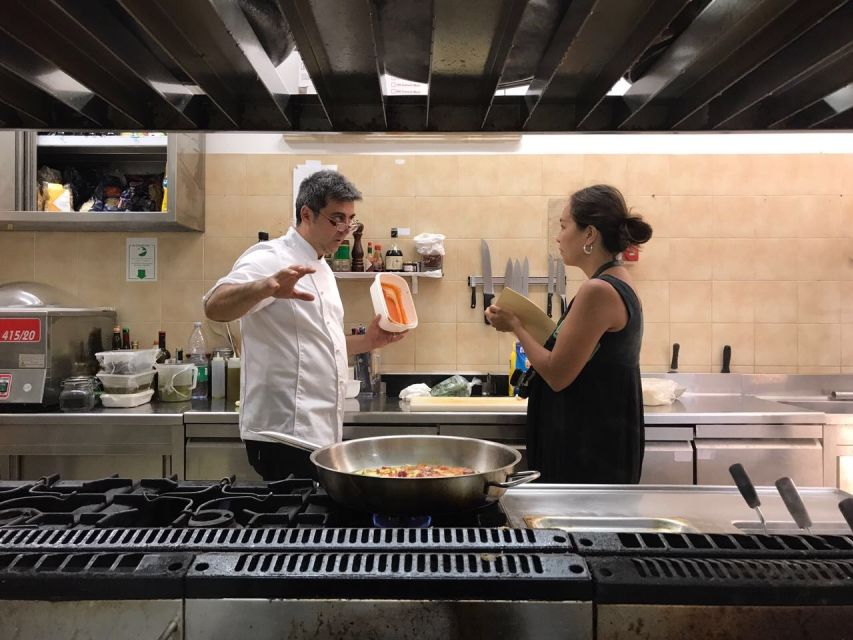
That difference can change the feel of the lesson. A professional restaurant kitchen gives you a glimpse of how a local food business operates, while a more informal venue may feel relaxed and personal. You should not expect a polished cooking studio with identical workstations for every participant. This is closer to being welcomed into a chef’s working world.
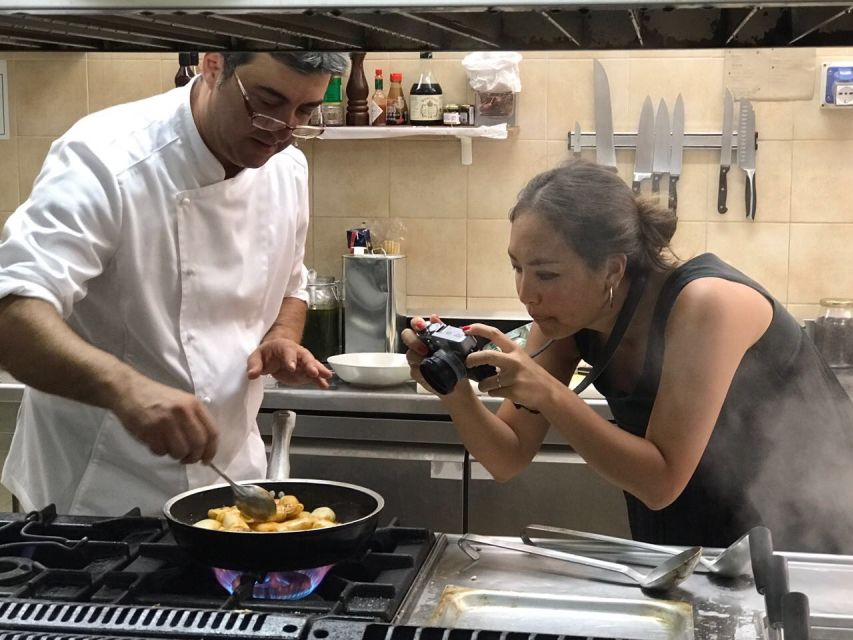
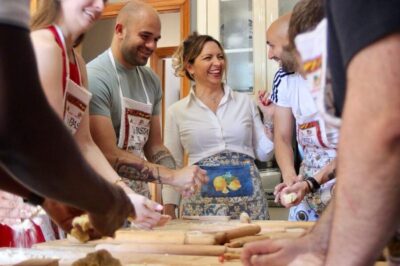
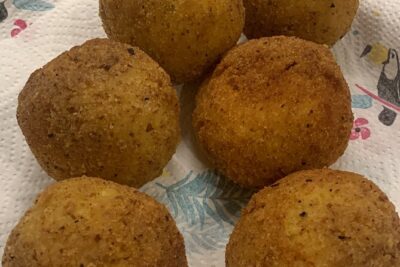
The class is hands-on. You help prepare the food rather than simply watching Ettore cook every dish. The precise menu changes, but examples include two pasta dishes, tuna steaks with peppers and onions, veal involtini, strawberry salad, fresh bread, seafood, fried mullet, eggplant with tomatoes and cheese, and arancini.
What you may cook during the four hours
The seafood dishes appear to be among the most memorable possibilities. You might prepare pasta with shrimp, calamari, and mussels, or make a sauce from shrimp shells and olive oil. That sort of step is especially useful because it shows how to get more flavor from an ingredient that many home cooks discard.
Cuttlefish-ink pasta, sardines, prawns with orange, and mussels with fresh cavatelli have also been part of different meals. You may work with fish selected at the market, so the class can feel like a lesson in making decisions as much as following a recipe.
Pistachio pesto is another recurring favorite. You may make it for pasta, perhaps alongside fresh cavatelli or another homemade shape. The class has also included a quick fresh-pasta lesson, with one participant noting that the basic pasta came together in about seven minutes. That is the kind of practical tip you can use after returning home.
The menu is not limited to seafood. If you are not keen on fish, tell the chef early. Previous menus have been adjusted for people with different preferences. Possible alternatives have included veal involtini, bread, eggplant dishes, tuna with sweet peppers and onions, or other market-led preparations.
Dessert and small plates may also appear. Cannoli, ricotta-filled brioche, strawberry salad, fresh fruit salad with apricots, and a charcuterie board have all featured in different classes. You should treat these as examples, not promises. The market and your group’s choices help shape the final meal.
Same region, a different dish to learn:
- Florence: Pasta Cooking Class with Unlimited Wine
★ 4.9 · 10,285 reviews - 3 in 1 Cooking Class near Navona: Fettuccine, Ravioli & Tiramisu
★ 5.0 · 7,376 reviews - Florence: Pasta & Tiramisu Cooking Class with Unlimited Wine
★ 4.9 · 6,708 reviews - Florence: Pasta Cooking Class with Unlimited Wine
★ 5.0 · 6,413 reviews
Eating the meal you helped prepare
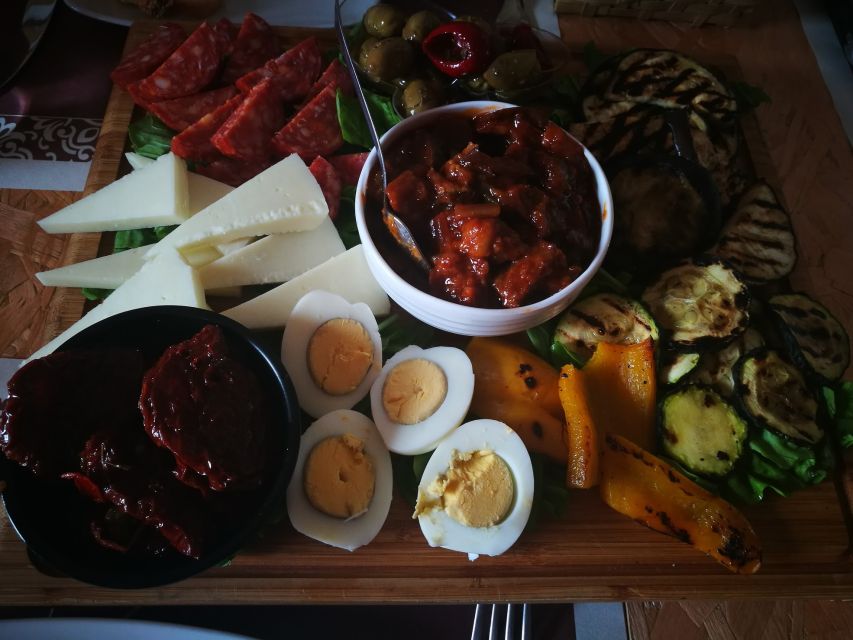
The class ends with lunch made from the ingredients you selected and prepared. This is where the four-hour format makes sense. You are not rushing through a single recipe and leaving with a small sample. Several dishes may be served, and the meal can become a long, social part of the experience.
I like the connection between the market and the table. You see the fish or produce at the stall, learn how it is handled, then taste it in a finished Sicilian dish. That chain gives the meal more meaning than simply ordering pasta at a restaurant.
Wine and limoncello have been served during some classes, but drinks are not automatically included in the listed price unless they are part of the chef’s organized menu. Ask about this if you do not drink alcohol or want to know the extra cost.
Portions can be generous. One participant described eating a charcuterie board followed by several dishes, while another noted being able to take leftovers away. Do not plan a large dinner immediately afterward. Four hours of shopping, cooking, and lunch is a full half-day.
Why the market-led menu is valuable
At $134.81 per person, this is not the cheapest way to eat in Syracuse. You are paying for more than lunch, though. The price covers a guided market visit, a local chef, the cooking class, the meal you prepare, and a transfer from the market when needed.
The strongest value comes from the personal attention and the menu flexibility. If you want a fixed lesson in making pizza, this may not be the right comparison. Here, you can get seafood advice, learn to make a sauce from shrimp shells, work with pistachios, shape pasta, or ask how to balance a tuna dish with peppers, onions, capers, and tomatoes.
The small group also matters. Eight is still large enough for a lively session, but it is not a private class. Your time at the work surface may depend on how many people attend and how the chef divides the tasks. Couples and families should be ready to share jobs.
The experience offers good value for people who would otherwise book a market tour and a separate cooking lesson. You get both in one four-hour block, plus lunch. If you only want to watch a chef or eat a restaurant meal, you may find the price harder to justify.
Practical points that can affect your day
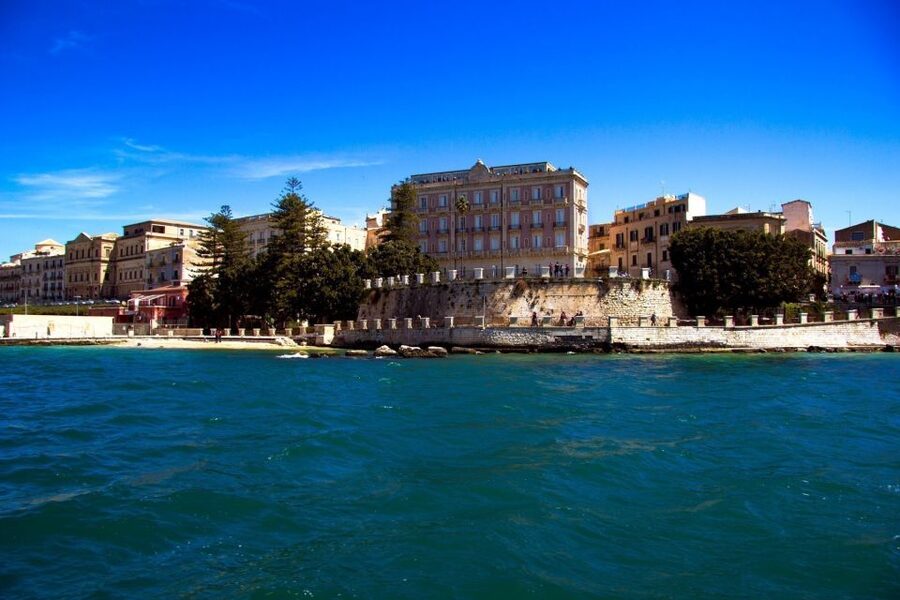
The market is closed on Sunday. On that day, the chef guides you through Ortigia’s streets to purchase local products instead. You still get the food-shopping element, but not the regular market-stall visit.
Starting times vary, so check availability before planning other Syracuse activities. The class ends back at the meeting point, but the transfer from the market to the kitchen may be arranged during the outing depending on the venue.
Monument entrance fees are not included. They are not normally central to this activity, since the focus is the market, kitchen, and meal, but it is useful to know that this is not a sightseeing pass for Ortigia’s churches or historic buildings.
Cancellation is flexible up to 24 hours before the start for a full refund, and you can reserve now and pay later. Those terms help if your Syracuse schedule is still moving around.
Who will enjoy this cooking class most
I would recommend it to people who plan trips around food and want more than a recipe card. You get contact with local vendors, a look at Sicilian ingredients, and a meal that changes with the market.
It also suits mixed groups. One person can love seafood while another prefers pasta or meat, and the chef can often adapt the menu. Families and couples celebrating a special occasion may appreciate the relaxed meal and personal attention. One class was used to mark a 25th anniversary, and another included a chef’s daughter helping with the experience.
This may be less suitable if you need a tightly timed activity, dislike group cooking, or want guaranteed dishes. The menu is part of the fun, but it also means you cannot count on one exact set of recipes.
Should you book the Syracuse cooking class?
I would book this if you want a food experience with a strong local connection. The best parts are the market walk with Ettore, the chance to choose ingredients, the hands-on preparation, and the long lunch that follows. The repeated praise for his warmth, cooking skill, and relationships with market vendors is backed up by specific details, from red prawns and pistachio spread to seafood pasta, arancini, and homemade cannoli.
Before paying, confirm the meeting details, tell the chef about food preferences, and ask what drinks are included. If you are in Syracuse on a Sunday, expect a street-based shopping route instead of the market itself. For a four-hour experience that combines shopping, cooking, and lunch in a group of no more than eight, the price is fair for food-focused visitors who want to take home useful Sicilian cooking ideas.
FAQ
How long does the Syracuse cooking class last?
The experience lasts four hours, including the market visit, cooking class, and lunch.
Where does the activity begin?
It begins at Bar Cristina in Piazza Pancali 24 in Syracuse, on Ortigia.
Where does the activity end?
The activity ends back at the meeting point.
Who leads the cooking class?
Chef Ettore is the chef most closely associated with the experience. The host or greeter can speak Italian and English.
Is the Ortygia Street Market visited every day?
No. The market is closed on Sunday. On Sundays, the chef guides you through the streets of the island to buy local products instead.
Is transportation included?
A transfer from the market to the cooking class is arranged if needed, depending on the location of the chef’s kitchen.
What food might be prepared?
Possible dishes include fresh pasta, seafood pasta, pistachio pesto, tuna with peppers and onions, veal involtini, arancini, fresh bread, eggplant dishes, cannoli, and fruit-based desserts. The menu can change according to the market and your preferences.
Are food and drinks included?
Lunch is included, but food and drinks outside the organized menu are not included. The chef arranges the menu, so ask what is covered if you want to order additional items or beverages.
How many people can join the class?
The group is limited to eight participants.
Newest classes around Italy
- Cooking Class in a Sicilian countryhouse★ 5.0 · 5 reviews
- Cesarine: Market Tour & Home Cooking Class in Catania★ 4.0 · 6 reviews
- Cesarine: Home Cooking Class & Meal with a Local in Catania★ 4.5 · 10 reviews
- Cooking Class in Taormina with Lunch Included★ 5.0 · 2 reviews
- Cooking class in Capri for small groups★ 4.0 · 4 reviews
- Cooking Class and Wine Pairing in Capri★ 5.0 · 57 reviews
- Lezione di Cucina : Pasta Fresca★ 5.0 · 12 reviews
- Private Cooking Class Experience in Reggio Calabria★ 5.0 · 5 reviews
Syracuse Cooking Classes, compared.
Syracuse: Sicilian Street Food Hands-On Cooking Class
Read our review →

Siracusa: Pasta & Tiramisu Cooking Class at a Local’s Home
Read our review →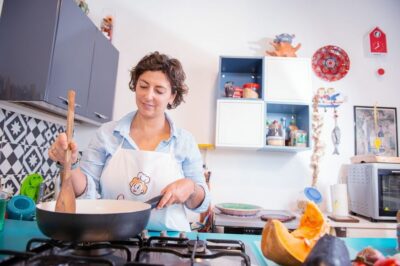
Siracusa: Authentic Cooking Class at a Local’s Home
Read our review →Browse the lists this tour appears in