
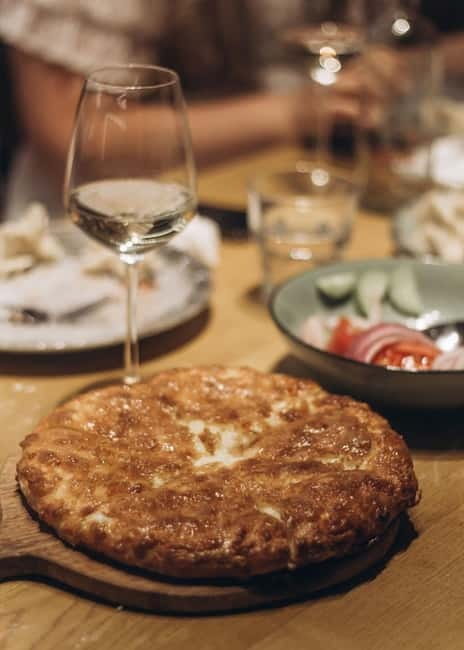
Review · TBILISI COOKING CLASSES
Tbilisi: Georgian Cooking Class with Khinkali and Khachapuri
Tbilisi’s best cooking lesson is not about watching a chef work from a distance. You sit down, handle the dough, fold the dumplings, shape the cheese bread, and eat the results. At St. Bunny restaurant, a chef such as Artem, Nino, Nina, George, or Seva may lead the session, depending on the day.
I like the generous spread of local cheese, tomato and cucumber salad, Kakheti aromatic oil, and homemade Georgian wine served around the lesson. I also like the social side: small groups often form quickly, and solo visitors can meet people from several countries over a plate of food. The main consideration is that this is held in a restaurant courtyard and dining setting, not a working kitchen, and some participants may do more hands-on work than others.
Key points to know before booking
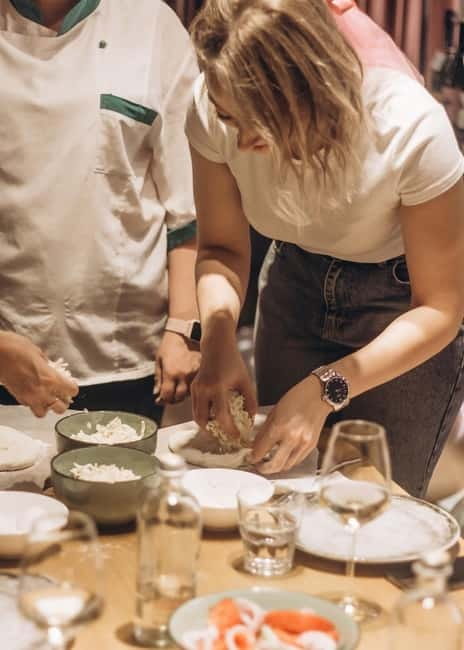
- You make two Georgian classics: Learn the dough, filling, folding, and cooking steps for khinkali and Imeretian khachapuri.
- The meal is part of the class: Cheese, salad, wine, and your finished dishes make this a full and filling 2.5-hour outing.
- The setting is unusual: St. Bunny occupies the third floor of the Merani shopping center, with entrances from Rustaveli Avenue and Alexander Griboyedov Street.
- Instruction is available in two languages: The class is offered in English or Russian, with recipes provided afterward.
- The price is strong value: At $28, you receive instruction, food, wine, cultural stories, and a substantial meal.
- Expect a relaxed group activity: It works well for solo visitors, couples, friends, and teens, though the amount of individual cooking can vary.
What you actually make: khinkali and Imeretian khachapuri
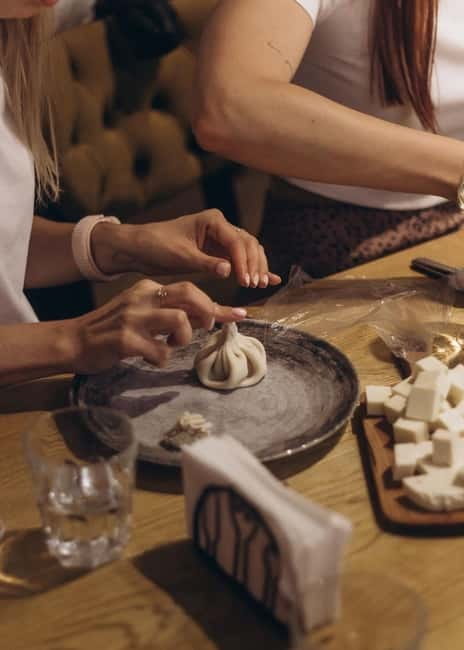
The class focuses on two dishes that explain a lot about Georgian food.
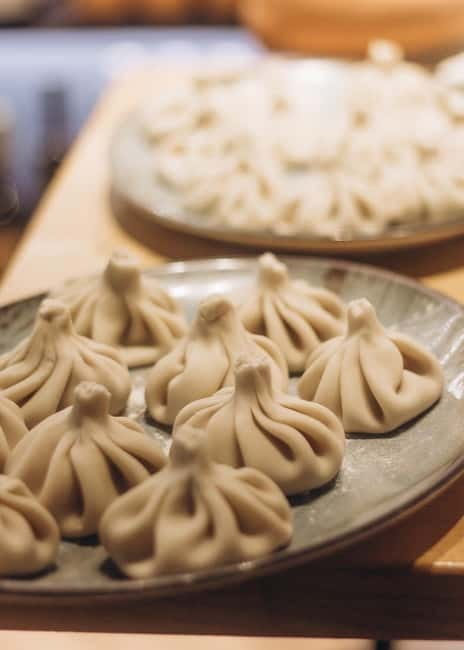
Khinkali are Georgian soup dumplings, usually filled with seasoned meat and broth. The skill is in folding the dough into a pleated pouch that holds the juices inside. You will be shown how to shape and seal them, then cook them before sitting down to eat.
This is the most playful part of the session. Folding a neat khinkali takes practice, and the chef stays close to help with the tricky bits. One instructor, George, was praised for supervising each move so everyone could follow along. Another, Artem, was singled out for patience, humor, and clear explanations. The exact chef may change, but the teaching style is generally step by step.
Imeretian khachapuri is a round Georgian cheese bread filled with cheese rather than topped with an egg. It is less dramatic than the boat-shaped Adjarian version, but it is an important regional style and a good introduction to Georgian baking.
One point is worth clarifying before you book. A participant expected a different type of khachapuri and found the version made in class surprising. If you have your heart set on Adjarian khachapuri, ask what will be prepared on your date. The advertised dish is Imeretian khachapuri.
More Cooking Classes in the world:
- Half-Day Thai Cooking Class at Organic Farm in Chiang Mai
★ 5.0 · 19,087 reviews - Florence: Pasta Cooking Class with Unlimited Wine
★ 4.9 · 10,285 reviews - 3 in 1 Cooking Class near Navona: Fettuccine, Ravioli & Tiramisu
★ 5.0 · 7,376 reviews
Arriving at St. Bunny on Rustaveli Avenue
St. Bunny is on the third floor of the Merani shopping center in central Tbilisi. You can enter from the main Rustaveli Avenue side or from parallel Alexander Griboyedov Street.
This is not a rustic farmhouse kitchen. The class takes place in the restaurant, in a distinctive courtyard-style setting with artistic details and an attractive historic building atmosphere. That gives the outing a pleasant sense of place, but it also means the lesson feels closer to a hosted food event than a professional cooking-school kitchen.
The meeting point is easy to combine with sightseeing in central Tbilisi. You will want to allow a few extra minutes to find the restaurant inside the shopping center and reach the third floor. A separate entrance is available for the activity, and the experience is listed as wheelchair accessible.
The class lasts about 2.5 hours. Starting times vary, so check the available slot when booking. An afternoon session works well after sightseeing, while an evening class can serve as dinner.
The welcome spread: wine, cheese, salad, and Georgian produce
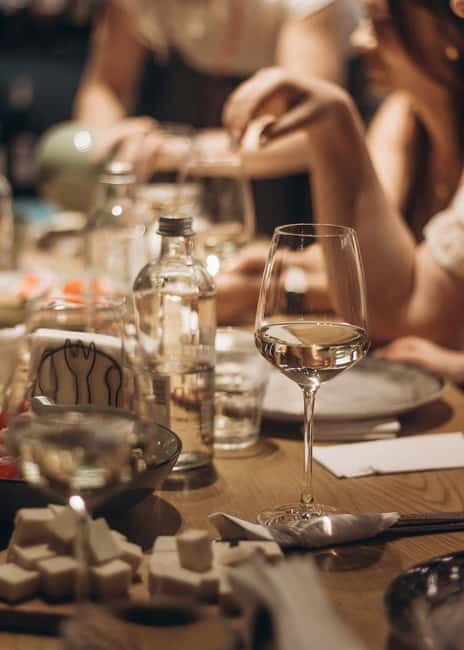
The food begins before the main cooking starts. You receive an assortment of local Georgian cheeses, a salad of ripe tomatoes and cucumbers, and Kakheti aromatic oil. A glass of homemade Georgian wine is also included.
This opening spread matters because it turns the lesson into a complete Georgian food experience. You are not waiting hungry for your dough to cook. You can snack, ask questions, and get comfortable with the group while the chef introduces the dishes.
The salad is simple, but the ingredients are central to Georgian meals. Fresh vegetables, good oil, and cheese are not filler here. They give you a taste of the produce and flavors that accompany the heavier khinkali and khachapuri.
There is also plenty of food. One participant felt the portions were too large and suggested making half as much to avoid waste. That is useful advice if you are a light eater. Come hungry, but do not plan a large meal immediately afterward.
The salad is described as generous enough to take some home. Additional wine or food can be ordered separately, but it is not included in the $28 price.
Folding dumplings with a chef beside you
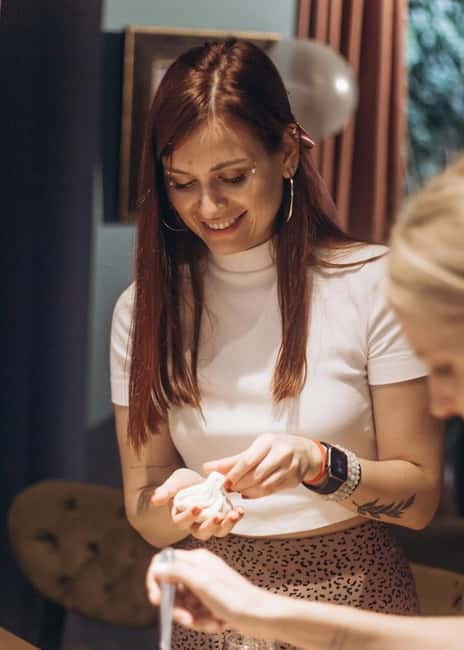
The heart of the experience is the hands-on khinkali lesson. The chef demonstrates the process, then guides you as you work through it yourself.
You will likely spend time on the dough, filling, and folding technique. The aim is not just to watch the finished dumpling appear. You are expected to participate, and the instructors are available to correct your technique and help you get the seal right.
This is where the size of the group makes a difference. Several sessions have had only four people, while other bookings have included groups of ten colleagues. Small groups give the chef more time to watch each person. Larger groups can be livelier, but not everyone may get equal hands-on time for every recipe.
One participant wished all members of the group could work directly on both dishes. That is the main practical limitation to keep in mind. The class is interactive, but your exact role can depend on group size and how the chef organizes the work.
Still, the activity is beginner-friendly. Clear instructions and close supervision make it possible even if you have never shaped Georgian dumplings before. The folding can be oddly calming once you get into the rhythm, and the mistakes become part of the fun.
Same region, a different dish to learn:
- Florence: Pasta & Tiramisu Cooking Class with Unlimited Wine
★ 4.9 · 6,708 reviews - Florence: Pasta Cooking Class with Unlimited Wine
★ 5.0 · 6,413 reviews - Hanoi Cooking Class: Culture, Local Market & Meaning CSR Impact
★ 5.0 · 5,147 reviews - 5 Traditional Dishes Hanoi Cooking Class with Market Trip
★ 5.0 · 4,890 reviews
Making cheese bread, then eating your own work
After the khinkali, the class turns to Imeretian khachapuri. The chef explains the preparation and helps you shape the bread and cheese filling.
This part is less fiddly than folding dumplings, so it gives the group a change of pace. You learn how Georgian cooks handle dough and cheese, then see the finished bread served warm with the rest of the meal.
The best feature of the class is that the food you prepare does not vanish into a kitchen. You sit down and eat it in a festive restaurant setting. That makes the lesson feel useful rather than purely performative. You leave knowing how the dishes are made and having eaten a substantial meal.
Some people may find the session a little more dinner-focused than expected. One participant described it as slightly too much hand-holding and more of a dinner than a cooking class. If you want a technical culinary course with advanced knife skills, detailed timing, and extensive individual work, this is not that kind of experience.
For most visitors, though, the balance works. You get enough instruction to repeat the recipes at home, without spending an entire day in a classroom.
Georgian stories and an easy way to meet people

The chefs do more than give directions. The class includes stories about Tbilisi and explanations of Georgian food culture. One instructor was praised for connecting the dishes with local history and cultural customs, while others kept the mood light with jokes and conversation.
That informal talk is a real part of the value. Food makes it easier to understand Georgia than a list of dates and monuments. Khinkali is not just a dumpling to fold, and khachapuri is not just cheese bread. The preparation, sharing, and generous table all reflect the social side of Georgian dining.
The group format also helps solo visitors. Several people joined alone and left having met new friends. Couples and groups of friends can enjoy the session together, while teens are also welcome according to the experience details.
Language should not be a major concern if you choose the right session. Instruction is offered in English or Russian. If you need one language in particular, select the matching time when available.
The chefs named in the feedback include Artem, Nino, Nina, George, and Seva. Their approaches vary, but the repeated strengths are patience, humor, clear instruction, and attention to the group.
Is $28 good value in Tbilisi?
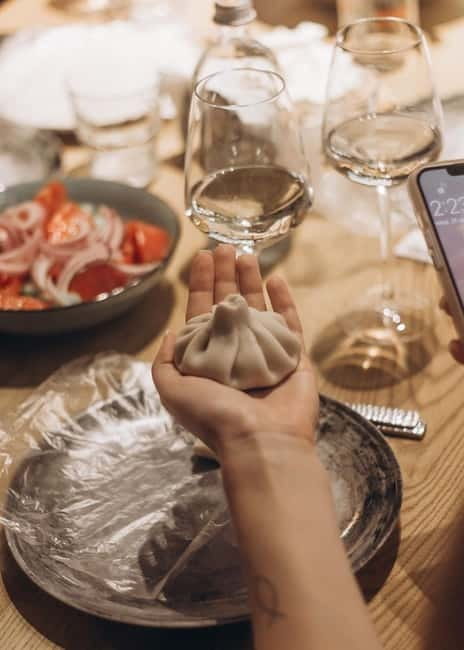
At $28 per person, this is a strong food value. The fee includes a 2.5-hour class, two dishes, local cheeses, fresh salad, Kakheti oil, homemade wine, and the meal you prepare.
The comparison that matters is not just the price of a restaurant dinner. A normal meal might let you taste khinkali and khachapuri, but it would not show you how the dough is made or how the dumplings are folded. Here, you get food plus a skill you can take home.
Recipes are provided afterward, sometimes through a link. That makes the experience more useful for anyone who wants to recreate the dishes after returning home.
The value is especially good for a first visit to Georgia. You receive a meal, a short cultural introduction, a social evening, and an activity that is different from another walking tour or museum visit. I would be less enthusiastic if you are seeking a serious professional course, since the class is designed for fun and accessible participation.
The price does not include extra wine or food ordered from the menu. You probably will not need additional food, since the included portions are substantial.
Who should book this class?
I would recommend it most strongly to:
- First-time visitors to Georgia who want to understand the food beyond simply ordering it.
- Solo visitors looking for an easy social activity in central Tbilisi.
- Couples and friends who enjoy making something together.
- Families with older children or teens, since the activity is interactive and approachable.
- Food lovers on a budget, because the class includes a full meal and wine.
- People with a free afternoon or evening, since the 2.5-hour length fits neatly into a city stay.
You might skip it if you dislike group activities, do not eat cheese or dough-heavy food, or want a highly technical cooking course. You should also keep the portion size in mind. The combination of salad, cheese, khinkali, khachapuri, and wine is filling.
The setting is wheelchair accessible, but the class is inside a shopping center on the third floor. If you have specific mobility needs, confirm the route and entrance arrangements before arrival.
Booking, cancellation, and timing
You can reserve the class and pay later, which is useful when your Tbilisi schedule is still changing. Free cancellation is available up to 24 hours before the activity for a full refund.
The activity has a rating of 4.7 from 1,146 ratings, which fits the consistent strengths of the experience: friendly chefs, a warm setting, clear steps, generous food, and good value. The few cautions are equally clear: not everyone may have equal hands-on time, portions can be large, and the venue is a restaurant courtyard rather than a kitchen.
Plan to arrive at St. Bunny with enough time to locate the third-floor venue. You can enter from Rustaveli Avenue or Griboyedov Street. The experience provider is Georgian Cuisine.
Should you book the Tbilisi cooking class?
Yes, if you want an easy, social introduction to Georgian food with a real meal at the end. The class gives you practical skills, local ingredients, wine, city stories, and a chance to meet people without taking up an entire day.
I would book it early in a Tbilisi visit if possible. You will learn what khinkali and khachapuri should taste like, receive recipes to use later, and gain a better sense of what to order in Georgian restaurants.
Just set the right expectation. This is a friendly restaurant-based cooking experience, not an intensive chef-training course. If that sounds like the right balance, $28 is hard to beat.
FAQ
How long does the cooking class last?
The experience lasts approximately 2.5 hours.
How much does the class cost?
The listed price is $28 per person.
Which dishes will I learn to make?
You will learn to prepare khinkali and Imeretian khachapuri.
Is food included?
Yes. The package includes the dishes you prepare, local Georgian cheeses, a salad of Georgian tomatoes and cucumbers with Kakheti aromatic oil, and homemade Georgian wine.
Is wine included?
Yes. A tasting of Georgian homemade wine is included. Additional wine or food ordered from the restaurant costs extra.
Where does the class meet?
The meeting point is Restaurant St. Bunny on the third floor of the Merani shopping center in Tbilisi.
How do I enter the restaurant?
You can enter the Merani shopping center from central Rustaveli Avenue or from parallel Alexander Griboyedov Street.
What languages are available?
The instructor can teach in English or Russian.
Will I receive the recipes?
Recipes are provided after the class, including through a link for some sessions.
Can I cancel for a full refund?
Yes. You can cancel up to 24 hours in advance for a full refund.
Newest classes around the world
- Aroidee’s Farm-Fresh Thai Cooking Experience★ 5.0 · 8 reviews
- Authentic Thai Cooking Class and Farm Visit in Chiang Mai★ 5.0 · 66 reviews
- Signature Thai Cooking Course★ 5.0 · 79 reviews
- Half Day Guided Thai Cooking Class in Chiang Mai★ 5.0 · 13 reviews
- Yummy Tasty Thai Cooking School in Chiang Mai★ 5.0 · 2 reviews
- Online Thai and Akha Cooking Class★ 5.0 · 70 reviews
- Northern Thai Cooking Class in Chiang Mai in a Countryside Home★ 5.0 · 2 reviews
- Private Half-Day Thai Cooking Class in Chiang Mai★ 5.0 · 4 reviews
Tbilisi Cooking Classes, compared.
Small-Group Khinkali and Khachapuri Cooking Class in Tbilisi
Read our review →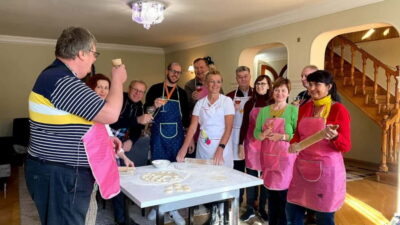
Nana’s Kitchen – traditional Georgian cooking class at real Georgian family home
Read our review →
Kakheti Horse Riding, Wine Tasting, and Cooking …
Read our review →Browse the lists this tour appears in