
Review · GREECE COOKING CLASSES
Kos Cooking Classes by Mama Contessa
The heart of this Kos experience is the family connection between the farm, factory, kitchen, and table. You see where the ingredients come from, learn how the family processes its products, then sit down to eat food prepared during the class. Mama Contessa’s kitchen is the main event, but the estate and olive oil tasting give the meal a useful sense of place.
I like the hands-on format and the chance to taste oil made on the property. I also like that the cooking is not rushed into a single demonstration: you get coffee and snacks, a farm tour, a factory visit, several recipes, and a proper meal. The main consideration is that the experience covers a lot in one day, so anyone wanting an intensive, technique-focused cooking lesson may find the estate tour equally important.
Key points
- Farm-to-table from the family’s own property: See the fields, olive trees, production areas, and storage spaces connected to the food you eat.
- Five Greek recipes: The cooking session includes four savory recipes and a Greek dessert.
- Olive oil tasting: Compare different oils and learn how the family’s product is processed and marketed.
- Warm family hosting: Mama Contessa leads the kitchen side, while her son helps explain the experience in English.
- A private group setting: The activity is arranged for a private group rather than a large mixed crowd.
- Useful souvenirs: You leave with a Greek recipe booklet and packaged olive oil from the family’s production.
Why this Kos cooking class feels different
Many Greek cooking classes begin and end at a worktable. This one begins much earlier, with the land and the people who work it. The family produces many of the basic ingredients used in its dishes, so you are not simply following a recipe in an anonymous kitchen.
That link matters. A tomato, grain, or bottle of oil means more when you have just seen the fields and production areas connected to it. The visit gives you a practical picture of how a family business moves from cultivation to processing, storage, cooking, and sale.
The setting is in Kos, part of Greece’s Dodecanese islands. The activity is not presented as a standard restaurant meal with a token demonstration added on. It is a private family experience built from several parts, with food as the thread tying them together.
You should also know what this is not. The supplied details do not promise a formal culinary school, professional knife training, or a chef-led lesson aimed at advanced cooks. The emphasis is on Greek home cooking, family methods, local ingredients, and sharing a meal.
More Cooking Classes in Greece:
- Athens: Classic Cooking Class with Market Visit and Wine
★ 5.0 · 1,101 reviews - Athens: Food Market Visit and Cooking Class with Wine
★ 4.9 · 1,087 reviews - Greek Cuisine Cooking Class in Santorini with Recipes and Wine
★ 5.0 · 969 reviews
Coffee, finger food, and a friendly start
Your arrival begins with Greek finger foods and Greek coffee. This is a small but useful opening, since it gives you time to settle in before the more active parts of the visit.
Greek coffee is strong, thick, and traditionally served in a small cup. Even if you do not usually drink coffee, the opening snack and coffee service help set a relaxed tone. It also gives you a first taste of the family’s hospitality before the cooking begins.
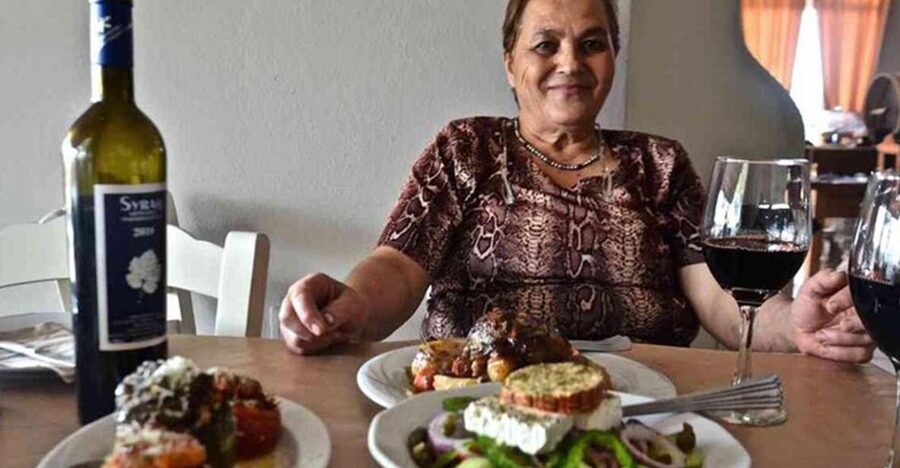
Mama Contessa is the central figure in the kitchen. Her son helps explain the activities in English, which is important for anyone who wants more than a visual demonstration. The listed host language is English, so English-speaking participants should be able to follow the main presentation.
The welcome is also a useful clue about the pace. This is meant to feel like a visit to a working family property, not a tightly timed series of tourist stops. You will want to arrive ready to listen, ask questions, and enjoy the food between activities.
Touring the estate and its 7,000 olive trees
After the welcome, you walk or ride around the family estate, where the products are made and grown. The property includes vegetable and cereal areas, along with about 7,000 olive trees.
That scale makes the olive oil part more than a quick tasting. You get a sense of the agricultural base behind the family’s work and see that the oil is tied to a large, active olive-growing operation. For anyone interested in Greek food beyond the restaurant table, this is one of the most useful parts of the day.
A bus is used to tour the wider property, according to the experience details. That matters because a large farm is not always practical to explore entirely on foot. The ride lets you cover more ground and reach the vegetable, cereal, and olive-growing areas without turning the visit into a long hike.
The tour is also a good fit for families and mixed-age groups. You can take part in the kitchen, watch from the side, or focus on the farm and factory portions. The experience is interactive, but it does not require every person to be cooking every minute.
Inside the family factory
The estate tour leads into the family factory, where the products are processed and stored. This is where the farm-to-table idea becomes concrete. You see the part of the operation that comes after growing and before serving.
The factory visit may be especially interesting if you want to understand olive oil as a product rather than simply a condiment. Processing and storage affect how food businesses handle what they produce, and the family explains how its products move through those stages.
The information provided does not specify every machine, processing method, or factory room, so do not book this expecting a technical industrial tour. Think of it as a family production visit that adds context to the food and olive oil tasting.
I like this part because it prevents the cooking class from feeling disconnected from local agriculture. You are not only told that the ingredients are local. You are shown the property and production spaces behind that claim.
Same region, a different dish to learn:
- Naxos: Half-Day Cooking Class at Basiliko Family Tavern
★ 5.0 · 887 reviews - Greek Cooking Class in Athens Including Rooftop Dinner with Acropolis View
★ 5.0 · 826 reviews - Greek Small-Group Athens Cooking Class & Dinner
★ 5.0 · 574 reviews - Exclusive Cooking Experience in our Cave Home by Petra Kouzina
★ 5.0 · 572 reviews
Tasting extra virgin olive oil
The olive oil tasting is one of the clearest highlights. You taste the family’s extra virgin olive oil and compare different types in a blind tasting, then evaluate them.
A blind tasting makes you pay attention. Instead of choosing an oil because you recognize the bottle or label, you focus on aroma, flavor, texture, and your own preference. You do not need professional tasting skills. The point is to notice differences and understand why extra virgin olive oil can taste quite different from one sample to another.
This is a useful skill to take home. Greek cooking relies heavily on olive oil, and knowing what you like can help you make better choices in shops and markets. The tasting also gives the later meal more meaning, since you have already considered one of its key ingredients.
The activity includes a packaged olive oil from the family’s production as a souvenir. That is more useful than a generic keepsake. You can use it at home, and the recipe booklet gives you a reason to do so.
Cooking four Greek dishes and a dessert
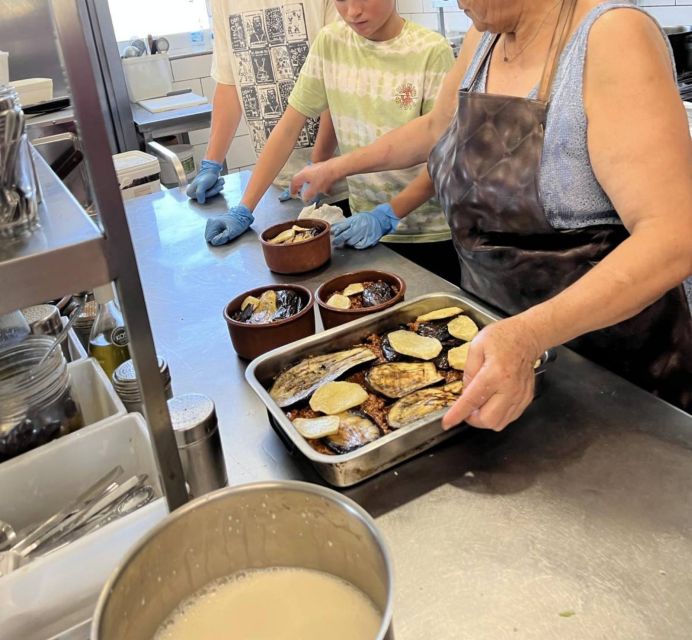
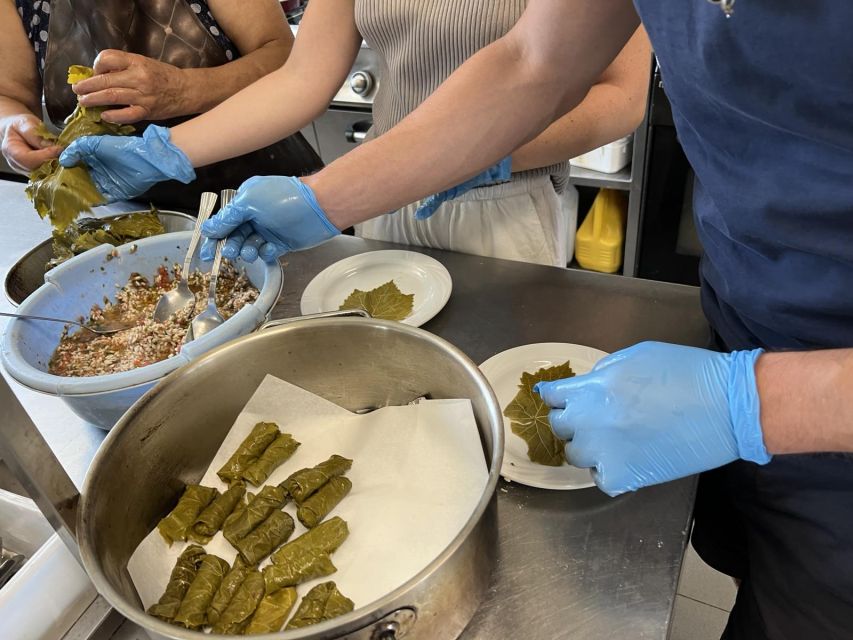
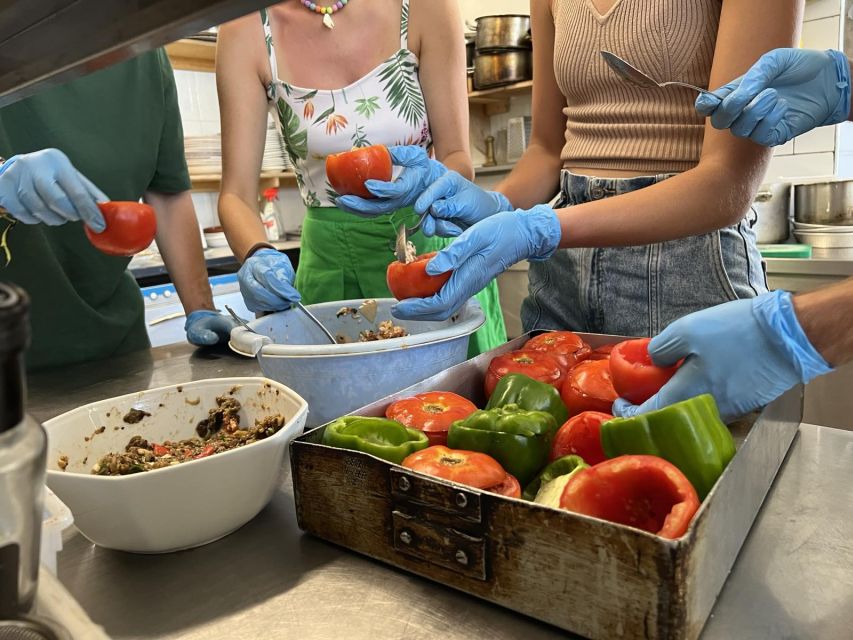
The cooking demonstration takes place in Mama Contessa’s kitchen and covers four different recipes plus a Greek dessert. Some people can join in while others watch, which makes the format flexible for groups with different interests.
You should expect a shared cooking session rather than a private lesson where one instructor works with one person at a time. Mama Contessa brings decades of cooking experience, and her son explains the process in English. The family’s approach gives the session a home-kitchen feel, rather than the polished rhythm of a professional cooking studio.
The number of recipes is a real strength. Four savory dishes and a dessert offer a broader look at Greek food than preparing one main course alone. At the same time, the class may not cover every recipe in great technical detail. You are getting a taste of several dishes and cooking traditions, not a full culinary certificate.
The recipe booklet helps solve that problem. You can revisit the dishes later and work through them at your own pace. For me, that makes the souvenir more valuable than a simple printed schedule or branded trinket.
Sitting down to the meal you helped prepare
At the end, the food prepared during the class becomes a full meal. This is the satisfying payoff of the visit. You have seen the farm, learned about the production side, helped prepare the dishes, and then eaten what came from the kitchen.
A shared meal also gives the day a social finish. The class is not only about collecting cooking tips. It is about seeing how Greek food works in a family setting, where preparation and conversation lead naturally to eating together.
The meal should be understood in the context of the class. The exact menu is not specified in the available details, so you should not book this expecting a fixed list of named dishes. The recipes may reflect what the family chooses to demonstrate and what ingredients are available.
That flexibility can be part of the charm, but it is worth keeping in mind if you have strict food preferences or need a confirmed menu before booking. The provided information does not list dietary accommodations or allergy procedures, so ask the provider directly before reserving if that affects your decision.
What the $101 price gives you
At $101 per person, this is not priced like a short cooking demonstration. The value depends on how much of the full day you use. You are paying for a private group experience that combines food, instruction, an estate tour, an olive oil tasting, a factory visit, a prepared meal, a recipe booklet, and packaged olive oil.
The price makes more sense for someone who wants several experiences in one booking. If you only want to learn two or three Greek recipes, a shorter class may cost less and offer more kitchen time. If you want to understand the family’s products and see the property, this activity gives you much more than a single restaurant-style lesson.
The private group format also affects value. You are not being placed in a large public class, and the experience can feel more personal because the family is hosting one private group. The exact group size is not provided, so ask if you need to know how many people will attend.
Free cancellation up to 24 hours before the activity and the option to reserve now and pay later make the booking less risky. The activity is listed as valid for one day, with starting times shown through availability. Since the total clock time is not stated, check the available start time and schedule before planning other Kos activities around it.
Who will enjoy this experience most
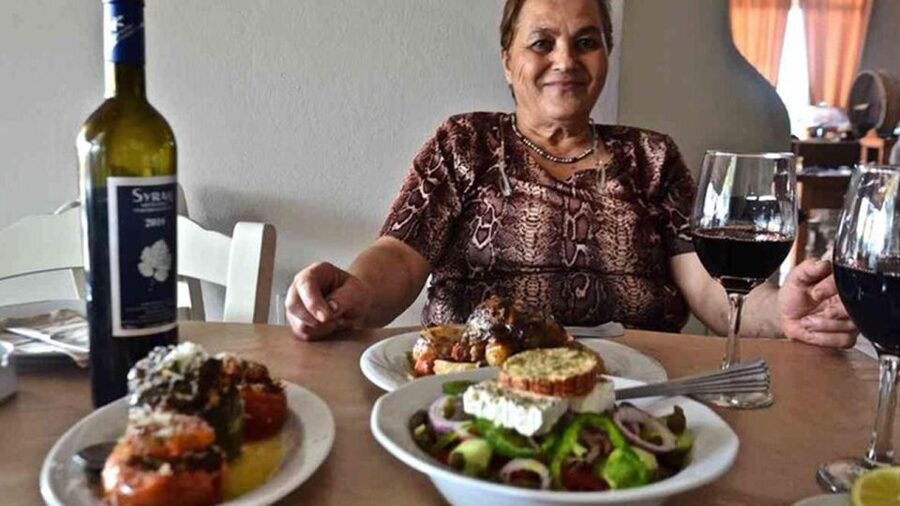
I would choose this for you if food is one of the main reasons you travel, but you also want to see the work behind the meal. It suits couples, families, and private groups who enjoy a relaxed mix of talking, tasting, touring, and cooking.
It is also a good choice for anyone curious about olive oil. The combination of the 7,000-tree farm, factory visit, and blind tasting gives the oil a central role rather than treating it as a minor extra.
The activity should suit people who like participation without pressure. You can join the cooking or watch, and the experience includes several different parts. That makes it easier for a group whose members have different energy levels or interests.
I would hesitate to recommend it to someone seeking a short, highly technical lesson. The day is spread across the estate, factory, tasting, kitchen, and meal. That variety is the appeal, but it also means the cooking instruction is only one part of the program.
Practical details before you reserve
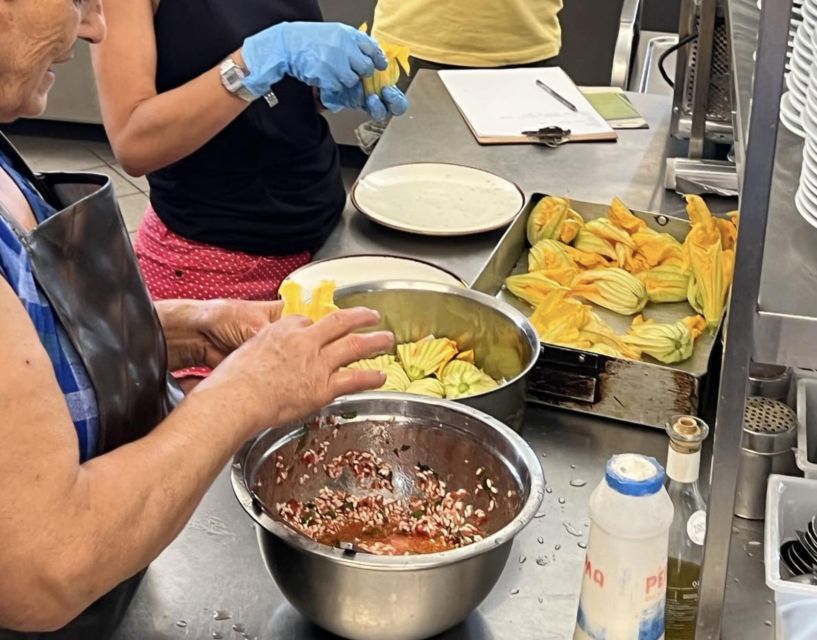
The host and greeter language is English, and the activity is offered for a private group. The provider is 4 SEASONS IKE, while the family experience centers on Mama Contessa and her son.
Check the starting time before booking because the activity does not provide one fixed departure hour. The listed price is $101 per person, and the experience is valid for one day.
The description does not state hotel pickup, exact transport arrangements to the property, accessibility information, dietary options, or the total duration. Do not assume those details. Ask the provider directly if you need transportation, mobility assistance, or a particular menu confirmed.
You should also allow enough room in your Kos schedule for the full experience. The program includes several stages and ends with a meal, so it is not sensible to treat it as a quick stop between tightly timed excursions.
Should you book Kos Cooking Classes by Mama Contessa?
Book it if you want a personal look at Kos agriculture and food, not just a recipe lesson. The strongest parts are the family-run setting, the estate with about 7,000 olive trees, the factory visit, the blind olive oil tasting, and the meal made from the class.
The $101 price is fair when you value the full combination of activities and the private format. It is less compelling if your only goal is advanced cooking instruction or a precisely scheduled short class.
For most food-focused visitors, I would put this high on the Kos list. You leave with a meal, a recipe booklet, and packaged olive oil, but the lasting value is the connection between the land, the family business, and the dishes on your plate.
FAQ
Where does Kos Cooking Classes by Mama Contessa take place?
The experience takes place on the family property in Kos, in the Dodecanese region of Greece. The property includes production areas, olive trees, and a family factory.
How much does the experience cost?
The listed price is $101 per person.
How long is the cooking class?
The activity is valid for one day, but a total duration is not provided. Check availability for starting times and ask the provider if you need the full end time.
What food is included at the beginning?
You are welcomed with Greek finger foods and Greek coffee.
How many recipes are prepared?
The cooking demonstration includes four different recipes and a Greek dessert.
Is olive oil tasting included?
Yes. You taste the family’s extra virgin olive oil and compare different types in a blind tasting.
Is the activity private?
Yes. It is offered as a private group experience.
What can I take home?
You receive a booklet of Greek recipes and packaged olive oil from the family’s production.
Newest classes around Greece
- Authentic and Traditional Cooking Class in Chania Crete★ 5.0 · 5 reviews
- Chania Cooking Class in Crete with rustic, delicious and homely Cretan food!★ 4.5 · 14 reviews
- Private Cooking Class – A Culinary Journey in Argostoli★ 5.0 · 2 reviews
- Greek Cooking Class with Acropolis View★ 5.0 · 76 reviews
- Private Walking Meze Cooking Course★ 5.0 · 6 reviews
- Cook with Katerina: Authentic Greek Home Cooking Class in Athens★ 5.0 · 15 reviews
- Private Greek Cooking Class in Athens-Learn to Cook with Angelina★ 5.0 · 3 reviews
- Hands On Greek Cooking Classes in Athens★ 5.0 · 7 reviews
Greece Cooking Classes, compared.
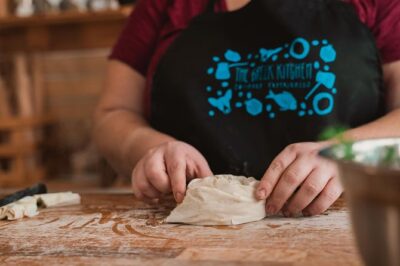
Classic Cooking Class with Market Visit and Wine
Read our review →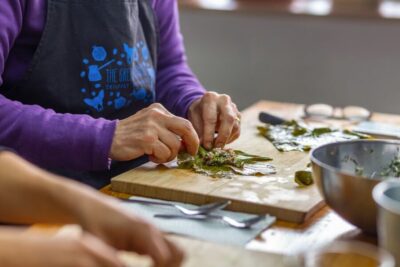
Food Market Visit and Cooking Class with Wine
Read our review →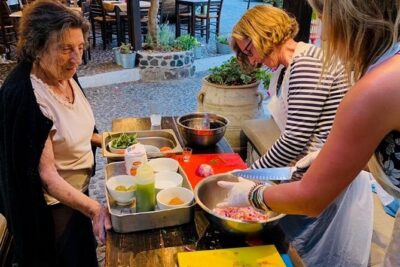
Greek Cuisine Cooking Class in Santorini with Recipes and Wine
Read our review →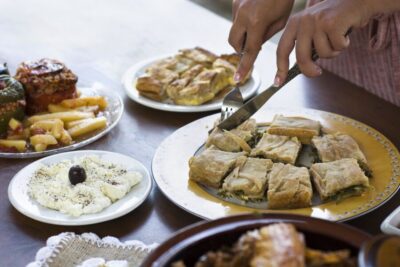
Naxos: Half-Day Cooking Class at Basiliko Family Tavern
Read our review →
Greek Cooking Class in Athens Including Rooftop Dinner with Acropolis View
Read our review →
Greek Small-Group Athens Cooking Class & Dinner
Read our review →
Exclusive Cooking Experience in our Cave Home by Petra Kouzina
Read our review →
Chania: Authentic Cooking Class in the White Mountains
Read our review →Browse the lists this tour appears in