
Review · ISTANBUL COOKING CLASSES
Istanbul: Vegan/Vegetarian Cooking Class with Locals at Home
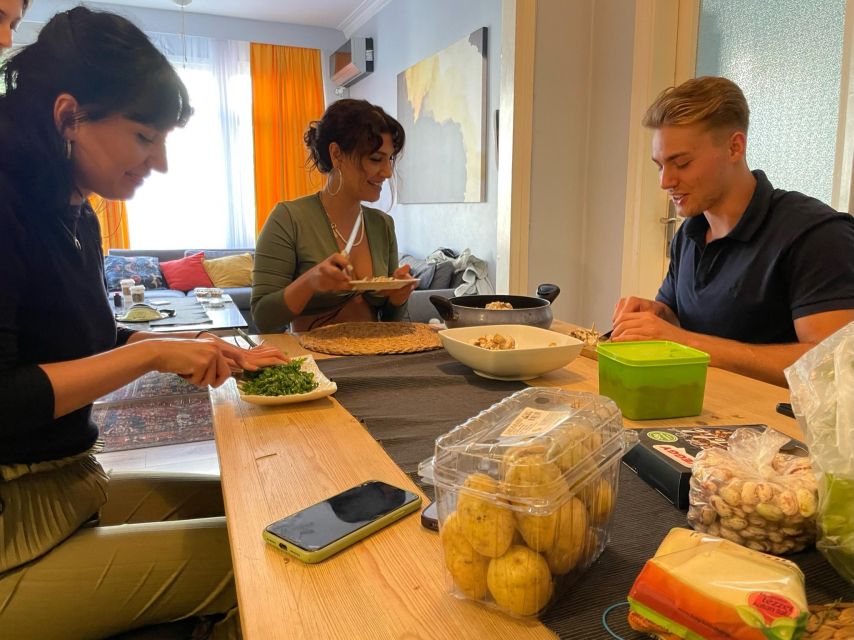
I like the idea of this class because it gets you out of a restaurant and into a real Istanbul home. With Rojda, you’ll prepare plant-based versions of Turkish favorites, including vegan Kokoreç, Dolma, and Mantı, then sit down to eat what you made.
Two things appeal to me here: the small six-person limit, which should keep the cooking hands-on, and the chance to hear about Istanbul and Rojda’s life while working in her kitchen. Tea, warm conversation, and a shared meal give the class a personal feel.
The main consideration is the price: $106 per person is a serious spend for 2.5 hours. You’re paying for more than recipes, but this is best for people who value home hospitality and cultural exchange, not for anyone seeking a cheap meal or a formal culinary school lesson.
Key points to know before booking
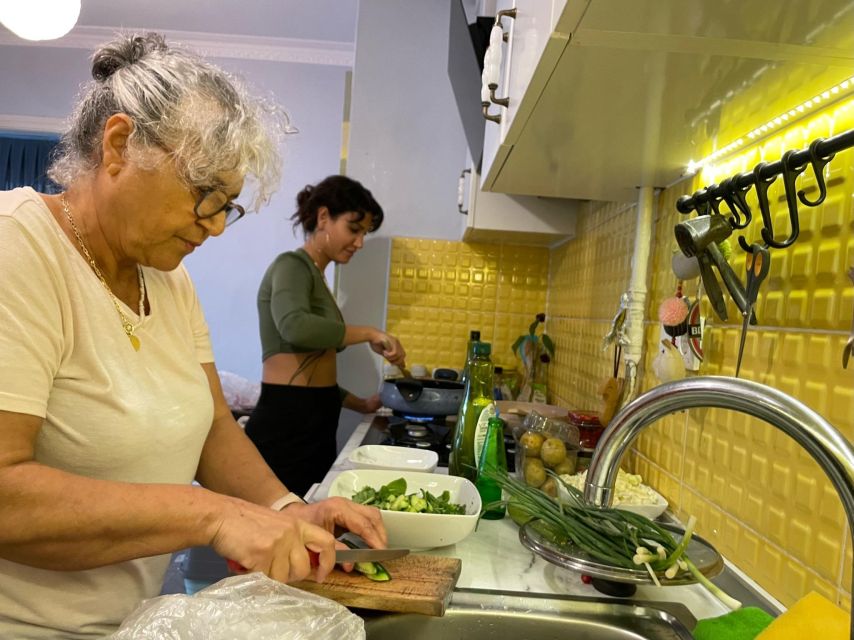
- Rojda hosts you at home near Taksim: This is a local kitchen experience, not a restaurant class or a large group demonstration.
- Vegan Turkish food takes center stage: You may prepare vegan Kokoreç, Dolma, homemade Mantı, and other plant-based dishes.
- The class lasts 2.5 hours: That includes the welcome, cooking, conversation, and eating together.
- Groups are limited to six people: The small size should give you more room to take part rather than simply watch.
- English and Turkish are spoken: You can choose a class conducted in either language when checking availability.
- The meeting point is simple: Call when you arrive or ring bell number 11 at the home near Taksim.
A Turkish cooking class with a personal address
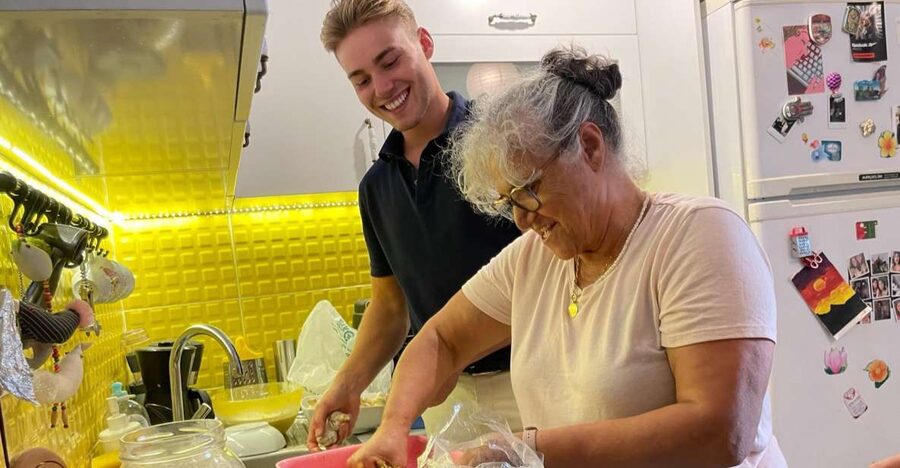
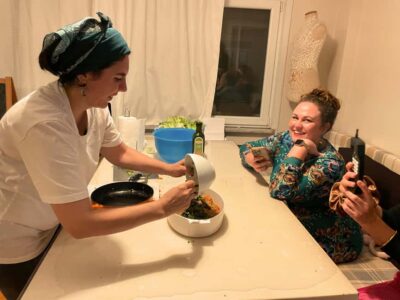
Many cooking classes take place in polished kitchens built for demonstrations. This one starts with a much more ordinary and personal setting: Rojda’s home near Taksim, one of Istanbul’s most central areas. You come to a local address, ring bell number 11, and enter a kitchen where the food and conversation share equal billing.
That setting changes the tone. You are not just being shown how a dish works. You are joining someone at home, drinking tea or coffee, and cooking side by side. The format is simple, but it gives the class a human scale that a large commercial workshop often lacks.
Rojda leads the experience in English or Turkish. Her role goes beyond giving instructions. She also talks about Istanbul, her own life, and Turkish culture, so the class can become a conversation as much as a lesson.
You should still keep your expectations in check. The information provided does not promise a full market visit, a neighborhood walk, or a formal tour of Taksim. The focus stays inside the home, around the cooking and the meal.
More Vegetarian Cooking Classes in Turkey:
- Oaxacan Vegetarian Cooking Class
★ 5.0 · 235 reviews - Marrakech: Moroccan Cooking Class for vegetarians and vegan
★ 4.9 · 156 reviews - Hoi An: Vegetarian Cooking Class w Local Family and transfer
★ 4.9 · 145 reviews
What happens during the 2.5-hour visit
The class begins with a welcome and a cup of tea or coffee. This opening matters because it sets a relaxed pace before anyone starts handling dough, shaping dumplings, or assembling vegetables. You have time to settle in and talk rather than rushing straight to the stove.
After that, you cook together. The exact order of the dishes can vary, but the featured recipes include vegan Kokoreç, Dolma, and homemade Mantı. These are not three interchangeable vegetable plates. Each shows a different way Turkish cooking can work with plant-based ingredients.
Vegan Kokoreç is especially interesting because classic Kokoreç is known as a street-food dish made with offal. Here, Rojda adapts the idea into a vegan version. That gives you a chance to see how a familiar Turkish flavor profile can be reshaped without treating plant-based food as an afterthought.
Dolma offers another useful lesson. Stuffed vegetables and leaves are closely tied to home cooking across the region, and the dish can be prepared without meat. You learn how a familiar household recipe changes when the filling is fully vegetarian or vegan.
Then there is Mantı, the small Turkish dumpling that takes patience and handwork. Making it from scratch is likely to be the most craft-focused part of the class. You do not just taste the finished dumpling. You take part in the shaping process and see why homemade Mantı is such a valued dish.
The meal comes after the cooking. Since the dishes are prepared during the visit, eating together gives the class a natural finish. You can taste the results while asking questions and continuing the conversation, rather than packing up and leaving as soon as the final recipe is done.
Why the plant-based menu is worth your time
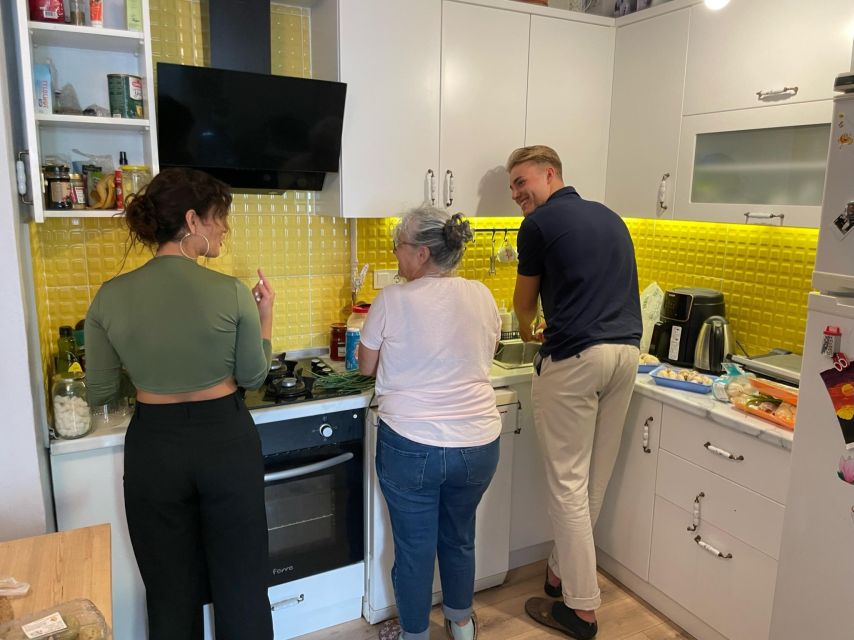
I like this class because it treats vegan and vegetarian Turkish food as part of Turkish cooking, not as a separate compromise menu. The description points out that many Turkish recipes are naturally vegetarian or can be adapted with care. That is useful for anyone who wants to eat locally while avoiding meat and animal products.
The menu also moves beyond the usual safe choices. You are not promised only a simple salad, lentil soup, or grilled vegetables. Vegan Kokoreç and homemade Mantı show more ambition, while Dolma connects the class to familiar home-style cooking.
For a vegan visitor, this can be a practical way to learn what to look for in Istanbul. You leave with a better sense of how local dishes may be changed and which traditional ideas can carry over into plant-based cooking. For a vegetarian visitor, the class offers a chance to understand Turkish food from inside the kitchen rather than through a menu translation.
The class is also suitable for someone who simply likes food and wants to learn. You do not have to define yourself by a strict dietary label to appreciate the recipes. The main value is seeing how ingredients, techniques, and family-style cooking come together.
Still, you should note that the supplied details do not list every dish or explain the ingredients in full. If you have allergies or strict dietary rules beyond vegan or vegetarian eating, contact the host before booking so you can confirm what will be served.
A small group changes the experience
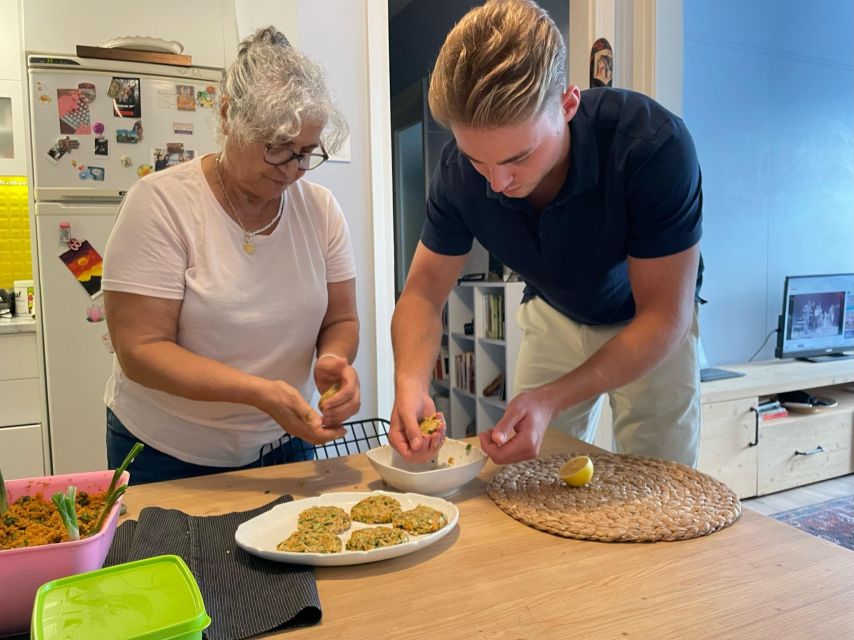
The maximum group size is six. That is one of the strongest practical features of the class. In a group this small, you have a better chance of rolling dough, shaping Mantı, assembling Dolma, and asking questions directly.
A small group also fits the home setting. Six people can share a table and conversation without turning the kitchen into a crowd. The class should feel more like cooking with a few new acquaintances than attending a performance.
The tradeoff is that the experience depends more on personal chemistry. Rojda’s warm hosting and conversation are central to the appeal, so this is not the right choice if you want to keep to yourself or focus only on technical instruction. The cooking is part of the visit, but so is talking.
The format has worked well for different types of visitors. A German couple described the class as a highlight of their time in Istanbul, while another participant focused on learning vegan Mantı. One German-language comment praised both the food and the conversations. These details suggest that the class works best when you are open to social contact, not just recipe collecting.
More Food Outings in Turkey:
- Small Group Cooking Class & Market Food Tour in Florence
★ 5.0 · 1,574 reviews - Athens: Food Market Visit and Cooking Class with Wine
★ 4.9 · 1,087 reviews - Undiscovered Charleston: Half Day Food, Wine & History Tour with Cooking Class
★ 5.0 · 948 reviews - Vietnamese Food Cooking Class in Hanoi with Market Experience
★ 5.0 · 778 reviews
What makes Rojda’s hosting important
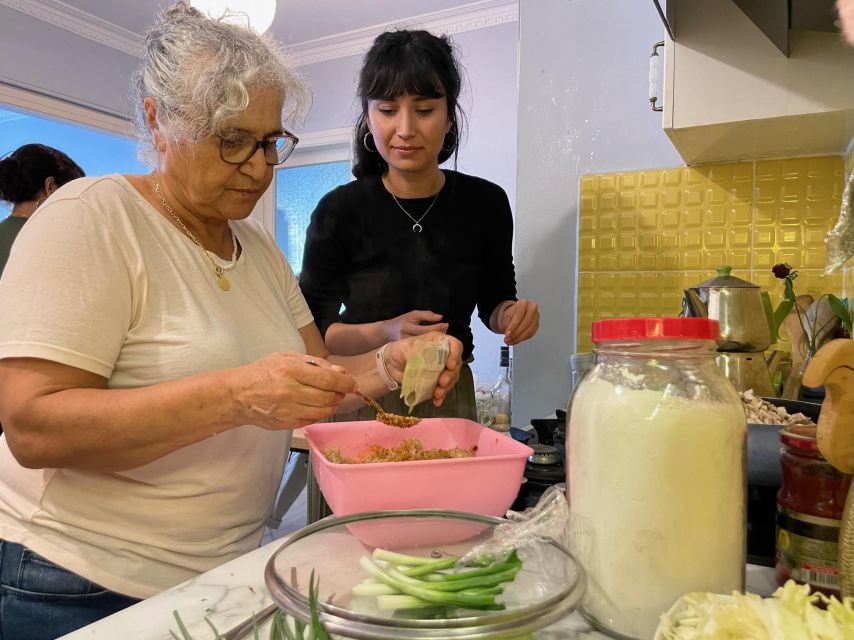
Rojda is the named host, and the experience is built around her home hospitality. That means you are getting her way of explaining the food, her approach to adapting Turkish recipes, and her own perspective on Istanbul.
The personal stories are not a minor extra. They are part of what separates this class from a standard cooking lesson. You can ask about the city, daily life, and the food traditions behind the dishes while you work.
The strongest praise attached to the experience centers on this combination of kindness, conversation, and food. One participant described the visit as feeling like time spent with a good friend. That is a warm response, but it also tells you what kind of experience this is: intimate, informal, and shaped by the host’s personality.
It is wise to view that as a benefit with a condition. You are not booking an impersonal class with a fixed script and a team of assistants. You are booking time with Rojda in her home. If that sounds appealing, the format has real charm. If you want a tightly timed professional kitchen lesson, you may prefer a different class.
The value of $106 per person
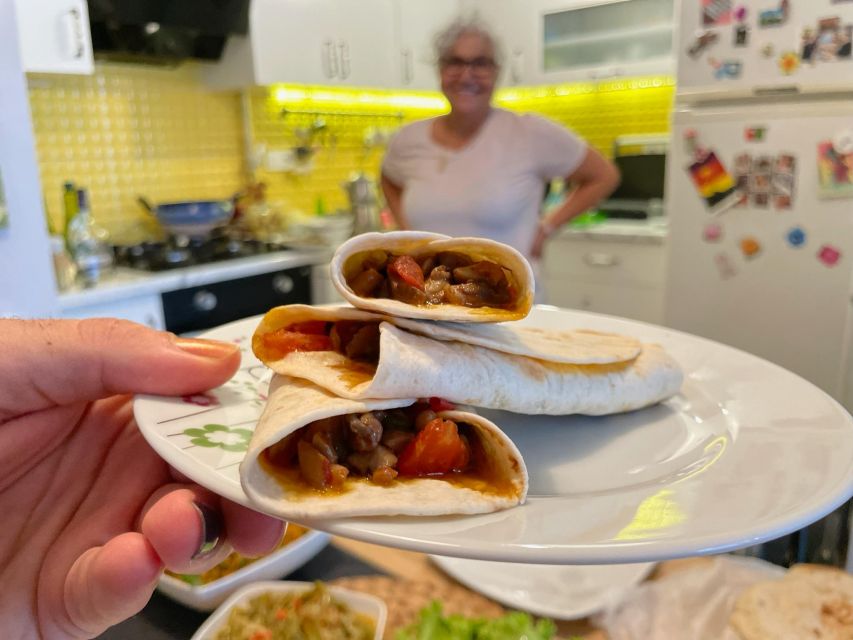
At $106 per person, this is not a bargain cooking lesson. The 2.5-hour duration works out to a substantial hourly cost, especially since transportation, a market visit, and extra sightseeing are not included in the information provided.
The price makes more sense if you treat the class as three things at once: cooking instruction, a home meal, and cultural conversation. You are not paying only for the food on the plate. You are also paying for a small group setting, access to a local home, and the chance to prepare dishes you might not learn in a standard restaurant meal.
I would compare it with the cost of a good meal and a separate cultural activity in Istanbul. If you would happily pay for both, this combined experience may offer fair value. If your main goal is simply to eat vegan food cheaply, the price will feel high.
The five-star rating from eight reviews supports the idea that the class delivers strongly for the right audience. The most repeated strengths are the tasty food, relaxed mood, personal attention, and cultural conversation. That does not make the price automatically right for everyone, but it gives you a clear picture of where the money goes.
Location near Taksim and meeting details
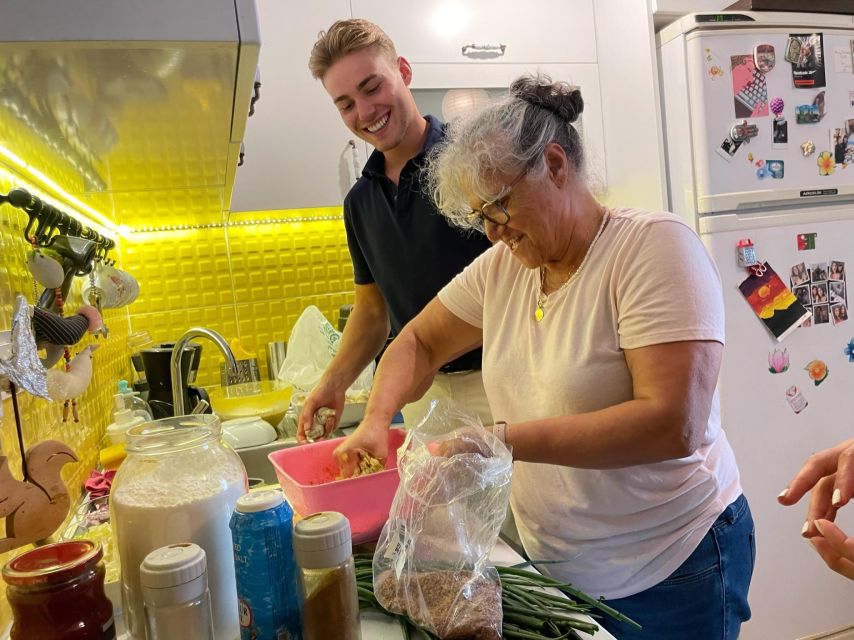
The home is near Taksim, described as one of Istanbul’s most central neighborhoods. That makes the location useful if you are already staying in or visiting the central part of the city.
The meeting instructions are brief: call the host when you arrive or ring bell number 11. You should have the host’s contact details ready and allow enough time to find the building. Since this is a home address rather than a prominent attraction, do not assume you will spot a large sign or a tour desk.
The activity information does not give a full street address in the supplied details, so you should check the confirmed meeting information before setting out. The experience itself lasts 2.5 hours, but your total time should include the journey to and from the home.
There is no listed transport service. You make your own way to the meeting point. That is easy enough for many people staying near central Istanbul, but it is worth planning carefully if you are coming from another part of the city.
Who should book this class
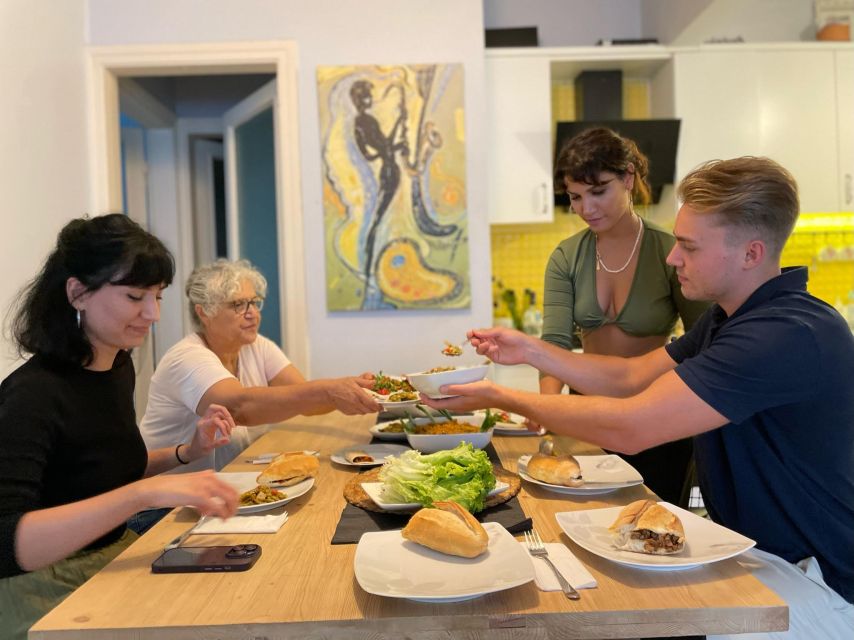
I would recommend this class most strongly to vegan and vegetarian visitors who want more than a restaurant meal. It is also a good match for anyone who enjoys learning through conversation and prefers a home setting to a commercial kitchen.
You should book if you like:
- Preparing food with your own hands
- Trying familiar dishes in an unusual plant-based form
- Small groups rather than large demonstrations
- Meeting a local host in a personal setting
- Hearing about Istanbul while you cook
- Sitting down to share the food you have made
Families and groups of friends may enjoy the friendly structure, but the group limit is six, so larger parties may not fit together. Solo visitors can also find value here, especially if they enjoy meeting people through food.
I would hesitate if you need a strict timetable, a wide range of menu choices, or a low-cost activity. The details do not promise a professional certificate, a market tour, or a long list of technical cooking skills. This is a warm home visit with cooking at its center.
Booking flexibility and language choices
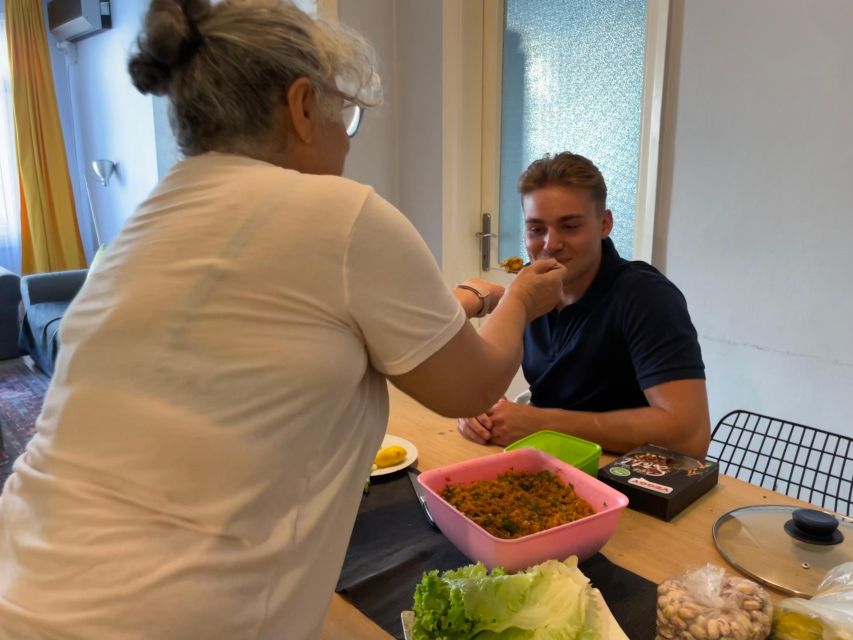
You can cancel up to 24 hours before the activity for a full refund. The reserve-now, pay-later option also lets you hold a place without paying immediately, which is useful when your Istanbul schedule is still changing.
Starting times depend on availability, so check the date you want rather than assuming a fixed daily schedule. English and Turkish are the listed languages. If you need detailed recipe explanations, choose the language in which you are most comfortable asking questions.
The small group limit is six participants. That number is worth checking when you book, especially if you are traveling with friends and want to stay together.
My verdict: a personal food experience, not a quick class
You should book this class if you want to cook Turkish food in a real home, meet Rojda, and spend part of your Istanbul visit in conversation rather than moving from sight to sight. The vegan Kokoreç, Dolma, and homemade Mantı give the lesson a distinctive menu, while the small group keeps the experience personal.
You should skip it if $106 feels too high for 2.5 hours or if you want a formal culinary course with a fixed, technical program. For the right person, though, the value is in the whole evening or afternoon: tea, recipes, stories, hands-on work, and a shared meal near Taksim.
FAQ
Where does the cooking class take place?
The class takes place at the host’s home near Taksim, in one of Istanbul’s most central neighborhoods.
How do I find the meeting point?
You can call the host when you arrive or ring bell number 11.
How long does the experience last?
The cooking class lasts 2.5 hours.
How many people can join?
The class is limited to six participants.
Which languages are available?
The instructor speaks English and Turkish.
Which dishes might I learn to make?
The class may include vegan Kokoreç, Dolma, homemade Mantı, and other vegan or vegetarian Turkish dishes.
Can I cancel or pay later?
You can cancel up to 24 hours in advance for a full refund. You can also reserve your place and pay later, subject to availability.
Newest classes around Turkey
- Bodrum Cooking Class★ 5.0 · 3 reviews
- Farmers Market visit & Turkish Cooking Class★ 5.0 · 60 reviews
- Cooking Class in Authentic Etrim Village★ 4.5 · 23 reviews
- Bodrum Cooking Class with Local Couple★ 5.0 · 6 reviews
- Turkish Cuisine Cooking Class at Local Home with Family★ 5.0 · 9 reviews
- Istanbul: Turkish Baklava Cooking Class with a Local Host★ 5.0 · 3 reviews
- Istanbul: Turkish Cooking Class with a Professional Chef★ 4.8 · 23 reviews
- Istanbul: Traditional Cooking Class with a Local Mom★ 5.0 · 2 reviews
Istanbul Cooking Classes, compared.
Traditional Home Cooking with a Local in İstanbul City Center
Read our review →
Traditional Home Cooking with a Local in İstanbul Center
Read our review →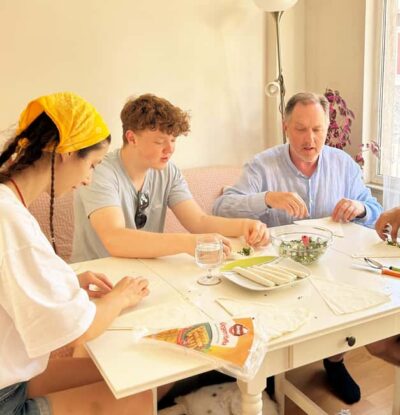
Authentic Turkish Cooking at a Local’s Home in Istanbul
Read our review →
Istanbul Turkish Home Cooking Class with a Local
Read our review →
Authentic Turkish Breakfast Cooking at Home with Locals
Read our review →
Browse the lists this tour appears in