
Review · ISTANBUL COOKING CLASSES
Istanbul: Traditional Cooking Class with a Local Mom
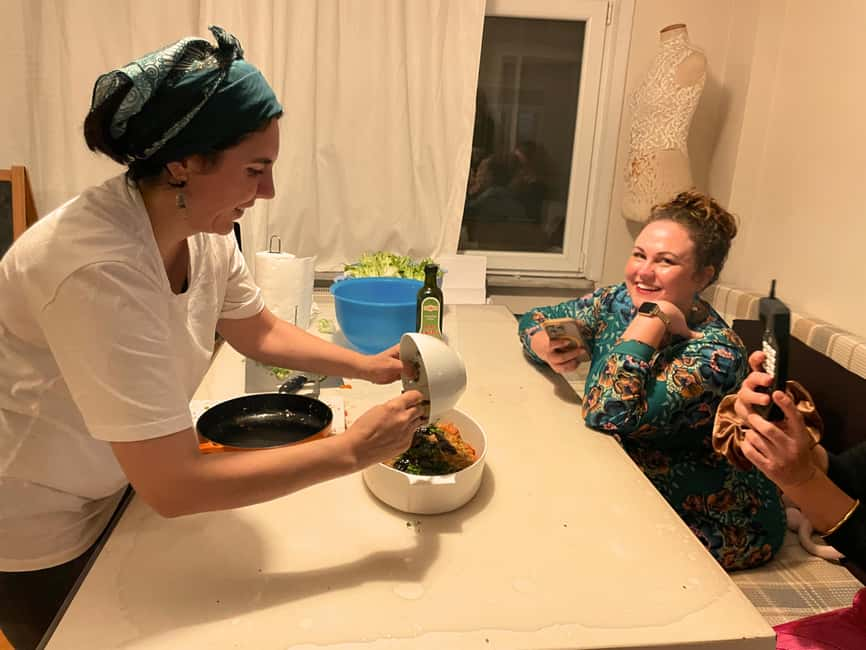
Tiny hand-folded mantı dumplings are the star here. You learn the patient, social art of making them with Rojda, whose family treats the dish as a group project. I like the warm tea welcome and the chance to prepare a full Turkish home meal, not just one showpiece dish. I also like that the class stays small, with no more than six people.
The main drawback is the price: $106 per person is a serious spend for three hours, even with the meal included. You also need to call when you arrive or ring bell number 11, so have the meeting instructions ready.
Key points at a glance
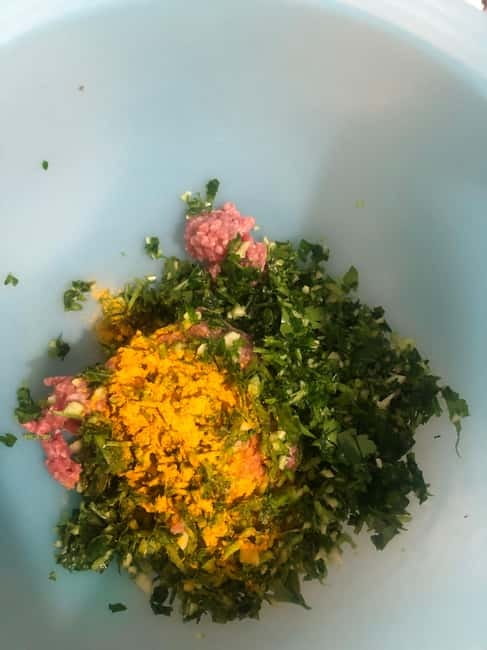
- Hand-folded mantı: Learn the small dumpling technique that gives this dish its special character.
- A full home menu: Prepare mantı, Turkish grape leaves, soup or a soup-like dish, and two side dishes.
- Rojda’s family traditions: Cooking comes with stories of Turkish and Kurdish grandmothers and the way recipes pass between generations.
- Small group of six: The format gives you more room to follow the folding and cooking steps.
- Tea, coffee, and a shared meal: You begin with a Turkish welcome and finish around the table with the food you made.
- Flexible booking: You can cancel up to 24 hours before the class for a full refund and reserve without paying immediately.
Why mantı makes this Istanbul class different
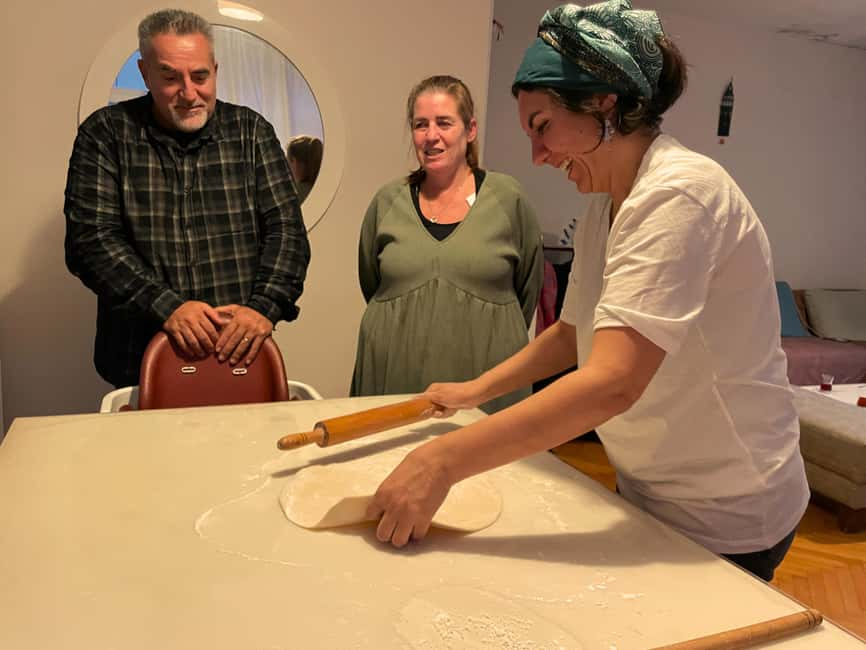
Many cooking classes teach a single dish, then send you on your way. This one uses mantı as a doorway into family cooking. The dumplings are small, filled with spiced meat, and folded by hand. That means the lesson is not just about ingredients. It is about repetition, teamwork, and the little tricks that help the dough hold together.
Rojda explains that making mantı in her family is a group effort. That detail matters. You are not simply watching a professional cook produce perfect dumplings while you stand at a safe distance. You are expected to fold, cook, and take part in the work.
I like the social nature of that setup. Mantı is the sort of dish that can turn a quiet class into a shared task, with everyone building a pile of dumplings together. It also gives you a better sense of Turkish home food than a restaurant meal alone can provide.
The class is offered in an Istanbul home, which changes the mood from formal demonstration to personal visit. The setting should appeal to you if you want to see how a local meal is built from basic preparation through the final table.
More Cooking Classes in Turkey:
- Traditional Home Cooking with a Local in İstanbul City Center
★ 5.0 · 82 reviews - Traditional Home Cooking with a Local in İstanbul Center
★ 4.9 · 78 reviews - Farmers Market visit & Turkish Cooking Class
★ 5.0 · 60 reviews
The welcome: Turkish tea and a home kitchen
The experience begins with a warm welcome and Turkish tea. Coffee and tea are included, and this first pause gives you a chance to settle in before the cooking starts.
That opening is useful rather than decorative. Turkish food is closely tied to hospitality, and sharing a drink before work begins helps establish the tone. You are entering someone’s kitchen, not joining a rushed food-production line.
The host speaks Turkish and English. If you have questions about an ingredient, a technique, or the story behind a dish, you can ask during the class. The available language information is simple, but English support is clearly part of the experience.
The group is limited to six participants. That is one of the strongest practical features. With a dish as fiddly as mantı, a large class could leave you watching from the back. Six people is still enough for a social atmosphere, while keeping the cooking more personal.
Folding mantı, one small dumpling at a time
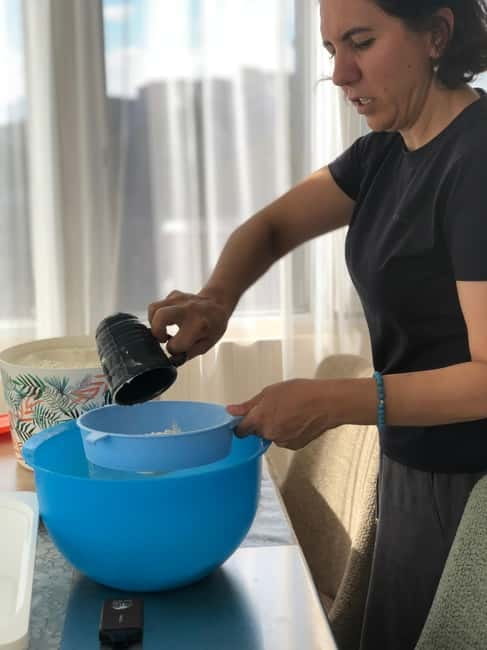
The mantı session is likely to be the most memorable part of the three hours. You work with tiny dumplings filled with spiced meat, learning how to fold them by hand rather than relying on a machine or prepared product.
The appeal is partly culinary and partly physical. You can see why the dish is traditionally made by several people. Each dumpling takes attention, and the repeated folding gives the group a shared rhythm.
Do not expect this to be a quick demonstration where the host does all the difficult work. The point is to practice the special technique and make the food yourself. Your folds may not match Rojda’s, but that is part of the fun. Home cooking is not a pastry competition.
The dish also carries family meaning. Rojda shares stories connected to Turkish and Kurdish grandmothers and the way these recipes were prepared across generations. That context gives the cooking more weight than a bare list of ingredients would.
If you enjoy hands-on food experiences, this is the class’s main reason to book. If you dislike detailed preparation or want a relaxed meal with little participation, the work may feel demanding.
Grape leaves and the wider Turkish table
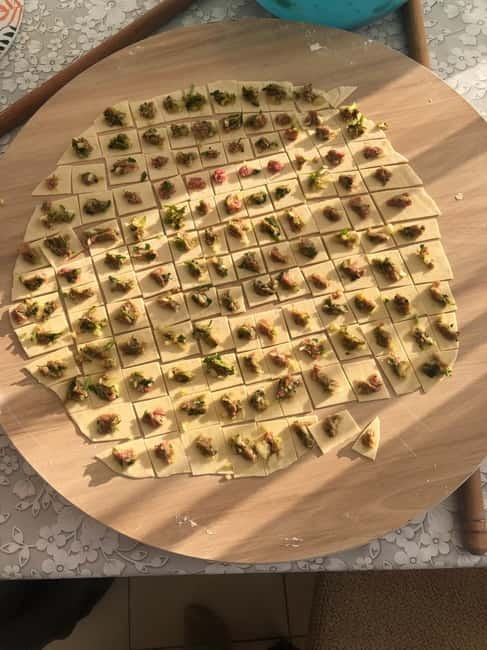
Mantı is not the only project. You also prepare Turkish grape leaves, along with two side dishes and a soup or soup-like dish. That broader menu is important because it shows how a Turkish home meal works as a collection of dishes rather than a single main course.
Grape leaves require their own care. The filling must be handled properly, and the leaves need to be shaped so the food stays together during cooking. The class gives you a chance to learn another traditional preparation beside the dumplings, so the three hours do not revolve around only one technique.
The exact side dishes can vary, but the food described for the meal includes soup, mushroom mezze, and salad. That combination gives you a useful contrast in texture and temperature. You are not eating a plate of identical dumplings. You are sitting down to a menu with several parts.
I like this format because it better reflects what you might encounter in a Turkish home. A soup, a vegetable or mushroom dish, salad, stuffed leaves, and mantı create a generous table with different flavors. It also gives you more value for the class fee than a short lesson focused on one small recipe.
Same region, a different dish to learn:
- Bodrum: Market Visit and Cooking Class
★ 4.9 · 41 reviews - Authentic Turkish Cooking at a Local’s Home in Istanbul
★ 4.9 · 24 reviews - Cooking Class in Authentic Etrim Village
★ 4.5 · 23 reviews - Istanbul: Turkish Cooking Class with a Professional Chef
★ 4.8 · 23 reviews
Stories that make the recipes matter
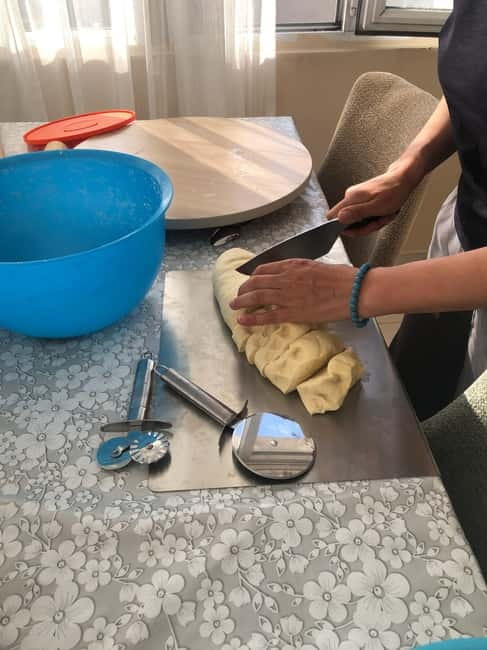
Rojda’s stories about Turkish and Kurdish grandmothers are a central part of the experience. The recipes are presented as family food, passed along through cooking together rather than treated as museum pieces.
That distinction is useful for you. Food traditions make more sense when you understand how people actually prepare them at home. The group effort behind mantı explains why the dish can carry memories of family gatherings. The recipe becomes connected to the people who made it, not just the finished taste.
The storytelling also gives the class a human scale. You are not receiving a broad lecture on Turkish cuisine. You are hearing how particular dishes fit into one family’s cooking traditions.
The information is delivered by a host who is described as kind, personable, good-humored, and generous with her time. The host is named Rojda in the experience details, while one booking account refers to her as Roza. Keep that small naming variation in mind when you meet her.
Sitting down to eat what you made
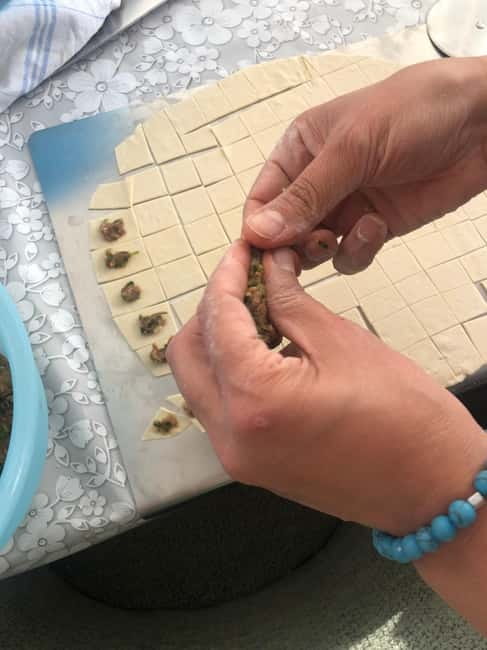
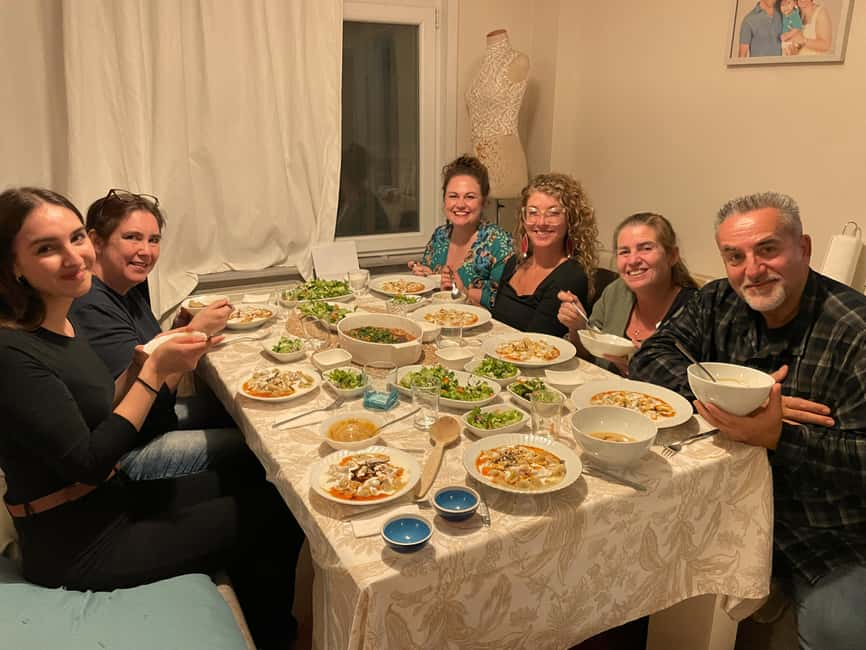
After the preparation and cooking, you gather around the table for the complete meal. This is the payoff, but it is also part of the lesson. You can taste the mantı, grape leaves, soup, sides, and salad together instead of judging each item in isolation.
The meal is included in the price, along with coffee and tea. One useful tip is to arrive hungry. The menu is described as generous, and the combination of several dishes can amount to a substantial lunch or dinner.
I especially like the shared-table finish. It gives you time to talk with the host and other participants, compare the dishes, and enjoy the food without the pressure of immediately leaving for the next Istanbul sight.
The meal may also help you understand why the class takes three hours. Folding mantı, preparing other dishes, cooking, and eating properly cannot be squeezed into a quick one-hour demonstration. The duration is long enough to let the experience unfold at a sensible pace.
Is $106 a fair price?
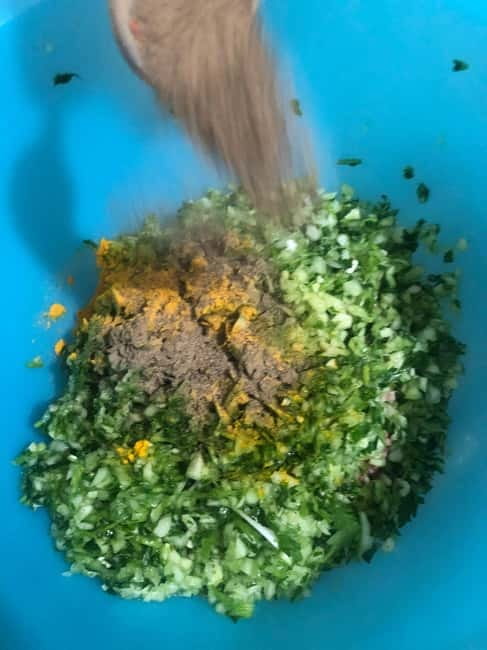
At $106 per person, this is not a budget meal or a casual market snack. You are paying for three hours, instruction, a small group capped at six, the ingredients, the cooking experience, and a complete home-style meal.
The value depends on what you want from an Istanbul food activity. If you only want to taste mantı, a restaurant will cost far less. If you want to learn how the dish is folded, prepare several other foods, hear family stories, and share the result in a private home setting, the price becomes easier to justify.
The small group helps. A class of six can offer more direct attention than a large commercial workshop. The personal setting also adds something that a restaurant cannot provide: you see the food being made from scratch and connect it to the host’s family traditions.
Still, I would not call this a bargain. You should book it because you value the home setting and hands-on cooking, not simply because you want a cheap meal. The strongest value comes from the combination of instruction, food, and cultural context.
Timing, meeting point, and booking details
The class lasts three hours, with starting times available according to the date you choose. The meeting instructions are brief: call when you arrive or ring bell number 11.
Because the activity takes place in a home, read those instructions carefully and keep the contact details accessible. The information does not give a full transport plan, so you should confirm your route and arrival time before setting out.
The host or greeter speaks Turkish and English. The group type is small, with a maximum of six participants. That limit is worth checking when you book if you care about a quieter, more personal class.
You can cancel up to 24 hours in advance for a full refund. You can also reserve now and pay later, which helps if your Istanbul schedule is still shifting.
Who will enjoy this class most?
I would recommend it to you if food is one of the main ways you connect with a place. You should especially enjoy the class if you like working with your hands, trying unfamiliar techniques, and eating a meal that includes several home dishes.
It suits couples, friends, solo visitors, and small groups who are comfortable sharing a kitchen. The six-person limit keeps it suitable for people who want some conversation without joining a crowded workshop.
It is also a good choice if you have already seen Istanbul’s major sights and want an activity with a slower, more personal pace. Three hours at a kitchen table gives you a different view of the city than another monument tour.
Families with children might find the mantı folding engaging, but the provided information does not specify a minimum age or child policy. Ask before booking if that detail matters to you.
You may want to skip it if you dislike meat-filled dishes, have strict dietary needs, or prefer a quick food tasting with no preparation. The menu centers on traditional dishes, and the class is built around cooking rather than simply watching.
Should you book the Istanbul home cooking class?
Book this experience if you want to make mantı by hand, learn how Turkish grape leaves and side dishes fit into a home menu, and share the meal with a host who connects the recipes to Turkish and Kurdish family traditions.
Think twice if $106 feels high for a three-hour activity or if you want a polished restaurant-style demonstration. The class asks you to participate, and the small dumplings require patience.
For the right eater, this is a strong choice. The food is generous, the group is limited to six, and the mantı lesson offers a memorable task you can connect with long after the meal is over. Go hungry, arrive prepared to work, and expect the best part to happen around the table.
FAQ
How long does the Istanbul cooking class last?
The class lasts three hours.
How much does the cooking class cost?
The listed price is $106 per person.
What dishes will I prepare?
You will learn to make Turkish mantı, Turkish grape leaves, two side dishes, and a soup or soup-like dish. The meal may also include items such as mushroom mezze and salad.
Is the meal included?
Yes. A meal is included, along with coffee and/or tea.
How many people can join the class?
The class is limited to six participants.
What language does the host speak?
The host or greeter speaks Turkish and English.
Where do I meet the host?
You meet at the Istanbul home where the class takes place. When you arrive, you can call the host or ring bell number 11.
Can I cancel for a refund?
Yes. You can cancel up to 24 hours in advance for a full refund.
Do I have to pay when I book?
No. The reserve now and pay later option lets you book without paying immediately.
Newest classes around Turkey
- Bodrum Cooking Class★ 5.0 · 3 reviews
- Farmers Market visit & Turkish Cooking Class★ 5.0 · 60 reviews
- Cooking Class in Authentic Etrim Village★ 4.5 · 23 reviews
- Bodrum Cooking Class with Local Couple★ 5.0 · 6 reviews
- Turkish Cuisine Cooking Class at Local Home with Family★ 5.0 · 9 reviews
- Istanbul: Vegan/Vegetarian Cooking Class with Locals at Home★ 5.0 · 8 reviews
- Istanbul: Turkish Baklava Cooking Class with a Local Host★ 5.0 · 3 reviews
- Istanbul: Turkish Cooking Class with a Professional Chef★ 4.8 · 23 reviews
Istanbul Cooking Classes, compared.
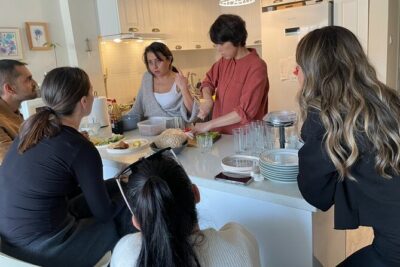
Traditional Home Cooking with a Local in İstanbul City Center
Read our review →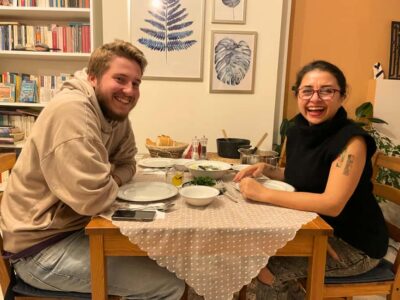
Traditional Home Cooking with a Local in İstanbul Center
Read our review →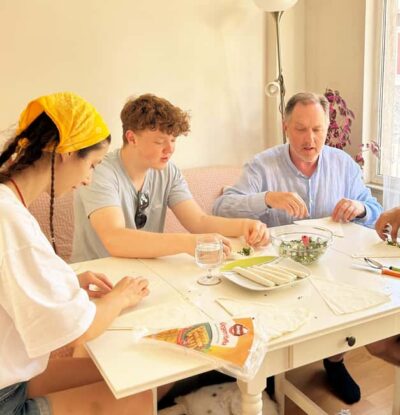
Authentic Turkish Cooking at a Local’s Home in Istanbul
Read our review →
Istanbul Turkish Home Cooking Class with a Local
Read our review →
Vegan/Vegetarian Cooking Class with Locals at Home
Read our review →
Authentic Turkish Breakfast Cooking at Home with Locals
Read our review →
Browse the lists this tour appears in