
Review · ITALY COOKING CLASSES
Tuscan Cooking Experience with Wine Tasting in Panzano in C.
The most appealing part of this experience is its setting: you learn to make pasta inside a 1,000-year-old villa in Panzano’s Conca D’Oro, then eat what you prepared with wine from the estate. This is not just a meal with a cooking demonstration tacked on. The food, vines, olive trees, and cellar all belong to the same working place.
I like two things in particular. First, the cooking focuses on simple seasonal dishes, the kind of food you can actually repeat at home. Second, the group is limited to eight people, which gives the pasta lesson and wine tasting a more personal feel. The main drawback is that the villa and vineyard setting are not suitable for people with limited mobility or wheelchair users.
Key points at a glance
- Pasta making with Enza: Learn a traditional dish and take your own pasta home when the session is shared with other participants.
- A working Tuscan estate: See the vineyards, olive groves, cellar, and wine production at a villa run by three generations of farmers and wine producers.
- Food and wine together: Learn how to taste wine with food while sampling the seasonal dishes prepared during the class.
- Small group format: The class is limited to eight participants, useful for a hands-on activity where space and attention matter.
- A useful half-day: The 3.5-hour schedule leaves time to visit Panzano, Greve, Radda, or Castellina afterward.
- Good take-home value: Recipes come in English and Italian, and the estate sells wine, honey, and olive oil.
Cooking pasta in the Conca D’Oro
The experience begins at Via Case Sparse 38 in Panzano. From there, you spend a half-day at Il Palagio di Panzano, an estate in the Conca D’Oro, one of the prettiest valleys in Chianti.
The villa’s age gives the visit its sense of place. You are not in a modern teaching kitchen separated from local life. The cooking class is tied to a farmhouse estate with three generations of family experience in farming and wine production. That connection matters because the food is explained alongside the products and work that support it.
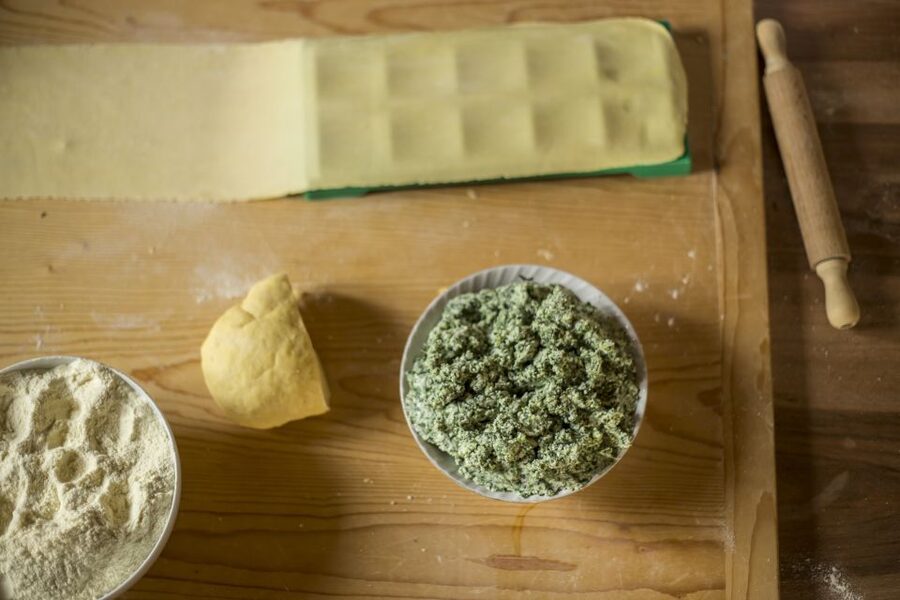
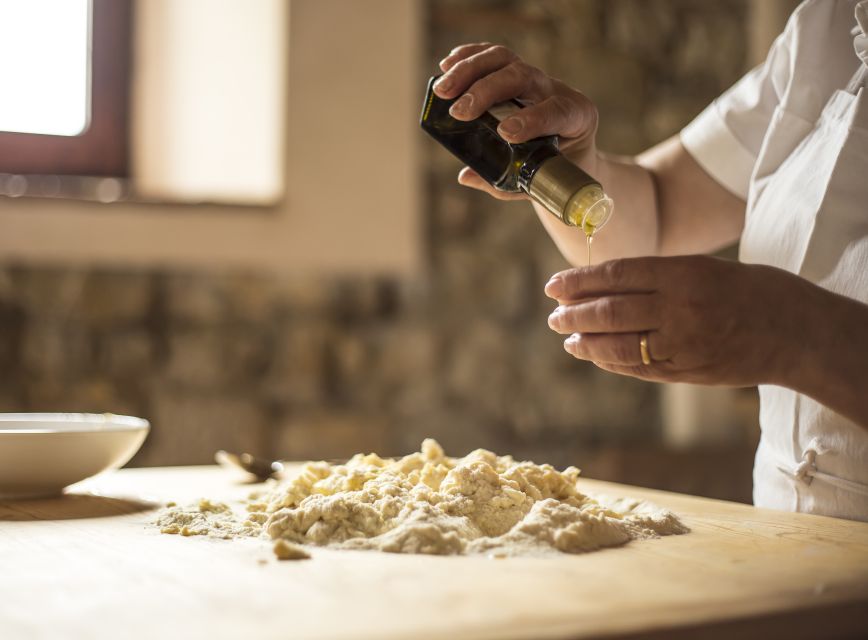
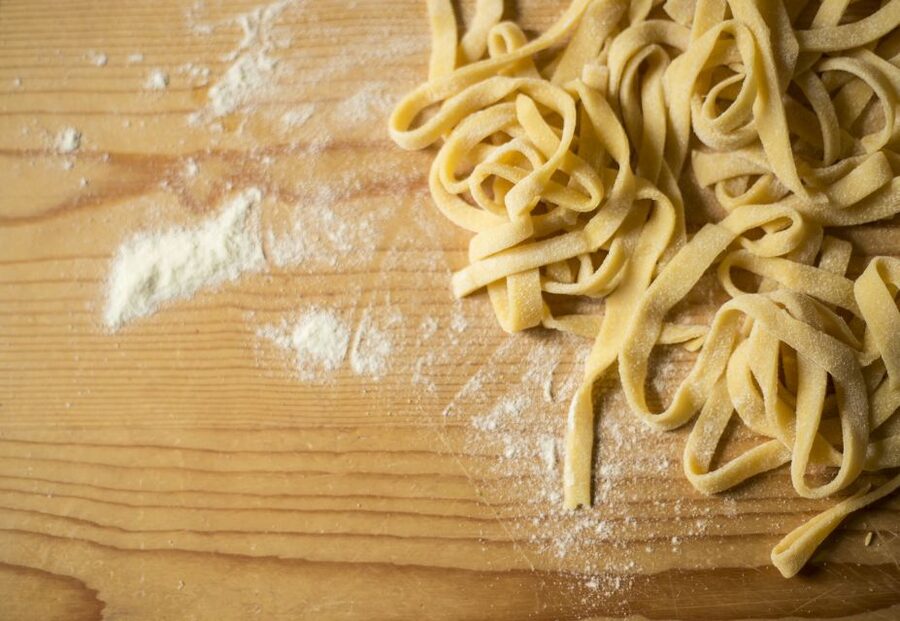
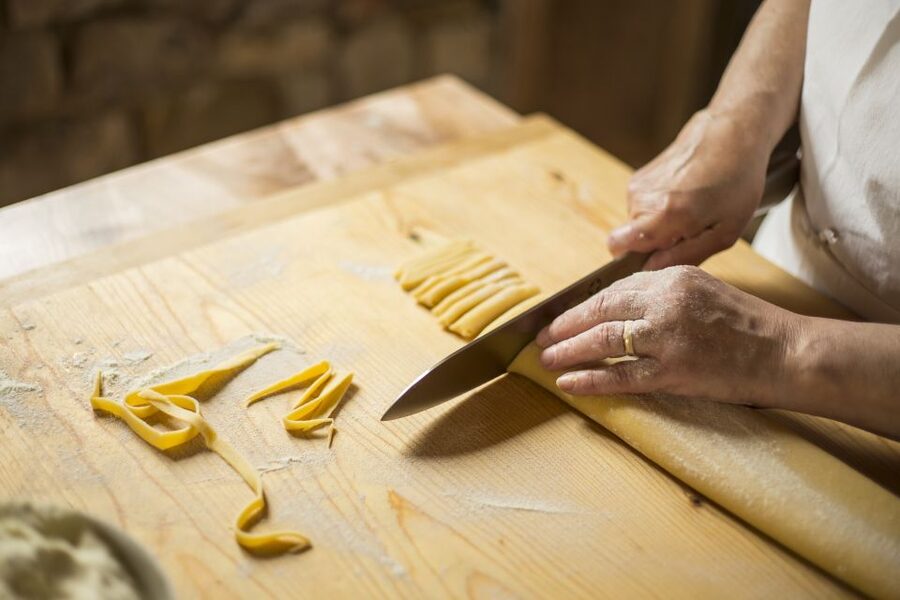
The class centers on traditional pasta. You learn the basic process, work with the dough, and prepare a dish built around products available in the region and season. This is the sort of lesson I find more useful than a long list of elaborate recipes. You are learning a method, not just watching someone assemble a plate.
Enza helps with the cooking session. The strongest feature of her instruction is its practical focus. The dishes are simple, but simple does not mean dull. Tuscan cooking often depends on good ingredients, sensible preparation, and restraint rather than a complicated list of steps.
The shared class has a maximum of eight people. That number is small enough to make a difference when you are shaping pasta or trying to follow a new technique. You should still expect a group activity rather than private instruction. If the class reaches its limit, each person takes home their own pasta.
Recipes are supplied in both English and Italian. That is a small but useful detail. The English version helps you cook the meal at home, while the Italian version gives you the proper names and wording for ingredients and dishes.
More Cooking Classes with Wine Tasting in Italy
- Florence: Pasta Cooking Class with Unlimited Wine
★ 4.9 · 10,285 reviews - Florence: Pasta & Tiramisu Cooking Class with Unlimited Wine
★ 4.9 · 6,708 reviews - Florence: Pasta Cooking Class with Unlimited Wine
★ 5.0 · 6,413 reviews
Why the seasonal menu matters
The class presents food as part of the region rather than as a generic Italian cooking lesson. The dishes are shaped by what is available locally, so the menu may reflect the season instead of following a fixed international formula.
That approach gives you a better feel for Tuscan food. You are tasting how the area cooks, not simply learning the most familiar pasta dish for an overseas audience. Expect uncomplicated flavors and a meal where the quality of the ingredients matters more than decoration.
The available feedback praises the food for being simple and delicious, with Enza’s help making the process approachable. That is also a fair way to set your expectations. This is not a chef competition, and it is not designed around restaurant-style showmanship. The reward is learning a few dependable techniques and eating the results fresh at the estate.
The food is served as part of lunch after the walk through the property. Because you have prepared the dish yourself, the meal has a satisfying logic: you see the place, learn the method, and then sit down with the finished food and a glass of wine.
From vines and olive trees to the cellar
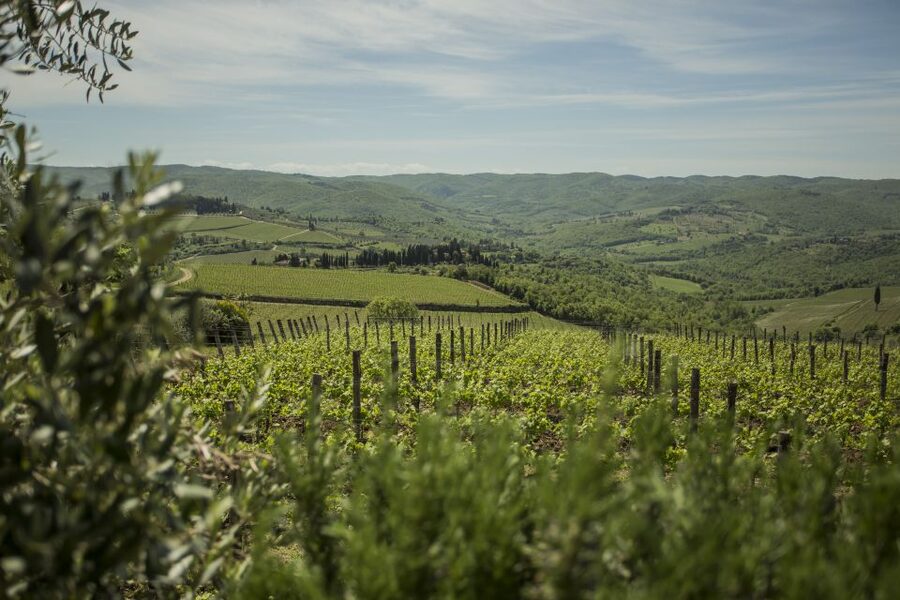
After the pasta lesson, you walk through the vineyards and olive groves. You also visit the cellar and see how the villa operates as a wine-producing estate.
This part keeps the class from feeling like an indoor cooking appointment. You get a clearer picture of the work behind the meal. Grapes become wine, olives become oil, and the foods used in the kitchen connect to the farm around you.
The walk is also where the setting earns its keep. Panzano is known as Tuscany’s first organic district, and the estate offers a direct way to see that agricultural identity. The activity information does not promise a technical farming lecture, so I would expect an introduction to the estate and its products rather than an advanced course in organic agriculture.
The cellar visit adds context before the tasting. Wine can seem mysterious when it arrives only in a glass. Seeing the production setting first makes the later tasting easier to understand, especially if you are new to wine.
The countryside views are a clear part of the appeal. Bring a camera, sunglasses, and a sun hat, since some portions take place outdoors. Comfortable shoes are important too. The activity is not recommended for people with limited mobility, and it is not suitable for wheelchair users.
Learning to pair wine with food
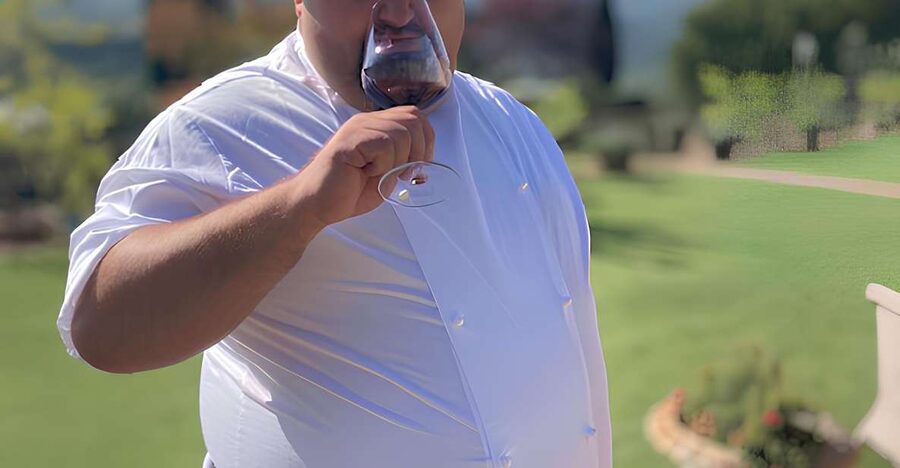
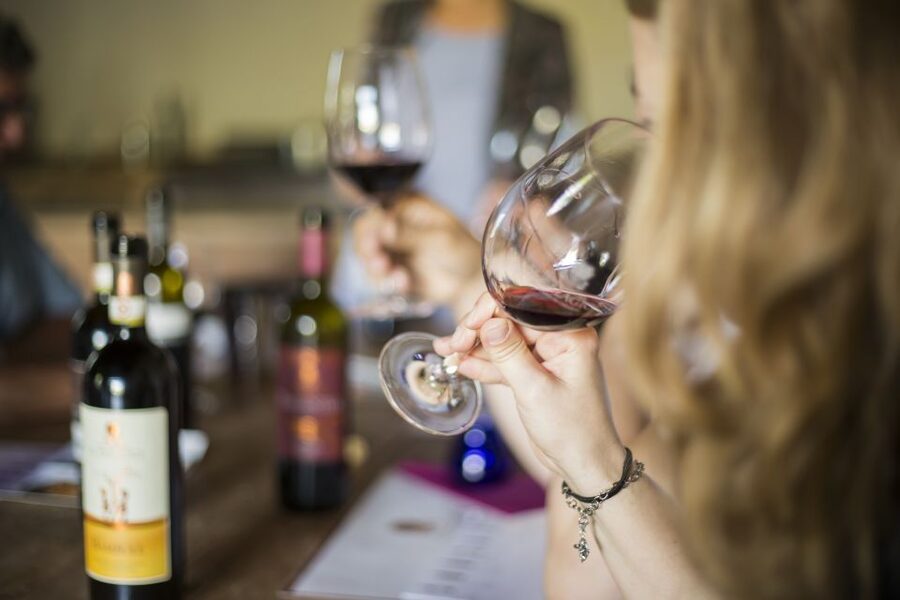
Wine tasting follows the walk, with lunch served at the villa’s winery. You learn how to taste wine and how food changes what you notice in the glass.
One of the more interesting ideas here is the attention to your taste receptors. Rather than treating wine tasting as a test of fancy vocabulary, the experience looks at how your mouth responds to different flavors. This makes the lesson useful for beginners who want to understand why one wine works with a dish and another does not.
You sample a selection of wines with the food prepared during the class. The pairing is not an extra course added at the end. It is part of the meal and part of the lesson. You can pay attention to how the wine behaves with the pasta, the seasoning, and the other simple flavors from the season.
I like this format because it connects tasting to something concrete. You do not need to memorize a long list of grape names to get value from it. You can leave with a better sense of how to choose wine for dinner at home.
The tasting also fits the estate’s story. You have already walked among the vines and visited the cellar, so the wine is tied to a real place. That makes the glass in front of you feel less anonymous.
More Italian Classes in Italy:
- Cooking Class and Lunch at a Tuscan Farmhouse with Local Market Tour from Florence
★ 5.0 · 4,831 reviews - Tuscan Cooking Class and Dinner in Florence
★ 4.5 · 732 reviews - Rome Pasta Making Class with Italian Sauces and Wine Included
★ 5.0 · 645 reviews - Tuscan Cooking Class
★ 5.0 · 584 reviews
The 3.5-hour schedule and nearby towns
The full experience lasts about 3.5 hours. The main stop is the villa and winery in the Panzano area, with the listed visit also connected to Greve in Chianti. The start and finish are at Via Case Sparse 38 in Panzano.
The schedule includes cooking, food tasting, lunch, wine tasting, and the estate walk. That is a generous amount to fit into a half-day, so you should not plan it as a rushed add-on between unrelated attractions. Give yourself enough time to arrive at the meeting point and settle into the group.
One advantage is what you can do afterward. The activity leaves room to explore Panzano, Greve, Radda, or Castellina. Panzano makes the most obvious pairing because the class takes place there, while Greve, Radda, and Castellina offer more options if you are touring the Chianti area by car.
Hotel pickup and drop-off are not included as a standard part of the experience. You can request pickup and return when booking, but confirm the arrangement before you rely on it. The stated meeting point remains Via Case Sparse 38, and the activity ends back there.
There are several start times depending on availability. Check the time before booking, especially if you are fitting this around a winery visit, a drive through Chianti, or an evening reservation.
Is $215.24 a fair price?
At $215.24 per person, this is not a bargain cooking class. The value comes from the amount packed into the visit and the setting in which it takes place.
Your price covers food and drinks, the pasta lesson, recipes in English and Italian, the winery and cellar tour, lunch, and wine tasting. You are paying for more than instruction at a kitchen counter. You also receive access to a historic villa, working agricultural grounds, and a meal connected to the estate’s own wine.
I would consider the price reasonable for someone who wants a polished half-day in Chianti and values food, wine, and scenery equally. It is less compelling if your main goal is a long, technical cooking course. The 3.5-hour format gives you a taste of several parts of Tuscan life, but it cannot provide advanced culinary training.
The small group helps support the price. With no more than eight participants, the class should feel more manageable than a large demonstration. Still, the activity is shared, and you should not expect one-on-one attention throughout.
You can also reserve now and pay later, which helps if your itinerary is still changing. Cancellation is free up to 24 hours before the activity for a full refund. Those terms reduce the risk of committing early, though you should still check the exact booking conditions when selecting your date.
Who will enjoy this experience most?
I would recommend this activity to couples, food-focused visitors, and anyone staying in or touring the Chianti region. It works especially well for people who want an activity with both instruction and atmosphere.
It is also a good fit if you like bringing home a practical skill. The recipes and pasta lesson give you something more lasting than a restaurant meal. You can try to recreate the menu later and remember the estate through the food.
Wine beginners should feel comfortable here. The tasting lesson is built around how wine works with food, rather than requiring expert knowledge before you arrive. People already deeply involved in wine may find the introduction basic, but they may still enjoy the villa, cellar, and meal.
Vegetarians can request a vegetarian option at booking. You should mention this in advance rather than waiting until the day of the class.
The activity is not a good choice for babies under one year, people with colds, people with mobility impairments, or wheelchair users. Pets and smoking are not allowed. Children can attend under the stated child-rate rule, but that rate applies only when the child shares the experience with two paying adults.
Practical tips for a better visit
Wear shoes you can walk in comfortably. The program includes vineyards, olive groves, and a cellar, so this is not a sit-down cooking class from start to finish.
Bring sun protection and a camera. Sunglasses and a sun hat are specifically recommended, and the Tuscan countryside gives you worthwhile photo stops.
Plan to eat. Food and drinks are included, and lunch is part of the experience, not an optional purchase. If you have dietary needs, raise them at booking.
Keep some room in your luggage for estate products. Wine, honey, and olive oil are available to buy at the villa. These can be more useful souvenirs than fragile decorative items, though you will need to handle wine bottles carefully during the rest of your trip.
If you are driving through Chianti, treat the class as the anchor for the day. Afterward, you can continue to Panzano, Greve, Radda, or Castellina rather than trying to squeeze in a distant sight.
Should you book the Panzano cooking class?
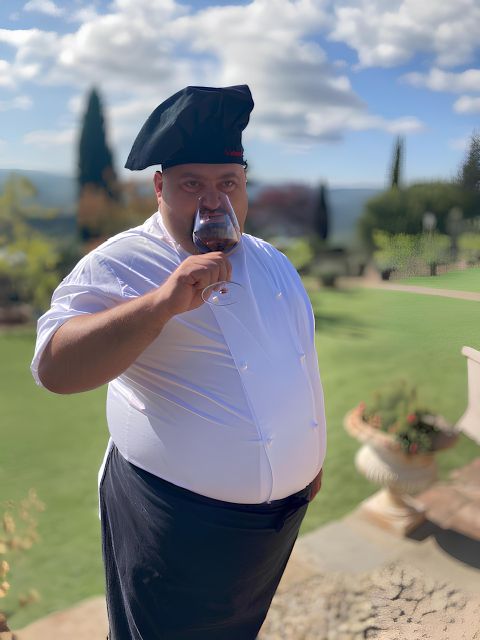
Book it if you want a half-day that joins cooking, wine, farming, and Tuscan views in one place. The villa, small group, pasta lesson with Enza, and included lunch give the experience a clear purpose. The simple seasonal food is a strength if you want recipes you can use at home, not a complicated chef’s performance.
Think twice if you need wheelchair access, dislike shared classes, or want an intensive culinary course. The price is high for a short activity, and hotel transport is not automatically included. For food lovers touring Chianti, though, the combination of a 1,000-year-old villa, hands-on pasta making, estate wine, and a ready-made lunch makes the cost easier to justify.
FAQ
How long does the cooking and wine experience last?
The experience lasts 3.5 hours. Check available starting times when choosing your date.
Where does the activity start?
It starts at Via Case Sparse 38 in Panzano.
Where does the activity finish?
The activity ends back at the meeting point in Panzano.
Is hotel pickup included?
Hotel pickup and drop-off are not included as a standard part of the activity. You can request them when booking, so confirm the arrangement before your visit.
What does the price include?
The price includes food and drinks, the pasta cooking lesson, recipes in English and Italian, a winery tour, lunch, and wine tasting.
How many people are in the cooking group?
The shared cooking experience has a maximum of eight participants.
Can I request vegetarian food?
Yes. A vegetarian option is available, but you should advise the provider when booking.
What languages are available?
The live tour can be provided in English, Italian, Spanish, and Portuguese.
What should I bring?
Bring comfortable shoes, sunglasses, a sun hat, and a camera.
Is the activity suitable for people with limited mobility?
No. The activity is not recommended for people with limited mobility and is not suitable for wheelchair users.
More Food and Drink Outings in Italy
- Small Group Cooking Class & Market Food Tour in Florence
★ 5.0 · 1,574 reviews - Pasta Making & Wine Tasting with Dinner in Frascati from Rome
★ 5.0 · 1,326 reviews - Rome: Pasta Making with Wine Tasting and Dinner in Frascati
★ 4.9 · 979 reviews - Super Fun Pasta & Gelato Class by Vatican with Wine + Oil Tasting
★ 5.0 · 726 reviews
Newest classes around Italy
- Cooking Class in a Sicilian countryhouse★ 5.0 · 5 reviews
- Cesarine: Market Tour & Home Cooking Class in Catania★ 4.0 · 6 reviews
- Cesarine: Home Cooking Class & Meal with a Local in Catania★ 4.5 · 10 reviews
- Cooking Class in Taormina with Lunch Included★ 5.0 · 2 reviews
- Cooking class in Capri for small groups★ 4.0 · 4 reviews
- Cooking Class and Wine Pairing in Capri★ 5.0 · 57 reviews
- Lezione di Cucina : Pasta Fresca★ 5.0 · 12 reviews
- Private Cooking Class Experience in Reggio Calabria★ 5.0 · 5 reviews
Italy Cooking Classes, compared.
3 in 1 Cooking Class near Navona: Fettuccine, Ravioli & Tiramisu
Read our review →
Pasta & Tiramisu Cooking Class with Unlimited Wine
Read our review →
Cooking Class and Lunch at a Tuscan Farmhouse with Local Market Tour from Florence
Read our review →
Pasta Making Class with Wine, Limoncello, and Dessert
Read our review →
Rome Cooking Class: Make Pasta and 3 Spritz Cocktails
Read our review →Browse the lists this tour appears in