
Review · VIETNAM COOKING CLASSES
Sapa Cooking Class With Ethnic Minorities Chef In Village
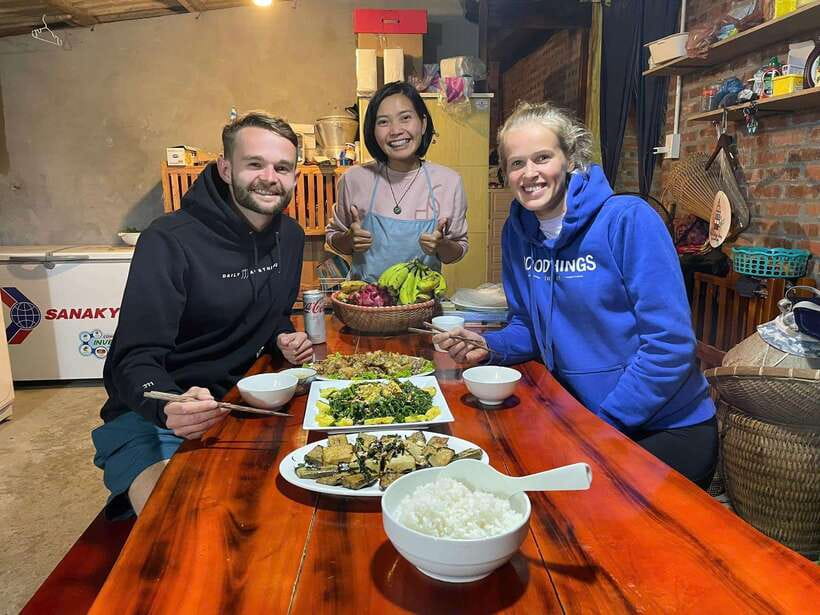
The most useful part of this Sapa experience happens before you reach the stove: you shop for ingredients with a local ethnic minority chef, learning which foods and flavors belong in Northern Vietnamese cooking. Then you prepare the meal yourself, rather than simply watching a demonstration.
I like the direct market-to-kitchen format, and I like that pickup, ingredients, tools, and seasonal tea are included in the $45 price. The main drawback is that the menu and class duration are not specified, so you cannot plan around particular dishes or a fixed schedule.
Key points at a glance
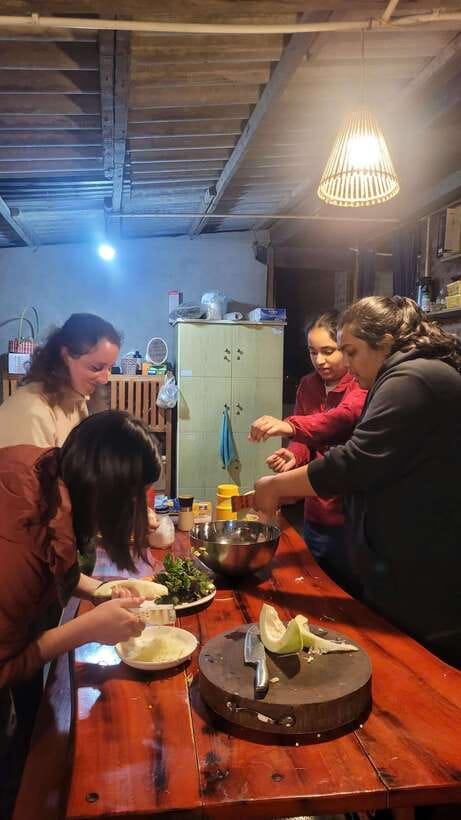
- Market shopping comes first: Choose fresh ingredients with your guide before cooking them.
- Local instruction: An English-speaking ethnic minority chef leads the class and explains Northern Vietnamese recipes.
- Hands-on cooking: You practice shopping, preparing, and cooking rather than only observing.
- $45 covers the basics: Transport, kitchen use, tools, ingredients, and seasonal tea are included.
- A flexible menu: Specific dishes are not listed, so the recipes may depend on the season and market selection.
- Plan for the outdoors: Comfortable clothes, sunscreen, water, and insect repellent are sensible choices.
Starting with Sapa’s market ingredients
This class begins with a useful lesson: Vietnamese cooking is built around fresh ingredients chosen close to the time they are cooked. Instead of arriving to find every item measured and waiting, you go to a local market with your guide and help select what will go into the meal.
That changes the experience. You learn to look at the raw materials first, then understand how they become a finished dish. The market stop also gives you a better sense of everyday food in Northern Vietnam than a class held entirely inside a tourist kitchen.
The exact market is not named, and no fixed shopping list is provided. That is worth keeping in mind. If you want to learn one particular recipe, such as a named noodle dish or spring roll, ask about the menu before booking. If you enjoy a little uncertainty and want the cooking to reflect local availability, the open format is a plus.
Your chef and guide help you choose fresh ingredients. The supplied information does not specify how long the market visit lasts or how large the group will be, so expect the pace to depend on the day’s arrangements and the number of people attending.
More Farm Cooking Classes in Vietnam
- Mekong Day Trip Explore Village Bicycle CookingClass Group 12 Pax
★ 5.0 · 705 reviews - Cocolocal Farm Cooking Class with market tour and basket boat
★ 5.0 · 231 reviews - Full Experience Tour: Cooking Class & Basket Boat at Eco-Village
★ 5.0 · 187 reviews
Meeting an ethnic minority chef in Sapa
The instructor is an English-speaking local ethnic minority chef. That is the central reason to choose this class over a generic cooking lesson. You are not only learning a recipe. You are also hearing how local food fits into the culture of Northern Vietnam.
The chef is there to guide the full process, from shopping through preparation and cooking. The wording of the experience promises practical instruction, so you should expect to handle ingredients and cooking tools yourself. This suits you if you want to take the technique home, not just take photographs of someone else preparing lunch.
The information does not provide the chef’s name or a personal biography. It also does not explain which ethnic group the chef belongs to. I would not book this expecting a formal cultural lecture. The strongest cultural element is likely to come through the food, ingredient choices, and the chef’s way of explaining local methods.
English is the listed language. If you have dietary restrictions, tell the provider before you go and confirm what substitutions are possible. No dietary accommodations are specifically promised.
Preparing Northern Vietnamese dishes from start to finish
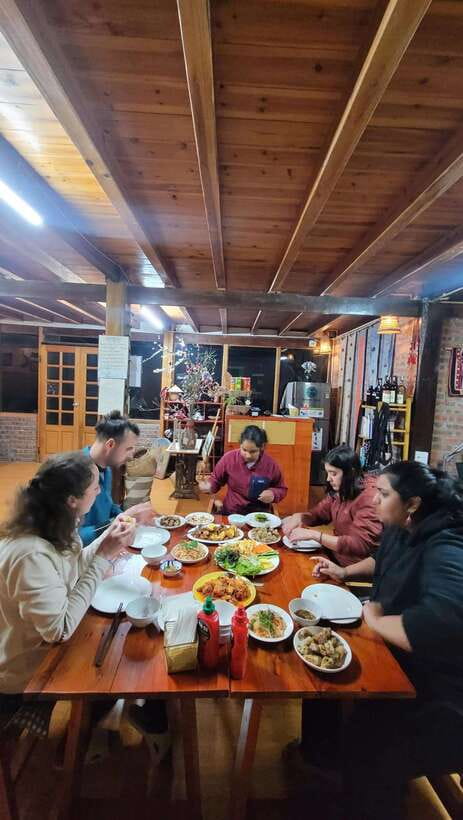
After shopping, you move into the kitchen and begin preparing the meal. The class covers the complete chain: selecting ingredients, cleaning and preparing them, cooking the dishes, and sitting down to enjoy what you have made.
This is where the $45 price has practical value. You are not paying only for a plate of food. You are paying for instruction, kitchen access, equipment, ingredients, and transport. You also leave with recipes and methods you can try at home, though the supplied details do not specify whether printed recipe cards are provided.
The menu is not listed. That means you should not assume a particular dish. Northern Vietnamese cooking covers many styles, and the final meal may reflect what is fresh at the market. Ask before the class if you need vegetarian food, avoid particular ingredients, or want to know how much hands-on work is involved.
Expect basic cooking instruction rather than a professional culinary course. The appeal is the local setting and the chance to reproduce familiar regional flavors with guidance. You will likely get the most from it if you enjoy chopping, mixing, seasoning, and working at a relaxed pace.
Learning the flavors behind the recipes
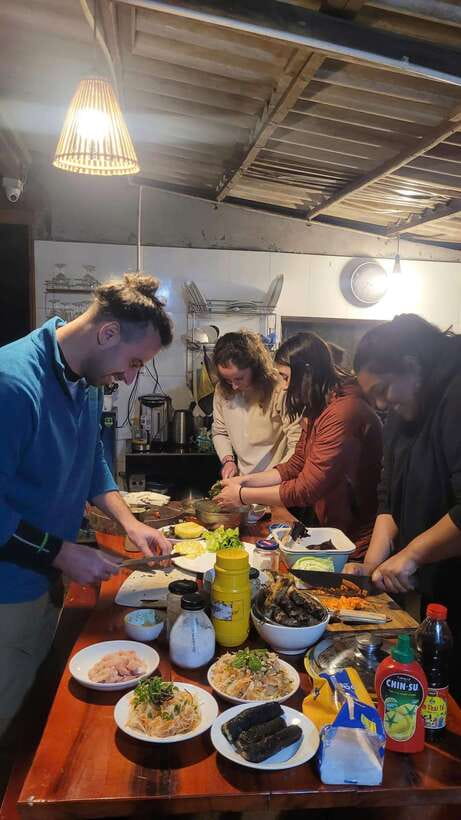
A good cooking class explains more than the steps. It shows you why an ingredient matters and how several simple elements create the flavor of a dish.
This class focuses on essential ingredients and flavors in Vietnamese cooking. The exact ingredients are not named, so I cannot promise a lesson on any particular herb, sauce, spice, or cooking method. Still, the market visit gives the chef a natural way to explain what is fresh, what is local, and what should be used together.
Pay attention to balance. Vietnamese food often depends on the relationship between fresh ingredients, savory seasoning, sweetness, acidity, and heat. Even if you do not remember every measurement, you can take home a better sense of how to taste and adjust a dish.
The hands-on structure matters here. You learn through your own knife work and seasoning choices, not by watching from the edge of a room. If you are new to Vietnamese cooking, ask questions as you go. If you already cook Asian food at home, use the class to compare local methods with your own.
Same region, a different dish to learn:
- Hanoi Cooking Class: Culture, Local Market & Meaning CSR Impact
★ 5.0 · 5,147 reviews - 5 Traditional Dishes Hanoi Cooking Class with Market Trip
★ 5.0 · 4,890 reviews - Cooking Class Hoi An:Local Market, Basket Boat, Fishing & Cooking
★ 5.0 · 3,660 reviews - Hoi An Cooking Class(Market,BasketBoat Crabfishing&Cooking Class)
★ 5.0 · 3,386 reviews
Ending with a home-cooked meal and seasonal tea
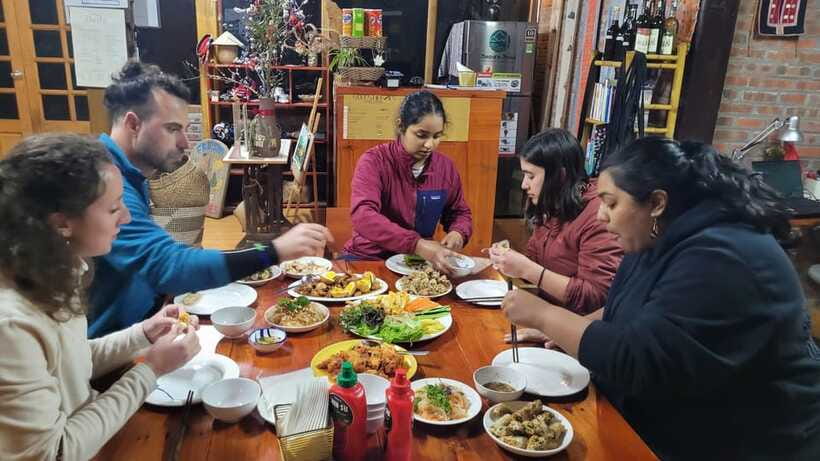
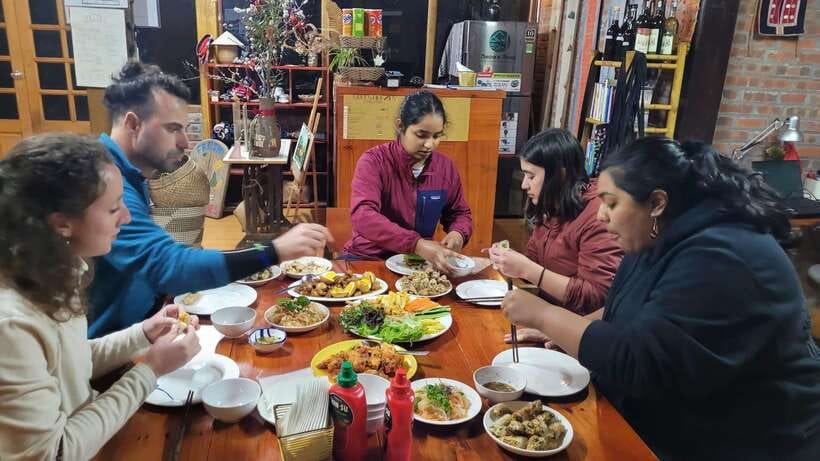
Once the dishes are ready, you eat the food you helped prepare. That gives the class a clear reward and lets you judge the result while the method is still fresh in your mind.
A free seasonal tea is included. It is a small touch, but a useful one. Tea gives you a calm way to finish the meal and may change with the time of year. The type of tea is not specified, so do not book this expecting a particular tea-tasting session.
The meal itself is part of the lesson. Notice the texture of the ingredients, the balance of seasoning, and the difference between freshly prepared food and the version you might make later at home. You can also use this time to ask the chef about substitutions and serving ideas.
No separate restaurant meal is mentioned. The food you prepare is the meal, so arrive ready to take part rather than expecting a cooking demonstration followed by a large catered lunch.
Transport by motorbike or car
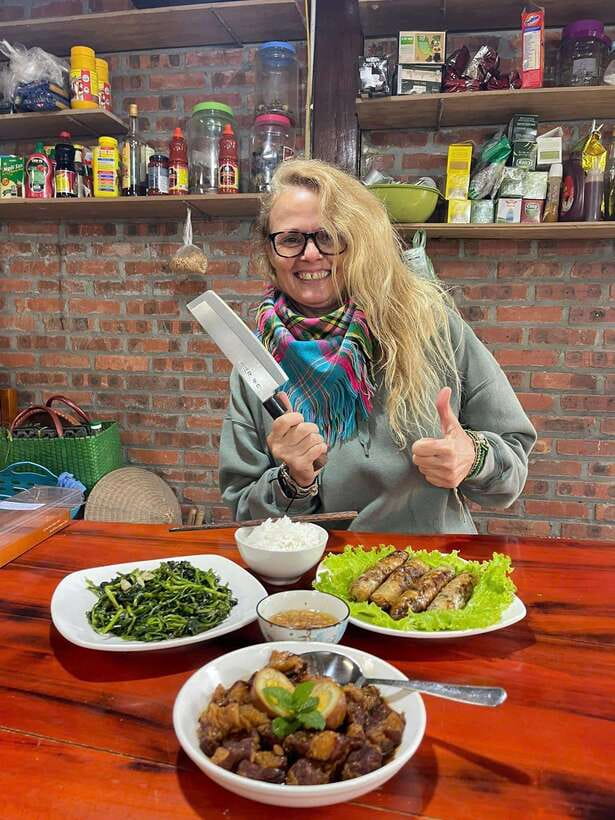
Pickup and drop-off at your accommodation are included by motorbike or car, depending on your group size. That removes one of the more awkward parts of arranging a cooking activity in Sapa, especially if you are unfamiliar with the local roads or staying outside the central area.
The transport choice may also shape the experience. A motorbike can be a practical way to move through Sapa, but it is less suitable if you have mobility concerns, dislike riding, or need extra space for personal items. A car may be used for larger groups, though the exact vehicle is not guaranteed.
Confirm your accommodation details when booking and ask which transport is planned for your group. The pickup and drop-off inclusion adds real value to the price, but the information does not say how far outside Sapa the service extends.
The experience includes outdoor activity at the market, and weather can change quickly in Northern Vietnam. Wear clothes you can move in and bring water, sunscreen, and insect repellent. A camera is also recommended for the market and surrounding views, but protect it from rain and splashes in the kitchen.
Who will enjoy this class most
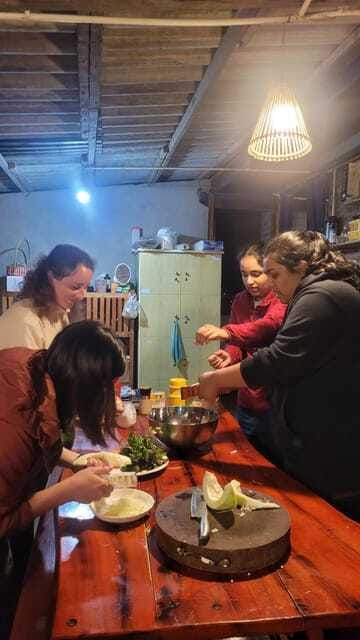
I would recommend this experience to you if you want a small, practical connection with local food and culture. It works especially well for:
- First-time visitors who want more than a standard sightseeing stop
- Home cooks looking for Northern Vietnamese recipes
- Couples, families, and small groups who enjoy making a meal together
- People interested in ethnic minority culture through everyday food
- Anyone who prefers an active class to a passive tasting
It may not suit you if you want a fixed menu, a precise timetable, or advanced culinary training. The open menu is part of the appeal, but it also means you should ask questions before committing.
The class is not suitable for people with back problems, according to the activity information. That matters because market shopping and kitchen preparation may involve standing, walking, bending, or working at a counter. It is also listed as unsuitable for people prone to seasickness, although no boat travel is described. If that warning concerns you, clarify it with the provider before booking.
Smoking, littering, and touching plants are not allowed. These rules are straightforward and fit an experience that includes local food, outdoor spaces, and respect for the surrounding community.
Is $45 a fair price in Sapa?
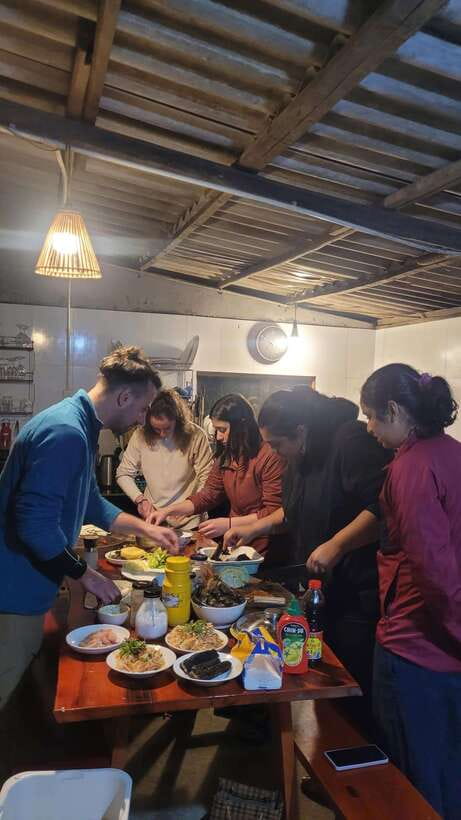
At $45 per person, this is not the cheapest way to eat in Sapa. A local meal alone can cost much less. The comparison is not quite fair, though, because this price includes more than food.
You receive pickup and drop-off, a kitchen, cooking tools, ingredients, an English-speaking chef, the market visit, instruction, the meal, and seasonal tea. If you value convenience and want a skill you can use again, the package makes sense.
The value depends on how actively you take part. If you mainly want lunch, spend less at a restaurant. If you want to understand how the food is chosen and prepared, the price is easier to justify.
Group size is not provided, and that is an important unknown. A smaller class usually gives you more time with the chef and more control over the cooking. Ask about group size if personal instruction is a priority.
Practical tips for a smoother cooking day
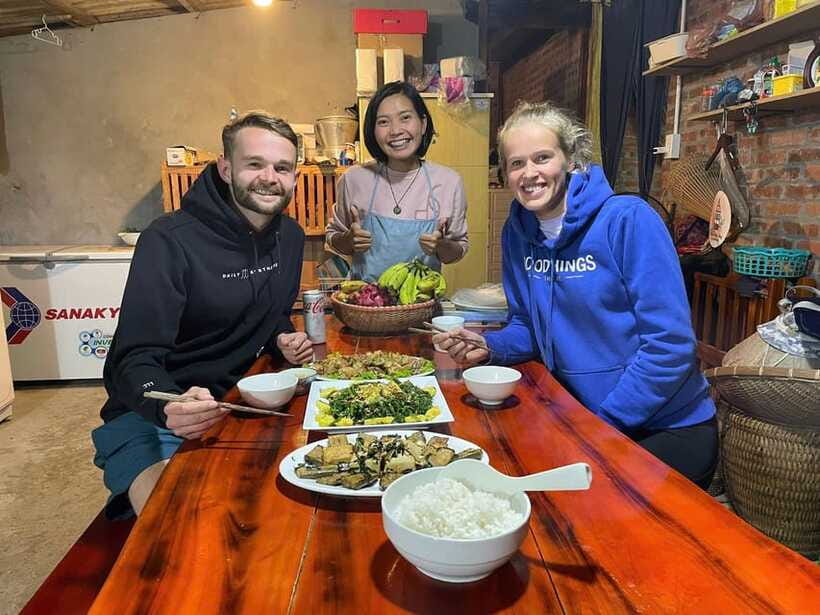
Wear comfortable clothes that are suitable for walking and outdoor activity. Avoid anything you would dislike getting stained or splashed.
Bring water, sunscreen, insect repellent, and a camera. The class involves a market and local surroundings, so you should prepare for changing weather rather than assuming a dry, cool day.
Ask these questions before you book:
- Which dishes are planned?
- How long does the experience last?
- How many people will attend?
- Is vegetarian or allergy-friendly cooking possible?
- Will the class take place at the chef’s home, a dedicated kitchen, or another location?
- Is the transport by motorbike or car for your group?
These details are not provided, and the answers may affect your decision more than the headline price.
Bring curiosity as well as an appetite. The most rewarding part may be learning why the chef selects one ingredient instead of another, or how a familiar dish changes with the season.
Should you book the Sapa cooking class?
Book this class if you want to connect with Sapa through food, local shopping, and direct instruction from an ethnic minority chef. The market-to-kitchen format gives you a fuller experience than a simple meal, and the included transport makes the $45 price easier to accept.
Think twice if you need a guaranteed menu, a set duration, or a class designed for people with limited mobility. The missing details are not deal-breakers, but you should confirm them first.
For most curious home cooks, this is a sensible way to spend part of a Sapa visit. You get a meal, a local encounter, and practical recipes to carry home. Book at least 24 hours ahead if your plans might change, since cancellation is allowed for a full refund up to that point.
FAQ
Where does this cooking class take place?
The experience takes place in Sapa in Northern Vietnam. The specific kitchen and market name are not provided.
What is included in the $45 price?
The price includes pickup and drop-off at your accommodation by motorbike or car, kitchen use, cooking tools, ingredients, an English-speaking chef, and seasonal tea.
Is transport included?
Yes. Pickup and drop-off at your accommodation are included. Transport may be by motorbike or car, depending on your group size.
Who teaches the cooking class?
An English-speaking local ethnic minority chef teaches the class.
Will I shop for ingredients?
Yes. You visit local markets with a guide and select fresh ingredients for the dishes you will prepare.
Do I cook the food myself?
Yes. The class is hands-on and covers shopping, preparation, and cooking from start to finish.
Which dishes will I learn to make?
The specific dishes are not listed. Ask the provider about the planned menu before booking.
Is tea included?
Yes. A free seasonal tea is included with the experience.
What should I bring?
Bring a camera, sunscreen, water, comfortable clothes, and insect repellent.
Can I cancel for a full refund?
Yes. You can cancel up to 24 hours in advance for a full refund.
Newest classes around Vietnam
- Can Tho Cooking Class in the countryside – Vegetarian available★ 5.0 · 10 reviews
- Full-Day Experience in Mekong Cycling and Authentic Home Cooking★ 5.0 · 89 reviews
- Biking and Cooking Class in Can Tho Rural★ 5.0 · 5 reviews
- Cooking, Farming and Waterfall In Vietnam Countryside★ 3.0 · 6 reviews
- Cooking class & Vibrant Market by Scooter/Tuktuk (Half-Day)★ 5.0 · 55 reviews
- Top Home Cooking Class with Stunning River View AC Kitchen★ 5.0 · 25 reviews
- Tam Coc Cooking Class with Unique Experience★ 4.3 · 13 reviews
- Street Food Walking Tour with a Cooking Instructor★ 5.0 · 5 reviews
Vietnam Cooking Classes, compared.
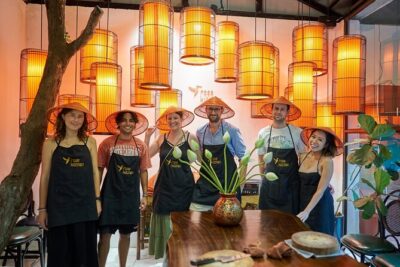
Hanoi Cooking Class: Culture, Local Market & Meaning CSR Impact
Read our review →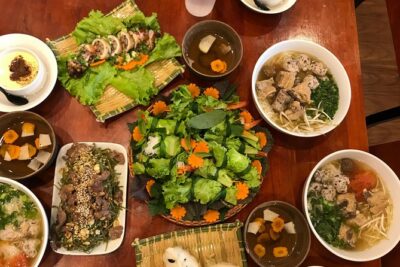
5 Traditional Dishes Hanoi Cooking Class with Market Trip
Read our review →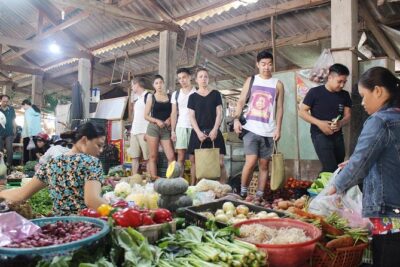
Cooking Class Hoi An:Local Market, Basket Boat, Fishing & Cooking
Read our review →
Hoi An Cooking Class(Market,BasketBoat Crabfishing&Cooking Class)
Read our review →
Market Tour, Basket Boat Ride and Cooking Class
Read our review →
Cai Be Mekong Delta Tour: Cooking Class, Cycling & Craft Villages
Read our review →
Basket Boat with Lantern-Making & Cooking Class Tour
Read our review →
Hoi An Cooking Class(Local market,Basket Boat,Fishing & Cooking)
Read our review →Browse the lists this tour appears in