Review · ITALY COOKING CLASSES
Romagna: Piadina Cooking Class
Piadina is Romagna’s warm, rustic answer to bread, and this class lets you make it from a plain mix of flour and water to a hot, folded snack. You work in a country farmhouse at Agriturismo Campo Rosso, then eat your handiwork with local cheese while looking across the Romagna hills.
I like the hands-on cooking and the chance to learn an old local recipe rather than simply watch a demonstration. I also like the setting, since the outdoor tasting with a glass of wine or juice turns a short lesson into a relaxed slice of countryside life.
The main drawback is that this is a focused 1.5-hour activity, not a full meal or broad cooking course. You also need to wear sleeves, and the class is not suitable for children under four or people with gluten intolerance.
Key points at a glance
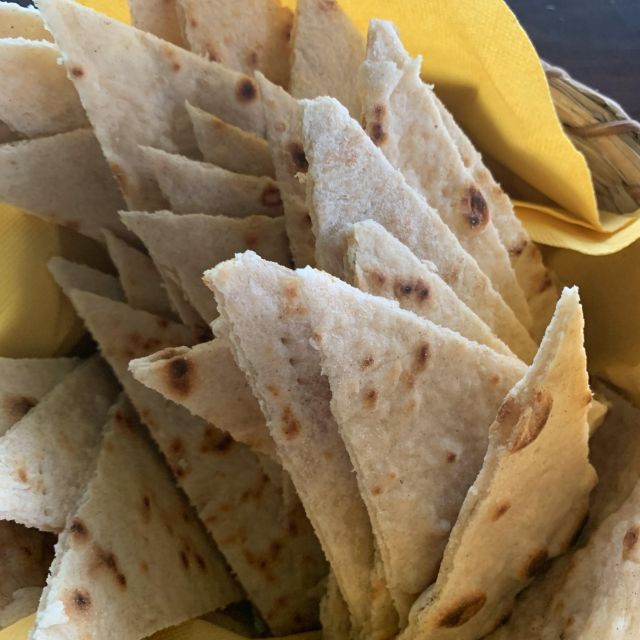
- You make piadina from scratch: Knead flour and water by hand, then roll the dough into thin discs.
- You cook on a hot pan: The class takes you through the important final step, from raw dough to freshly cooked bread.
- You choose simple local fillings: Use pecorino cheese, herbs, and vegetables for your snack.
- You eat in a country farmhouse setting: The tasting comes with Romagna hill views and a glass of wine or natural drink.
- The class is easy to fit into a day: It lasts 1.5 hours, with starting times shown when you check availability.
- Language and access are practical strengths: Instruction is offered in Italian, French, and English, and the activity is wheelchair accessible.
Why piadina is worth learning in Romagna
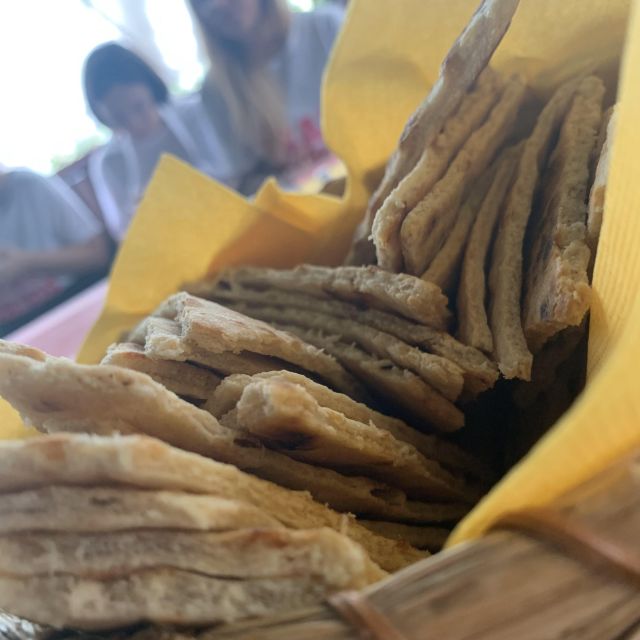
Piadina is an unleavened bread linked especially with the provinces of Forlì-Cesena, Ravenna, and Rimini. It is not an elaborate dish with a long ingredient list. Its appeal comes from the method, the texture, and the way it is served hot with local food.
That simplicity makes the class a good fit for you if you want a food activity that feels connected to the place. You begin with flour and water, knead the dough, and use a rolling pin to shape it into a disc only a few millimeters thick. The result is a practical skill you can remember after the holiday.
I appreciate that the class does not treat piadina as a restaurant mystery. You see how much work goes into getting the dough thin enough and how cooking changes it. Even if your finished disc is not perfectly round, you still get a warm, edible reward.
Piadina is traditionally paired with local cheeses and cured meats. This class specifically mentions pecorino, herbs, and vegetables as fillings. The selection keeps the activity centered on simple regional flavors rather than turning it into a complicated cooking competition.
More Cooking Classes in Italy:
- Florence: Pasta Cooking Class with Unlimited Wine
★ 4.9 · 10,285 reviews - 3 in 1 Cooking Class near Navona: Fettuccine, Ravioli & Tiramisu
★ 5.0 · 7,376 reviews - Florence: Pasta & Tiramisu Cooking Class with Unlimited Wine
★ 4.9 · 6,708 reviews
Arriving at Agriturismo Campo Rosso
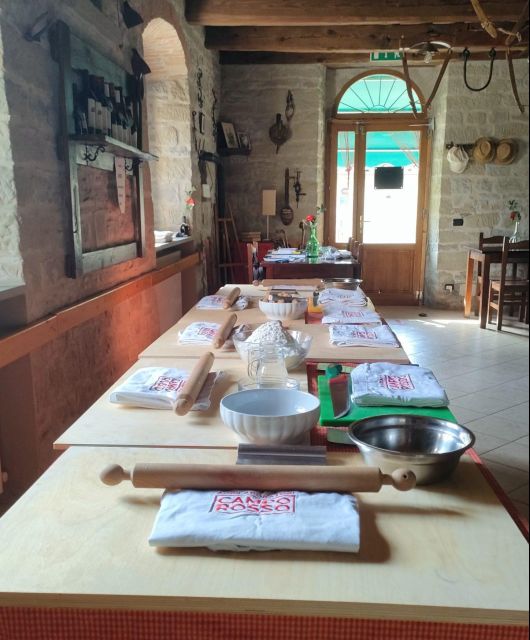
The setting is a country farmhouse rather than a city cooking studio. That matters because the class is designed as a small taste of rural Romagna, with the food, building, and hill views working together.
You should expect the cooking area to be prepared with the basic kitchen equipment you need. An apron and headgear are included, so you do not have to bring special cooking gear. The requirement to avoid sleeveless shirts is worth noting before you leave your hotel. Wear a comfortable top with sleeves, since this is part of the stated dress rules.
The farmhouse setting also gives the activity a slower pace. You are not racing from one sight to another. The class allows time to handle the dough and then sit down for a snack outdoors. That makes it especially useful on a day when you want a break from museums, churches, or busy town centers.
The property is described as offering a panoramic view of the Romagna hills. The view is part of the value, not just a backdrop for photographs. You get to eat something made on site while looking out over the countryside that gives the dish its local setting.
Kneading flour and water by hand
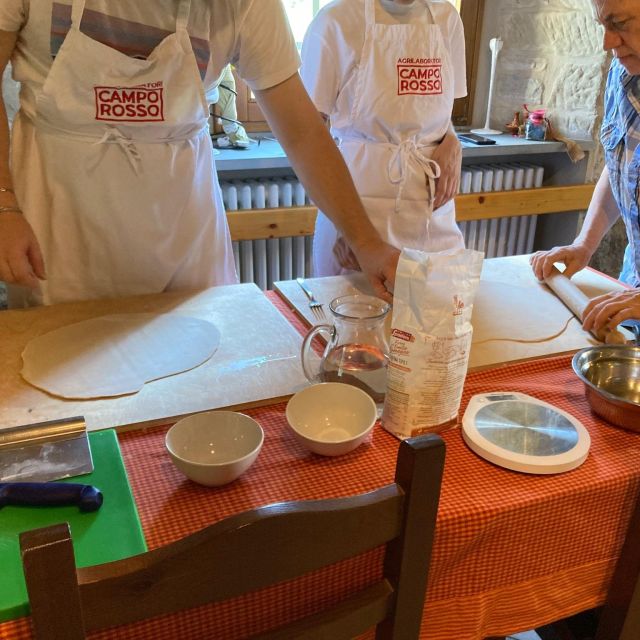
The class begins with the basic dough. You knead flour and water with your hands, which is the part that makes this more than a tasting session. You learn how the ingredients come together and get a feel for the consistency before shaping the piadina.
There is no leavening step described, so you do not need to wait for dough to rise. That helps explain why the whole activity fits into 1.5 hours. It also means the class stays direct and practical: mix, knead, roll, cook, fill, eat.
For you, the hands-on part may be more useful than a polished demonstration. Piadina looks simple, but rolling a piece of dough into an even, thin disc takes some care. The rolling pin gives you a clear task, and the final thickness matters because it affects how the bread cooks.
Do not expect a formal lesson in every variation of Romagna bread. The focus is on making one traditional recipe and enjoying it fresh. That narrow focus is a strength if you want a short, approachable class, but it may feel limited if you are hoping to prepare several dishes.
Rolling the dough into a thin disc
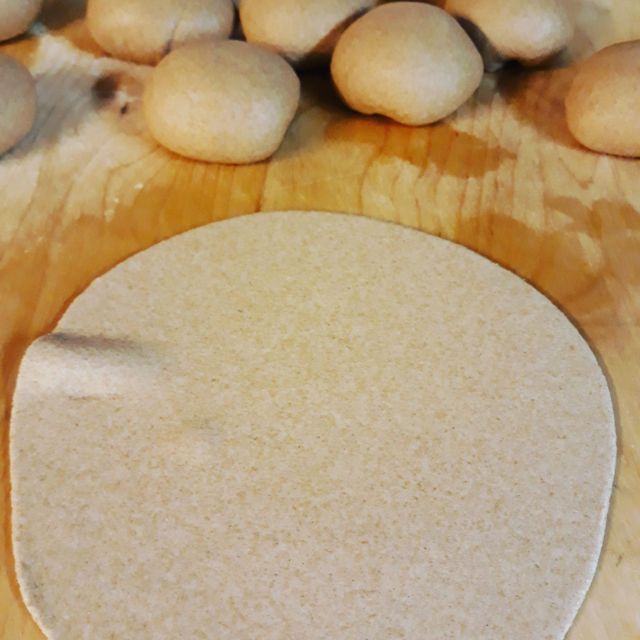
After kneading, you roll the dough until it becomes a disc a few millimeters thick. This is the point where you can test your patience and coordination. A circle that is slightly uneven will still taste good, but the process helps you understand the craft behind a food that is often served casually.
The class lets you do the work yourself instead of handing you a prepared piece of dough. That makes the finished snack more satisfying. You have handled every stage up to the pan, and you can see how a few basic ingredients become a recognizable regional food.
I would treat this as a relaxed workshop, not a test. The aim is to learn an old recipe and enjoy the result. The warm farmhouse setting and friendly staff help keep the mood informal. One particularly positive account described the welcome as so warm that the visitor felt transported back several decades, with the staff making a great effort to create a memorable day.
That kind of hospitality can make a difference in a cooking class. You will likely get more from the activity if you ask questions, take your time, and accept that handmade food has character. A perfectly shaped piadina is not the only measure of success.
Same region, a different dish to learn:
- Florence: Pasta Cooking Class with Unlimited Wine
★ 5.0 · 6,413 reviews - Cooking Class and Lunch at a Tuscan Farmhouse with Local Market Tour from Florence
★ 5.0 · 4,831 reviews - Rome: Pasta Making Class with Wine, Limoncello, and Dessert
★ 4.9 · 3,177 reviews - Pastamania – Florence Pasta Making Class
★ 5.0 · 3,050 reviews
Cooking piadina on the hot pan
Once your dough is rolled, you cook it on a hot pan. This is the most important transformation in the class. The raw dough becomes a warm, flexible bread that can hold cheese, herbs, or vegetables.
The supplied details do not specify the exact cooking time or the size of the group, so you should not plan on a precise minute-by-minute schedule. Starting times vary, and you need to check availability for the date you want. Still, the 1.5-hour duration gives you a useful guide for fitting the class before or after another activity.
Cooking the bread fresh has a clear advantage over receiving a prepared sample. You can taste the difference between dough that has just come off the pan and bread that has been sitting for some time. The class makes the cooking itself part of the meal.
The equipment is included, as are the apron and headgear. You only need to arrive in suitable clothing and be ready to work with flour. Since the activity is not suitable for people with gluten intolerance, this is not a place to attend simply for the scenery if you cannot safely handle or eat wheat-based food.
Filling the bread with local flavors
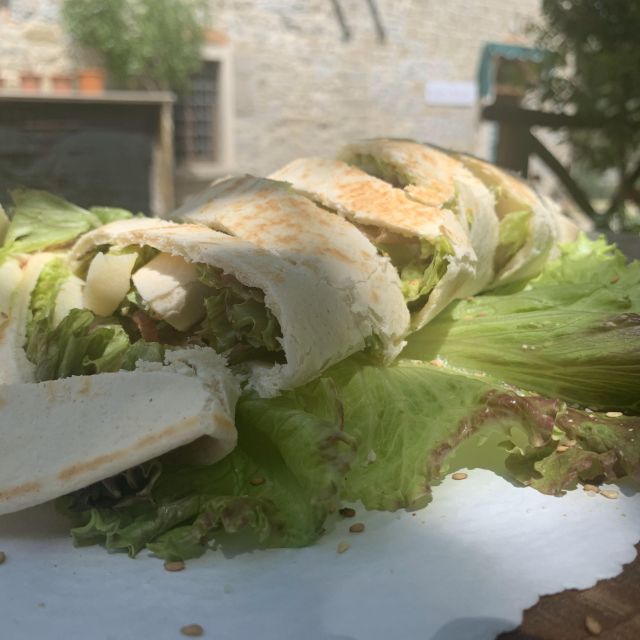
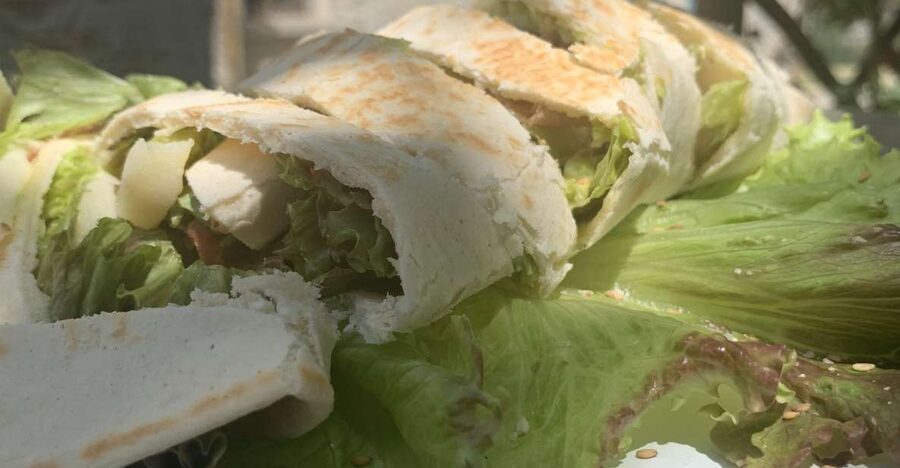
When the piadina is hot, you fill it with pecorino cheese or with herbs and vegetables. This keeps the tasting grounded in the food traditions of the area. The combinations are simple, but that is exactly the point: piadina is a carrier for local ingredients, not a dish that needs a heavy sauce or elaborate presentation.
The inclusion of pecorino gives you a direct taste of the region’s cheese culture. Herbs and vegetables offer a lighter option within the stated fillings. Cured meats are part of the wider tradition of serving piadina, but they are not specifically listed as part of this class, so you should not assume they will be included.
You get to eat what you prepare, which adds value to the price. At $51.24 per person, this is more than buying a snack at a bakery, but the fee covers instruction, the cooking setup, equipment, protective clothing, tasting, and a drink. You are paying for an activity as well as food.
The value is strongest if you enjoy learning by doing. If you only want to taste piadina, a restaurant or market stand will probably cost less and take less time. If you want a local food memory you can recreate at home, the class makes better sense.
A farmhouse tasting with wine or juice
The final part is an outdoor snack with a glass of wine or a natural drink. This is where the activity shifts from workshop to easygoing meal. You can eat the warm piadina, taste the filling, and take in the view of the Romagna hills.
The drink choice makes the class workable for different preferences. Wine suits the regional setting, while juice or another natural drink gives you a nonalcoholic option. The information does not specify the wine variety or the exact natural drink, so you should view the beverage as a pleasant inclusion rather than a formal tasting.
I like this closing because it avoids ending the class the moment the cooking is finished. You have time to enjoy the food outdoors and let the countryside setting do some of the work. One short assessment described the activity as very enjoyable, while another praised the warmth and hospitality so strongly that the day became a lasting memory.
The tasting is still a snack, not a guaranteed full lunch or dinner. If you are hungry, plan your larger meal separately. The piadina, filling, and drink should give you a pleasant bite, but the class is not presented as a multi-course food tour.
Who will get the most from this class
This is a good choice for you if you enjoy local food, prefer a hands-on activity, and have time for a short outing in the countryside. It also suits couples, friends, and families with older children who can take part in kneading and rolling.
Children under four are not accepted. The activity is also unsuitable for anyone with gluten intolerance. Those limits are important because the class depends on handling and eating traditional wheat-based piadina.
You do not need advanced cooking skills. The process is basic enough for a beginner, and the point is to learn an old recipe rather than produce professional restaurant food. The kitchen equipment is supplied, and instruction is available in English, French, and Italian.
The activity is wheelchair accessible, which makes it easier to consider for guests who need an accessible venue. Still, the available information does not give further details about routes, restrooms, or the exact arrangement of the farmhouse. If you have specific mobility needs, confirm those points before booking.
Language, timing, and cancellation advice
Instruction is available in Italian, French, and English. That gives English-speaking visitors a practical way to follow the cooking steps, ask questions, and understand what they are doing with the dough.
The class lasts 1.5 hours. Starting times are not fixed in the information provided, so check the available dates and times before building the rest of your day around it. The short duration makes it easier to pair with other plans, but you should allow enough time to reach the farmhouse and settle in before the lesson begins.
You can cancel up to 24 hours in advance for a full refund. The reserve-now, pay-later option also gives you some breathing room when your schedule is still changing. Those policies are useful for an Italy trip where weather, transport, and day trips can shift your plans.
The activity provider is Agriturismo Campo Rosso. Since the class is tied to a farmhouse rather than a generic cooking school, check the meeting information carefully when booking and confirm the starting time you receive.
Is the $51.24 price good value?
The price is fair if you want more than a bite to eat. You receive a 1.5-hour cooking lesson, ingredients for the activity, kitchen equipment, an apron, headgear, a tasting, and wine or juice. You also get the farmhouse setting and the chance to prepare the bread yourself.
It is less compelling if your main goal is simply to sample piadina. A local café or restaurant should be a simpler choice for that. The class earns its price through participation, instruction, and the setting, not through the amount of food on the plate.
The small number of available ratings is worth keeping in mind. The recorded score is five out of five, with praise focused on friendly hospitality, an authentic old-fashioned atmosphere, and the general enjoyment of the time spent there. That is encouraging, but it is still a limited pool, so I would not use the score alone to predict every detail of your visit.
The strongest reason to book is the combination of food and welcome. You are not just shown a local specialty. You handle the dough, cook it, eat it outdoors, and spend time in a farmhouse where the staff’s hospitality is a major part of the appeal.
Should you book the Romagna piadina class?
Book this class if you want a short, friendly food activity with real participation and a rural setting. It is especially appealing during a stay in Emilia-Romagna when you want to step away from standard sightseeing and learn one of the region’s everyday foods.
Skip it if you need a full meal, dislike working with flour, cannot eat gluten, or are looking for a wide-ranging cooking course. Also remember to wear sleeves and avoid bringing children under four.
For most food-minded visitors, the best reason to choose it is simple: you leave with a better sense of how piadina is made, not just how it tastes. At $51.24, the class offers solid value when the view, instruction, equipment, drink, and warm farmhouse welcome all matter to you.
FAQ
Where does the piadina cooking class take place?
The class takes place at Agriturismo Campo Rosso in Emilia-Romagna, Italy.
How long does the activity last?
The cooking class and tasting last 1.5 hours.
What will I learn to make?
You will learn to make traditional Romagna piadina, an unleavened bread made from flour and water.
What fillings are available?
The stated fillings include pecorino cheese, herbs, and vegetables.
Is a drink included?
Yes. The activity includes a glass of wine or a natural drink such as juice.
Is cooking equipment provided?
Yes. Kitchen equipment, an apron, and headgear are included.
What languages are available for instruction?
Instruction is available in Italian, French, and English.
Is the class wheelchair accessible?
Yes, the activity is listed as wheelchair accessible.
Can I cancel for a refund?
Yes. You can cancel up to 24 hours in advance for a full refund.
Newest classes around Italy
- Cooking Class in a Sicilian countryhouse★ 5.0 · 5 reviews
- Cesarine: Market Tour & Home Cooking Class in Catania★ 4.0 · 6 reviews
- Cesarine: Home Cooking Class & Meal with a Local in Catania★ 4.5 · 10 reviews
- Cooking Class in Taormina with Lunch Included★ 5.0 · 2 reviews
- Cooking class in Capri for small groups★ 4.0 · 4 reviews
- Cooking Class and Wine Pairing in Capri★ 5.0 · 57 reviews
- Lezione di Cucina : Pasta Fresca★ 5.0 · 12 reviews
- Private Cooking Class Experience in Reggio Calabria★ 5.0 · 5 reviews
Italy Cooking Classes, compared.
3 in 1 Cooking Class near Navona: Fettuccine, Ravioli & Tiramisu
Read our review →
Pasta & Tiramisu Cooking Class with Unlimited Wine
Read our review →
Cooking Class and Lunch at a Tuscan Farmhouse with Local Market Tour from Florence
Read our review →
Pasta Making Class with Wine, Limoncello, and Dessert
Read our review →