
Review · ITALY COOKING CLASSES
Pasta Cooking Class in a Garden near Pompeii
Fresh pasta tastes better when you have rolled it yourself, and this class puts you at the kitchen table rather than in a polished cooking school. You begin in Sabrina’s garden, see the vegetables and herbs used in the meal, then learn handmade pasta and a Campania dessert from family recipes. I especially like the garden-to-table setting and the warm, personal teaching from Sabrina and Rosalba.
I also like the small group format, which gives you a real turn with the dough instead of watching from the back. The main thing to consider is that three hours can pass quickly, and the class takes place in a private home, so you should choose it for personal contact and local food rather than a formal culinary lesson with a fixed professional kitchen.
Key points at a glance
- Start in the garden: See the vegetables and herbs that go into the meal before entering the house.
- Make pasta by hand: Work with flour and eggs, then learn how to judge the dough and roll it properly.
- Learn a Campania dessert: The traditional lemon caprese cake uses mostly homegrown ingredients.
- Eat a full local menu: Bruschetta, fresh pasta, dessert, water, and Gragnano wine are included.
- Keep it personal: The group is limited to 10, and some sessions may be much smaller.
- Stay close to Pompeii: The garden is a few minutes from the ruins and the Sanctuary of the Blessed Virgin of the Rosary.
Why this Pompeii cooking class feels personal
Many cooking classes are built around a demonstration, a quick attempt, and a plate of food. This one is meant to feel more like an afternoon in an Italian home. Sabrina welcomes you into her house and shares recipes taught by her mother, who learned them from her own mother.
That family connection matters. You are not simply following a printed recipe. You are learning the small judgments that make fresh pasta work: how the dough should feel, when it has been worked enough, and how thin to roll it. Those details are difficult to learn from a cookbook.
Sabrina teaches in English, and Rosalba may also help with the cooking and hosting. The tone is friendly and relaxed. One young participant became particularly attached to Gary the cat, an amusing reminder that this is a working family home, not a staged restaurant set.
The class has a 5.0 rating from 10 recorded bookings, with praise focused on the hosts, the chance to participate fully, and the quality of the food. That is a small sample, but the pattern is clear: personal hospitality is the heart of the experience.
More Pasta Making Classes in Italy:
- Florence: Pasta Cooking Class with Unlimited Wine
★ 4.9 · 10,285 reviews - 3 in 1 Cooking Class near Navona: Fettuccine, Ravioli & Tiramisu
★ 5.0 · 7,376 reviews - Florence: Pasta & Tiramisu Cooking Class with Unlimited Wine
★ 4.9 · 6,708 reviews
A garden introduction before the cooking begins
The visit starts outside in the small garden at Giardini Balestrieri. Sabrina shows you the products of the land and explains how the garden connects to the meal you are about to prepare.
This is a useful opening because it gives the food a sense of place. You can see the vegetables and herbs before they appear on your plate, and the class makes use of seasonal produce. The menu may change with the time of year and the weather, rather than following a rigid formula.
That flexibility is a strength. A local host can adjust ingredients to what is fresh, and the food should feel tied to Campania rather than copied from a standard lesson used all year. It also means you should not expect every class to be identical.
The garden is part of the charm, but it is not presented as a major farm visit. Think of it as a short introduction to the household’s ingredients, followed by the main cooking session indoors or, when conditions allow, outside.
For the meeting point, look for a sign marked Balestrieri Gardens. The location is only a few minutes from the Pompeii ruins and the sanctuary, so you can fit the class into a sightseeing day without leaving the area.
Making fresh pasta with flour, eggs, and patience
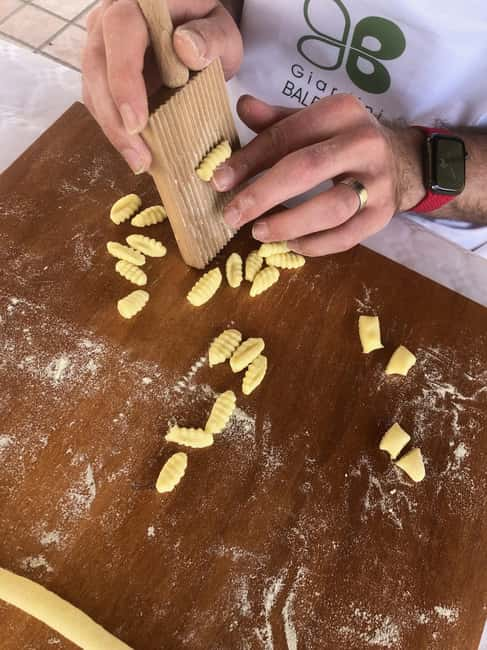
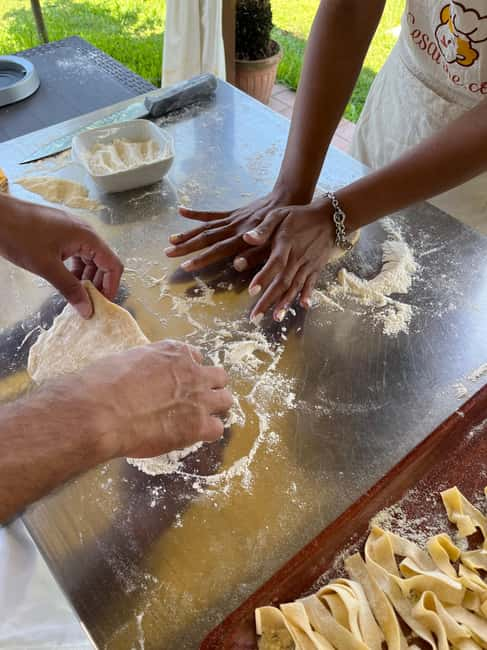
The main practical lesson is handmade pasta. Sabrina shows you the traditional method using flour and eggs, then guides you as you mix and work the dough.
This is where the class earns its keep. Pasta dough seems simple, but the feel changes as you knead it. You need to notice when it becomes smooth and workable, and you need to roll it thin enough without tearing it. Sabrina’s method focuses on those tactile skills rather than just handing you a finished dough ball.
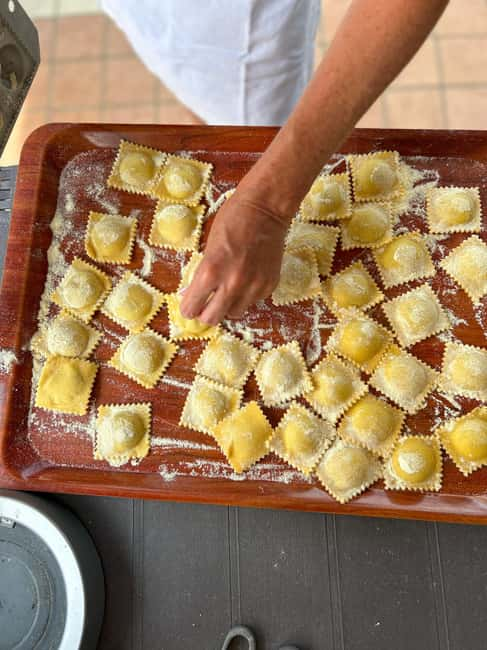
The pasta may be ravioli, a frequent focus of the class, though the precise dish can vary with the menu. You should expect to help from scratch, shape the pasta, and cook what you have made. It is a satisfying format because the meal at the end is directly tied to your own work.
You do not need to arrive as a cook. One participant described arriving with little confidence and leaving feeling capable of making pasta. That is a fair expectation, as long as you are willing to follow instructions and get your hands into the dough.
A three-hour session gives enough time for instruction, preparation, cooking, and eating. Still, do not expect a full professional course covering many pasta shapes, sauces, or regional techniques. The focus is narrower and more useful: learn one traditional preparation well, then take the method home.
The lemon caprese cake and bruschetta
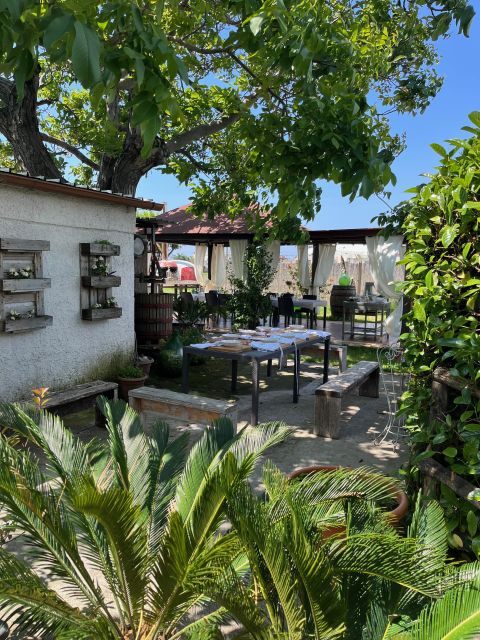
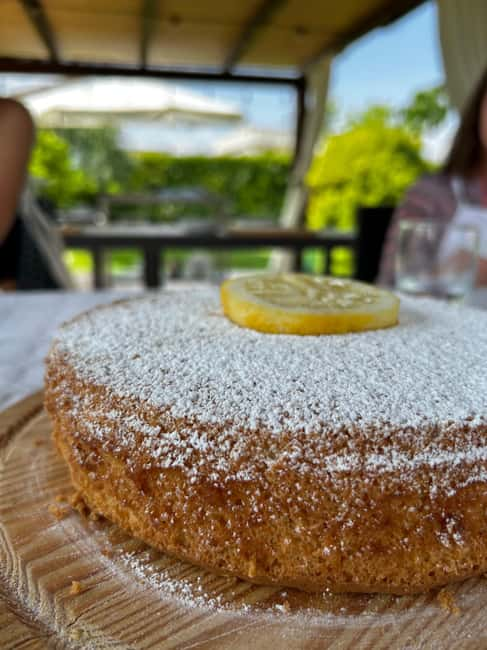
The menu includes more than pasta. You prepare bruschetta with seasonal vegetables and a homemade dessert, usually described as a lemon caprese cake.
The cake is a Campania specialty made with almonds and chocolate, and here it is taught as part of the family-style menu. The lemon flavor fits the region’s familiar citrus tradition, and the class uses mostly homegrown ingredients when available.
This dessert lesson adds variety to the afternoon. You are not spending all three hours rolling pasta, and you get a second recipe that is realistic to repeat in your own kitchen. The instructions also give you a taste of the host family’s broader cooking habits, not just one pasta dish.
Bruschetta is the simplest part of the meal, but it helps link the garden to the table. Seasonal vegetables and herbs are used as part of the opening course, followed by the fresh pasta and dessert.
The food is described as genuine and home prepared. That does not mean a formal multi-course restaurant meal with elaborate plating. It means simple local ingredients, family recipes, and food you have helped prepare yourself.
More Cooking Classes in Italy:
- Florence: Pasta Cooking Class with Unlimited Wine
★ 5.0 · 6,413 reviews - Cooking Class and Lunch at a Tuscan Farmhouse with Local Market Tour from Florence
★ 5.0 · 4,831 reviews - Rome: Pasta Making Class with Wine, Limoncello, and Dessert
★ 4.9 · 3,177 reviews - Pastamania – Florence Pasta Making Class
★ 5.0 · 3,050 reviews
Sitting down to eat with Gragnano wine
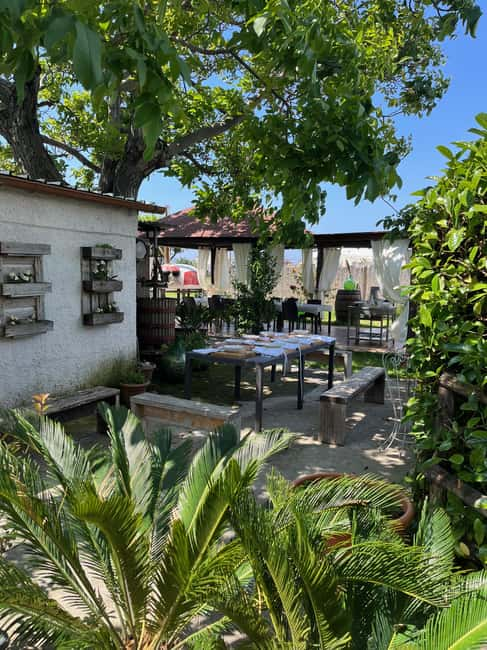
After the cooking, you eat the dishes prepared during the class. The included menu contains bruschetta with seasonal vegetables, fresh pasta, homemade dessert, water, and Gragnano wine.
Gragnano, near Naples, is well known in Campania for dried pasta and local wine. Including Gragnano wine gives the meal a clear regional touch, rather than treating the drink as an afterthought.
The meal is one of the reasons the class works well for people who want conversation as much as instruction. You have time to sit with the host and the other participants, compare your pasta, and enjoy the results without rushing straight to the next Pompeii sight.
The menu is generous for a $94 price. You are paying for three hours, an English-language lesson, ingredients, a garden introduction, a meal, wine, and the chance to cook in a private home. Compared with a short demonstration followed by a tasting, this offers more active participation and more food.
The value depends on what you want. If you only want to eat fresh pasta, a restaurant will cost less and require no work. If you want a memorable activity, practical skills, and a family setting near Pompeii, the price is easier to justify.
Small groups make a real difference
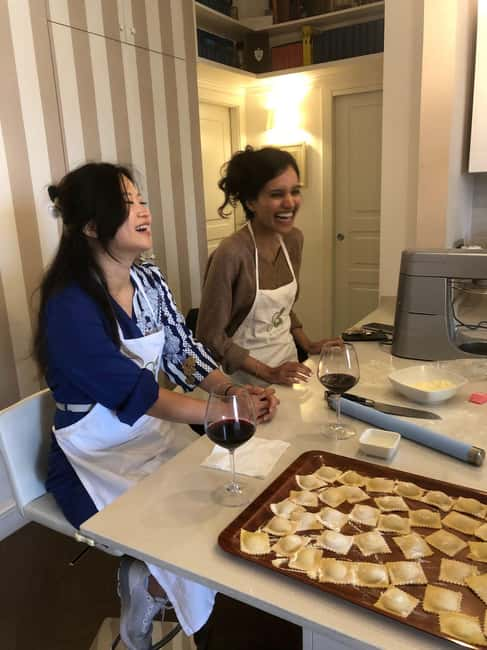
The official maximum is 10 participants, but some sessions can be much smaller. One class had only two people, and another family group included a 12-year-old daughter who took part in the cooking.
That range matters. A group of 10 will feel more social and may give you less individual attention than a private or two-person class. Even so, the small-group limit is far better than a large workshop where you only watch the instructor.
You should have a chance to mix, shape, and roll the pasta rather than simply stand nearby. Sabrina’s teaching style is patient and inclusive, with adjustments to ingredients and the menu based on the season and climate.
Families should find the format appealing, especially if children enjoy hands-on work and food. The class is not described as a special children’s program, so younger children may need close help. A 12-year-old took part successfully, which suggests that older children and teenagers can get plenty from it.
Couples, solo visitors who are comfortable joining a group, and friends looking for an afternoon activity also fit the class well. The minimum booking is two people, so you cannot reserve it as a one-person experience under the stated conditions.
Fitting the class into a Pompeii day
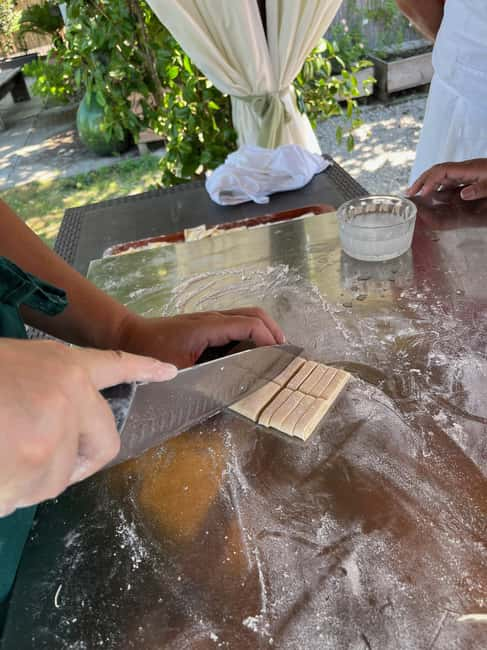
The cooking class is located a few minutes from both the Pompeii ruins and the sanctuary. That makes it easy to pair with sightseeing, but you should plan your day around the three-hour duration rather than trying to squeeze it into a narrow gap.
A practical plan is to visit the archaeological site first, take a break, then attend the cooking class. You will likely appreciate the chance to sit down and do something slower after walking through the ruins.
The precise start time depends on availability, so check before you build your schedule. A transfer can be requested, but it is not included in the price. Ask for details if you need transport help, rather than assuming pickup is part of the booking.
The meeting point is marked with a Balestrieri Gardens sign. Since the class is connected to a private home, pay attention to the stated meeting instructions and allow time to find the sign.
Do not book it if you need a tightly timed activity with a guaranteed end minute. Family-style cooking can run at a relaxed pace, and the three hours may feel short once you add the garden visit, preparation, meal, and conversation.
What the atmosphere is really like
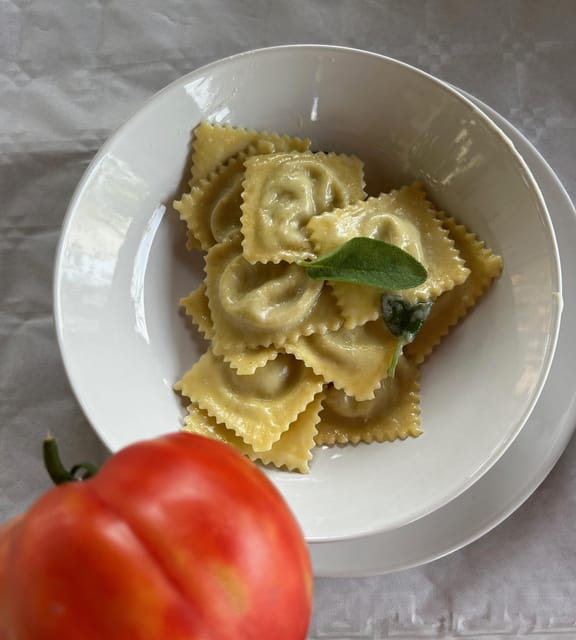
The strongest part of the experience is not a single recipe. It is the feeling of being welcomed into everyday family life around food.
Sabrina and Rosalba are praised for making people feel at home, and the teaching is described as patient rather than rushed. That tone can make a major difference if you are nervous about cooking or unsure of your English-language instructions.
You should expect a warm, informal setting. The class is not a chef-led performance with a restaurant brigade, certificates, or technical kitchen equipment. It is closer to learning from a local family member who wants you to understand the method and enjoy the meal.
The home setting also brings a few limits. You may have less space than in a dedicated cooking studio, and the menu is shaped by the household, season, and available garden produce. For many people, those are the very features that make the afternoon appealing. If you prefer exact timings and standardized recipes, they may feel less convenient.
Rain does not necessarily cancel the experience. The activity is usually set up outdoors when possible, but it can move inside when the weather is poor. The garden is most enjoyable in good weather, but the cooking itself remains the main event.
Who should book this experience
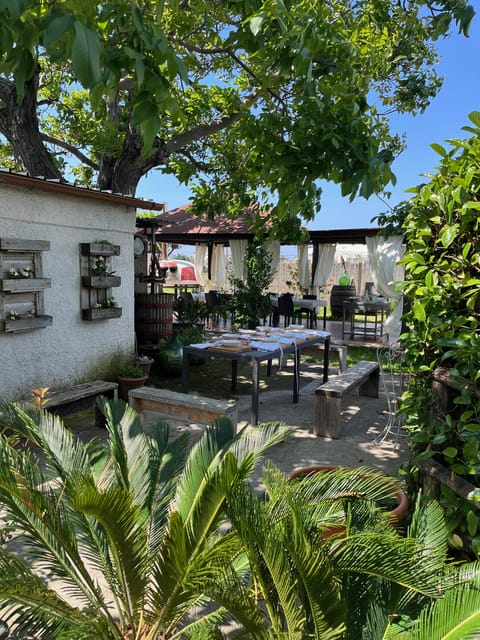
I would choose this class if you want a personal connection to Pompeii beyond the ancient ruins. The short distance from the archaeological site makes it especially useful for a day based in Pompeii, and the food gives you a different way to understand Campania.
It suits you if you:
- Want to learn a pasta technique you can repeat at home
- Enjoy small groups and informal conversation
- Prefer family recipes to formal culinary demonstrations
- Are interested in seasonal produce and local ingredients
- Want a food activity suitable for older children and teenagers
- Like having a full meal included rather than only a tasting
You may want another option if you dislike hands-on cooking, need a private booking for one person, or want a lesson focused on advanced culinary skills. The class is also not the right pick if you are expecting transportation, since transfer is separate and must be requested.
Cancellation is free up to 24 hours before the activity for a full refund, and you can reserve now and pay later. Those terms help if your Pompeii schedule is still shifting.
Should you book the pasta class near Pompeii?
Book it if you want three unhurried hours of pasta making, garden produce, family recipes, and a shared meal with Gragnano wine. The strongest reasons are Sabrina’s personal teaching, the chance to make ravioli from scratch, and the setting close to Pompeii’s major sights.
The $94 price is fair when you count the instruction, ingredients, dessert, drinks, and meal. It is less compelling if you only want lunch, but this is an activity first and a meal second.
My practical advice is to reserve it for a day when you can give it room to breathe. Bring your appetite, expect to work with your hands, and accept that the menu may change with the season. If that sounds better than another hurried sightseeing stop, this is a good way to add a human, local side to your Pompeii visit.
FAQ
Where does the pasta cooking class take place?
The class takes place at Giardini Balestrieri in Pompeii, near the Pompeii ruins and the sanctuary. Look for a sign that says Balestrieri Gardens.
How long does the experience last?
The cooking class lasts three hours. Starting times depend on availability.
What food is included?
The included menu has bruschetta with seasonal vegetables, fresh pasta, homemade dessert, water, and Gragnano wine.
Will I make pasta from scratch?
Yes. You learn to make handmade pasta with flour and eggs, including how to judge the dough and roll it. Ravioli is a frequent focus of the lesson.
Is the class taught in English?
Yes. English instruction is provided.
What is the maximum group size?
The experience is limited to 10 participants. A minimum of two people is required to book.
Is transportation included?
No. Transfer is not included, but you can request information about arranging one.
Newest classes around Italy
- Cooking Class in a Sicilian countryhouse★ 5.0 · 5 reviews
- Cesarine: Market Tour & Home Cooking Class in Catania★ 4.0 · 6 reviews
- Cesarine: Home Cooking Class & Meal with a Local in Catania★ 4.5 · 10 reviews
- Cooking Class in Taormina with Lunch Included★ 5.0 · 2 reviews
- Cooking class in Capri for small groups★ 4.0 · 4 reviews
- Cooking Class and Wine Pairing in Capri★ 5.0 · 57 reviews
- Lezione di Cucina : Pasta Fresca★ 5.0 · 12 reviews
- Private Cooking Class Experience in Reggio Calabria★ 5.0 · 5 reviews
Italy Cooking Classes, compared.
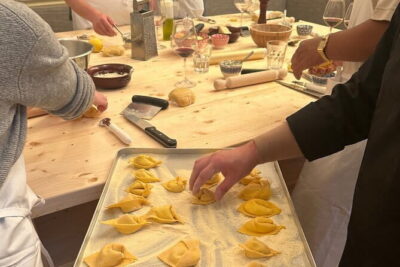
3 in 1 Cooking Class near Navona: Fettuccine, Ravioli & Tiramisu
Read our review →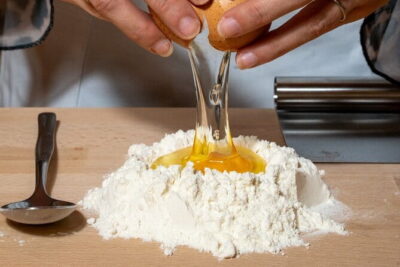
Pasta & Tiramisu Cooking Class with Unlimited Wine
Read our review →
Cooking Class and Lunch at a Tuscan Farmhouse with Local Market Tour from Florence
Read our review →
Pasta Making Class with Wine, Limoncello, and Dessert
Read our review →
Rome Cooking Class: Make Pasta and 3 Spritz Cocktails
Read our review →Browse the lists this tour appears in