
Review · PALERMO COOKING CLASSES
Market Tour, Traditional Cooking and Limoncello class
Palermo’s best food lessons often begin with a market bag in hand. This four-hour outing takes you through Capo Street Market, then into Patrizia’s apartment in the 17th-century Palazzo Asmundo, where shopping turns into caponata, busiate with pesto Trapanese, cassata, and limoncello.
I like two things here: the market-to-table connection, which gives the meal a clear sense of place, and the relaxed home setting, where cooking comes with wine and conversation about Sicily. The main drawback is that the class can feel less structured in a larger group, and the promised limoncello and take-home bottle should be confirmed before you go.
Key points
- Capo market comes first: You help select ingredients instead of arriving to a meal prepared in advance.
- Palazzo Asmundo setting: The cooking takes place in a charming historic apartment near Palermo’s old markets.
- Traditional menu: Expect caponata, busiate with pesto Trapanese, and cassata, with menus sometimes changing.
- Limoncello included: The class is designed to show you the process and provide a small bottle to take home.
- Warm, personal hosting: Patrizia is the main host, with Giuliana involved as a chef on some dates.
- Four hours at $207.84: The price makes the most sense if you value instruction, food, wine, and a home visit more than a formal restaurant-style class.
From Capo Street Market to a Sicilian kitchen
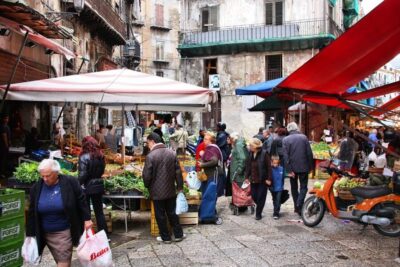
The morning begins at 9:30 a.m. at Via Volturno 78, close to Palermo’s Capo market. This is a useful starting point because you are not simply being handed ingredients in a cooking school. You begin by seeing the food in the place where local shopping happens.
Patrizia guides the shopping and chooses what will go into the meal. That can mean looking at vegetables for caponata, fresh herbs and tomatoes for pesto Trapanese, or seafood and meat when the day’s menu changes. The market visit is not a full food tour with many tasting stops. It is a practical shop tied directly to the cooking that follows.
That distinction matters. If you want a long market lecture, extensive tastings, or hours of vendor stories, this may feel short. If you want to understand how a Sicilian meal starts with fresh ingredients, the format works well. You see the produce, ask questions, and then carry the ingredients to the kitchen where they will be used.
The Capo area is one of the old market districts of Palermo, and the meeting point is also near Ballarò. Only Capo is listed as a stop, so you should not expect a separate tour of both markets. Still, beginning here gives the activity a stronger local setting than meeting at a modern cooking studio.
More Cooking Classes with a Market Tour in Italy
- Palermo: Market Tour and Sicilian Cooking Class with Lunch
★ 4.9 · 229 reviews - Wanna be Sicilian: Palermo Cooking Class and Market Tour
★ 5.0 · 197 reviews - Palermo: Half-Day Cooking Class & Market Tour
★ 4.9 · 60 reviews
Inside Palazzo Asmundo’s 17th-century apartment
After shopping, you head to a charming apartment inside Palazzo Asmundo, an historic building dating from the 17th century. This is one of the most distinctive parts of the outing. You are cooking in a home rather than standing at a row of workstations in a commercial classroom.
Patrizia’s role is central. She welcomes the group, explains the dishes, and shares stories about Sicilian food, customs, and daily life. On some occasions, Giuliana works as the chef alongside her. One account also names Alex as the guide, so the exact host arrangement may vary by date. Patrizia is the consistent name connected with the home and the class.
The apartment setting creates a social meal as much as a lesson. Several accounts describe wine, snacks, conversation, and a feeling of sharing lunch or dinner with a local acquaintance. That is a real strength if you enjoy talking while you cook. It is less ideal if you want a tightly timed demonstration followed by precise individual instruction at every step.
Two cats, Nino and Bella, or cats described by other names in different accounts, may be in the home. There is outdoor space where you can stay if needed, but anyone with a serious allergy should take this detail seriously before booking.
What you cook: caponata, busiate, and cassata
The listed sample menu covers three classic Sicilian preparations.
Caponata is the starter, a cooked vegetable dish usually associated with eggplant, sweet and sour flavors, and a balance of vegetables, vinegar, and other additions. It is a good teaching dish because it shows how Sicilian food often combines produce, acidity, sweetness, and olive oil rather than relying on heavy sauces.
The main course is busiate with pesto Trapanese. Busiate is a distinctive twisted pasta shape from western Sicily. Pesto Trapanese is different from the basil-heavy pesto most people know from Liguria. It is associated with Trapani and typically centers on fresh tomato, almonds, garlic, and herbs. The class is a useful place to learn why two Italian dishes carrying the same name can taste and look quite different.
Cassata is listed for dessert. In this version, you make a Sicilian pie filled with ricotta cream rather than treating cassata only as the elaborate, brightly decorated cake often seen in pastry shops. The dessert gives the meal a sweet finish and introduces the importance of sheep’s milk ricotta in Sicilian cooking.
The menu is not completely fixed. Other accounts describe swordfish rolls, fresh swordfish, veal spadini or braciole, cheese, almond and tomato pesto, and a ricotta-filled baked dessert. That flexibility can be a plus because the meal may follow what looks best at the market. It also means you should not book expecting every dish above on every date.
A class for cooks who want to participate
The cooking is hands-on, but the level of instruction may depend on the group and the day. You can expect to help prepare the dishes, watch demonstrations, ask questions, and eat the finished meal. Several accounts describe simple methods that were easy to repeat at home, especially pasta preparation and the caponata.
I like this approach for a mixed group. Children have taken part, including a family with children ages three, four, six, and twelve. The host adjusted the activity so the whole family could participate. A solo participant can also volunteer for extra kitchen tasks, while a family or group of friends can divide up the work.
Do not confuse hands-on with a formal culinary course. You may not receive a printed recipe packet, and one disappointed participant specifically said recipes were promised but not supplied. If written recipes matter to you, ask about them before booking and take notes during the class.
The same issue applies to the pace. Many people describe a relaxed afternoon with plenty of conversation. One negative account describes long periods without enough attention from the host and little focus on the food. That appears to be an exception among the supplied feedback, but it points to a real consideration: this is a social home meal with cooking instruction, not a professional examination kitchen.
More Cooking Classes with a Market Tour in Palermo
- Palermo: Shopping at Capo Market and Sicilian Cooking Class
★ 5.0 · 2 reviews
The limoncello lesson and take-home bottle
Making limoncello adds a distinctly Sicilian finish. You learn about the process and, according to the advertised plan, take home a small bottle as a souvenir. That is more personal than buying a standard bottle at a shop, and it gives you a reminder of the meal that you can share later.
There is one important caution. One account says no limoncello was made and no bottle was provided, while another gives a detailed description of making it and taking a bottle home. Since the activity advertises limoncello as part of the class, this appears to have varied by date or circumstance. I would confirm the current arrangement directly if the bottle is a major reason for booking.
The class is also about how Sicilians use food to connect people. Limoncello is not just a recipe exercise. It becomes part of the final conversation, alongside wine and the meal you have helped prepare.
Wine, conversation, and the rhythm of the meal
The food is only half of the afternoon. Wine, snacks, and conversation are built into the atmosphere described for the class. Patrizia talks about Sicilian culture, food customs, and the history behind the dishes. The cooking becomes a way to discuss family traditions, regional differences, and the habits of ordinary life in Sicily.
This is where the activity differs from a standard market tour followed by a cooking demonstration. You spend much of the time in a private home, eating what you helped prepare. The room may feel more like a shared family table than a classroom.
That social tone will suit you if you enjoy meeting people from other places and asking questions. Several accounts describe stimulating conversation and the sense of leaving with new friends. If you prefer to keep your attention on technique, be ready for a meal that includes plenty of talk.
The supplied feedback is overwhelmingly positive, with a 4.9 rating from 35 reviews and 97 percent of participants recommending the activity. That strong response fits the repeated praise for Patrizia’s warmth, the apartment, the food, and the market visit. Still, the lower rating is useful because it highlights the limits of a small home operation: the quality of the day may depend on the group size, host attention, and whether every advertised element is delivered.
Group size and the question of intimacy
The maximum group size is 25 people. That is a fairly large ceiling for a home cooking class, even though several bookings described groups of three, four, five, or six. You should ask about the expected number for your date if personal instruction is important.
A small group will probably make it easier to work at the counter, ask questions, and speak directly with Patrizia or Giuliana. A larger group may feel more like a communal meal with demonstrations and shared tasks. Neither format is automatically better, but they offer different kinds of value.
Families can fit well here, and the activity has worked for children as young as three. Couples and solo cooks may also enjoy it, especially if they want a social afternoon rather than a private lesson. Professional cooks can find useful regional ideas, but the class is aimed at ordinary home cooks and curious eaters rather than advanced culinary training.
Is $207.84 a fair price?
At $207.84 per person, this is not a cheap meal or a basic market walk. You are paying for roughly four hours, a market shop, instruction, several dishes, wine, a meal in a private apartment, cultural conversation, and a limoncello bottle when that part runs as advertised.
The value depends on what you want. If you compare it with a restaurant meal, the price is high. If you compare it with a private food outing that includes ingredients, cooking, drinks, a host, and a home setting, it becomes easier to justify. The strongest value comes from the combination of activities rather than from the amount of food alone.
Pickup is available on request for an extra charge. The regular meeting point is easy to identify, and the area is near public transportation. The activity ends back at the meeting point, so you can plan the rest of your Palermo day from there.
Free cancellation is available if you cancel at least 24 hours before the 9:30 a.m. start time. Changes made inside that window are not accepted, and the activity may be canceled if its minimum number is not met. In that case, you are offered another date or activity, or a full refund.
Who should book this Palermo food experience?
I would choose this for you if you want local contact, shared cooking, and a long meal more than a polished cooking-school format. It is especially well suited to couples, families, small groups, solo visitors who like joining a table, and anyone interested in recreating Sicilian dishes at home.
It is also a good first or second-day activity in Palermo. The market helps you get familiar with local ingredients, while the conversation can give you useful context for the rest of your time in Sicily.
I would hesitate if you need strict dietary control, guaranteed individual instruction, a printed recipe book, or a fixed menu. The supplied information does not explain dietary accommodations, and the menu can change. I would also confirm the limoncello bottle and expected group size before paying.
Should you book it?
Book this class if the idea of shopping with Patrizia at Capo market, cooking in a historic Palermo home, drinking Sicilian wine, and eating the results sounds better than a formal demonstration. The warm hosting, flexible menu, and home setting are the main reasons to choose it.
Skip it if you mainly want a quick market tour, a highly technical lesson, or a guaranteed bottle and printed recipes without asking questions first. For most people seeking a personal introduction to Sicilian food, the market-to-table format offers strong value, as long as you understand that the atmosphere is relaxed and the details can vary.
FAQ
Where does the activity begin?
It begins at Via Volturno 78, 90138 Palermo, Italy, at 9:30 a.m.
Where does the activity end?
It ends back at the meeting point.
Is pickup available?
Pickup is available on request for an additional charge.
How long does the activity last?
The activity lasts approximately four hours.
What market do you visit?
The activity includes a visit to Palermo’s historic Capo Street Market. The meeting point is also near the old Ballarò market, but Capo is the listed market stop.
What food will I prepare?
The sample menu includes caponata, busiate with pesto Trapanese, and cassata. Other menus can include dishes such as swordfish rolls or veal braciole.
Is limoncello included?
The activity is designed to include a limoncello lesson and a small bottle to take home. Because this has not happened on every reported date, confirm the current arrangement before booking.
What is the cancellation policy?
You can cancel at least 24 hours before the start time for a full refund. Cancellations or changes made less than 24 hours before the start time are not accepted for a refund.
Newest classes around Palermo
- Palermo: Sicilian Cuisine Social Cooking Class & Dinner★ 5.0 · 4 reviews
- Palermo: Pasta & Tiramisu Cooking Class at a Local’s Home★ 4.9 · 74 reviews
- Palermo: Sapore di Strada Cooking Class★ 4.7 · 22 reviews
- Palermo: Shopping at Capo Market and Sicilian Cooking Class★ 5.0 · 2 reviews
- Palermo: Italian Cooking MasterClass with Food & Wine★ 5.0 · 2 reviews
- Palermo: Cooking and Limoncello Class★ 4.6 · 14 reviews
- Palermo: Authentic Italian Cooking Class★ 4.6 · 15 reviews
- Palermo: Exclusive Sicilian cooking class at the home of a well-known Italian chef★ 5.0 · 75 reviews
Palermo Cooking Classes, compared.
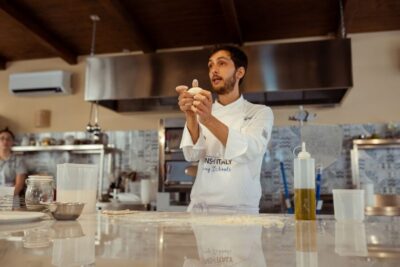
Pizza and Gelato Cooking Class with Dinner and Wine
Read our review →
Market Tour and Sicilian Cooking Class with Lunch
Read our review →
Wanna be Sicilian: Palermo Cooking Class and Market Tour
Read our review →
Exclusive Sicilian cooking class at the home of a well-known Italian chef
Read our review →
Pasta & Tiramisu Cooking Class at a Local’s Home
Read our review →
Browse the lists this tour appears in