Review · COOKING CLASSES
Makati: Hands on Manila Cooking Class
Filipino merienda can be far more than a light snack, and this two-hour class proves it. With Chyl guiding you through pancit noodles, lumpia spring rolls, and sweet turon, you prepare three dishes that together feel like a full meal. I like the small limit of four people, which gives you real time at the cooker, and the way Chyl connects each recipe with family life and Filipino food customs. The main drawback is that the outdoor setting may be uncomfortable in rain, and the $60 price is high for a two-hour class.
I also like that you do the work yourself, from preparing ingredients to cooking and assembling the food. The recipes use practical ingredients and straightforward methods, so you can try them at home. Confirm the exact meeting spot before you go: the activity is promoted as being in Makati, while the supplied location field says Nueva Vizcaya, and the courtyard can be difficult to identify without clear directions.
Key points to know before booking
- Three substantial Filipino dishes: Prepare pancit, lumpia, and turon, a savory noodle dish, crisp spring rolls, and a sweet banana treat.
- Chyl leads the lesson: She teaches in English and adds family stories, food background, and useful cooking guidance.
- A true hands-on format: You receive ingredients and equipment, then prepare and cook your own food rather than simply watching a demonstration.
- Small groups matter: With no more than four participants, you get personal help and room to ask questions.
- The class runs outdoors: The setting is pleasant in good weather but has limited cover if rain arrives.
- Plan to arrive hungry: The food is described as a heavy snack, but the three dishes can amount to two meals for some people.
Filipino food lessons in a Makati courtyard
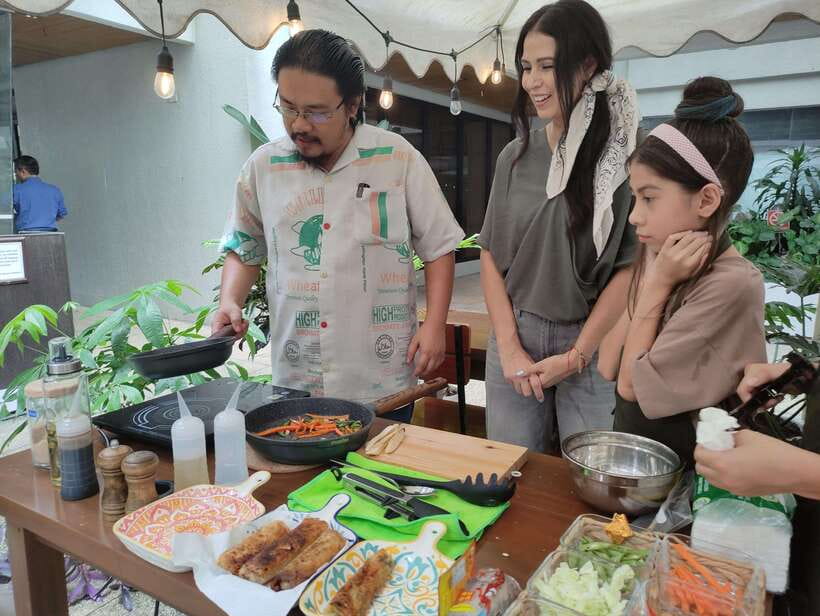
This is a cooking class with a useful sense of place. You are not simply handed a recipe card and sent to a hotplate. Chyl explains how Filipino food connects with family routines, celebrations, childhood memories, and the country’s many regional traditions.
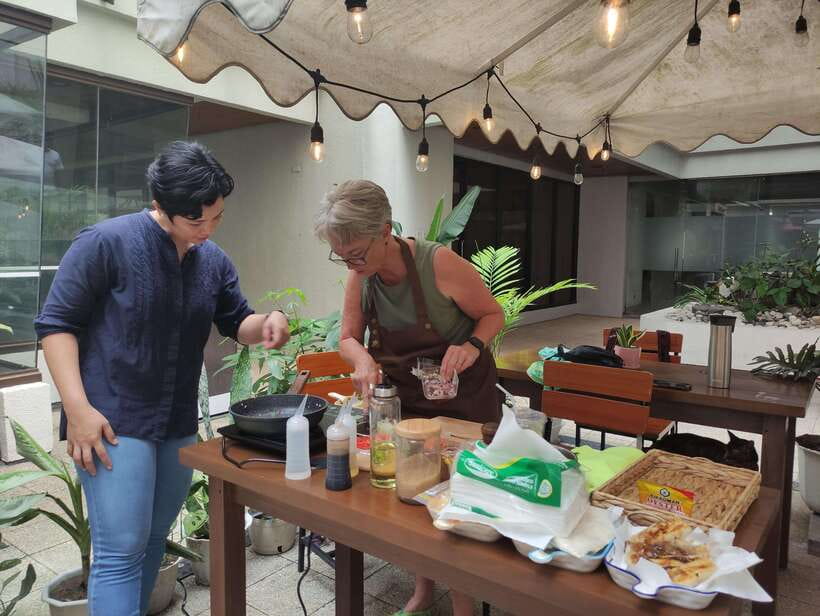
The class takes place in an outdoor courtyard in the heart of Makati. The location is described as being near the Peninsula Hotel and Greenbelt Mall, which makes it convenient if you are already in that part of the city. You are told to look for the instructor at the courtyard in front of the coffee kiosk. That sounds simple, but the meeting point may take a little searching, so I would contact the organizer beforehand and allow extra time.
The location information deserves a careful check. The activity is named Makati: Hands on Manila Cooking Class, while the supplied location field lists Nueva Vizcaya. Since those places are not interchangeable, confirm the address shown on your booking before setting out. The Grab app is the practical way to reach the venue, especially if you are unfamiliar with Manila traffic or the local street layout.
More Cooking Classes in the world:
- Half-Day Thai Cooking Class at Organic Farm in Chiang Mai
★ 5.0 · 19,087 reviews - Florence: Pasta Cooking Class with Unlimited Wine
★ 4.9 · 10,285 reviews - 3 in 1 Cooking Class near Navona: Fettuccine, Ravioli & Tiramisu
★ 5.0 · 7,376 reviews
What the two-hour lesson actually covers
The class is built around a Filipino merienda, the broad snack tradition that can include noodles, fried food, sweets, and much more. Here, snack is a modest label. You prepare one noodle dish, one savory fried dish, and one dessert, then sit down to eat what you made.
The recipes described most often are:
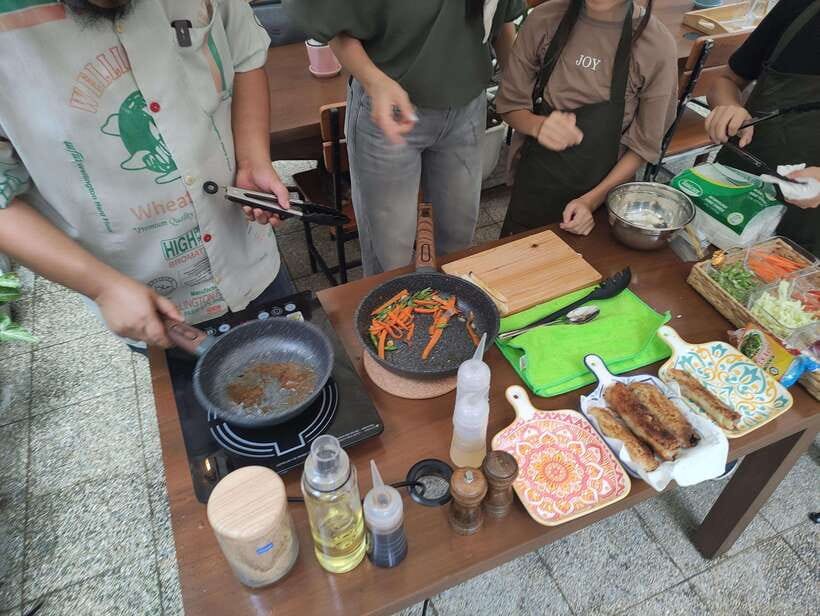
- Pancit, a Filipino noodle dish prepared as a stir-fry
- Lumpia, crisp spring rolls with a savory filling
- Turon, a sweet banana preparation wrapped and fried, sometimes described here as a crepe or wrapper-based dessert
The exact flow may vary slightly, but the class covers ingredient preparation, cooking, and final assembly. You are not expected to bring tools or groceries. Cooking equipment and ingredients are included, as is a nonalcoholic drink.
That arrangement makes the class easy for a visitor. You do not need to hunt through a market for unfamiliar ingredients or worry about buying more than you can carry. You can focus on techniques, flavors, and the stories behind the food.
From chopping board to hotplate
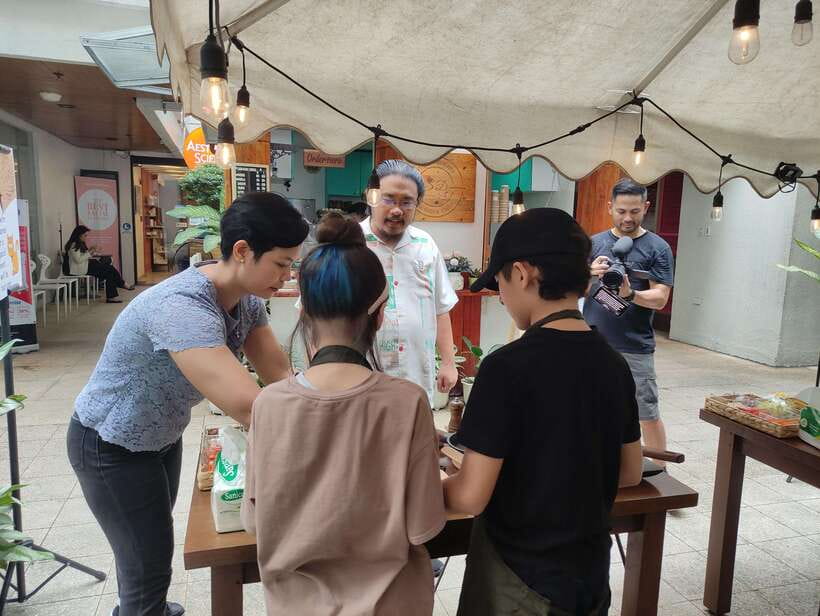
The strongest part of this activity is the practical work. You prepare the ingredients, operate the cooker, handle the utensils, and build the dishes yourself. That matters because Filipino food can look simple on a menu while involving useful small skills at home, such as managing a stir-fry, filling and rolling spring rolls, and working with a sweet fried dessert.
Chyl’s teaching style is calm and patient. She gives instructions clearly, then lets you take the lead. That balance works for a first-time cook, but it also leaves room for an experienced home cook to ask detailed questions or adjust the pace.
You should not expect a formal restaurant kitchen or a long chef demonstration. This is closer to a friendly shared table with a cooker in front of you. Each participant has the chance to work through the recipes rather than watching one person do everything.
The limited group size is a real benefit. With four people at most, Chyl can spot when a beginner needs help and still answer questions from someone with more kitchen experience. If you are alone, the small format can become almost private. If you book with family or friends, everyone has enough room to participate.
Pancit, lumpia, and turon: why these dishes work
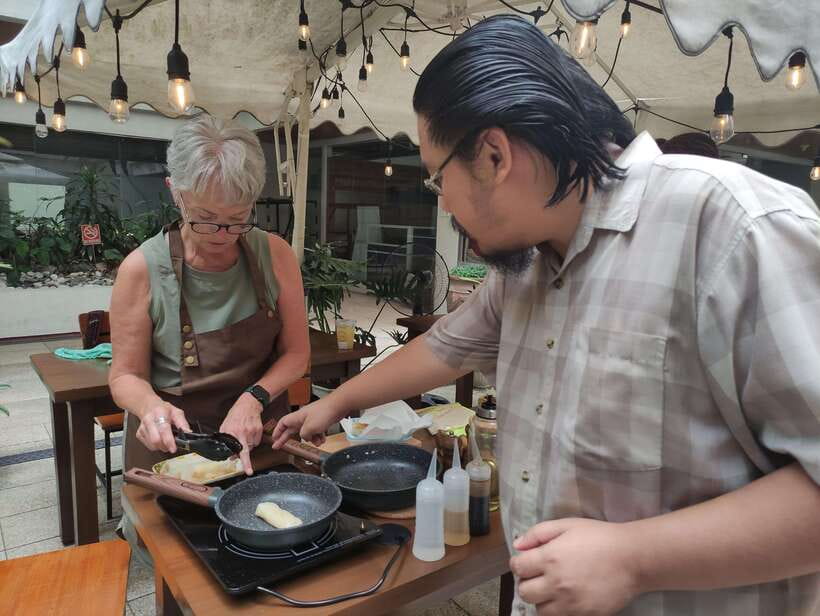
Pancit gives you an introduction to the Filipino habit of turning noodles into a filling, flexible meal. It is a useful recipe for home cooks because it can be adapted to different ingredients and does not require rare equipment. You learn how a few fresh components and a hot pan can produce a dish with plenty of flavor.
Lumpia brings a different lesson. The work is slower and more tactile, since you fill, roll, and cook the spring rolls. The crisp result rewards careful preparation, and the method is easy to remember once you have made a batch yourself. It also gives you a dish that works well for sharing.
Turon provides the sweet finish. The banana filling and fried wrapper show how an everyday ingredient can become a popular Filipino treat. Chyl uses the food to explain how recipes passed through family kitchens can grow into widely loved snacks. That cultural context gives the dessert more meaning than a simple cooking step.
Together, these three dishes offer good variety. You move from noodles to savory rolls to something sweet, with different textures and cooking tasks along the way. You also finish with food you can recognize and recreate, rather than a highly specialized dish that is difficult to attempt outside the Philippines.
Same region, a different dish to learn:
- Florence: Pasta & Tiramisu Cooking Class with Unlimited Wine
★ 4.9 · 6,708 reviews - Florence: Pasta Cooking Class with Unlimited Wine
★ 5.0 · 6,413 reviews - Hanoi Cooking Class: Culture, Local Market & Meaning CSR Impact
★ 5.0 · 5,147 reviews - 5 Traditional Dishes Hanoi Cooking Class with Market Trip
★ 5.0 · 4,890 reviews
The cultural side is more than filler
Chyl’s stories are a major reason to choose this class instead of following a recipe online. She talks about Filipino family life, food traditions, and the place of snacks in everyday routines. She also explains how ingredients and cooking methods can reflect family values and celebrations.
That background helps you understand why Filipino cuisine can be overlooked by visitors who focus only on better-known food destinations in Southeast Asia. The country’s cooking reflects its many islands and its long exchange of local and outside influences, but this lesson keeps the subject grounded in food people actually cook and eat.
I especially value the connection between simple food and ordinary life. A banana dessert can carry a story about a grandmother’s kitchen. A noodle dish can be tied to family gatherings. The class gives you these links while your hands are busy, which makes the information easier to remember.
The class does not claim to cover all Filipino cuisine, and it should not be treated as a full regional survey. You get three accessible dishes and a friendly introduction. That narrow focus is useful for two hours, but you should not book it expecting a broad lesson on every major Filipino specialty.
How much food will you get?
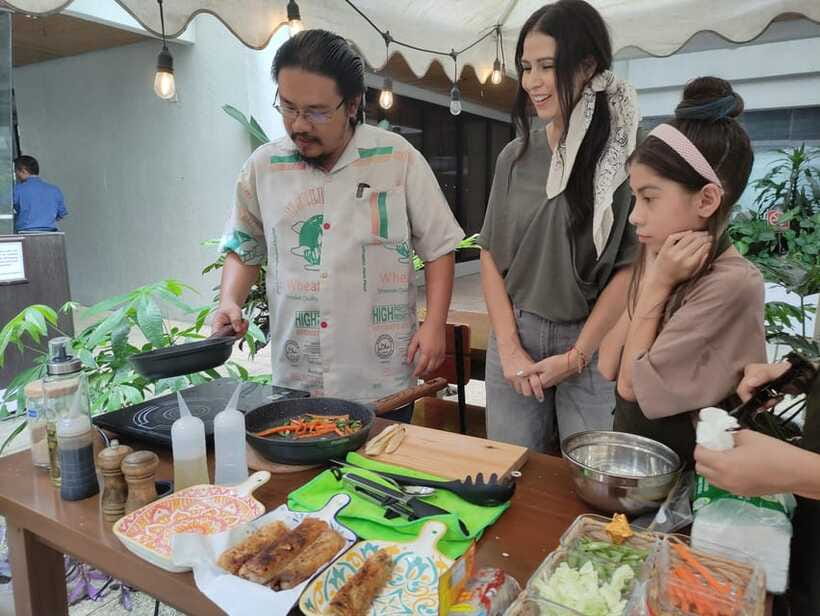
Plan to arrive hungry. The menu is called a heavy snack, but the amount can feel closer to two meals, particularly if you are cooking alone. You may have plenty left after tasting each dish.
This is a plus if you want a cooking activity that also covers lunch or an early dinner. It is less ideal if you have a large meal planned soon afterward. The dishes are made from scratch, and you eat the results at the end, so the class has both a lesson and a substantial food component.
A nonalcoholic drink is included. The supplied information does not promise a wider drinks menu, so do not book this expecting a tasting session or a cocktail pairing. The food is the main event.
Is $60 a fair price?
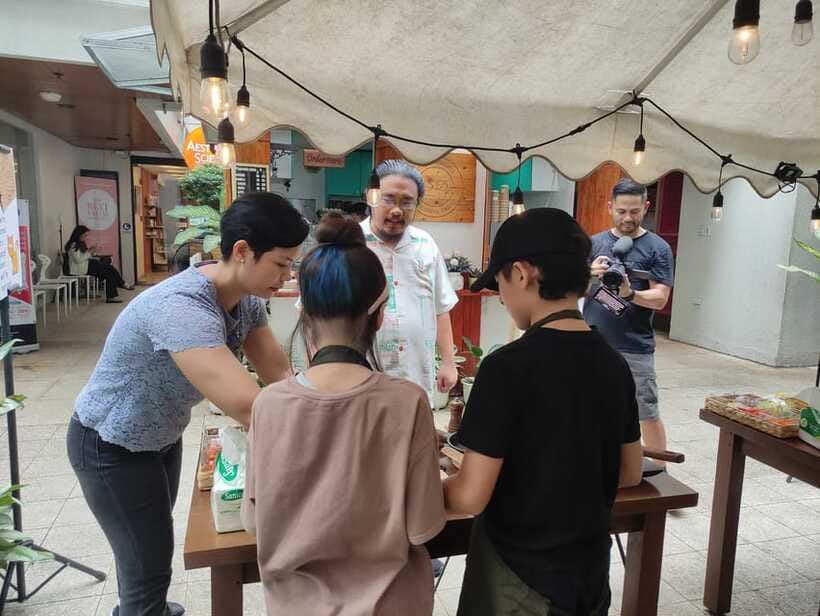
At $60 per person, this is not a bargain cooking lesson. You are paying more than the cost of the ingredients alone, and the class lasts only two hours. One detailed assessment also considered the price high and suggested a lower rate would feel more comfortable.
Still, price is not the whole calculation. Your fee covers the equipment, ingredients, drink, instruction, food, and the convenience of a central location. You also receive a small-group lesson with a host who can answer individual questions. If you are traveling solo, that personal attention can make the rate easier to justify.
The class has stronger value if you care about learning recipes you can repeat at home. It is weaker value if you mainly want a cheap meal or a long professional cooking course. You are paying for guidance, cultural context, and participation, not just for three dishes.
The included food also changes the equation. Since the class produces a filling meal, you may not need to buy lunch or dinner immediately afterward. I would view the $60 as a reasonable splurge for a hands-on cultural activity, but not as an everyday food deal.
Weather, access, and practical details
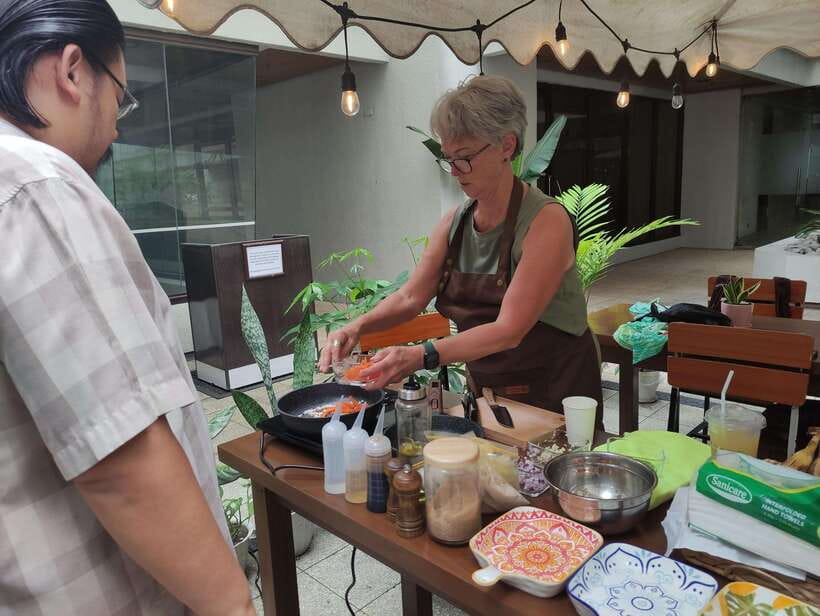
The outdoor courtyard sounds pleasant when the weather cooperates. It gives the session a relaxed feel and keeps the setting from becoming a closed classroom. The tables can be arranged so that each person has ingredients and utensils within easy reach.
Rain is the clear weak spot. The venue is not fully covered, and a wet session may require rearranging equipment and drying surfaces. If the forecast looks poor, contact the organizer before you leave and ask how the class will be handled.
The experience is wheelchair accessible, but the outdoor setting may still make comfort depend on the exact arrangement that day. Children under nine are not permitted, and the activity is not suitable for visually impaired participants. Children nine and older can take part, making this a reasonable short activity for families who want something more active than sightseeing.
Wear comfortable clothes. You will be working around food and cooking equipment, so this is not the moment for delicate clothing or a formal outfit. Hotel pickup and drop-off are not included, so you must make your own way to the courtyard.
Cancellation is flexible: you can cancel up to 24 hours in advance for a full refund. You can also reserve now and pay later, which helps if your Manila schedule is still shifting.
Who will enjoy this class most?
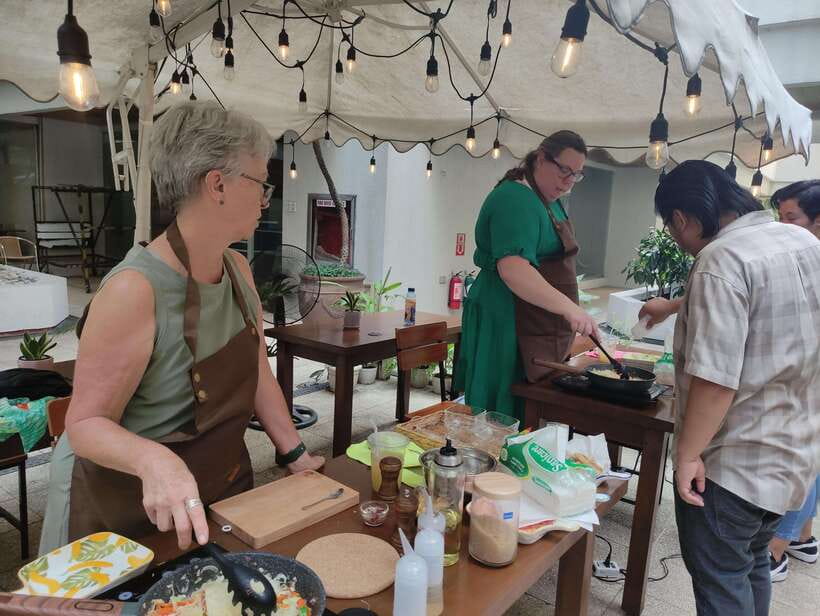
I would recommend it to solo visitors, couples, families with older children, and small groups of friends. Solo participants can benefit from the close instruction and the chance to ask as many questions as they like. Families get a short activity with food at the end, without committing to a full-day course.
It suits beginners particularly well. The recipes are approachable, the cooking is guided, and Chyl’s patient manner helps take pressure off anyone who worries about getting a step wrong. You do not need advanced kitchen skills to take part.
It also works for experienced cooks who want local context. You may already know how to stir-fry or roll spring rolls, but Chyl’s stories about Filipino food and family traditions add something a recipe website cannot.
I would hesitate if you want a polished indoor venue, a large selection of dishes, or a lesson focused on advanced technique. I would also think twice if you dislike fried food or prefer to eat lightly, since the portion of food can be generous.
Should you book the Makati cooking class?
Book it if you want to spend two hours actively making Filipino food instead of only ordering it. The combination of pancit, lumpia, and turon gives you a useful introduction, while Chyl’s stories connect the dishes to home cooking and Filipino culture.
The main cautions are the price, the weather exposure, and the need to confirm the exact address. Once those points work for you, this is a friendly, practical class with a good chance of sending you home with recipes you will actually make again.
FAQ
Where does the cooking class take place?
The activity is promoted as taking place in Makati, in an outdoor courtyard in front of a coffee kiosk. The supplied location field lists Nueva Vizcaya, so confirm the exact address with the organizer before traveling to the meeting point.
How long is the cooking class?
The class lasts two hours. Starting times vary, so you need to check availability when booking.
What food will I prepare?
You will prepare a Filipino merienda that includes a noodle dish, savory spring rolls, and a sweet treat. The dishes described are pancit, lumpia, and turon.
Is food and equipment included?
Yes. Cooking equipment, food ingredients, and one nonalcoholic drink are included.
Is the class taught in English?
Yes. The instructor teaches in English.
Can children join the class?
Children under nine cannot join. Children aged nine and older may take part.
What should I bring?
Wear comfortable clothes. You also need to arrange your own transportation because hotel pickup and drop-off are not included.
Newest classes around the world
- Aroidee’s Farm-Fresh Thai Cooking Experience★ 5.0 · 8 reviews
- Authentic Thai Cooking Class and Farm Visit in Chiang Mai★ 5.0 · 66 reviews
- Signature Thai Cooking Course★ 5.0 · 79 reviews
- Half Day Guided Thai Cooking Class in Chiang Mai★ 5.0 · 13 reviews
- Yummy Tasty Thai Cooking School in Chiang Mai★ 5.0 · 2 reviews
- Online Thai and Akha Cooking Class★ 5.0 · 70 reviews
- Northern Thai Cooking Class in Chiang Mai in a Countryside Home★ 5.0 · 2 reviews
- Private Half-Day Thai Cooking Class in Chiang Mai★ 5.0 · 4 reviews
Cooking Classes, compared.
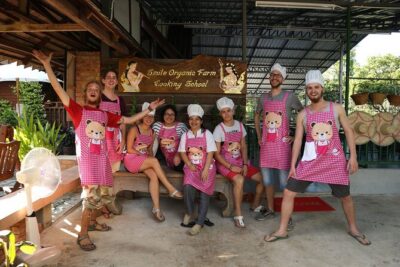
Half-Day Thai Cooking Class at Organic Farm in Chiang Mai
Read our review →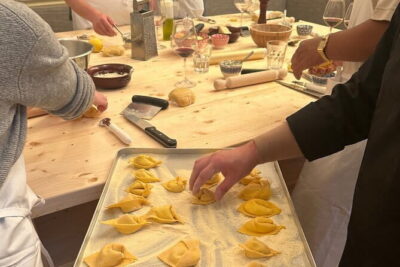

3 in 1 Cooking Class near Navona: Fettuccine, Ravioli & Tiramisu
Read our review →
Pasta & Tiramisu Cooking Class with Unlimited Wine
Read our review →
Hanoi Cooking Class: Culture, Local Market & Meaning CSR Impact
Read our review →
5 Traditional Dishes Hanoi Cooking Class with Market Trip
Read our review →