Review · COOKING CLASSES WITH A MARKET TOUR
Local Market Tour and Traditional Meal Cooking Class
The best part of this experience is the move from market stall to home kitchen. You shop for fresh ingredients in a Nairobi market, then carry them to a nearby apartment and turn them into a Kenyan meal with your guide. It is a simple idea, but it gives you a useful look at daily life, food shopping, transport, and home cooking in one short outing.
I like the small group of no more than six, which should make it easier to ask questions and get involved at the stove. I also like the optional matatu ride, since public transport is part of ordinary Nairobi life rather than a polished sightseeing bubble. The main caution is practical: the apartment is on the fourth floor and has stairs only, so check this carefully if anyone in your group has mobility limits.
Key points to know
- Fresh market shopping comes first: You help choose ingredients instead of simply watching a cooking demonstration.
- The cooking takes place in a private home: The setting gives the meal a personal, everyday feel.
- Matatu travel is optional: You can add a short public transport experience between the meeting point and market.
- Vegetarian, vegan, pescatarian, and meat-based meals are offered: Tell the guide about specific requests before you arrive.
- The group is capped at six people: This suits visitors who prefer conversation and hands-on participation.
- There are stairs to the fourth-floor apartment: The building has no lift, despite the activity being described as wheelchair accessible.
From Westlands Square to a real Nairobi market

You meet at Westlands Square, outside the Java café entrance. The starting times are 11:30 a.m. and 5 p.m., giving you a choice between a daytime outing and an early evening experience. The exact pace may depend on traffic and the market schedule, but the activity itself is listed as three hours.
The meeting point is easy to identify, but hotel pickup is not included. You need to reach Westlands Square on your own and arrange your return afterward. At the end, the guide can help request an Uber from the apartment, though the fare is your responsibility.
From the meeting point, you may ride toward the market by matatu. This is optional, so you can ask about the current transport plan if you prefer a more direct route. A matatu is part of the normal rhythm of Nairobi, and even a short ride can help you understand how residents get around. It is not a sightseeing vehicle, so expect ordinary public transport rather than a controlled tour bus.
That distinction matters. If you want polished transport and fixed travel times, this may feel less tidy than a standard city excursion. If you want a closer look at normal city routines, the matatu option adds something worthwhile.
More Cooking Classes with a Market Tour in the world:
- Hanoi Cooking Class: Culture, Local Market & Meaning CSR Impact
★ 5.0 · 5,147 reviews - 5 Traditional Dishes Hanoi Cooking Class with Market Trip
★ 5.0 · 4,890 reviews - Cooking Class and Lunch at a Tuscan Farmhouse with Local Market Tour from Florence
★ 5.0 · 4,831 reviews
Shopping for ingredients in an African fresh market
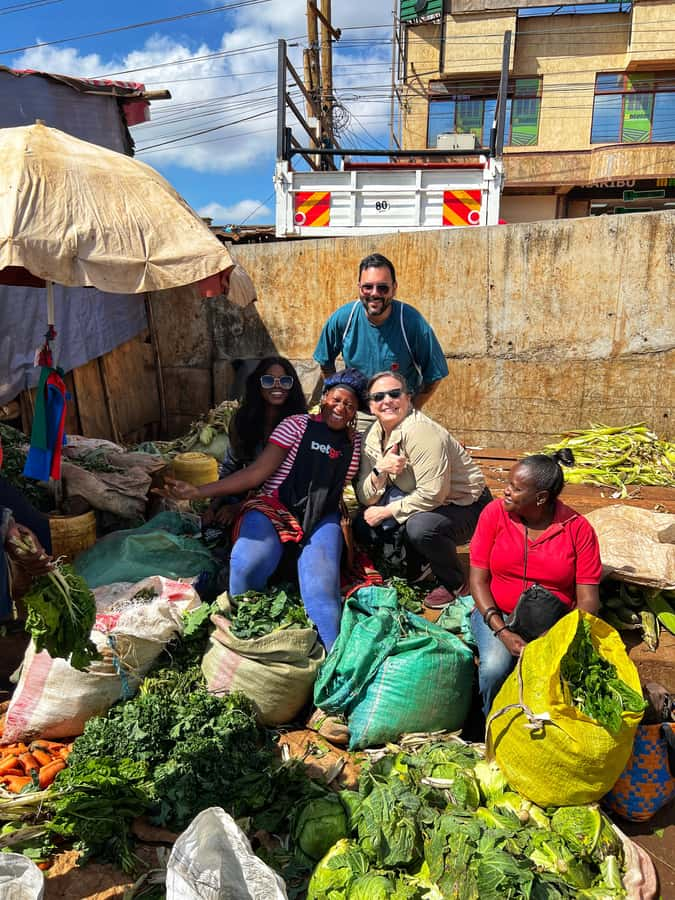
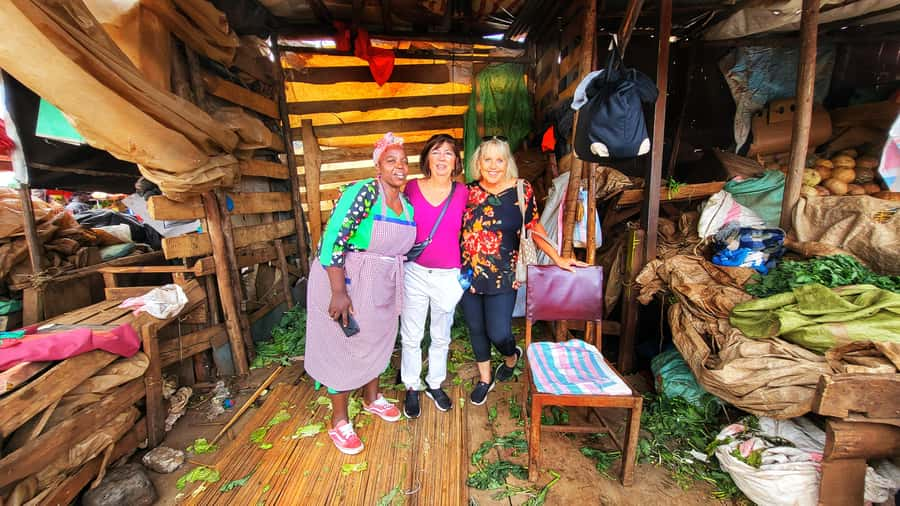
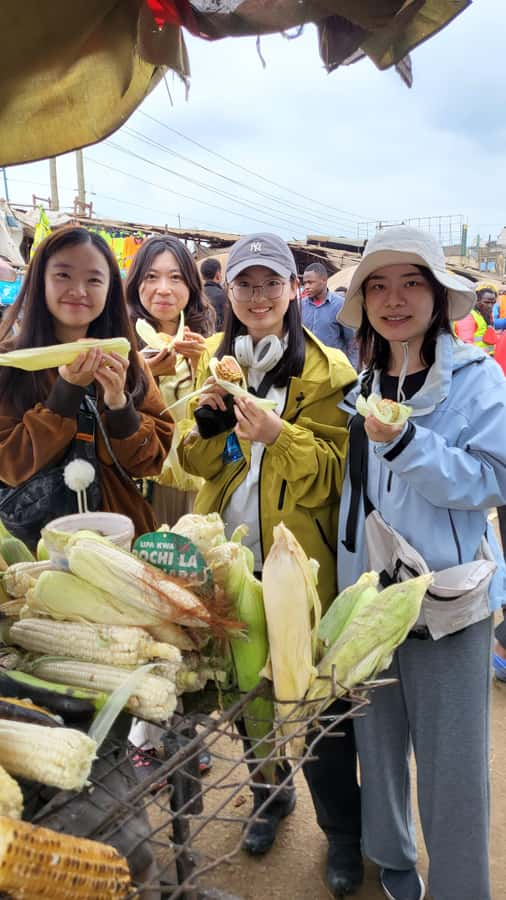
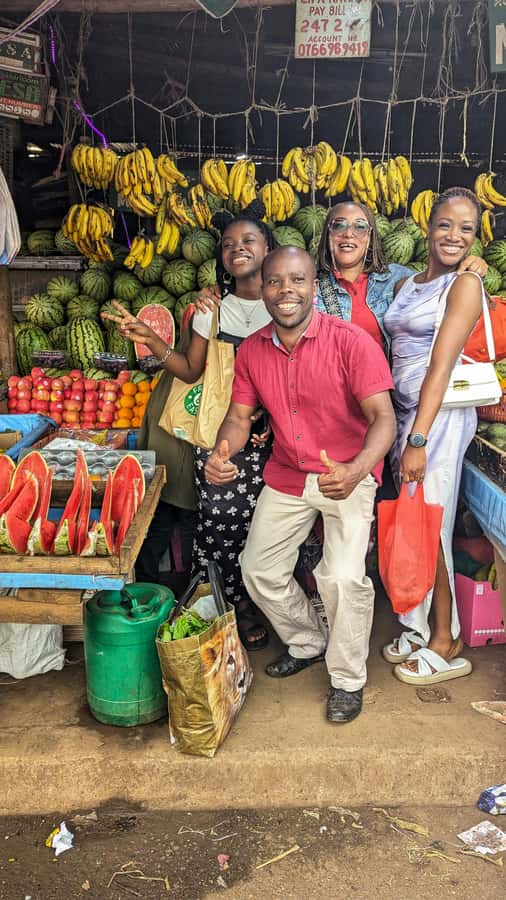
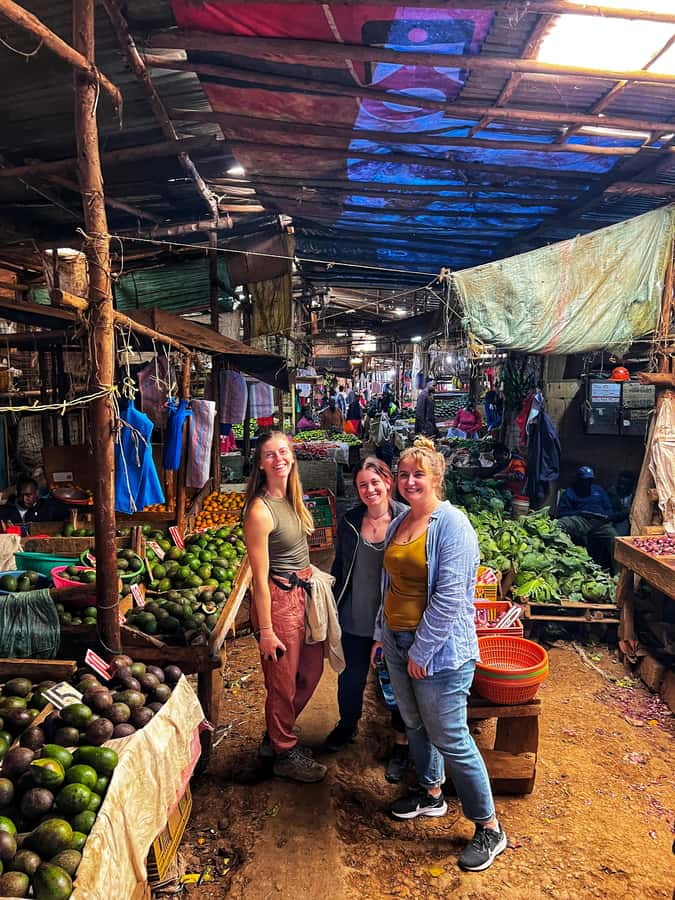
The market visit is the heart of the outing. You walk through a local African fresh market with your guide and shop for the food used in the cooking class. This turns a familiar cooking lesson into a practical food tour. You see the ingredients before they reach the plate, learn how they are selected, and gain context for the meal you will later prepare.
The guide is there to explain the food culture and help with the shopping. The available information does not name the market, so you should not expect a famous landmark or a formal culinary institution. The appeal is the ordinary setting: food shopping as people do it, with the guide helping you make sense of what you see.
Allow yourself to be present here rather than rushing through with a camera. Ask about the ingredients, how they are used, and which foods are common in Kenyan homes. The guide can also help you understand how the market fits into daily life in Nairobi.
One important point is that market conditions can be basic. You will be walking, and the ground may not be as smooth as a shopping center. Comfortable closed shoes are a must. A light jacket is useful, and an umbrella or raincoat is sensible during the rainy season.
A short trip to the apartment kitchen
After shopping, you head to the guide’s home, about ten minutes from the market, although traffic can affect the journey. This change of setting gives the experience its personal character. You are not cooking in a large classroom with rows of workstations. You are entering an apartment and preparing food in an everyday home setting.
The apartment is on the fourth floor and has a nice view, but there is no lift. You must use the stairs. This is the most important physical detail to settle before booking. The activity is marked wheelchair accessible, yet a fourth-floor apartment without an elevator creates an obvious access problem for the cooking portion. Contact the provider directly if you need step-free access.
A clean washroom and Wi-Fi are available. You may also have time to relax briefly after eating before arranging your return. The atmosphere is intended to be friendly and informal, with the guide acting as host as well as instructor.
The guide names connected with this experience include Gladys and Ninoh. One account specifically praises Gladys for careful preparation, security, cooking, and presentation, while another describes Ninoh’s market knowledge and warm approach. Since more than one guide name appears in the available information, confirm who will host your date if that matters to you.
Cooking a traditional Kenyan meal together
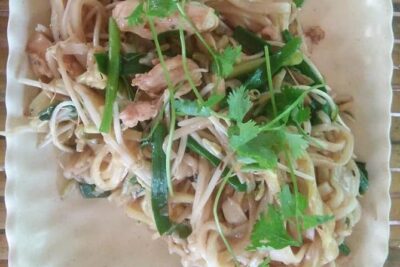
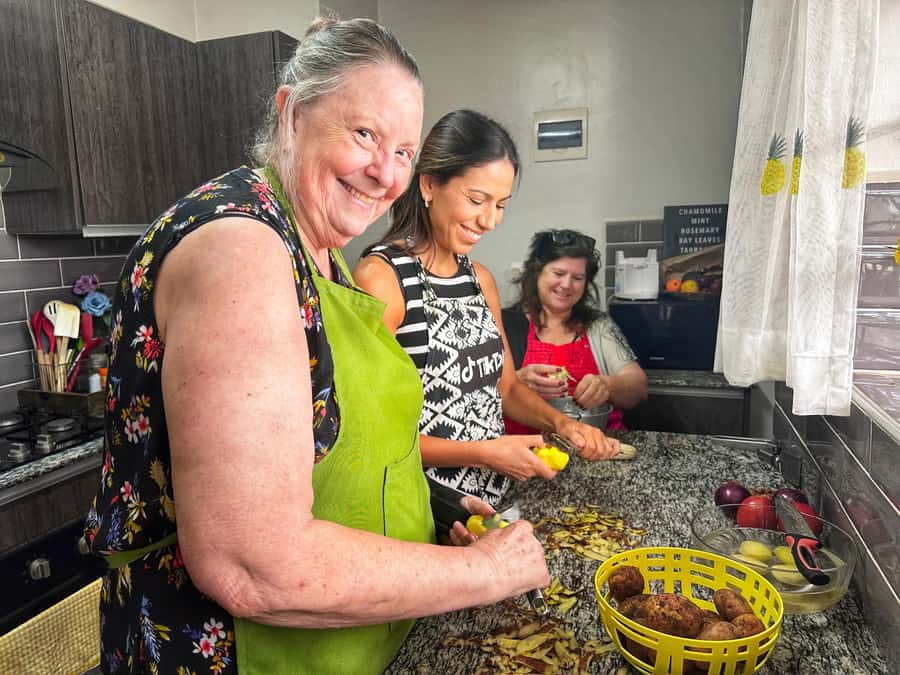
The cooking class is hands-on. You do not simply sit back while someone prepares food in front of you. You work with the ingredients bought at the market and help make a traditional Kenyan meal, then sit down to eat it.
The exact menu is not fixed in the information provided. That can be a plus, especially if you have a dietary request, but it also means you should not book expecting one named dish. The meals are described as suitable for meat eaters, pescatarians, vegetarians, and vegans. Contact the guide before the tour with specific requests so the ingredients can be planned properly.
The class is also a good way to connect food with home life. You learn not only what goes into the dish, but how ingredients are handled, combined, and served in a Kenyan household. The guide can explain local habits as you cook, giving you useful context that a restaurant meal cannot provide.
Do not expect a professional culinary school format. The point is participation, conversation, and a meal made together. You may be asked to chop, stir, season, or assist with preparation, so wear clothes and shoes that are comfortable and practical. The host even advises you to be ready to get your hands dirty.
More Cooking Classes in the world:
- Half-Day Thai Cooking Class at Organic Farm in Chiang Mai
★ 5.0 · 19,087 reviews - Florence: Pasta Cooking Class with Unlimited Wine
★ 4.9 · 10,285 reviews - 3 in 1 Cooking Class near Navona: Fettuccine, Ravioli & Tiramisu
★ 5.0 · 7,376 reviews - Florence: Pasta & Tiramisu Cooking Class with Unlimited Wine
★ 4.9 · 6,708 reviews
Eating the meal in a private home
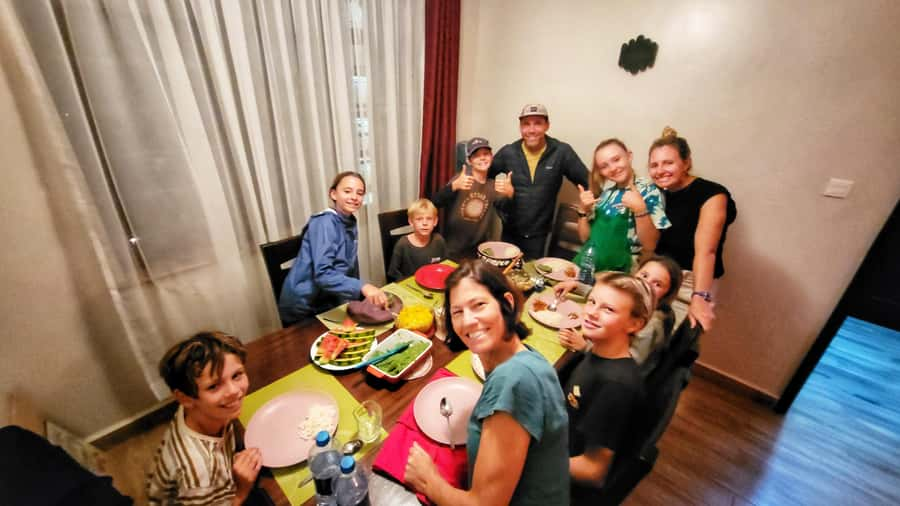
The meal is served at the apartment after cooking. This is where the market visit and kitchen work come together. You know where the ingredients came from, and you have helped prepare them, so the meal has a stronger sense of place than a dish ordered from a hotel menu.
I especially like this part for visitors who want conversation rather than a quick tasting. The experience is built around spending time with a local host, asking questions, and talking about food and life in Nairobi. A private home also gives you a more personal setting than a restaurant, though it means the surroundings are domestic and informal.
The available information does not promise a long meal or a set number of dishes. Since the whole experience lasts three hours, the market visit, transfer, preparation, and eating portion must share the time. If cooking is your main reason for booking, tell the guide that in advance and ask how much time is normally spent in the kitchen.
The food is made with fresh local ingredients, described as organic. Dietary needs are accommodated, but allergies require special care. People with animal allergies are specifically advised not to take this activity, so contact the provider before booking if that applies to you.
What the three-hour format means for you
Three hours is enough for a taste of several parts of Nairobi, but not enough for a slow market study and an elaborate multi-course class. You should think of this as a focused cultural outing: meet, shop, travel, cook, eat, and finish.
The 11:30 a.m. start may fit neatly into a day of sightseeing. The 5 p.m. start can work well if you want an evening meal and a relaxed end to the day. Traffic may affect the ten-minute transfer from the market, so avoid scheduling something immediately afterward.
Small groups make a difference here. With a maximum of six participants, you have a better chance to speak with the guide and take an active role in cooking. Couples, solo visitors, and small families who enjoy social activities are likely to get the most from it. A larger group may find the home kitchen more limiting, but the published group size keeps the experience intimate.
Is $64 a fair price?
At $64 per person, the value depends on how much you want from a cultural experience rather than a simple meal. The price covers the market tour, fresh ingredients, the cooking class, the prepared meal, and the guide. It does not cover hotel pickup, hotel drop-off, or your return Uber.
You are also paying for access to a local host and a private home, not just food. That personal element is what makes the price reasonable for someone who wants context and conversation. A restaurant meal would likely be simpler and less expensive, but it would not include the market shopping or hands-on preparation.
The optional matatu ride adds value at no extra cost, although you should view it as an everyday transport experience, not a private transfer. If you prefer comfort, predictability, and door-to-door service, you may not see it as a benefit.
The ability to reserve now and pay later helps if your schedule is still moving. You can cancel up to 24 hours ahead for a full refund. Those terms are useful in Nairobi, where traffic and changing plans can affect a short city outing.
Clothing, stairs, and other practical details
Wear closed, flat shoes or sports shoes. You will walk through a market, use public transport if you choose that option, and climb four flights of stairs. Comfortable clothing is best.
A trouser or long skirt is recommended, and the host asks visitors not to wear crop tops or shorts. Bring a light jacket, plus an umbrella or raincoat during the rainy season.
English and Swahili are the listed languages. Wi-Fi and a clean washroom are available at the apartment. Nudity is not allowed, which is a basic house rule rather than a concern for most visitors.
The activity is described as wheelchair accessible, but the stairs-only apartment should take priority in your planning. Ask for a clear answer before booking if you need wheelchair access. The animal allergy warning is also worth taking seriously.
Who should book this Nairobi experience?
I would choose this for someone who wants to understand Nairobi through ordinary routines. It suits you if you enjoy markets, local food, conversation, and practical activities where you take part rather than watch from the sidelines.
It is a particularly good fit for solo visitors and couples who want a small-group setting. The experience also works for people curious about Kenyan home cooking but unsure where to begin, since the guide can accommodate several diet styles.
I would think twice if you want a major landmark tour, luxury transport, or a fixed menu with professional chef instruction. The market is the attraction, the apartment is informal, and the schedule is short. You need to be comfortable with stairs, local transport, and a bit of flexibility.
Should you book this market and cooking class?
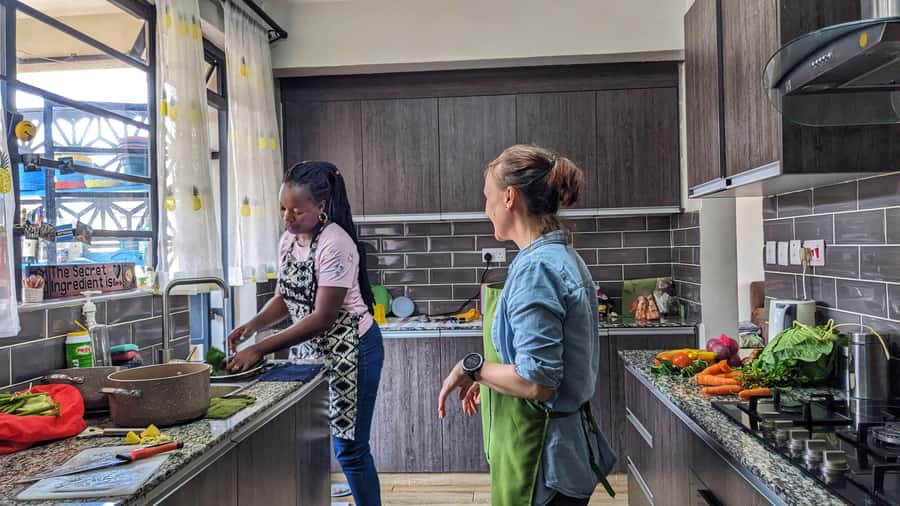
Book it if you want a personal look at Nairobi that links shopping, transport, cooking, and conversation. The strongest features are the market-to-kitchen route, the small group, the optional matatu ride, and the chance to eat food you helped prepare.
Before paying, confirm the guide’s name, your meal request, the transport plan, and the stairs at the apartment. If those details work for you, $64 buys more than a meal. It gives you a compact local experience with a clear human connection. If you need full accessibility or prefer a polished, scheduled culinary studio, choose another activity.
FAQ
Where does the experience begin?
It begins at Westlands Square, outside the entrance to the Java café. You must make your own way to this meeting point.
What time does the tour start?
The listed starting times are 11:30 a.m. and 5 p.m. Check availability for the date you want.
How long does the experience last?
The experience lasts three hours.
Is hotel pickup included?
No. Hotel pickup and drop-off are not included. At the end, the guide can help you request an Uber from the apartment, but you pay for the ride.
Is the matatu ride required?
No. The matatu ride is listed as optional. Ask the guide about the transport plan when you meet.
What languages does the guide speak?
The guide speaks English and Swahili.
What kind of food will I cook?
You will prepare a traditional Kenyan meal using fresh local ingredients. The exact menu is not specified, so contact the guide about the dish and any meal requests.
Can I request a vegetarian or vegan meal?
Yes. The experience is described as suitable for vegetarian, vegan, pescatarian, and meat-based diets. Send your request before the activity.
Is the apartment accessible by elevator?
No. The apartment is on the fourth floor, and the building has stairs only. There is no lift.
How many people can join the group?
The group is limited to six participants.
What should I wear and bring?
Wear comfortable clothes and flat, closed shoes. A trouser or long skirt is recommended. Bring a light jacket and an umbrella or raincoat during the rainy season.
Newest classes around the world
- Aroidee’s Farm-Fresh Thai Cooking Experience★ 5.0 · 8 reviews
- Authentic Thai Cooking Class and Farm Visit in Chiang Mai★ 5.0 · 66 reviews
- Signature Thai Cooking Course★ 5.0 · 79 reviews
- Half Day Guided Thai Cooking Class in Chiang Mai★ 5.0 · 13 reviews
- Yummy Tasty Thai Cooking School in Chiang Mai★ 5.0 · 2 reviews
- Online Thai and Akha Cooking Class★ 5.0 · 70 reviews
- Northern Thai Cooking Class in Chiang Mai in a Countryside Home★ 5.0 · 2 reviews
- Private Half-Day Thai Cooking Class in Chiang Mai★ 5.0 · 4 reviews
Cooking Classes with a Market Tour, compared.
Hanoi Cooking Class: Culture, Local Market & Meaning CSR Impact
Read our review →
5 Traditional Dishes Hanoi Cooking Class with Market Trip
Read our review →
Cooking Class and Lunch at a Tuscan Farmhouse with Local Market Tour from Florence
Read our review →
Cooking Class, Market & Thai Herbs Garden Tour
Read our review →
Authentic Cooking Class with Market & Farm Visit
Read our review →
Paella Cooking Experience & Boqueria Market Tour
Read our review →
Cooking Class Hoi An:Local Market, Basket Boat, Fishing & Cooking
Read our review →