Review · COOKING CLASSES
Krakow Pierogi Cooking Class
The best part of this Krakow cooking class is that you do not simply eat pierogi, you make them from flour to finished dish. Local instructors share family methods from their grandmothers’ kitchens, then guide you through both a savory filling and a sweet one.
I like the hands-on pace and the personal stories. You get useful kitchen skills, a drink with your meal, and enough practical advice to try pierogi at home. The main caution is finding the venue: one participant had trouble because the entrance had no clear lights or sign outside.
Key points at a glance
- Two fillings in one class: Prepare both savory and sweet pierogi, so you learn how the dough works with very different flavors.
- Dough made from scratch: You handle the first stage yourself instead of starting with prepared wrappers.
- Local teachers with family recipes: Magda, Olga, and Sylwia have each led praised sessions, with stories about cooking alongside mothers and grandmothers.
- A small-group feel: One class had six people, while other sessions were private or nearly so, allowing plenty of help.
- A complete meal at the end: Boil your pierogi, eat what you made, and pair it with a local beer or glass of wine.
- Two hours near central Krakow: The class fits neatly into a day of sightseeing, though you should allow extra time to locate the entrance.
Why pierogi make such a good Krakow cooking class
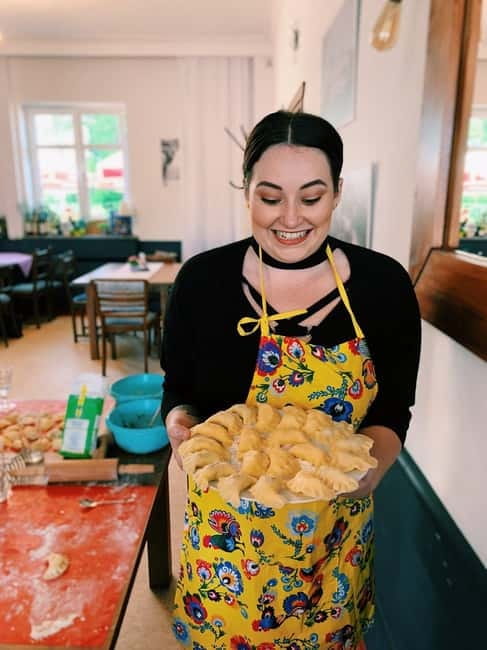
Pierogi are simple in appearance: dough wrapped around a filling and cooked in boiling water. But the small details matter. Dough that is too stiff becomes difficult to roll. Dough that is too thin may tear. A filling that is too wet can cause trouble when you seal the edges.
That makes pierogi a fine dish to learn in person. You can watch the technique, copy it, and ask questions before your first dumpling reaches the pot. The class gives you the full process rather than a short demonstration from the other side of a kitchen.
You also get a useful introduction to Polish food culture. The instructors connect the dish to family cooking and everyday traditions, with stories from their own homes. That personal angle gives the class more meaning than a standard restaurant meal.
I especially like the choice of two fillings. A savory version shows the classic side of pierogi, while a sweet version reminds you that these dumplings can work as a dessert or treat. You leave with a better sense of how one basic dough can support different ideas.
More Cooking Classes in the world:
- Half-Day Thai Cooking Class at Organic Farm in Chiang Mai
★ 5.0 · 19,087 reviews - Florence: Pasta Cooking Class with Unlimited Wine
★ 4.9 · 10,285 reviews - 3 in 1 Cooking Class near Navona: Fettuccine, Ravioli & Tiramisu
★ 5.0 · 7,376 reviews
Arriving near Krakow’s city center
The class takes place at a local restaurant close to Krakow’s city center. That location makes it practical to fit the experience around sightseeing, but the meeting point deserves attention.
The venue may not be strongly marked from the street. One participant specifically had difficulty finding it because there were no lights or signs outside. I would not arrive at the last minute, especially in the evening or in poor weather. Check the meeting instructions carefully and give yourself a few extra minutes to identify the entrance.
Once inside, the setting is designed for cooking rather than formal dining. Materials and equipment are supplied, so you do not need to bring kitchen tools or ingredients. The important thing is to arrive ready to work with your hands.
The class is conducted in English. That makes it a straightforward choice for English-speaking visitors, and the instructors are expected to explain each stage as you go rather than assume prior cooking skill.
Starting with dough from scratch
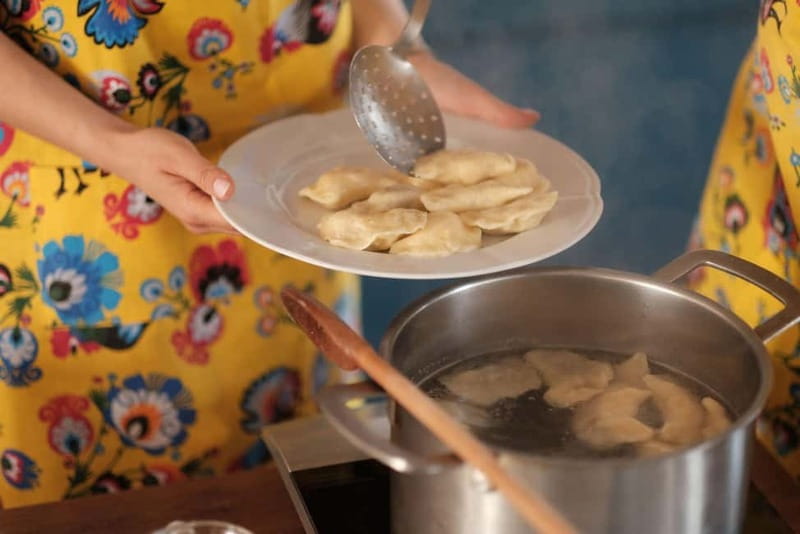
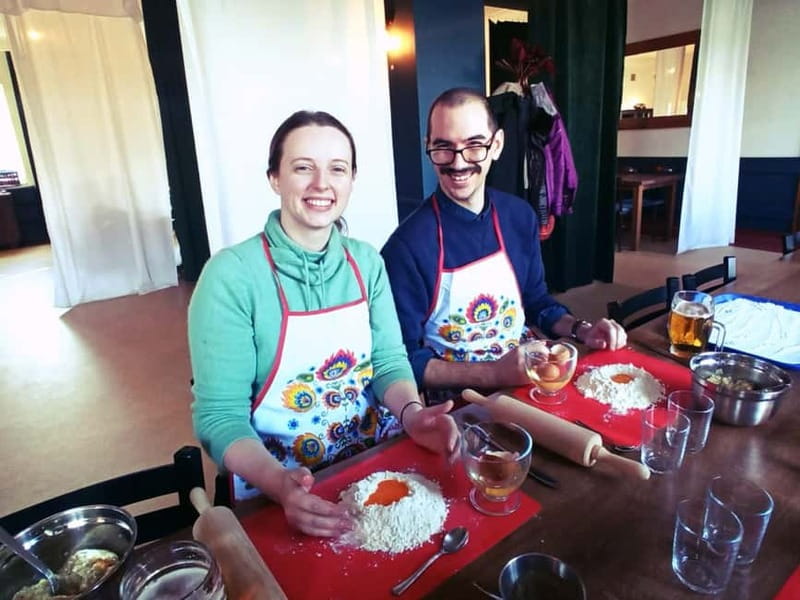
The first real task is making the pierogi dough. This is where you begin to understand why the class is more useful than simply ordering a plate.
Your instructor guides you through the ingredients and texture, then shows how to bring the dough together. You will work it, roll it, and prepare it for cutting into individual rounds. The process is approachable for a beginner, but it still gives an aspiring cook something concrete to learn.
The dough stage also sets the rhythm for the rest of the class. You are not just watching someone prepare food while you wait for a tasting. You take part from the opening step, with guidance available as you work.
Family technique is a major part of the teaching. The instructors draw on methods passed down through their own families, including tips associated with their grandmothers’ kitchens. These small practical details are often what make a recipe repeatable at home.
Do not expect a polished professional kitchen lesson where every dumpling looks identical. This is a social, hands-on class. Your first pierogi may be a little uneven, and that is part of the fun. The instructor’s job is to help you seal the dough properly and keep the process moving.
Preparing savory and sweet fillings
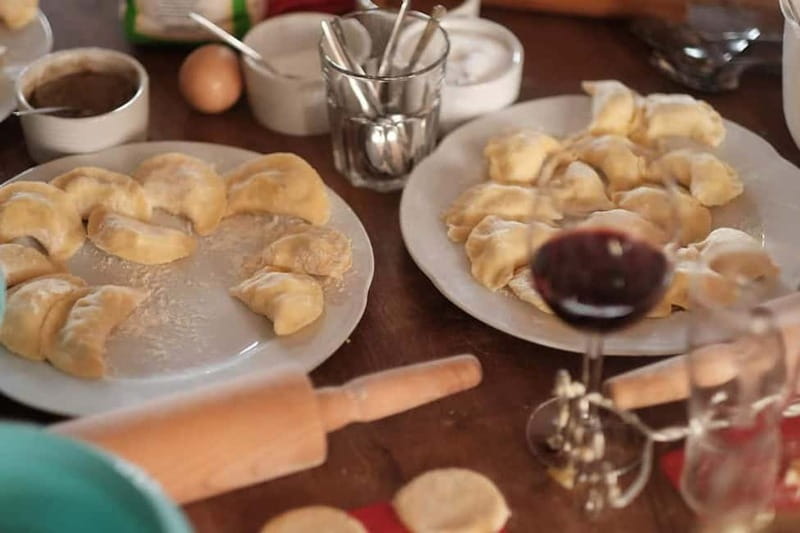
After the dough, you prepare two fillings: one savory and one sweet. The exact ingredients are not specified, so do not book this expecting a particular recipe. What you can count on is a clear contrast between the two preparations.
The savory filling introduces the familiar side of Polish pierogi. It is the style most people picture when they think of a Polish meal. The sweet filling changes the mood and shows how the same dough can be used in another course.
I find this two-part approach valuable because it teaches flexibility. You are not memorizing one fixed dish. You are learning a method that can adapt to different fillings, which is exactly what you need if you plan to make pierogi once you return home.
The instructors also talk about Polish food customs and the place of pierogi in local life. That conversation helps explain why this dish matters beyond its ingredients. It is connected with home cooking, family gatherings, and recipes shared across generations.
The class is also suitable for people who rarely cook. You receive the equipment, ingredients, instruction, and support in one place. The pace is interactive rather than demanding, so you can ask for help while shaping or filling the dumplings.
Same region, a different dish to learn:
- Florence: Pasta & Tiramisu Cooking Class with Unlimited Wine
★ 4.9 · 6,708 reviews - Florence: Pasta Cooking Class with Unlimited Wine
★ 5.0 · 6,413 reviews - Hanoi Cooking Class: Culture, Local Market & Meaning CSR Impact
★ 5.0 · 5,147 reviews - 5 Traditional Dishes Hanoi Cooking Class with Market Trip
★ 5.0 · 4,890 reviews
Shaping, sealing, and boiling your pierogi
Once the fillings are ready, you cut the dough into rounds, add the filling, fold each piece, and seal the edges. This is the stage where your technique starts to show.
You need enough filling to make the pierogi satisfying, but not so much that the seam will not close. The edge must be pressed firmly so the dumpling stays together in the water. Your instructor can correct these details as you work, which is far easier than trying to diagnose the problem alone at home.
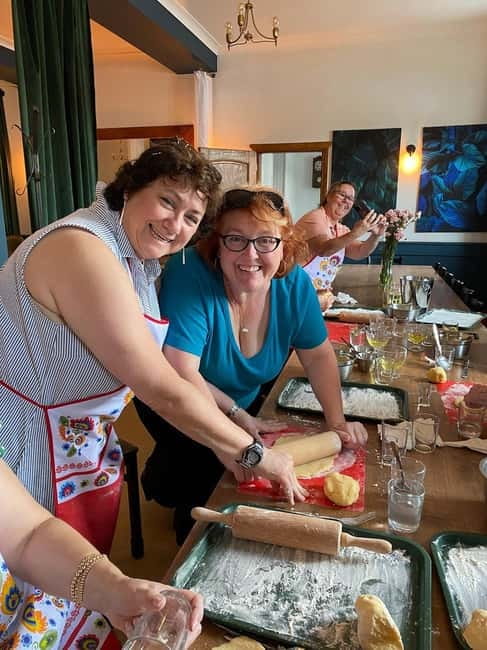
The shaping stage is also where group classes become social. You work at the same time as the other participants, compare results, and get into a steady rhythm. A group of six was described as a good size, and that gives you a useful idea of the atmosphere: enough people for conversation, but not a crowded workshop.
The class has also worked well with larger groups. Sylwia was praised for handling a large session in a personable way. At the other end of the scale, some sessions had only one booking or a very small number of people. In that case, you can expect more room for questions and conversation, though the exact group size depends on the date you choose.
When the pierogi are ready, you boil them under instruction. This completes the process and lets you see how the dough and filling behave after cooking. You are not simply handed a plate prepared in advance. The food you eat comes from the work you have just done.
Sitting down with a local drink
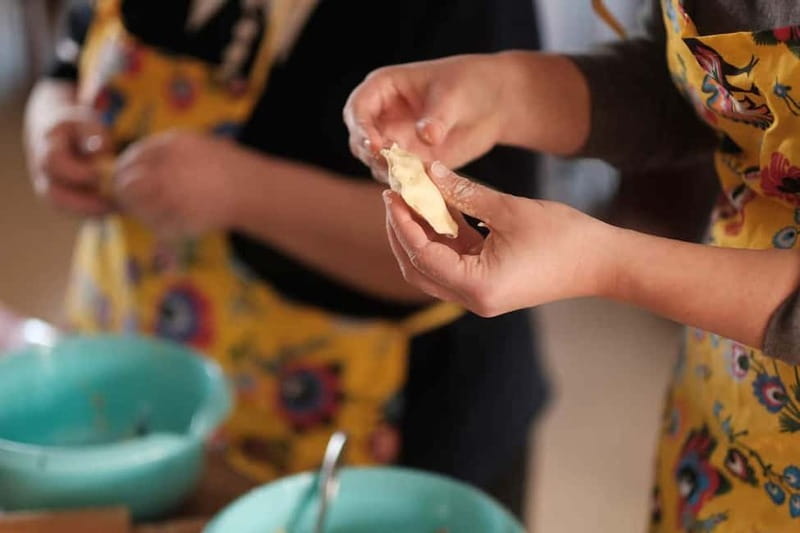
The final stage is the reward: you eat your homemade pierogi with a local beer or a glass of wine. This is included in the experience and turns the lesson into a complete meal.
The drink pairing also gives the class a relaxed finish. After standing, rolling, filling, and sealing, you can sit down and enjoy the results. You have time to talk with the instructor and ask about the recipes or Polish food traditions.
The portion should be satisfying because you make plenty of pierogi, not just a token sample. One participant specifically noted that the class produced a generous amount with both sweet and savory types. The exact quantity can vary, but the format is designed for you to eat what you prepare.
This is also a good moment to judge the value of the class. At $89 per person, you are paying more than you would for an ordinary restaurant dish. But the price includes a two-hour activity, ingredients, equipment, instruction, two types of filling, cultural conversation, and a drink. If you want only a cheap meal, this is not the right purchase. If you value participation and a skill you can take home, the price is easier to justify.
The instructors make the difference
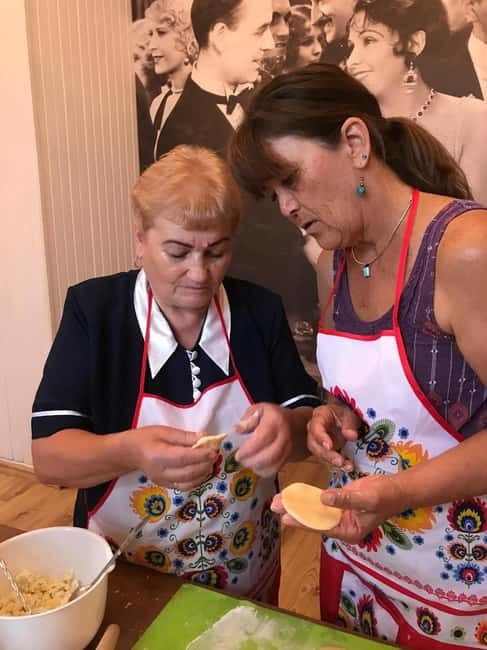
The experience depends heavily on the person leading your session. Several instructors are named in the available feedback, including Magda, Olga, and Sylwia.
Magda is described as clear, charming, informative, and engaging. She led sessions where participants appreciated the explanations and the amount of hands-on work. Olga is also praised for her explanations and for helping people leave with a strong understanding of the process.
Sylwia brings a particularly personal touch. She has shared stories about making pierogi with her mother and grandmother, answered questions about Polish family history, and offered suggestions for things to do during the rest of a Krakow visit. That kind of conversation can turn a cooking lesson into a friendly exchange rather than a fixed script.
The instructors also appear comfortable with different group sizes. Sylwia handled a large group well, while small sessions allowed plenty of one-on-one help. You should not assume your class will be private, but the format is built around personal guidance rather than a lecture.
The strongest praise is aimed at the teachers’ warmth and clarity. That matters because pierogi making can feel fiddly at first. A patient instructor keeps the class enjoyable and helps you avoid wasting dough or filling.
What the two-hour schedule means for your day
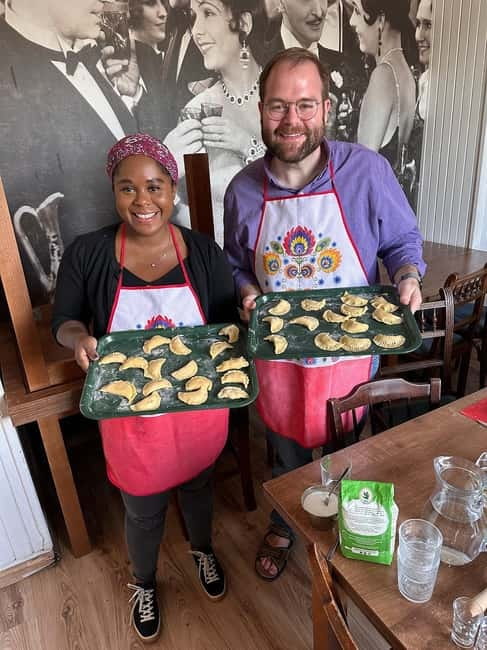
Two hours is long enough to complete the full process without taking over your day. You can place the class between other Krakow activities, provided you allow time to reach the venue and find the entrance.
The schedule moves through several stages:
- Making the dough from scratch
- Preparing one savory and one sweet filling
- Cutting and shaping the dough
- Filling and sealing the pierogi
- Boiling the finished dumplings
- Eating them with beer or wine
- Hearing stories, tips, and cultural background along the way
Because you are doing the work yourself, the pace may feel faster than a normal meal. You will be active for much of the class, then have time to sit and eat at the end.
This suits people who want a focused activity. It may not suit someone looking for a slow restaurant lunch with no participation. The point is to learn by doing, and you should expect a little flour, repetition, and imperfect shapes.
Who will get the most from this experience
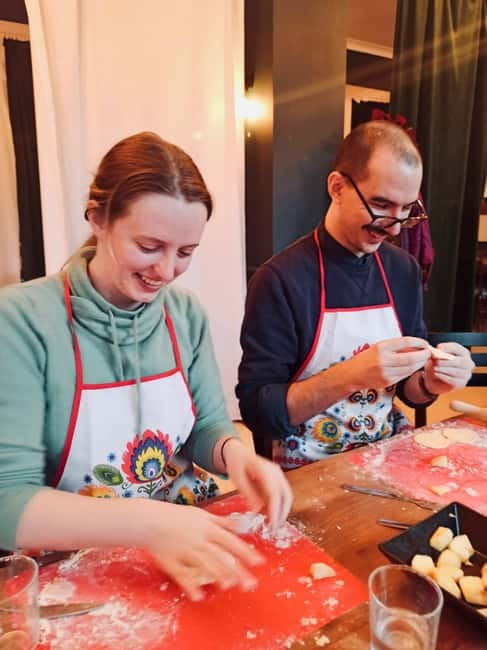
I would recommend this class to first-time visitors who want a direct connection with Polish food. It gives you a meal, a local perspective, and a recipe method in one short session.
It is also a good pick for families and mixed-ability groups because no advanced cooking experience is required. Children or beginners can take part with guidance, though the supplied information does not specify an age policy, so check before booking for very young participants.
Couples and small groups will appreciate the social format, especially if they enjoy sharing a task rather than sitting across a table. Solo participants can also fit in easily, since the class naturally encourages conversation.
You should think twice if you need a highly formal lesson, a guaranteed private class, or a precisely stated menu. The fillings are described only as savory and sweet, and group size can vary. The venue signage is another practical concern.
Free cancellation up to 24 hours before the start gives you some flexibility, and you can reserve now and pay later. Starting times vary, so check availability for your date rather than assuming a fixed schedule.
Is the Krakow pierogi class worth $89?
For me, the value comes from the combination of food and access. You are not just buying pierogi. You are paying for an instructor, ingredients, equipment, cultural context, two filling styles, a drink, and the chance to repeat the recipe at home.
The 4.9 rating from 16 reviews supports the idea that the class is consistently well received, particularly for its friendly instruction and hands-on format. The strongest individual praise goes to Magda, Olga, and Sylwia, with clear explanations and personal stories mentioned again and again.
Still, the price is not a bargain meal. Krakow offers cheaper ways to taste pierogi. Choose this class if you want to understand how the dish is made and enjoy an activity with your meal.
Should you book it?
Book this experience if you want to make Polish food rather than simply order it. The two fillings, family cooking stories, local drink, and practical instruction give you plenty for a two-hour class.
I would especially choose it for a first Krakow visit, a rainy afternoon, or a small group that likes cooking together. Allow extra time to find the unmarked entrance, and confirm the start time and available cancellation terms before paying.
Skip it if your main goal is the lowest-cost meal or a fixed menu with named ingredients. For everyone else, the chance to shape, boil, and eat your own pierogi makes this a personable and useful introduction to Polish cooking.
FAQ
Where does the pierogi cooking class take place?
The class takes place at a local restaurant near Krakow’s city center in Lesser Poland, Poland.
How long does the class last?
The activity lasts two hours.
What will I make during the class?
You will make pierogi from scratch, including the dough, one savory filling, and one sweet filling.
Is the class suitable for beginners?
Yes. No previous cooking experience is required, and the instructor provides guidance, materials, and equipment.
What language is the class taught in?
The instructor teaches in English.
Is a drink included?
Yes. After making and boiling the pierogi, you receive a local beer or a glass of wine with your food.
Can I cancel the booking?
You can cancel up to 24 hours in advance for a full refund. You can also reserve the activity and pay later.
Newest classes around the world
- Aroidee’s Farm-Fresh Thai Cooking Experience★ 5.0 · 8 reviews
- Authentic Thai Cooking Class and Farm Visit in Chiang Mai★ 5.0 · 66 reviews
- Signature Thai Cooking Course★ 5.0 · 79 reviews
- Half Day Guided Thai Cooking Class in Chiang Mai★ 5.0 · 13 reviews
- Yummy Tasty Thai Cooking School in Chiang Mai★ 5.0 · 2 reviews
- Online Thai and Akha Cooking Class★ 5.0 · 70 reviews
- Northern Thai Cooking Class in Chiang Mai in a Countryside Home★ 5.0 · 2 reviews
- Private Half-Day Thai Cooking Class in Chiang Mai★ 5.0 · 4 reviews
Cooking Classes, compared.
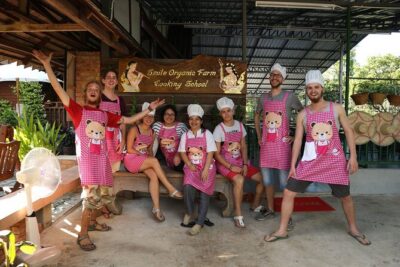
Half-Day Thai Cooking Class at Organic Farm in Chiang Mai
Read our review →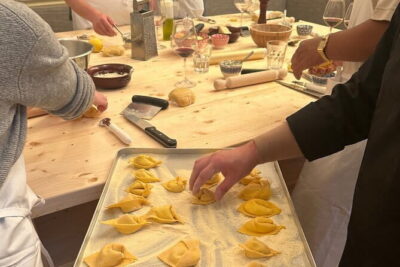

3 in 1 Cooking Class near Navona: Fettuccine, Ravioli & Tiramisu
Read our review →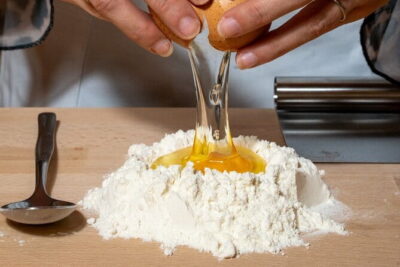
Pasta & Tiramisu Cooking Class with Unlimited Wine
Read our review →
Hanoi Cooking Class: Culture, Local Market & Meaning CSR Impact
Read our review →
5 Traditional Dishes Hanoi Cooking Class with Market Trip
Read our review →