
Review · THAILAND COOKING CLASSES
Koh Samui: Thai Cooking Class with Local Market Tour
Koh Samui’s best food lesson may begin before you touch a wok. This three-hour class starts at a local market, then moves to a small cooking school in a home garden where you prepare Thai dishes with help from a local teacher. The market-to-kitchen link gives the food more meaning than a hotel demonstration.
I like the personal scale, with no more than six people and an individual work station for each cook. I also like the menu choice: you can select from Pad Thai, Tom Yum, green curry, Som Tam, Massaman curry, stir-fried rice, and other Thai favorites. The main consideration is that pickup is limited to certain parts of Koh Samui, and the class may feel brief if you want a long market visit or a full culinary course.
- A 30-minute local market visit introduces the herbs, vegetables, spices, and ingredients used in class.
- A small group of up to six people means the teacher can give hands-on help.
- Choose your own dishes from Thai soups, curries, salads, noodles, stir-fries, and dessert.
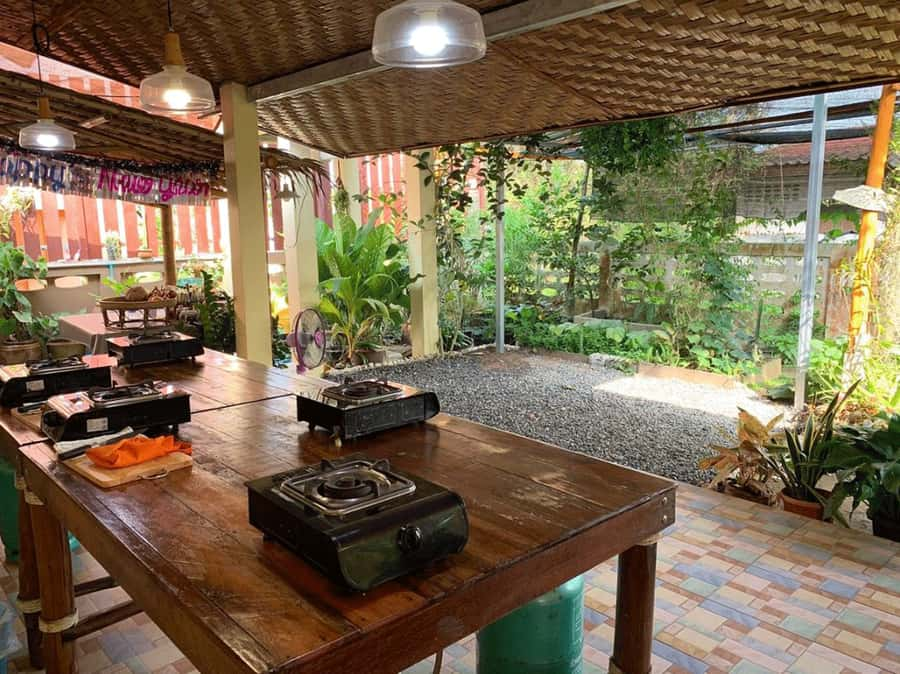
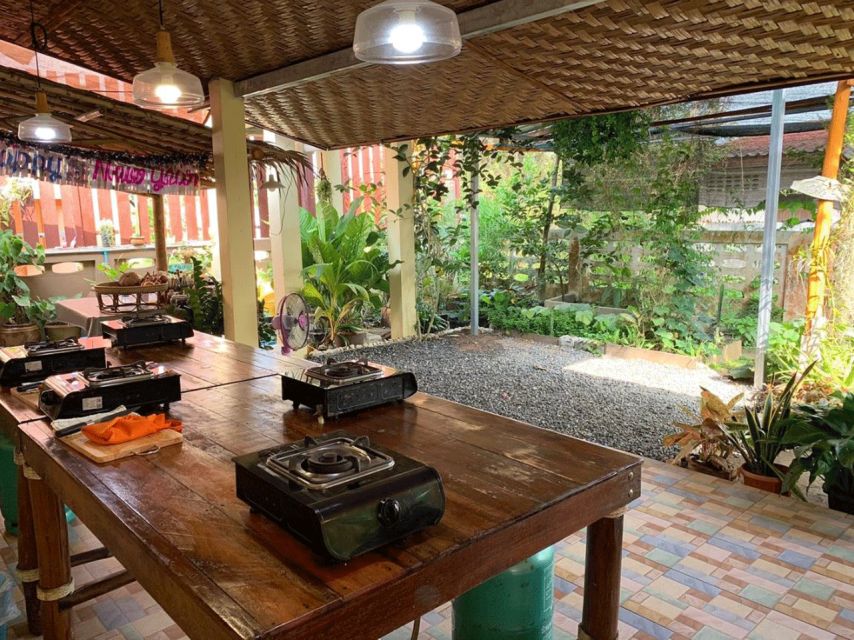
- A garden-style kitchen at a local home gives the class a more personal setting than a large resort kitchen.
- Hotel pickup and return are included from Bophut, Choeng Mon, Chaweng, and Chaweng Noi near the main road.
- You eat what you prepare, with recipes and practical tips you can use at home.
From Koh Samui market to garden kitchen
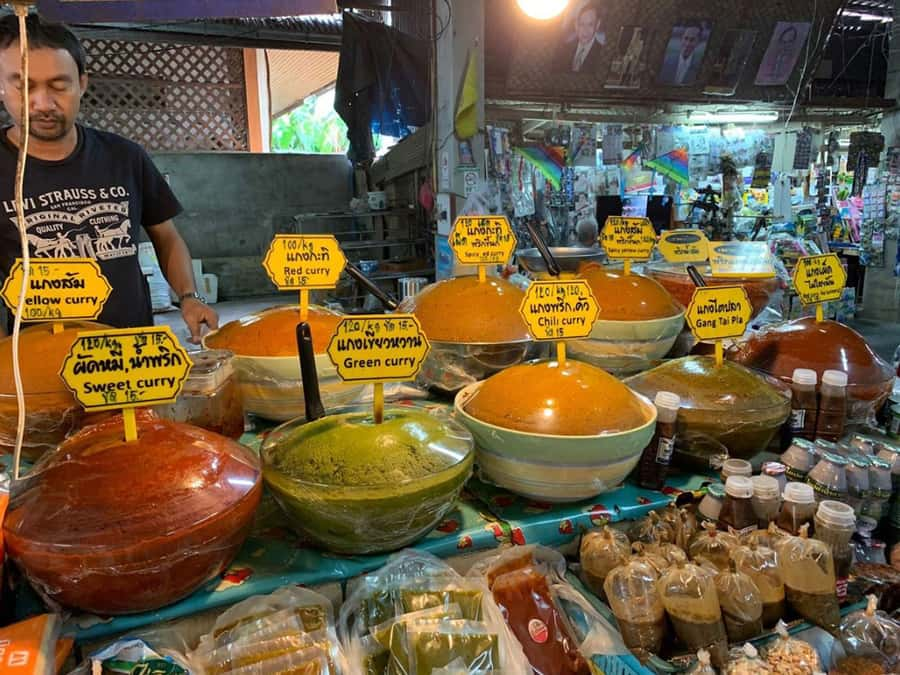
The appeal here is simple: you do not just watch someone cook Thai food. You see the raw ingredients, learn what they are used for, then handle them yourself.
Your pickup is arranged from hotels in Bophut, Choeng Mon, Chaweng, and Chaweng Noi, provided the hotel is near the main road. If you are staying on a hillside, you will need to meet the driver at a nearby hotel or agreed meeting point. The exact time is sent by email, so check your inbox and be ready in the lobby at least 10 minutes early.
The activity itself lasts about three hours. Pickup may take place 30 to 50 minutes before the scheduled start, so allow extra time in your morning or afternoon plan. The class is taught in English by a certified Thai chef, and the small group format keeps the pace manageable.
Different instructors appear to lead the class on different dates. Names that come up include June, Jun, Jul, and Num. The teaching style described across the experience is warm and practical, with attention to flavor, ingredient use, food hygiene, and everyday Thai eating habits.
Choosing three dishes before the market visit
Before setting off, you choose three dishes from the available menu. That choice gives you a useful say in the meal, especially if you already know your favorite Thai foods or want to try something new.
The menu covers several parts of a Thai meal:
- Spring rolls
- Tom Yum spicy soup
- Tom Kah coconut milk soup
- Som Tam papaya salad
- Glass noodle salad
- Green, Massaman, and Panang curry
- Pad Thai and Pad Kee Mao
- Fried rice and Pad Ka Pao with hot basil
- Banana with coconut milk
The menu is broad enough for a group to create a varied meal. One person can choose curry, another can choose noodles, and someone else can focus on soup or salad. A family of five, for example, can end up cooking a wide selection rather than eating five identical plates.
The information for the class describes preparing four authentic dishes and a dessert during the two-hour kitchen session, while the booking details ask each person to choose three dishes. The exact number you prepare may depend on the group and how the teacher organizes the menu. If having a precise dish count matters to you, ask the operator before booking.
More Cooking Classes with a Market Tour in Thailand
- Chiang Mai: Cooking Class, Market & Thai Herbs Garden Tour
★ 4.9 · 4,824 reviews - Chiang Mai: Authentic Cooking Class with Market & Farm Visit
★ 4.9 · 4,546 reviews - Phuket Thai Cooking Class with Market Tour Option
★ 5.0 · 2,665 reviews
A 30-minute look at a real Thai market
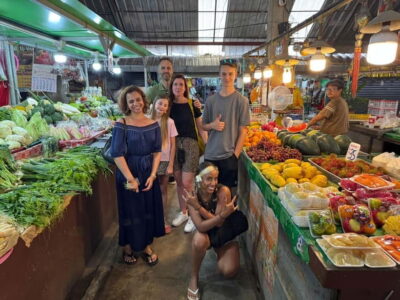
The market visit is short, but it gives the cooking lesson a useful starting point. Your teacher points out herbs, vegetables, spices, and other produce before you work with them in the kitchen.
This is where the class moves beyond a recipe sheet. You can learn which ingredients grow on Koh Samui and which ones need to be brought in from elsewhere. You may also hear how local people shop and eat, rather than simply receiving a list of ingredients with English labels.
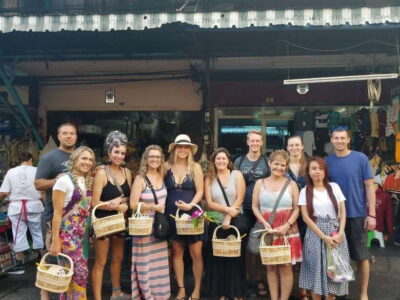
The market is described as a lively place filled with colors and smells. Expect a practical introduction rather than a long food tour. Thirty minutes is enough to recognize key ingredients and understand what you will use later, but not enough for a detailed survey of every stall.
That short timing is one of the few limits of the experience. If your main interest is market photography, street food, or extended shopping, you may want a separate market visit. Here, the market has a clear job: it prepares you for the cooking.
Learning Thai flavor in a small kitchen
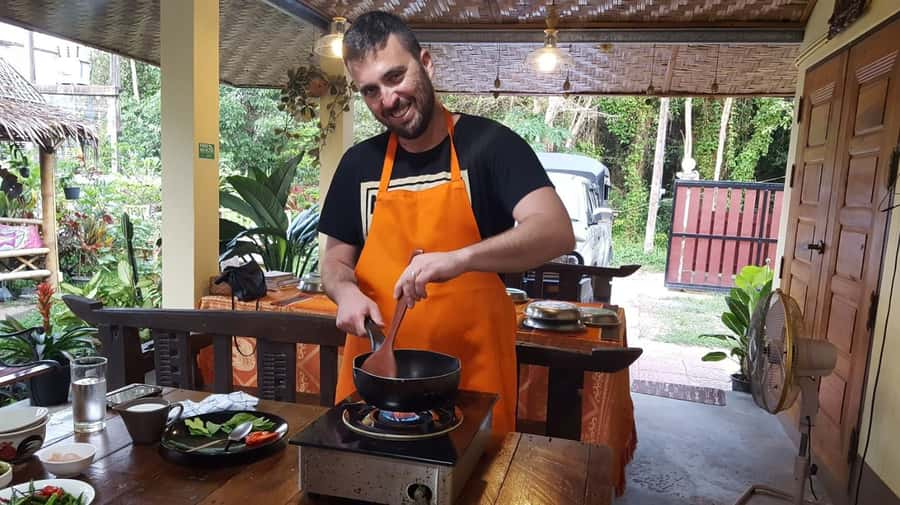
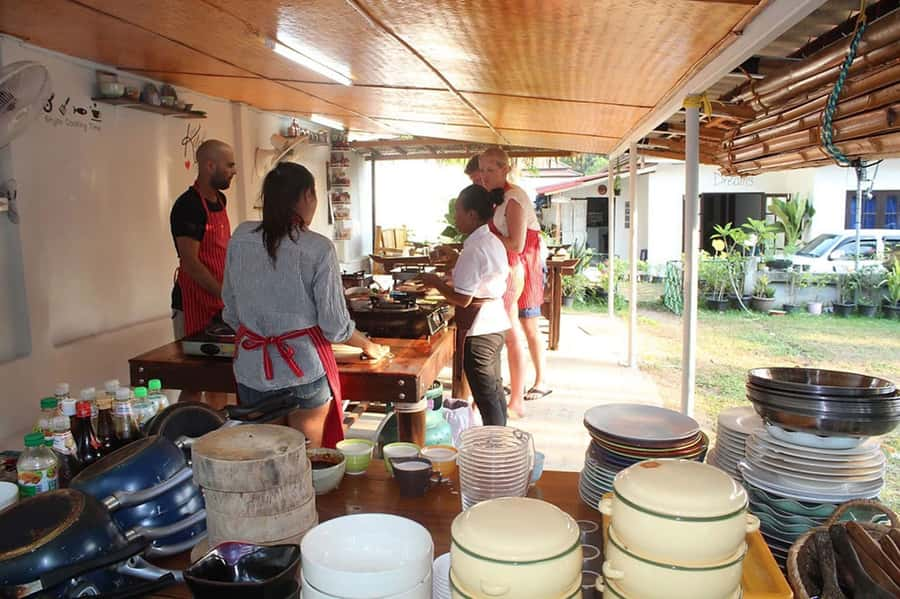
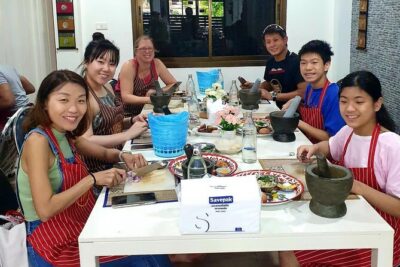
Back at the cooking school, you get an individual work space and the equipment and ingredients needed for the class. The kitchen is described as a covered, garden-style area beside the teacher’s home, rather than a large commercial studio.
That setting matters. You can see the teacher’s garden and learn about ingredients grown at home. The class has a more direct connection to local life, while still offering the structure of a proper cooking school.
The two-hour lesson covers the basic work behind Thai dishes. Expect explanations before the practical work begins, followed by step-by-step instruction as you prepare your selected recipes. One especially useful part is learning how herbs, spices, vegetables, coconut milk, noodles, and hot basil affect the final taste and texture.
The teacher needs to manage several recipes at once. The small group limit helps here. With six people or fewer, the instructor can move between stations, answer questions, and show you how to correct a dish as you go.
I would not book this expecting advanced chef training. The value is in learning accessible Thai recipes and the role of each ingredient. The class is aimed at curious home cooks, not professional kitchen technique.
What makes the home setting useful
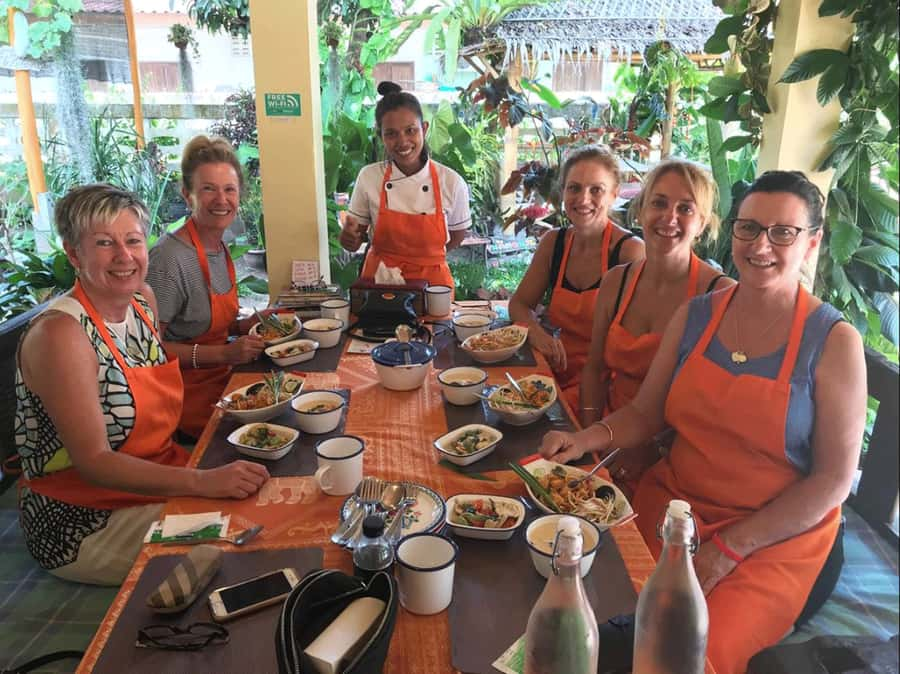
Several of the dishes rely on ingredients that may be unfamiliar if you usually cook Western food. Seeing them in a market and then in a home garden makes them easier to remember.
The garden visit also adds context. You may hear about the health benefits associated with certain ingredients, how Thai people use them at home, and which plants the teacher grows. This kind of information is hard to get from a printed recipe alone.
The home setting does not mean you are left without equipment or instruction. Ingredients and cooking tools are included, and the class is designed around individual stations. The balance is appealing: you receive organized teaching, but the setting feels personal rather than corporate.
Food hygiene is also covered. That is worth noting if you are new to Thai cooking or unsure how the ingredients are handled. One account of the class specifically praised the clear theory before the practical work and the attention to cleanliness.
More Thai Classes in Thailand:
- Half-Day Thai Cooking Class at Organic Farm in Chiang Mai
★ 5.0 · 19,087 reviews - Thai and Akha Cooking Class in Chiang Mai
★ 5.0 · 4,358 reviews - Bangkok: Hands-on Thai Cooking Class and Market Tour
★ 4.9 · 1,614 reviews - Bangkok: Tingly Thai Cooking School Half-Day Cooking Class
★ 4.9 · 1,191 reviews
Eating the meal you prepared
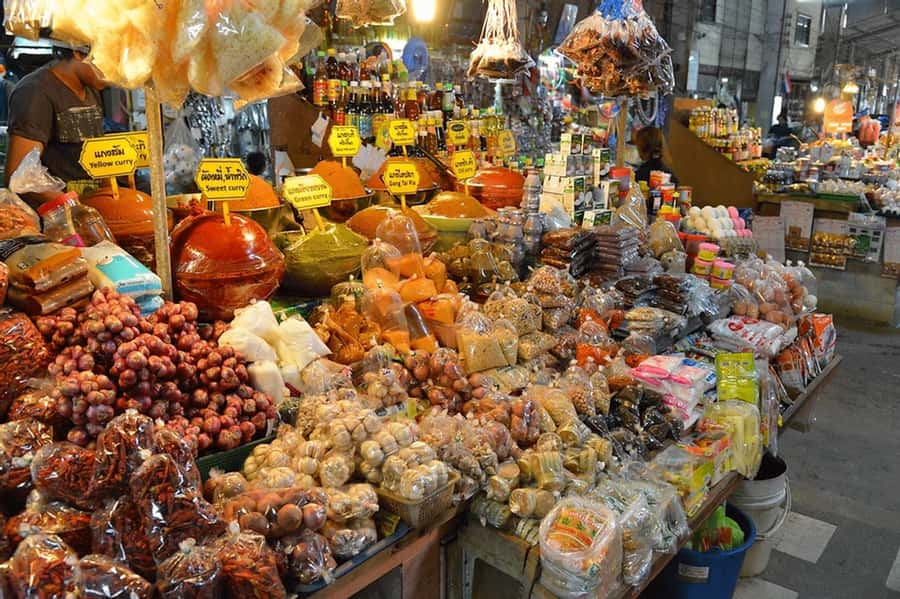
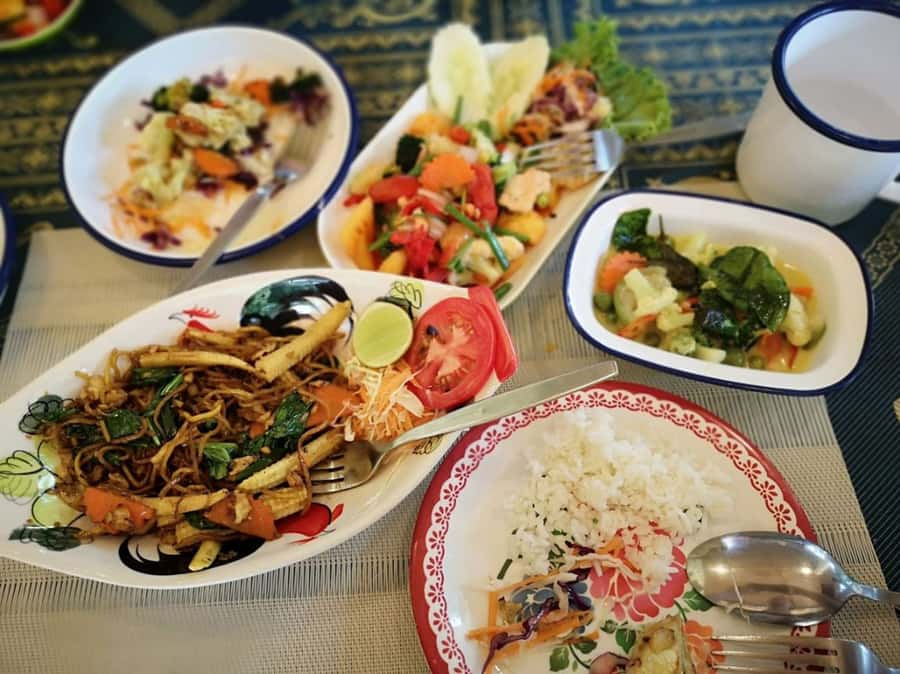
At the end, you sit down and eat the food made during the lesson. This is more than a snack after class. It lets you taste the effect of your choices and see how the separate dishes work together.
You may eat in courses as the different recipes are finished. If your group selects several different dishes, the meal can include a broad mix of flavors, from hot soup and sharp salad to creamy curry and sweet banana with coconut milk.
The meal is also a useful quality check. You can ask the teacher why a curry tastes too mild, how a salad gets its balance, or what you should change when making the recipe at home. That immediate feedback is one reason a hands-on class is more useful than simply ordering the same dishes in a restaurant.
The main practical point is that the food is prepared and eaten during the class. You are not promised takeaway portions, so plan to enjoy the meal on site rather than save it for later.
Guides who teach more than recipes
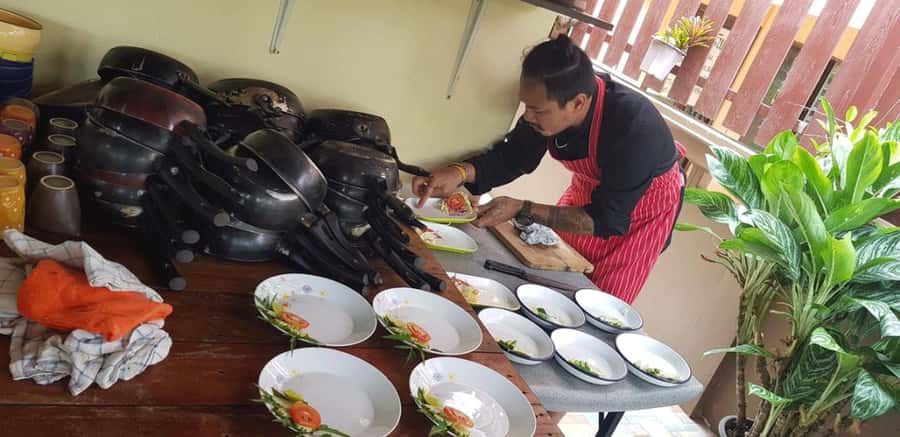
The strongest part of the experience is the teacher. Names such as June, Jun, Jul, and Num appear among the instructors, and the class is built around their personal explanations.
Expect the teacher to discuss local life, how Thai people eat, the origins or uses of ingredients, and practical ways to repeat the recipes at home. The instruction is not just a set of commands. You get background before handling the food, then help while you cook.
The teaching style seems especially suited to first-time Thai cooks. Recipes are explained in clear steps, and the pace allows questions. A friendly teacher can make a big difference when several dishes are being prepared at once.
Because the specific instructor may vary, I would avoid booking if you need a particular teacher unless the operator confirms the name. The experience is sold as an English-language class, and the listed guides are all presented as Thai cooking teachers.
Is $93 a fair price?
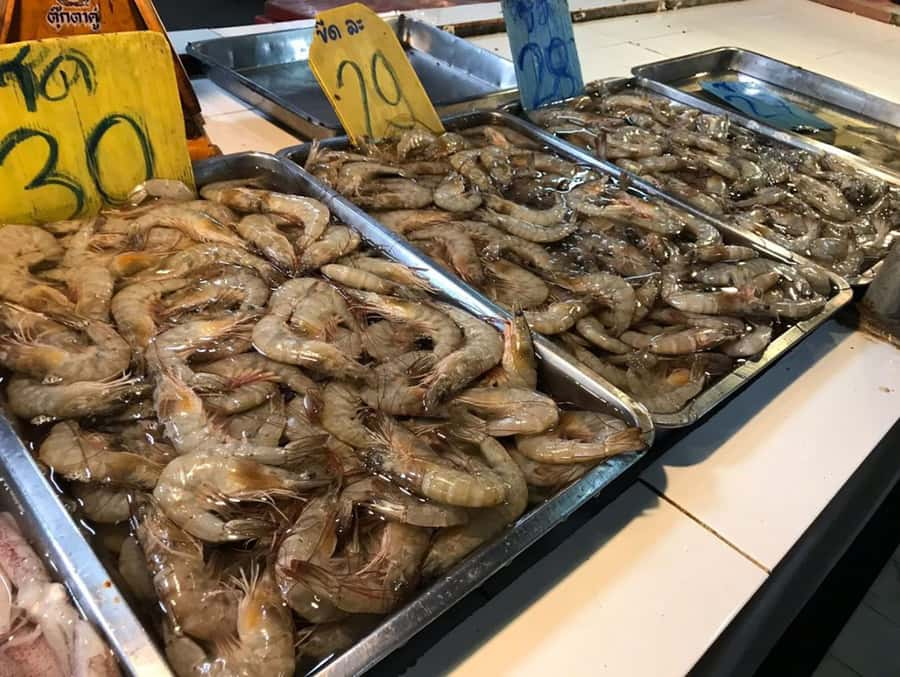
At $93 per person, this is not the cheapest way to eat Thai food in Koh Samui. You could order several inexpensive dishes at a local restaurant for much less.
The comparison changes when you count what is included. You receive hotel pickup and return in the covered areas, a market visit, a certified teacher, ingredients, equipment, an individual work space, and a freshly prepared meal. You also leave with cooking skills rather than only a full stomach.
The small group limit improves the value. A class for up to six people gives you more direct access to the instructor than a large demonstration. For a couple, family, or solo visitor who wants active participation, the price is easier to justify.
I see the strongest value for people who will use the recipes later. If you cook at home and want to recreate Thai food, the lesson can pay off well after your holiday. If you only want a quick meal and have no interest in cooking, the price may feel high.
Who should book this Koh Samui cooking class?
This is a good match for families, couples, and solo visitors who enjoy food and want a local activity with a clear structure.
Families can split the menu and make several different dishes. Couples can choose complementary recipes and share the final meal. Solo participants benefit from the small group because they still receive personal help rather than being lost in a crowd.
The class also suits people who want a taste of daily Koh Samui life without signing up for a full-day cultural tour. The market and garden provide local context, while the cooking gives you something active to do.
I would think twice if you dislike spicy food, cannot take part in hands-on preparation, or want a long market tour. The menu includes spicy dishes, though you choose what to prepare. The experience is also short, so it gives you a focused introduction rather than a complete study of Thai cuisine.
Practical details before you reserve
The activity is offered in English and has a maximum of six participants. Small classes and individual work spaces are included.
Pickup covers Bophut, Choeng Mon, Chaweng, and Chaweng Noi near the main road. Hill hotels require a meeting point at a nearby hotel. Check the pickup email carefully and arrive at the lobby at least 10 minutes before the stated time. Arriving more than 10 minutes late can mean missing the transfer.
You can cancel up to 24 hours before the activity for a full refund. A reserve-now, pay-later option is also available, which helps if your Koh Samui schedule is still changing.
The class includes food and equipment, but the supplied details do not state whether dietary restrictions can be accommodated. If you have allergies or follow a special diet, contact the operator before reserving and explain exactly what you cannot eat.
Should you book it?
I would book this class if you want to do more than sample Thai food. The market visit, home garden, small group, and hands-on meal give you a personal look at how ingredients become familiar Thai dishes.
The best reason to choose it is the combination of local setting and useful instruction. You see the produce, cook it with help, and eat the result. The main tradeoff is time: the market visit lasts about 30 minutes, and the whole activity takes three hours.
Choose it with realistic expectations. This is a friendly introduction to Thai home cooking, not a full-day food expedition. For $93, it offers solid value to anyone who wants practical recipes, direct contact with a local teacher, and a meal they helped create.
FAQ
How long does the Koh Samui cooking class last?
The activity lasts three hours. It includes about 30 minutes at a local market and about two hours of hands-on cooking, with transfer time arranged around the scheduled start.
How many people can join the class?
The class is limited to six participants, with individual working spaces provided.
What dishes can I choose to cook?
Options include spring rolls, Tom Yum, Tom Kah, Som Tam, glass noodle salad, green curry, Massaman curry, Panang curry, Pad Thai, Pad Kee Mao, fried rice, Pad Ka Pao, and banana with coconut milk.
Is hotel pickup included?
Yes. Pickup is included from hotels in Bophut, Choeng Mon, Chaweng, and Chaweng Noi near the main road.
Can I be picked up from a hillside hotel?
If you stay on a hill, you must go to a nearby hotel or meeting point for pickup. The operator confirms the exact arrangements by email.
What language is the class taught in?
The live tour guide and cooking instruction are in English.
Are ingredients and cooking equipment included?
Yes. The class includes ingredients, cooking equipment, and an individual work space.
Can I cancel the activity for a refund?
You can cancel up to 24 hours in advance for a full refund. A reserve-now, pay-later option is also available.
Newest classes around Thailand
- Aroidee’s Farm-Fresh Thai Cooking Experience★ 5.0 · 8 reviews
- Authentic Thai Cooking Class and Farm Visit in Chiang Mai★ 5.0 · 66 reviews
- Half Day Guided Thai Cooking Class in Chiang Mai★ 5.0 · 13 reviews
- Yummy Tasty Thai Cooking School in Chiang Mai★ 5.0 · 2 reviews
- Signature Thai Cooking Course★ 5.0 · 79 reviews
- Online Thai and Akha Cooking Class★ 5.0 · 70 reviews
- Northern Thai Cooking Class in Chiang Mai in a Countryside Home★ 5.0 · 2 reviews
- Private Half-Day Thai Cooking Class in Chiang Mai★ 5.0 · 4 reviews
Thailand Cooking Classes, compared.
Half-Day Thai Cooking Class at Organic Farm in Chiang Mai
Read our review →
Cooking Class, Market & Thai Herbs Garden Tour
Read our review →
Authentic Cooking Class with Market & Farm Visit
Read our review →
Phuket Thai Cooking Class with Market Tour Option
Read our review →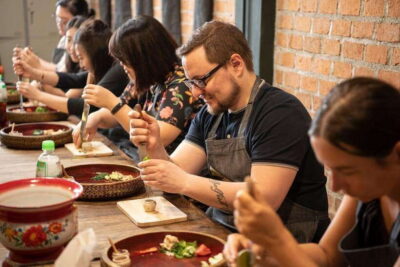
Tingly Thai Cooking School Half-Day Cooking Class
Read our review →Browse the lists this tour appears in